家电

Search documents
马上评|从“首破50万亿”看见中国消费的活力与潜力
Xin Lang Cai Jing· 2026-01-23 10:41
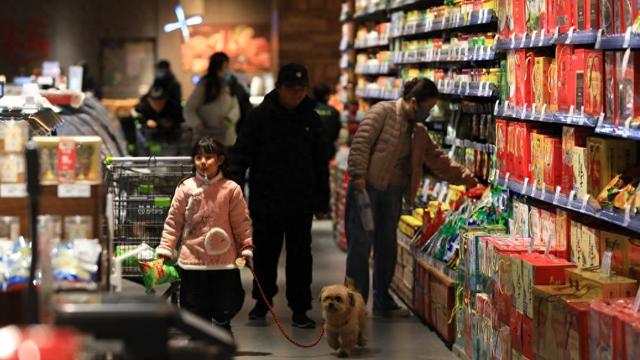
Group 1 - The total retail sales of consumer goods in China surpassed 50 trillion yuan in 2025, reaching 50,120.2 billion yuan, with a year-on-year growth of 3.7% [2] - Online retail sales amounted to 15,972.2 billion yuan, reflecting a year-on-year increase of 8.6%, contributing to 52.0% of economic growth, which is a 5 percentage point increase from 2024 [2] - The growth in consumer spending is seen as a key driver of China's economic growth, showcasing the strong vitality and internal momentum of the economy [2] Group 2 - Service consumption retail sales accelerated significantly, growing by 5.5% year-on-year, outpacing goods retail sales by 1.7 percentage points, with tourism, health, and education services emerging as new growth points [3] - The shift from "having" to "quality" is evident, particularly in the automotive sector, where production and sales reached 34.53 million and 34.40 million units respectively, marking increases of 10.4% and 9.4% year-on-year, with new energy vehicle sales growing by 19.8% [4] - The consumption market is increasingly focused on quality, with online retail continuing to grow rapidly, achieving an 8.6% year-on-year increase, and new retail models like unmanned stores and membership warehouses also seeing double-digit growth [5] Group 3 - The expansion of the consumption market, especially in service consumption and quality consumption, is providing sustained momentum for high-quality economic development in China [6] - There is significant potential for growth in the consumption rate, which currently stands at about 40%, indicating a gap of 10-20 percentage points compared to developed countries [6] - Recent policies aimed at stimulating consumption include optimizing product and service supply, enhancing consumer capacity and willingness, and improving the consumption experience [6] Group 4 - The focus on increasing residents' income is crucial for unlocking social consumption potential, with ongoing research into plans for job stability and income growth for urban and rural residents [7] - As residents' disposable income increases, their confidence in consumption is expected to strengthen [8]

家电行业再掀“口水战”:公牛集团索赔420万、家的电器反诉“不正当竞争”
Sou Hu Cai Jing· 2026-01-23 10:06
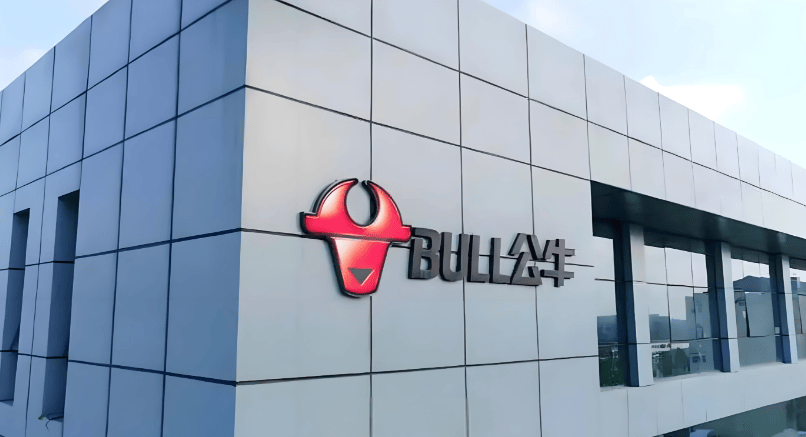
Core Viewpoint - The ongoing dispute between Bull Group and Jia's Electric over advertising claims has escalated, highlighting competitive tensions in the home appliance industry [2][4][12] Group 1: Dispute Details - The conflict began with Jia's Electric questioning Bull Group's advertising claim that "7 out of 10 Chinese households use Bull," alleging misleading representation [5][6] - Jia's Electric has filed a lawsuit against Bull Group, claiming the latter's advertising constitutes unfair competition and false advertising [4][8] - Bull Group has responded with a lawsuit for commercial defamation and unfair competition, seeking compensation of 4.2 million yuan [6][8] Group 2: Industry Context - The home appliance industry is experiencing intensified competition, with companies increasingly resorting to aggressive marketing tactics [12] - The decline in new housing sales, with a reported 8.7% decrease in sales area and a 12.6% drop in sales revenue, is contributing to heightened competition among industry players [13] - Bull Group reported a revenue decline of 3.22% year-on-year for the first three quarters of 2025, with net profit down 8.72% [13]

2025年社会消费品零售总额突破五十万亿元
Ren Min Ri Bao· 2026-01-23 10:04
Group 1 - The core viewpoint of the articles indicates that by 2025, the total retail sales of social consumer goods are projected to reach 50.1 trillion yuan, with a growth rate of 3.7% [1] - Retail sales of goods are expected to grow by 3.8%, while catering revenue is anticipated to increase by 3.2% [1] - The contribution rate of final consumption expenditure to economic growth is expected to reach 52%, continuing to serve as a main engine for economic development [1] Group 2 - During the "14th Five-Year Plan" period, the total retail sales of social consumer goods have successively surpassed new milestones of 40 trillion, 45 trillion, and 50 trillion yuan [1] - The "old-for-new" policy is expected to drive retail sales of home appliances and communication equipment to exceed 1 trillion yuan each, setting historical highs [1] - The consumption potential is continuously being released, with over 129 million units of 12 categories of home appliances being replaced and over 9.1 million digital products being purchased in 2025 [1] Group 3 - The trend of consumption upgrading is evident, with sales of smart glasses, smartwatches, and smart bands increasing by over 40% [1] - The economic vitality is robust, with frequent launches of new products in the fields of smart connected vehicles and smartphones, and the rapid establishment of flagship stores for domestic and international brands [1] - The "IP + consumption" trend is thriving, with sales of movie derivatives during the summer season in 2025 expected to double year-on-year [1] Group 4 - The acceleration of industrial transformation and upgrading is being promoted by the "old-for-new" policy, effectively enhancing new productive forces [2] - The sales proportion of first-level energy efficiency or water efficiency products among the 12 categories of home appliances has reached over 90% [2] - There has been a significant increase in the variety of home appliance products, with 17.78 million new types added in 2025, representing a year-on-year growth of 28.89% [2]
黄宏生家族,330亿的生意退市
商业洞察· 2026-01-23 09:35
Core Viewpoint - The article discusses the strategic move by the Huang Hongsheng family to privatize Skyworth Group and spin off its solar energy business for independent listing, reflecting a shift in focus towards renewable energy and the potential for significant growth in this sector [4][5][10]. Group 1: Privatization and Spin-off Strategy - On January 21, Skyworth Group announced plans for privatization and the spin-off of its solar business, offering shareholders two options: a share swap or cash payout, leading to a 37% increase in stock price [5][12]. - The estimated valuation of Skyworth Solar is around 10 billion RMB, with the Huang family retaining a 46.52% stake post-transaction [7]. - The privatization involves repurchasing 635 million shares from other shareholders, with the cash option providing a 96% premium over the previous closing price [14][15]. Group 2: Financial Performance and Growth - For the first half of 2025, Skyworth Group reported a revenue increase to 36.26 billion RMB, with the solar business contributing 13.84 billion RMB, a 53.5% year-on-year growth [23][24]. - The solar segment is expected to surpass traditional television revenue by mid-2025, driven by the saturation and competitive pressures in the traditional appliance market [26]. - The management highlighted that the current market valuation does not reflect the intrinsic value of the solar assets, prompting the need for an independent listing to enhance brand image and facilitate international expansion [29]. Group 3: Market Position and Future Plans - Skyworth entered the solar market in 2020, focusing on distributed solar solutions tailored to user needs, leveraging its extensive distribution network from its home appliance business [30][34]. - The company has established over 800,000 solar power stations, generating more than 41 billion kWh of electricity, with operational capacity exceeding 27 GW [22]. - Future plans include expanding the solar business internationally, with significant contracts already signed in Europe and Southeast Asia, aiming to capitalize on the higher electricity prices abroad [39][41].

华安双核驱动混合A:2025年第四季度利润461.58万元 净值增长率9.5%
Zhong Guo Zheng Quan Bao· 2026-01-23 09:21
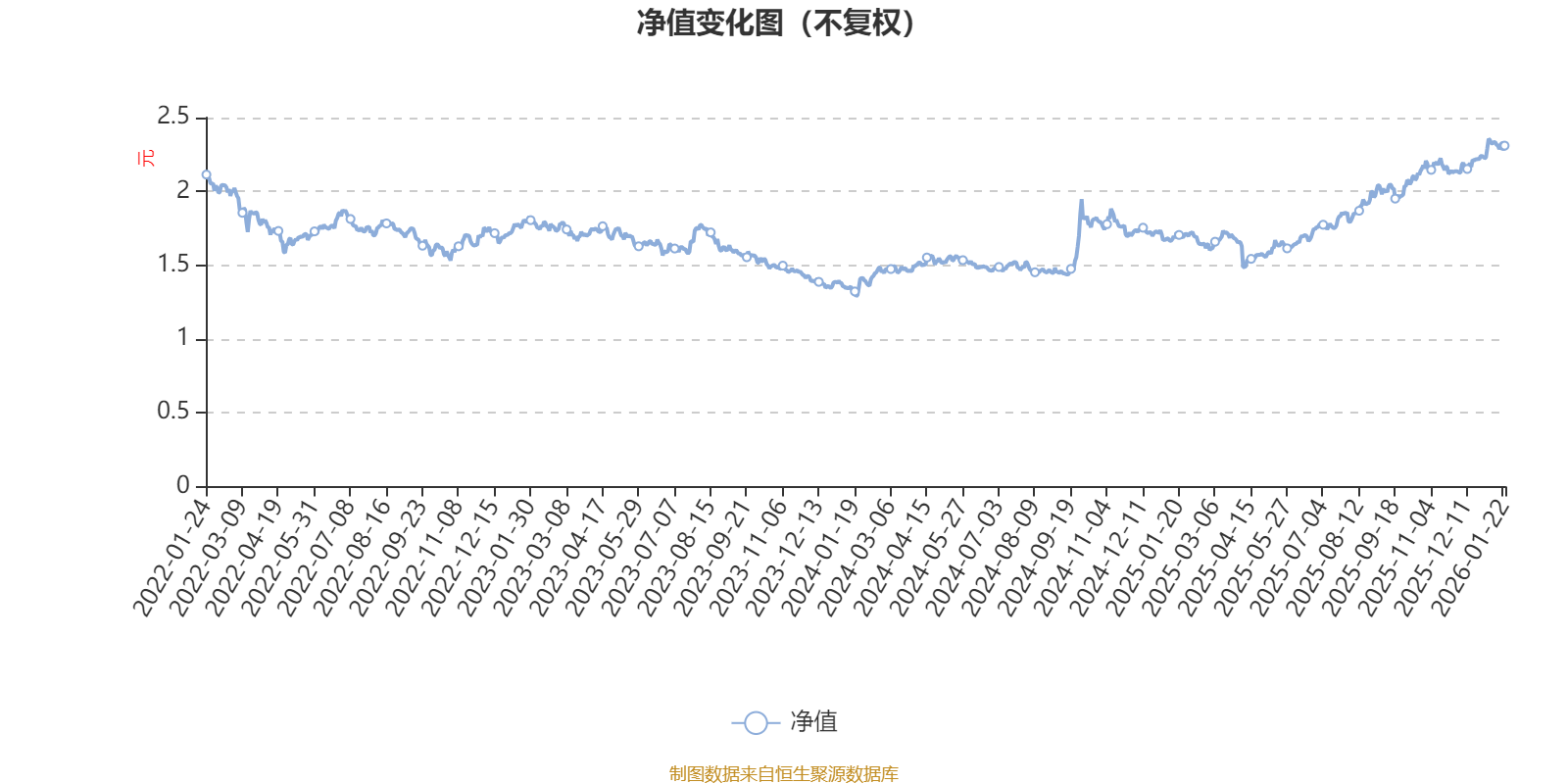
Core Viewpoint - The AI Fund Huashan Dual-Core Driven Mixed A (006121) reported a profit of 4.6158 million yuan for Q4 2025, with a net asset value growth rate of 9.5% during the reporting period [2]. Fund Performance - As of January 22, the fund's unit net value was 2.31 yuan, with a one-year cumulative net value growth rate of 36.45%, ranking 339 out of 673 comparable funds [2][4]. - The fund's performance over different time frames includes a three-month growth rate of 9.37% (ranked 324/689) and a six-month growth rate of 26.17% (ranked 305/689) [4]. Investment Strategy - The fund manager indicated a strategy of reducing holdings in the already appreciated non-ferrous metals sector while increasing positions in select stocks within the chemical, travel, and consumer sectors [3]. - The fund continues to hold non-bank financials and shipbuilding sectors, which are viewed positively and not overvalued [3]. Fund Characteristics - The fund's average stock position over the past three years was 91.53%, significantly higher than the industry average of 84.04% [15]. - As of Q4 2025, the fund's total assets amounted to 50.8559 million yuan [17]. - The fund has a high concentration of holdings, with its top ten stocks including major companies such as China Pacific Insurance, China Life, and Midea Group [20]. Risk and Return Metrics - The fund's Sharpe ratio over the past three years was 0.7343, ranking 72 out of 383 comparable funds [10]. - The maximum drawdown over the past three years was 29.54%, with the largest single-quarter drawdown occurring in Q1 2021 at 27.58% [12].
江苏消费品以旧换新政策“更新”!扫地机器人、智能马桶等智能家居被纳入
Yang Zi Wan Bao Wang· 2026-01-23 06:15
Core Viewpoint - Jiangsu Province has announced a large-scale equipment update and consumer goods trade-in policy to be implemented by 2026, focusing on promoting green, low-carbon, and smart products while managing funding limits and qualifications for subsidies [1][4]. Group 1: Automotive Support - The policy supports the scrapping of gasoline and diesel vehicles registered before specific dates, offering a one-time subsidy for purchasing new energy vehicles or low-displacement fuel vehicles [2]. - For scrapped eligible vehicles, a subsidy of 12% of the vehicle price (up to 20,000 yuan) is provided for new energy vehicles, and 10% (up to 15,000 yuan) for low-displacement fuel vehicles [2]. - Consumers must register their scrapped vehicles in their name by January 8, 2025, to qualify for the subsidy [2]. Group 2: Home Appliance Support - The policy includes support for six categories of home appliances, providing a subsidy of 15% of the sales price (up to 1,500 yuan) for energy-efficient products [3]. - Consumers can receive a subsidy for one item per category, including refrigerators, washing machines, televisions, air conditioners, computers, and water heaters [3]. - The policy also supports the purchase of digital and smart products, offering a 15% subsidy (up to 500 yuan) for items like smartphones and smartwatches [3]. Group 3: Funding Management - The funding for the consumer goods trade-in program will be managed with a limit, and any unused funds by December 31, 2026, will be reclaimed [1][4]. - The funding distribution will consider factors such as population, GDP, and local sales, with a focus on maximizing the impact of subsidies [1][4]. - The provincial and municipal governments will share the funding burden, with specific ratios for different regions [4]. Group 4: Regulatory Oversight - The policy emphasizes strict regulatory oversight of the funding and project implementation, with local governments being the primary responsible entities [6]. - There will be measures to prevent misuse of funds, including penalties for violations and a requirement for transparent reporting and evaluation of the program's effectiveness [6]. - Local governments are encouraged to develop their own funding plans while adhering to the unified standards set by the province [6].

新国补实施约半月,手机好卖、一级能效家电销售提升
第一财经· 2026-01-23 06:06
Core Viewpoint - The implementation of the 2026 national subsidy has led to a recovery in sales of home appliances, with a notable increase in the sales proportion of energy-efficient products and mobile phones since January [3][4]. Group 1: National Subsidy Impact - The national subsidy program has been launched across all 31 provinces, with an increase in the number of retail points compared to last year and stricter fund usage supervision [3]. - In Qinghai, as of January 20, 2026, a total of 34,094 subsidy coupons for home appliance replacements and new digital products have been issued, with 8,712 coupons redeemed, amounting to 4.3984 million yuan, stimulating consumption of 33.717 million yuan [3]. - A retail merchant in East China reported a month-on-month sales increase in January compared to December, with mobile phone sales benefiting significantly from the subsidy, showing a year-on-year growth of approximately 10% [4]. Group 2: Sales Performance - Data from Suning.com indicates that since the launch of the new subsidy, sales of air conditioners, refrigerators, washing machines, televisions, and water heaters have increased by over 60% month-on-month compared to December [4]. - Sales of high-efficiency products have reached a proportion of 92.6%, with certain categories like new air conditioning systems and large-screen televisions seeing sales growth of around 100% [4]. Group 3: Consumer Trends - The subsidy has stimulated mid-to-high-end mobile phone consumption, with the 3,000-6,000 yuan price range becoming mainstream, accounting for over 60% of sales [5]. - There is a growing consumer interest in high-end features such as advanced imaging, fast charging, and AI assistants, alongside a notable increase in bundled purchases of smartphones with smartwatches and bands, which rose by 87% [5]. - Smart glasses have been included in the subsidy program for the first time, with manufacturers expecting strong demand for AI-enabled models due to the 15% subsidy [5].
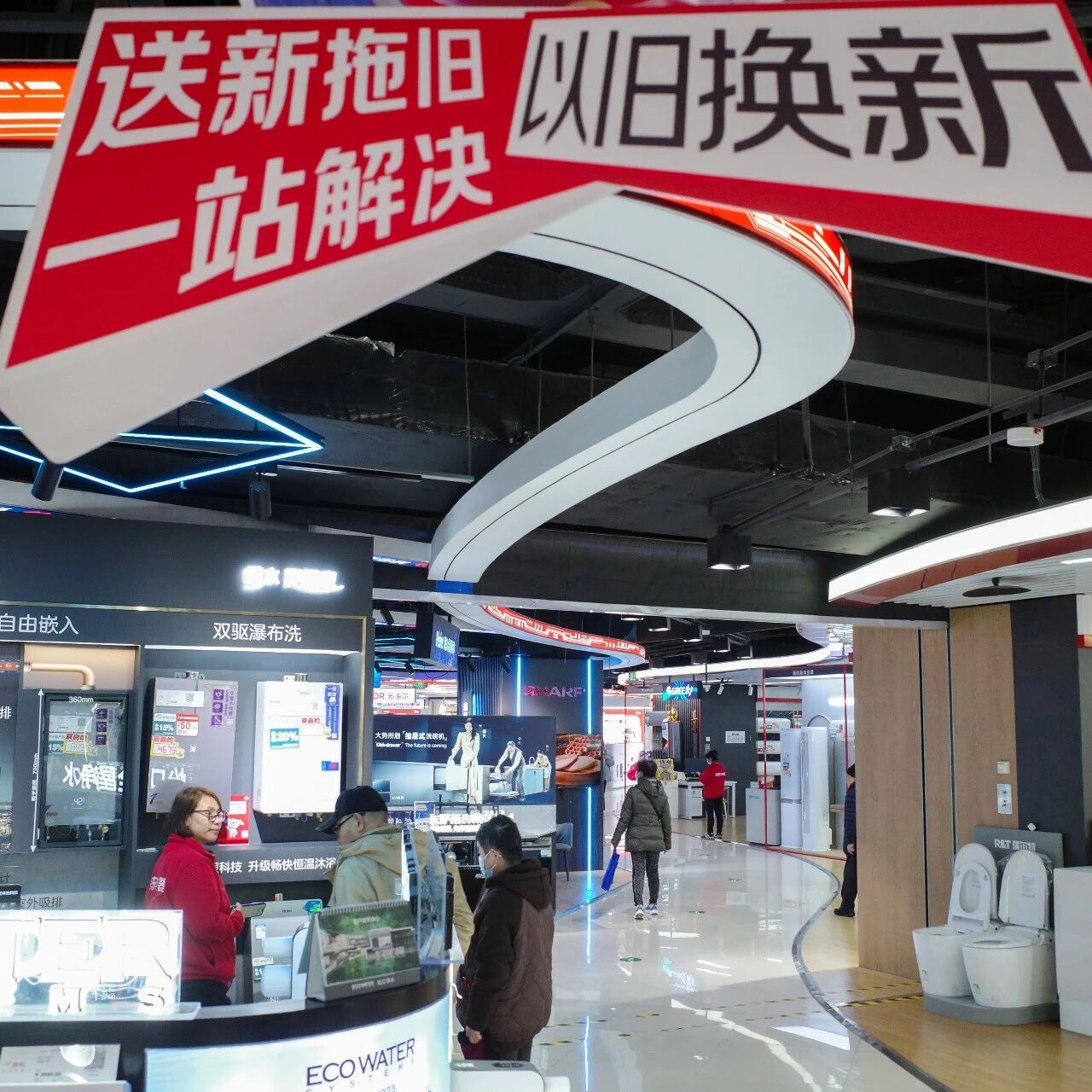
新国补实施约半月,手机好卖、一级能效家电销售提升
Di Yi Cai Jing· 2026-01-23 05:19
Group 1 - The implementation of the 2026 national subsidy has led to a recovery in sales since January, with a notable increase in the sales proportion of first-level energy-efficient home appliances and mobile phones [4] - The national subsidy program has been launched across all 31 provinces, with an increase in retail points and stricter fund usage supervision compared to last year [4] - In Qinghai, as of January 20, a total of 34,094 home appliance replacement and digital product purchase subsidy coupons were issued, with 8,712 coupons redeemed, amounting to 4.3984 million yuan, stimulating consumption of 33.717 million yuan [4] Group 2 - Mobile phone sales have benefited significantly from the new round of national subsidies, with a year-on-year increase of approximately 10% [5] - Sales of air conditioners, refrigerators, washing machines, televisions, and water heaters through Suning.com have increased by over 60% compared to December, with first-level energy-efficient and water-efficient products accounting for 92.6% of sales [5] - The new subsidy policy has also boosted mid-to-high-end mobile phone consumption, with the 3,000-6,000 yuan price range becoming mainstream, and over 60% of sales coming from this segment [5] Group 3 - Dealers express concerns about the pressure of funding for advance payments and hope for quicker settlement of outstanding funds from previous years to facilitate participation in the current subsidy program [6]
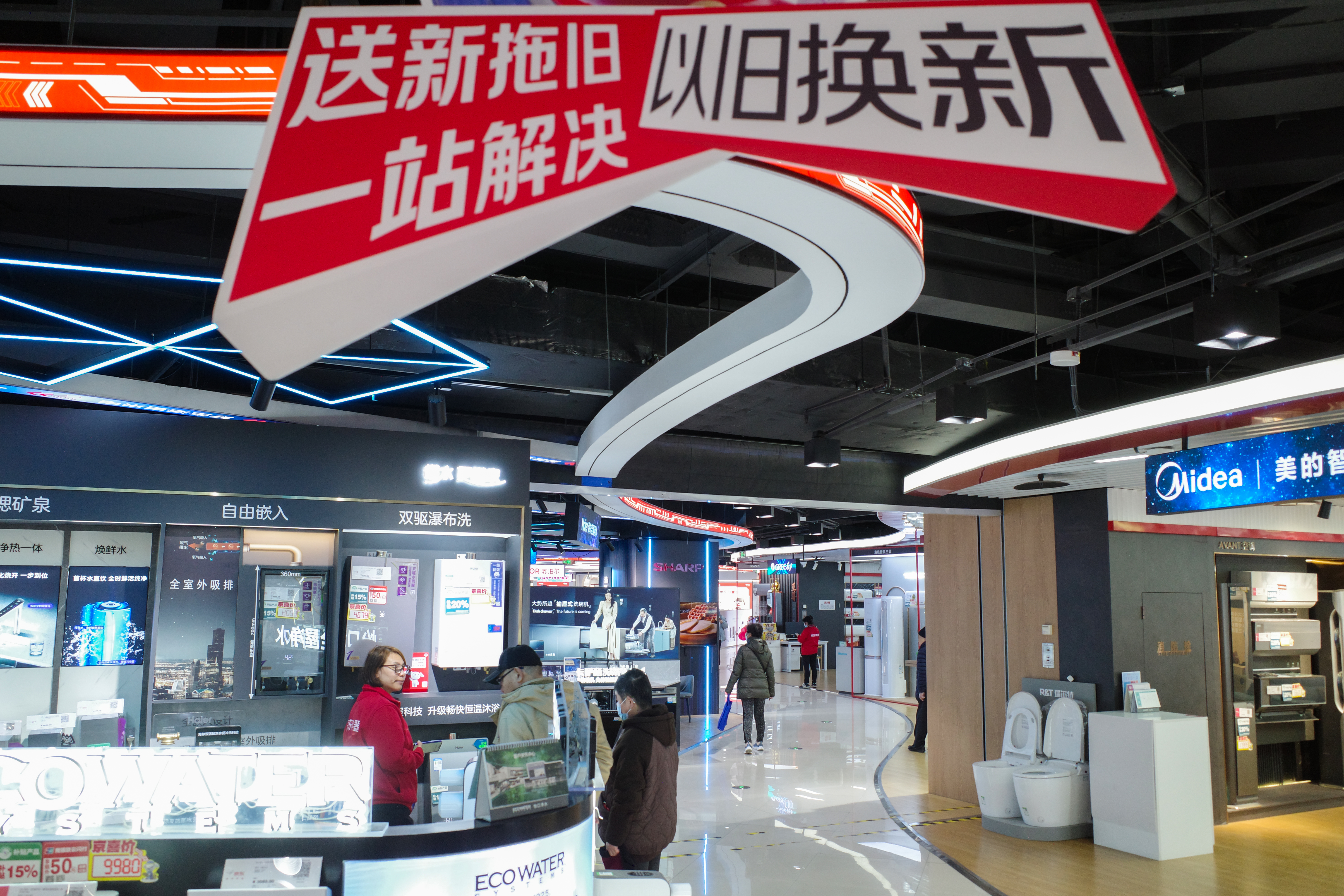
和音:“五十万亿元”展现的中国大市场——解码数字里的“机遇清单”④
Ren Min Ri Bao· 2026-01-23 03:26
Group 1 - The core focus of the articles is on China's strategy to expand domestic demand, which is seen as essential for economic growth and stability, with a projected retail sales total exceeding 50 trillion yuan by 2025 [1][2] - Domestic demand has become the main driving force for China's economic growth, contributing an average of 93.1% to economic growth from 2013 to 2024, with final consumption expenditure expected to contribute 52% in 2025, an increase of 5 percentage points from the previous year [1][2] - The shift towards service consumption is notable, with service spending projected to account for 46.1% of per capita consumption in 2025, indicating a structural optimization in consumer behavior [1] Group 2 - China's consumer spending is currently at about 40%, with significant room for growth compared to developed countries, which presents a vast investment opportunity in new urbanization, technology industries, and improving livelihoods [2] - The implementation of policies such as the trade-in program for consumer goods is expected to benefit over 360 million people, showcasing the market's potential and the effectiveness of policy measures [2] - China aims to transition from being the "world's factory" to becoming a "world market," enhancing its role as a major consumer market, which will create new opportunities for global cooperation [2][3]
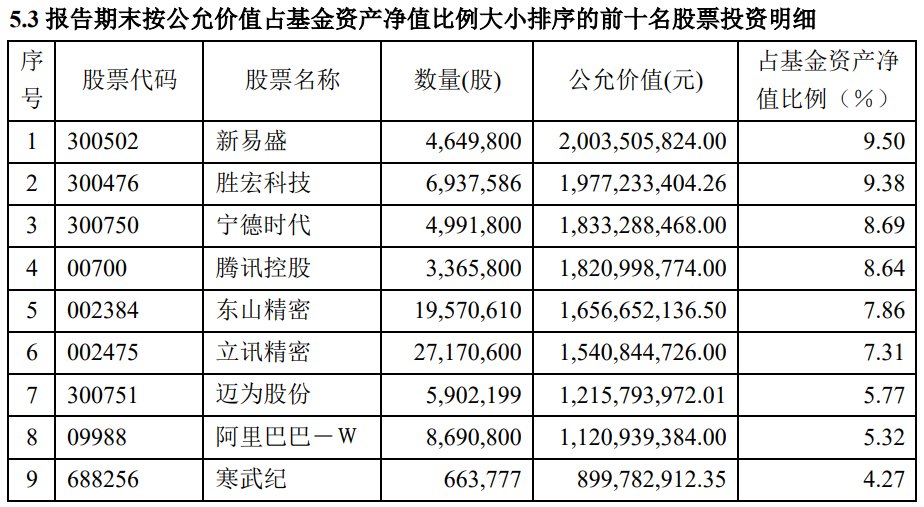
睿远基金旗下产品2025年四季报:傅鹏博减仓阿里巴巴-W 华润万象生活首进赵枫前十大重仓股
Zhi Tong Cai Jing· 2026-01-23 03:03
业绩方面,截至报告期末睿远成长价值混合A基金份额净值为1.9685元,报告期内,该类基金份额净值增长率为0.57%,同期业绩比 较基准收益率为-1.37%;截至报告期末睿远成长价值混合C基金份额净值为1.9159元,报告期内,该类基金份额净值增长率为 0.47%,同期业绩比较基准收益率为-1.37%。 傅鹏博和朱璘在季报中表示,为2026年的组合搭建做了准备:一方面,减持了基本面趋势偏弱的公司,降低了其对组合净值可能带 来的负面影响;另一方面,增加了数据中心液冷、存力和算力的相关公司,主要是基于对行业发展态势,以及个股跟踪研究后的选 择。对于上一年重点配置的光模块、PCB材料、芯片、数据中心液冷等板块和个股,持续看好其未来的发展,2026年将进一步加大 研究力度。 近日,睿远基金披露2025年四季报。在2025年四季度期间,傅鹏博和朱璘管理的睿远成长价值混合基金加仓了寒武纪(688256.SH), 新易盛(300502.SZ)、阿里巴巴-W(09988)、东山精密(002384.SZ)等个股则遭其减仓。从前十大持仓来看,较为明显的变化是移动运营 商个股配置不在前十行列,取而代之的是四季度表现突出的光伏和半导体 ...