
云计算

Search documents
就在2026年上半年,甲骨文等“OpenAI链”逆袭?这是先决条件
Hua Er Jie Jian Wen· 2026-01-06 07:03
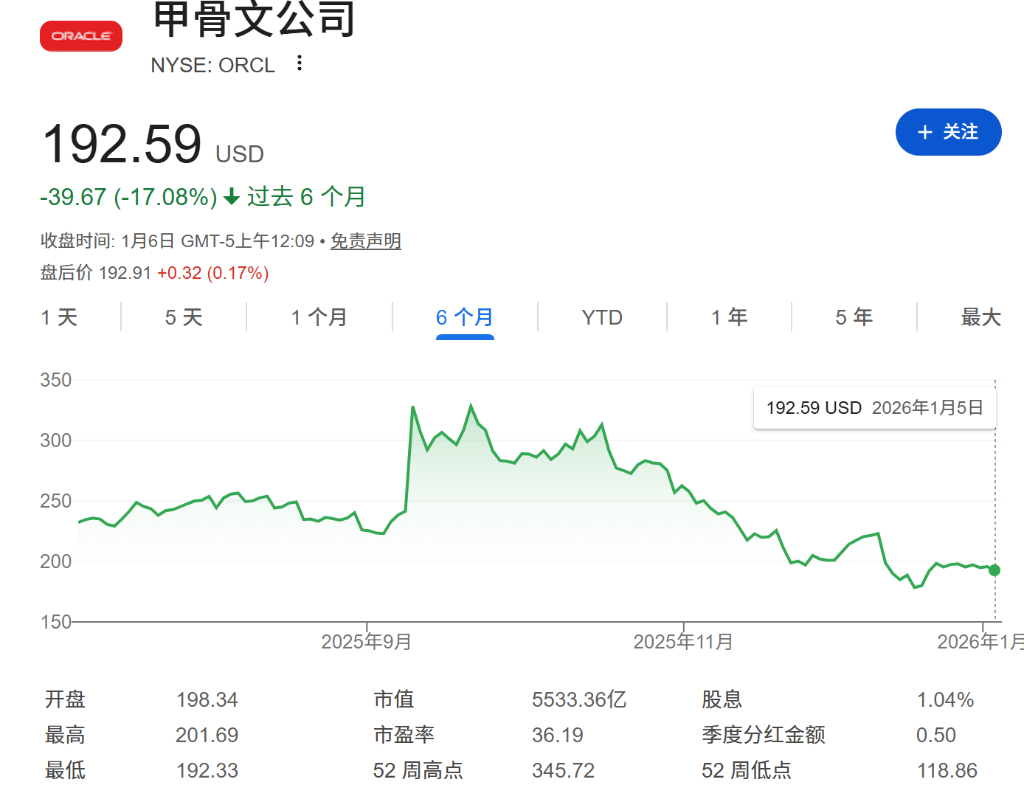
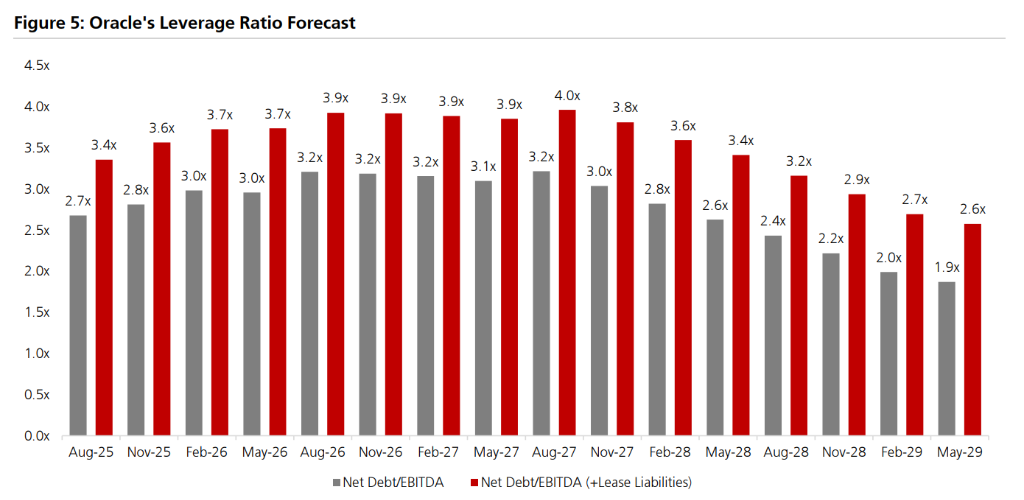
Core Viewpoint - Wall Street is currently experiencing extreme anxiety, highlighted by Oracle's stock price plummeting 41% since mid-September, while bulls are betting on a "stunning reversal" in the first half of 2026 [1] Group 1: Market Sentiment and Concerns - The market's panic is primarily driven by two concerns: extreme distrust in OpenAI's financial sustainability and worries about Oracle's ability to maintain its investment-grade rating amid aggressive capital expenditures [3] - Investors believe that if OpenAI can secure funding or launch a new model like GPT-6 by early 2026, Oracle, trading at 34 times CY27 earnings, could represent a significant buying opportunity [3] - Conversely, if OpenAI fails to compete against Google's Gemini or if Oracle is forced to dilute shareholders through equity financing, the stock's decline may continue [3] Group 2: OpenAI's Potential Solutions - To reverse Oracle's downturn, three key developments are necessary: securing capital injection, launching GPT-6, and achieving real revenue generation from enterprise AI projects [4][6] - OpenAI is reportedly seeking to raise $100 billion at an $830 billion valuation, which could alleviate counterparty risk for Oracle if successful [6] - The launch of GPT-6 in Q1 2026 is seen as critical to dispelling doubts about Google's competitive edge [6] Group 3: Oracle's Financial Strategy and Risks - Oracle is perceived to be walking a tightrope, with concerns that its support for OpenAI's computing needs could downgrade its credit rating to "junk" status [5] - The company's strategy includes financial engineering to manage significant funding pressures, including potential "off-balance-sheet" financing [8][14] - Oracle's net debt to EBITDA ratio is projected to reach 4.0 times by 2027, raising alarms about its ability to maintain an investment-grade rating [14] Group 4: Project Highlights and Revenue Potential - The Abilene project in Texas is identified as a key positive aspect, with the potential to disrupt bearish narratives if it is delivered on time and OpenAI makes timely payments [10][11] - As of November, 96,000 GB200 GPUs have been delivered, indicating that the project is progressing faster than expected [14] - The Abilene project is expected to contribute approximately $8.3 billion in annual revenue, significantly boosting Oracle's cloud infrastructure growth [14] Group 5: Valuation and Market Position - Oracle's current stock price of around $195 reflects a high level of pessimism, incorporating fears of OpenAI's collapse and financing difficulties [13] - Any alleviation of these risks, such as OpenAI securing funding, could trigger a sharp valuation recovery [13] - Compared to Microsoft, which faces similar risks with OpenAI but trades at a higher FY30 P/E ratio of 18 times, Oracle's valuation appears discounted [14]


Bitcoin mining stock prices diverge sharply in 2025 as AI pivots drive gains
Yahoo Finance· 2026-01-05 15:52
Core Insights - Bitcoin mining companies that diversified into AI and high-performance computing (HPC) significantly outperformed traditional cryptocurrency miners in 2025 Group 1: Company Performance - IREN achieved a 285% return in 2025, leading the sector after signing a five-year agreement with Microsoft valued at approximately $9.7 billion for cloud computing services [2] - Cipher recorded a 218% increase following a 15-year lease agreement with Amazon Web Services and a separate $3 billion deal with Fluidstack, totaling $5.5 billion for hosting AI workloads [3] - Hut 8 saw a 124% return after announcing a $7 billion partnership with Anthropic and Fluidstack to develop AI data centers, with potential total contract value reaching $17.7 billion [4] Group 2: Underperforming Companies - Marathon Digital (MARA) ended the year down 46%, with Rosenblatt Securities lowering its price target due to high exposure to bitcoin mining and declining profitability [5] - Bitdeer experienced the largest decline among major miners, with a 48% loss attributed to a class action lawsuit regarding its SEAL04 chip development timeline [6] Group 3: Mixed Sector Performance - Other miners showed varied performance: Terawulf returned 103%, Bitfarms gained 58%, CleanSpark ended with a 10% gain, and Core Scientific rose 4%, while Hive fell 9% and Cango dropped 32% [7]





“英伟达亲儿子”CoreWeave(CRWV.US)把违约红线往后挪 竭尽全力为AI云算力交付争取时间
Zhi Tong Cai Jing· 2026-01-05 14:13
Core Viewpoint - CoreWeave, a leader in cloud AI computing power leasing, has revised a significant credit agreement to ease liquidity testing requirements, which has garnered attention in the stock market and resulted in a stock price increase of over 5% in pre-market trading [1] Group 1: Credit Agreement Revision - The revision of the DDTL 3.0 credit agreement aligns financing arrangements with the delivery timeline described by the parent company for the quarter ending September 30, 2025 [1] - Key changes in the First Amendment include lowering the minimum liquidity requirement to $100 million for payment dates between March 1, 2026, and May 1, 2026, and delaying the first testing dates for debt service coverage and contract achievement ratios to October 31, 2027, and February 28, 2026, respectively [1] - The amendment allows for unlimited equity cures for failing to meet financial covenants until October 28, 2026, after which it limits the use of equity cures to three months within any four-calendar-month period [1] Group 2: Market Implications - Analysts suggest that the revision signals short-term benefits by reducing liquidity thresholds and delaying key financial metric tests, which alleviates concerns about potential technical defaults or forced refinancing in early 2026 [2] - However, the need for more flexible covenants indicates that CoreWeave requires additional leeway during a period of high capital expenditure and delivery ramp-up in the AI infrastructure sector [2] Group 3: Company Background - CoreWeave is recognized as an early adopter of NVIDIA GPU cloud leasing, gaining favor from NVIDIA's venture capital arm and securing access to high-demand AI GPUs like the H100 and H200 [3] - The company became the first to deploy NVIDIA H200 Tensor Core GPUs in August 2023, enhancing its ability to provide powerful computing capabilities amid rising AI demand [3] Group 4: Service Offerings - CoreWeave specializes in providing high-end AI GPU clusters on a large scale, allowing users to access cloud-based AI computing resources for machine learning, deep learning, and inference workloads [4] - The global demand for AI computing resources is experiencing explosive growth, pushing the capacity of underlying infrastructure to its limits, despite ongoing expansions of large AI data centers [4] Group 5: Industry Trends - The recent launch of Google's Gemini3 AI application ecosystem has significantly increased AI computing demand, highlighting the ongoing supply-demand imbalance in AI infrastructure [5] - Strong demand for HBM storage systems and enterprise SSDs further confirms that the AI boom is still in the early stages of infrastructure development [5]


甲骨文如何扭转市场叙事?瑞银:OpenAI信仰修复、负债压力证明可控
Hua Er Jie Jian Wen· 2026-01-05 09:41
Core Viewpoint - Oracle's stock price has experienced a significant decline of 41% since mid-September, reflecting market concerns about OpenAI's ability to fulfill its trillion-dollar promises and Oracle's substantial net debt of $88 billion [1][4] Group 1: Market Sentiment and Stock Performance - Investors are anxious about OpenAI's ability to meet commitments, which has negatively impacted Oracle as a key supplier [4] - UBS maintains a "Buy" rating, arguing that the market has overestimated the risks associated with OpenAI and Oracle's financing pressures [1][4] - The current price-to-earnings ratio for Oracle based on 2026 earnings expectations is 29 times, and only 11 times for 2030, indicating an attractive risk-reward ratio [1] Group 2: OpenAI's Financial Situation - OpenAI is reportedly raising $100 billion at a valuation of $830 billion, with significant commitments from SoftBank and Amazon, which could alleviate concerns about Oracle's risk exposure [7] - The anticipated release of GPT-6 in Q1 is expected to enhance OpenAI's competitive position and restore investor confidence [7] Group 3: Oracle's Debt and Financing Strategies - Oracle's net debt stands at $883 billion, with a net debt/EBITDA ratio of 2.8 times, raising concerns about its balance sheet [6] - To manage capital expenditures and debt, Oracle is pursuing aggressive financing strategies, including off-balance sheet financing and a "Bring Your Own Chip" (BYOC) model [6][7] - UBS estimates that if 50% of Oracle's funding needs are met through these strategies, direct financing requirements could drop from $80 billion to $40 billion over the next three years [7] Group 4: Market Position and Growth Potential - Despite concerns about competition from Google's Gemini, UBS's enterprise AI survey indicates that OpenAI remains dominant in the enterprise market [5] - Oracle's revenue growth is projected to accelerate from 16% to 46% between FY26 and FY28, suggesting a robust growth narrative [9] - Even in a worst-case scenario where OpenAI's contributions to Oracle's revenue cease, the stock's price-to-earnings ratio would still be relatively low at 12.4 times [9]
国投证券港股晨报-20260105
国投证券(香港)· 2026-01-05 08:53
Core Insights - The report highlights a strong start for the Hong Kong stock market in 2026, with the Hang Seng Index rising by 2.76% and the Hang Seng Tech Index increasing by 4% on the first trading day, driven by positive market sentiment and broad sector gains [2][3] - The semiconductor sector is noted as a key driver in the US market, with significant gains in companies like Nvidia and Micron Technology, while software stocks showed weakness [4] - The report discusses the geopolitical impact of US military actions in Venezuela, suggesting potential long-term implications for oil prices and market stability [5] Company Overview - The specific company under review, 精锋医疗 (Jingfeng Medical), was established in 2017 and specializes in surgical robots, being the first in China and the second globally to receive regulatory approval for multiple types of surgical robots [7] - Financial projections indicate revenues of 48.04 million yuan in 2023, 160 million yuan in 2024, and 150 million yuan in the first half of 2025, with net losses projected at 210 million yuan, 220 million yuan, and 89.09 million yuan respectively [7] Industry Status and Outlook - The surgical robot market in China is projected to grow from 2.71 billion yuan in 2019 to 7.18 billion yuan by 2024, reflecting a compound annual growth rate of 21.5%, with expectations to reach 102.02 billion yuan by 2033 [8] Advantages and Opportunities - The company holds a unique position as the first in China and second globally to gain approval for various types of surgical robots, which enhances its competitive edge [9] - The product portfolio is comprehensive, allowing for strong synergies and collaboration within the company [9] - The company has robust research and development capabilities and has attracted significant cornerstone investors, indicating strong industry recognition and support [9] Fundraising and Use of Proceeds - The IPO is set to raise funds with approximately 42% allocated for the research and development of core products, 20% for commercialization, and 10% for capacity expansion, among other uses [13] Investment Recommendation - The report suggests that the company, with its leading position and strong investor backing, has a projected market capitalization of approximately 16.8 billion HKD at the IPO price, with a price-to-sales ratio of about 50 times, comparable to its peers [14]
信银国际:美国减息及美元转弱支撑后市 料恒指今年目标29500点
Zhi Tong Cai Jing· 2026-01-05 08:47
Group 1 - The Hong Kong stock market started 2026 with a significant rise of over 700 points on the first trading day, indicating a positive outlook for the year ahead [1] - The performance of the Hong Kong stock market in the fourth quarter of the previous year lagged behind major markets due to profit-taking at year-end, but optimism remains for 2026 [1] - Key factors expected to boost the market include important meetings in mainland China scheduled for March and April, and the uncertainty surrounding the next Federal Reserve chair, with a target for the Hang Seng Index set at 29,500 points for the year [1] Group 2 - The mainland AI industry is broad, covering multiple sectors, and is expected to see increased spending on innovation and development as it enters the "14th Five-Year Plan" [1] - The competition between China and the U.S. in AI is anticipated to drive growth in industries such as new energy and autonomous driving, with cloud computing and AI applications also benefiting [1] - There is a positive outlook for high-dividend stocks, including traditional sectors like Chinese telecommunications, banks, insurance, and energy, as well as consumer staples with yields above 3% after valuation corrections [1]
亚马逊大意失AI:昔日位面之子,沦为版本弃子?
Tai Mei Ti A P P· 2026-01-05 07:14
Core Viewpoint - Amazon is restructuring its AI strategy by creating a new "AGI organization" to integrate its language model team, chip development unit, and quantum computing team, as a response to its lagging position in the AI race compared to competitors like Google, Meta, and Nvidia [1][3]. Group 1: Amazon's AI Strategy and Challenges - Since 2025, Amazon's stock performance has been poor, with no significant annual gains, indicating that investors do not view Amazon as a key player in the AI sector [3]. - Despite having strong assets like AWS, self-developed chips, and a global e-commerce platform, Amazon's AI initiatives have been perceived as reactive rather than proactive, leading to a strategic need for urgent correction [3][4]. - Amazon's AI models, such as the Nova series, have not gained significant traction in the market, with OpenAI and Google dominating token usage [4]. Group 2: Competitive Landscape - Amazon's AWS, once a leader in cloud services, is facing increasing competition from Microsoft Azure and Google Cloud, which are integrating AI capabilities more effectively [7][10]. - Microsoft Azure's market share is growing, driven by strong demand for AI services, while AWS's positioning as a "model supermarket" dilutes its competitive edge [10][11]. Group 3: Internal Challenges and Organizational Structure - Amazon's AI team has been fragmented across various business lines, focusing on incremental improvements rather than developing a cohesive AGI strategy, leading to missed opportunities in the consumer AI space [15][16]. - The company's historical focus on customer-centric improvements has resulted in a reluctance to invest in long-term, high-risk AI innovations, causing it to fall behind competitors who are more agile in adapting to new trends [16][17].

低费率创业板人工智能ETF华夏(159381)涨超2%价格创新高,近20日吸金超7亿元
Mei Ri Jing Ji Xin Wen· 2026-01-05 04:50
Core Viewpoint - The A-share market experienced a significant rise, led by technology stocks, with strong performance in sectors such as brain-computer interfaces, memory, and GPUs, indicating a bullish sentiment towards technology investments in 2026 [1] Group 1: Market Performance - The A-share market saw a substantial increase in early trading on January 5, 2026, with technology stocks leading the charge [1] - Popular ETFs, including the Huaxia AI ETF (159381), 5G Communication ETF (515050), and Cloud Computing 50 ETF (516630), all rose over 2% by 10:45 AM [1] - The Huaxia AI ETF (159381) attracted over 700 million yuan in net inflows over the past 20 days, reflecting strong investor interest in technology-focused ETFs [1] Group 2: Investment Opportunities - The Huatai Securities technology research team is optimistic about the AI computing power chain, predicting a significant increase in demand for AI computing power in 2026, presenting investment opportunities both domestically and internationally [1] - The "14th Five-Year Plan" outlines the direction for emerging information and communication industries, with commercial aerospace, low-altitude economy, and quantum technology expected to offer promising investment opportunities [1] Group 3: ETF Details - The Huaxia AI ETF (159381) tracks the AI index and has a high weight in optical modules (over 57%), covering domestic software and AI application companies, with a low fee rate of 0.20% [2] - The 5G Communication ETF (515050) tracks the 5G communication theme index and focuses on companies like Nvidia, Apple, and Huawei, with a total scale of nearly 8 billion yuan [2] - The Cloud Computing 50 ETF (516630) tracks a cloud computing index with a high AI computing power content, covering various sectors related to computing power, and is noted for having the lowest fee rate among similar ETFs [2]

国金证券:2026年AI算力需求有望持续强劲 看好AI覆铜板/PCB及核心算力硬件、半导体设备等
智通财经网· 2026-01-04 23:41
Group 1 - The core viewpoint is that the capital expenditure of the four major cloud service providers in North America (Microsoft, Google, Meta, Amazon) continues to grow, with a positive outlook for future capital spending, indicating sustainability and potential for further increases [1] - Nvidia's AI server cabinet is expected to see significant growth by 2026, with a surge in token numbers and a forecasted explosive growth in ASIC quantities, leading to optimism for AI copper-clad laminates/PCBs and core computing hardware [1][2] - The demand for AI copper-clad laminates/PCBs and core computing hardware is expected to continue increasing in both volume and price, driven by rapid growth in Nvidia GPUs and explosive growth in Google and Amazon ASICs [2] Group 2 - The semiconductor equipment industry is viewed positively due to the expansion cycle of storage and the acceleration of self-sufficiency, with significant opportunities for domestic replacements [3] - The domestic cloud service providers still have room for increased capital expenditure, with Tencent, Alibaba, and Baidu reporting varying year-on-year changes in capital spending, indicating a strong future investment in AI infrastructure [3] - Apple's AI strategy focuses on hardware, prioritizing edge computing and strong privacy protection, with expectations for breakthroughs in AI/AR glasses technology and sales [4]

上海城地香江数据科技股份有限公司关于对外担保进展的公告
Shang Hai Zheng Quan Bao· 2026-01-04 19:57
证券代码:603887 证券简称:城地香江 公告编号:2025-107 上海城地香江数据科技股份有限公司 重要内容提示: ● 担保对象及基本情况 (一)担保的基本情况 近日,上海城地香江数据科技股份有限公司(以下简称"公司")收到全资子公司城地香江(上海)云计 算有限公司(保证人,以下简称"云计算")为全资子公司上海城地启斯云计算有限公司(债务人,以下 简称"城地启斯")就中国农业银行股份有限公司上海自贸试验区新片区分行(债权人,以下简称"农业 银行")银行借款等事宜签订的《保证合同》,担保金额为29,000万元,担保方式为连带责任保证。 本次担保未超过公司年度预计担保额度,未设置反担保。 (二)内部决策程序 上述担保授权已经公司第五届董事会第十五次会议、公司2024年年度股东大会审议通过,具体内容可查 阅公司披露的相关公告(公告号:2025-038、2025-073)。 (三)担保额度调剂情况 为降低融资利率,进一步提高子公司收益,公司将原城地启斯在上海农村商业银行股份有限公司上海自 贸试验区临港新片区支行存续的银行借款替换为农业银行29,000万元银行借款,并提供对应担保,因存 在替换时间差,在2025年 ...
