
医药

Search documents
20股本月录得翻倍行情,电力设备股数量最多,这些标的获融资客加仓
Xin Lang Cai Jing· 2025-11-30 04:59
Market Overview - In November, major market indices experienced more declines than gains, with the Shanghai Composite Index falling nearly 1.7% as of November 28, ending a six-day winning streak [1][2] - The North Exchange 50 and Sci-Tech Innovation 50 indices also showed significant declines [1] Individual Stock Performance - Excluding newly listed stocks, 20 stocks recorded over 100% gains this month, with Huasheng Lithium Battery achieving the highest increase of 247.30% [3][4] - Other notable performers include Haike Xinyuan, Pinggao Co., Guosheng Technology, Hefei China, Furui Shares, Zhenai Meijia, ST Hezhong, and Qingshuiyuan, with five stocks showing over 100% gains [3][4] Sector Analysis - Among the 20 stocks that doubled in value, the sectors with the most representation were Electric Equipment (approximately 25%), Textile and Apparel (15%), and Medical Biology (15%), along with others like Defense and Military, Environmental Protection, Computer, Building Decoration, Coal, Agriculture, and Comprehensive sectors [5] - The five stocks with the highest monthly gains belonged to the Electric Equipment, Computer, Building Decoration, and Medical Biology sectors [5] Financing Activity - As of November 27, stocks that doubled in value saw increased buying from margin traders, with notable net purchases in Saiwei Electronics, Huasheng Lithium Battery, and Tianhua New Energy, amounting to net financing of 650 million, 600 million, and 480 million respectively [5] - Other stocks like Tengjing Technology, Jianglong Shipbuilding, Pinggao Co., and Haike Xinyuan also experienced net purchases exceeding 100 million [5]


晚间重大,国常会出利好,4天缩量冲高回落,今天警惕一个关键信号
Sou Hu Cai Jing· 2025-11-29 06:01
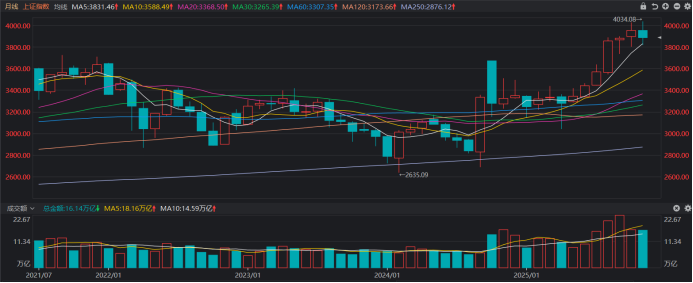
Core Viewpoint - The A-share market experienced a "roller coaster" effect on November 27, 2025, with a slight increase in the Shanghai Composite Index but a decline in the Shenzhen Component and ChiNext indices, amidst decreasing trading volume over four consecutive days [1][3]. Market Trends - The market has shown a "shrinking rebound" trend for four days, with trading volume decreasing to 1.71 trillion yuan, raising concerns among investors about potential market stagnation or upcoming volatility [3][5]. - The market sentiment has cooled significantly, with the success rate of consecutive rising stocks dropping below 20%, indicating a cautious approach from active funds [3][5]. Technical Analysis - The shrinking trading volume reflects a decrease in capital participation and a strong sense of caution among investors, with the Shanghai Composite Index facing significant resistance at the 60-day moving average [5][7]. - Historical data suggests that the area above 3400 points on the Shanghai Composite Index has accumulated a considerable number of trapped positions, creating a strong resistance zone that requires substantial volume to break through [5][8]. Sector Performance - There is a noticeable shift in market focus from high-growth sectors to low-value stocks, with defensive sectors like banking, insurance, and liquor gaining traction as investors seek safety [8][10]. - The technology growth sectors, particularly semiconductors and AI, have faced significant pullbacks after substantial gains earlier in the year, leading to profit-taking behavior among investors [8][10]. Policy Impact - Recent government policies have positively influenced the pharmaceutical and medical device sectors, with expectations of continued active rebounds in certain stocks [10]. - Warnings from the Ministry of National Defense regarding Japan's stance on the Taiwan Strait have positively impacted the military industry and local stocks in Fujian [10]. Capital Flow - There is a noticeable slowdown in incremental capital, with northbound capital showing a cautious attitude and trading volumes declining [12]. - The overall market sentiment is cautious due to external uncertainties, with investors advised to maintain a 50% position and consider defensive sectors to hedge against risks [12].



海南自贸港加工增值免关税政策内销货值超110亿元
Xin Hua She· 2025-11-29 05:10
Core Insights - The Hainan Free Trade Port's processing and value-added goods domestic sales tax exemption policy has been approved for 129 pilot enterprises by October 2025, with a total domestic sales value of approximately 11.096 billion yuan and a tax exemption amounting to about 860 million yuan [1] Group 1: Policy Overview - The processing and value-added goods domestic sales tax exemption policy is one of the core tax policies of the Hainan Free Trade Port [1] - Initially covering industries within the customs special supervision area, the policy has expanded to include sectors outside the area such as pharmaceuticals, coffee, and jewelry [1] Group 2: Future Directions - Haikou Customs will continue to explore the expansion of the policy's applicability and enhance the convenience of business operations [1] - The focus will be on meeting enterprise needs while improving regulatory and service measures to further release policy dividends [1]
越南与欧洲自由贸易联盟(EFTA)第18轮自由贸易协定谈判在岘港举行
Shang Wu Bu Wang Zhan· 2025-11-29 04:47
Core Points - The 18th round of Free Trade Agreement (FTA) negotiations between Vietnam and the European Free Trade Association (EFTA) took place in Da Nang, Vietnam from November 25 to 28 [1] - The goal of both parties is to make every effort to complete consultations in this round and to adopt necessary flexible measures to ensure a balanced agreement beneficial to both sides [1] - The negotiations are progressing smoothly, with efforts to narrow remaining differences highlighted by the Vietnamese delegation [1] Trade Relations - As of the end of 2024, trade between Vietnam and EFTA is expected to exceed $3.5 billion, maintaining stable growth over the years [1] - Major exports from Vietnam to EFTA member countries include footwear, textiles and garments, machinery and equipment, mobile phones and components, as well as agricultural products like coffee and cashews [1] - In return, Vietnam primarily imports high-tech and high-value-added products from EFTA member countries, such as pharmaceuticals, precision machinery, medical devices, and chemical products [1]
港股主板打新超购创纪录 热门赛道小市值股受追捧
Zheng Quan Shi Bao· 2025-11-28 19:34
Core Insights - The Hong Kong IPO market is experiencing a surge in new stock subscriptions, with record oversubscription rates being achieved in 2025, driven by regulatory policy optimization, significant profit potential, and concentration in popular sectors [1][3][4] Group 1: New IPO Records - The latest IPO, Quantitative Group, achieved an oversubscription rate of 9365.28 times, setting a new record for the Hong Kong main board [1][3] - This follows a series of record-breaking oversubscription rates in 2025, including previous records set by companies like Jin Ye International Group and Di Pu Technology [1][3] - Historically, the record for oversubscription was held by Mao Ji Kui Chong at 6289 times until it was surpassed in 2025 [3] Group 2: Company Overview - Quantitative Group, established in 2014, operates in the online market sector and has launched platforms for consumer e-commerce and automotive retail [2] - The company reported a revenue of 414 million yuan in the first five months of 2025, marking a year-on-year growth of 38.12%, with a profit of 126 million yuan, up 262% [2] - Post-IPO, the founder and CEO, Zhou Hao, retains control with a 33.03% stake, while major institutional investors include Sunshine Life and Fosun International [2] Group 3: Market Trends - The concentration of oversubscribed stocks in high-growth sectors such as new consumption and biotechnology indicates a strong market preference for these areas [4] - In 2025, nearly 30% of new stocks on the Hong Kong main board have seen oversubscription rates exceeding 1000 times, with several exceeding 5000 times [3][4] - The small market capitalization of many oversubscribed stocks allows for significant fluctuations in subscription rates with relatively small amounts of capital [4]
美股异动 | 医药板块集体走低 礼来(LLY.US)跌2.4%
智通财经网· 2025-11-28 15:09
Group 1 - The pharmaceutical sector experienced a collective decline on Friday, with notable drops in major companies [1] - Eli Lilly (LLY.US) fell by 2.4% after reaching an all-time high and surpassing a market capitalization of $1 trillion on Wednesday [1] - Other companies such as Novo Nordisk (NVO.US), United Therapeutics (UTHR.US), and UnitedHealth (UNH.US) also saw slight declines [1]

四川凉山:“十四五”以来单位规模工业增加值能耗下降31%
Zhong Guo Xin Wen Wang· 2025-11-28 14:16
Core Insights - Since the beginning of the "14th Five-Year Plan," the energy consumption per unit of industrial added value in Liangshan has decreased by 31% [1] - The average annual growth rate of industrial added value in Liangshan from 2021 to 2024 is projected to be 10.6% [1] - The total profit of industrial enterprises in Liangshan has increased from 11.29 billion to 20.87 billion, with an average annual growth of 16.61% [1] Industrial Development - Liangshan has established 6 provincial-level green factories and has become home to the first steel enterprise in Sichuan to complete a full-process ultra-low emission transformation [1] - The industrial added value has successively surpassed 50 billion, 60 billion, and 70 billion, with the proportion of industrial output in GDP rising from 26.9% to 30.8% [1] - The number of large-scale industrial enterprises has reached 459, with 30 "specialized, refined, and innovative" enterprises [2] Technological Innovation - Liangshan has built 3 provincial key laboratories, 3 engineering technology research centers, and 21 enterprise technology centers, effectively breaking through the bottleneck of technology and industrial innovation integration [1] - Several technological achievements, such as 5N-level high-purity titanium and rare earth extraction processes, have reached international leading levels [1] Enterprise Cultivation - The region has added 2 billion-level enterprises and 12 ten-million-level enterprises, bringing the total to 4 and 20 respectively [2] - A total of 56 innovative small and medium-sized enterprises have been cultivated [2] Industrial Cluster Development - Major projects such as the 20,000-ton titanium and titanium alloy melting and forging facility and the 12,500-ton annual cathode copper refining project have accelerated construction or been completed [2] - These projects aim to fill gaps in the industrial chain, improve supply chain weaknesses, and enhance value chain levels [2] Smart and Green Transformation - Liangshan is focusing on high-end, intelligent, and green development, with the world's largest high-purity titanium ingot produced in the region [2] - The aerospace high-end manufacturing industrial park is under construction, and a local pharmaceutical company has ranked among China's top 100 pharmaceutical industries for 14 consecutive years [2] Support for Enterprises - Liangshan has established a high-standard service center for small and medium-sized enterprises, serving over 6,000 enterprises [2] - The region has supported 570 enterprises in enjoying over 17 billion kilowatt-hours of electricity benefits, helping to reduce electricity costs by approximately 2.7 billion [2] - The industrial output value of industrial parks has increased from 59 billion to 92.12 billion, representing a growth of 56.1% [2]
深圳市坪山区高水平推进质量强区工作
Zhong Guo Zhi Liang Xin Wen Wang· 2025-11-28 14:13
Core Viewpoint - The Pingshan District in Shenzhen is actively promoting a "Quality Strong District" initiative, integrating quality improvement into its key industrial clusters, and has been recognized for its efforts in a white paper on quality enhancement [1][3]. Group 1: Quality Improvement Initiatives - Pingshan District has incorporated quality enhancement into its "6+3" industrial cluster strategy, focusing on smart vehicles, innovative pharmaceuticals, and Chinese chips [3]. - The district has established a comprehensive quality policy system, launched quality improvement initiatives in parks, and developed quality talent and infrastructure [3]. - A total of 15 key tasks and 45 detailed measures have been outlined in the quality enhancement plan, with ongoing quality surveys in education and healthcare sectors [3]. Group 2: Industry Collaboration - The district is exploring pilot projects for quality improvement in specialized industrial parks and has developed a "six-star" quality management service evaluation system [5]. - Leading companies like BYD are being guided to undertake national and provincial quality technology projects, enhancing quality control capabilities across the supply chain [5]. Group 3: Enterprise Engagement - Training programs for chief quality officers have been organized, resulting in 553 qualified individuals from high-growth enterprises [6]. - BYD's quality management practices have been recognized as a national model, and several local companies have received prestigious awards for their innovations [6]. Group 4: Technological Support - Pingshan District is enhancing its quality infrastructure by introducing leading automotive testing and certification organizations and establishing a comprehensive traffic testing base [8]. - The district aims to improve the quality of biomedicine and medical devices by setting up key laboratories and testing centers [8]. Group 5: Future Plans - The district plans to further refine its industrial quality policy framework, focusing on new energy and innovative pharmaceuticals [9]. - There will be an emphasis on collaborative standard development and quality enhancement in critical sectors like automotive chips and medical devices [9].


北京先通国际医药科技股份有限公司获证监会备案通知书 拟于香港联合交易所上市
Xin Lang Cai Jing· 2025-11-28 12:24
Core Points - The China Securities Regulatory Commission (CSRC) has issued a filing notice confirming the overseas issuance and "full circulation" of shares for Beijing Xiantong International Pharmaceutical Technology Co., Ltd [1] - The company plans to issue no more than 9.26 million overseas listed ordinary shares and list them on the Hong Kong Stock Exchange [1] - A total of 95 shareholders will convert a combined 34.466 million shares of unlisted domestic shares into overseas listed shares [1][2] Summary by Sections - **Company's Actions** - The company is set to issue up to 9.26 million shares for overseas listing [1] - 95 shareholders will convert 34.466 million unlisted domestic shares into overseas shares [1][2] - **Regulatory Requirements** - The CSRC requires the company to report any significant events from the date of the notice until the completion of the overseas issuance [1] - The company must report the issuance status within 15 working days after the completion of the overseas listing [1] - If the overseas issuance and share conversion are not completed within 12 months, the company must update the filing materials [1] - **Shareholder Participation** - The largest conversion comes from Xu Xinsheng with 3.343 million shares, followed by Jiangsu Diquan Chengda Equity Investment Center and Jinshi Manufacturing Transformation Upgrade New Materials Fund with 2.959 million and 2.276 million shares respectively [2]
机构称恒生科技指数有望率先反弹,恒生科技ETF易方达(513010)近10日“吸金”约20亿元
Sou Hu Cai Jing· 2025-11-28 10:41
Market Performance - The CSI Hong Kong Stock Connect Healthcare Index increased by 3.9%, while the Hang Seng Hong Kong Stock Connect New Economy Index and Hang Seng Technology Index both rose by 3.8%. The CSI Hong Kong Stock Connect Internet Index grew by 3.3%, and the CSI Hong Kong Stock Connect Consumer Theme Index saw a 2.4% increase [1] - As of Thursday, the E Fund Hang Seng Technology ETF (513010) experienced a net inflow of approximately 2 billion yuan over the last 10 trading days, bringing its total size to nearly 25 billion yuan [1] Economic Outlook - According to招商证券, the Federal Reserve's dovish stance and a 70% probability of a rate cut in December are alleviating external negative factors, which may improve market sentiment. The "AI bubble theory" has led to an overselling of the Hong Kong technology sector, suggesting that the growth logic and valuation advantages of the Hang Seng Technology Index are significant, with potential for recovery ahead of A-shares and the Hang Seng Index [1]
