
食品饮料

Search documents
【立方早知道】61岁女富豪被留置!手握三家上市公司/两大半导体龙头宣布涨价/A股多家公司将赞助“苏超”
Sou Hu Cai Jing· 2026-01-28 02:35
Group 1: Currency and Economic Indicators - The US dollar index experienced a significant drop, reaching a low of 95.5542, the lowest since February 2022, following comments from Trump expressing indifference towards the dollar's decline [1] - The People's Bank of China reported that by the end of Q4 2025, the total balance of RMB loans was 271.91 trillion yuan, a year-on-year increase of 6.4%, with a total increase of 16.27 trillion yuan for the year [5] Group 2: Corporate Developments - The actual controller of Dongcai Technology, Yichang Technology, and Gaomeng New Materials, Xiong Haitao, is under investigation by the Sichuan Provincial Supervisory Committee [3] - Multiple semiconductor companies announced price increases, with prices for certain products rising by 15% to 50% for Zhongwei Semiconductor and up to 80% for Guokewi [3] - A number of A-share companies reported their 2025 earnings forecasts, with Shijia Photon expecting a revenue increase of approximately 98.13% and a net profit increase of about 425.95% [20] - Vanke A announced that its largest shareholder, Shenzhen Metro Group, will provide a loan of up to 2.36 billion yuan to repay bond principal and interest [25] - Di'er Laser is planning to issue H-shares and apply for listing on the Hong Kong Stock Exchange to enhance its international strategy [29] Group 3: Regulatory and Policy Changes - The Ministry of Natural Resources, the Ministry of Civil Affairs, and the National Health Commission jointly issued 18 measures to support the development of elderly care services, including encouraging mixed-use land development [7] - The revised Drug Administration Law will take effect on May 15, emphasizing the importance of clinical value in drug research and introducing exclusive market periods for pediatric and rare disease drugs [12] - The Ministry of Human Resources and Social Security announced plans to implement employment support measures in response to the impact of artificial intelligence [9]


1月27日机械设备、汽车、国防军工等行业融资净卖出额居前
Sou Hu Cai Jing· 2026-01-28 02:05
Summary of Key Points Core Viewpoint - As of January 27, the latest market financing balance is 27,059.04 billion yuan, showing a decrease of 2.12 billion yuan compared to the previous trading day, with 17 industries experiencing an increase in financing balance, while 14 industries saw a decrease [1]. Industry Financing Balance Changes - The communication industry had the highest increase in financing balance, rising by 1.11 billion yuan to a total of 1,339.67 billion yuan [1]. - Other industries with notable increases include: - Pharmaceutical and biological: increased by 0.44 billion yuan to 1,696.03 billion yuan - Non-ferrous metals: increased by 0.41 billion yuan to 1,494.54 billion yuan - Public utilities: increased by 0.29 billion yuan to 569.69 billion yuan [1]. - Conversely, the following industries experienced significant decreases in financing balance: - Machinery and equipment: decreased by 1.70 billion yuan to 1,418.93 billion yuan - Automotive: decreased by 0.96 billion yuan to 1,242.31 billion yuan - National defense and military: decreased by 0.68 billion yuan to 1,040.47 billion yuan [2]. Percentage Changes in Financing Balance - The coal industry recorded the highest percentage increase in financing balance at 1.09%, totaling 149.82 billion yuan [1]. - Other industries with notable percentage increases include: - Communication: 0.84% - Steel: 0.79% - Agriculture, forestry, animal husbandry, and fishery: 0.59% [1]. - Industries with the largest percentage decreases include: - Machinery and equipment: decreased by 1.19% - Comprehensive: decreased by 1.10% - Oil and petrochemicals: decreased by 0.89% [1].
万联晨会-20260128
Wanlian Securities· 2026-01-28 01:54
Core Insights - The A-share market indices collectively rose on Tuesday, with the Shanghai Composite Index up by 0.18%, the Shenzhen Component Index up by 0.09%, and the ChiNext Index up by 0.71%. The total trading volume in the Shanghai and Shenzhen markets reached 28,947.28 billion yuan. The electronic, communication, and defense industries led the gains, while coal, agriculture, forestry, animal husbandry, and steel sectors lagged behind [2][8] - In January 2025, the total profit of national industrial enterprises above designated size reached 7.4 trillion yuan, marking a year-on-year increase of 0.6%, reversing a three-year decline. Notably, profits in December turned from a 13.1% decline in November to a 5.3% increase [3][9] Industry Analysis Food and Beverage Sector - The heavy holding ratio in the food and beverage sector continues to decline, with the ratio dropping to 2.61% in Q4 2025, down 0.20 percentage points from the previous quarter, significantly below the historical average of 6.77% since 2018. The sector ranks sixth among 31 first-level industries in terms of heavy holding ratio [10][11] - Within the sector, the heavy holding ratio for sub-sectors excluding liquor has rebounded. The liquor segment's heavy holding ratio has decreased significantly, with a current ratio of 2.26%, down 0.23 percentage points. Other sub-sectors like seasoning and fermented products, dairy beverages, and snacks have seen slight increases in their heavy holding ratios [10][11] - Investment recommendations suggest that the liquor industry is in a bottoming phase, with low valuations and high dividends providing strong support for stock prices. The expectation is that the inventory destocking cycle will continue into the first half of 2026, with a potential turning point in the second half of 2026 [11][19] Consumer Sector - The heavy holding ratio in the consumer sector has declined for seven consecutive quarters, reaching a historical low of 4.41% in Q4 2025, significantly below the historical average of 10.94% since 2018. Most consumer sub-sectors have seen a decrease in heavy holding ratios, with only light industry manufacturing, commercial retail, and social services showing slight increases [10][19] - Investment suggestions highlight that the current domestic consumption remains weak, with government policies expected to stimulate consumption. Specific recommendations include focusing on the liquor industry, where the market has absorbed pessimistic expectations, and on other food and beverage segments where raw material costs are declining [19][20] Gaming Industry - In January 2026, the number of approved game licenses increased, with a total of 182 games approved, representing a year-on-year growth of 33.82%. This includes 177 domestic games and 5 imported games, indicating a stable recovery in the gaming sector [15][16] - The game "Rainbow Six: Siege" has been highlighted for its tactical shooting gameplay, which is expected to enhance competition in the FPS segment. The game is positioned to leverage Tencent's ecosystem to build community and esports infrastructure [16][17]






一夜劲销亿元,广东特产刷屏直播间,百万只鸭蛋五分钟售罄
Sou Hu Cai Jing· 2026-01-28 01:21
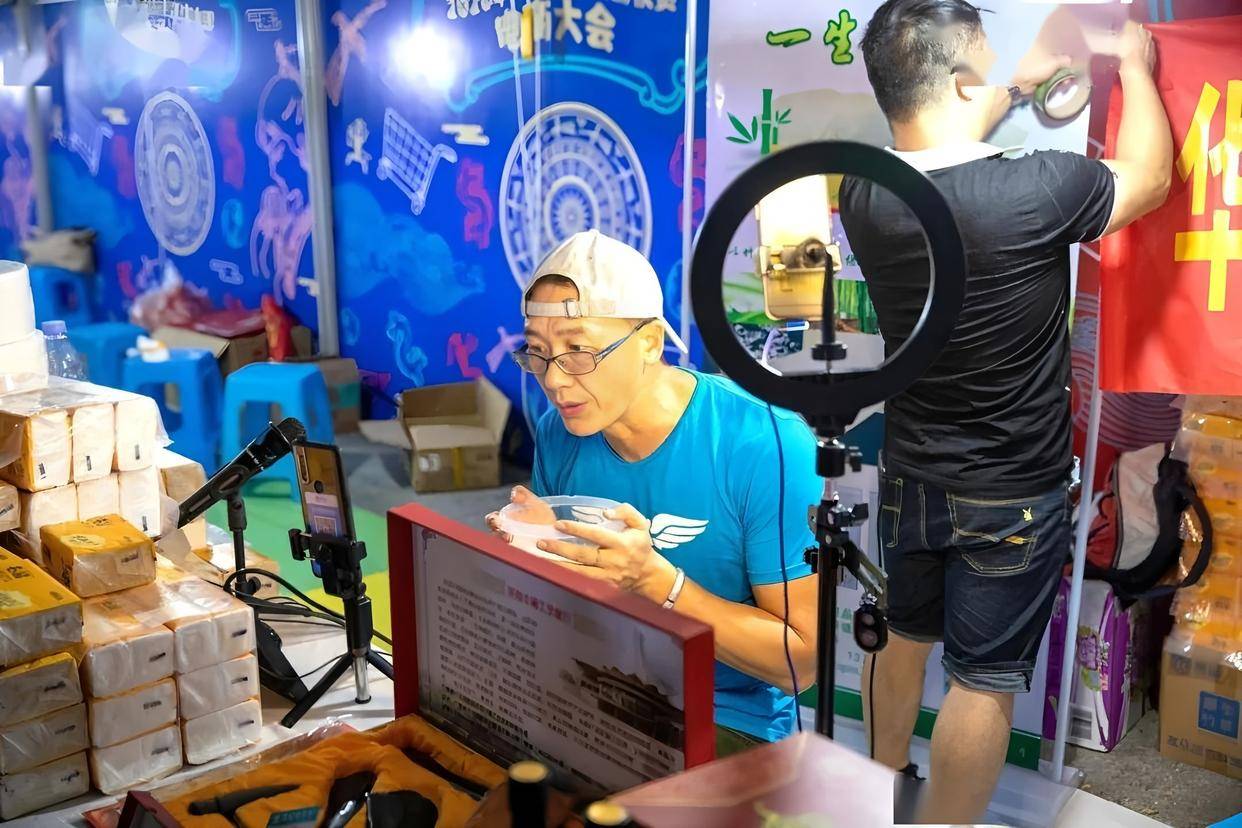
Core Viewpoint - Guangdong is reshaping its manufacturing landscape and leading a new economic trend in China through the explosive growth of live-streaming e-commerce, as evidenced by the success of the "Guangdong Goods Go Global" initiative [1][3][10]. Group 1: Sales Performance - In 2023, Guangdong's live-streaming e-commerce sales have reached the top position nationwide, supported by leading companies like Xinxuan Group [3]. - The live-streaming event led by Xinxuan Group featured 127 well-known Guangdong brands, showcasing the strength of Guangdong manufacturing [3][8]. - Notable sales figures include the Huatian smoke and stove set achieving sales of 3.4 million yuan, and the Guangdong duck eggs selling over 2 million units in just five minutes [7][10]. Group 2: Government and Corporate Collaboration - The success of the live-streaming event is attributed to the collaboration between six provincial departments and local enterprises, creating a platform for brand exposure [8][10]. - Xinxuan Group has committed to continuously opening its supply chain resources to distribute Guangdong's quality products across 31 provinces and hundreds of cities [10]. Group 3: Consumer Engagement and Brand Storytelling - The live-streaming atmosphere was likened to a festive event, with hosts sharing compelling brand stories in local dialects, enhancing consumer engagement [5][11]. - The emotional connection established through storytelling and interactive comments significantly boosted consumer purchasing intentions [7][11]. Group 4: Digital Transformation and Market Expansion - Guangdong's manufacturing sector is undergoing a digital transformation, with companies like Midea and Gree actively participating in live-streaming and short video marketing [15]. - The success of Guangdong's model is influencing other regions, with similar live-streaming initiatives emerging in Zhejiang and Jiangsu, indicating a nationwide trend [17]. Group 5: Future Outlook - The continuous expansion of Guangdong's live-streaming e-commerce industry is expected to create new opportunities and innovative practices in the future [17].
大消费行业2025Q4基金持仓分析:大消费板块重仓比例连续7个季度回落,远低于历史均值水平
Wanlian Securities· 2026-01-28 00:24
证券研究报告|商贸零售 [Table_Title] 大消费板块重仓比例连续 7 个季度回落,远 低于历史均值水平 [Table_ReportType] ——大消费行业 2025Q4 基金持仓分析[Table_ReportDate] [投资要点: Table_Summary] ⚫ 大消费板块重仓比例持续回落,多数消费子板块重仓比例均环比 下降,只有轻工制造、商贸零售和社会服务三个板块略有上升。 2025Q4 大消费板块基金重仓比例延续了 7 个季度以来的下降趋 势,环比下降 0.28pcts 至 4.41%,目前处于历史低位,远低于 2018 年以来的历史重仓比例平均值 10.94%。 ⚫ 分个股:全市场个股持仓 TOP20 中大消费板块占据 2 个席位,与 Q3 季度席位数持平,大消费板块个股重仓比例分化明显。2025Q4 全市场基金重仓比例 TOP20 个股中大消费板块占据 2 个席位,食 品饮料(贵州茅台)和家用电器(美的集团)各占据 1 席。大消 费板块基金重仓比例提升幅度前 10 个股包括 3 只家用电器个股 (美的集团、格力电器、海尔智家)、2 只食品饮料个股(伊利股 份、口子窖)、2 只轻工制造个 ...
都江堰:以千年“治”慧 书写开放发展新答卷
Xin Lang Cai Jing· 2026-01-27 18:56
Core Viewpoint - Dujiangyan City is leveraging its historical water management wisdom to drive open development and economic growth, focusing on industrial upgrades, tourism, and international cooperation [3][9]. Group 1: Economic Development - The "Tianfu Zhen Shui" industry has grown from nothing to a production value exceeding 4 billion yuan, with the city ranking 6th nationally in county-level tourism [3][4]. - Dujiangyan aims to establish itself as the largest natural drinking water production base in Southwest China, with over 80 food and beverage companies in the "Tianfu Zhen Shui" industrial park [4]. - The city plans to optimize its modern industrial system and aims for a GDP exceeding 77 billion yuan by 2030 [5]. Group 2: Infrastructure and Urban Development - The Qingcheng Bridge, a significant infrastructure project, was completed in September 2025, enhancing urban traffic and opening new spaces for industry upgrades [8]. - Dujiangyan is implementing 35 key projects under the "Ten Major Projects for a Happy Life," focusing on education and healthcare improvements [8]. Group 3: International Relations and Cultural Exchange - Dujiangyan has established friendly city relationships with 38 cities across 30 countries, enhancing its global influence [7]. - The city is actively promoting international tourism and cultural exchanges, integrating local festivals with international events [6][7]. Group 4: Environmental and Social Initiatives - The city has achieved 302 days of good air quality in a year and is enhancing green spaces, with 250,000 square meters of new urban greenery [8]. - Dujiangyan is committed to low-carbon development and improving public services for urban residents [8].

广东江门50场重点促消费活动助侨乡广货“出圈”
Sou Hu Cai Jing· 2026-01-27 16:17
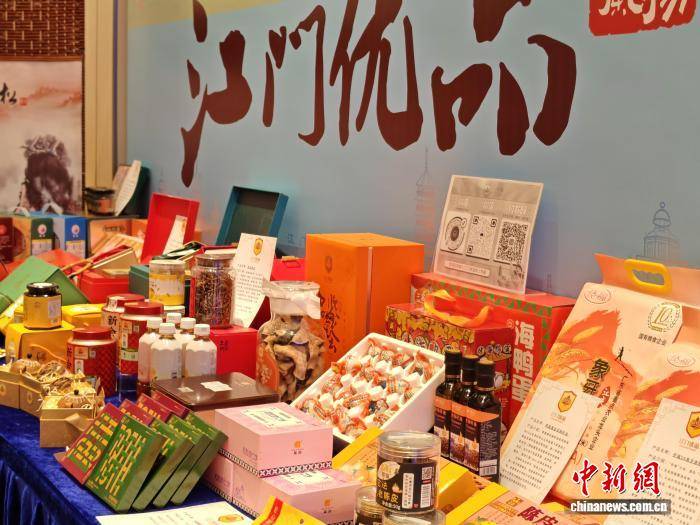
Core Viewpoint - Jiangmen is focusing on the theme "Guangdong Goods Going Global" by organizing over 50 key consumer promotion events to enhance local products and cultural experiences, aiming to expand their market reach beyond Jiangmen [1][3] Group 1: Consumer Promotion Activities - Jiangmen will host a series of events including overseas Chinese gatherings, New Year markets, agricultural product feasts, and coffee industry festivals to promote local specialties [1] - The Jianghai District is innovating a "time-slot" consumer model for the Jianghai Quality New Year Festival, bringing convenience markets to key factories and government canteens, thus meeting the public's New Year shopping needs [1] Group 2: Upcoming Events - From January 29 to February 1, the Kaiping Gourmet Culture Week will take place, featuring over 120 national brands to create a unique culinary experience [3] - The "Qiaoyun New Year · Fortune in Taishan" event will run from February 9 to 18, combining overseas Chinese culture, New Year customs, and sports activities to provide a comprehensive consumer experience [3] - The Fourth China Qiaodu (Jiangmen) Coffee Festival will be held from March 5 to 8, showcasing over 200 coffee brands and positioning Jiangmen as a key player in the coffee industry [3]
公募基金2025年四季报全景解析
Huafu Securities· 2026-01-27 14:25
- The report does not contain any specific quantitative models or factors for analysis[1][2][3]
金融工程专题研究:公募FOF基金2025年四季报解析
Guoxin Securities· 2026-01-27 14:18
- The report categorizes FOFs into three types based on the proportion of equity assets: debt-biased FOFs, balanced FOFs, and equity-biased FOFs[2][13] - The total number of FOF products established by the end of Q4 2025 is 549, with a combined scale of 2441.88 billion yuan, an increase of 26.20% compared to Q3 2025[2][12] - The scale of debt-biased FOFs, balanced FOFs, and equity-biased FOFs in Q4 2025 are 1611.13 billion yuan, 454.77 billion yuan, and 375.98 billion yuan respectively[2][13] - The median returns for debt-biased FOFs, balanced FOFs, and equity-biased FOFs in Q4 2025 are 0.33%, -0.64%, and -1.21% respectively[2][24] - The most heavily allocated active equity funds by FOFs are 富国稳健增长A, 博道久航C, and 中欧红利优享A[3][32] - The active equity funds with the largest FOF holdings are 兴全商业模式优选A, 易方达信息行业精选C, and 易方达科融[3][33] - The most heavily allocated passive index equity funds by FOFs are 永赢中证沪深港黄金产业股票ETF, 华夏恒生科技ETF, and 富国中证港股通互联网ETF[36] - The passive index equity funds with the largest FOF holdings are 华夏恒生ETF, 永赢中证沪深港黄金产业股票ETF, and 华夏恒生科技ETF[36] - The most heavily allocated enhanced index funds by FOFs are 汇添富国证2000指数增强A, 招商沪深300指数增强C, and 招商中证500等权重指数增强C[37] - The enhanced index funds with the largest FOF holdings are 汇添富国证2000指数增强A, 国泰海通中证500C, and 汇添富中证1000指数增强A[37] - The most heavily allocated bond funds by FOFs are 广发纯债A, 易方达岁丰添利A, and 兴全稳泰A[40] - The bond funds with the largest FOF holdings are 国泰利享中短债A, 富国国有企业债C, and 富国产业债A[40] - The most heavily allocated "fixed income+" funds by FOFs are 景顺长城景颐双利A, 西部利得汇享A, and 华泰保兴尊合A[42] - The "fixed income+" funds with the largest FOF holdings are 富国天利增长债券A, 易方达裕祥回报A, and 易方达稳健收益A[42] - The active equity funds with the highest estimated net increase in FOF holdings in Q4 2025 are 易方达改革红利, 景顺长城稳健回报C, and 中欧小盘成长C[44][48] - The active equity funds with the largest estimated net increase in FOF holdings in Q4 2025 are 景顺长城稳健回报C, 国泰海通量化选股D, and 西部利得研究精选C[44][48] - The bond funds with the highest estimated net increase in FOF holdings in Q4 2025 are 天弘信利C, 华夏短债A, and 鹏华丰恒A[50] - The bond funds with the largest estimated net increase in FOF holdings in Q4 2025 are 国泰利享中短债A, 富国国有企业债C, and 富国产业债A[50] - The top three active equity fund managers with the most FOF allocations in Q4 2025 are 杨梦, 范妍, and 刘健维[52][53] - The top three "fixed income+" fund managers with the most FOF allocations in Q4 2025 are 李怡文, 王晓晨, and 彭成军[54] - By the end of Q4 2025, 168 FOFs directly invested in stocks, with balanced FOFs having the highest proportion of stock investments, followed by equity-biased FOFs[60][61] - The top three stocks most heavily allocated by FOFs are 紫金矿业, 宁德时代, and 寒武纪-U[63] - The stocks with the largest FOF holdings are 宁德时代, 中国东航, and 盛达资源[63]




食品饮料行业点评报告:2025Q4食品饮料持仓回落,布局窗口渐行渐近
KAIYUAN SECURITIES· 2026-01-27 13:43
Investment Rating - The industry investment rating is "Positive" (maintained) [1] Core Insights - The food and beverage sector is currently at a low position in terms of valuation and fundamentals, presenting significant layout value. The CPI in December 2025 increased by 0.8%, indicating a mild recovery trend. The policy focus on expanding domestic demand and promoting consumption is becoming clearer, signaling a potential bottoming out of industry demand. The current valuation and policy bottom are resonating, gradually releasing pessimistic expectations and providing a safety margin for investment [7][35] - The upcoming Spring Festival is expected to catalyze performance in the sector, with resilient demand for consumer goods and a continuous upward trend in the snack sector. The mismatch in the timing of the Spring Festival is anticipated to lead to a concentrated release of stocking demand. The sector is expected to achieve rapid growth in Q1 2026 [7][35] Summary by Sections Fund Positioning - In Q4 2025, the allocation ratio for food and beverage in the overall market funds dropped to a new low of 6.1%, down from 6.4% in Q3 2025. The allocation ratio for active equity funds was 4.0%, slightly down from 4.1% in the previous quarter, indicating a continued reduction in food and beverage allocations by active equity funds [4][13] - The overall number of shares held by funds in the food and beverage sector decreased in Q4 2025, with a general trend of reduced allocation to food and beverage companies. Notably, companies like Yurun Agriculture, Yili, and West Wheat Food saw an increase in market value held by funds, while companies like Wuliangye, Shanxi Fenjiu, and Kweichow Moutai experienced significant decreases [6][29][32] Investment Recommendations - The report suggests focusing on two main lines for investment: first, consider companies like Shede Liquor that have undergone sufficient adjustments and possess high elasticity; second, allocate to industry leaders such as Kweichow Moutai and Shanxi Fenjiu, which have strong performance stability and risk resistance. The Spring Festival stocking is expected to be a core catalyst for the sector's performance [7][34] - Specific investment opportunities are highlighted in three sub-sectors: raw milk/dairy products, the snack sector, and the catering supply chain. Companies such as Wei Long, Gan Yuan Food, Yan Jin Pu Zi, West Wheat Food, and Yili are identified as key investment targets, with beneficiaries including Yurun Agriculture, Mengniu Dairy, Anjixin Food, and Guoquan [7][38]