
农业

Search documents
如果中国现在需要大力促进内需,有什么切实可行有效的方法?
Sou Hu Cai Jing· 2025-12-05 10:08
Group 1 - The core viewpoint emphasizes the need to increase residents' income, particularly expanding the middle-income class, as financial security boosts consumer confidence [2] - There is a concern regarding the sustainability of income growth, with reports indicating a decline in income for grassroots officials and some farmers, particularly those in the construction industry [3] - The agricultural sector is facing challenges, with some farmers experiencing a significant drop in income due to falling prices and reduced sales, despite high production levels [4] Group 2 - There is a focus on increasing expected income, suggesting that even if current income is down, there is hope for future growth [5] - Addressing income issues is crucial for enhancing consumption capacity, which is linked to consumer confidence [6] - The need for investment in "people" rather than just "things" is highlighted as a significant shift for future economic strategies [8] Group 3 - Investment in infrastructure has shown considerable benefits for economic and social development, but over-investment in physical assets can lead to diminishing returns and increased wealth disparity [9][10] - The anxiety surrounding personal welfare issues such as housing, healthcare, and education is a major factor inhibiting consumer spending [10] - Strengthening consumer protection is essential to encourage spending, making individuals feel secure in their financial decisions [11] Group 4 - There is a need for better consumer policies and regulations to foster a favorable consumption environment, as current policies may hinder effective implementation [13] - Urban management practices, such as excessive parking fees and strict regulations on small vendors, can suppress consumer activity [14] - Creating a positive consumption atmosphere is vital for encouraging spending behavior among consumers [15] Group 5 - While population decline is a concern, the focus should be on activating existing population resources and creating an environment conducive to sustained population growth [16]


22股最新股东户数降逾一成
Zheng Quan Shi Bao Wang· 2025-12-05 09:41
Summary of Key Points Core Viewpoint - A total of 858 stocks reported their latest shareholder numbers as of November 30, with 427 stocks showing a decline in shareholder numbers compared to the previous period, indicating a trend of decreasing investor interest in certain companies [1][3]. Group 1: Shareholder Changes - Among the 858 stocks, 22 stocks experienced a decline in shareholder numbers exceeding 10%, with Huaying Agriculture showing the largest drop of 25.80%, bringing its total to 50,981 shareholders [3]. - Haima Automobile followed with a 19.43% decrease in shareholder numbers, totaling 200,890 [3]. - Other notable declines include Hangzhou High-tech (-18.01%), Xinlong Holdings (-18.00%), and Yahua Group (-17.39%) [3]. Group 2: Market Performance - The average decline for concentrated stocks from November 21 was 1.07%, with 40% of these stocks outperforming the Shanghai Composite Index, which fell by 2.88% during the same period [2]. - Green Island Wind had the highest increase among stocks with declining shareholder numbers, rising by 32.45% since November 11 [2]. - Other stocks with significant gains include Changshan Pharmaceutical (up 16.86%) and Pulutong (up 24.61%) [2]. Group 3: Industry Concentration - The concentrated stocks are primarily found in the machinery, basic chemicals, and power equipment sectors, with 52, 44, and 38 stocks respectively [3]. - The trend of decreasing shareholder numbers is particularly pronounced in the agriculture and automotive sectors, as evidenced by the significant drops in Huaying Agriculture and Haima Automobile [3].


新世纪期货交易提示(2025-12-5)-20251205
Xin Shi Ji Qi Huo· 2025-12-05 06:55
Report Investment Ratings - Iron ore: Oscillation [2] - Coking coal and coke: Oscillation [2] - Rolled steel and rebar: Oscillation [2] - Glass: Weak oscillation [2] - Soda ash: Oscillation [2] - Shanghai Stock Exchange 50 Index: Oscillation [3] - CSI 300 Index: Oscillation [3] - CSI 500 Index: Rebound [3] - CSI 1000 Index: Rebound [3] - 2 - year Treasury bond: Oscillation [3] - 5 - year Treasury bond: Oscillation [3] - 10 - year Treasury bond: Downward [3] - Gold: Strong - biased oscillation [4] - Silver: Strong - biased oscillation [4] - Logs: Oscillation and bottom - building [4] - Pulp: Oscillation [7][8] - Offset paper: Oscillation [8] - Soybean oil: Range - bound operation [8] - Palm oil: Range - bound operation [8] - Rapeseed oil: Range - bound operation [8] - Soybean meal: Weak - biased oscillation [8][9] - Rapeseed meal: Weak - biased oscillation [8] - No. 2 soybeans: Weak - biased oscillation [9] - No. 1 soybeans: Weak - biased oscillation [9] - Live pigs: Strong - biased oscillation [9] - Rubber: Oscillation [10][11] - PX: Wide - range oscillation [11] - PTA: Oscillation [11] - MEG: Weak oscillation [11] - PR: Wait - and - see [11] - PF: Wait - and - see [11] Core Views - The iron ore market has an oversupply situation, with limited upward momentum for prices in the high - level range. The coal - coke market has a weak demand but short - term support at low levels. The steel market is in a bottom - oscillating state, and the glass market's future depends on cold - repair progress and macro factors. In the financial market, the short - term adjustment is expected, but the medium - term trend remains optimistic. The precious metals market is supported by long - term factors, with short - term disturbances from interest rate policies and risk - aversion sentiment. The light industry products like logs and pulp have their own supply - demand characteristics and price trends. The oilseeds and oils market is expected to continue range - bound operation, and the agricultural products market, such as live pigs, has specific supply - demand and price trends. The soft commodities and polyester products also have their own price trends based on supply, demand, and cost factors [2][3][4][7][8][9][10][11] Summary by Categories Black Industry - **Iron ore**: Global iron ore shipments increased by 44.7 million tons to 3.3232 billion tons, while the arrival volume at 47 ports decreased by 155.5 million tons to 2.784 billion tons. Daily hot - metal production dropped by 23,800 tons to 2.323 million tons. The demand core lies in real estate, with new construction at the 2005 level and weak domestic demand. Port iron ore inventory slightly increased to an 8 - month high. The oversupply pattern is hard to reverse, and although the probability of short - term negative feedback is low, the price oscillates in the high - level range with limited upward momentum [2] - **Coal and coke**: On December 1st, the first round of coke price cuts was implemented, and there are still expectations for further cuts. After continuous declines, the valuation of coking coal and coke has become reasonable and stopped falling this week. The National Development and Reform Commission's emphasis on energy supply during the heating season has reduced the expectation of new anti - involution measures in the coal industry. Some domestic coal mines are affected by safety inspections, with a slight decline in the weekly operating rate. The profit of some coking enterprises has improved, but the demand is weakening, and the game between steel mills and coking enterprises has intensified. There is still a need for inventory replenishment in the short term, providing support at low levels [2] - **Rolled steel and rebar**: The downstream demand is sluggish, and winter - storage replenishment has not started yet. The core lies in steel demand, with real - estate new construction at the 2005 level and weak domestic demand. Steel prices may stop falling if the output is reduced by more than 5% in the fourth quarter of 2025 and anti - involution policies are effectively implemented. Currently, the price is expected to remain at the bottom, with no significant change in supply and demand expectations, and attention should be paid to the impact of December's macro - policy expectations on winter storage [2] - **Glass**: There are supply - side disturbances. It is expected that three production lines in Hubei will undergo cold - repair in December, but there are rumors of a delay. The price in the Shahe area has weakened again, and the futures price is running weakly. The total inventory of float - glass sample enterprises has decreased, reaching the lowest level since October. The real - estate completion decline has dragged down demand, and whether the price can stop falling depends on the cold - repair progress and macro factors [2][3] Financial - **Stock index futures/options**: The previous trading day saw the CSI 300 Index up 0.34%, the SSE 50 Index up 0.38%, the CSI 500 Index up 0.24%, and the CSI 1000 Index up 0.01%. There was capital inflow in the engineering machinery and semiconductor sectors and capital outflow in the catering, tourism, and retail sectors. There are various exchanges and communications between Chinese and American enterprises and organizations, and relevant policies and statements are also involved. The market is in short - term adjustment, but the medium - term trend is optimistic, with the high - tech industry continuing to grow [3] - **Treasury bonds**: The yield of the 10 - year Chinese Treasury bond increased by 2bps, FR007 rose by 1bp, and SHIBOR3M remained unchanged. The central bank conducted 180.8 billion yuan of 7 - day reverse - repurchase operations on December 4th, with a net withdrawal of 175.6 billion yuan. The spot - bond interest rate is consolidating, and the market trend shows a slight rebound [3] Precious Metals - **Gold**: In the context of high interest rates and globalization reconstruction, the pricing mechanism of gold is shifting from being centered on real interest rates to central - bank gold purchases. The US debt problem has damaged the dollar's credit, highlighting gold's de - fiat - currency attribute. In a high - interest - rate environment, gold's substitution effect for bonds is weakened, and its sensitivity to US Treasury real interest rates has decreased. Geopolitical risks and China's physical - gold demand support the price. The logic behind the current gold - price increase remains unchanged, with short - term disturbances from the Fed's interest - rate policy and risk - aversion sentiment. The Fed has cut interest rates twice this year, and factors such as non - farm data and inflation data also affect the market [4] - **Silver**: Similar to gold, it shows a strong - biased oscillation trend, affected by the Fed's interest - rate policy, risk - aversion sentiment, and economic data [4] Light Industry - **Logs**: The daily average shipment volume at ports last week was 613,000 cubic meters, a decrease of 31,000 cubic meters from the previous week. The national daily average outbound volume was stable above 600,000 cubic meters but decreased last week. The volume of New Zealand's logs shipped to China in October increased by 2% compared to the previous month, while China's coniferous - log imports decreased by 4.67% from the previous month and 7.14% year - on - year. The expected arrival volume last week decreased by 48%. The port inventory decreased by 600,000 cubic meters. The spot - market price is running weakly, and the price of 4/6 - meter medium - grade A logs has decreased. The supply pressure has improved, with downstream demand mainly for rigid needs and weak cost support. The price is expected to oscillate and build a bottom [4][7][8] - **Pulp**: The spot - market price continued to show a strong trend in the previous trading day, with the price of some softwood - pulp spot markets rising by 20 - 150 yuan/ton and that of hardwood - pulp by 20 - 50 yuan/ton. The latest FOB price of softwood pulp remained at $680/ton, and that of hardwood pulp increased by $10 to $550/ton, strengthening the cost support for pulp prices. The profitability of the paper - making industry is low, and paper mills have high inventory pressure, with low acceptance of high - priced pulp. The demand is weak, and although traders have raised their quotes, downstream procurement is rational. The price is expected to return to oscillation [7][8] - **Double - offset paper**: The spot - market price stabilized in the previous trading day. The production of double - offset paper is expected to be stable, with little change in the supply side. The publication tenders are basically over, and orders are expected to increase, which is beneficial for paper - enterprise sales. Large - scale paper enterprises have a strong willingness to support prices, and the price may be raised at the beginning of the month. The price is expected to maintain oscillation in the short term [8] Oilseeds and Oils - **Oils**: US soybean crushing reached a record high, but the US biodiesel policy is uncertain. In October, the production and inventory of Malaysian palm oil were higher than expected, and the export in November decreased by 19.7% month - on - month. However, palm oil is supported by the expected production reduction due to floods in Southeast Asia and the postponement of EU policies. A large amount of soybeans are arriving in China, the oil - mill operating rate is high, and although the oil inventory has decreased, the supply is abundant. The demand may gradually pick up, and with cost support, the oil market is expected to continue range - bound operation, with attention paid to the weather in the Brazilian soybean - producing area and the production - sales changes of Malaysian palm oil [8] - **Meals**: The US soybean production, exports, and ending inventory have all been adjusted downward, with a structurally tight supply, but the global soybean supply is still relatively abundant. The Sino - US trade agreement may promote US soybean exports to China, but US soybeans are more expensive than Brazilian ones, and the US biodiesel policy is uncertain, resulting in uncertain demand prospects. The weather in the Brazilian soybean - producing area is generally favorable, while that in the Argentinean area is uneven. The domestic oil - mill operating rate is high, and a large amount of imported soybeans are arriving. The supply of soybean meal is abundant, and although the demand from the breeding industry supports feed consumption, the breeding efficiency is poor, and feed enterprises are cautious in procurement. The price is expected to oscillate weakly, with attention paid to the weather in South American soybean - producing areas and the progress of Sino - US trade [8][9] Agricultural Products - **Live pigs**: The average trading weight of live pigs nationwide is 124.62 kg, and it is showing a downward trend in most provinces this week. Due to the lag in the monthly slaughter progress, breeding enterprises are accelerating sales, increasing the supply of live pigs. Retail farmers are mainly slaughtering large - weight pigs, which do not fully match market demand. Slaughtering enterprises are more inclined to purchase from large - scale farms, leading to a slight decrease in the trading weight, which may continue to decline slightly in the next week. The average settlement price of live pigs at key slaughtering enterprises nationwide is 12.09 yuan/kg, a decrease of 0.84% from the previous period. The settlement price is continuously falling. The average operating rate of slaughtering enterprises nationwide is 38.92%, a 0.7 - percentage - point increase from last week. The supply of live pigs is generally abundant, and with the temperature drop, the terminal consumption has slightly recovered, increasing the orders of slaughtering enterprises and supporting the slight increase in the operating rate. However, the operating rate is expected to weaken next week. The profitability of self - breeding and piglet - fattening has decreased, and the decline in breeding costs is less than that in sales revenue. The average weekly price of live pigs is expected to continue to decline in the next week [9] Soft Commodities - **Rubber**: In the Yunnan rubber - producing area, the weather is average, and the raw - material price is stable, with the factory price increase driving up the raw - material price. In Hainan, the weather is good this week, but the output has decreased due to temperature. Affected by continuous rain and typhoon weather, the overall glue output is lower than the same period in previous years. The production and purchase costs of local processing plants have slightly increased, providing support for the price. In Thailand, there is a lot of rain, and the average weekly price has reached 57 Thai baht/kg, with both the glue and cup - lump prices rising. In Vietnam, the raw - material supply in the southern area is gradually recovering, while other areas are still affected by rainfall. The total inventory is at a low level. The capacity utilization rate of Chinese semi - steel tire sample enterprises is 66%, and that of full - steel tire sample enterprises is 62%. The capacity utilization rate decreased this week due to short - term maintenance plans in some enterprises, but it will gradually recover. According to the China Association of Automobile Manufacturers, in October, China's automobile production and sales reached 3.35 million and 3.32 million vehicles respectively, with a slight month - on - month increase and a record - high year - on - year increase. The natural - rubber inventory is increasing significantly, with the total social inventory reaching 1.08 million tons, a 1.7% increase from the previous period. Both bonded and general - trade warehouses are accumulating inventory, and it is in the seasonal inventory - accumulation period. The weakening of raw - material procurement prices and the inventory - accumulation trend suppress price increases, and with weak demand - side support, the natural - rubber price is expected to show a wide - range oscillation [10][11] Polyester - **PX**: Geopolitical instability has led to supply risks, and with the Fed likely to cut interest rates in December, oil prices have rebounded. The current PX supply is high, but the downstream polyester load has rebounded, which is beneficial for PX demand. The PXN price difference is temporarily stable, and the PX price is oscillating widely [11] - **PTA**: The wide - range oscillation of oil prices has affected the PX end, causing the cost of PTA to loosen. Although the short - term supply - demand situation of PTA has improved, the industry's seasonal weakness is inevitable, and the supply - demand situation will deteriorate in the future. The processing margin is still low, and the spot price is expected to mainly follow the cost - side fluctuations in the short term, with the spot basis fluctuating within a range [11] - **MEG**: In the long - term, the inventory - accumulation pressure of MEG still exists, but the situation has improved in the near - term due to a reduction in some supplies. Attention should be paid to the continuous changes in the supply side. As the port inventory increases, the liquidity of goods in the market has increased, and the MEG spot basis has weakened. In the short term, the MEG price is expected to oscillate weakly, with continuous upward pressure [11] - **PR**: The terminal performance remains weak, and the order - taking pressure of factories and traders has increased. With weak raw - material support, the polyester - bottle - chip market may oscillate weakly [11] - **PF**: The upward trend of oil prices continues, and the current supply - demand structure of polyester staple fiber is acceptable. However, the market is in a wait - and - see state [11]
智库预测英国农户因极端天气损失超8亿英镑
Xin Hua She· 2025-12-05 06:31
新华社伦敦12月4日电(记者郭爽)英国智库能源和气候信息小组4日发布分析报告显示,遭受有记录以 来最热春夏季以及干旱气候的打击,预计今年英国农户损失超过8亿英镑(1英镑约合1.3美元)。 ...
中原证券晨会聚焦-20251205
Zhongyuan Securities· 2025-12-05 05:12
Core Insights - The report highlights the gradual recovery of the domestic market, with expectations for a 5% growth target for the year, supported by macroeconomic stabilization and upcoming policy meetings that may catalyze a new market rally [5][9][10] - The A-share market is experiencing a phase of consolidation, with various sectors such as aerospace robotics, coal, and non-ferrous metals leading the gains, while others like tourism and food and beverage are lagging [5][9][13] - The report emphasizes the importance of maintaining a balanced investment strategy, focusing on high-dividend defensive stocks and technology growth sectors [10][12] Domestic Market Performance - The Shanghai Composite Index closed at 3,875.79, with a slight decline of 0.06%, while the Shenzhen Component Index rose by 0.40% to 13,006.72 [3] - The average price-to-earnings ratios for the Shanghai Composite and ChiNext indices are 15.94 and 47.66, respectively, indicating a suitable environment for medium to long-term investments [5][9] International Market Performance - Major international indices such as the Dow Jones and S&P 500 experienced declines of 0.67% and 0.45%, respectively, while the Nikkei 225 saw a modest increase of 0.62% [4] Industry Analysis - The report indicates that the charging and swapping service industry, along with information transmission and software services, are experiencing rapid growth in electricity consumption [16] - The coal production and import rates are declining, with a notable decrease in raw coal production by 2.3% year-on-year in October 2025 [17][18] - The report also notes that the chemical industry is gradually entering a recovery phase, with improved profitability in sectors like agricultural chemicals and fluorochemicals, while others face challenges due to overcapacity [21][22] Investment Recommendations - The report maintains a "stronger than the market" rating for the electric power and public utilities sector, suggesting a focus on stable, high-dividend companies [19] - In the chemical industry, it recommends monitoring integrated leaders such as Wanhua Chemical and Baofeng Energy, as well as sectors like organic silicon and phosphoric chemicals for investment opportunities [23][24] - The AI sector is highlighted for its rapid application growth, with recommendations to focus on companies involved in AI infrastructure and domestic chip production [24][25]

乡村智库万里行走进阳山,政企校联动共绘阳山高质量发展新篇
Nan Fang Nong Cun Bao· 2025-12-05 05:05
Core Viewpoint - The event "Rural Think Tank Journey into Yangshan" aims to promote high-quality development through the integration of government, enterprises, and educational institutions, focusing on the "Sports+" industry in Yangshan County [2][4][15]. Group 1: Event Overview - The event was held at the Yangshan Cultural and Arts Center, gathering representatives from government, enterprises, and educational institutions for discussions on the integration of county economy and sports industry [3][4]. - The event was broadcasted online, attracting over 630,000 viewers [4]. - It was organized under the guidance of the Guangdong Provincial "Hundred Million Project" Command Office, with participation from various local and provincial organizations [7][9][10]. Group 2: Government and Institutional Support - Yangshan County has focused on ecological and green development, leveraging support from the Guangdong Provincial Sports Bureau and local universities to enhance the integration of sports and the "Hundred Million Project" [20][38]. - The county aims to create multiple sports event IPs and establish a comprehensive fitness network [21][22]. Group 3: Industry Integration and Development - The event featured a signing ceremony focusing on four core areas: integration of production, education, and research; industry resource linkage; promotion of agricultural specialty products; and cooperation in sports events [44]. - Partnerships were established to enhance agricultural technology research and promote local agricultural products through e-commerce platforms [50][61]. - Collaboration with provincial sports associations aims to promote outdoor sports and enhance Yangshan's brand as a destination for outdoor activities [54]. Group 4: Expert Contributions and Insights - Experts from South China Agricultural University delivered keynote speeches, providing theoretical insights and practical case studies to support Yangshan's high-quality development and rural revitalization [70][71]. - Topics included the exploration of "Sports+" integration pathways, optimization of agricultural supply chains, and strategies for urban-rural integration [73][75][78].

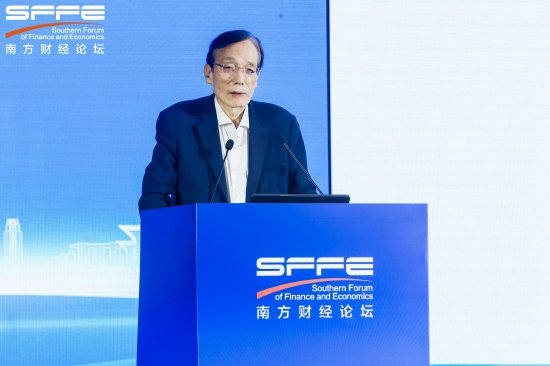
刘世锦:金融强国是实现制造强国和消费强国目标的桥梁
Xin Lang Cai Jing· 2025-12-05 03:23
Core Insights - The "Southern Finance Forum 2025" held in Guangzhou focuses on the theme "The Power of Consensus - Innovation Surge, China's Asset Revaluation" [1][7] - Liu Shijun, a key speaker, highlighted three major advantages of China's economy: catch-up potential, new technology revolution, and super-large market economy [3][10] Economic Advantages - **Catch-up Potential**: This refers to opportunities in areas where developed economies have already advanced, such as service industry development driven by consumption structure upgrades and the transformation of traditional manufacturing and agriculture [3][9] - **New Technology Revolution**: Emphasis on digital and green technologies as focal points for economic advancement [3][9] - **Super-large Market Economy**: While China has 400 million middle-income groups, there are 900 million low-income individuals who could transition to middle-income status, potentially creating a consumption market of 800 to 900 million [3][10] Strategic Goals - **Manufacturing Power**: Aim to cultivate large innovative enterprises at the global forefront [10] - **Consumer Power**: Target to become the largest consumer market globally [10] - **Financial Power**: Financial strength is essential for achieving the first two goals, acting as a bridge for development [10] Financial Development - Liu emphasized the need for a robust capital market and strong currency to support high-quality development, focusing on selecting viable projects to enhance resource allocation efficiency [10][11] - The importance of a strong currency is highlighted, with historical examples of the British pound and the US dollar being tied to strong economic and financial systems [11] Currency Internationalization - Current GDP contribution of China's economy is 18% globally, with manufacturing at 30%, but the currency's functional role is below 10% [11] - Liu proposed increasing offshore RMB supply to achieve scale economy and enhance RMB's international use [11][12] - Suggested adjustments to foreign trade strategy to balance imports and exports while using RMB for transactions, potentially converting a trade surplus of nearly $1 trillion into offshore RMB [12] Recommendations for RMB - Advocated for RMB appreciation to allow consumers to access more international products at better prices, supporting the goal of becoming a consumer powerhouse [12] - Suggested expanding the ecosystem of offshore RMB financial products to improve liquidity and convenience, accelerating the process of RMB internationalization [12]
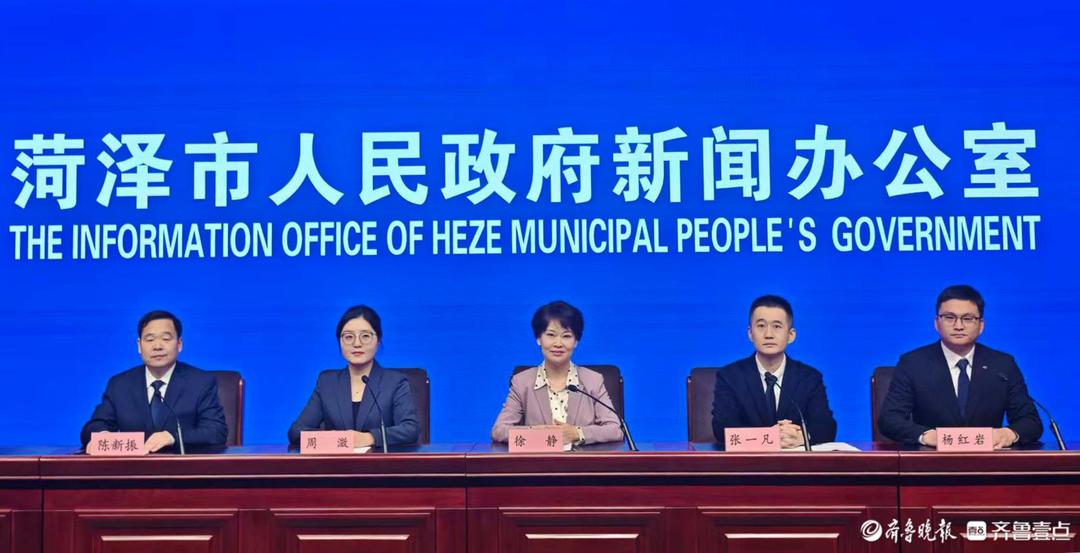
菏泽:深入实施创新驱动发展战略,推进科技创新与产业创新融合
Qi Lu Wan Bao· 2025-12-05 03:15
Core Viewpoint - The news highlights the significant advancements in technology innovation and development in Heze City during the "14th Five-Year Plan" period, emphasizing the integration of technological and industrial innovation to support high-quality economic growth [1][4]. Group 1: Major Changes in Technology Management - The establishment of the Heze Municipal Science and Technology Committee enhances the unified leadership of technology work, coordinating major strategic tasks and policies across the city [3]. Group 2: Investment and Innovation Capacity - R&D expenditure has significantly increased, with a growth rate leading the province for two consecutive years, reaching 1.47% of GDP, an increase of 0.72 percentage points since 2020 [4]. - The innovation platform system has improved, with 4 provincial key laboratories and over 400 municipal key laboratories established, along with 3 provincial and 200 municipal technology innovation centers [4]. - The high-level talent pool has expanded, with 7 overseas experts included in national talent programs and over 30 leading industry talents recruited [4]. Group 3: Support for R&D Projects - Over 2,000 national and provincial technology plan projects have been implemented, securing nearly 600 million yuan in project funding [5]. - The city has organized annual technology innovation breakthrough projects, with several approved as major provincial projects [5]. Group 4: Growth of High-Tech Industries - By the end of 2024, high-tech industries are expected to account for over 42% of the total industrial output, an increase of 4.27 percentage points since 2020 [6]. - The number of high-tech enterprises is projected to exceed 600, doubling since the beginning of the "14th Five-Year Plan," while the number of technology-based SMEs has increased 4.3 times since 2020 [6]. - Significant technological achievements have been recognized, with two projects nominated for provincial science and technology awards, marking a major breakthrough for Heze [6]. Group 5: Optimizing the Innovation Environment - The city has intensified efforts to mobilize and guide technology innovation, holding annual technology conferences and organizing various technology activities to foster a strong innovation atmosphere [7]. - Policies supporting small and micro enterprises have been implemented, with over 60 million yuan allocated for high-tech enterprise upgrades and more than 1,000 companies receiving R&D subsidies [8]. - The financial support for technology transfer has been enhanced, with over 2 billion yuan in loans for technology transfer projects [8]. Group 6: Development in Agriculture and Social Technology - The city has established various agricultural technology parks and has achieved significant advancements in agricultural innovation, including the approval of new wheat varieties [10]. - Major biomedical projects have been successfully implemented, contributing to health innovation [10]. - Efforts in ecological and environmental technology have been made, promoting green and low-carbon enterprises [10]. Group 7: Domestic and International Technology Cooperation - Numerous technology cooperation activities have been organized, establishing stable partnerships with over 120 universities and research institutions [11]. - Several technology cooperation bases and innovation centers have been established, facilitating collaborative projects and technology transfer [12]. Group 8: Future Directions for Technology Innovation - The city aims to enhance strategic technology capabilities, focusing on key technology breakthroughs and accelerating technology transfer to overcome industrial bottlenecks [13]. - There is a commitment to strengthen the role of enterprises in technological innovation and to cultivate a robust ecosystem for high-tech enterprises [13]. - Continuous reforms in the technology system will be pursued to stimulate innovation and entrepreneurship [14]. - The establishment of a first-class technology innovation ecosystem is a priority, focusing on service systems, financial environments, and intellectual property protection [14].

建德“双高铁”将启 “跨城发展、同城生活”近在眼前
Hang Zhou Ri Bao· 2025-12-05 02:33
Core Insights - The opening of the Hangzhou-Qiuzhou high-speed railway in December marks the beginning of a "dual high-speed rail" era for Jiande, enhancing its role as a regional transportation hub and facilitating urban-rural integration [2][3] Group 1: Transportation Infrastructure - Jiande will benefit from the new Hangzhou-Qiuzhou high-speed railway, which will connect it to major rail lines like Hangzhou-Huangshan and Shanghai-Kunming, significantly reducing travel times within the Yangtze River Delta [3] - The Jiande South Station is designed to integrate high-speed rail services with a multi-modal transport network, including buses and tourist shuttles, ensuring seamless connectivity for passengers [3] Group 2: Youth Policies and Talent Attraction - The "Youth in the Countryside" initiative aims to attract young talent to Jiande, offering various support programs for entrepreneurship and employment, including subsidies and mentorship opportunities [4][5] - The initiative emphasizes breaking down urban-rural barriers, allowing young people to enjoy urban opportunities while living in a rural environment [5] Group 3: Economic and Tourism Development - Jiande is launching a "2025 Consumer Voucher" program with a budget of 2 million yuan to promote local agricultural products and tourism, encouraging visitors to experience the local culture and cuisine [6] - The city is positioning itself as a "resort city," promoting various outdoor and cultural activities to attract tourists, especially following the high-speed rail's opening [6]

综合晨报:美国首申人数下降,哈塞特预计下次会议降息25bp-20251205
Dong Zheng Qi Huo· 2025-12-05 01:00
Report Industry Investment Rating No information provided. Core Viewpoints of the Report - The US initial jobless claims decreased, and the market risk preference was moderate, with the US dollar index fluctuating in the short - term [1][14]. - Gold prices fluctuated and rose near the $4200 mark, and silver prices retreated from high levels. The upward momentum of commodities slowed down [2][11]. - The macro factors are relatively supportive of copper prices in the short - term, and the price is expected to fluctuate at a high level [38]. - The inventory of soda ash manufacturers decreased, but the soda ash market is still under pressure due to supply expansion and demand reduction [4][70][71]. Summary According to the Directory 1. Financial News and Comments 1.1 Macro Strategy (Gold) - Hasset expects a 25bp interest rate cut at the next meeting. Gold prices fluctuated and rose near $4200, and silver prices retreated from high levels. The market is in a consolidation phase, and the gold - silver ratio is expected to rise [10][11]. 1.2 Macro Strategy (Foreign Exchange Futures (US Dollar Index)) - The US un - paid national debt exceeded $30 trillion, and the initial jobless claims were lower than expected. The US dollar index is expected to fluctuate in the short - term [12][14][16]. 1.3 Macro Strategy (US Stock Index Futures) - Goldman Sachs suspended the bond issuance for CyrusOne. The US initial jobless claims decreased. The US stock index futures are expected to fluctuate at a high level in the short - term and be treated with a bullish mindset overall [17][18]. 1.4 Macro Strategy (Stock Index Futures) - 16 provinces completed the old - community renovation plan. China and France held talks. The stock market trading was light, and it is recommended to hold long positions in stock index futures evenly [19][20][21]. 1.5 Macro Strategy (Treasury Bond Futures) - The central bank will conduct a 100 - billion - yuan repurchase operation. The treasury bond futures fell sharply. It is recommended to hold short positions before the market sentiment stabilizes [22][24][25]. 2. Commodity News and Comments 2.1 Agricultural Products (Corn Starch) - The boxboard and corrugated paper industries' operating rates increased. The corn starch supply pressure is expected to remain low. It is recommended to operate around the current processing fee in the rice - flour price difference strategy [26][27]. 2.2 Black Metals (Steam Coal) - The steam coal price in the northern port market was weak. The coal price is expected to decline seasonally from December to January [28]. 2.3 Black Metals (Iron Ore) - The global new ship order volume decreased by over 40% year - on - year. The iron ore price is expected to fluctuate sideways [29]. 2.4 Black Metals (Coking Coal/Coke) - The coking coal auction price in Lvliang increased. The first round of coke price cuts was implemented. The coking coal and coke market is expected to fluctuate [30][31]. 2.5 Agricultural Products (Corn) - The inventory of corn deep - processing enterprises increased month - on - month but decreased year - on - year. The 01 contract is expected to drive the market upward in the short - term, and mid - and long - term opportunities should be focused on [32][33]. 2.6 Agricultural Products (Soybean Oil/Rapeseed Oil/Palm Oil) - Argentina's soybean planting progress was delayed. The vegetable oil market weakened, and the palm oil price rebound was blocked. It is recommended to pay attention to the palm oil's rebound opportunities [34][35]. 2.7 Non - ferrous Metals (Copper) - The dehydration project of Kamoa - Kakula Copper Mine progressed smoothly, and high - grade mining is expected to resume. Mercuria plans to extract over 40,000 tons of copper from LME warehouses. The copper price is expected to fluctuate at a high level, and it is recommended to buy on dips [36][37][38]. 2.8 Non - ferrous Metals (Polysilicon) - Shaanxi's photovoltaic and wind power mechanism electricity prices were announced. The polysilicon supply - demand contradiction worsened. It is recommended to operate cautiously and consider option double - buying opportunities [39][40]. 2.9 Non - ferrous Metals (Industrial Silicon) - Hesheng Silicon Industry's controlling shareholder pledged part of its shares. The industrial silicon market is expected to fluctuate between 8800 - 9500 yuan/ton [41][42]. 2.10 Non - ferrous Metals (Lead) - The LME lead 0 - 3 spread was at a discount, and the lead ingot social inventory reached a 15 - month low. It is recommended to buy lead on dips [43][44]. 2.11 Non - ferrous Metals (Zinc) - The LME zinc 0 - 3 spread was at a premium, and the zinc ingot social inventory decreased. It is recommended to hold long positions and pay attention to the pressure near 23,000 yuan/ton [45][46]. 2.12 Non - ferrous Metals (Nickel) - Vale's 2026 nickel production is expected to be 175,000 - 200,000 tons. The nickel market is expected to fluctuate and wait for new drivers [47][48]. 2.13 Non - ferrous Metals (Lithium Carbonate) - Salt Lake Co., Ltd. is expected to exceed its lithium carbonate production plan. It is recommended to short on rallies in the short - term and buy on dips in the mid - term [49][50]. 2.14 Non - ferrous Metals (Tin) - The LME tin 0 - 3 spread was at a premium. The tin price is expected to fluctuate at a high level, and it is recommended to buy on dips [51][52]. 2.15 Energy and Chemicals (Carbon Emissions) - The CEA closing price was 60.03 yuan/ton. The CEA price is expected to fluctuate in the short - term [53][54]. 2.16 Energy and Chemicals (Natural Gas) - The US natural gas inventory decreased week - on - week. The NYMEX natural gas faces downward pressure [55][57]. 2.17 Energy and Chemicals (LLDPE) - China's polyethylene production decreased week - on - week. The LLDPE supply - demand is still relatively loose, and short - selling should pay attention to macro disturbances [58][59]. 2.18 Energy and Chemicals (PTA) - The operating rates of the Jiangsu and Zhejiang textile industries decreased. The PTA price is expected to have limited downward space in the short - term, and it is recommended to buy on dips [59][60][61]. 2.19 Energy and Chemicals (Caustic Soda) - The caustic soda price in Shandong decreased locally. The caustic soda market is expected to be weak in the short - term [62][63]. 2.20 Energy and Chemicals (Urea) - The urea enterprise inventory decreased. The urea price is expected to be supported by inventory reduction, and attention should be paid to the new upward drive from the macro - level [64][65][66]. 2.21 Energy and Chemicals (PVC) - The PVC price decreased slightly. The PVC market is expected to fluctuate at a low level due to high supply and low demand [67][68][69]. 2.22 Energy and Chemicals (Soda Ash) - The soda ash manufacturer inventory decreased. The soda ash market is under pressure due to supply expansion and demand reduction, and it is recommended to short far - month contracts on rallies [70][71]. 2.23 Energy and Chemicals (Float Glass) - The float glass manufacturer inventory decreased. The float glass market is expected to be weak, and it is recommended to short on rallies in the mid - term [72].