
交通运输业

Search documents
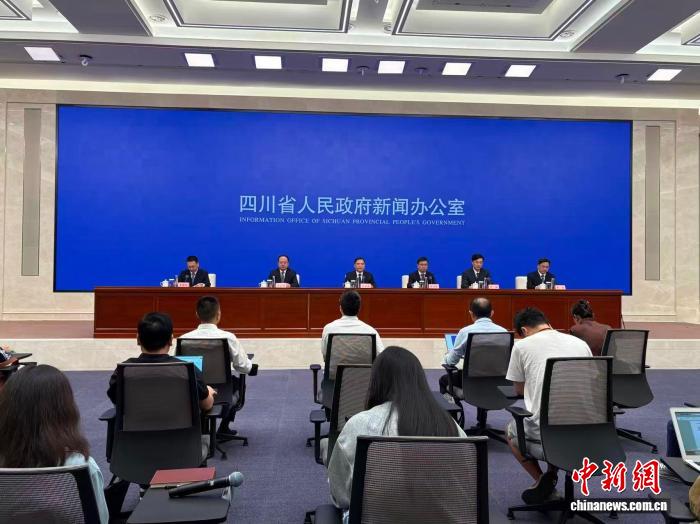
四川经济总量连续跨过两个万亿元大关 实现历史性晋位
Zhong Guo Xin Wen Wang· 2025-09-19 06:51
Core Insights - Sichuan's economic total has crossed two trillion yuan thresholds, exceeding 6 trillion yuan, ranking it 5th nationally, marking a historic advancement [1][2] - The per capita GDP of Sichuan has surpassed 10,000 USD, indicating a significant improvement in comprehensive economic strength [2] Economic Structure and Growth - Over the past five years, Sichuan's industrial structure has been optimized, with the added value of strategic emerging industries accounting for 30% of the above-scale industrial output [2] - The service sector contributed over 60% to economic growth, showcasing a shift towards a more service-oriented economy [2] - Sichuan has developed three trillion-yuan industrial clusters and five national advanced manufacturing clusters, enhancing new economic momentum [2] Infrastructure and Connectivity - Sichuan has improved its comprehensive transportation network, adding 13 new major access routes, totaling 51 [2] - Chengdu International Airport has seen annual passenger throughput exceed 87 million, establishing Chengdu as the "third aviation city" in China [2] - The province's openness has significantly increased, with total import and export volume surpassing 1 trillion yuan, ranking first in the central and western regions [2] Investment and Consumption - Key projects in Sichuan have seen cumulative investments exceeding 4 trillion yuan [2] - Chengdu has become the second provincial capital in China to surpass 1 trillion yuan in consumption [2] - The core value added of the digital economy has exceeded 500 billion yuan, indicating robust growth in emerging industries [2]

8月生产、内需、外贸等运行平稳 经济转型升级稳步推进
Xin Hua Wang· 2025-09-15 23:40
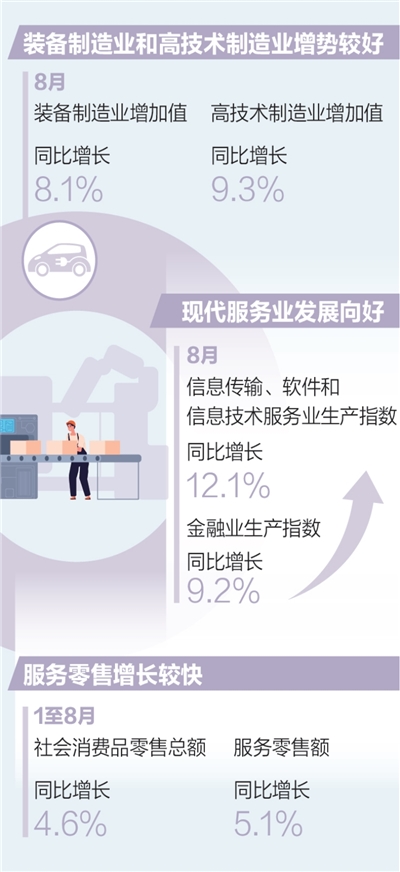
Economic Overview - The overall economic operation in August is stable, with steady progress and no change in growth stability [5][10] - Industrial production shows rapid growth, with the industrial added value for large enterprises increasing by 5.2% year-on-year and 0.37% month-on-month [7] - The service sector's production index grew by 5.6% year-on-year, outperforming industrial growth [7] Consumption and Investment - From January to August, the total retail sales of consumer goods increased by 4.6% year-on-year, with service retail sales up by 5.1% [8] - Fixed asset investment rose by 0.5% year-on-year, while excluding real estate development, it grew by 4.2% [8] - In August, retail sales of furniture, home appliances, and cultural office supplies saw growth rates exceeding 10% due to consumption policies [11] Employment and Prices - The urban unemployment rate in August was 5.3%, consistent with the previous year [10] - The Consumer Price Index (CPI) decreased by 0.4% year-on-year, primarily due to falling food prices, while the core CPI rose by 0.9% [10] Trade Performance - In August, the total import and export value of goods increased by 3.5% year-on-year, with both exports and imports achieving three consecutive months of growth [9] Industrial and Technological Development - The manufacturing sector, particularly in high-tech and equipment manufacturing, showed significant growth, with high-tech manufacturing increasing by 9.3% year-on-year [12] - The production of new energy vehicles and related components saw substantial increases, with production of lithium-ion batteries for vehicles rising by 44.2% [12] Policy Impact - The Producer Price Index (PPI) showed signs of stabilization, with a narrowing year-on-year decline, reflecting the effectiveness of macroeconomic policies [13] - Policies aimed at boosting consumption and stabilizing employment have been effective, with various sectors experiencing price increases [14] - The government continues to implement proactive macroeconomic policies to support economic stability and growth [14][15]
交旅融合绘出流动风景线
Jing Ji Ri Bao· 2025-09-12 22:03
Core Insights - The "Five Mountains" scenic areas in China have seen a surge in tourism, with over 30,000 participants in the historical cultural tourism activities this summer, highlighting the growing interest in these destinations [1] - The construction of transportation infrastructure during the 14th Five-Year Plan period has significantly improved accessibility to cultural and tourism resources, facilitating regional economic development [1] Transportation Infrastructure Development - By the end of 2024, the railway operating mileage is expected to reach 162,000 kilometers, an increase of approximately 16,000 kilometers from the end of the 13th Five-Year Plan, with high-speed rail accounting for 10,000 kilometers of this growth [1] - The total length of highways will reach 5,490,000 kilometers, an increase of about 290,000 kilometers, including a 30,000-kilometer increase in expressways [1] - The navigable length of high-grade waterways will reach 17,600 kilometers, an increase of 1,600 kilometers [1] Modern Tourism Trends - The optimization of the comprehensive transportation system has enhanced travel efficiency, moving people into a "fast travel, slow experience" era, where tourists seek immersive cultural experiences [2] - The integration of various transportation modes at modern transport hubs has reduced transfer time and energy expenditure, allowing for seamless transitions between high-speed rail, subways, airports, and buses [2] - Upgraded transportation infrastructure has lowered overall tourism costs, with increased frequency of routes and improved urban public transport systems, making cultural tourism more accessible to a broader audience [2]
自特朗普发动关税战以来,美国哪些行业失业最严重?
财富FORTUNE· 2025-09-11 13:10
Core Insights - The trade war initiated by Donald Trump has led to significant job losses in industries affected by tariffs, with a net reduction of 90,100 jobs since February [2][4] - The overall employment growth in the U.S. has been positive, with an increase of 385,000 jobs during the same period, driven mainly by sectors less impacted by tariffs, such as healthcare and hospitality [4] - The unemployment rate has slightly increased to 4.3%, marking a four-year high [2] Industry Impact - Industries directly affected by tariffs include manufacturing, mining and logging, construction, wholesale trade, retail trade, transportation, and warehousing [3] - Manufacturing has seen a loss of 41,000 jobs, while wholesale trade has lost 34,000 jobs [4] - In contrast, retail trade has added 19,000 jobs, and construction employment has remained stable [4] Economic Outlook - Despite job losses in tariff-impacted sectors, there are layoffs in other industries due to overall economic uncertainty stemming from the trade war [5] - Moody's Analytics warns that the current trend of more layoffs than new jobs typically occurs during economic recessions [5] - The Trump administration claims that tax cuts and deregulation will stimulate economic growth and ultimately create more jobs [5]
重磅经济数据即将发布
第一财经· 2025-09-11 09:49
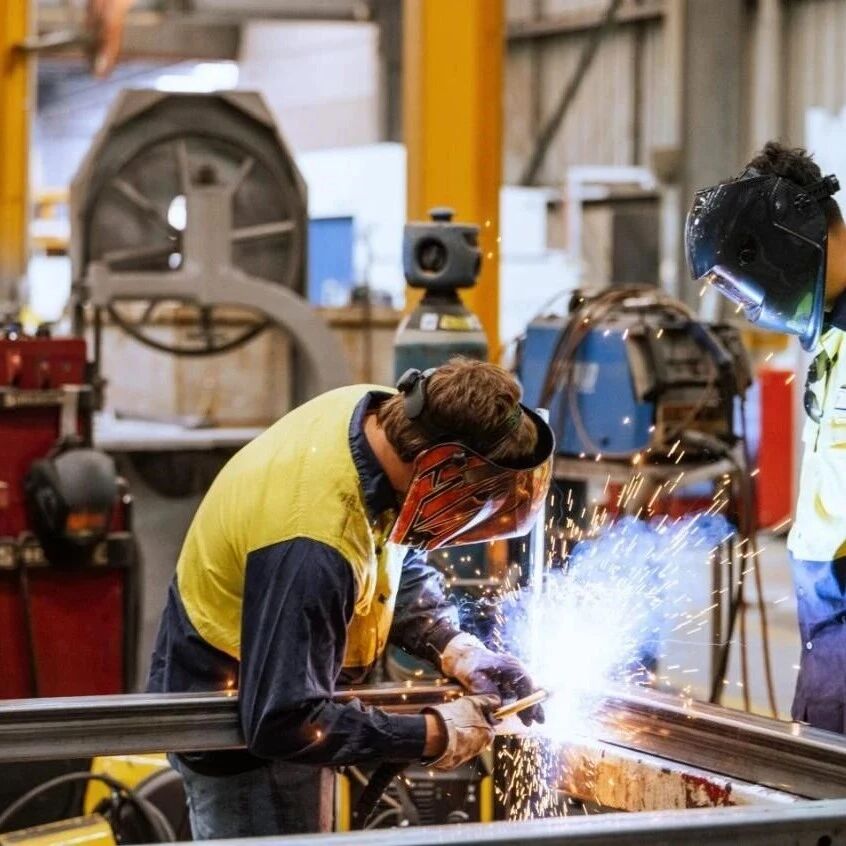
Economic Overview - In July, China's economy experienced short-term fluctuations due to extreme weather conditions, with market attention focused on whether August data would stabilize and rebound [3] - The National Bureau of Statistics is set to release key economic indicators on September 15, including industrial added value, retail sales, and fixed asset investment [3] Industrial Growth - The average predicted year-on-year growth rate for industrial added value in August is 5.7%, consistent with the previous month's data [6] - The manufacturing PMI for August is reported at 49.4%, indicating slight improvement, while the non-manufacturing PMI is at 50.3%, suggesting continued expansion [6] - Analysts note that external demand remains strong, supporting industrial production despite some internal challenges [6][7] Consumer Spending - The predicted year-on-year growth rate for social retail sales in August is 3.9%, slightly higher than the previous month's 3.7% [9] - Factors contributing to this growth include increased tourism and automotive consumption, although retail and housing-related consumption remain weak [9][10] - The automotive sector shows significant growth, with production and sales exceeding 2 million units for the first eight months of the year, and August figures reflecting a year-on-year increase of 13% in production [10] Infrastructure Investment - The average predicted growth rate for fixed asset investment in August is 1.5%, slightly lower than the previous month's 1.6% [12] - Infrastructure investment is expected to receive support from government spending and the recent allocation of 300 billion yuan for key projects [12] - The focus on "two new" and "two heavy" investments is anticipated to stimulate private sector investment and support overall fixed asset investment [12][13] Future Outlook - The economic landscape is characterized by resilience in external demand and weakness in internal demand, necessitating further policy measures to boost domestic consumption [13] - The implementation of new policy tools and a focus on high-quality urban development and new industrialization are expected to support economic growth in the medium to long term [14]
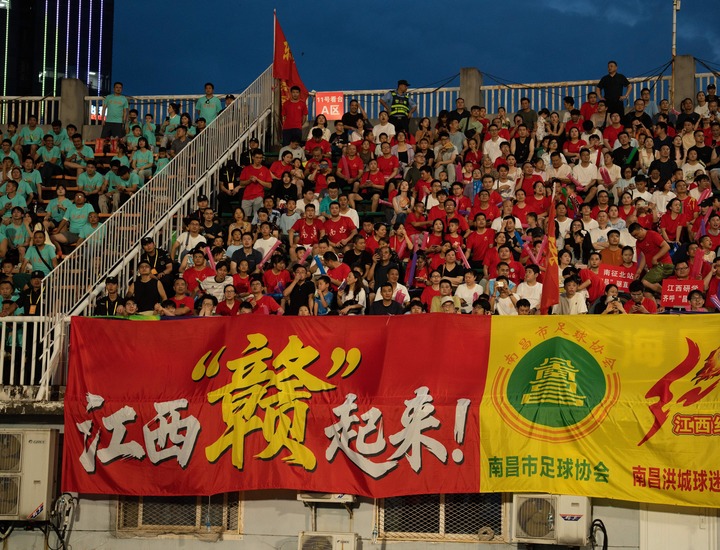
经济政策一线微观察|一场球赛激活一条消费链——“比赛日经济”的“赣超”实践
Xin Hua Wang· 2025-09-06 10:41
Group 1 - The Jiangxi Super Football League is significantly boosting local economies by attracting thousands of fans, leading to increased activity in sectors such as dining, transportation, accommodation, shopping, and cultural creativity [1] - The event has resulted in peak traffic at airports and high-speed train stations, with 21,000 spectators in the Shangrao division contributing to this surge [1] - The league is creating new travel trends, with fans combining match attendance with local tourism, such as visiting scenic spots like Sanqing Mountain and Songcheng [1] Group 2 - The government is focusing on unlocking the consumption potential in culture, tourism, and sports, as highlighted in the recent work report and the "14th Five-Year" sports development plan, which aims for sports consumption to exceed 2.8 trillion yuan by 2025 [3] - The league is enhancing urban image, promoting employment and entrepreneurship, and fostering inter-city exchanges, demonstrating the practical benefits of sports for the community [5] - The ongoing popularity of the league is becoming a new way for residents in Jiangxi to enjoy their weekends, providing strong momentum for urban economic growth [5]
8月份制造业采购经理指数小幅回升,制造业景气水平有所改善
Bei Ke Cai Jing· 2025-09-01 14:52
Core Viewpoint - In August, China's economic indicators showed a slight recovery, with the manufacturing PMI at 49.4%, non-manufacturing business activity index at 50.3%, and composite PMI output index at 50.5%, indicating overall economic expansion despite ongoing pressures [1][2]. Manufacturing Sector - The manufacturing PMI increased to 49.4%, reflecting improved economic conditions, with production and demand indices rising, and price indices continuing to increase [2]. - Among 13 sub-indices, production index, new orders index, and others showed increases ranging from 0.1 to 1.8 percentage points, while finished goods inventory and employment indices declined by 0.6 and 0.1 percentage points respectively [2]. - Analysts suggest that the slight recovery in manufacturing PMI indicates the initial effects of policies aimed at expanding domestic demand, although the index remains below the threshold for five consecutive months, highlighting persistent economic downward pressure [2][3]. Non-Manufacturing Sector - The non-manufacturing business activity index rose to 50.3%, indicating continued expansion, with significant recovery in the service sector, although the construction sector saw a decline [5]. - Key indices such as new orders, backlogs, and sales prices showed increases between 0.1 and 1.1 percentage points, while new export orders and input prices remained stable [5][6]. - The banking sector and capital market services are maintaining expansion, with strong financial support for the real economy, and summer consumption positively impacting transportation and entertainment sectors [6]. Economic Outlook - Forecasts suggest that in September and the fourth quarter, China's macroeconomic environment will continue to stabilize and improve, with manufacturing market demand expected to recover and production activities expanding [4][8]. - The overall growth momentum in the non-manufacturing sector remains stable, driven by policy support and market self-repair, with a focus on cultivating effective demand increments [7][8].
8月PMI小幅回升 经济整体保持复苏
Qi Huo Ri Bao Wang· 2025-09-01 05:45
Group 1 - The manufacturing Purchasing Managers' Index (PMI) for August is reported at 49.4%, indicating a slight improvement of 0.1 percentage points from the previous month, but still in the contraction zone [1] - The non-manufacturing business activity index increased by 0.2 percentage points to 50.3%, while the composite PMI rose by 0.3 percentage points to 50.5%, suggesting overall economic recovery [1] - The hospitality and new orders indices in the accommodation sector, although still below 50%, showed significant month-on-month increases of over 5 percentage points, indicating strong consumer activity during the summer [1] Group 2 - The manufacturing PMI has been below the expansion threshold for five consecutive months, highlighting persistent demand issues that negatively impact certain industrial product prices, such as steel and non-ferrous metals [1] - The input price index for raw materials stands at 53.3%, reflecting a 1.8% increase, which suggests rising cost pressures that may benefit energy, non-ferrous, and steel sectors [1] - The economic recovery is characterized as weak, with production recovery outpacing demand, indicating that companies may face challenges in increasing efficiency despite production increases [2]
8月中国非制造业整体保持平稳运行
Zhong Guo Xin Wen Wang· 2025-08-31 07:48
Group 1 - The overall business activity index for China's non-manufacturing sector in August is 50.3%, indicating a slight increase of 0.2 percentage points from the previous month, reflecting stable growth momentum [1] - Various sub-indices such as new orders, backlog orders, inventory, sales prices, supplier delivery times, and business activity expectations have shown increases ranging from 0.1 to 1.1 percentage points compared to the previous month [1] - The banking sector's supply and demand remain in the expansion zone, and the capital market service sector remains active, indicating strong financial support for the real economy [1] Group 2 - The analysis indicates that the non-manufacturing sector's operational activities continue to expand, with a narrowing decline in demand and relatively stable price trends in the upstream and downstream markets [2] - There is an optimistic outlook among enterprises regarding future market conditions, with expectations for continued release of domestic demand potential in September and the fourth quarter due to policy drivers and market self-repair effects [2] - The performance of resident consumption and new momentum-related industries is reported to be good, with strong development trends in information services, particularly with the advancement of "Artificial Intelligence+" initiatives [1][2]
中上协:上半年全市场上市公司实现营业收入35.01万亿元 分红回购规模再创新高
Xin Hua Cai Jing· 2025-08-31 05:50
Overall Business Performance - In the first half of 2025, the total revenue of listed companies in China reached 35.01 trillion yuan, a year-on-year increase of 0.16% [2] - The net profit for the same period was 3.00 trillion yuan, showing a year-on-year growth of 2.54%, with an increase of 4.76 percentage points compared to the previous year [2] - Nearly 60% of companies reported revenue growth, and over 75% were profitable, with 2,475 companies showing positive net profit growth [2] Industry Performance - Among 19 industry categories, 17 achieved profitability, with 7 industries showing revenue growth and 10 industries showing net profit growth [3] - The manufacturing sector showed a marginal improvement, with revenue and net profit growth rates of 4.73% and 7.75% respectively [4] - Advanced manufacturing fields such as military, new energy, and medical devices experienced strong demand, with revenue growth rates of 6.49% and 10.10% for non-ferrous metals and plastic products [4] Consumption and Market Trends - The consumption potential continued to be released, with the automotive sector, particularly in new energy vehicles, showing over 30% net profit growth [4] - The home appliance sector also saw revenue and net profit growth exceeding 9% [4] - Emerging consumption trends, such as pet economy and IP economy, showed significant growth, with net profit increases of 40.29% and 54.90% respectively [4] Overseas Business Growth - Despite challenges from U.S. tariffs, overseas revenue reached 4.90 trillion yuan, a year-on-year increase of 4.50% [5] - The shipbuilding industry led global exports with a delivery value increase of 38.6% [5] - The cross-border e-commerce sector saw investment growth exceeding 15% as domestic internet giants expanded overseas [5] R&D and Innovation - Total R&D investment across listed companies exceeded 810 billion yuan, a year-on-year increase of 3.27% [6] - The R&D intensity for the entire market was 2.33%, with higher intensities in the ChiNext and Sci-Tech Innovation Board [6] - The issuance of Sci-Tech bonds reached over 1.02 trillion yuan, significantly boosting funding for technology innovation [6] Capital Market Developments - As of August 31, 2025, there were 5,435 listed companies in the domestic stock market, with 67 new listings this year [8] - Cash dividends reached a total of 649.7 billion yuan, with a payout ratio of 31.97%, indicating a trend towards normalized and standardized profit distribution [8] - The number of companies announcing share buyback plans reached 1,321, with a completion rate of 49% [9]