服饰

Search documents
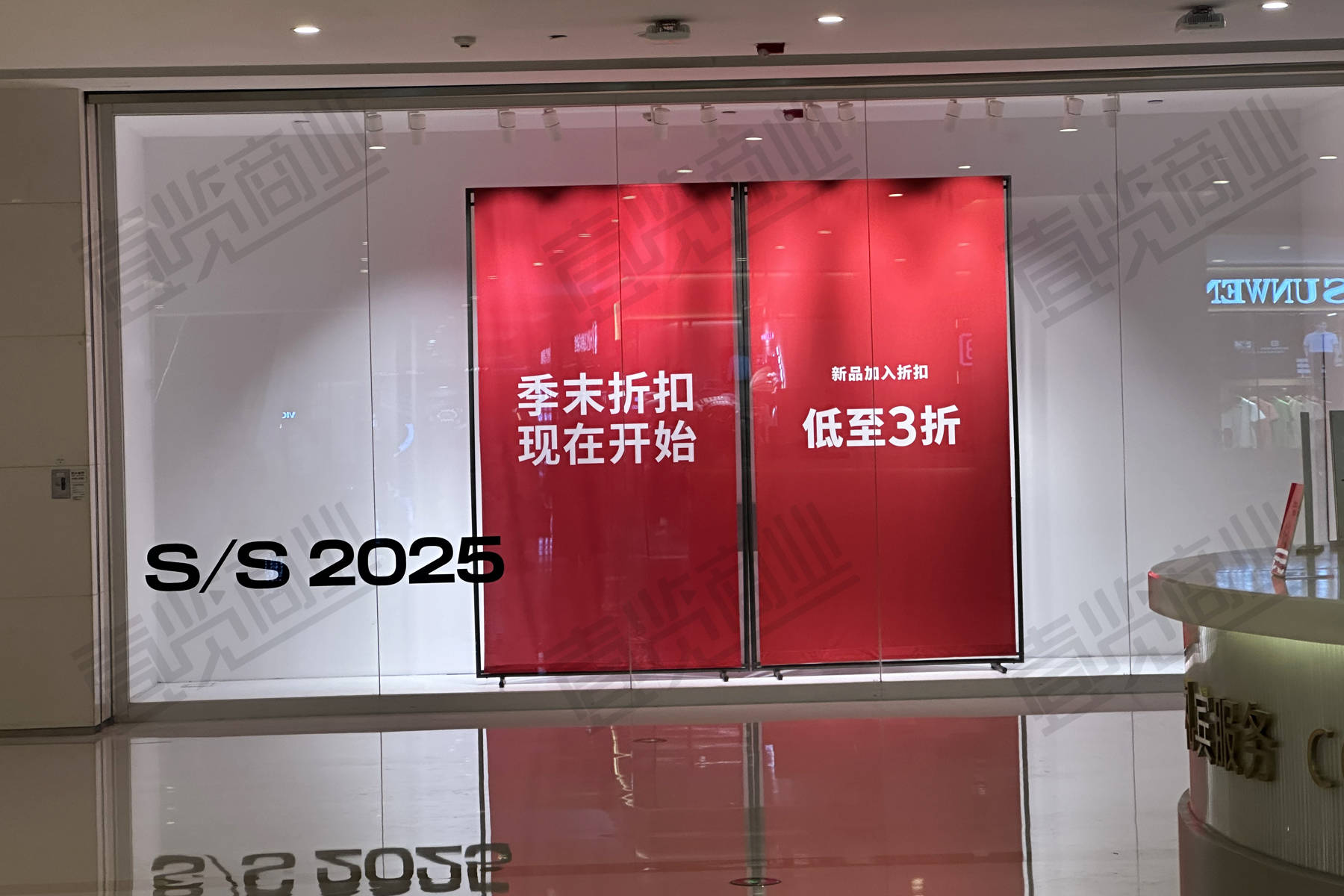
超1.7万家实体店,倒在2025上半年
商业洞察· 2025-10-15 09:24
Core Viewpoint - The retail industry in China is undergoing significant adjustments, with a notable increase in store closures across various sectors, including supermarkets, department stores, tea and coffee shops, and apparel brands, driven by changing consumer habits and market dynamics [2][3][7][9][12][19][24]. Supermarket Sector - In the first half of 2025, at least 720 supermarkets closed, including major brands like Yonghui and Walmart, due to factors such as operational strategy adjustments and lease expirations [4][6]. - The online retail growth rate of 8.5% significantly outpaces the 3.75% growth in offline retail, indicating a shift in consumer shopping habits towards online platforms [7]. - Traditional supermarkets face challenges from aging infrastructure and expiring leases, prompting a shift towards closing underperforming stores and enhancing online operations [8]. Department Store Sector - The department store retail total saw a 1.2% year-on-year increase in the first half of 2024, recovering from a 3% decline the previous year, but still lagging behind overall retail growth [9]. - At least 23 department stores and shopping centers closed in the first half of 2025, with closures attributed to outdated business models and lease expirations [10][11]. Tea and Coffee Sector - A total of 6,673 tea and coffee shops closed in the first half of 2025, reflecting a market reshuffle [12][15]. - Major brands like Xinyue and Nayuki saw significant store reductions, with Nayuki closing 159 stores, marking an 18.32% decrease in its total store count [15][18]. Apparel Sector - The apparel retail sector experienced a 3.1% year-on-year growth, which is below the overall retail growth rate of 5.0% [19]. - At least 4,563 apparel stores closed in the first half of 2025, with brands like Semir and H&M leading in closures due to high inventory levels and outdated brand appeal [20][23]. Cinema Sector - The cinema industry faced a high vacancy rate of 30-40%, leading to the closure of at least 38 cinemas in the first half of 2025 [25][26]. - Factors contributing to the cinema industry's struggles include high fixed costs, reliance on film content for revenue, and competition from streaming platforms [26]. Other Industries - Other sectors, such as the pet industry and home improvement, also experienced closures, indicating a broader trend of contraction across various retail formats [28].


打通银企互信“最后一公里” 福建泉州积极推动企业备案受益所有人信息
Jin Rong Shi Bao· 2025-10-15 08:07
Core Insights - The implementation of beneficiary owner information registration has significantly improved loan approval speed and reduced transaction fees for companies in Quanzhou, enhancing financial support for businesses [1][3]. Group 1: Benefits of Information Registration - Companies that complete the registration process experience faster loan approvals, with an average reduction of 5-7 working days in approval time and a 40% decrease in due diligence costs [3]. - The registration enhances transparency, allowing banks to better understand the compliance status and ownership structure of businesses, thereby reducing information asymmetry and fostering trust between banks and enterprises [2][3]. Group 2: Financial Incentives and Support - Registered companies benefit from fee waivers, such as the elimination of transaction fees, which can save businesses significant operational costs, allowing them to reinvest in development [3]. - As of the end of August, the "positive guidance" policy has benefited 10,349 enterprises, resulting in a total of 1.62 billion yuan in new credit and over 300,000 yuan in fee reductions [4]. Group 3: Market Transparency and Economic Development - The registration initiative has led to a significant increase in market transparency, with over 160,000 businesses registered by mid-September, achieving a registration rate of 59% in Quanzhou [4]. - The People's Bank of China aims to create a win-win situation where compliant enterprises benefit, banks enhance risk management, and regulatory oversight becomes more precise and transparent [4]. Group 4: Outreach and Support Initiatives - The People's Bank of China has conducted over 100 promotional activities to assist businesses in understanding the registration process, reaching more than 200,000 enterprises [5][6]. - Training sessions for intermediary agencies have been organized to help facilitate the registration process for private enterprises, with over 20,000 businesses receiving assistance [6].
超1.7万家实体店,倒在2025上半年
Sou Hu Cai Jing· 2025-10-11 03:27
Retail Industry Overview - The total retail sales of consumer goods in China reached 24.55 trillion yuan in the first half of the year, with a year-on-year growth of 5.0%, slightly up from 3.7% in the same period last year [2] - Online retail sales amounted to 7.43 trillion yuan, growing by 8.5%, while offline retail sales were 17.12 trillion yuan, with a growth of 3.75%, indicating a shift in consumer shopping habits towards online platforms [2][5] Store Closures - In the first half of 2025, at least 1.71 million stores closed across various sectors, including major brands like Walmart, Starbucks, and Haidilao [2] - The supermarket sector saw at least 720 store closures, including national and regional brands such as Yonghui Supermarket and Hema [3][4] - The restaurant industry faced nearly 10,000 closures, while the apparel sector saw around 4,500 stores shut down [2][6] Supermarket Sector Challenges - Traditional supermarkets are experiencing accelerated closures due to increased competition from e-commerce and the rise of instant retail, which has grown from 36.6 billion yuan in 2017 to 650 billion yuan in 2023 [6] - Many supermarkets are closing underperforming stores and focusing on online business to adapt to changing consumer preferences [6][7] Department Store and Shopping Center Decline - The department store sector reported a year-on-year growth of only 1.2%, with at least 23 department stores and shopping centers closing in the first half of 2025 [8][9] - The decline is attributed to outdated business models and a lack of unique product offerings, leading to decreased foot traffic [11][12] Tea and Coffee Shop Closures - The tea and coffee sectors saw significant closures, with at least 6,673 tea and coffee shops shutting down in the first half of 2025 [13] - Brands like Heytea and Nayuki faced substantial store reductions, reflecting a market consolidation where only strong brands survive [15][20] Apparel Industry Adjustments - The apparel sector experienced a 3.1% year-on-year growth, with at least 4,563 clothing stores closing, including major brands like Semir and GU [21][24] - The closures are driven by high inventory levels, brand aging, and a shift towards larger store formats, which require higher operational efficiency [24][25][27] Cinema Industry Struggles - The cinema industry is facing a crisis, with a high vacancy rate of 30-40% and at least 38 cinemas closing in the first half of 2025 [28][30] - Factors contributing to this decline include high fixed costs, reliance on blockbuster films, and competition from streaming services [30][31][32] Other Industries - Various other sectors, including pet care, home improvement, and education, also experienced closures, indicating a broader trend of market contraction [34]



一周关闭25家门店,优衣库、GUCCI、永辉持续调整
3 6 Ke· 2025-10-09 11:16
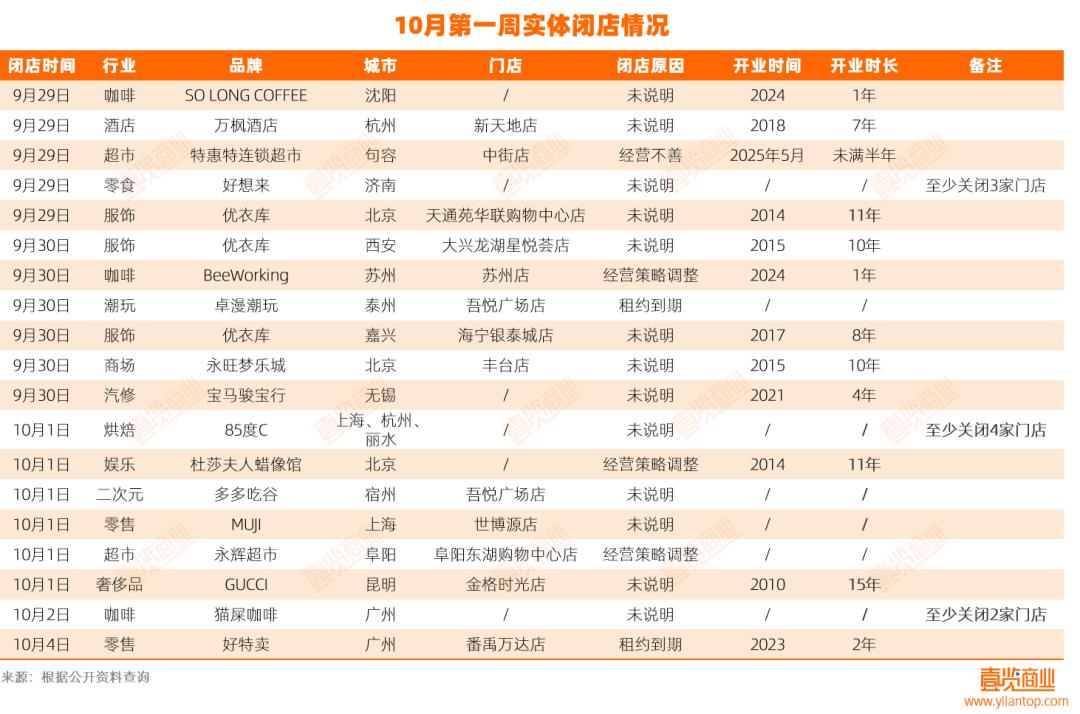
Core Insights - In the first week of October, a total of 17 brands closed at least 25 stores, indicating a significant trend in the retail and service sectors [1] Group 1: Industry Overview - The restaurant industry is the most affected, with 8 store closures, including 4 coffee shops and 4 bakery stores, all from the same brand, 85°C [4] - The apparel and supermarket sectors also experienced notable adjustments, with Uniqlo closing 3 stores in Beijing, Xi'an, and Jiaxing, each operational for 8 to 11 years [4] - Supermarkets saw 2 closures, including Yonghui Supermarket and Tehui Chain Supermarket, with the latter closing within 6 months of opening due to poor management [5] Group 2: Company Performance - Fast Retailing, Uniqlo's parent company, reported a total revenue of 1,790.1 billion yen (approximately 91.3 billion RMB) for the first half of the fiscal year 2024-2025, a 12% year-on-year increase, but with a 3% revenue decline in the Greater China region [4] - Gucci has faced a significant revenue drop of 25% to 1.46 billion euros in Q2, with a 26% decline in overall revenue for the first half of the year, leading to multiple store closures [5] - Kering Group plans to increase its store closure target from 50 to 80 by 2025, with Gucci expected to account for nearly half of these closures [5][6]
这家老字号官宣携手迈巴赫,入榜全球服饰品牌价值50强
Sou Hu Cai Jing· 2025-10-06 14:29
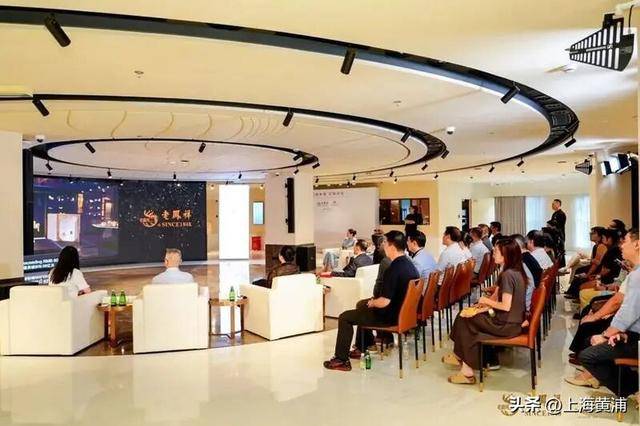
Core Insights - Lao Feng Xiang, a century-old Chinese jewelry brand, has signed a strategic cooperation agreement with Maybach Luxury Goods Asia Pacific Ltd in Shanghai, marking a significant milestone in its brand development and market expansion efforts [1][3] - Lao Feng Xiang has been included in the "Apparel 50 2025" list published by Brand Finance, ranking 38th, which reflects a rise of five positions from the previous year [6][8] - The partnership aims to enhance brand promotion, expand into the Asia-Pacific market, and improve global positioning, showcasing a commitment to integrating Eastern and Western craftsmanship [3][6] Brand Value Rankings - Chanel has surpassed Louis Vuitton to become the most valuable apparel brand globally, according to the latest Brand Finance report [4][5] - Other notable brands in the top rankings include Nike, Hermès, and Rolex, with Lao Feng Xiang being the only mainland Chinese jewelry brand on the list [5][6] - The inclusion of Chinese brands like Anta, Bosideng, and Chow Tai Fook in the rankings highlights the transformation and cultural confidence within China's manufacturing sector [8]

国庆不出游,痴迷外卖拼单,中国年轻人的低欲望时代,真的要来了
Sou Hu Cai Jing· 2025-10-01 04:16
Core Insights - The concept of "low-desire living" is emerging as a significant trend among young consumers in China, indicating a shift away from excessive consumption towards more mindful spending [3][12] - The rise of shared platforms and second-hand markets reflects a broader societal change where individuals prioritize essential purchases over brand-driven consumption [5][9] Group 1: Consumer Behavior Changes - Young consumers are increasingly focused on purchasing only necessary items during promotional events, with over 72% of users born in the 1990s and 2000s indicating they only buy essentials during sales [3] - The trend of "宅家经济" (stay-at-home economy) is gaining traction, with many young people opting for home-based activities and avoiding crowded tourist spots during holidays [6] - The popularity of "拼单" (group ordering) has surged, with a 400% increase in orders within six months, leading to an average order price dropping below 10 yuan [6][8] Group 2: Economic Implications - The shift towards group ordering has disrupted traditional high pricing in the food delivery sector, with common prices for items like milk tea and rice bowls dropping to 7 yuan and 9 yuan respectively [8] - More than 60% of young consumers are increasing their savings rates, and the monthly active users of second-hand trading platforms have reached 300 million [9] - Financial behaviors among the 18-30 age group are becoming more conservative, with a decline in consumption and credit card installment usage, while savings and investment in funds are on the rise [11] Group 3: Future Outlook - The low-desire lifestyle is characterized by a focus on quality experiences, self-control, and sustainable growth, suggesting a fundamental shift in consumer values [12] - The economic landscape in China is expected to adapt to these new consumer preferences, moving towards direct-to-consumer (C2M) models to enhance supply chain efficiency and reduce costs for consumers [9][12]

组合需要适度均衡 部分私募“不想跟科技股玩了”
Zhong Guo Zheng Quan Bao· 2025-09-24 20:21
Core Viewpoint - The A-share market is experiencing high volatility, with strong performance in large-cap technology growth stocks, but signs of sector differentiation and crowded trading are becoming increasingly evident [1][2]. Market Dynamics - Recent surges in AI, computing power, and semiconductor sectors have led some private equity firms to express concerns about short-term risks in technology stocks, prompting a shift in investment focus towards cyclical, consumer, and high-end manufacturing sectors [1][2]. - The financing balance in the A-share market has been rising, indicating a concentration of leveraged funds in technology stocks, which raises potential short-term risks [1][2]. Trading Conditions - The TMT (Technology, Media, Telecommunications) sector's trading volume has reached approximately 35%, placing it in the 92nd percentile since 2019, while the growth style's trading volume is around 58%, in the 97th percentile since 2019, indicating a crowded trading environment [2]. - Some private equity firms are adjusting their portfolios to balance exposure, with a focus on reducing positions in overvalued technology stocks while increasing allocations to sectors like new energy and consumer goods [4][6]. Investment Strategies - Private equity firms are showing a clear divergence in strategies, with some reducing exposure to high-flying technology stocks and reallocating to sectors with better valuation prospects, while others maintain their focus on growth opportunities [4][6]. - There is a growing interest in sectors related to overseas demand, such as appliances and consumer brands, which are perceived to have strong competitive advantages and profitability [6][7]. Sector Outlook - The technology sector is expected to continue evolving, with opportunities emerging within the domestic supply chain, particularly in AI and related industries, where valuations are relatively lower compared to international counterparts [5][6]. - Consumer and cyclical assets are gaining attention, with expectations of improved performance as overall market confidence rises, and certain cyclical stocks are anticipated to benefit from favorable supply-demand dynamics [7].
服饰行业周度市场观察-20250920
Ai Rui Zi Xun· 2025-09-20 12:40
Investment Rating - The report does not explicitly provide an investment rating for the apparel industry Core Insights - The report highlights the growing popularity of loose-fitting pants over leggings, with market share for leggings expected to drop from 46.9% in 2022 to 38.7% by 2025, while loose pants gain traction [2] - Domestic watch brands like Seagull are experiencing significant sales growth in overseas markets, with a 95.63% increase during Black Friday promotions, driven by their high cost-performance ratio [1] - Luxury brands are increasingly entering the beauty market, with LVMH's perfume and cosmetics division generating €4 billion in revenue, accounting for 10% of the group's sales [4] Industry Trends - The trend of "de-streetification" is emerging among traditional streetwear brands, as they seek to elevate their image through quality and positioning, with brands like KITH and NOAH leading this transformation [3] - The luxury sector faces challenges in marketing, particularly during events like Qixi Festival, where brands struggle with cultural misinterpretation and market saturation [3] - The sportswear market is diversifying, with brands balancing the functionality of leggings with the comfort of loose pants, reflecting consumer demand for both performance and style [2] Top Brand News - Anta Sports reported a revenue of 38.54 billion yuan in the first half of 2025, a 14.3% increase, but faced an 8.27% drop in stock price due to concerns over growth potential [5] - FILA achieved a revenue of 14.18 billion yuan, growing 8.6% by focusing on high-end sports fashion and targeting middle-class consumers [5] - Bosideng ranked 45th in the 2025 global apparel brand value list with a brand value of $2.09 billion, reflecting its strong market position and commitment to innovation [8]

政策利好首发经济 释放消费新动能
Zheng Quan Ri Bao Wang· 2025-09-19 12:43
Group 1 - The Ministry of Commerce and nine other departments have jointly issued policies to expand service consumption, emphasizing the development of "first-release economy" and the creation of new consumption scenarios that integrate business, travel, culture, sports, and health [1][2] - The "first-release economy" concept encompasses the overall business activities of companies launching their latest products and services for the first time, including new products, new business formats, and new models [2][3] - Local governments are actively responding to national policies by implementing supportive measures, such as financial incentives for introducing first stores and promoting new consumption models [2] Group 2 - The "first-release economy" is showing multiple trends in the consumer market, meeting the demand for novelty and high-quality living, while also promoting cross-industry collaboration and creating new growth points [3] - Several listed companies in Zhejiang Province are accelerating their layout in the first-release economy, launching new brands and stores across various sectors, including beauty, digital products, and trendy toys [4] - The first-release economy has evolved from a marketing gimmick to a national strategy, with companies needing to focus on sustainable operations to seize opportunities in the new consumption wave [4]


Hush Puppies暇步士鞋类新品即将上市,嘉曼服饰构建全品类自营体系
Zhong Guo Chan Ye Jing Ji Xin Xi Wang· 2025-09-19 08:29
Core Insights - Hush Puppies, a high-end American leisure lifestyle brand, is set to launch its new footwear collection in October 2025, focusing on "Comfort Revitalization" with technology-driven comfort and eco-friendly designs [1][5][11] - The transition of footwear operations from Belle Group to Beijing Jiama Clothing Co., Ltd. marks a significant shift in brand management and strategy, aiming to establish a comprehensive self-operated system for the brand [5][6][17] Strategic Developments - The complete operation of the footwear business is a crucial step for Jiama Clothing, indicating the establishment of a full-category self-operated system for Hush Puppies [5][6] - The acquisition of Hush Puppies' IP assets in mainland China and Hong Kong/Macau was completed in September 2023, laying the foundation for brand integration [6][8] Product Innovation - The upcoming footwear collection integrates innovative technology and environmental concepts, focusing on comfort, sustainability, and technology [10][11] - The products are designed to cater to the specific foot shape characteristics of Chinese consumers, with tailored designs for different aesthetic preferences of men and women [11] Market Positioning - Jiama Clothing is leveraging its multi-brand resources and omnichannel capabilities to enhance the brand value of Hush Puppies, ensuring a seamless consumer experience across online and offline channels [8][17] - The strategic channel layout includes independent footwear stores and upgraded flagship stores, creating a synergistic effect between apparel and footwear categories [8][17]