
鞋服

Search documents
东莞:“制造美学之城”的进阶密码
2 1 Shi Ji Jing Ji Bao Dao· 2025-10-27 12:20
Core Insights - Dongguan is transforming its manufacturing sector by integrating aesthetics into production, moving from OEM to building independent brands, thereby enhancing both commercial and aesthetic value in the packaging industry [2][3] - The "Manufacturing Aesthetics" initiative aims to elevate the value of Dongguan's manufacturing by incorporating design, craftsmanship, and cultural elements throughout the production process, thus redefining business models and soft power in manufacturing [3][8] - Dongguan's approach to combining aesthetics with manufacturing is gaining traction among global buyers, allowing local companies to shift from merely exporting products to exporting values and concepts [3][6] Group 1: Manufacturing Aesthetics - Dongguan has pioneered the "Manufacturing Aesthetics" concept, which integrates cultural elements into manufacturing, creating a city-wide initiative to enhance the global influence of its industries [3][8] - The initiative is seen as a new production factor that reconstructs the value of Dongguan's manufacturing, allowing companies to find new positions in the global value chain [3][19] - Companies like Times Group and Weishi Culture Technology are examples of how traditional manufacturers are adopting this aesthetic approach to enhance product appeal and market competitiveness [10][12] Group 2: Market Response and Growth - Dongguan's enterprises are experiencing increased interest from global buyers, with significant inquiries and orders at trade shows like the Canton Fair, indicating a successful market response to the "Manufacturing Aesthetics" strategy [2][6] - The footwear company Gettana reported over 15% growth in emerging markets like Africa and South America, showcasing the effectiveness of their aesthetic-driven product designs [6][12] - The ceramic giant Marco Polo has also gained international recognition for its innovative products that blend technology, aesthetics, and practicality, further validating the success of Dongguan's aesthetic manufacturing approach [15][19] Group 3: Future Directions - Dongguan is evolving from a manufacturing hub to an innovation city, with a focus on cultural and aesthetic values that resonate with global consumers [19] - The integration of aesthetics into manufacturing is not limited to packaging but extends across various sectors, including textiles, furniture, and ceramics, indicating a broad industry transformation [12][19] - Companies are increasingly leveraging aesthetic design to enhance product value, which is crucial for competing in a global market dominated by established Western brands [17][19]


哈森股份(603958) - 2025年第三季度服装行业主要经营数据的公告
2025-10-27 10:16
证券代码:603958 证券简称:哈森股份 公告编号:2025-059 哈森商贸(中国)股份有限公司 2025 年第三季度服装行业主要经营数据的公告 本公司董事会及全体董事保证本公告内容不存在任何虚假记载、误导性陈述 或者重大遗漏,并对其内容的真实性、准确性和完整性承担法律责任。 哈森商贸(中国)股份有限公司(以下简称"公司")根据《上海证券交易 所上市公司自律监管指引第 3 号行业信息披露:第十号--服装》的相关规定,现 将 2025 年第三季度公司鞋包业务主要经营数据(未经审计)公告如下: | | | | | 单位:家 | | --- | --- | --- | --- | --- | | 项目 | 本期新开 | 本期关闭 | 本期净减少 | 期末店铺数量 | | 直营店铺合计 | 20 | 55 | 35 | 701 | | 其中:哈森 | 7 | 20 | 13 | 313 | | 卡迪娜 | 0 | 13 | 13 | 70 | | 诺贝达 | 0 | 3 | 3 | 89 | | 派高雁 | 3 | 7 | 4 | 134 | | 其他 | 10 | 12 | 2 | 95 | | 经销商店铺合计 ...

阿迪达斯让雪中飞代工很没良心吗?
半佛仙人· 2025-10-23 04:10
Core Viewpoint - The article emphasizes the quality and integrity of Adidas in choosing to collaborate with a reputable Chinese manufacturer, Snow Flying, for its products, highlighting that this choice reflects a commitment to quality over cost-cutting measures often seen in the industry [3][4][7]. Group 1: Manufacturing Quality - Adidas' decision to use Snow Flying, a well-established Chinese apparel manufacturer, is portrayed as a sign of quality, contrasting with cheaper alternatives from Southeast Asian factories [3][4]. - The article argues that the perception that OEM (Original Equipment Manufacturer) products are inferior is a misconception, as many high-quality brands utilize OEM manufacturing without compromising on quality [5][6]. Group 2: Chinese Manufacturing Capabilities - The article asserts that Chinese manufacturers, particularly in the apparel sector, have developed significant expertise and technology over the past 30 years, making them leaders in the field [7]. - It highlights that the best materials and manufacturing techniques are often sourced from China, with specific examples such as the high-quality denim produced in Changzhou [7]. Group 3: Cost and Quality Relationship - The relationship between the cost paid by brands to manufacturers and the quality of the final product is emphasized, indicating that higher investment leads to better quality outcomes [6][7]. - The article suggests that many brands avoid using Chinese manufacturing not due to a lack of quality, but because they cannot afford the higher costs associated with reputable manufacturers [7].

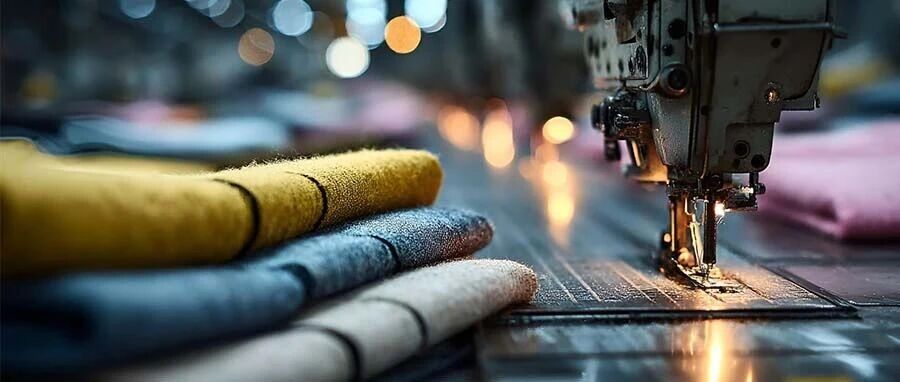
东莞“制造美学”之旅启航,广交会采购商将赴莞“寻宝”
2 1 Shi Ji Jing Ji Bao Dao· 2025-10-22 08:00
Core Insights - The 138th Canton Fair is set to showcase Dongguan as a "City of Manufacturing Aesthetics," attracting significant attention from domestic and international buyers [1] - Dongguan's enterprises achieved an intended transaction amount of $530 million during the first phase of the fair, marking a 15.2% increase compared to the previous session [1] Group 1: Manufacturing Aesthetics - Dongguan has introduced the concept of "Manufacturing Aesthetics" in 2024, focusing on six dimensions: design, craftsmanship, production, products, culture, and philosophy to reconstruct the value of its manufacturing industry [1] - The fair serves as a platform to demonstrate Dongguan's quality advantages and innovative capabilities in manufacturing [1] Group 2: International Procurement Engagement - Over ten international buyers from countries such as Argentina, Egypt, Russia, Brazil, and Canada will engage in precise industrial matching in Dongguan, facilitating direct procurement needs to local manufacturers [2] - The participation of these global buyers highlights Dongguan's robust manufacturing strength in the international market [2] Group 3: Trade Expansion Initiatives - Dongguan's Commerce Bureau emphasizes the importance of international buyer resources during the fair as a vital channel for expanding international trade [3] - The city plans to organize more targeted and professional trade matching activities to promote the "Dongguan Manufacturing" brand and connect local enterprises with global markets [3] Group 4: Media Engagement and Aesthetic Exploration - Mainstream media and influencers will visit Dongguan on October 24-25 to experience the charm of the "City of Manufacturing Aesthetics" [4] - Dongguan has hosted various high-profile exhibitions to showcase its manufacturing industry's aesthetic and creative capabilities, enhancing its international appeal [4] Group 5: Cultural and Creative Industries - Dongguan is recognized as a "City of Trendy Toys," producing a quarter of the world's animation derivatives and nearly 85% of trendy toys, serving as a prime example of "Manufacturing Aesthetics" [5] - The city aims to integrate traditional cultural inspirations into innovative product development, enhancing its competitive edge in the global market [5]
爱拼会赢 奋勇争先(前沿观察·挑大梁 看担当)
Ren Min Ri Bao· 2025-10-21 07:33
Group 1 - The construction of major projects in Fujian is progressing rapidly, with significant efforts in various sectors including transportation and petrochemicals [6][7][12] - Fujian's GDP reached 27,996.57 billion yuan in the first half of the year, reflecting a year-on-year growth of 5.7% [7] - Jinjiang, a key foreign trade hub, has a textile and footwear industry with an annual output value exceeding 400 billion yuan, contributing significantly to the global market [8] Group 2 - Jinjiang has 872 high-tech enterprises and is focusing on innovation in traditional industries through new materials and smart manufacturing [9] - The establishment of a low-altitude drone governance platform in Fuzhou aims to enhance urban management and response capabilities [9] - Fujian Haohui Lin Food Co., Ltd. benefited from a 9 million yuan loan from Fujian Haixia Bank, showcasing innovative financing solutions for local businesses [10][11] Group 3 - The integration of industry and technology is emphasized, with initiatives to connect enterprises with research institutions for innovation [8][9] - The government is actively addressing financing challenges faced by private enterprises, promoting new financial products to support business growth [10][11] - The construction of the integrated circuit industry park in Quanzhou is underway, with efforts to streamline environmental assessments and project approvals [12] Group 4 - The local government is implementing measures to incentivize and support capable officials, enhancing their roles in driving economic development [13][14] - A focus on accountability and performance evaluation is evident, with a system in place to promote effective leaders within the administrative framework [13][14] - Continuous efforts are being made to foster a proactive and responsible workforce, aligning with the broader goals of modernization and economic prosperity in Fujian [15]
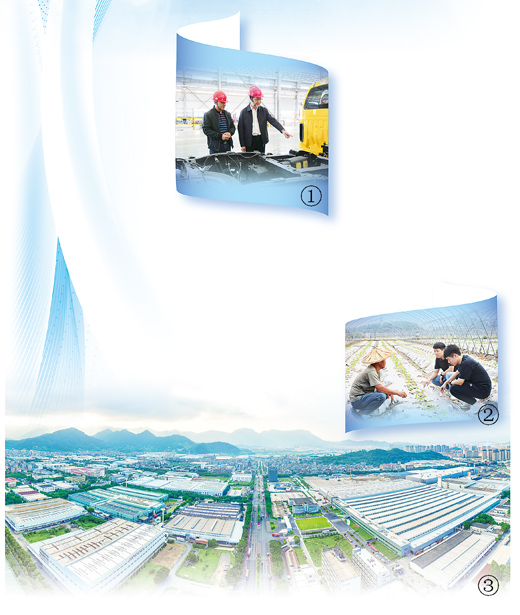
金融服务“沉下去” 县域经济“活起来”
Jin Rong Shi Bao· 2025-10-21 06:37
Core Insights - The article emphasizes the role of county-level economies as fundamental units of the national economy, highlighting the importance of financial support in revitalizing these economies [1] Group 1: Financial Mechanisms and Support - The People's Bank of China (PBOC) in Putian has established a "door-to-door" policy guidance mechanism to tailor financial solutions for local enterprises, enhancing service efficiency [2] - A financial work committee has been formed to ensure smooth policy transmission and support for county-level financial management [3] - The PBOC has introduced innovative loan products to support local industries, such as "Craftsman Loans" and "Ability Loans," to meet the financing needs of the handicraft industry [4] Group 2: Credit and Loan Growth - As of the end of August, the balance of loans for technical transformation projects in the county reached 822 million yuan, with a significant increase in loan issuance efficiency [2] - The balance of loans for agricultural support in Xianyou County reached 1.753 billion yuan, marking a year-on-year growth of 42.62% [3] - The total loan balance for key county-level industrial chains reached 19.357 billion yuan, with 2,366 enterprises benefiting from these loans [4] Group 3: Financial Services for Rural Areas - The PBOC has promoted a "Supply and Marketing + Finance" service model to assist village-level supply cooperatives in obtaining credit, facilitating financial access for small-scale operations [6] - By the end of July, 107 financial credit villages and 8 credit towns were established, benefiting over 12,534 clients with a total loan issuance of 3.17 billion yuan [6] Group 4: Technological Empowerment - Financial institutions are leveraging big data and AI to innovate financial products and services, enhancing accessibility for various market entities [7] - The PBOC has guided banks to utilize national platforms for credit information sharing, resulting in 55 loans amounting to 97.51 million yuan for local enterprises [8]
总书记的关切·落地的回响 | 守好实体经济这个根基
Ren Min Ri Bao· 2025-10-21 02:53
Group 1 - The importance of developing the real economy is emphasized as a strategic choice for a large country like China, focusing on industrial modernization and manufacturing improvement [1][2][3] - The Luoyang Bearing Group has successfully increased its high-end bearing output to account for 70% of its total production, showcasing the effectiveness of focusing on real industry [1] - The transformation of Yangquan Valve Company, which has embraced technological innovation, reflects the historical evolution of national industry and the necessity of maintaining a strong real economy [1] Group 2 - The steel industry, particularly the development of "hand-tear steel," illustrates the commitment to innovation and quality, with thickness reduced from 0.02mm to 0.015mm [4] - Companies are encouraged to focus on their core business and avoid distractions from capital operations, as seen in the textile and footwear industries in Fujian [5] - Innovation is highlighted as a core competitive advantage, with companies like XCMG and LiuGong leading in engineering machinery through groundbreaking products [6][7] Group 3 - The manufacturing sector is identified as a critical component of the real economy, with China's industrial output increasing from 31.3 trillion yuan to 40.5 trillion yuan during the 14th Five-Year Plan [8] - China has over 63 million enterprises, including 504,000 high-tech firms and 14,000 specialized small and medium-sized enterprises, indicating a robust and resilient real economy [8] - China's contribution to global manufacturing growth exceeds 30%, and it remains the largest automobile exporter, enhancing its international industrial competitiveness [8]
金融纽带联华商 共筑统一大市场
Qi Huo Ri Bao Wang· 2025-10-20 00:55
Core Viewpoint - The 10th Huashang Cultural Festival will be held on October 29 in Shangqiu, aiming to create a platform for global Chinese merchants to connect with the national unified market, emphasizing the historical roots of commercial civilization in the region [1][2]. Group 1: Festival Overview - The festival has evolved from a local cultural event to a globally recognized cultural celebration since its inception in 2006 [1]. - The theme "Gathering at the Source of Yin Shang, Integrating into the Big Market" reflects both a historical tribute to commercial roots and a contemporary focus on market integration [1][2]. Group 2: Strategic Importance of Shangqiu - Shangqiu is positioned as a key node in the "Belt and Road" initiative and a core area for high-quality development in the Yellow River Basin, benefiting from multiple strategic opportunities [2][3]. - The city aims to leverage its unique geographical advantages and industrial foundation to contribute to the construction of a national unified market [3][4]. Group 3: Financial Support Activities - A financial support event will take place on October 28, focusing on "Financial Empowerment and Industry-Finance Coordination" to connect financial institutions with local industries [6][9]. - The event aims to facilitate diverse financial services and promote high-quality regional economic development by linking financial capital with local特色产业 [6][9]. Group 4: Industry Development Strategies - Shangqiu is focusing on building a logistics network, enhancing agricultural supply stability, and nurturing competitive niche industries to support its economic growth [7][8]. - The city is also promoting cultural and tourism integration to stimulate domestic demand and create new economic scenarios [8]. Group 5: Event Activities - The festival will feature a series of activities, including cultural performances, academic exchanges, and business events, aimed at showcasing Shangqiu's unique charm and fostering industry collaboration [10][11]. - Specific exhibitions, such as the Refrigeration Equipment Expo and Shoe Industry Expo, will highlight local industry strengths and facilitate project signings [10].
中国零售消费行业生成式AI及数据应用研究报告
艾瑞咨询· 2025-10-12 00:06
Core Insights - The retail industry is transitioning from high-speed growth to stock competition, necessitating the digital transformation of "people, goods, and venues" through generative AI and data applications [1][2][4] Group 1: Market Dynamics - The retail sector is experiencing intensified competition, requiring companies to leverage digital technologies to enhance sales conversion rates and inventory turnover while reducing operational costs [2][6] - Post-pandemic consumer behavior has shifted towards rationality, prompting businesses to focus on member economies rather than traffic-driven models [4] Group 2: Industry-Specific Trends - In the beauty sector, domestic brands have rapidly increased their market share from 43.7% in 2022 to 55.7% in 2024, utilizing KOL evaluations and UGC content to establish a marketing loop [9] - The footwear and apparel market is facing severe competition, with companies needing to build independent product development capabilities and brand recognition to stand out [11] - The home goods industry is entering a phase of replacement, with companies seeking growth through international expansion and enhanced online-offline integration [14] Group 3: Generative AI and Data Integration - Generative AI's application potential is highly dependent on high-quality, compliant data, with data governance being crucial for establishing this foundation [20] - 71% of companies plan to strengthen data-driven decision-making, with generative AI primarily being implemented in marketing and customer service scenarios [23] - Nearly 90% of companies prefer to collaborate with external service providers for generative AI development, indicating a strong reliance on cloud service providers for comprehensive data and AI solutions [29][30] Group 4: Marketing and Customer Engagement - Over 90% of companies have adopted generative AI in marketing, significantly reducing content production costs and improving sales conversion rates [48][51] - Generative AI enhances customer service efficiency, with over 50% of companies reporting improvements in service quality and reduced reliance on human intervention [53] Group 5: Decision-Making and Governance - 93% of companies are building knowledge bases that cover multiple scenarios, with generative AI aiding in data governance and enhancing decision-making processes [56] - The integration of generative AI and data allows for real-time insights and dynamic responses, shifting decision-making from experience-driven to data-driven approaches [42] Group 6: International Expansion - 93% of retail companies are expanding overseas, focusing on markets with high purchasing power and mature channels, such as the Asia-Pacific and Europe [66] - Generative AI is key in overcoming language and cultural barriers, facilitating localized marketing and efficient customer service for companies entering international markets [69]

供需两侧发力 业态焕新升级——在“活力中国调研行”中感受消费向“新”力
Xin Hua She· 2025-10-03 05:21
Core Insights - The article emphasizes the importance of consumption as a key driver of economic growth and a reflection of public well-being [2] Group 1: Consumption Trends - Various regions are actively enhancing consumption through new scenarios, business models, and supply chains, aiming to stimulate demand and economic growth [2][5] - The night economy in Chengdu, exemplified by the "Night Tour Jinjiang," showcases the integration of cultural tourism and local businesses, attracting both domestic and international tourists [4] - In Hubei, cultural experiences are increasingly integrated into tourism, with significant revenue generated from cultural products, indicating a shift towards experiential consumption [5][6] Group 2: Technological Advancements - The automotive industry is leveraging smart production lines, with companies like Lantu Auto achieving significant growth in vehicle deliveries due to enhanced production efficiency [8] - In Fujian, the shoe industry is transitioning to high-end products through intelligent manufacturing and personalized customer experiences, reflecting a broader trend of technological integration in traditional industries [9][10] Group 3: Community and Social Initiatives - Community initiatives in Xiamen are enhancing local services and promoting consumption, with a focus on convenience and accessibility for residents [11][12] - Employment generation is a critical aspect of economic development, with the clothing e-commerce sector in Hubei creating thousands of jobs through innovative business models [13][14]