
医疗

Search documents
学查改求实效 作风建设见真章(深阅读)
Ren Min Ri Bao· 2025-08-04 22:39
聚焦主题,注重实效,各地一体推进学查改,推动作风建设走深走实。日前,记者走进江西赣州、山东 烟台、广东广州等地,看学习教育带来的成效和变化。 开展深入贯彻中央八项规定精神学习教育,是今年党建工作的重点任务。习近平总书记强调,"确保学 有质量、查有力度、改有成效。" 江西赣州挖掘红色资源—— 学有质量 增强感染力和实效性 "当时,毛主席去江西苏区长胜县铲田区调查工作,坚持向当地财政部门缴纳食宿费……"8月2日上午, 走进江西省赣州市瑞金中央革命根据地纪念馆,循声望去,参观者正围在一个玻璃展柜旁倾听讲解。 展柜里,是一张泛黄的登记簿,上面写着:十捌号,主席毛泽东住,付还大洋一元四角五分;展柜旁, 讲解员杨耀燕娓娓道来,前来开展学习教育的瑞金市年轻干部驻足倾听。 最近,一条来自山东省烟台市毓璜顶医院的短信,让烟台招远市道西村村民吴新荣颇感意外—— "您好,我院现开展门诊预交金清退工作,您的诊疗卡内尚有余额,请及时提取到银行卡内……"吴新荣 这才想起,2019年自己曾带亲属到这家医院就医,当时预存了一笔钱。治疗结束,这笔钱也被遗忘。 "要不是医院主动提醒,这钱就石沉大海了。"吴新荣根据提示,通过手机小程序操作"卡余额 ...
格隆汇公告精选(港股)︱心动公司(02400.HK)盈喜:预期中期净利润大幅增加约215%
Ge Long Hui· 2025-08-04 15:15
Group 1 - Xindong Company (02400.HK) expects a significant increase in mid-term net profit by approximately 215% [1] - The company anticipates revenue of no less than RMB 3,050 million for the six months ending June 30, 2025, representing a 37% increase from RMB 2,220.6 million for the same period in 2024 [1] - The expected net profit for the same period is projected to be no less than RMB 790 million, up from RMB 250.6 million in the previous year [1] Group 2 - The increase in revenue and profit is primarily driven by strong performance from self-developed games such as "Ragnarok M: Classic," "Heartopia," and "Torchlight: Infinite" [1] - TapTap has shown continuous growth in revenue and profit due to improvements in advertising algorithms and increased user engagement, despite stable year-on-year average monthly active users [1] - The positive outlook is somewhat offset by reduced revenue from certain existing games and increased performance-linked compensation [1]

攻守兼备红利50组合周度收益跑至红利类基金产品约11%分位-20250804
Changjiang Securities· 2025-08-04 05:13
Quantitative Models and Construction Methods - **Model Name**: "Offense and Defense Dividend 50 Portfolio" **Model Construction Idea**: This model aims to enhance returns by selecting high-dividend stocks with a balance of growth and stability, outperforming the benchmark dividend indices[6][15] **Model Construction Process**: The portfolio is constructed by combining stocks with high dividend yields, growth potential, and low volatility. The selection process involves filtering stocks based on dividend-related factors and optimizing the portfolio to achieve a balance between growth and defensive characteristics[6][15] **Model Evaluation**: The model demonstrates strong performance, consistently outperforming the benchmark dividend indices and ranking in the top percentile among dividend-focused funds[6][21] - **Model Name**: "Central SOE High Dividend 30 Portfolio" **Model Construction Idea**: This model focuses on central state-owned enterprises (SOEs) with high dividend payouts, aiming to capture stable returns from these entities[15] **Model Construction Process**: The portfolio is constructed by selecting 30 central SOEs with the highest dividend yields. The selection criteria emphasize stability and consistent dividend payouts[15] **Model Evaluation**: The model shows stable performance, delivering excess returns over the benchmark dividend indices[15][21] - **Model Name**: "Electronic Sector Enhanced Portfolios" **Model Construction Idea**: These models aim to enhance returns within the electronic sector by focusing on high-growth sub-sectors and leading companies in mature sub-sectors[15][31] **Model Construction Process**: 1. **Balanced Allocation Enhanced Portfolio**: This portfolio is constructed by evenly allocating weights across various electronic sub-sectors to achieve diversification[15] 2. **Sector Leader Enhanced Portfolio**: This portfolio focuses on leading companies in mature sub-sectors, emphasizing their growth potential and market dominance[15][31] **Model Evaluation**: Both portfolios demonstrate positive returns, with the Sector Leader Enhanced Portfolio delivering higher excess returns relative to the electronic sector index[31] Model Backtesting Results - **Offense and Defense Dividend 50 Portfolio**: - Weekly excess return: ~1.41% over the CSI Dividend Total Return Index[6][21] - Year-to-date excess return: ~3.52% over the CSI Dividend Total Return Index[21] - Weekly performance percentile: ~11% among dividend-focused funds[6][21] - **Central SOE High Dividend 30 Portfolio**: - Weekly excess return: ~0.35% over the CSI Dividend Total Return Index[6][21] - **Electronic Sector Enhanced Portfolios**: - **Balanced Allocation Enhanced Portfolio**: Weekly excess return: ~0.89% over the electronic sector index[31] - **Sector Leader Enhanced Portfolio**: Weekly excess return: ~0.89% over the electronic sector index[31] Quantitative Factors and Construction Methods - **Factor Name**: Dividend Quality **Factor Construction Idea**: This factor evaluates the stability and sustainability of a company's dividend payouts[16][18] **Factor Construction Process**: The factor is calculated using metrics such as dividend payout ratio, historical dividend growth rate, and earnings stability. Companies with higher scores on these metrics are ranked higher[16][18] **Factor Evaluation**: The factor demonstrates strong predictive power for identifying high-performing dividend stocks[16][18] - **Factor Name**: Dividend Growth **Factor Construction Idea**: This factor focuses on the growth potential of a company's dividends over time[16][18] **Factor Construction Process**: The factor is derived from the historical growth rate of dividends and projected earnings growth. Companies with consistent and high dividend growth rates are ranked higher[16][18] **Factor Evaluation**: The factor shows significant excess returns compared to pure dividend yield factors[16][18] - **Factor Name**: Low Volatility Dividend **Factor Construction Idea**: This factor targets stocks with high dividend yields and low price volatility[16][18] **Factor Construction Process**: The factor is constructed by combining dividend yield with a volatility measure (e.g., standard deviation of returns). Stocks with high yields and low volatility are ranked higher[16][18] **Factor Evaluation**: The factor provides a defensive characteristic, outperforming during market downturns[16][18] Factor Backtesting Results - **Dividend Quality Factor**: - Weekly excess return: ~1.94% over the CSI Dividend Index[18] - **Dividend Growth Factor**: - Weekly excess return: ~0.92% over the CSI Dividend Index[18] - **Low Volatility Dividend Factor**: - Weekly excess return: ~0.69% over the CSI Dividend Index[18]
炸了!美国数据一出炉,特朗普坐立难安!美专家已发出严厉警告
Sou Hu Cai Jing· 2025-08-04 04:57
Group 1 - The U.S. labor market shows signs of weakness, with non-farm payrolls adding only 73,000 jobs in August, significantly below the expected 110,000, marking the lowest figure since October of the previous year [1] - The Labor Department revised down the job numbers for May and June, reducing them by a total of 258,000 jobs, which contributed to an increase in the unemployment rate from 4.1% to 4.2% [1] - The federal government has been cutting jobs, with 12,000 positions eliminated in July alone, totaling 84,000 job cuts for the year [1] Group 2 - Analysts have noted that the current economic state is characterized by stagnation, with no hiring or layoffs occurring, described as "half-dead" [2] - The significant job cuts in federal agencies, including over 80,000 positions in the Department of Education, have contributed to the employment decline [4] - The cumulative downward revision of non-farm payroll data since 2023 has exceeded 1.7 million jobs, raising concerns about the accuracy of previous employment reports [4] Group 3 - Investor Jim Rogers has expressed extreme pessimism about the U.S. economy, warning of an impending "great crisis" due to the massive national debt [9] - Rogers draws parallels between the current U.S. situation and the historical debt crisis faced by the UK in 1976, emphasizing the importance of debt repayment [9] - He believes the prolonged bull market in U.S. stocks, which has lasted since 2009, is unsustainable and warns of a severe downturn when the market eventually corrects [9] Group 4 - Rogers has shifted his investment focus away from U.S. stocks, holding only stocks from China, which he views as a rapidly rising global power with significant potential, particularly in tourism [8][12] - He highlights the importance of China's Belt and Road Initiative, suggesting it will reshape global economic and political landscapes [8]


马斯克放大招!推出视频生成器Grok Imagine ,实时AI视频渲染技术有望3到6个月实现——《投资早参》
Mei Ri Jing Ji Xin Wen· 2025-08-03 23:33
Important Market News - The People's Bank of China held a meeting on August 1, 2025, emphasizing increased financial support for the economy, implementing moderately loose monetary policy, and lowering the reserve requirement ratio [1] - The Ministry of Finance and the State Taxation Administration announced that starting from August 8, 2025, interest income from newly issued government bonds, local government bonds, and financial bonds will be subject to value-added tax [1] Industry Insights - Elon Musk announced the launch of Grok Imagine, an AI text-to-video generator for Grok Heavy subscribers, currently in testing, with rapid video rendering improvements [2] - The Ministry of Industry and Information Technology released a digital transformation plan for the machinery industry, aiming for 50% of enterprises to achieve a maturity level of II or above by 2027 [3] - Zhejiang University unveiled a new generation of neuromorphic brain-like computers named "Wukong," which supports over 2 billion neurons and operates at approximately 2000 watts [4] - The global market for brain-computer interface medical applications is projected to reach $40 billion by 2030 and $145 billion by 2040, indicating significant potential in various sectors [5] Risk Alerts - Changqing Technology announced plans for shareholders to reduce their holdings by up to 8.2473 million shares, representing 5.98% of total shares [6] - Fangda Special Steel's shareholder plans to reduce holdings by up to 23.1318 million shares, representing 1% of total shares [6] - Huarun Pharmaceutical announced a plan to reduce holdings by up to 11.82 million shares, representing 1% of total shares [6] - Morning Feng Technology's shareholder plans to reduce holdings by up to 169,000 shares, representing 1% of total shares [6] - United Imaging Healthcare announced plans for employee shareholders to reduce holdings by up to 13.3766 million shares, representing 1.6231% of total shares [7]
综合价值管理赋能上市公司形成四大合力
Shang Hai Zheng Quan Bao· 2025-08-03 19:14
Core Viewpoint - The core argument emphasizes that listed companies are not solely the assets of major shareholders but are jointly owned by diverse investors, necessitating the transformation of differing expectations into collaborative development to enhance comprehensive value management [1][2]. Group 1: Importance of Diverse Investor Participation - The trend of socialized equity structure in China's A-share market shows a decline in the proportion of institutional holdings from 50.7% in 2018 to 42.0% in 2024, indicating an increase in the influence of individual and institutional investors [3]. - Attracting diverse social capital is crucial for the development of listed companies, especially in sectors like biotechnology and information technology, where early-stage investments are vital for overcoming innovation challenges [4]. Group 2: Comprehensive Value Management - Comprehensive value management aims to align the interests of various investors, addressing the financial stability needs of financial investors, the innovation expectations of industrial investors, and the social responsibility demands of societal investors [8]. - Companies should elevate comprehensive value management to a strategic level, integrating financial, industrial, and social value dimensions into their evaluation systems [8]. Group 3: Addressing Investor Discrepancies - Discrepancies between major shareholders and minority investors pose challenges in decision-making regarding profit distribution, mergers, and R&D investments, necessitating a balanced approach to governance [10][11]. - Companies should optimize shareholder checks and balances to foster collaboration between major and minor shareholders, ensuring that both long-term growth and short-term returns are addressed [12]. Group 4: Innovation and Technology Development - Disparities in understanding technology innovation between industrial investors and company management can hinder progress, necessitating a collaborative approach to decision-making in technology paths and innovation outcomes [14][16]. - Companies should establish processes that involve both management and industrial investors in technology decisions to align their interests and enhance innovation [16]. Group 5: Risk Sharing Mechanisms - Financial and industrial investors often have differing risk preferences, complicating the establishment of effective risk-sharing mechanisms in innovation [19][21]. - Companies should adopt diversified financing strategies to distribute risks among various investor groups, enhancing stability and flexibility in funding [21]. Group 6: Balancing Economic and Social Value - Social investors prioritize long-term societal impacts over short-term economic benefits, creating potential conflicts in corporate decision-making [24]. - Companies must recognize the influence of social perceptions on their investment value and strive to balance economic performance with social responsibility [25][26].
投资策略周报:坚守自我,科技为先-20250803
KAIYUAN SECURITIES· 2025-08-03 03:11
Group 1 - The market has experienced a slight pause after five consecutive weeks of growth, with new capital's marginal profit effect weakening. The financing balance growth rate in the Shanghai and Shenzhen markets is slowing down, indicating a neutral oscillation range of 7%-10% [2][12][13] - The report emphasizes that the current market structure is increasingly clear, driven by two main lines: the "anti-involution" leading to a cyclical and pro-cyclical trading PPI recovery, and the strong elasticity provided by global technology collaboration [2][12][58] Group 2 - The report identifies that despite the current low PPI levels, there is potential for marginal improvement due to a loose liquidity environment, which may accelerate valuation recovery. This is supported by two signals: the credit transmission providing leading signals for PPI recovery and the structural divergence between CRB and PPI [3][14][17] - The "anti-involution" policy has catalyzed a shift towards PPI trading, with core assets in cyclical consumption likely to experience valuation recovery, thus supporting the index [3][21][25] Group 3 - The TMT sector is highlighted as a core area for institutional long-term allocation, driven by a "fan effect" that attracts consensus among funds. The sector has shown significant trading activity, particularly in the communication sub-sector, which has gained traction as other sectors have seen a decline in trading volume [4][37][38] - The semiconductor industry is entering an upward phase, with conditions for transitioning from "expectation recovery" to "economic verification" being met. The report notes that the current semiconductor cycle is characterized by strong demand driven by AI and high-performance computing needs [4][47][49] Group 4 - The report suggests a strategic allocation in the current market environment, recommending a focus on technology, military, anti-involution, PPI diffusion directions, and stable dividends. Specific sectors include AI, robotics, semiconductors, and cyclical sectors like insurance and real estate, which are expected to benefit from PPI recovery [5][58]
AI大模型如何重塑业务:行业实战派拆解场景创新密码
Sou Hu Cai Jing· 2025-08-02 05:24
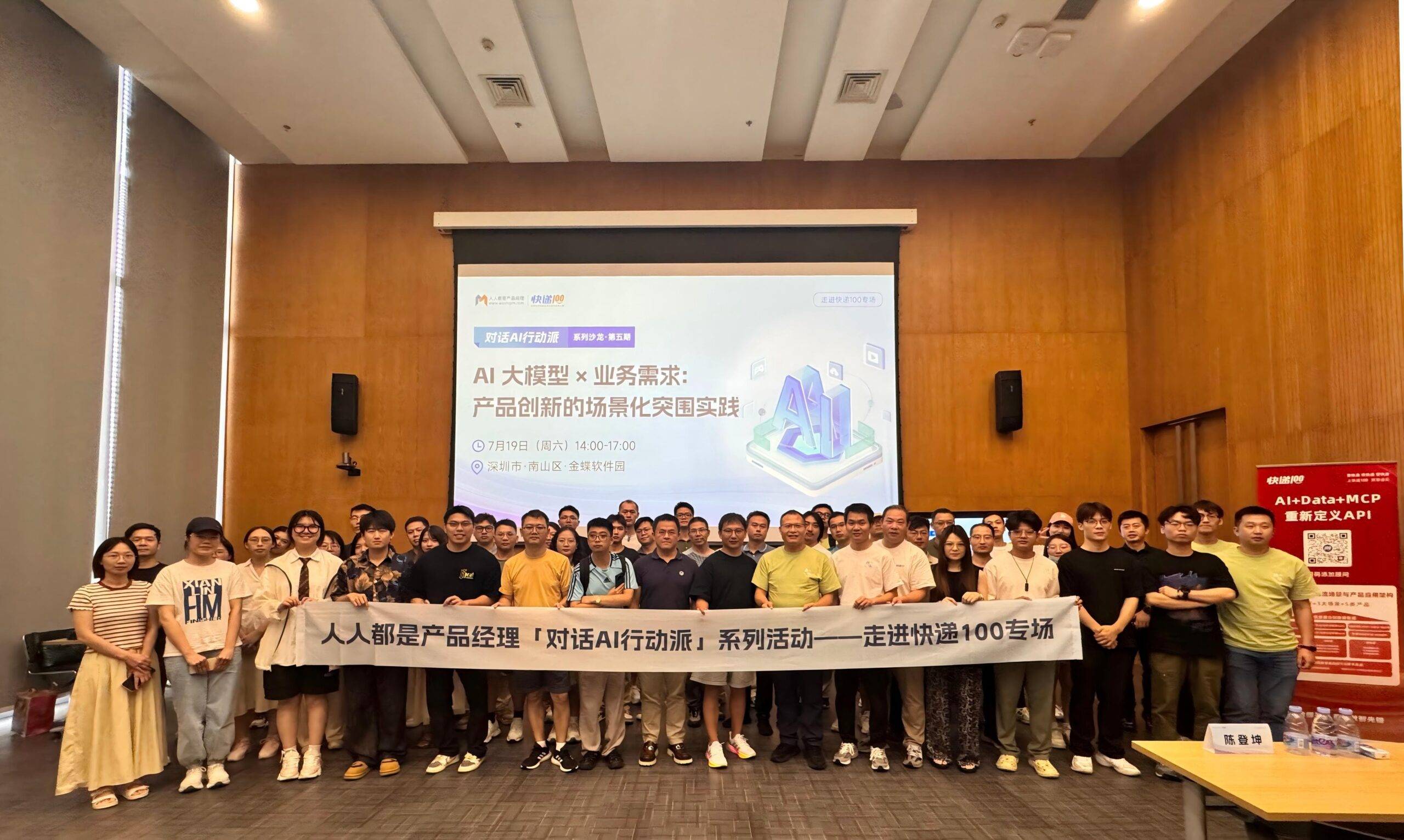
Core Insights - The integration of AI large models into business operations is a pressing challenge for companies, focusing on transforming technological potential into business value [1] - The "AI Action Dialogue" event gathered over 100 product professionals to explore innovative applications of AI in various industries [1] Group 1: Healthcare Sector - The healthcare industry faces challenges related to "data sensitivity" and "controllable outcomes," with a focus on lightweight solutions to navigate compliance hurdles [4] - AI product managers should adopt a "dual-track thinking" approach, understanding both the capabilities of large models and the specific industry context [4] Group 2: Logistics Sector - The logistics company, Kuaidi100, has developed China's first intelligent logistics network map, covering over 4,000 transfer centers and 24 million delivery points [5] - The shift in user demand from tracking packages to predicting delivery times has led to the implementation of AI-driven solutions, enhancing operational efficiency and user experience [5][6] - AI has enabled the automation of customer service, replacing 70% of human inquiries, and improved resource allocation through an AI backup system [5][6] Group 3: Home Decoration Sector - The home decoration industry is relatively under-digitized, and the company ChaoDapei emphasizes the importance of redefining business efficiency and user experience through AI [8] - The approach involves focusing on business scenarios, tool capabilities, and human adaptability to create sustainable value [8] Group 4: Education Sector - The concept of "AI as a core engine" rather than an add-on is crucial for transforming educational products, emphasizing the need for a paradigm shift in how AI is integrated [11] - The company Malong Intelligent has implemented AI to enhance user engagement and create personalized learning experiences, moving beyond mere efficiency improvements [11][12] - The focus is on collaborative learning environments where AI assists in real-time feedback and adaptive learning paths for students [13] Group 5: Overall Insights - The ultimate value of AI large models lies in accurately identifying real business problems and reshaping product core and user experience [14] - The ongoing "AI Action Dialogue" series aims to continue exploring practical wisdom and innovative sparks in AI implementation across various sectors [14]
医疗ETF(512170)获融资买入2.44亿元,居两市第50位
Sou Hu Cai Jing· 2025-08-02 00:18
Group 1 - On August 1, the medical ETF (512170) recorded a financing purchase amount of 244 million yuan, ranking 50th in the two markets [1] - The financing repayment amount on the same day was 255 million yuan, resulting in a net sell of approximately 1.1 million yuan [1] - Over the last three trading days, the financing purchases for the medical ETF were 274 million yuan, 255 million yuan, and 244 million yuan respectively [1] Group 2 - On the same day, the short selling of the medical ETF amounted to 116,500 shares, while the net purchase was 748,900 shares [1]
日本企业“破产潮”影响广泛
Jing Ji Ri Bao· 2025-08-01 21:59
Core Insights - The number of bankrupt companies in Japan with liabilities exceeding 10 million yen reached 4,990 in the first half of 2025, marking a 1.19% increase from the previous year and the highest level since 2014 [1] - Various industries, including services, construction, childcare, and healthcare, are facing significant bankruptcy risks due to rising costs and economic pressures [1][2][3] Industry Analysis - In the construction sector, the number of bankruptcies in the renovation and painting industry reached 119, surpassing the figures during the 2009 financial crisis, indicating a 20-year high for the first half of the year [1] - The childcare sector saw 22 bankruptcies in the first half of 2025, a 70% increase year-on-year, with predictions of a record high for the entire year due to fierce competition and rising operational costs [2] - Home care institutions reported 45 bankruptcies, a 12.5% increase from the previous year, driven by factors such as reduced service demand and rising costs [2] - The healthcare sector experienced 21 hospital and clinic bankruptcies, a 16.6% increase, with larger institutions facing more severe financial crises due to rising operational costs and labor shortages [3] Economic Factors - High prices contributed to 343 bankruptcies in the first half of 2025, although this represents an 8.5% decrease from the previous year, maintaining a high level above 300 for three consecutive years [3] - Labor shortages led to 172 bankruptcies, the highest for the same period, with recruitment difficulties and rising labor costs being significant contributors [4] - Tax-related bankruptcies reached 77, the second highest since 2016, as companies struggled to meet tax obligations amid rising operational costs [4] - The depreciation of the yen resulted in 33 bankruptcies, with total liabilities exceeding 88.9 billion yen, eight times that of the previous year, highlighting systemic risks for small export-oriented companies [4] Overall Outlook - Japan is facing a systemic crisis characterized by high prices, labor shortages, and debt repayment peaks, particularly in critical sectors like childcare and healthcare [5] - The political instability and uncertain economic policies from the U.S. may further exacerbate the bankruptcy situation, with predictions suggesting that the total number of bankruptcies could exceed 10,000 for the year [5]