电动汽车

Search documents
70后学霸夫妻非洲卖纸尿裤,年收入32亿元,冲刺港股IPO
2 1 Shi Ji Jing Ji Bao Dao· 2025-10-16 15:25
Core Insights - The meeting between Ghana's Minister of Trade and the SenDa Group in Guangzhou highlights the potential investment opportunities in Ghana, particularly in the manufacturing sector, with a focus on the company LeShuShi, known as the "King of Diapers in Africa" [1] Company Overview - LeShuShi Limited has re-applied for a main board listing on the Hong Kong Stock Exchange after its previous application lapsed in January 2025. The company is backed by a couple who control 64.42% of its shares through Century BVI [2] - The company has established itself as a leader in the African baby diaper and sanitary napkin markets, holding market shares of 20.3% and 15.6% respectively as of 2024 [1] Financial Performance - LeShuShi's revenue is projected to grow from approximately $320 million in 2022 to $454 million in 2024, with a compound annual growth rate exceeding double digits. Net profit is expected to increase from $18 million to $95.1 million during the same period, reflecting a growth rate of over five times [4] - In the first four months of 2025, the company reported revenues of $161 million, a year-on-year increase of 15.5%, and a net profit of $31.1 million, up 12.5% [4] - The gross profit margin has improved significantly, reaching 35.2% in 2024 and 33.6% in the first four months of 2025, attributed to scale effects, product structure optimization, and improved foreign exchange risk management [4][5] Market Positioning - LeShuShi's pricing strategy has allowed it to maintain and even increase prices despite a general decline in average selling prices across its product lines. The company’s flagship diaper brand, Softcare, sells at an average price of 8.78 cents per piece in 2024 [5] - The company has adopted a "volume-driven" approach, with its products priced lower than competitors, which has helped it capture significant market share [5] Strategic Goals - Following the IPO, LeShuShi plans to invest in capacity expansion, production line upgrades, new product development, market expansion, and potential mergers and acquisitions to solidify its market leadership [6] Industry Context - The African market is experiencing strong population growth, with a compound annual growth rate of 1.8% in newborns from 2020 to 2024, presenting significant economic growth potential [8] - China remains Africa's largest trading partner, with trade volume reaching $295.6 billion in 2024, indicating a growing trend of Chinese companies investing in Africa, particularly in manufacturing and local production [8][9] Challenges - Despite its success, LeShuShi faces challenges such as foreign exchange losses, which amounted to $18.3 million from 2022 to 2024, representing 10% of its total net profit during that period [6] - The company currently lacks any currency hedging policies, which may expose it to further risks [6]


70后学霸夫妻非洲卖纸尿裤,年收入32亿元,冲刺港股IPO
21世纪经济报道· 2025-10-16 15:16
Core Viewpoint - The article discusses the investment opportunities and market positioning of Leshu Shi, a leading player in the African diaper and sanitary napkin market, as it prepares for its IPO and expands its operations in Africa [1][4]. Company Overview - Leshu Shi, known as the "King of Diapers in Africa," is seeking to list on the Hong Kong Stock Exchange after a previous application lapsed. The company holds the largest market shares in the African baby diaper and sanitary napkin markets, with 20.3% and 15.6% respectively [1][4]. - The company is controlled by a couple who graduated from Harbin Engineering University, holding 64.42% of the shares through Century BVI [2]. Financial Performance - From 2022 to 2024, Leshu Shi's revenue increased from approximately $320 million to $454 million, with a compound annual growth rate exceeding double digits. Net profit surged from $18 million to $95.1 million, reflecting a growth rate of over five times [4]. - In the first four months of 2025, the company reported revenue of $161 million, a year-on-year increase of 15.5%, and net profit of $31.1 million, up 12.5% [4]. - The gross profit margin improved significantly from 23.0% in 2022 to 35.2% in 2024, attributed to scale effects, product structure optimization, and improved foreign exchange risk management [4]. Market Strategy - Leshu Shi has adopted a "volume-driven" strategy, with its Softcare brand diapers priced at only 8.78 cents per piece in 2024, allowing it to maintain competitive pricing while achieving high gross margins [6][5]. - The company has established local production lines in Ghana since 2018, which has helped reduce costs and enhance competitiveness [5]. Industry Context - The African market is experiencing strong population growth, with a compound annual growth rate of 1.8% for newborns from 2020 to 2024, indicating significant economic potential [9]. - China has maintained its position as Africa's largest trading partner for 16 consecutive years, with trade volume reaching $295.6 billion in 2024, reflecting a growing trend of Chinese companies investing in Africa [9][10]. Challenges and Opportunities - Despite its success, Leshu Shi faces challenges such as foreign exchange losses, which amounted to $18.3 million from 2022 to 2024, and the absence of a currency hedging policy [7]. - The Ghanaian government has initiated a "24-hour economy and export plan" to improve the business environment, which could benefit local manufacturers like Leshu Shi [12].

东兴证券晨报-20251016
Dongxing Securities· 2025-10-16 14:39
Core Insights - The report highlights the resilience of the A-share market amidst external shocks, indicating a sustained upward trend in the medium term despite recent volatility [4][5] - The banking sector is experiencing a recovery with positive relative returns, driven by improved dividend yields and stable fundamentals [7][8] - The commercial aerospace industry, particularly in rocket technology, presents investment opportunities in engine component suppliers and testing service providers [12][15] Economic News - China's scientists have made significant advancements in solid-state lithium batteries, potentially doubling the range of electric vehicles from 500 km to over 1000 km [2] - The National Development and Reform Commission has launched a three-year plan to double the service capacity of electric vehicle charging facilities by 2027, aiming for 28 million charging stations [2] - TSMC reported a record net profit growth of 39% in Q3 2025, with optimistic projections for the AI market and a capital expenditure increase [2] Company Insights - XPeng Motors achieved a remarkable 79.4% year-on-year increase in exports in September 2025, with total exports exceeding 29,723 units in the first nine months [3] - Tianhao Energy signed an investment agreement for a natural gas development project, enhancing energy security in the Southwest region [3] - Xiaomi launched a new ad-free short drama app, indicating a strategic move into content distribution [3] Banking Sector Analysis - The banking sector's PB valuation stands at 0.67x, indicating a favorable position compared to historical averages, with several banks showing positive stock performance [7][8] - The report anticipates stable net interest income growth due to a stabilization in interest margins and a resilient banking sector despite external pressures [9] - Mid-term dividend announcements from banks are expected to attract long-term capital, enhancing the sector's appeal [10] Commercial Aerospace Industry - The report emphasizes the importance of engine components and testing services in the commercial rocket industry, particularly referencing SpaceX's development of the Falcon 1 rocket [12][15] - Key suppliers in the domestic market, such as Sui Rui New Materials and Guoji Precision, are highlighted for their roles in providing critical components for rocket engines [16]






补贴退坡前迎抢购潮!美国Q3电动车销量创纪录 占比首破11%
智通财经网· 2025-10-16 12:01
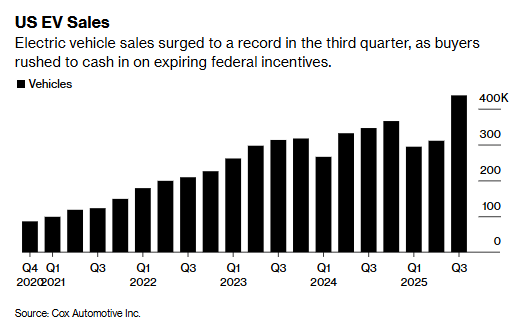
Group 1 - In Q3, electric vehicle and electric truck sales in the U.S. reached 438,500 units, marking a record high for a single quarter and accounting for 11% of total new car sales, up from 8.7% previously [1][4] - Analysts predict a potential decline in electric vehicle sales in the coming months due to the cancellation of federal tax credits, despite expectations for continued growth from affordable electric models [1][6] - By 2030, electric vehicles are projected to make up 25% of new car sales in the U.S., a significant increase from current levels, although lower than previous estimates of 50% [1][6] Group 2 - Tesla remains the dominant player in the U.S. electric vehicle market, but its market share has decreased from 80% four years ago to 41% as competitors close the gap [4] - General Motors has seen rapid progress in electrification, capturing 15% of the electric vehicle market this quarter, up from 10% year-over-year, driven by the popularity of the Chevrolet Equinox [4] - Nearly half of U.S. consumers purchasing electric vehicles this year did not utilize any federal subsidies, with at least 11 electric models priced below the average new car transaction price [4] Group 3 - The path for electric vehicle development remains challenging, with forecasts indicating a drop in market share to 27% by 2030, down from previous estimates of 48% [6] - The second-hand electric vehicle market is thriving, and more affordable electric models are set to enter production, with at least nine new models expected to be priced below $40,000 in the next three years [6] - The automotive industry's shift towards electrification is deemed irreversible, with some regions taking longer to transition, but the overall direction is clear [6]


Crazy Thursday
Datayes· 2025-10-16 11:39
Core Viewpoint - The article discusses the fluctuations in the A-share market, highlighting the impact of geopolitical tensions, particularly between the US and China, on market performance and investor sentiment [4][11]. Market Performance - The Shanghai Composite Index briefly fell below 3900 points but managed to recover, supported by certain stocks [2]. - As of October 16, the A-share market showed mixed results, with the Shanghai Index up by 0.1%, Shenzhen Component down by 0.25%, and the ChiNext Index up by 0.38% [11]. - The total trading volume for the day was 19,488.83 billion yuan, a decrease of 1,417.72 billion yuan from the previous day [11]. Geopolitical Influences - The article emphasizes the ongoing trade tensions between the US and China, with Trump confirming that the two countries are in a trade war [4]. - Key figures from the US government have suggested a decoupling from China if it continues to act against global cooperation [4]. Sector Insights - The coal sector experienced a rise, with expectations of tighter supply in the fourth quarter due to production halts from heavy rainfall and upcoming safety inspections [14]. - The port and shipping sector saw gains, with specific stocks like Nanjing Port performing well amid rumors of increased port fees for US vessels [12]. Investment Trends - The article notes a significant net outflow of 560.98 billion yuan from major funds, with the non-ferrous metals sector experiencing the largest outflow [26]. - The banking, coal, transportation, food and beverage, and oil and petrochemical sectors saw net inflows, indicating a shift in investor focus [26]. Regulatory Developments - The National Medical Insurance Administration announced reforms to advance the immediate settlement of medical insurance funds by the end of 2025 [21]. - The article also mentions the establishment of a multi-crystalline silicon storage platform, although rumors regarding this have been denied [22]. Company-Specific News - Nio Inc. is facing a lawsuit from Singapore's sovereign wealth fund for allegedly inflating revenue, which is not related to its recent operational performance [10]. - The article highlights significant profit increases for companies like Shijia Photon, which reported a net profit growth of 727.74% year-on-year for the first three quarters of 2025 [22].

印度承诺不将中国稀土出口至美国
Zhong Guo Qing Nian Bao· 2025-10-16 11:34
Core Insights - India has assured China that rare earth materials imported from China will not be exported to the United States, highlighting India's dependence on China's rare earth industry and its delicate balancing act between the US and China [1][2] Group 1: Industry Dependence - India's electric vehicle and renewable energy sectors are heavily reliant on stable supplies of rare earth magnets, particularly critical elements like dysprosium and terbium, essential for electric motors and wind turbines [2] - In the fiscal year 2024-2025, India is expected to import approximately 870 tons of rare earth magnets, with a total value exceeding 3 billion rupees [2] - An executive from an Indian electric vehicle company stated that there is currently no alternative to China's supply chain, as other countries like Australia and the US cannot meet the demand [2] Group 2: Strategic Moves - China has restored exports of light rare earth magnets to India following the Shanghai Cooperation Organization summit in September, but shipments of heavy rare earth permanent magnets are pending formal usage guarantees [2] - China's recent expansion of export controls on rare earths is framed as a national security measure to prevent sensitive technologies from being used for military purposes [2][3] - Indian officials acknowledge that the country's manufacturing sector cannot afford to risk supply disruptions from China, indicating a reliance on Chinese support in critical areas [3]

【美股盘前】Q3净利润创历史新高,台积电涨超2%;遭新加坡主权财富基金起诉,蔚来跌超7%;预计2026年营收超600亿美元,Saleforce涨超5%;...
Mei Ri Jing Ji Xin Wen· 2025-10-16 10:23
Group 1 - Major stock index futures are showing positive movement, with Dow futures up 0.25%, S&P 500 futures up 0.27%, and Nasdaq futures up 0.42% [1] - Semiconductor stocks are experiencing a broad increase, with Nvidia up 1.07%, Broadcom up 1.69%, AMD up 0.78%, and Micron Technology up 2.66% [1] - TSMC reported a record high net profit for Q3, with consolidated revenue of NT$989.92 billion, a year-on-year increase of 30.3%. In USD, revenue for the quarter was $33.1 billion, and net profit was NT$452.3 billion, a 39.1% year-on-year increase, with a gross margin of 59.5% [1] Group 2 - NIO's stock fell over 7% following a lawsuit from Singapore's sovereign wealth fund, which accused the company and its executives of securities fraud related to a short-selling report from June 2022 [2] - Deutsche Bank raised ASML's target price from €900 to €1000 while maintaining a "buy" rating, expecting fourth-quarter orders to rise to €6.9 billion [2] - Salesforce anticipates revenue exceeding $60 billion by 2030, surpassing analyst expectations of $58.37 billion, leading to a stock increase of over 5% [3] - Nscale announced a $14 billion deal with Microsoft for the purchase of approximately 200,000 Nvidia GPUs, contributing to a 0.26% increase in Microsoft's stock [3] - Canada is threatening legal action against Stellantis over plans to shift production of a vehicle model to a U.S. factory, resulting in a 0.59% decline in Stellantis' stock [3]


突发!蔚来被新加坡主权基金起诉,相关指控三年前已澄清
Mei Ri Jing Ji Xin Wen· 2025-10-16 10:20
Core Viewpoint - NIO's stock price has dropped significantly following a lawsuit filed by Singapore's sovereign wealth fund, GIC, alleging securities fraud against the company and its executives [1][2]. Group 1: Lawsuit Details - GIC has accused NIO of inflating revenue and profits through a partnership with Wuhan Weinan Battery Asset Co., misleading investors and causing financial losses [1]. - The lawsuit is based on allegations stemming from a short report by Grizzly Research in June 2022, which claimed NIO may have manipulated its financial results [2][3]. - Grizzly's report indicated that NIO's stock had risen over 450% since 2020, attributing this to potentially misleading financial practices [2]. Group 2: Company Response and Investigations - NIO conducted an independent internal review in August 2022, which found no wrongdoing, and the SEC did not take further action after NIO's response to their inquiries [3]. - Major financial institutions, including Deutsche Bank and Morgan Stanley, have publicly supported NIO, disputing the claims made in Grizzly's report [3]. Group 3: GIC's Legal History - This is not GIC's first lawsuit against a publicly listed company; the fund has previously sued several multinational corporations, indicating a pattern of using legal action as a risk management strategy [4]. - GIC manages over $100 billion and has faced challenges with its investment returns, with a 20-year annualized real return rate of 3.8% as of March 2025, the lowest in recent years [4].

五折甩卖,这家车企关掉最后一家店
盐财经· 2025-10-16 10:11
Core Viewpoint - Polestar has closed its last physical retail store in China, indicating a strategic shift in its business model to better align with the rapidly changing consumer demands in the Chinese market. This does not signify an exit from the Chinese market, as existing customer rights will remain unaffected [2][3]. Group 1: Business Strategy and Operations - Polestar is transitioning to an online sales model, with consumers able to access product information and purchase through digital channels. However, the online purchasing system has been closed, and test drive services are no longer offered [5]. - Despite poor sales performance in China, Polestar has established China as its most important production base, with models being produced in various cities for global markets. The production lines have shifted to focus on export-oriented models [7]. - In the first three quarters of the year, Polestar's global sales approached 45,000 units, with most vehicles produced in China [7]. Group 2: Sales Performance - In Q3 2025, Polestar's global retail sales reached 14,192 units, a year-on-year increase of 13%. Cumulatively, sales for the first nine months were approximately 44,482 units, reflecting a growth of 36% [8]. - In stark contrast, Polestar's sales in China have been dismal, with only 69 units sold in the first half of the year. This includes 56 units in January and only 1 unit in March [8]. Group 3: Financial Performance - As of the end of 2024, Polestar's total assets amounted to $40.54 billion, with liabilities at $73.83 billion, resulting in a negative net asset of $33.29 billion. Cumulatively, Polestar has incurred losses exceeding $5.1 billion from 2020 to 2024, with a single-year net loss of $2 billion in 2024 [8]. - Since its IPO in 2022, Polestar's stock price has plummeted by 90%, and it received a compliance notice from NASDAQ due to its stock price falling below $1 [13]. Group 4: Management and Organizational Changes - Polestar has been undergoing significant organizational changes, including a 10% workforce reduction and a focus on cost management. The company has also been reducing its presence in China, including the closure of its direct sales channels [10]. - The management team in China has seen instability, with seven different leaders in eight years. Recently, there has been a major overhaul of the global management team [12]. Group 5: Future Outlook - Polestar aims to achieve an annual retail sales growth of 30% to 35% from 2025 to 2027 and is targeting profitability by 2025 [12].

对美国而言,这远不止经济上的不便,更是地缘战略上的耻辱
Hu Xiu· 2025-10-16 09:55
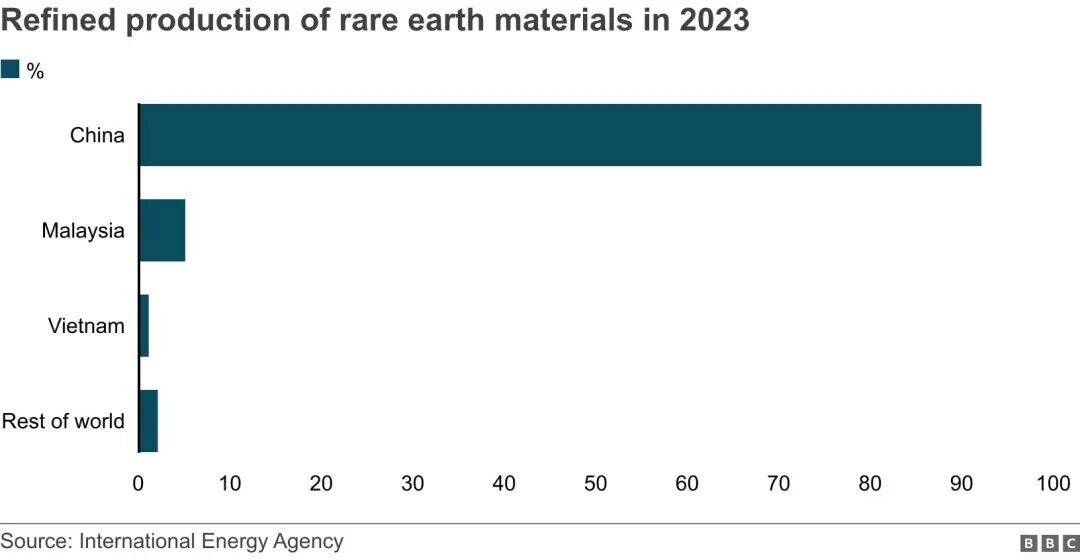
Core Viewpoint - The article discusses the escalating tensions between the U.S. and China regarding technology and material supply chains, highlighting how U.S. measures to isolate China have inadvertently revealed America's own vulnerabilities in critical materials and technologies [1][2][4]. Group 1: U.S. Measures and China's Response - The U.S. has implemented tariffs, export bans, and sanctions aimed at isolating China and maintaining its technological dominance [1]. - In response, China has enacted stringent export controls on key materials such as lithium batteries, graphite anodes, and rare earth technologies, marking a significant escalation in the global materials sovereignty struggle [3][5]. - These measures are framed as necessary for national security and are intended to prevent the proliferation of weapons [3]. Group 2: Impact on U.S. Industries - The export restrictions target critical sectors including clean energy, military, and semiconductors, which are vital to U.S. economic and technological ambitions [6]. - Over 78% of materials used in U.S. military equipment are sourced from China, indicating a deep reliance on Chinese supply chains [8]. - The inability of the U.S. to quickly replace these materials could lead to significant delays in military production and maintenance [8]. Group 3: Economic Implications - The new export controls could severely impact the U.S. economy, with projections suggesting that GDP growth could be limited to 0.1% in the first half of 2025 without the influence of AI-related capital expenditures [9]. - Supply chain issues in the AI sector could hinder its expansion and lead to increased costs, affecting various industries from electric vehicles to consumer electronics [10][12]. - The U.S. electric vehicle revolution is heavily dependent on a battery supply chain dominated by China, which poses risks to production costs and decarbonization efforts [11][13]. Group 4: Geopolitical Dynamics - The article suggests that the U.S. is facing a strategic embarrassment as it becomes increasingly reliant on a country it seeks to undermine [21]. - European nations may find opportunities to enhance their own industrial capabilities in response to the U.S.-China tensions, potentially leading to a re-industrialization effort [23][24]. - Global South countries are also positioned to leverage their resource wealth, potentially collaborating with China or Europe while avoiding U.S. conditions [25][26]. Group 5: Structural Challenges for the U.S. - The U.S. faces significant challenges in rebuilding its industrial ecosystem, including time, material resources, and technical knowledge [14][16][17]. - Developing new mining and refining capabilities could take a decade, and the U.S. lacks the necessary infrastructure to process its own mineral resources effectively [15][16]. - The article emphasizes the asymmetry in global economic structures, where China leads in actual product production while the U.S. dominates narrative control [27].