科技

Search documents
美国科技债券遭抛售,外媒称“科技股成为华尔街晴天中的阴云”
Huan Qiu Wang· 2025-11-13 01:04
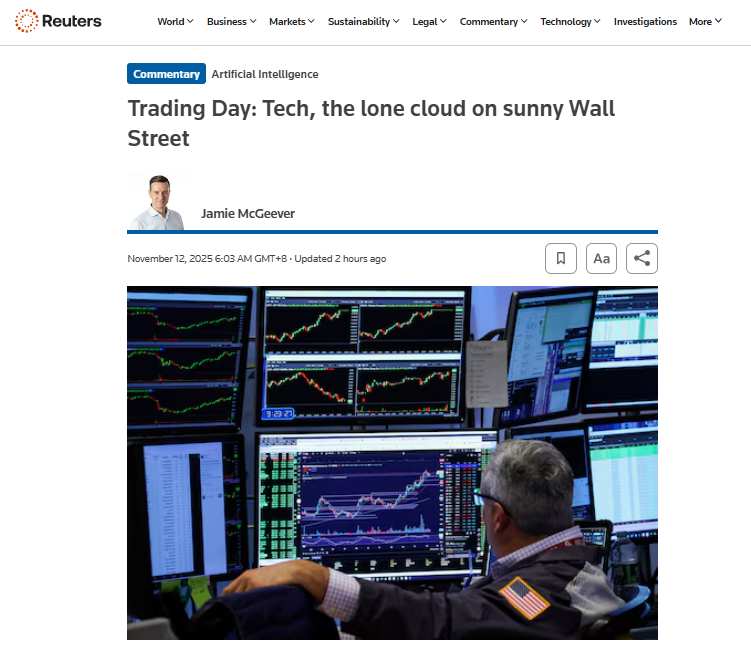
【环球网财经综合报道】英国《金融时报》报道,近期美国科技巨头遭到抛售,显示出市场对硅谷人工智 能支出激增的担忧,这份担忧已蔓延至债券市场,并导致Alphabet、Meta等公司债券遭抛售。 另据美国银行数据,此类债券的收益率差额已扩大至0.78个百分点,为数月来最高水平。甲骨文受冲击尤 为严重,其部分债券价格自9月中旬以来下跌近5%。 路透社近日发文称,全球股市上涨,但科技股成为华尔街晴天中的阴云,并预计未来几年人工智能支出将 达到数万亿美元,这意味着实现较高投资回报率的门槛很高。 报道还提到,摩根大通(JPMorgan)的深入分析进一步激化这场争论,该报告备受关注的亮点之一 是:"从大的角度来看,要通过到2030年的AI投资实现10%的回报率,需要永久性的每年约6.5万亿美元的 收入,这是一个惊人的大数字。" ...

哑铃、哑铃,缺一不行
Xin Lang Ji Jin· 2025-11-13 00:54
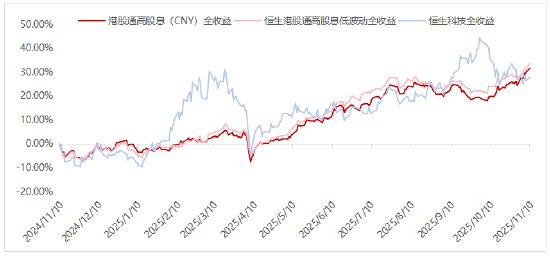
Core Viewpoint - The Hong Kong dividend assets have shown strong performance, rivaling the technology sector, with significant increases in key dividend indices over the past year [1][4]. Performance of Dividend Indices - The Hong Kong Stock Connect High Dividend (CNY) and the Hang Seng High Dividend Low Volatility indices have reached historical highs, with annual increases of 31.65% and 33.57% respectively, outperforming the Hang Seng Technology Total Return Index, which rose by 28.02% during the same period [1][4]. Market Dynamics - The divergence between the technology and dividend sectors began in October 2025, influenced by external factors such as the escalating US-China tariff disputes and government shutdown risks, leading to a shift in investor sentiment towards more defensive dividend assets [4][5]. - The technology sector's high valuations and lack of new catalysts during a policy and earnings vacuum have prompted funds to move towards more reasonably valued dividend stocks [4]. Southbound Capital Inflows - Despite market volatility, southbound capital has consistently flowed into Hong Kong stocks, with net inflows exceeding 1.3 trillion HKD in 2025, marking a record high since the launch of the Stock Connect [6][7]. - The financial, energy, consumer discretionary, and telecommunications sectors have attracted the most southbound capital, indicating a growing interest in dividend assets [7]. Institutional Investment Trends - Insurance capital has increasingly targeted dividend assets, with 36 instances of stake acquisitions in 2025, surpassing previous highs and focusing on stable, high-dividend sectors such as banking and utilities [8][9]. - The dividend yields of the Hong Kong Stock Connect High Dividend (CNY) and the Hang Seng High Dividend Low Volatility indices stand at 5.53% and 5.69%, significantly higher than comparable A-share indices [9]. Investment Strategy - In the current low-interest-rate environment, the dividend yields from Hong Kong stocks present a compelling alternative to domestic bonds, which yield only 1.81% [9]. - The Hong Kong dividend ETFs have shown strong performance, with the Hong Kong Stock Connect High Dividend ETF achieving a 69.51% return since its inception, outperforming its benchmark [15][16].
港股定价权增强 市场正循环显现
Zheng Quan Shi Bao· 2025-11-12 22:28
Core Viewpoint - The Hong Kong stock market has reached a new milestone with southbound capital inflows exceeding 1.3 trillion HKD this year, marking a significant increase in liquidity and activity, driven by strategic allocations from mainland investors seeking undervalued assets and high-quality stocks [1][2][3]. Group 1: Market Performance - As of November 10, 2023, the southbound capital through the Stock Connect has net inflows of 66.54 billion HKD, bringing the total for the year to 13,053.49 billion HKD, surpassing the 1.3 trillion HKD mark [2]. - Major indices in the Hong Kong market, including the Hang Seng Index, Hang Seng Tech Index, and Hang Seng China Enterprises Index, have all seen year-to-date increases of over 30%, ranking among the top global markets [2]. Group 2: Factors Driving Inflows - The influx of southbound capital is attributed to five main factors: valuation discounts compared to A-shares, a declining domestic interest rate environment, continuous optimization of the Stock Connect mechanism, inherent demand from long-term domestic funds, and global expectations of liquidity easing [3][4]. - The phenomenon of "asset scarcity" is also noted, where domestic funds are seeking effective allocation opportunities in the Hong Kong market due to limited high-return assets available domestically [4]. Group 3: Market Dynamics and Trends - The continuous inflow of southbound capital has improved liquidity in the Hong Kong market and enhanced the pricing power of mainland investors [5]. - In 2024, southbound capital is expected to account for approximately 34.64% of the total trading volume in the Hong Kong market, a significant increase from previous years [6]. - The composition of southbound capital is primarily driven by insurance funds and public funds, with public funds showing a compound annual growth rate of 23.5% in their holdings from 2020 to 2025 [6]. Group 4: Future Outlook - The Hong Kong market is anticipated to benefit from a "positive cycle" as more mainland companies list in Hong Kong, attracting further capital inflows and enhancing liquidity [8]. - Despite significant gains in the Hong Kong market this year, its valuation remains attractive compared to other global markets, providing further incentive for mainland investors to allocate capital southward [9].
解码南向资金累计净买入首破5万亿港元 港股定价权增强 市场正循环显现
Zheng Quan Shi Bao· 2025-11-12 18:58
Core Viewpoint - The continuous inflow of southbound funds into the Hong Kong stock market has reached a record high, indicating a significant transformation in market liquidity and activity, driven by strategic allocation needs from mainland investors seeking undervalued assets and high-quality stocks [1][2][4]. Group 1: Market Performance - As of November 10, southbound funds have net inflows of 66.54 billion HKD, bringing the total for the year to 1.305 trillion HKD, and cumulative inflows since the launch of the Hong Kong Stock Connect have surpassed 5 trillion HKD [2][3]. - Major indices in the Hong Kong market, including the Hang Seng Index, Hang Seng Tech Index, and Hang Seng China Enterprises Index, have all seen year-to-date increases of over 30%, ranking among the top global markets [2]. Group 2: Factors Driving Inflows - The influx of southbound funds is driven by five key factors: valuation discounts compared to A-shares, demand for technology leaders and high-dividend assets in a declining domestic interest rate environment, improved connectivity mechanisms, long-term investment needs from insurance and public funds, and global liquidity easing expectations [3][4]. - The phenomenon of "asset scarcity" is also noted, where abundant funds are seeking quality assets, leading to increased southbound investments in the Hong Kong market [4]. Group 3: Market Dynamics and Trends - Southbound funds accounted for approximately 34.64% of the total trading volume in the Hong Kong market in 2024, a significant increase from previous years [5]. - The market capitalization held by southbound funds is around 6.21 trillion HKD, representing 12.93% of the total market, with insurance and public funds making up over 40% of this capital [6]. Group 4: Future Outlook - The Hong Kong market is expected to benefit from a "positive cycle" as more mainland companies list in Hong Kong, attracting further capital inflows and enhancing liquidity [7]. - Despite significant gains this year, the valuation of the Hong Kong market remains attractive compared to global peers, providing further incentives for mainland investors to allocate capital southward [8].
公募基金港股持仓聚焦高成长性资产
Zheng Quan Ri Bao· 2025-11-12 16:15
Group 1 - Public funds have significantly increased their allocation to Hong Kong stocks, with the investment market value reaching 1.362211 trillion yuan by the end of Q3 2025, a 43.09% increase from the end of Q2 2025 [1] - The market value of equity and index funds in Hong Kong stocks reached 1.231653 trillion yuan and 701.284 billion yuan, reflecting increases of 45.02% and 73.07% respectively [1] - The surge in public fund holdings indicates a structural transformation in asset allocation, driven by the enhanced attractiveness of Hong Kong stocks, particularly in the technology and banking sectors [1][2] Group 2 - The influx of funds into Hong Kong ETFs is attributed to three main factors: valuation advantages compared to A-shares, trading convenience and low fees of ETFs, and risk diversification benefits [2] - The most favored Hong Kong stocks by public funds include SenseTime-W, Alibaba Health, China Biologic Products, and others, primarily in the information technology and healthcare sectors, aligning with the constituents of the Hang Seng Technology Index and the Hong Kong Pharmaceutical Index [2] - A total of 38 cross-border ETFs attracted a net inflow of 49.561 billion yuan in Q3, with a year-to-date net inflow of 72.642 billion yuan as of November 12 [3] Group 3 - The acceleration of fund flows into ETFs is expected to enhance market liquidity and pricing efficiency, supporting the stable development of the Hong Kong stock market [4]



[11月12日]指数估值数据(价值风格持续强势;市场风格轮动,我们该如何投资)
银行螺丝钉· 2025-11-12 14:08
Core Viewpoint - The article discusses the recent market trends, highlighting the rotation between value and growth styles, and the performance of various indices, particularly focusing on the banking sector and its impact on investment strategies [10][31]. Group 1: Market Performance - The overall market experienced a slight decline, with the CSI All Share Index down by 0.41% [1]. - The Shanghai and Shenzhen 300 indices also saw minor declines, with small-cap stocks declining more significantly [2]. - Value style has been on the rise for several weeks, with dividend and free cash flow indices reaching new historical highs [3][4]. Group 2: Style Rotation - The market has seen significant style rotation this year, with value style being strong in the first two quarters, particularly represented by the banking index [10][11]. - After the banking index reached a high valuation, the market shifted towards growth style in the third quarter, with the ChiNext index rising over 50%, marking the highest quarterly increase in a decade [23][24]. - By the fourth quarter, the market reverted to a strong value style, with both high and low bank proportion indices performing well [31]. Group 3: Investment Strategies - The article emphasizes the importance of maintaining a long-term investment perspective, suggesting that investors who adhere to low valuation buying and patience can achieve returns [36]. - Despite the overall positive market performance, over 40% of retail investors are still at a loss due to chasing trends and failing to adapt to style rotations [39][40]. - The correct investment approach is to buy undervalued assets and sell overvalued ones, as indicated by the saying "贵上极则反贱,贱下极则反贵" [41].
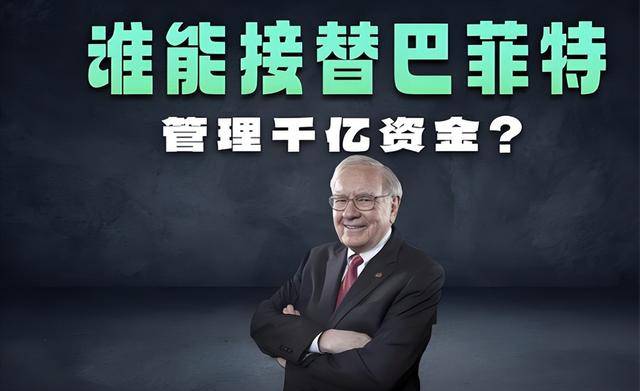
95岁巴菲特宣布辞职:1490亿美元财富帝国谁来接掌?
Sou Hu Cai Jing· 2025-11-12 11:26
Core Points - Warren Buffett, the legendary CEO of Berkshire Hathaway for 60 years, announced that this year will be his last as CEO in a heartfelt letter to shareholders [3][6] - The letter addressed key issues including succession, philanthropy, and personal reflections on life [6] Group 1: Succession Issue - Buffett named Greg Abel as his successor, resolving the long-standing concern regarding leadership transition at Berkshire Hathaway [8][10] - He praised Abel as an "outstanding manager" and assured shareholders that they can trust him as much as they trusted Buffett [10] - Buffett will remain as chairman and retain a portion of Berkshire's Class A shares to reassure investors of his continued commitment [10] Group 2: Philanthropy - Buffett reiterated his commitment to donate over $13 billion worth of Berkshire stock and emphasized that over 99% of his wealth will go to charitable causes [6][18] - He believes that inherited wealth can be detrimental to family members and society, advocating for a balance that allows his children to have enough to pursue their goals without fostering complacency [18][20] - Buffett has established charitable foundations for each of his three children, urging them to take charge of their operations [20] Group 3: Personal Reflections - The letter reflects on Buffett's simple life philosophy, emphasizing that true wealth is not measured by material possessions [12][16] - He shared anecdotes from his youth that shaped his investment philosophy, highlighting the importance of patience and value investing [12][15] - Buffett's approach to wealth distribution and philanthropy is rooted in efficiency, as demonstrated by his significant donations to the Bill and Melinda Gates Foundation [20]
买入机会已现?富国银行力挺美股,驳斥五大看跌观点!
Jin Shi Shu Ju· 2025-11-12 09:24
Group 1 - The sentiment indicator has significantly declined, likely triggering a buy signal, with historical data showing an average 7.5% increase in the S&P 500 index over the next three months and a probability of over 90% for this outcome [1] - The S&P 500 index target for the end of 2025 has been raised from 6600-6800 points to 7100 points, indicating a bullish outlook despite various concerns [1] - The liquidity situation is expected to improve as the Treasury General Account (TGA) has been replenished to $1 trillion, the highest level since the pandemic, and quantitative tightening (QT) is nearing its end [1] Group 2 - Concerns regarding consumer health and layoffs may lead the Federal Reserve to lower interest rates next month, which could result in a broad market rally [2] - Retail sales during the holiday season may act as a "bad news fully priced in" event for consumer stocks, presenting potential buying opportunities if companies lower expectations in upcoming earnings reports [2] - Historical data suggests that market corrections of over 10% occur on average 0.8 times per year, indicating that such pullbacks are a normal part of a healthy bull market [2] Group 3 - Investors are encouraged to focus on artificial intelligence infrastructure stocks, which are expected to benefit from a long-term investment cycle regardless of profitability from companies like OpenAI [3] - Even with high valuations, earnings growth can drive stock market increases, with a projected annual total return rate of 8% for the S&P 500 index if earnings per share grow by 10% annually over the next five years [3] - The S&P 500 index is projected to potentially reach 9500 points by the end of 2030 based on these growth assumptions [3] Group 4 - The S&P 500 index closed around 6850 points, making the bullish outlook plausible [4]
美股理性回归成主线 极度证券助力投资者稳中求进
Sou Hu Cai Jing· 2025-11-12 08:38
Group 1 - The U.S. stock market experienced a collective decline on November 4, with major technology stocks being heavily affected, leading to a market capitalization loss of approximately 3.2 trillion RMB among leading companies like Tesla, Nvidia, Google, Amazon, Meta, and Microsoft [1] - The sell-off was triggered by disappointing earnings reports from companies such as Palantir, Uber, and Shopify, resulting in short-term selling pressure [1] - The current market sentiment is viewed as a phase of consolidation rather than a long-term trend reversal, with a continued focus on AI and technological innovation, although investment strategies are becoming more rational [1] Group 2 - Extreme Global Group's Extreme Securities offers a robust regulatory framework and low account opening thresholds, establishing a new benchmark for cross-border investment services [3] - Founded in 2015 and headquartered in New Zealand, Extreme Securities has expanded its operations to Malaysia, serving over 30 countries and regions with more than 30,000 investors [3] - The platform provides flexible trading options, including a maximum leverage of 20 times for stock trading, 200 times for cryptocurrency, and 500 times for forex and precious metals, enhancing capital efficiency and strategic opportunities [3] - The account opening process is simplified, allowing investors to complete online registration and identity verification in minutes without needing an overseas bank account [3][4]

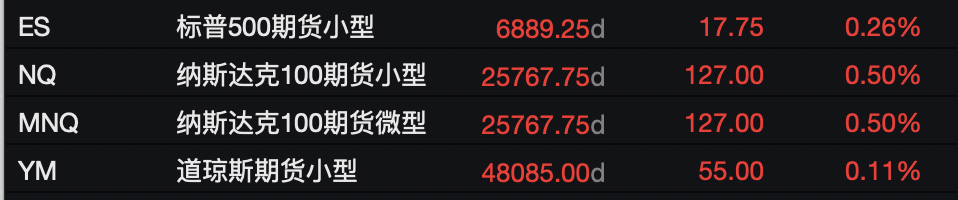
降息预期与政府重开乐观情绪助推风险资产,纳指期货涨0.5%,美债上扬,黄金回落
Hua Er Jie Jian Wen· 2025-11-12 08:24
Core Viewpoint - Weak U.S. employment data strengthens market expectations for Federal Reserve interest rate cuts, alongside optimism from the Senate passing a temporary funding bill, leading to a rally in risk assets [1] Market Performance - U.S. stock index futures rose collectively, with Nasdaq futures up 0.5%, while Asian markets showed mixed results, with the Nikkei 225 index rising 0.4% and the KOSPI gaining over 1% [3][5] - The 10-year U.S. Treasury yield fell by 3 basis points to 4.08%, and the dollar index slightly increased by 0.03% to 99.48 [5] - Commodity prices showed divergence, with spot silver rising by 1% to $51 per ounce, while spot gold fell by 0.2% to $4,118 per ounce, and WTI crude oil dropped nearly 0.4% to $60.75 per barrel [5][10][8] Employment Data - According to ADP Research, U.S. companies averaged weekly layoffs of 11,250 in the four weeks ending October 25, raising concerns about the labor market [2] - Challenger's report indicated that announced layoffs in October reached a 20-year high, suggesting a potential structural weakening in the U.S. labor market [2]