
公用事业

Search documents
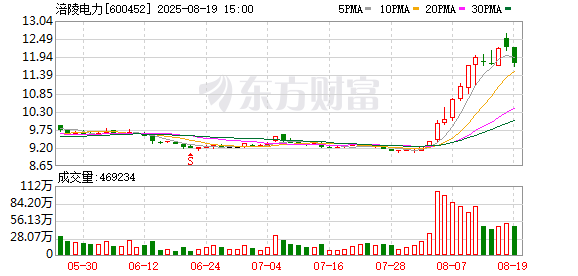
涪陵电力2025半年度拟派5377.9万元红包
Zheng Quan Shi Bao Wang· 2025-08-19 12:57
Core Viewpoint - Fuling Power announced a semi-annual distribution plan for 2025, proposing a cash dividend of 0.35 yuan per 10 shares, totaling approximately 53.78 million yuan, which represents 32.24% of the company's net profit [2][4]. Company Summary - The company reported a revenue of 1.416 billion yuan for the first half of 2025, a year-on-year decrease of 3.86% [2]. - The net profit for the same period was 167 million yuan, down 14.95% year-on-year, with a basic earnings per share of 0.11 yuan and a weighted average return on equity of 3.1% [2]. - This marks the 18th cash distribution since the company's listing [2]. Dividend Distribution History - The latest distribution plan is as follows: - 2025.06.30: 10 shares pay 0.35 yuan (tax included), total cash amount 0.54 billion yuan, dividend yield 0.36% [2]. - Previous distributions include: - 2024.12.31: 10 shares pay 0.55 yuan, total cash amount 0.85 billion yuan, dividend yield 0.48% [2]. - 2024.09.30: 10 shares pay 0.5 yuan, total cash amount 0.77 billion yuan, dividend yield 0.42% [2]. - 2023.12.31: 10 shares send 4 and pay 1.45 yuan, total cash amount 1.59 billion yuan, dividend yield 0.87% [2]. - 2022.12.31: 10 shares send 2 and pay 1.8 yuan, total cash amount 1.65 billion yuan, dividend yield 1.27% [2]. Industry Context - In the public utility sector, Fuling Power's cash distribution ranks fifth among six companies that announced their semi-annual distribution plans for 2025 [4]. - The leading company in terms of cash distribution is Guodian Power, with a total cash amount of 1.7836 billion yuan, followed by Longyuan Power and Jiufeng Energy with 0.836 billion yuan and 0.266 billion yuan, respectively [4].


公用事业公司黑山(BKH.US)拟以36亿美元收购同行NorthWestern (NWE.US)
Zhi Tong Cai Jing· 2025-08-19 12:55
Core Viewpoint - Black Hills Corporation (BKH.US) announced the acquisition of NorthWestern Energy Group (NWE.US) for $3.6 billion, with a total enterprise value of $15.4 billion, aiming to create a regional, regulated natural gas utility company [1] Group 1: Acquisition Details - The transaction values NorthWestern at approximately $59 per share, representing a 7.66% premium over its previous closing price [1] - Under the agreement, NorthWestern shareholders will receive 0.98 shares of Black Hills stock for each share they hold [1] - The deal is expected to close within 12 to 15 months, with Black Hills shareholders owning about 56% of the combined company post-transaction [1] Group 2: Market Reaction - As of the report, Black Hills' stock was down 0.53% in pre-market trading, while NorthWestern's stock was up 3.53% [1]


每日机构分析:8月19日
Sou Hu Cai Jing· 2025-08-19 11:13
Group 1 - The central banks are expected to maintain a cautious approach towards interest rate decisions, with the Federal Reserve unlikely to implement significant rate cuts despite political pressure [1][2] - The market anticipates a potential resumption of the Fed's rate-cutting cycle in September, but the extent of any cuts is expected to be limited to 25 basis points rather than 50 [2] - The Reserve Bank of New Zealand is projected to cut rates by 25 basis points, aligning with market expectations, and is expected to conclude its current easing cycle after November [3] Group 2 - Fitch Ratings indicates that Indian companies are not significantly impacted by U.S. tariffs, but sectors like pharmaceuticals may face increased pressure due to secondary effects of tariffs [4] - If the U.S. maintains higher tariffs compared to other Asian markets, it could pose moderate downside risks to India's projected economic growth rate of 6.5% for FY2026 [4] - The potential for over-supply shifts towards India due to U.S. tariffs could lead to a decrease in domestic prices for products like steel and chemicals, creating a ripple effect in the market [4]
时刻六年险资举牌同业再现,什么信号?
Ge Long Hui· 2025-08-19 10:42
Group 1 - The core viewpoint of the articles highlights a resurgence in insurance companies' stake acquisitions, particularly in Hong Kong stocks, with six instances occurring within two weeks, indicating a shift from banking to consumer and insurance sectors [1][19] - The recent stake acquisitions by insurance funds mark the first occurrence in six years, reflecting a strong demand for high-dividend assets and a shift of funds from traditional dividend stocks to other high-dividend sectors [2][19] - The historical performance of dividend assets shows a cyclical rotation through four distinct phases, with the current phase indicating a strong performance in banking stocks and a relative outperformance of Hong Kong dividends compared to A-shares [2][19] Group 2 - The outlook for Hong Kong dividend opportunities suggests that they serve as a safe haven amid macroeconomic uncertainties, with insurance stocks offering both cyclical resilience and stable profitability [3][19] - The Hong Kong high-dividend low-volatility ETF (520550) tracks a diversified index of high-dividend stocks, providing exposure to various sectors while maintaining a low fee structure of 0.2% [3][5] - The Hong Kong high-dividend low-volatility index has demonstrated superior performance compared to major Hong Kong indices over the past three years, with a cumulative return of 86.88% [8][9] Group 3 - The current state of Hong Kong dividend assets is not overheated, with the high-dividend low-volatility index at a historically low level, indicating potential for future growth [9] - Hong Kong is experiencing a dividend payout peak, with total cash dividends expected to reach HKD 1.38 trillion in 2024, reflecting a year-on-year growth of over 10% [9][19] - Southbound capital inflows have surged, with a record net purchase of over HKD 35.8 billion on August 15, indicating a strong preference for high-dividend stocks across various sectors [13][19]



巴菲特再卖苹果,两大“看空”信号
华尔街见闻· 2025-08-19 10:16
Core Viewpoint - Berkshire Hathaway's recent reduction in its stake in Apple has sparked significant market attention, interpreted as a rational move for risk management and portfolio rebalancing rather than a bearish signal [2][4] Group 1: Investment Strategy - The sale of Apple shares contradicts Warren Buffett's investment philosophy of "buy and hold," suggesting that the current risk-reward ratio for Apple is no longer optimal [2][3] - Selling part of a position indicates that the investor believes the stock's attractiveness has diminished compared to other potential investments [3] Group 2: Portfolio Composition - Apple represents a substantial portion of Berkshire's portfolio, accounting for $66.639 billion, or 25.8% of total holdings [5] - Despite the reduction, Apple's weight in the overall portfolio is not excessively high when considering Berkshire's total assets, which include significant non-public holdings [9][7] Group 3: Market Signals - The small scale of the reduction sends a clear signal that there are concerns regarding Apple, particularly in light of policy uncertainties and valuation issues [10][11] - Policy uncertainties include potential increases in capital gains tax, which could impact future investment decisions [12][14] Group 4: Valuation Concerns - Apple's valuation has increased significantly, with its price-to-earnings (P/E) ratio rising to 35, making it less attractive compared to the past when it was around 10-15 [16] - The current high valuation requires sustained high growth, which may be challenging given recent fluctuations in market share [16][17]


7月经济数据点评:扩大内需从多方面入手
Bank of China Securities· 2025-08-19 05:36
Economic Performance - July industrial added value grew by 5.7% year-on-year, down 1.1 percentage points from June and slightly below the consensus expectation of 5.8%[4] - Retail sales in July increased by 3.7% year-on-year, a decline of 1.1 percentage points from June, with non-automotive retail sales growing by 4.3%[12] - Fixed asset investment from January to July showed a cumulative year-on-year growth of 1.6%, with private investment declining by 1.5%[23] Sector Analysis - From January to July, manufacturing investment rose by 6.2%, while real estate investment fell by 12.0%[25] - High-tech industries saw a cumulative year-on-year growth of 9.5% in industrial added value, indicating resilience in this sector[7] - Service consumption in July grew by 5.2% year-on-year, supported by strong demand during the summer travel season[15] Challenges and Risks - Economic data for July reflects significant downward pressure on growth, influenced by complex external conditions and adverse domestic weather factors[34] - Price factors continue to drag down nominal growth rates in retail sales and fixed asset investment[34] - Risks include potential global inflation resurgence and rapid economic downturns in Europe and the U.S.[36] Policy Recommendations - The report suggests that proactive macroeconomic policies are essential to stimulate domestic demand and support growth[35] - Attention should be given to the implementation of consumption loan interest subsidies and the impact of U.S.-China trade negotiations on foreign trade dynamics[35]
21社论丨持续筑牢A股“健康牛”根基
21世纪经济报道· 2025-08-18 23:52
Group 1 - The A-share market has surpassed a market capitalization of 100 trillion yuan for the first time, with a daily trading volume of 2.81 trillion yuan, marking the third-highest in history [1] - The current market trend is characterized as a "systematic slow bull" market, driven by multiple factors and reflecting a collective expectation for a gradual upward trend [1] - Various market hotspots, including sectors like banking, energy, public utilities, and technology (AI, innovative pharmaceuticals, military, and semiconductors), are contributing to a rotating market state, creating a "slow bull" pattern [1] Group 2 - The ongoing exit of low-end capacity due to the rectification of low-price disorder is expected to enhance industry concentration and improve PPI, providing listed companies with better performance and profit opportunities [2] - The influx of medium to long-term funds from state-owned commercial insurance companies and pension funds into the market has been a significant driver of the current market rally [2] - As of June 30, northbound capital holdings reached 2.29 trillion yuan, an increase of 2.38% from the previous quarter, indicating a growing interest in A-shares [2] Group 3 - There is an expectation for further liquidity release in the market, with predictions of the Federal Reserve entering a rate-cutting cycle, which would enhance global liquidity [3] - Positive factors such as liquidity, technological innovation, and improved market confidence are collectively driving the stock market upward, although maintaining low volatility remains a challenge [3] - The need for market participants to avoid excessive speculation and maintain a stable market environment is emphasized, with a call for institutional investors to uphold market stability [3]

险资今年举牌30次助力牛市
2 1 Shi Ji Jing Ji Bao Dao· 2025-08-18 23:09
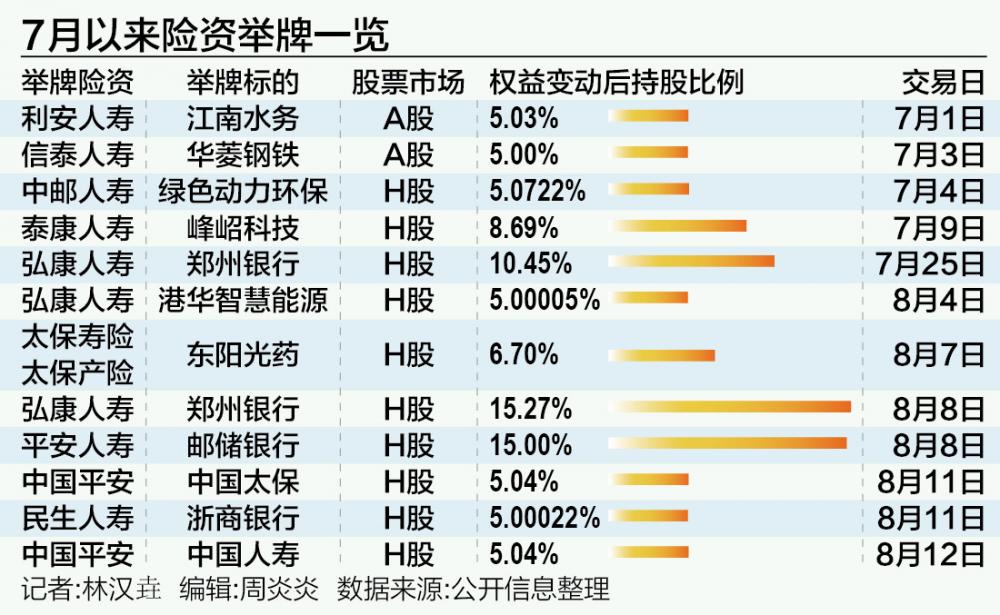
Core Viewpoint - The activity of insurance funds in the capital market has significantly increased in 2025, with a record 30 stake acquisitions this year, second only to 2015's 62 acquisitions, indicating a robust trend towards long-term investment in the A-share market [1][2][3]. Group 1: Insurance Fund Activity - Insurance funds have made 30 stake acquisitions this year, surpassing 20 in 2024 and 26 in 2020, with a notable focus on both A-shares and H-shares [2][3]. - The sectors targeted by insurance funds include banking, public utilities, non-bank financials, media, and pharmaceuticals, with banks being the most favored, receiving 14 out of 30 acquisitions [3][4]. - The total amount involved in the long-term investment reform pilot has reached 222 billion yuan, with seven insurance fund private equity companies established [1][6]. Group 2: Market Impact - On August 18, the total market capitalization of A-shares surpassed 100 trillion yuan for the first time, with the Shanghai Composite Index reaching a nearly 10-year high [1][8]. - The current market is characterized by a "slow bull" trend, supported by improving economic conditions and increased capital inflow [9][10]. - Insurance funds are seen as a key driver of this market trend, enhancing the participation of institutional investors and stabilizing market fluctuations [11][12]. Group 3: Regulatory Environment - Recent regulatory measures have encouraged insurance funds to increase their equity investments, with a target for large state-owned insurance companies to allocate 30% of new premiums to A-shares starting in 2025 [10][11]. - The adjustment of regulatory ratios for equity assets has further expanded the investment scope for insurance funds, promoting a more favorable environment for long-term investments [10][11]. - The establishment of private equity funds by insurance companies is aimed at optimizing asset-liability management and reducing the volatility of equity investments [7][8].
21社论丨持续筑牢A股“健康牛”根基
2 1 Shi Ji Jing Ji Bao Dao· 2025-08-18 22:41
Group 1 - The A-share market's total market capitalization has surpassed 100 trillion yuan for the first time, with a daily trading volume of 2.81 trillion yuan, marking the third-highest in history [1] - The current market trend is characterized as a "systematic slow bull," which reflects a collective expectation for a gradual upward movement rather than a heated market [1] - Various sectors, including banking, energy, public utilities, and technology, are experiencing alternating rotations, contributing to a stable "slow bull" market without overheating [1] Group 2 - The ongoing exit of low-end production capacity due to the rectification of low-price competition is expected to enhance industry concentration and improve pricing power in globally competitive sectors, thereby boosting company performance and profits [2] - The influx of medium to long-term funds from state-owned commercial insurance companies and pension funds into the market has been a significant driver of the current market rally [2] - As of June 30, northbound capital holdings reached 2.29 trillion yuan, an increase of 2.38% from the previous quarter, indicating growing foreign interest in A-shares [2] Group 3 - There is an expectation for further liquidity release in the market, with predictions that the Federal Reserve may enter a rate-cutting cycle, which would enhance global liquidity [3] - Positive factors such as liquidity, technological innovation, and improved market confidence are collectively driving the stock market upward, although maintaining low volatility remains a challenge [3] - It is crucial for market participants to avoid excessive promotion of a "bull market" and to be cautious of speculative activities, ensuring a stable market environment [3]
持续筑牢A股“健康牛”根基
2 1 Shi Ji Jing Ji Bao Dao· 2025-08-18 22:05
Group 1 - The A-share market's total market capitalization has surpassed 100 trillion yuan for the first time, with a daily trading volume of 2.81 trillion yuan, marking the third-highest in history [1] - The current market trend is characterized as a "systematic slow bull," which reflects a collective expectation for a gradual upward movement rather than a heated market [1] - Various sectors, including banking, energy, public utilities, and technology, are experiencing alternating rotations, contributing to the "slow bull" pattern without overheating the overall market [1] Group 2 - The ongoing exit of low-end production capacity due to the rectification of disorderly low-price competition is expected to enhance industry concentration and improve pricing power in globally competitive sectors, thereby boosting company performance and profits [2] - The influx of medium to long-term funds from state-owned commercial insurance companies and pension funds into the market has been a significant driver of the current market rally, alongside a reduction in U.S. asset allocations [2] - As of June 30, northbound capital holdings reached 2.29 trillion yuan, a 2.38% increase from the previous quarter, indicating growing foreign interest in A-shares [2] Group 3 - There is an expectation for further liquidity release in both domestic and international markets, with the Federal Reserve likely to enter a rate-cutting cycle, which would enhance global liquidity [3] - Positive factors such as liquidity, technological innovation, and improved market confidence are collectively driving the stock market upward, although maintaining low volatility remains a challenge [3] - It is crucial for market participants to avoid excessive speculation and maintain a stable market environment, learning from past experiences to ensure sustainable growth [3]