游戏

Search documents
港股收评:恒指涨0.17%、科指涨0.28%,新消费概念股及军工股走高,有色金属概念股调整,半导体芯片股走低
Jin Rong Jie· 2026-01-22 08:22
Market Overview - The Hong Kong stock index opened high but closed lower, with the Hang Seng Index up 0.17% at 26,629.96 points, the Hang Seng Tech Index up 0.28% at 5,762.44 points, the National Enterprises Index down 0.09% at 9,114.3 points, and the Red Chip Index up 0.48% at 4,223.84 points [1] Company News - Shanghai Electric (02727.HK) expects a net profit of RMB 1.1 billion to RMB 1.32 billion for 2025, an increase of approximately 47% to 76% year-on-year [2] - Kingdee International (00268.HK) anticipates total revenue of RMB 6.95 billion to RMB 7.05 billion for 2025, a year-on-year growth of about 11.1% to 12.7%, with net profit expected between RMB 60 million and RMB 100 million [2] - JD Health saw a significant decline, with shares dropping over 2% [1] - Xiaomi Group (01810.HK) repurchased 7 million shares for HKD 248 million at prices between HKD 35.22 and HKD 35.48 [3] - Bubble Mart (09992.HK) repurchased 500,000 shares for HKD 96.49 million at prices between HKD 191.1 and HKD 194.9 [3] Sector Performance - Major tech stocks showed mixed performance, with Alibaba up 0.98% and Tencent down 0.83% [1] - Semiconductor stocks faced declines, with Zhaoyi Innovation down over 8% [1] - Military stocks strengthened, with China Shipbuilding Defense up over 3% [1] - Internet healthcare stocks were among the biggest losers, with JD Health down over 2% [1] Analyst Insights - Dongwu Securities noted that the Hong Kong market is in a long-term upward trend but faces short-term challenges, with strong consensus on domestic fundamentals but mixed views on overseas factors [5] - Guolian Minsheng Securities expressed optimism about the revaluation of Chinese AI, citing a solid industry catalyst timeline [6] - Morgan Stanley predicted that the upward trend in A-shares and Hong Kong stocks will continue until the Lunar New Year, with earnings expectations being revised upward, particularly in materials and communication services [6] - Guojin Securities highlighted that the valuation advantages of the Hong Kong market will become more pronounced as the domestic economy recovers and overseas monetary policies turn accommodative [7]
育碧股价大幅下跌22%,跌至SBF 120指数成分股底部
Mei Ri Jing Ji Xin Wen· 2026-01-22 08:17
Group 1 - The core point of the article is that Ubisoft's stock price has significantly dropped by 22%, placing it at the bottom of the SBF120 index components following the announcement of a major restructuring plan and the cancellation of six games [1] Group 2 - The company has initiated a large-scale restructuring plan, which is a significant strategic shift [1] - The cancellation of six games indicates a potential shift in the company's development strategy and focus [1]
育碧重组:放弃《波斯王子》重制版,谋求更多出售资产可能
2 1 Shi Ji Jing Ji Bao Dao· 2026-01-22 08:01
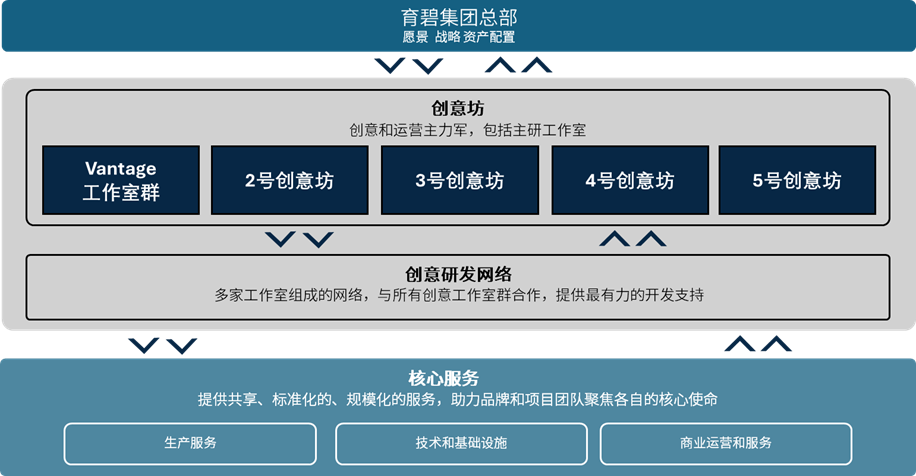
Core Viewpoint - Ubisoft has announced a major restructuring plan that includes redefining its organizational structure, operational model, and product portfolio, which will be implemented by early April 2024 [1][3]. Grouping 1: Restructuring Plan - The restructuring will divide the company into five Creative Houses, each responsible for a unique creative category, with independent financial decision-making authority [3][5]. - The new model aims to enhance innovation capabilities and improve project execution speed by aligning creative and financial responsibilities closer to frontline teams [3][4]. - Ubisoft plans to resume in-office work every Friday while allowing a limited number of remote workdays annually [3]. Grouping 2: Cost Reduction Initiatives - The current cost-cutting plan aims to reduce fixed costs by at least €100 million (approximately ¥814 million) compared to the 2024-25 fiscal year, with an accelerated timeline to achieve this by March 2026 [4]. - The total fixed cost reduction since the 2022-23 fiscal year is expected to reach approximately €500 million, with a target of reducing annualized fixed costs to about €1.25 billion (approximately ¥1.0173 billion) by March 2028 [4][8]. - Recent studio closures and restructuring have resulted in over 150 layoffs, including the shutdown of studios in Halifax, Stockholm, and restructuring in Abu Dhabi, RedLynx, and Massive [4]. Grouping 3: Product Strategy Changes - Ubisoft will significantly modify its product roadmap over the next three years, halting six projects that do not meet the new quality standards or product prioritization [6]. - Seven games will receive additional development time to ensure they meet higher quality benchmarks, including a previously planned release for the 2026 fiscal year that has been postponed to 2027 [6]. Grouping 4: Financial Performance Context - Ubisoft's financial performance has been under pressure, with a reported revenue decline of 20.5% year-on-year to €1.85 billion (approximately ¥15.055 billion) for the 2024-2025 fiscal year, and an operating loss of €15.1 million (approximately ¥12.3 million) [8]. - The company anticipates net revenue of approximately €1.5 billion (approximately ¥12.215 billion) for the 2025-26 fiscal year, with a projected decrease in gross profit of about €330 million [8]. - The CEO has acknowledged the challenges posed by rising development costs and increased competition in the AAA gaming sector, prompting the need for a significant restructuring to return to sustainable growth [8][9].

育碧宣布大规模重组,多款游戏取消或延期
Xin Lang Cai Jing· 2026-01-22 06:52
Group 1 - Ubisoft announced a major corporate restructuring plan, leading to changes in multiple game projects, studio adjustments, and potential layoffs [1][2] - The highly anticipated remake of "Prince of Persia: The Sands of Time" has been canceled, along with three new IP games and one mobile game [2] - Seven Ubisoft games have been delayed, including a game speculated to be a remake of "Assassin's Creed: Black Flag," now scheduled for release in the next fiscal year, 2027 [2] Group 2 - Ubisoft's Stockholm studio will be completely shut down, and the Halifax mobile game studio will also be affected by the restructuring [2] - Other studios, including Ubisoft Abu Dhabi, RedLynx, and Massive (the developer of "The Division"), will undergo restructuring due to a cost-cutting plan, potentially leading to layoffs [2] - The company is shifting its strategic focus towards developing open-world games and online service games, marking a significant change in its strategy [3] Group 3 - Ubisoft will implement a new operational model centered around five "creative workshops," each focusing on a unique creative area responsible for product development and market strategy [3] - All teams will return to a five-day office work schedule, while the company will provide an annual remote work allowance to accommodate some remote work needs [3]
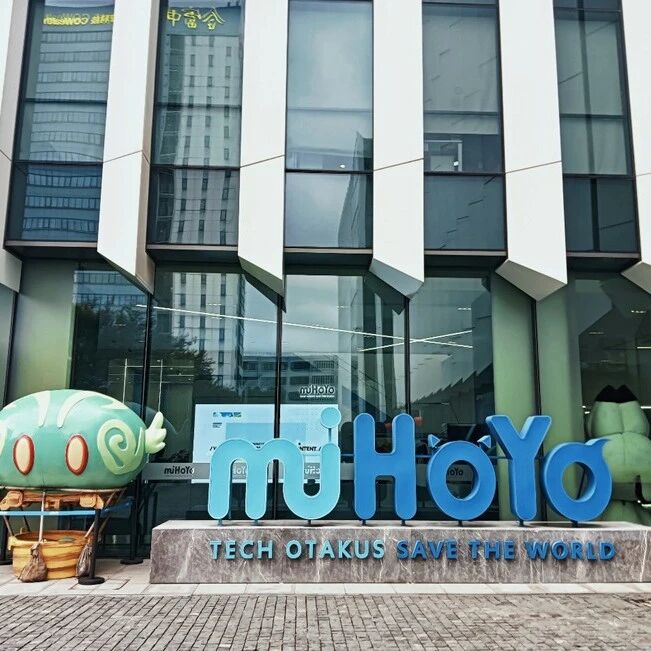
再问米哈游“创新不停 瓶颈却至”,下一个爆款究竟在哪里?
Xin Lang Cai Jing· 2026-01-22 06:06
Core Viewpoint - In 2025, miHoYo's performance reflects a duality of innovation persistence and emerging bottlenecks, with significant revenue growth driven by established IPs but concerns over a lack of new product innovation [3][16][27] Revenue and Growth - miHoYo's game business revenue is projected to reach 78 billion, a year-on-year increase of 38%, significantly outpacing Tencent's 8% and NetEase's 12% growth [3][16] - The combined revenue from "Genshin Impact" and "Honkai: Star Rail" is expected to exceed 44 billion, with "Honkai: Star Rail" achieving over 4 billion in annual revenue [3][16] Innovation and Product Development - The company's innovation in 2025 focuses on deepening technology within mature IPs and exploring flagship new products, but it remains tied to a single genre, limiting growth potential compared to Tencent and NetEase's multi-genre strategies [5][18] - The announcement of the UE5 flagship title "Varsapura" is a highlight, yet it is still in the prototype stage and has not yet generated revenue [6][19] Legal and Management Challenges - miHoYo has initiated 12 lawsuits related to leaks, including a record claim of 230 million against the leak of "Varsapura" test materials, indicating a strong stance on protecting innovation [7][20] - Frequent leaks have exposed management vulnerabilities, leading to concerns about user expectations and the potential for reduced innovation space [20] Strategic Focus and Investment - The company's strategy emphasizes focusing on core genres and investing in the supply chain, with three founders maintaining stable roles to support business operations [9][22] - Three invested companies have filed for IPOs in 2025, aiming to cover the entire innovation chain from development to monetization [10][23] Market Position and Competitive Landscape - miHoYo's valuation increased by 38% in 2025, higher than Tencent's decline of 12% but lower than NetEase's 25% growth, indicating a reliance on the success of future products like "Varsapura" for maintaining high valuation [11][24] - The company faces challenges in expanding into new genres and markets, particularly in response to competition from ByteDance's casual games and the lack of a comprehensive monetization strategy [11][24] Conclusion - miHoYo's 2025 performance illustrates a balance between ongoing innovation and the need to overcome strategic conservatism and ecological weaknesses, with future success likely hinging on the successful launch of "Varsapura" and diversification beyond existing IPs [26][27]
一年爆赚上百亿,震惊业内的低调北京大厂,十几年没走过寻常路
3 6 Ke· 2026-01-22 05:28
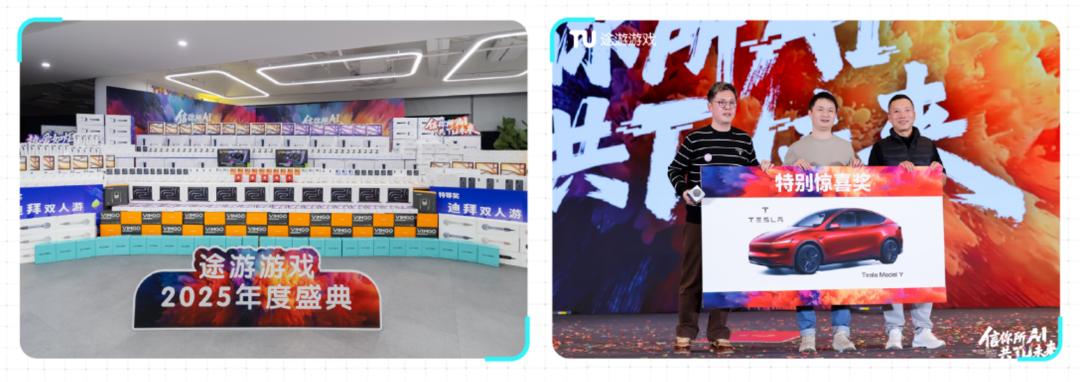
Core Viewpoint - The article highlights the impressive performance and strategic evolution of Tuyu, a traditional gaming company that has successfully navigated the competitive landscape of the gaming industry by diversifying its product offerings and leveraging innovative marketing strategies [1][7]. Group 1: Company Performance - Tuyu has shown strong revenue growth, with its game "Fishing Battle" projected to generate 900 million yuan in iOS revenue by 2025, placing it in the top 10 of revenue rankings despite fierce competition from major players like Tencent and NetEase [3][4]. - The company’s total annual revenue exceeds 10 billion yuan, driven by multiple successful titles including "Tuyu Fishing" and "Tuyu Dou Di Zhu," which collectively generate nearly 1.8 billion yuan on iOS alone [4][7]. Group 2: Strategic Evolution - Tuyu's founders, with backgrounds in major internet companies, have applied innovative internet thinking to the gaming sector, allowing the company to differentiate itself from traditional competitors [10][11]. - The company has effectively transitioned from a focus on traditional card games to mobile gaming, capitalizing on the growing popularity of mobile platforms and adopting aggressive branding strategies [11][13]. Group 3: Market Adaptation - Tuyu entered the mini-game market early, predicting its growth trajectory and adapting its product development to meet evolving user preferences, which has led to successful titles like "Next God: Light Awakening" and "Wandering Supermarket" [19][21]. - The company has successfully integrated social features into its games, enhancing user engagement and retention, which has been crucial for its success in the competitive gaming landscape [30][31]. Group 4: Long-term Vision - Tuyu demonstrates a commitment to long-term development, as evidenced by the seven-year development cycle for its SLG game "Three Kingdoms: Ice Age," reflecting the company's patience and dedication to quality [35][36]. - The company’s approach emphasizes understanding user needs and preferences, allowing it to create games that resonate with a broad audience, including previously untapped demographics [36][37].
银行回撤,大消费/互联网紧随其后;医疗和科技逆势小涨
Ge Long Hui· 2026-01-22 05:17
大消费冲高回落,截止午盘下跌0.23%。其中安踏体验下跌5.75%,李宁下跌4%,申洲国际/蜜雪集团/ 康方生物等股跌幅均在3%上方;同程旅行/阿里健康/药明联合等涨幅均在2%上方。 恒生科技开盘后只需拉升,随后维持在中轴上方盘整,截止午盘上涨0.13%。其中百度集团上涨 3.29%,中芯国际上涨3.15%,比亚迪股份/阿里巴巴等股涨幅均在1%上方;网易逆势下跌3.43%,小米 集团下跌2.31%。 内容只是个人观点,仅供参考,不作为投资依据!欢迎关注交流,互相学习、共同探讨! 冲高回落维持弱势,截止午盘,恒生指数小跌0.15%。银行跌幅居前,大消费/互联网等紧随其后;恒生 医疗和恒生科技等逆势小涨。 银行高开低走后一路回撤,截止午盘下跌0.29%。重庆农村商业银行下跌1.51%,大新集团下跌1.5%, 农业银行/光大银行/招商银行等股跌幅均在1%上方,青岛银行/招商银行/中国银行等股逆势小涨。 ...

游戏赚来的钱,米哈游投出3家IPO
首席商业评论· 2026-01-22 04:52
Core Viewpoint - The article discusses the significant investment activities of the gaming giant miHoYo, highlighting its strategic investments in various sectors, particularly in AI and technology, as a means to diversify and secure future growth amidst uncertainties in its core gaming business [4][16]. Investment Strategy - miHoYo has made over 30 disclosed investments across various fields, including AI, embodied intelligence, and commercial aerospace, indicating a broad interest in future technologies [4][6]. - The company has invested in projects like MiniMax, Suplay, and Soul, which are either approaching IPO or have already gone public, showcasing its commitment to nurturing potential high-growth ventures [4][6][16]. Investment Portfolio - miHoYo's investment portfolio includes significant stakes in Suplay (11.86%) and Soul (5.47%), both of which are in the gaming and social media sectors [6][8]. - The company has also invested in cutting-edge fields such as controlled nuclear fusion and brain-computer interfaces, reflecting its ambition to be at the forefront of technological advancements [7][14]. Market Trends and Insights - The article notes that miHoYo's investments are driven by the growing demand for virtual companionship and identity recognition among younger generations, suggesting a strategic alignment with market trends [13][14]. - The decline in revenue from its flagship game "Genshin Impact" has prompted miHoYo to seek new revenue streams through investments, indicating a proactive approach to mitigate risks associated with its core business [17][18]. Future Outlook - miHoYo's aggressive investment strategy is seen as both a proactive and reactive measure to address uncertainties in its gaming revenue, with the potential for these investments to yield significant returns in the future [16][18]. - The company’s focus on technology investments is expected to enhance its operational efficiency and expand its existing ecosystem, thereby creating new revenue opportunities [15][18].
传媒互联网行业周报:推荐游戏板块,《心动小镇》国际服表现出色-20260122
CMS· 2026-01-22 04:35
Investment Rating - The report maintains a strong recommendation for the gaming sector, particularly highlighting the performance of "Heart Town" in international markets [1][2]. Core Insights - The media industry has seen a 3.34% increase over the past week, ranking third among all sectors, and a 16.92% increase year-to-date, leading all sectors [1]. - The report emphasizes the potential of key companies in the gaming sector, with several titles showing significant performance improvements in international markets [1]. - The report identifies opportunities in the overseas and female-oriented gaming markets, projecting a 14.08% year-on-year increase in sales revenue for the Chinese market in the first half of 2025, reaching 168 billion yuan [1]. - AI applications are expected to continue influencing the gaming industry positively, enhancing production efficiency and creativity [1]. Summary by Sections Market Performance - The media sector's overall performance shows a 3.34% increase from January 12 to January 18, with the media index outperforming the Shanghai Composite Index [10][1]. - Key companies in the media sector have shown varied performance, with notable increases in stocks like Liou Co. and People's Daily [13]. Gaming Sector Highlights - "Heart Town" has topped the free charts in over 50 regions globally since its international launch on January 8, 2026, indicating strong overseas marketing capabilities [2]. - The gaming market in China is projected to reach 168 billion yuan in sales revenue in the first half of 2025, with a user base of 679 million [1]. - The report highlights the significant growth potential in the female gaming market, with a projected market size of 8 billion yuan in 2024, growing at a rate of 124.1% [1]. Company Performance - Key companies such as Century Huatong and Giant Network are expected to see significant revenue growth from new game launches and international expansions [1]. - The report notes that AI technology is enhancing game production and marketing efficiency, with companies like 37 Interactive Entertainment and Century Huatong investing in related technologies [1].
游戏赚来的钱,米哈游投出3家IPO
创业邦· 2026-01-22 03:55
Core Viewpoint - The article discusses the investment strategies of the gaming giant miHoYo, highlighting its significant investments in various sectors, particularly in AI and virtual social platforms, and the implications of these investments for the company's future growth and diversification [6][20]. Investment Overview - miHoYo has made over 30 investments across diverse fields, including AI, embodied intelligence, and commercial aerospace, indicating a broad interest in future technologies [6][7]. - The company invested in MiniMax, a leading AI player, during its angel round when its valuation was around 1.2 billion, and its market value has since exceeded 100 billion post-IPO [6][8]. - miHoYo holds significant stakes in several companies, including 11.86% in Suplay and 5.47% in Soul, both of which are preparing for IPOs [7][8]. Investment Strategy - The investment strategy reflects a preference for projects that can enhance or replicate the successful business model established by miHoYo's games, which combine intricate characters with deep emotional connections [13][15]. - Investments in AI companies aim to improve development efficiency for existing games, as seen in the collaboration with MiniMax for the development of "崩坏·星穹铁道" [17]. Market Trends and Future Outlook - The gaming industry is experiencing a decline in revenue from flagship titles like "原神," prompting miHoYo to seek new revenue streams through strategic investments [20]. - The company’s investments are seen as a proactive measure to mitigate uncertainties in its core gaming business, with a focus on emerging technologies that align with the evolving needs of younger generations for virtual companionship and identity [15][20]. Regional Focus - Nearly half of miHoYo's investment projects are located in Shanghai, indicating a regional preference in its investment strategy [18]. Conclusion - miHoYo's aggressive investment approach is a blend of proactive growth strategies and reactive measures to address uncertainties in its primary business, reflecting a broader trend among gaming companies to diversify into technology sectors [21].