
基金业

Search documents
资管周报:收益率超37%的理财产品“诱惑” 十余家券商资管核心岗位调整
Xin Lang Cai Jing· 2025-11-24 04:21
Group 1: Market Trends - The Hong Kong IPO market has seen a significant increase in financing, with a total of HKD 250.5 billion raised as of November 19, 2025, representing a 172.44% increase compared to the previous year [1] - The "fixed income +" funds have performed exceptionally well this year, with returns reaching up to 45%, and the industry expects a return of 2%-5.5% for next year [4] - The FOF (Fund of Funds) market has rebounded significantly, with 69 new FOFs established this year, raising a total of CNY 69.236 billion, the highest in three years [7] Group 2: Pension and Financial Products - The personal pension system has achieved notable success in its three years of implementation, with 72.79 million accounts opened and over 1,245 products available, covering savings, insurance, funds, and wealth management [3] - Banks are increasingly focusing on the pension finance sector as a new growth area, especially in light of declining demand for traditional real estate and infrastructure loans [2] Group 3: Fund Management and Performance - The ETF market has reached a new high, with total market size at CNY 5.7 trillion and bond ETFs surpassing CNY 710 billion [5] - The public fund industry has seen significant changes in management, with 153 companies undergoing executive changes this year, indicating a dynamic shift in leadership [8]

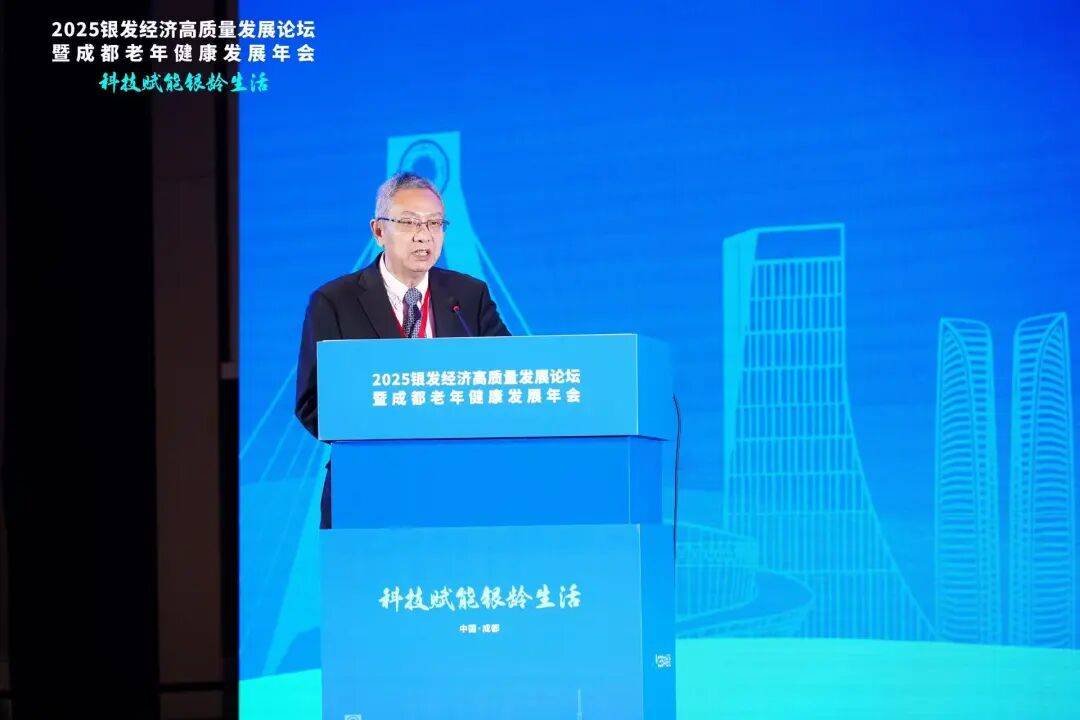
借鉴国际经验,建设中国国情“三支柱”养老保障体系
Sou Hu Cai Jing· 2025-11-23 02:47
Group 1: International Experiences - The U.S. OASDI program calculates pensions based on indexed monthly average wages, which helps to narrow income disparities [1] - Germany's statutory pension insurance combines "pay-as-you-go" and "personal accounts" models to enhance risk resistance [1] - Australia's Superannuation scheme mandates employer contributions, achieving a coverage rate exceeding 90% [1] - Canada's Registered Pension Plan (RPP) offers tax incentives to encourage corporate participation [1] Group 2: China's Practices and Innovations - China is advancing nationwide coordination of basic pensions to address regional fund imbalances, aiming for a "single reservoir" approach [1] - The exploration of a dual-track system of "basic pension + personal accounts" seeks to increase subsidies for low-income groups [1] - A pilot program for long-term care insurance is set to cover 45 million disabled elderly individuals, with cumulative expenditures exceeding 85 billion yuan by 2024 [1] - The expansion of personal pension trials will raise the annual contribution limit to 30,000 yuan, with enhanced tax incentives [3] - The nationwide rollout of the personal pension system starting in 2025 is expected to attract long-term capital into the market, with over 18 million accounts opened in the first month [3] - Development of "age-friendly" financial products, such as retirement target funds and commercial care insurance, is underway [3] - Financial institutions are encouraged to collaborate with elderly care service providers to offer integrated "finance + service" solutions [3]
央行报表及债券托管量观察:债市主线暂缺下的机构行为特征
Huachuang Securities· 2025-11-20 13:25
1. Report Industry Investment Rating The report does not mention the industry investment rating. 2. Core Viewpoints of the Report - The year - end bond market rally can still be expected, but the magnitude should be rationally viewed. Bank, insurance, and wealth - management funds still have bond - allocation needs, protecting the market. However, the rate - cut expectation is weaker than in the past two years, so the rally may be limited [5][7][109]. - Currently, the three factors affecting bond - market fluctuations are risk preference, fund sales regulations, and year - end rally. As the negative impacts of risk preference and fee regulations are weakening, the risk of yield rising above the previous high is controllable. Before the implementation of the fee regulations, the bond market may fluctuate narrowly around 1.8%, and a potential decline in yield may occur later [5][7][109]. - Structurally, there is room to explore the spread of 3 - 5y policy - financial bonds. Attention can be paid to 7y CDB bonds in the medium - term, and the 30 - 10y treasury bond term spread may continue to compress. The 30y treasury bond swap strategy can be considered, and 15 - 30y local bonds can be participated in after the November supply peak [5][7][109]. 3. Summary According to the Directory 3.1 10 - month Central Bank Balance Sheet and Custody Volume Interpretation - **2025 October Central Bank Balance Sheet Changes**: The central bank's balance - sheet size decreased from 47.14 trillion yuan to 47.06 trillion yuan. The main reduction item on the asset side was "claims on the government", and the main increase item on the liability side was "government deposits". The "other depository corporation deposits" decreased seasonally [12][13][22]. - **Impact of Central Bank Operations on Custody Volume in October 2025**: The net investment scale of innovative tools was close to the change in the custody - account balance. The main incremental bond type was local bonds, and treasury bonds shifted from reduction to increase [27]. 3.2 Leverage Ratio Driven by the carry - trade space, institutions' willingness to increase leverage marginally recovered. In October, the average monthly trading volume of repurchase increased, and the average leverage ratio of bond funds rose. It reached the highest level in early November and then declined due to tightened liquidity [30]. 3.3 By Institution - **Banks**: Big banks' bond - allocation speed slowed down, with both primary - and secondary - market bond - buying efforts decreasing. Rural commercial banks may still have bond - allocation needs as their deposit growth rate exceeds the loan growth rate [42][48][54]. - **Insurance**: In the context of a bullish equity market, the incremental bond investment of insurance companies declined. In Q3 2025, there was an inversion between the incremental bond investment and secondary - market bond - buying scale. However, in the future, there may still be bond - allocation demand for incremental funds [62][70]. - **General Funds**: The bond - allocation sentiment improved. At the end of the year, there may still be a tendency to front - run, but the intensity may weaken. The scale of bond funds increased, and wealth - management products had strong bond - allocation demand, which is beneficial for the year - end rally [72][80][83]. - **Foreign Capital**: The comprehensive return on investing in certificates of deposit decreased, and foreign capital maintained a net outflow, mainly reducing holdings of certificates of deposit and policy - financial bonds while increasing holdings of treasury bonds [84][91]. 3.4 By Bond Type In October, the incremental custody volume of the bond market rebounded, and certificates of deposit and government bonds were the main supporting items. The net financing scale of government bonds decreased, the supply of policy - financial bonds slightly increased, and the net financing of certificates of deposit increased significantly [92][99][102].
5年期定存产品首见“下架”!存款还能去哪“增值”?
Sou Hu Cai Jing· 2025-11-18 16:40
Group 1 - The core viewpoint of the articles highlights the declining interest rates on bank deposits, particularly the disappearance of 5-year deposit products among small and medium-sized banks, indicating a broader trend in the banking industry under pressure from narrowing net interest margins [1][2][3] - Recent statistics show that dozens of small and medium-sized banks have lowered deposit rates, with some products decreasing by over 60 basis points, and many banks have removed 5-year deposit products from their offerings [1][2] - The net interest margin for commercial banks was reported at 1.42% in Q2 2025, a decrease of 0.01 percentage points from Q1, remaining at historically low levels [1][2] Group 2 - In response to declining deposit rates, many young investors are turning to funds, particularly ETFs, which offer a diversified investment approach with lower risk compared to individual stock purchases [2][3] - The domestic ETF market has seen significant growth, surpassing 5 trillion yuan in total scale, with stock ETFs experiencing the most substantial increase, growing by 512.37 billion yuan in just four months [2] - Various ETF options are recommended for different investment strategies, including A500 ETF for balanced exposure to core assets, a dividend-focused ETF for lower volatility, and a technology-focused ETF for those willing to accept some risk [3]

帮主郑重:黄金投资备选方案,
Sou Hu Cai Jing· 2025-11-18 05:28
Group 1 - The article presents three mid-to-long-term gold investment options suitable for different budget levels, emphasizing a stable allocation strategy rather than following market trends [1][3] Group 2 - The first option is a bank accumulation gold product with a minimum investment of 1200 yuan for China Construction Bank and 1500 yuan for China CITIC Bank, recommended for those with stable spare cash. It suggests a monthly fixed investment approach to average costs over time, focusing on large banks for stability and ease of liquidation, with a minimum holding period of 1-2 years [3] - The second option is a low-threshold gold ETF linked fund, allowing investments starting from as low as 10 yuan or 100 yuan. This option is ideal for beginners with limited funds, as it tracks gold prices without the need for physical storage. A monthly investment strategy is also recommended to mitigate short-term volatility [3] - The third option is a gold-themed index fund that invests in quality companies within the gold industry, such as mining and processing firms. This option provides exposure to both gold price appreciation and industry growth, with a low entry point of a few hundred yuan. It is advised to select funds with experienced managers and significant holdings in leading companies, with a recommended holding period of 3-5 years [3][4] Group 3 - All three investment strategies avoid short-term speculation and align with a mid-to-long-term investment logic, allowing investors to choose based on their budget and risk tolerance [4]
固收-3-5Y政金债的结构性行情
2025-11-18 01:15
Summary of Key Points from Conference Call Industry Overview - The conference call primarily discusses the fixed income market, particularly focusing on government bonds and the impact of monetary policy changes on the financial sector. Core Insights and Arguments 1. **Monetary Policy Shift**: The central bank has shifted its approach, allowing credit growth to remain stable rather than requiring year-on-year increases, aiming to prevent excessive competition among financial institutions and ensure reasonable profit margins [1][3][5] 2. **Diverse Monetary Tools**: The central bank is utilizing a variety of tools for injecting base currency, including overnight reverse repos, MLF, and relending, rather than solely relying on rate cuts [1][3][5] 3. **Loan Rate Alignment**: There is an emphasis on aligning loan rates with government bond yields to reflect true financing costs and avoid irrational competition among financial institutions [1][3][5] 4. **Reducing Financing Costs**: Strategies to lower financing costs focus on structural adjustments, such as increasing direct financing through government bond issuance and fiscal subsidies, with expectations of government leverage exceeding new credit growth next year [1][5][6] 5. **Shift in Fund Allocation**: From Q3 onwards, funds have gradually shifted towards 3-7 year government bonds, with an estimated 200 billion and 300 billion entering the market by year-end and Q1 of the following year, respectively [1][4][7] 6. **Focus on Government Bonds**: Joint-stock banks are particularly interested in 3-7 year government bonds due to their increasing yield spread compared to AAA-rated corporate bonds, enhancing their investment appeal [1][10] Additional Important Insights 1. **Impact of Fiscal Funds**: The release of 500 billion in quasi-fiscal funds as project capital may lead to increased nominal interest rates and potential inflation if physical work volume rises [2][12] 2. **Market Reactions to Fund Behavior**: The behavior of amortized cost funds has significant market implications, with a notable shift towards 3-7 year bonds, indicating a potential chain reaction in the market [4][7] 3. **Banking Sector Adjustments**: The pressure from deposit migration has led some banks to withdraw 3-5 year fixed deposit products, reflecting a trend towards more liquid deposits and a desire to reduce long-term liabilities [11] 4. **Investment Strategy of Funds**: Funds are expected to maintain a high allocation to government bonds, with estimates suggesting that 70-80% of new allocations will be in government bonds, with potential substitutes being 3-7 year government bonds if full allocation is not achieved [8][9] This summary encapsulates the key points discussed in the conference call, highlighting the evolving landscape of the fixed income market and the strategic responses from financial institutions.
流动性与同业存单跟踪:从核心超储偏低的视角理解资金面和分层利差
ZHESHANG SECURITIES· 2025-11-16 11:40
1. Report Industry Investment Rating No relevant information is provided in the content. 2. Core Viewpoints of the Report - In the situation of low core excess reserves, factors such as large - scale government bond net payments and frozen funds from new stock subscriptions on the Beijing Stock Exchange can lead to a tightening of the capital market and an increase in repurchase rates. However, the strong lending capacity of non - bank institutions like money market funds has kept the capital stratification spread low, which is favorable for inter - bank certificate of deposit (CD) pricing. But the investment in 1 - year CDs still requires consideration of cost - effectiveness [1][14][15]. 3. Summary According to the Table of Contents 3.1 From the Perspective of Low Core Excess Reserves to Understand the Capital Market and Stratification Spread - **Analysis of the Tightening Capital Market**: The official excess reserve ratio at the end of September 2025 was 1.40%, lower than that in September 2024 and the estimated value. The calculated core excess reserve ratio was 0.5%, lower than the previous forecast. Large - scale government bond net payments (nearly 500 billion yuan in the past week) and frozen funds from new stock subscriptions on the Beijing Stock Exchange (about 870 billion yuan) were the main reasons for the capital tightening in the past week. The impact of the full deposit of payment institution customer reserves during "Double Eleven" on the capital market was likely not the cause [2][12][13]. - **Analysis of the Compressed Capital Stratification Spread**: The continuous compression of the capital stratification spread indicates the strong lending capacity of non - bank institutions. Since 2024, regulatory measures have led to a shift of commercial bank deposits to non - bank institutions, increasing the lending power of non - bank institutions and decreasing that of commercial banks. This has compressed the spread between R007 and DR007. The compressed spread is beneficial for inter - bank CD pricing, but the investment in 1 - year CDs still needs to consider cost - effectiveness [4][14][15]. 3.2 Narrow - Sense Liquidity - **Central Bank Operations**: In November, the net investment of outright reverse repurchase was 50 billion yuan. In the past week, the net investment of pledged reverse repurchase was 626.2 billion yuan, with large net investments on Tuesday and Wednesday. As of November 14, the balance of reverse repurchases was 1122 billion yuan, at a relatively high level [16][17]. - **Institution Lending and Borrowing**: On November 14, the net lending amount of large - scale banks decreased compared to November 7, while the net lending balance of money market funds increased. The net lending of joint - stock banks was at a neutral level compared to previous years. The balance of bonds to be repurchased in the inter - bank market decreased, and the market leverage ratio declined [19][26]. - **Repurchase Market Transactions**: In the past week, the volume and price of the inter - bank pledged repurchase market were stable. The median daily trading volume decreased slightly, and the median R001 increased slightly. The liquidity friction was minimal [31]. - **Interest Rate Swaps**: The 1 - year interest rates of FR007 IRS and SHIBOR 3 - month IRS were basically flat compared to the previous week, and both were at relatively low levels in the historical range [38]. 3.3 Government Bonds - **Next - Week Net Payments**: In the past week, the net payment of government bonds was 472.5 billion yuan, and it is expected to be 362.9 billion yuan in the next week. The net payment pressure is relatively large, especially on Monday [39]. - **Current Issuance Progress**: As of November 14, the net financing progress of national debt was 91.5%, and the issuance progress of new local bonds was 93.3%. The issuance of refinancing special bonds has completed the annual task [40]. 3.4 Inter - bank Certificates of Deposit - **Absolute Yields**: On November 14, the SHIBOR quotes of various maturities and the yields of AAA - rated inter - bank CDs of various maturities showed different changes compared to November 7 [47][48]. - **Issuance and Stock**: In the past week, the total issuance of inter - bank CDs increased. In terms of issuance terms, the proportions of 6 - month and 9 - month CDs increased, while those of 1 - month, 3 - month, and 1 - year CDs decreased [50][52]. - **Relative Valuation**: On November 14, the spreads between the 1 - year AAA - rated inter - bank CD yield and R007, and between the 10 - year national debt yield and the 1 - year AAA - rated inter - bank CD yield were at certain historical quantiles [55].
别再瞎存钱吃利息了!银行朋友偷偷教我的 4 个理财招,稳赚还不踩坑
Sou Hu Cai Jing· 2025-11-13 10:45
Core Insights - The article emphasizes the importance of not just saving money in traditional bank accounts, as the interest earned often does not keep up with inflation, leading to a gradual devaluation of savings [2][7] Group 1: Investment Strategies - The first method discussed is the "Ladder Deposit Method," which involves splitting a lump sum into smaller deposits with varying maturities to ensure regular access to funds while benefiting from higher interest rates [3] - The second method is a combination of "Money Market Funds + Demand Deposits," where a portion of funds is kept in a low-interest demand deposit for immediate access, while the rest is invested in money market funds for better returns [4] - The third method is "Treasury Reverse Repos," which allows individuals to lend money to the government with Treasury bonds as collateral, offering flexible terms and competitive interest rates, especially around holidays [5] - The fourth method involves "Hidden Benefits of Large Time Deposits," where banks may offer additional perks such as points redeemable for gift cards or better interest rates for early withdrawals compared to standard demand deposit rates [6] Group 2: Financial Awareness - The article highlights the misconception that financial management is only for the wealthy, encouraging individuals with smaller amounts of money to explore suitable investment options [7] - It stresses the need for individuals to actively compare interest rates and investment options to maximize returns, rather than relying solely on traditional savings methods [6][7]

多空因素交织,农商行再入场
Southwest Securities· 2025-11-10 07:15
Report Industry Investment Rating No relevant content provided. Report's Core View - The bond market has shown a volatile downward trend recently due to a mix of bullish and bearish factors. The central bank's restart of open - market Treasury bond trading and the marginal weakening of macro - data have strengthened the expectation of policy easing, providing core support for the bond market. However, the strengthening of the equity market and the approaching implementation of the "Sales New Rules" have caused short - term disturbances to market sentiment. Despite short - term disturbances, the core logic supporting the bond market's improvement at the end of the year remains solid. As the suppression from the equity market eases and market forces undergo structural changes, bond market sentiment is expected to continue to recover, and short - term fluctuations may present good allocation opportunities [2][87][88]. - The central bank's open - market Treasury bond trading in October was relatively restrained. It is a regular operation to enrich the liquidity - injection toolbox, bringing longer - term and cheaper funds to the market, which is expected to maintain overall market liquidity and ease the fund - stratification phenomenon. The weakening of October's economic data may lead to a marginal increase in the market's expectation of reserve - requirement ratio cuts and interest - rate cuts, which could boost the year - end "long" sentiment in the bond market. The independent strength of the A - share market has temporarily boosted risk appetite and suppressed the bond market, but this suppression may be only temporary at the end of the year. The approaching implementation of the "Sales New Rules" has recently increased short - term market disturbances, but there is a possibility of a "sell - the - rumor, buy - the - news" market trend after the policy is officially implemented. Market forces are undergoing structural changes, with the active trading forces retreating, while rural commercial banks, which were previously conservative, have started to replenish their positions significantly, which is important for warming market sentiment and restoring confidence [2][88]. - If there is no increase in the expectation of interest - rate cuts to catalyze the bond - market rally, the market may show a narrow - range downward oscillation from November to December. Considering the weakening economic data, the market's expectation of reserve - requirement ratio cuts and interest - rate cuts may increase marginally, boosting the year - end "long" sentiment in the bond market. It is conservatively estimated that the lower limits of the yields of 30 - year and 10 - year Treasury bonds (old bonds) may be around 1.9% and 1.7% respectively. In terms of investment strategy, it is recommended to set the portfolio duration in the medium - to - long range. For allocation, it is advisable to select high - quality coupon - bearing assets as the bottom - position, adopting the "coupon + carry - trade" income approach, and exploring the allocation opportunities of 2 - year AA -/AA - rated credit bonds and 10 - year local government bonds. For trading, it is recommended to pay attention to the trading opportunities of medium - duration varieties such as secondary perpetual bonds that have experienced significant declines [2][89]. Summary by Relevant Catalog 1. Important Matters - In October, the central bank's open - market Treasury bond trading net - injected 20 billion yuan of liquidity. Through various central - bank loans, a total of 174.8 billion yuan of liquidity was injected, and through various open - market operations, a total of - 205.3 billion yuan of liquidity was injected. Among them, the net - injection scale of open - market Treasury bond trading reached 20 billion yuan [5]. - In November, the 3 - month term buy - back repurchase was carried out at the same volume. On November 5, 2025, the central bank conducted a 700 - billion - yuan buy - back repurchase operation with a 3 - month (91 - day) term, and the maturity scale of the 3 - month term buy - back repurchase in November was also 700 billion yuan [6]. - From January to October 2025, China's total import and export value was 37.31 trillion yuan, a year - on - year increase of 3.6%. In October, China's export value in US dollars decreased by 1.1% year - on - year, and the import value increased by 1.0% year - on - year [8]. 2. Money Market 2.1 Open - Market Operations and Fund - Rate Trends - From November 3 to November 7, 2025, the central bank injected 495.8 billion yuan through 7 - day reverse - repurchase operations, with 2068 billion yuan maturing, resulting in a net - injection of - 1572.2 billion yuan. From November 10 to November 14, 2025, it is expected that 495.8 billion yuan of base money will be matured and withdrawn. The policy rate of the 7 - day open - market reverse - repurchase was 1.40% from November 3 to November 7. As of November 7, R001, R007, DR001, and DR007 were 1.392%, 1.468%, 1.332%, and 1.413% respectively, with changes of - 1.53BP, - 2.46BP, 1.37BP, and - 4.21BP compared to October 31. The interest - rate centers also changed to some extent [11][12][15]. 2.2 Certificate of Deposit (CD) Rate Trends and Repurchase Transaction Situations - In the primary market of CDs, last week, the total CD issuance scale was 527.86 billion yuan, a decrease of 206.66 billion yuan from the previous week. The maturity scale was 376.87 billion yuan, a decrease of 187.44 billion yuan from the previous week, and the net - financing scale was 150.99 billion yuan, a decrease of 19.22 billion yuan from the previous week. As of the 45th week of 2025, the cumulative annual CD issuance scale had reached 29.04 trillion yuan. The institution with the largest CD issuance scale last week was city commercial banks, with a net - financing scale of 182.16 billion yuan. The CD issuance scales of state - owned banks, joint - stock banks, city commercial banks, and rural commercial banks were 118.15 billion yuan, 127.78 billion yuan, 237.78 billion yuan, and 48.69 billion yuan respectively, accounting for 22.2%, 24.0%, 44.7%, and 9.1% of the total issuance. The CD issuance rates of various types of banks decreased to some extent compared to the previous week [18][21][24]. - In the secondary market of CDs, the yields of CDs of all maturities increased overall. The yields of AAA - rated 1 - month, 3 - month, 6 - month, 9 - month, and 1 - year CDs increased by 6.05BP, 1.13BP, 0.73BP, 0.37BP, and 0.50BP respectively, and the 1Y - 3M spread was at the 54.41% quantile level [28]. 3. Bond Market - In the primary market, last week, the supply of discounted Treasury bonds and short - term Treasury bonds increased. A total of 54 interest - rate bonds were issued, with an actual issuance amount of 513.997 billion yuan and a net - financing amount of 318.843 billion yuan. From January to November, the net - financing pace of local government bonds was generally faster than that of Treasury bonds. As of November 7, 2025, the cumulative net - financing scale of various Treasury bonds was about 5.85 trillion yuan, and that of various local bonds was about 6.44 trillion yuan, with a more obvious increase in the supply scale of central - government finances compared to the 2021 - 2024 average [31]. - In the secondary market, the bullish market of the restarted Treasury bond trading has temporarily ended. As the implementation of the "Sales New Rules" approaches, interest rates have generally shown a volatile upward trend. The yields of 1 - year, 3 - year, 5 - year, 7 - year, 10 - year, and 30 - year Treasury bonds and the corresponding yields of China Development Bank bonds have all changed to some extent. The implied tax rate of 10 - year China Development Bank bonds increased slightly. The liquidity premium of active bonds has generally increased. The average spread between the active and sub - active bonds of 10 - year China Development Bank bonds was about - 6BP [31][45]. - The supply of Treasury bonds increased significantly last week. Among them, 5 Treasury bonds were issued, with an actual issuance amount of 295.89 billion yuan and a net - financing amount of 225.8 billion yuan; 32 local government bonds were issued, with an actual issuance amount of 91.607 billion yuan and a net - financing amount of - 5.457 billion yuan; 17 policy - financial bonds were issued, with an actual issuance amount of 126.5 billion yuan and a net - financing amount of 98.5 billion yuan. As of last week, the issuance scale of special refinancing bonds had reached 2.06 trillion yuan, mainly with long - and ultra - long - term maturities, and the issuance scale of bonds with maturities of 10 years and above was about 1.81 trillion yuan, accounting for about 88.02%. Regions with relatively large issuance scales include Jiangsu, Sichuan, Shandong, Guizhou, and Henan, accounting for about 35.67% of the total issuance scale [40][42]. 4. Institutional Behavior Tracking - Last week, the scale of leveraged trading fluctuated around a high - level center, with an average of about 7.97 trillion yuan. In the cash - bond market, the buying power of state - owned banks weakened, and they continued to prefer to increase their holdings of Treasury bonds with maturities of less than 5 years, but the buying scale decreased compared to the previous week. Rural commercial banks changed from selling to buying, with a total weekly increase in holdings of less than 5 billion yuan, which was a significant improvement compared to the previous week's net - selling of over 124 billion yuan. The承接 power of funds weakened, and securities companies sold about 31 billion yuan net. In contrast, the insurance industry's willingness to increase its holdings increased marginally, and it increased its holdings of policy - financial bonds with maturities of over 5 years [61][71]. - In September 2025, the overall inter - bank market institutional leverage ratio was about 118.68%, an increase of about 0.06 percentage points from August. The leverage ratios of commercial banks, securities companies, and other institutions in the inter - bank market in September were about 109.85%, 192.23%, and 133.25% respectively [61]. - The 20 - day moving average of the daily trading volume of inter - bank pledged repurchase last week was 7.37 trillion yuan, a change of about 430 billion yuan from the previous week. The average scale of leveraged trading last week was about 7.97 trillion yuan, and the daily leveraged - trading scales from November 3 to November 7 were 7.69 trillion yuan, 7.93 trillion yuan, 8.09 trillion yuan, 8.42 trillion yuan, and 7.72 trillion yuan respectively [67]. - Based on the net - buying data of institutional investors in the past 20 trading days, the recent average cost of adding positions in 10 - year Treasury bonds for major trading players such as rural commercial banks, securities companies, funds, and other products is around 1.830%. Rural commercial banks' behavior of adding positions at high prices was obvious last week, while the position - adding actions of securities companies and funds cooled down [74]. - According to the calculation methods in relevant reports, since the current spread between local government bonds and Treasury bonds is relatively high, both commercial banks and insurance companies can obtain relatively higher returns by investing in local government bonds [81]. 5. High - Frequency Data Tracking - In terms of high - frequency data, last week, the settlement price of rebar futures decreased by 3.42% week - on - week, the settlement price of wire rod futures remained unchanged at 0.00%, the settlement price of cathode - copper futures decreased by 1.54%, the cement - price index increased by 0.06%, and the Nanhua Glass Index increased by 0.74%. The CCFI index increased by 3.60% and the BDI index increased by 7.02% week - on - week. In terms of food prices, the wholesale price of pork increased by 2.42% and the wholesale price of vegetables increased by 1.58% week - on - week. The settlement prices of Brent crude - oil futures and WTI crude - oil futures decreased by 2.60% and 2.54% respectively week - on - week. The central parity rate of the US dollar against the RMB last week was 7.08 [84]. 6. Market Outlook - The bond market is expected to continue to recover as the suppression from the equity market eases and market forces undergo structural changes. Short - term fluctuations may present good allocation opportunities. It is conservatively estimated that the lower limits of the yields of 30 - year and 10 - year Treasury bonds (old bonds) may be around 1.9% and 1.7% respectively. In terms of investment strategy, it is recommended to set the portfolio duration in the medium - to - long range, select high - quality coupon - bearing assets as the bottom - position, and explore the allocation opportunities of 2 - year AA -/AA - rated credit bonds and 10 - year local government bonds. For trading, it is recommended to pay attention to the trading opportunities of medium - duration varieties such as secondary perpetual bonds that have experienced significant declines [87][88][89].
固定收益定期:债市依然是震荡修复
GOLDEN SUN SECURITIES· 2025-11-09 12:10
Group 1 - The core viewpoint of the report indicates that the bond market is currently experiencing a phase of adjustment and recovery, with slight increases in interest rates across various maturities following a rapid decline in rates the previous week [1][10]. - The report highlights that the fundamental data does not present a clear signal for the bond market to adjust, with demand still under pressure despite a slight recovery in CPI and PPI growth rates [2][11]. - It is noted that the adjustments in the bond market since the third quarter are primarily driven by institutional behavior rather than fundamental or liquidity factors, with a significant reduction in bond fund positions due to increased risk appetite in the equity market [3][15]. Group 2 - The recovery in the bond market since October is largely attributed to non-bank institutions replenishing their positions, while the participation of banks and other institutional investors remains limited due to profit-taking pressures and regulatory constraints [4][19]. - The report suggests that the impact of bank regulatory pressures will be more evident in the early to mid-fourth quarter, as banks prepare for asset allocation for the upcoming year [5][20]. - Overall, the report concludes that the bond market will continue to recover amidst fluctuations, with expectations for smoother declines in interest rates towards the end of the fourth quarter, particularly for the 10-year government bond yield [6][24].