
汽车

Search documents
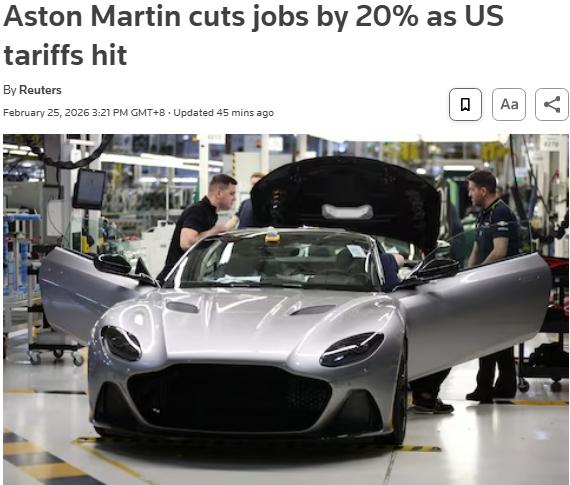
受美国关税等影响 阿斯顿·马丁计划裁员至多20%
Zhong Guo Xin Wen Wang· 2026-02-25 10:41
Group 1 - Aston Martin plans to cut up to 20% of its workforce in response to U.S. tariffs and to achieve a performance recovery [1][4] - The layoffs are expected to save approximately £40 million, with related costs around £15 million [4] - The company is facing challenges such as weak demand and pressure from U.S. tariffs, prompting CEO Adrian Hallmark to seek cost reductions after three profit warnings in the past year [4]

2025年中德货物进出口1.51万亿元
Sou Hu Cai Jing· 2026-02-25 10:36
Core Insights - In 2025, the trade volume between China and Germany is projected to reach 1.51 trillion yuan, representing a 5.2% increase from 2024, with exports to Germany at 664.3 billion yuan and imports from Germany at 846.3 billion yuan [1] Trade Dynamics - Germany remains China's largest trading partner in Europe, with China regaining its position as Germany's largest trading partner after a year [1] - The import and export of electromechanical products between China and Germany is expected to reach 1.07 trillion yuan in 2025, marking a 5.8% increase from 2024 and accounting for 70.8% of the total trade volume [1] Product Breakdown - Within the electromechanical trade, automotive and parts exports/imports are projected at 131.5 billion yuan, constituting 12.3% of the electromechanical trade [1] - Other significant product categories include electronic components (74 billion yuan), computers and parts (73.8 billion yuan), and measurement and analysis instruments (59.8 billion yuan) [1] - In the pharmaceutical sector, imports and exports of medicinal materials and drugs are expected to reach 65.7 billion yuan, while basic organic chemicals will account for 18.4 billion yuan [1] - Emerging fields such as 3D printers and industrial robots are projected to have trade volumes of 2.6 billion yuan and 1 billion yuan, respectively [1] Strategic Partnership - The relationship between China and Germany is characterized as a win-win, all-encompassing strategic partnership, with deep industrial integration and mutually beneficial economic cooperation [1]
2025年全球工业“一场奇特的反弹”
Hua Er Jie Jian Wen· 2026-02-25 10:35
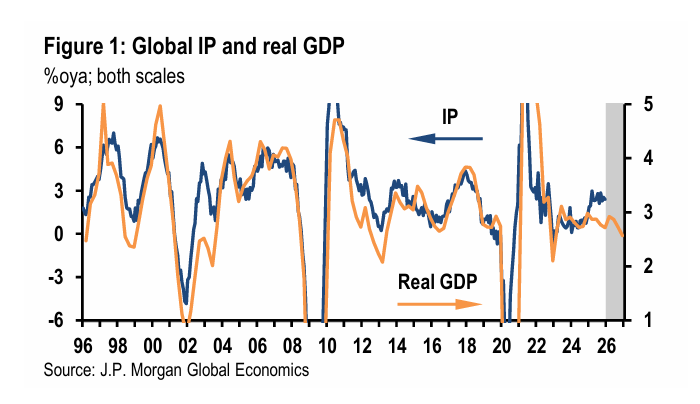
Core Insights - The global manufacturing sector in 2025 has shown resilience contrary to the expected narrative of "trade conflict = industrial recession" [1] - Morgan Stanley's report highlights that global industrial output (IP) is rebounding after a period of stagnation from 2022 to 2024, with the goods sector outperforming services during intense trade tensions [1] Demand and Growth Drivers - Three key variables are identified as driving this growth: capital expenditure (especially equipment investment), a resurgence in non-tech sectors, and a shift in inventory dynamics from a drag to a lean state [3][4] - The report anticipates a 2%-3% annualized growth in global industrial output in the coming months, supported by stable end-demand and low inventory levels [3][22] Industrial Output Performance - Global industrial output is projected to grow by 2.4% year-over-year in 2025, with significant growth concentrated in the first quarter [4] - The first quarter saw a remarkable annualized growth rate of 9.4%, attributed to preemptive production and procurement due to trade conflict concerns [4] Sectoral Analysis - The technology sector is expected to see a 9.1% year-over-year growth in 2025, driven by AI enthusiasm and capital expenditure from hyperscalers [5] - Non-tech sectors are also rebounding, with a projected growth of 1.2% in 2025, reversing the previous two years of contraction [5][6] Regional Insights - Developed markets are experiencing a manufacturing revival, with the U.S. and Eurozone expected to achieve growth rates of 1.7% and 1.8% respectively in 2025 [7] - The automotive sector is not the primary driver of this recovery, as other industries like aerospace and machinery are also showing improvement [9] Emerging Markets Dynamics - Emerging markets are projected to see a 3.8% year-over-year growth in commodity production, primarily driven by Asia, although this growth is unevenly distributed [10][13] Capital Expenditure Trends - Capital expenditure is a significant driver of demand, with global business equipment investment expected to grow by 6.5% year-over-year in Q3 2025, marking the fastest growth in three years [14][16] - The report notes that equipment investment growth is not limited to the U.S., with a notable increase in other regions as well [16] Inventory Dynamics - Inventory levels have shifted from being a drag on growth to a lean state, providing a buffer for future production increases [18] - The report suggests that low inventory levels may necessitate additional restocking, potentially leading to higher industrial output than demand alone would suggest [18] Trade Conflict and Policy Implications - Recent judicial changes regarding tariffs are not expected to significantly alter the ongoing trade conflict narrative, as the U.S. government continues to implement tariffs [21] - The report concludes that the trade conflict remains a central theme affecting business confidence and industrial performance [21] Future Outlook - The combination of lean inventory, stable end-demand, and potential demand expansion from tech to non-tech sectors supports the forecast of 2%-3% annualized growth in global industrial output [22] - However, risks remain, including a potential slowdown in tech growth and labor market stagnation impacting retail and consumer goods demand [22]

【独家】魅族手机或将成为历史:业务实质性停摆,3月正式退市
Xin Lang Cai Jing· 2026-02-25 10:32
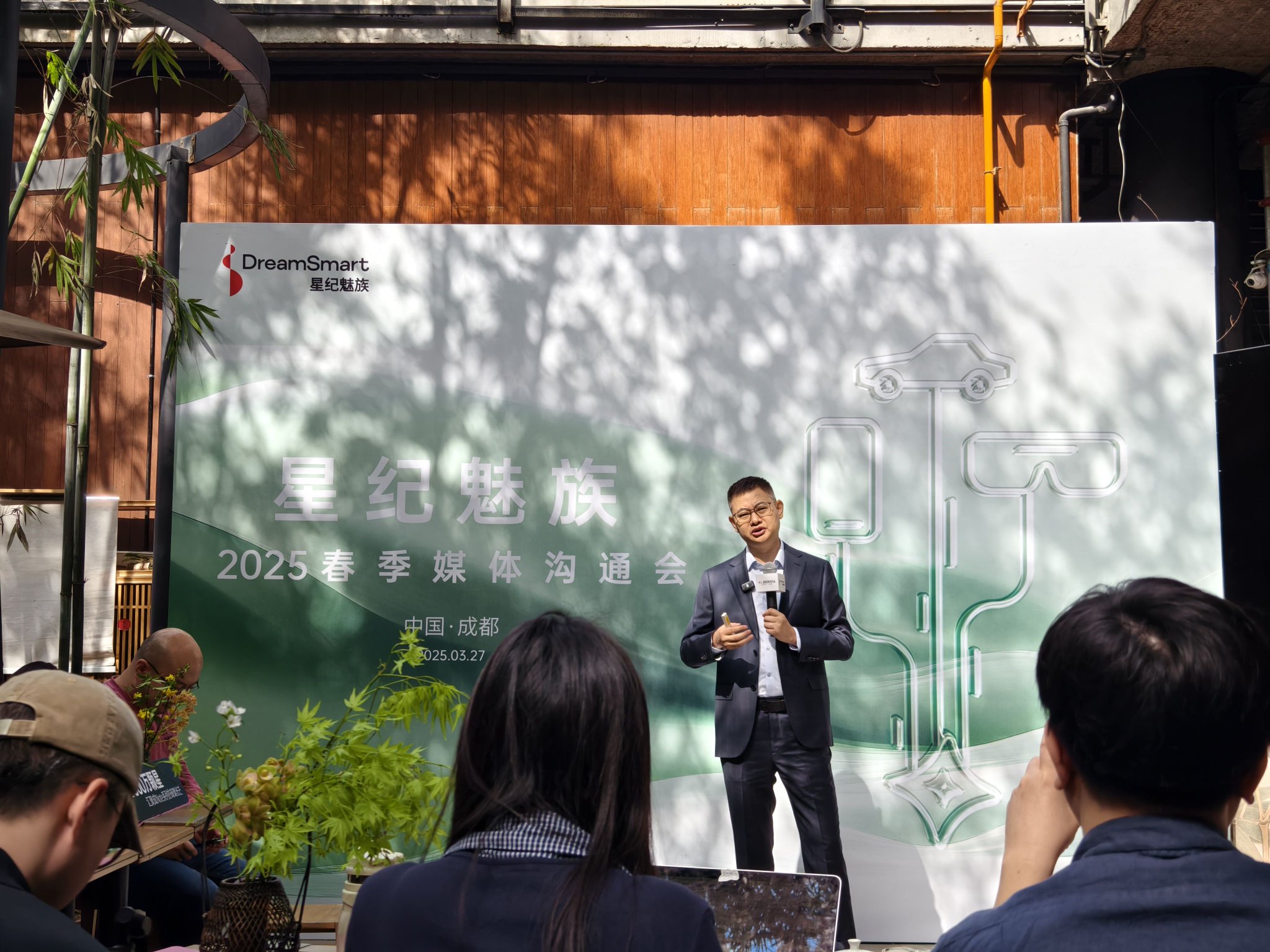
Core Viewpoint - Meizu's mobile phone business is effectively ceasing operations and is expected to officially delist by March 2026, while its FlymeAuto business will operate independently within the Geely system [1][2]. Group 1: Business Operations - Meizu's mobile phone operations have been significantly halted, with many suppliers unable to settle payments since April of the previous year, leading to substantial bad debts [2]. - The FlymeAuto business will continue to exist under Geely, although many employees have already left or transitioned to other roles within Geely's Zeekr automotive division [1][2]. - The company had previously aimed to return to the top five in the mid-to-high-end smartphone market within three years, but this goal has not been realized [3][4]. Group 2: Leadership Changes - Several high-level executives have departed, including the former CEO Shen Ziyu, who resigned in May 2024, leading to a shift in focus towards AR glasses and overseas markets [7][9]. - The recruitment of experienced executives from other tech companies did not reverse the company's declining fortunes, as evidenced by the departure of key figures like COO Liao Qinghong and others [7][9]. Group 3: Financial Performance - Meizu has reported significant financial losses, with over 10 billion yuan in losses attributed to its mobile phone business, prompting Geely to reconsider further investments [11][12]. - The company's strategy to focus on low-cost models like the Note22 did not yield the expected results, leading to a decline in overall performance [8][11]. Group 4: Market Position and Future Prospects - Meizu, once a leader in the music player market and a notable smartphone manufacturer, has struggled to maintain its market position against competitors like Xiaomi and Honor since 2014 [10][11]. - The acquisition by Geely in 2022 was intended to leverage Meizu's FlymeOS for smart driving technology, but the anticipated synergies have not materialized, leading to a reassessment of the acquisition's value [11][12]. - The company is now facing an uncertain future, with the potential for bankruptcy looming as it awaits a final decision on its fate [2][12].

去年中德货物进出口1.51万亿元,机电产品占贸易规模的70.8%
Sou Hu Cai Jing· 2026-02-25 10:30
Core Insights - In 2025, the trade volume between China and Germany is projected to reach 1.51 trillion yuan, representing a 5.2% increase from 2024, with exports to Germany amounting to 664.3 billion yuan and imports from Germany totaling 846.3 billion yuan [1] Trade Dynamics - Germany remains China's largest trading partner in Europe, with China regaining this status after a year [1] - The import and export of electromechanical products between China and Germany is expected to reach 1.07 trillion yuan in 2025, marking a 5.8% increase from 2024 and accounting for 70.8% of the total trade volume [1] - Specific product categories include automotive and parts exports/imports at 131.5 billion yuan (12.3% of electromechanical trade), electronic components at 74 billion yuan, computers and parts at 73.8 billion yuan, and measuring and analytical instruments at 59.8 billion yuan [1] Emerging Sectors - Trade in pharmaceuticals and basic organic chemicals is projected at 65.7 billion yuan and 18.4 billion yuan, respectively, while emerging sectors like 3D printers and industrial robots are expected to see trade volumes of 2.6 billion yuan and 1 billion yuan [1] Strategic Partnership - China and Germany are described as comprehensive strategic partners, with deep industrial integration and mutually beneficial economic cooperation that brings tangible benefits to both countries' enterprises and citizens [1]
汽车行业月报:政策托底稳增长,智驾政策加速落地
Zhongyuan Securities· 2026-02-25 10:25
Investment Rating - The report maintains an investment rating of "Outperform the Market" for the automotive industry [1]. Core Insights - The automotive industry index increased by 3.62% as of February 25, outperforming the Shanghai Composite Index by 3.0 percentage points, ranking 8th among 30 primary industries [7][12]. - In January 2026, automotive production and sales reached 2.45 million and 2.347 million units, respectively, with a month-on-month decline of 25.7% and 28.3%, but year-on-year figures remained stable [31]. - The report highlights a steady growth in the new energy vehicle (NEV) sector, with production and sales of 1.041 million and 945,000 units in January 2026, achieving a penetration rate of 40.26% [73][75]. - The report emphasizes the importance of policies supporting the automotive market, including the promotion of vehicle trade-in programs and the acceleration of autonomous driving regulations [7][97]. Summary by Sections Industry Performance Review - The automotive index outperformed the market, with a year-to-date increase of 3.97% [12]. - Nearly 70% of automotive stocks rose in February, with the top five performers being Tianrun Industrial, Yinlun Co., Xingmin Zhitong, Jingzhuang Technology, and Jinhongshun [19][20]. - The industry valuation metrics show a PE (TTM) of 33.99 times, ranking 14th among 30 primary industries [23]. Key Data Tracking - In January 2026, the passenger vehicle market saw production and sales of 2.062 million and 1.988 million units, respectively, with a year-on-year decline of 4.1% and 6.8% [46]. - The commercial vehicle market continued its positive trend, with production and sales of 388,000 and 359,000 units, respectively, reflecting year-on-year growth of 29.9% and 23.5% [64]. - NEV production and sales maintained robust growth, with a year-on-year increase of 2.6% and 0.1%, respectively [73]. Important Industry Company News - The report notes significant developments in the autonomous driving sector, including the release of safety requirements for L3 autonomous driving systems by the Ministry of Industry and Information Technology [97]. - Tesla's Cybercab, designed for autonomous driving, has begun production, marking a significant step towards the commercialization of fully autonomous vehicles [98].





404批新车公告:小鹏首款6座SUV全系搭载中创新航电池
高工锂电· 2026-02-25 10:14
Core Viewpoint - The article discusses the emerging competition in the 6-seat SUV market, highlighting the increasing focus of various automakers on this segment, which offers larger space and comfort compared to traditional 5-seat SUVs [2][5]. Group 1: New Vehicle Announcements - The Ministry of Industry and Information Technology announced 88 new vehicles, with notable contributions from brands like Volvo, Zeekr, BYD, Geely, Haval, and Xpeng [2]. - Key new models include the Xpeng GX, BYD Tang, Li Auto L9, AITO M8, and Leap Motor D19, all of which are 6-seat SUVs [2]. - Volvo leads with 14 new models, surpassing domestic brands, and all new vehicles are equipped with batteries from CATL, with 12 models using ternary batteries [2][3]. Group 2: Battery Supply and Technology - CATL remains the leading battery supplier, providing nearly half of the new vehicle battery configurations, followed by companies like Honeycomb Energy and Aodong [4]. - The Xpeng GX will feature various versions, including pure electric and range-extended models, marking a significant step in Xpeng's strategy to offer a dual-energy vehicle lineup [4]. - The shift to 6-seat SUVs necessitates larger battery capacities to maintain comfort and trunk space, leading to an upgrade in battery configurations [6]. Group 3: Market Trends and Implications - The market share of 5-seat SUVs is projected to be nearly 90% by 2025, while 6-seat SUVs are beginning to show growth [6]. - The transition from 5-seat to 6-seat SUVs impacts battery companies by requiring larger battery capacities, which in turn influences the choice of battery materials and configurations [6][8]. - The demand for 6-seat SUVs drives innovation in battery technology, as manufacturers seek batteries that are long-lasting, fast-charging, safe, and lightweight [8]. Group 4: Competitive Landscape - Major battery manufacturers, including CATL, Aodong, and LG, are accelerating efforts to secure clients in the 6-seat SUV market, indicating a new competitive landscape [9].


宝马集团董事长齐普策随德国总理默茨访华并同宁德时代签署合作谅解备忘录|快讯
Sou Hu Cai Jing· 2026-02-25 10:13
Group 1 - BMW Group's Chairman, Zipse, emphasized the importance of cooperation in addressing global challenges during the visit of German Chancellor Merz to China, which aims to strengthen the strategic partnership between Germany and China [2][3] - A memorandum of understanding was signed between BMW Group and CATL to enhance collaboration in the electric vehicle supply chain, focusing on reducing carbon footprints through sustainable development and technological innovation [2][5] - The automotive industry is identified as a core pillar of the Germany-China economic relationship, with BMW planning to launch new high-end models in China to meet the growing demand for quality products as the country transitions to a consumption-driven economy [5][7] Group 2 - China is recognized as a critical component of BMW Group's future strategy, being the largest automotive market and a hub for technological innovation, necessitating a strong local presence for global competitiveness [7][8] - BMW has established four major R&D innovation centers and three software companies in China, with the first locally produced new generation model, the BMW iX3 long-wheelbase version, set to debut at the Beijing Auto Show [8]


中美局势要变天!莫迪通知全球,对美打响第一枪,携30多国齐上阵
Sou Hu Cai Jing· 2026-02-25 10:11
Core Viewpoint - The U.S. Supreme Court ruled that the tariffs imposed by the Trump administration were illegal, undermining the legal basis for using tariffs as a tool for international pressure [3][7][9]. Group 1: Legal and Political Implications - The Supreme Court's decision effectively dismantled the legal foundation of the "tariff stick" that Trump used to pressure other countries, declaring that the use of the International Emergency Economic Powers Act (IEEPA) for imposing tariffs was an overreach of presidential authority [5][9]. - Following the ruling, the White House attempted to invoke the Trade Act of 1974 to impose a new 10% tariff on all imports, which was quickly raised to 15%, but this measure has a built-in time limitation of 150 days without Congressional approval [11][13]. Group 2: International Reactions - Countries began to reassess their trade relationships with the U.S. after the legal ruling, with India being the first to publicly clarify that its energy procurement policies would not change due to U.S. pressure [16][18]. - India canceled a planned trade delegation to the U.S., indicating a shift in negotiations and a desire to reassess previously agreed terms under duress from U.S. tariffs [20][22]. Group 3: Economic Impact - The U.S. GDP growth rate for 2025 is projected at only 2.2%, with households bearing the burden of tariffs, averaging an additional cost of $1,700 per family due to increased prices on various goods [25][27]. - Industries reliant on global supply chains, such as semiconductors and automotive manufacturing, faced significant layoffs due to rising costs from tariffs, with over 80,000 jobs lost in 2025 [27]. Group 4: Future Outlook - The U.S. Trade Representative expressed concerns about China potentially taking advantage of the situation, reflecting a sense of vulnerability in U.S. trade policy [29][30]. - The upcoming expiration of the temporary tariff measures and the potential for high-level talks between the U.S. and China will be critical in determining the future of U.S. trade policy and its global standing [34].

去年中德货物进出口1.51万亿元 机电产品占贸易规模的70.8%
Yang Shi Xin Wen· 2026-02-25 09:56
Core Insights - In 2025, the trade volume between China and Germany is projected to reach 1.51 trillion yuan, representing a 5.2% increase from 2024, with exports to Germany amounting to 664.3 billion yuan and imports from Germany totaling 846.3 billion yuan [1] - Germany remains China's largest trading partner in Europe, marking China's return to this position after a year [1] - The trade in electromechanical products between China and Germany is expected to reach 1.07 trillion yuan in 2025, a 5.8% increase from 2024, accounting for 70.8% of the total trade volume [1] Trade Details - The import and export of automobiles and their parts is projected to be 131.5 billion yuan, making up 12.3% of the electromechanical trade [1] - Exports of electronic components, computers and their parts, and measuring and testing instruments are expected to be 74 billion yuan, 73.8 billion yuan, and 59.8 billion yuan respectively [1] - The trade in pharmaceuticals and basic organic chemicals is expected to reach 65.7 billion yuan and 18.4 billion yuan respectively, while emerging products like 3D printers and industrial robots are projected to have trade volumes of 2.6 billion yuan and 1 billion yuan [1] Strategic Partnership - China and Germany are described as comprehensive strategic partners with deep industrial integration, benefiting both countries' enterprises and people through mutually beneficial economic cooperation [1]