
数据中心

Search documents
AI突传重磅!OpenAI再造爆款 Cerebras撤回IPO计划
Zheng Quan Shi Bao Wang· 2025-10-04 06:50
Group 1: Major Acquisition News - BlackRock's GIP is in advanced talks to acquire Aligned Data Centers, with a potential deal value of up to $40 billion, which could become one of the largest transactions of the year [3][4] - Aligned, supported by Macquarie Group, is valued at approximately $40 billion in this transaction, and GIP is also considering other large acquisitions, including the power company AES Group, valued at around $38 billion [3][4] - The acquisition of Aligned would mark another significant transaction since the launch of ChatGPT, as investors are increasingly betting on technology leaders that can drive industry and economic transformation [4] Group 2: OpenAI's New Application - OpenAI's newly launched video generation app, Sora, has topped the Apple App Store's "Top Free Apps" chart, indicating strong market interest [5][6] - Sora allows users to create short AI-generated videos and remix content from other users, and it is currently available only on iOS devices by invitation [5][6] - The app is powered by OpenAI's latest video and audio generation model, Sora 2, which is capable of creating highly realistic scenes and sounds [5] Group 3: Cerebras IPO Withdrawal - Cerebras has officially withdrawn its IPO plans in the U.S., a decision that comes after the company recently raised over $1 billion in funding, indicating sufficient capital for its operations [7][8] - The company has shifted its focus from hardware sales to providing cloud services, allowing users to query models powered by its chips [8] - Cerebras' CEO believes the original IPO filing is outdated, especially considering the latest developments in the AI sector [8]

刚刚!AI,突传重磅!
Zheng Quan Shi Bao Wang· 2025-10-04 06:50
Group 1: Major Acquisitions and Investments - BlackRock's GIP is in advanced talks to acquire Aligned Data Centers, with a potential deal value of up to $40 billion, marking it as one of the largest transactions of the year [1][3][4] - GIP is also considering other large acquisitions, including a potential purchase of AES Corporation, valued at approximately $38 billion, which is expected to benefit from the increased power demand driven by AI applications [3][4] Group 2: AI Developments and Market Trends - OpenAI's new video social application, Sora, has topped the Apple App Store's "Top Free Apps" chart, indicating strong market interest in AI-driven applications [2][6] - The launch of Sora represents OpenAI's significant step towards creating social media products, potentially opening new advertising revenue streams and increasing technology exposure [7] Group 3: IPO and Market Activity - Cerebras has withdrawn its IPO plans shortly after raising over $1 billion in funding, reflecting a strategic decision to focus on its current financial position rather than pursuing public listing at this time [8][9] - The withdrawal comes amid a resurgence in IPO activity in the U.S., driven by investor enthusiasm for AI-related stocks [8]
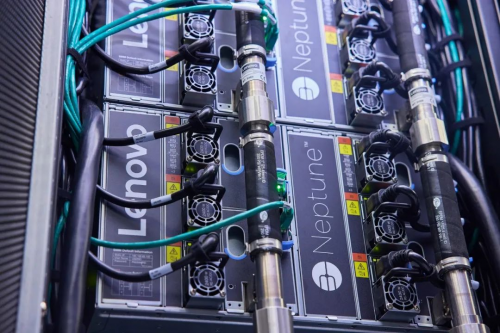
AI服务器液冷渗透率将超50%,系统化服务能力成竞争焦点
Sou Hu Wang· 2025-10-04 02:33
Group 1: Market Overview - The rapid development of AI technology is driving unprecedented cooling demands in data centers, with liquid cooling emerging as a more efficient and cost-effective solution [1] - According to Guosen Securities, the global liquid cooling market for data centers is expected to reach $10 billion by 2026, driven by major tech companies like Google, Amazon, Meta, and NVIDIA [1][6] - The penetration rate of liquid cooling in domestic data centers is projected to accelerate, with an expected penetration rate of over 50% for AI servers by 2026 [6] Group 2: Technological Advancements - Liquid cooling systems outperform traditional air cooling in terms of heat transfer capabilities and overall energy efficiency, leading to lower Power Usage Effectiveness (PUE) and reduced energy consumption [3] - Lenovo's "Hades" warm water cooling system, designed for AI training and high-performance computing, has achieved a PUE value below 1.1, allowing for the operation of servers exceeding 100 kW without dedicated air conditioning [5][8] - Innovations such as Lenovo's "Flying Fish" bionic cooling design and "Dual-Cycle" phase-change immersion cooling system have significantly enhanced cooling performance, with PUE values as low as 1.035 [8] Group 3: Competitive Landscape - Domestic manufacturers are gaining ground in the liquid cooling market, leveraging cost advantages and technological innovations to compete with established foreign players [9][14] - Vertiv, a leading overseas temperature control company, holds a 23.5% share of the global data center cooling market, benefiting from partnerships with NVIDIA [9] - Lenovo's collaboration with major chip manufacturers like Intel, NVIDIA, and AMD enhances its competitive edge in the liquid cooling sector, allowing for seamless integration of server performance [13][14] Group 4: Future Projections - The liquid cooling market in China is expected to grow significantly, with projections indicating a market size of approximately 130 billion yuan by 2029 [6] - The demand for liquid cooling solutions is expected to be driven by the increasing energy consumption of data centers, which currently accounts for 1.5% to 2% of global electricity usage, projected to rise to 4% by 2030 [2] - Companies like Lenovo are well-positioned to capitalize on the growing liquid cooling market due to their technological advancements and strong service capabilities [14]

外媒:400亿美元,贝莱德押注人工智能
Huan Qiu Wang· 2025-10-04 01:08
Group 1 - BlackRock's Global Infrastructure Partners (GIP) is in advanced negotiations to acquire Aligned Data Centers, targeting a major beneficiary of AI spending, potentially becoming one of the largest deals of the year [1][3] - Aligned Data Centers is estimated to be valued at approximately $40 billion, supported by Macquarie Group, with Mubadala Investment Company’s AI investment firm MGX also participating in the negotiations [3] - GIP is also considering other large acquisition projects, including a potential acquisition of AES Corp, with an enterprise value of about $38 billion, due to the expected surge in electricity demand from AI applications [3] Group 2 - If the acquisition of Aligned is completed at $40 billion, it would rank among the top five global deals of the year [3] - BlackRock acquired GIP for approximately $12.5 billion last year, and its stock has risen about 13% this year, with a market capitalization of around $189 billion [3]

陆家嘴财经早餐2025年10月4日星期六
Wind万得· 2025-10-03 22:36
Group 1: Transportation and Economic Activity - On October 2, the total inter-regional personnel flow reached 30,177.02 million trips, a month-on-month decrease of 10.1% but a year-on-year increase of 6.4%. Railway passenger volume was 19.288 million trips, down 16.6% month-on-month but up 5.8% year-on-year. Road transport accounted for 27,838 million trips, down 9.9% month-on-month and up 6.4% year-on-year. Waterway passenger volume increased by 25.7% month-on-month and 19.1% year-on-year to 1.6606 million trips. Civil aviation passenger volume was 2.4416 million trips, down 1.3% month-on-month and up 5% year-on-year [2] Group 2: Regulatory and Trade Developments - The State Council's Work Safety Committee has initiated a crackdown on illegal mining activities and the sealing of abandoned mines, emphasizing the need for coordinated efforts across departments to prevent such incidents [3] - The Ministry of Commerce announced that Mexico's Ministry of Economy has initiated four anti-dumping investigations against Chinese products, including float glass and PVC-coated fabrics. China will investigate Mexico's proposed import tariff increases and take necessary measures to protect its enterprises [3] Group 3: Market Performance and Investment Trends - The Hang Seng Index closed down 0.54% at 27,140.92 points, with a weekly increase of 3.88%. The Hang Seng Tech Index fell 0.9% but saw a weekly gain of 6.9%. Notably, shares of electric vehicle manufacturers like BYD fell nearly 4%, while Shanghai Electric surged over 14%, reaching a 10-year closing high [4] - Multiple public funds have released their strategies for Q4 2025, expressing optimism about the A-share and Hong Kong stock markets, anticipating a continued upward trend supported by policy measures [4] - According to Morgan Stanley, foreign capital inflow into the Chinese stock market rebounded to $4.6 billion in September, marking the highest monthly inflow since November 2024. Year-to-date, passive funds have seen a total inflow of $18 billion [5] Group 4: Industry Insights and Future Projections - The artificial intelligence industry in China is projected to exceed 900 billion yuan in 2024, with a year-on-year growth of 24%. By September 2025, the number of AI companies is expected to surpass 5,300, accounting for 15% of the global total [6] - In August, Chinese domestic car manufacturers recorded overseas sales of 286,000 units, a year-on-year increase of 16%. From January to August, total overseas sales reached 2.1 million units, up 11% year-on-year [6] - The real estate market in Beijing has seen a significant increase in second-hand housing transactions, with an average daily transaction of 525 units in September, a 22% increase from August [6] Group 5: Financial Market Movements - The total market capitalization of stablecoins has surpassed $300 billion, positioning them as systemically important financial products comparable to large retail money market funds in the U.S. [7] - OpenAI's video application Sora has shown strong initial traction, achieving 164,000 downloads in its first two days despite being limited to the U.S. and Canada [8] - Tesla reported a third-quarter energy product installation of 12.5 GWh, contributing to a total of 32.5 GWh for the first three quarters of the year [8] Group 6: Global Economic Indicators - The U.S. Senate failed to pass a temporary funding bill, leading to a continued government shutdown [9] - Brazil's National Bank for Economic and Social Development announced a joint investment fund with China's Export-Import Bank, targeting up to $1 billion for investments in energy transition, infrastructure, mining, agriculture, and AI [9] - The Federal Reserve is facing challenges with a softening job market and inflation above target, with officials emphasizing the need for caution regarding interest rate cuts [9]

AI热潮酝酿年内前五大交易,贝莱德接近400亿美元收购数据中心公司
Hua Er Jie Jian Wen· 2025-10-03 19:03
Core Insights - The ongoing AI investment boom is leading to significant transactions, with BlackRock's Global Infrastructure Partners (GIP) reportedly nearing a $40 billion acquisition of Aligned Data Centers [1] - The acquisition reflects investor enthusiasm for AI infrastructure, especially following OpenAI's recent valuation surge to $500 billion [1][4] - GIP is also exploring other large acquisition opportunities, including AES Corp., which has an enterprise value of approximately $38 billion [3] Group 1: AI Investment Trends - The AI industry is attracting substantial capital across various sectors, including AI chip leaders like NVIDIA and AI model stars like OpenAI and Anthropic [2] - Concerns exist regarding potential valuation bubbles in the AI sector, as services have yet to become widely adopted and generate sufficient revenue [2] Group 2: Aligned Data Centers Overview - Aligned Data Centers operates 50 campuses and 78 data centers across the U.S. and South America, with over $12 billion in equity and debt commitments received this year [3] - The company is currently owned by Macquarie and is a key target for acquisition due to its strategic position in the AI infrastructure space [3] Group 3: OpenAI Valuation Surge - OpenAI's recent stock sale transaction valued the company at $500 billion, marking a 66% increase in just two months [4] - The rapid valuation growth highlights the investment frenzy surrounding leading AI technology firms, despite OpenAI not yet being profitable [4] Group 4: Recent Major AI Transactions - Recent significant investments in the AI sector include Meta's $29 billion funding for a data center in Louisiana and NVIDIA's commitment of up to $100 billion to OpenAI for data center development [5] - Oracle issued $18 billion in bonds for OpenAI's infrastructure, marking the second-largest investment-grade bond issuance in the U.S. this year [5] - BlackRock's stock has seen a 13.2% increase this year, with a market capitalization of approximately $189 billion following the acquisition news [5]
雪佛龙加州炼油厂发生大火,占加州总炼油产能的16%以上;投资者呼吁否决马斯克1万亿美元薪酬方案【美股盘前】
Mei Ri Jing Ji Xin Wen· 2025-10-03 11:05
Group 1 - Chevron's refinery in California experienced a fire, impacting over 16% of the state's refining capacity and supplying more than 40% of aviation fuel and over 20% of automotive fuel in Southern California [2] - Tesla reported a record quarterly delivery of 497,099 vehicles in Q3, exceeding analyst expectations and marking a 7.4% year-over-year increase, leading to a 1.56% rise in its stock price [3] Group 2 - Ark Invest, led by Cathie Wood, increased its holdings in Alibaba and Baidu, purchasing 14,453 shares of Alibaba valued at approximately $2.74 million and 45,478 shares of Baidu valued at about $6.4 million [4] - BlackRock's Global Infrastructure Partners (GIP) is in talks to acquire Aligned Data Centers for a valuation of $40 billion, contributing to a 0.17% increase in BlackRock's stock [5] Group 3 - Berkshire Hathaway announced a $9.7 billion acquisition of OxyChem, the chemical business of Occidental Petroleum, marking its largest deal in three years, with $6.5 billion allocated for debt repayment [6] - Investors are calling for the rejection of Elon Musk's $1 trillion compensation plan and a restructuring of Tesla's board, as stated in an open letter from a group representing several large public pension funds [7] Group 4 - Boeing's 777X first flight has been delayed to 2027, potentially incurring non-cash accounting costs between $2.5 billion and $4 billion, with Lufthansa adjusting its fleet plans accordingly [8]

数字基础设施交易热潮再现:贝莱德(BLK.US)旗下GIP接近400亿美元收购Aligned数据中心
Zhi Tong Cai Jing· 2025-10-03 04:21
Group 1 - Global Infrastructure Partners (GIP) is in advanced talks to acquire Aligned Data Centers, potentially making it one of the largest deals of the year with an estimated valuation of around $40 billion [1] - The deal involves participation from MGX, an AI investment company established by the sovereign wealth fund Mubadala, which has previously invested in Aligned [1] - The acquisition, if completed at the $40 billion valuation, would rank among the top five global mergers and acquisitions of the year [1] Group 2 - Aligned operates across the U.S. and South America, managing and planning 50 data center campuses with a total of 78 facilities [2] - In January, Aligned secured over $12 billion in equity and debt financing commitments from investors, including those under Macquarie Asset Management [2] - The demand for data centers has surged due to AI technology, prompting the White House to propose streamlining environmental assessments for new facilities [2]
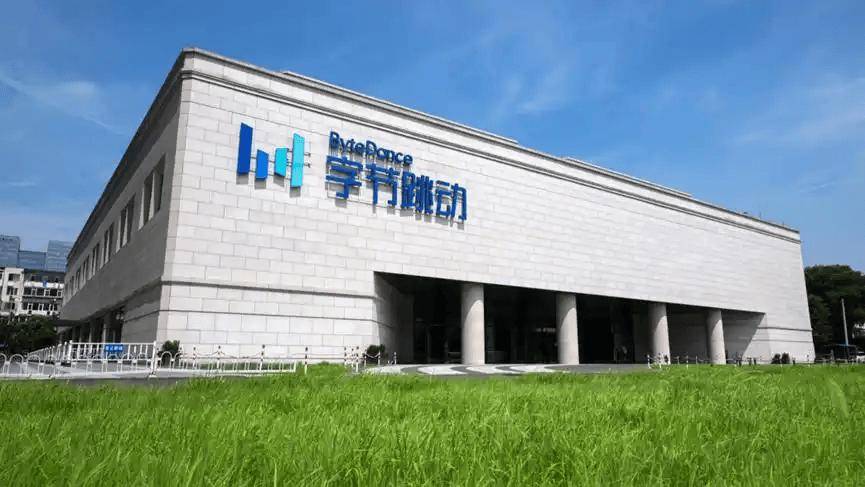
算力圈开始卷绿电了?抖音入局200MW风光伏储微网!
Sou Hu Cai Jing· 2025-10-03 03:25
Core Insights - The competition among major internet companies has shifted from app performance to the environmental impact of their data centers, with Douyin planning to procure over 200MWh of large-scale lithium battery storage and renewable energy equipment to ensure uninterrupted power supply for its core business [1][4] - Douyin's aggressive procurement strategy reflects a sense of urgency in its green energy initiatives, aiming to respond to carbon neutrality policies, reduce reliance on traditional power grids, and ensure business continuity [4][6] - The industry is collectively transforming under policy guidance, with a mandatory requirement for new data centers to achieve over 80% green electricity usage by the end of 2025, pushing all data center operators to accelerate their green initiatives [4][6] Company Actions - Douyin's tender specifies that bidders must have experience with large-scale lithium battery storage systems of at least 30MWh, with a tight timeline for project completion by the end of December [4] - Tencent has already implemented a successful integrated wind, solar, and storage project, which is the first of its kind in China, generating 14 million kWh annually, equivalent to the annual electricity consumption of 5,000 households [6][8] - Tencent's project not only reduces carbon emissions by nearly 8,000 tons annually but also saves over 3.5 million yuan in electricity costs, demonstrating that green transformation can yield economic benefits [8] Industry Trends - The shift towards green computing is becoming a core competitive advantage in the data center industry, as the demand for computing power continues to grow alongside the digital economy [8][10] - The green electricity ratio directly impacts operational costs, and more clients are considering environmental performance when selecting cloud service providers [8] - Future policies will further clarify the direction of green energy initiatives, with ongoing plans to enhance the integration of computing power and energy management through innovative mechanisms [10]


中概股和港股狂飙!华尔街押注科网巨头、AI数据中心
Di Yi Cai Jing· 2025-10-03 00:13
Core Viewpoint - The US stock market experienced slight gains amid uncertainty regarding a government shutdown, with Chinese concept stocks, particularly in AI and cloud services, showing significant strength, leading to a surge in the Hang Seng Index above 27,000 points [1] Group 1: Market Performance - The Hang Seng Technology Index rose significantly, driven by overseas funds, despite the absence of southbound capital due to the Golden Week holiday [1] - Major US indices showed modest gains, with the S&P 500 up 0.06%, Nasdaq up 0.3%, and Dow Jones up 0.17% [1] - Chinese tech giants like Alibaba and Baidu saw substantial increases, with Alibaba rising 3.59% and Baidu 2.03%, outperforming US AI stocks [1] Group 2: Investment Trends - There is a renewed interest from US capital in Chinese stocks, particularly in the tech sector, with significant valuation re-evaluations for companies like Alibaba and Baidu, which have seen year-to-date gains of 123% and 66% respectively [2] - The investment sentiment is further fueled by advancements in AI infrastructure and self-developed advanced chips, enhancing investor excitement [2] Group 3: Data Center Sector - The data center concept is gaining traction, with major Chinese cloud service providers (BAT) increasing capital expenditures in AI, benefiting data center providers like GDS and VNET [3][4] - Jefferies highlights GDS and Century Internet as top beneficiaries in the data center space, with positive outlooks following recent demand recovery signals [3][4] Group 4: Future Market Outlook - The overall sentiment for A-shares and H-shares remains positive, with expectations of continued upward momentum driven by AI themes [6] - Analysts predict that the fourth quarter will be crucial for establishing a new bull market in Hong Kong stocks, influenced by US-China negotiations and the Federal Reserve's interest rate decisions [6] - International investors are increasingly optimistic about Chinese stocks, with a notable absence of previous doubts regarding their investability [7]