电动车

Search documents
早盘:美股继续下滑 道指下跌200点
Xin Lang Cai Jing· 2026-01-14 15:08
Market Overview - US stock market continued to decline with the Dow Jones down by 210.73 points, a decrease of 0.43%, closing at 48,981.26 points; the Nasdaq fell by 316.43 points, down 1.33%, at 23,393.44 points; and the S&P 500 dropped by 59.07 points, a decline of 0.85%, ending at 6,904.67 points [3][7] - Financial sector was the worst-performing industry, with JPMorgan's stock plunging over 4% due to disappointing investment banking fees for Q4 [3][7] Company Performance - Wells Fargo's stock declined after reporting Q4 revenue below expectations, while Citigroup's Q4 performance exceeded expectations [3][7] - Rivian recalled over 19,000 electric vehicles in the US and was downgraded to "sell" by UBS [9] - Intel's stock rose following indications that Apple has invested in the company [9] - Honeywell's quantum computing division, Quantinuum, plans to file for an IPO [10] - AstraZeneca acquired Modella AI to accelerate cancer drug development [11] - Bilibili reported advertising revenue growth exceeding 20% for 11 consecutive quarters [12] Economic Indicators - US retail sales for November recorded a month-on-month increase of 0.6%, the highest since July, surpassing market expectations of 0.4% [8]


美股异动丨Rivian盘前跌超3%,近日在美国召回超1.9万辆电动车
Ge Long Hui· 2026-01-14 09:40
Core Viewpoint - Rivian, the American electric vehicle manufacturer, is facing a decline in stock price due to a recall of nearly 19,641 vehicles, which raises concerns about safety and operational processes [1] Group 1: Recall Announcement - Rivian has announced a recall of certain 2022 to 2025 models of the R1T pickup and R1S SUV due to improper operational procedures during maintenance, which could lead to the rear suspension components detaching while driving, increasing the risk of collisions [1] Group 2: Stock Market Reaction - Following the recall news, Rivian's stock dropped over 3% in pre-market trading, reaching a price of $18.22 [1] - Wolfe Research downgraded Rivian's rating from "in line with peers" to "underperform," maintaining a target price of $16 [1]

乘联分会:1月1-11日全国乘用车新能源市场零售11.7万辆 同比下降38%
Zhi Tong Cai Jing· 2026-01-14 08:14
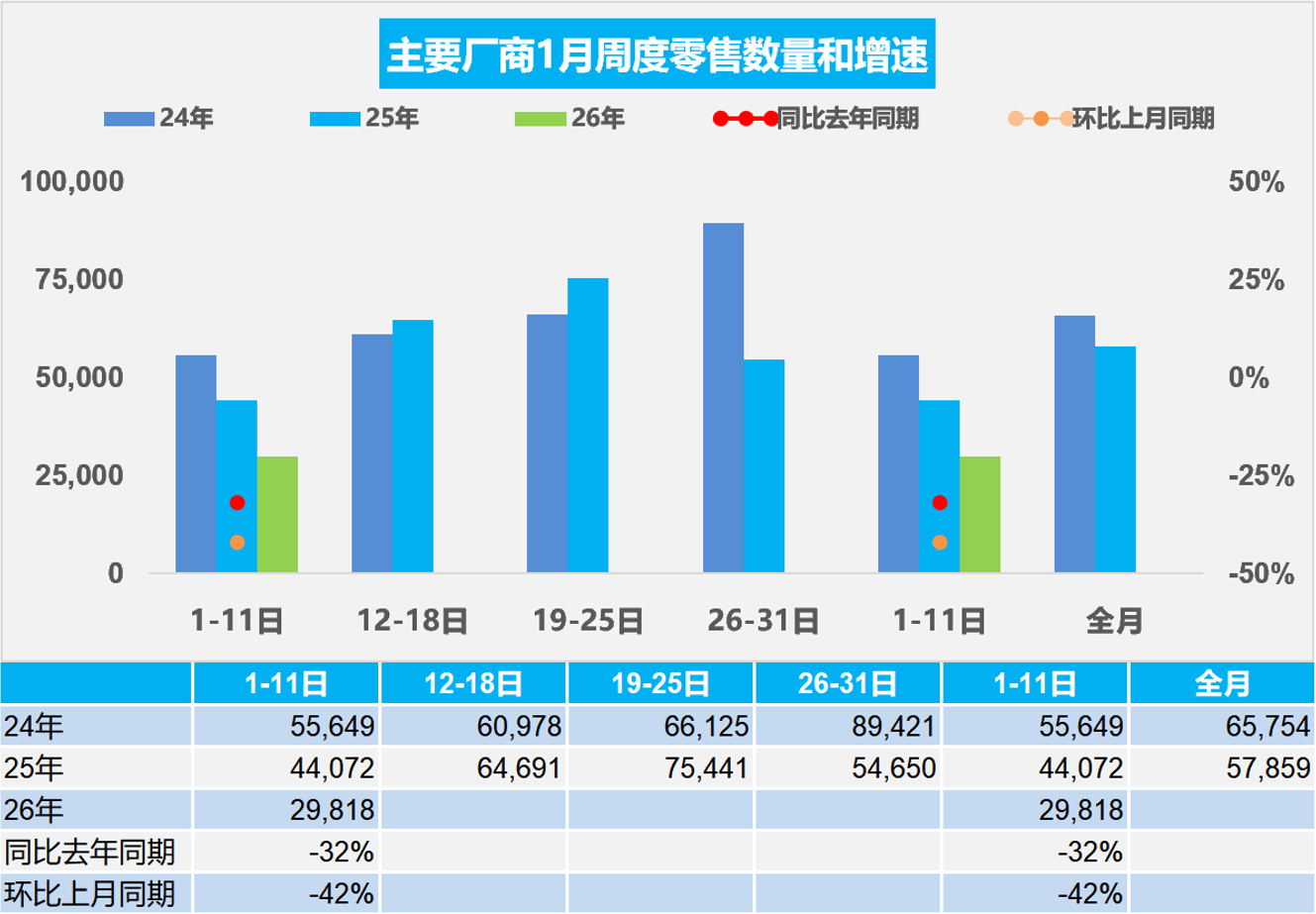
Group 1: New Energy Vehicle Market Performance - From January 1 to January 11, the retail sales of new energy vehicles in the passenger car market reached 117,000 units, a year-on-year decrease of 38% and a month-on-month decrease of 67% [1] - The retail penetration rate for new energy vehicles in the passenger car market is 35.5%, while the wholesale penetration rate is 43.9% [1] - The wholesale of new energy vehicles in the passenger car market totaled 167,000 units, down 30% year-on-year and 51% month-on-month [1] Group 2: Overall Passenger Car Market Trends - The total retail sales of passenger cars from January 1 to January 11 were 328,000 units, reflecting a year-on-year decline of 32% and a month-on-month decline of 42% [3] - The wholesale volume for passenger cars was 381,000 units, down 40% year-on-year and 30% month-on-month [5] - The average daily retail sales in the first week of January were 30,000 units, a decrease of 32% year-on-year and 42% month-on-month [3] Group 3: Policy Impact on Market - The National Development and Reform Commission announced a policy to promote large-scale equipment updates and a trade-in program, which is expected to boost domestic automobile consumption [3] - The subsidy for scrapping and updating passenger cars is projected to decrease by 20% on average per vehicle, with the maximum decline reaching 30% [3] - The expiration of the vehicle purchase tax exemption policy is contributing to the weak retail performance in January, but the market is expected to improve as subsidy details are rolled out [6] Group 4: Electric Vehicle Export and Market Dynamics - The Ministry of Commerce reported progress in negotiations regarding the EU-China electric vehicle case, which aims to provide price commitments to Chinese exporters, avoiding high tariffs [7] - This agreement is expected to stabilize market access for Chinese electric vehicles in the EU and promote a shift towards higher-end products [7] - The average price of passenger vehicles has seen a slight decline, influenced by structural changes in consumer purchasing power [8] Group 5: Battery Export Tax Changes - The announcement to reduce export tax rebates for lithium batteries is expected to have minimal impact on supply and demand in the short term [10] - The adjustment aims to align export prices with market realities and address international concerns, potentially easing trade tensions [10] - The first quarter's domestic demand for lithium batteries is projected to be only 18% of the annual total, indicating limited immediate effects on the industry [10]
爱玛科技:主营业务为电动自行车、电动轻便摩托车、电动摩托车等的研发、生产及销售
Zheng Quan Ri Bao· 2026-01-13 12:13
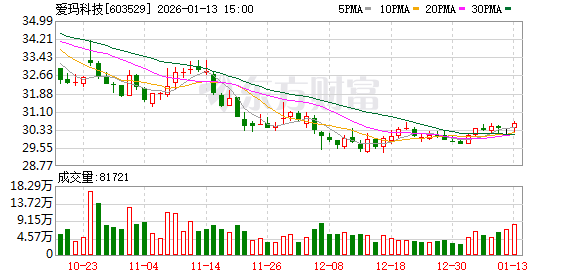
Group 1 - The core business of the company includes the research, production, and sales of electric bicycles, electric lightweight motorcycles, and electric motorcycles [2]

“不想被封杀就自己走!”爱玛前员工爆料暴力裁员早有前科
Feng Huang Wang Cai Jing· 2026-01-12 14:45
Group 1 - The company, Aima, is facing significant scrutiny due to recent layoffs, particularly in its high-end brand "Zero Boundary" and the international division, with a reduction rate exceeding 50% and over 200 employees affected [1] - Reports indicate that the company did not adhere to the industry standard "N+1" for severance compensation, with many laid-off employees receiving only one month’s salary as compensation [1] - Aima's management has downplayed the situation, claiming that the layoffs are part of normal personnel adjustments and that both the Zero Boundary brand and the international division are operating normally without impacting company performance [1] Group 2 - A whistleblower reported being forced to resign without any explanation or compensation, with threats made regarding future employment in the industry if they did not comply [2] - The whistleblower noted that around 30 to 50 employees faced similar situations, and Aima did not provide any job relocation options for those laid off [2] - Issues in Aima's international operations have been highlighted, including trademark registration problems in Vietnam and delays in the production timeline of their overseas factory, which has led to reliance on domestic production for international orders [2][3] Group 3 - The company’s reliance on domestic factories for international orders has raised concerns about quality assurance, as these factories prioritize domestic orders and lack dedicated personnel for overseas production [3] - The profitability of international orders is questioned, as the costs associated with shipping and after-sales service may outweigh the apparent higher profit margins compared to domestic sales [3]
专家预计:未来三年中国电动车出口欧盟年均增速约20%
Di Yi Cai Jing· 2026-01-12 14:15
Core Insights - The EU has become a significant growth engine for China's automotive exports, particularly in the electric vehicle (EV) sector [1] - A recent agreement between China and the EU provides general guidance on price commitments for Chinese exporters of pure electric vehicles, which is expected to strengthen the market position of Chinese brands in Europe [1] - Chinese brands are experiencing rapid growth in the EU, with a projected annual export growth rate of around 20% for Chinese electric vehicles to the EU from 2026 to 2028 [1] Group 1: Export Data - In 2025, China exported 2.07 million pure electric vehicles, with 580,000 units (28%) going to the EU [2] - For plug-in hybrid models, 940,000 units were exported from China, with 250,000 units (nearly 27%) to the EU [2] - Ordinary hybrid models saw exports of 440,000 units, with 170,000 units (approximately 39%) to the EU [2] Group 2: Market Dynamics - Major Chinese automakers such as SAIC, BYD, Chery, Leap Motor, and Xpeng are intensifying their efforts in the European market [3] - The price commitment mechanism established through negotiations is seen as a pragmatic breakthrough that replaces high tariffs, ensuring stable market access for Chinese electric vehicles in the EU [3] - Long-term collaboration between China and the EU is expected to shift from trade competition to deeper industrial cooperation, particularly in areas like battery recycling and carbon footprint management [3]
“不想被封杀就自己走!”爱玛前员工爆料暴力裁员早有前科
凤凰网财经· 2026-01-12 13:37
Group 1 - The recent layoffs at Aima have raised significant concerns, particularly affecting the high-end brand "Zero Boundary" and the international division, with a reduction rate exceeding 50% and over 200 employees laid off [2] - Many departing employees reported that the company did not adhere to the industry standard of "N+1" for severance, with some receiving only one month's salary as compensation [2] - Aima's management has downplayed the situation, claiming that the layoffs are minimal and that both the "Zero Boundary" brand and the international division are operating normally without impacting company performance [2] Group 2 - A former employee indicated that Aima has a history of low-cost layoffs, citing personal experience where they were forced to resign without compensation and faced threats regarding future employment in the industry [3] - The company did not provide any job relocation options for those laid off, instructing employees to seek new positions independently [5] - The internal chaos at Aima appears to be linked to issues in its overseas operations, particularly with the trademark registration in Vietnam, which has forced the company to operate under a different name [6] Group 3 - Aima's overseas production facility in Vietnam faced significant delays, leading to a reliance on domestic production for overseas orders, which has raised quality assurance concerns [9] - The company has prioritized domestic orders over international ones due to resource constraints, despite the potential for higher profits from overseas sales [9] - The risks associated with exporting, including higher costs and uncertainties in shipping and customs, have made international orders less appealing compared to domestic ones [9]

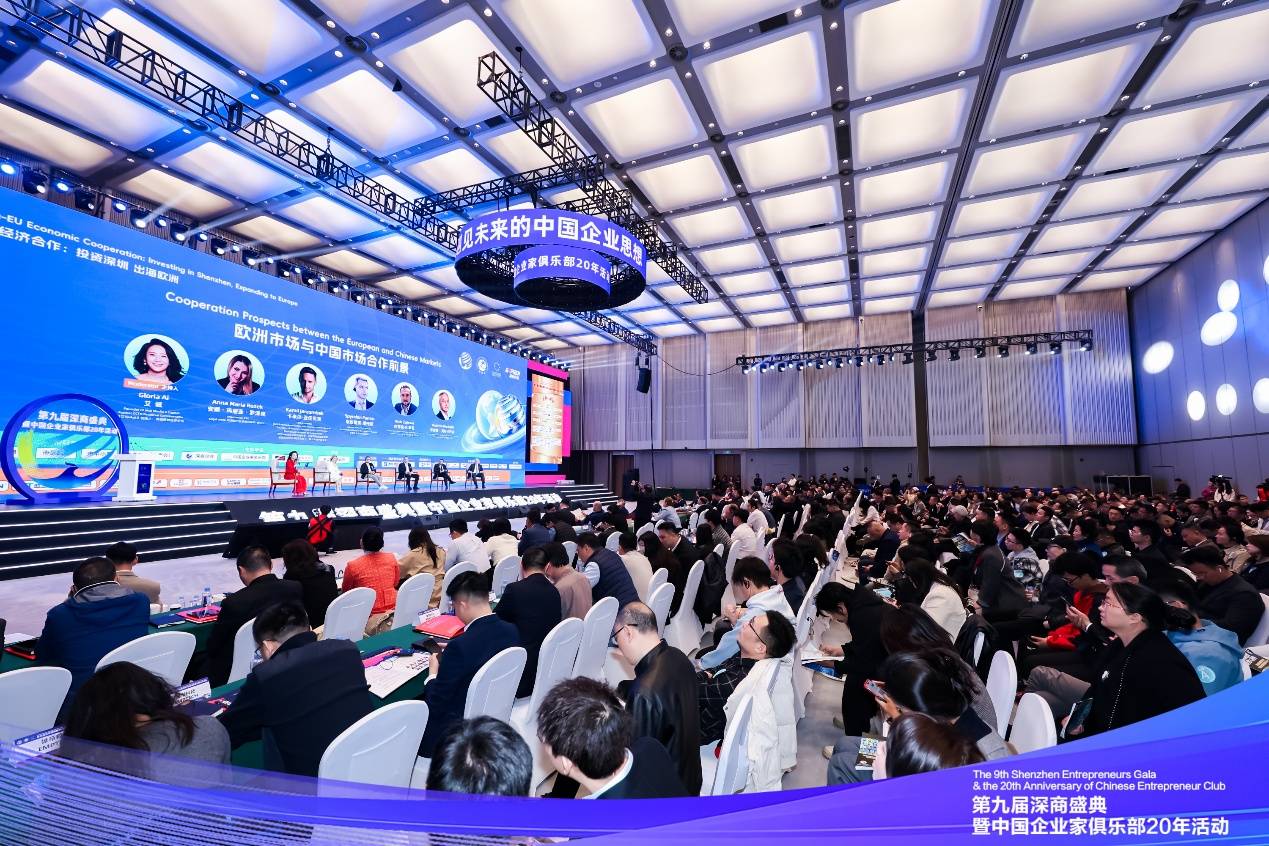
解锁新能源、金融科技合作密码!“中欧经济合作论坛”在深圳举行
Sou Hu Cai Jing· 2026-01-12 12:13
Core Insights - The ninth Shenzhen Business Convention and the China-Europe Economic Cooperation Forum focused on "Investing in Shenzhen, Going to Europe," discussing strategic emerging industries such as new energy, fintech, life health, cultural tourism, and digital economy [1] Group 1: Trade and Economic Cooperation - China and Europe have a strong economic symbiosis, with a trade volume of $749.34 billion in the first 11 months of 2025, marking a 4.6% year-on-year increase [2] - Shenzhen's exports to Europe reached 42.09 billion yuan in the first 11 months of 2025, a 3.4% increase, with nearly 80% of exports being electromechanical products [4] Group 2: Industry Collaboration - The cooperation between China and Europe has evolved from simple trade to technology exchange and industrial chain collaboration, creating significant economic growth opportunities [4] - New energy, fintech, and cultural tourism are identified as key areas for potential collaboration, with specific emphasis on the synergy between China's manufacturing strengths and Europe's green transition needs [8][10] Group 3: Compliance and Localization - Compliance has become a critical capability for companies entering the European market, with complex legal frameworks such as GDPR and CBAM posing significant challenges [11] - Localized data management and carbon emission tracking are highlighted as essential yet often overlooked requirements for successful market entry [11]
销量登顶全球后 比亚迪的下一关是获利
BambooWorks· 2026-01-12 09:53
Core Viewpoint - BYD has surpassed Tesla in global electric vehicle sales, but faces challenges in profit margins, rising risks in overseas markets, and a controversial financing model, leading to market skepticism about its ability to continue creating shareholder value [1][3]. Sales Performance - BYD achieved a significant increase in global sales, with a target of selling 2.26 million electric vehicles by 2025 and a 145% year-on-year growth in overseas sales. In contrast, Tesla's deliveries fell by 8.6% to 1.6 million units, marking its largest annual decline [3][4]. - In the Chinese market, BYD has established a dominant position, with Tesla experiencing its first sales drop of over 5% since the launch of its Shanghai factory [3]. Profitability Challenges - Despite the surge in sales, BYD's profitability has been under pressure, with a 32.6% year-on-year drop in net profit to 7.8 billion yuan (approximately 1.1 billion USD) in Q3, marking the largest decline in over four years. Revenue also saw its first decline in over five years, dropping to 195 billion yuan [6][8]. - BYD's gross margin was reported at 17.9%, comparable to Tesla's 18%, but its per-vehicle profit fell to 4,800 yuan, significantly lower than Tesla's projected profit of around 6,000 USD per vehicle for 2024 [7]. Market Competition and Risks - The domestic market is highly competitive, with rivals aggressively pursuing sales at low margins, which could further compress BYD's profitability. Additionally, rising vehicle purchase taxes and reduced government subsidies for lower-end electric vehicles pose further challenges [8]. - Analysts predict a slowdown in China's electric vehicle market, with expectations of declining sales by 2026, which may force BYD and its competitors to offer more consumer subsidies, further squeezing profit margins [8]. International Expansion and Financing Model - In response to domestic pressures, BYD is accelerating local production in Southeast Asia, Latin America, and Europe to avoid tariffs and shorten delivery times. However, establishing overseas factories has become increasingly complex due to scrutiny from local governments [9][10]. - BYD's controversial financing model, known as "Di Chain," has come under scrutiny, with the company being urged to reduce payment cycles to suppliers. As of May 2023, the related debt had ballooned to over 400 billion yuan, with an average payment cycle extending to 127 days [10][11]. Market Sentiment and Future Outlook - Despite the challenges, many analysts believe BYD is undervalued, with a majority recommending "buy" or "outperform" ratings. However, notable investors, including Berkshire Hathaway, have reduced their holdings, indicating a lack of confidence [11].


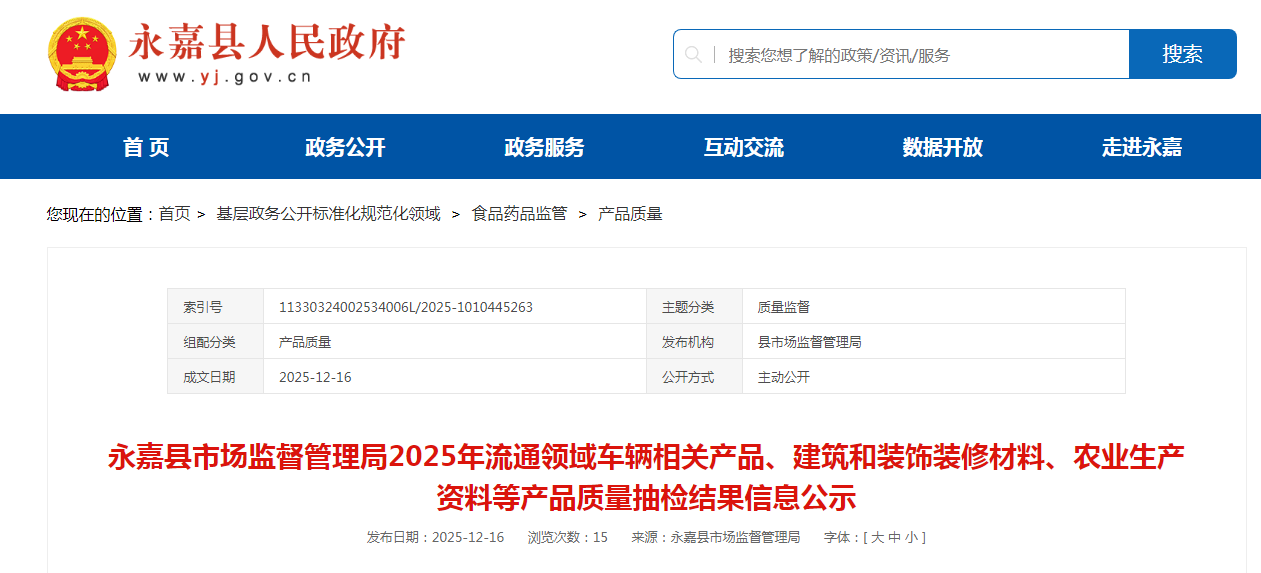
浙江省永嘉县市场监督管理局公示2025年流通领域车辆相关产品、建筑和装饰装修材料、农业生产资料等产品质量抽检结果
Zhong Guo Zhi Liang Xin Wen Wang· 2026-01-12 08:27
Core Viewpoint - The article reports on the quality inspection results of various products conducted by the Yongjia County Market Supervision Administration in 2025, highlighting compliance and non-compliance rates in the automotive and construction sectors [2]. Group 1: Automotive Products - The inspection included automotive brake pads and engine oils, with several samples meeting the required standards [2][3]. - Specific products such as the automotive brake pads from various manufacturers were tested, with compliance noted for most samples [2][3]. - A total of 6 electric bicycles were inspected, with one sample failing to meet safety standards [2][3]. Group 2: Construction Materials - The inspection also covered construction materials like cement and steel, with most samples passing the quality checks [3][4]. - Notably, two types of cement and hot-rolled ribbed steel bars were found compliant with the required specifications [3][4]. - The results indicate a focus on ensuring product safety and quality in the construction industry [3]. Group 3: Agricultural Products - The inspection included agricultural materials, with several fertilizers passing the quality checks [4]. - Specific fertilizers such as the platinum compound fertilizer were confirmed to meet the required standards [4].