股票

Search documents
百利好早盘分析:美元较为弱势 黄金高位震荡
Sou Hu Cai Jing· 2025-12-05 01:40
Group 1: Gold Market - The expectation of a Federal Reserve interest rate cut has increased, leading to a weaker dollar, which may support gold prices [1] - The World Gold Council reported that gold has reached over 50 historical highs this year, with a potential for moderate price increases if economic growth slows and interest rates decline further by 2026 [1] - Short-term expectations of loose monetary policy are likely to benefit gold prices, but there is a need to be cautious of potential price corrections [1] Group 2: Oil Market - There is a risk of oversupply in the oil market, with current inventory levels rising despite OPEC's plans to pause production cuts in Q1 next year [2] - Weak economic data from the U.S. may negatively impact oil demand, limiting the upside potential for oil prices [2] - Technical indicators suggest that oil prices may have support at $58.50 and resistance at $61 [2] Group 3: Copper Market - Copper prices have been strong recently, maintaining a bullish trend, with technical indicators showing a bullish crossover between the 20-day and 62-day moving averages [2] - There is a focus on testing support at $5.23 for potential price corrections [2] Group 4: Nikkei 225 - The Nikkei 225 index has shown strength after finding support at the 62-day moving average, with a recent upward movement [2] - Short-term focus is on testing support at 49,990 [2]


中加基金配置周报|中美领导人通话,俄乌谈判取得进展
Xin Lang Cai Jing· 2025-12-04 09:50
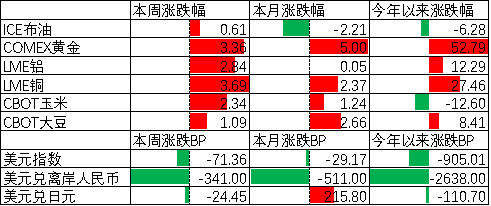
Key Points - The official manufacturing PMI in China for November is reported at 49.2, slightly up from the previous value of 49, while the non-manufacturing business activity index decreased to 49.5, down by 0.6 percentage points from the previous month [1][17] - In the U.S., the PPI for September increased by 0.3% month-on-month, with core PPI rising by 0.1%, indicating a notable acceleration in inflation [1][17] - U.S. retail sales for September grew by 0.2% month-on-month, marking the fourth consecutive month of positive growth but showing a significant slowdown and falling short of market expectations [1][17] - Durable goods orders in the U.S. for September showed an initial month-on-month increase of 0.5%, a significant deceleration from the revised 3% in the previous month, while core capital goods orders rose by 0.9%, exceeding market expectations of 0.3% [1][17] - Chinese President Xi Jinping and U.S. President Trump discussed the stability and positive direction of U.S.-China relations, emphasizing mutual benefits and cooperation [2][18] - Trump announced significant progress in the peace plan for the Russia-Ukraine conflict, with a special envoy set to meet with President Putin to finalize the agreement [3][19] - San Francisco Fed President Daly expressed support for a rate cut in December, citing a greater risk of sudden job market deterioration compared to inflation spikes [3][19] Market Review Futures Market - ICE Brent crude oil rose by 0.61% to $62.32, while COMEX gold increased by 3.36% to $4256.4 [4][22] - The U.S. dollar index fell by 71.36 basis points, with the Chinese yuan appreciating by 341 basis points against the dollar [5][22] Stock Market - The A-share market saw gains, with the ChiNext index rising by 4.54%, the largest increase among major indices, driven by improved risk appetite following the U.S.-China leaders' call [6][23] - The Hang Seng Index increased by 2.53%, and the Hang Seng Tech Index rose by 3.77%, reflecting a recovery in risk appetite [7][24] - U.S. stock markets also rebounded, with the Nasdaq index gaining 4.91%, supported by signs of resolution in the Russia-Ukraine conflict and increased rate cut expectations [8][25] Bond Market - In the bond market, credit bonds saw an upward trend, with 3Y AAA bonds rising by 5 basis points, while long-term bonds increased more than short-term ones [9][27] - U.S. Treasury yields generally declined, with the 20Y yield down by 5 basis points, influenced by Fed officials' support for a rate cut [10][28] Asset Allocation Perspective - The November PMI data indicates a slight recovery in manufacturing, while the service sector shows signs of contraction, suggesting a bottoming-out phase for the Chinese economy [11][29] - The expectation for a rate cut by the Federal Reserve has strengthened, with the probability of a December cut rising from 71% to 86% [11][29]
股指二次探底
Hua Tai Qi Huo· 2025-12-04 02:26
美国就业下滑。宏观方面,国务院总理李强在主持专题学习时指出,新型城镇化是扩大内需和促进产业升级、做 强国内大循环的重要载体。要因地制宜实施好新型城镇化规划。科学有序推进农业转移人口市民化。要深入实施 城市更新行动,把城市更新和消除安全隐患、稳楼市等工作结合起来,扎实推进好房子建设和房地产高质量发展。 要着力破解城乡二元结构。海外方面,ADP就业数据显示,11月私营企业减少3.2万个工作岗位,为2023年3月以来 最大降幅,远不及市场预期的增加1万个。 股指回调。现货市场,A股三大指数震荡下跌,沪指跌0.51%收于3878点,创业板指跌1.12%。行业方面,板块指 数跌多涨少,交通运输、有色金属、煤炭行业领涨,传媒、计算机、房地产、商贸零售行业跌幅居前。当日沪深 两市成交额为1.67万亿元。海外方面,美国三大股指小幅收涨,道指涨0.86%报47882.9点。 期指基差修复。期货市场,基差方面,股指期货的贴水继续修复。成交持仓方面,四大期指的成交量和持仓量同 步增加。 策略 海外方面,美国小非农就业数据表现弱于预期,美联储降息预期进一步升温,美股三大指数均小幅收涨。国内方 面,指数开启二次探底,关注即将召开的两大 ...
今日期货市场重要快讯汇总|2025年12月4日
Xin Lang Cai Jing· 2025-12-04 00:16
Group 1: Precious Metals Futures - Spot gold has surpassed $4240 per ounce, with a daily increase of 0.82% [1][8] Group 2: Base Metals Futures - Shanghai tin futures have shown strong performance, with the main continuous contract rising by 3.59% to 320,440 yuan per ton, marking the highest level since April 2022 [2][9] - The London Metal Exchange (LME) three-month tin futures also increased by 4.21%, reaching $40,685 per ton [2][9] Group 3: Energy and Shipping Futures - U.S. natural gas futures prices have continued to rise, increasing over 4.00% and 5.00%, reported at $4.011 and $4.050 per million British thermal units, respectively, marking the first time since 2022 that prices have touched $5 [3][10] - EIA crude oil inventory data shows an increase of 574,000 barrels for the week ending November 28, contrary to expectations of a decrease of 821,000 barrels, with the previous value being an increase of 2.774 million barrels [3][11] - Gasoline inventories rose by 451,800 barrels, significantly exceeding the expected increase of 146,800 barrels, with the previous value being an increase of 251,300 barrels [3][11] - Distillate inventories increased by 205,900 barrels, higher than the expected increase of 70,700 barrels, with the previous value being an increase of 114,700 barrels [3][11] - Additionally, crude oil inventories in Cushing, Oklahoma, decreased by 457,000 barrels, compared to a previous decrease of 68,000 barrels [4][11] - UBS predicts that crude oil prices will begin to recover in the second quarter of 2026 [5][11] Group 4: Macro and Market Impact - The U.S. ISM Non-Manufacturing PMI for November recorded at 52.6, exceeding expectations of 52.1 and the previous value of 52.4, marking the highest level since February 2025 [6][12] - U.S. Treasury Secretary Yellen indicated that certain sectors of the economy are showing signs of weakness, suggesting a need for interest rate cuts [12] - Concerns in the bond market have arisen regarding potential interest rate cuts if Hassett becomes the Federal Reserve Chair, leading to declines in U.S. 10-year and 2-year Treasury yields by over 2 basis points and 1.6 basis points, respectively [12] - In the stock market, major indices closed higher, with the Dow Jones up 0.86%, Nasdaq up 0.17%, and S&P 500 up 0.30% [12] - The Nasdaq Golden Dragon China Index fell by 1.37%, with several component stocks, including Canadian Solar, Huitian Network, and JinkoSolar, experiencing significant declines [12]
资产配置模型系列:基于周期理论的改进BL资产配置模型与应用展望
Bank of China Securities· 2025-12-04 00:08
Core Insights - The report emphasizes the improvement of the Black-Litterman (BL) model through the integration of nested cycle theory, which enhances the Sharpe ratio and win rate of asset portfolios, recommending an increase in A-shares and US Treasuries while gradually reducing US stock positions for 2026 [2][3][10]. Group 1: BL Model Overview - The BL model combines market implied equilibrium returns with investor subjective views weighted by confidence levels, resulting in more robust expected returns for asset allocation [8][10]. - The model addresses the high sensitivity of traditional mean-variance models to parameters and incorporates subjective investor views, making it more practical [10][11]. Group 2: Impact of Nested Cycle Theory - The improvement of the BL model is primarily based on subjective views derived from nested cycle theory, which assesses the performance of major asset classes under different cycle phases [10][11]. - The model outputs significantly enhance the Sharpe ratio of portfolios, allowing for better risk-adjusted returns [10][12]. Group 3: Asset Class Outlook for 2026 - The report forecasts a gradual shift to a de-stocking phase for major economies in 2026, suggesting an increase in allocations to A-shares and US Treasuries while reducing US stock positions [2][3][10]. - The model's asset return predictions will be based on historical average data from the transition from passive to active de-stocking phases [25][26]. Group 4: Performance of Asset Classes - Historical data indicates that during the passive de-stocking phase, equities outperform other asset classes with an average annual return of 27.74% and a win rate of 60% [17][18]. - In the active re-stocking phase, equities and commodities show strong performance, with equities achieving an average return of 40.01% and a win rate of 83% [17][18]. - Bonds perform best during the active de-stocking and passive re-stocking phases, with average returns of 10.28% and 3.61%, respectively [17][18]. Group 5: Model Implementation Steps - The BL model involves several steps: calculating prior expected returns, inputting subjective views, calculating posterior expected returns, and optimizing the asset allocation [21][22][23]. - The model's implementation requires historical return data and subjective forecasts from investment managers, with constraints on asset allocation ratios [30][31].
Dollar Does Not Deserve Its 'Very Rich Valuation,' Goldman Strategist Says
Youtube· 2025-12-03 16:34
Labor Market Concerns - There is a growing concern regarding the labor market, with indications that the layoff rate is beginning to pick up, despite previous stability in hiring and firing rates [2][3] - Upcoming reports are anticipated to confirm whether the tentative signals of increased layoffs are substantiated by comprehensive payroll and household survey data [3] Dollar Valuation and Economic Outlook - The US dollar is experiencing weakness due to a perception that the US economy is less exceptional than in the past, leading to a decline in its valuation [4][5] - The Federal Reserve is expected to ease policy further, which may contribute to continued dollar weakness [5][6] Bank of Japan (BOJ) Policy Considerations - The BOJ is considering a potential interest rate hike in December, influenced by the US economic performance and early signs of self-sustaining wage growth in Japan [10][11][12] - There is a concern regarding excessive yen weakening, prompting potential pushback from both the administration and the BOJ [12][13] Currency Trends and Investment Opportunities - The Chinese renminbi (CNY) is expected to appreciate gradually due to improved trade relations and significant growth in Chinese exports, which are seen as undervalued [16][17] - There are positive outlooks for the Chinese domestic equity market, particularly in high-tech industries, suggesting further growth potential [18][19] - Emerging markets, particularly Brazil, present investment opportunities in equities and bond markets as rate cuts are anticipated [21]

日本加息对全球市场有何影响?
2025-12-03 02:12
日本加息对全球市场有何影响?20251202 摘要 日本央行加息预期引发市场波动,与此前预期新首相上台后延续宽松政 策不同,当前预期基于日本最新数据和通胀指标,显示宽松政策难以为 继,导致市场调整并转向加息预期。 PMI 数据显示企业主动去库存,11 月外需回升但生产端偏弱,企业为避 免亏损缩减生产和采购,用现有库存满足需求。此举短期增加经济压力, 但中长期有助于重启库存周期,或在明年下半年改善供需关系并推动 PPI 回升。 2025 年 A 股流动性充裕,企业存款活化显著,活期存款占比提升。财 政发债增加企业现金流,反内卷和贸易战导致制造业投资下滑,资金流 入股市,风险偏好上升亦促使企业资金入市,预计该趋势在 2026 年上 半年持续。 当前债券市场表现不佳,但央行关注价格而非数量,下半年利率区间维 持在 1.3%-1.5%。降息可能要等到 2026 年,目前不宜看空债券市场, 关注中央经济工作会议是否带来超预期政策调整。 Q&A 日本央行加息预期对全球市场产生了哪些影响? 日本央行加息预期对全球市场产生了显著影响。首先,日元套息交易的反转导 致投资者卖出高息资产,回流日元,这直接推动了全球债券市场利率上行 ...
比特币再遭大跌,大跌只是开始,加密风暴将冲击全球市场
Sou Hu Cai Jing· 2025-12-02 17:00
Core Viewpoint - The cryptocurrency market experienced a significant collapse, with Bitcoin dropping 6% to below $86,000 and Ethereum falling 7% to around $2,800, leading to widespread declines in major altcoins [1][3]. Market Impact - The turmoil in the cryptocurrency market quickly spread to traditional financial markets, causing the Nasdaq 100 futures to drop by 1%, particularly affecting tech stocks [3]. - MicroStrategy, a major holder of Bitcoin with $56 billion in assets, indicated that they might be forced to sell part of their holdings if the mNAV ratio turns negative, which is currently at 1.19, close to the warning threshold [3][13]. - The correlation between Bitcoin and U.S. stocks has intensified, with Bitcoin's sudden drop reversing a positive market sentiment that followed Nvidia's strong earnings report, ultimately leading to a 300-point decline in the Dow [3][13]. Preceding Indicators - The collapse was foreshadowed by a $19 billion leveraged liquidation in early October, which initiated a selling spree that saw Bitcoin drop 16.7% in November [3][6]. - Despite a brief rebound above $90,000, the recovery was weak and unsustainable [3]. Structural Weaknesses - The market is facing structural vulnerabilities, with a significant lack of new capital inflows into Bitcoin ETFs and a recent net outflow exceeding $1 billion in a single week [6][8]. - The tightening of global liquidity, driven by signals from the Bank of Japan and hawkish comments from the Federal Reserve, has put additional pressure on high-risk assets [6][8]. Regulatory Environment - Regulatory concerns are also impacting market confidence, with warnings from the People's Bank of China about the risks associated with virtual currencies and the EU's MiCA legislation imposing strict limits on stablecoins [9]. - The downgrade of USDT's stability rating by S&P Global Ratings raises concerns about collateral adequacy, which could undermine the entire crypto ecosystem reliant on stablecoins [9]. Market Dynamics - The simultaneous decline of both risk assets like Bitcoin and traditional safe-haven assets like gold indicates a systemic liquidity contraction, forcing investors to liquidate assets for cash [11]. - The recent downturn has led to a significant number of liquidations, with over 260,000 traders losing approximately $941 million in just 24 hours [8]. Future Outlook - The market is now focused on upcoming U.S. non-farm payroll and inflation data, which will provide insights into the Federal Reserve's monetary policy direction [13]. - The potential selling pressure from MicroStrategy looms over the market, and without new capital inflows, the sustainability of any price recovery remains in doubt [13].

18年量化老手揭秘:机构震仓洗盘真相
Sou Hu Cai Jing· 2025-12-01 14:01
Group 1 - The global market is experiencing a stark contrast, with Japanese and Korean stock markets showing significant volatility, exemplified by the Nikkei 225 index initially rising but then dropping over 1%, and the Korean Composite Index flipping from a 1.2% gain to a loss [1][3] - Cryptocurrency markets are also showing divergence, with Bitcoin falling below $87,000 and Ethereum dropping below $2,900, while gold prices are rising, reminiscent of the 2008 financial crisis when gold served as a safe haven during risk asset declines [3][5] - Geopolitical tensions, particularly related to comments from former President Trump regarding Venezuela, are contributing to market uncertainty, highlighting the market's aversion to unpredictability [3][5] Group 2 - Many investors struggle to hold onto stocks during a bull market, often attributing their inability to external factors, but the real issue lies in not understanding the intentions of institutional investors [5][6] - Institutional investors are likened to skilled players in a card game, whose actions significantly influence stock price movements, making it crucial for retail investors to discern their strategies [5][6] - The advancement of computer technology and quantitative data analysis provides tools for retail investors to decode institutional behavior, potentially allowing them to make more informed investment decisions [6][12] Group 3 - Key quantitative data indicators include "dominant momentum," which reflects various trading behaviors, and "institutional inventory," which shows the activity level of large funds [11][12] - Recognizing signals of institutional activity, such as a combination of "recovery" behavior and active "inventory," can indicate opportunities for retail investors to capitalize on market fluctuations [12][16] - The current market movements, including the fluctuations in Japanese and Korean stocks and the contrasting trends in cryptocurrencies and gold, suggest that large funds are reallocating their asset portfolios [18]
日本,全线暴跌!黑天鹅,突袭!
Sou Hu Cai Jing· 2025-12-01 07:30
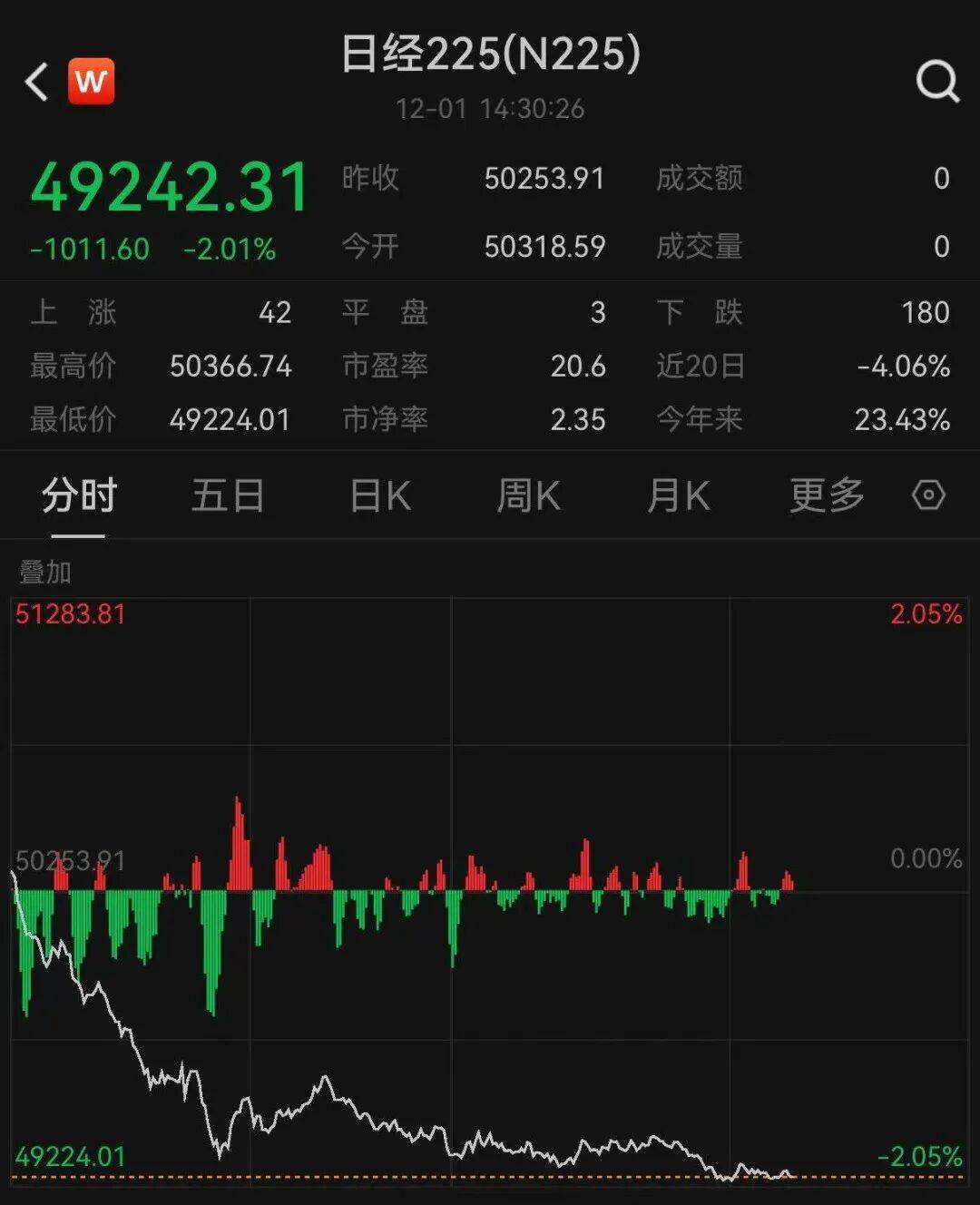
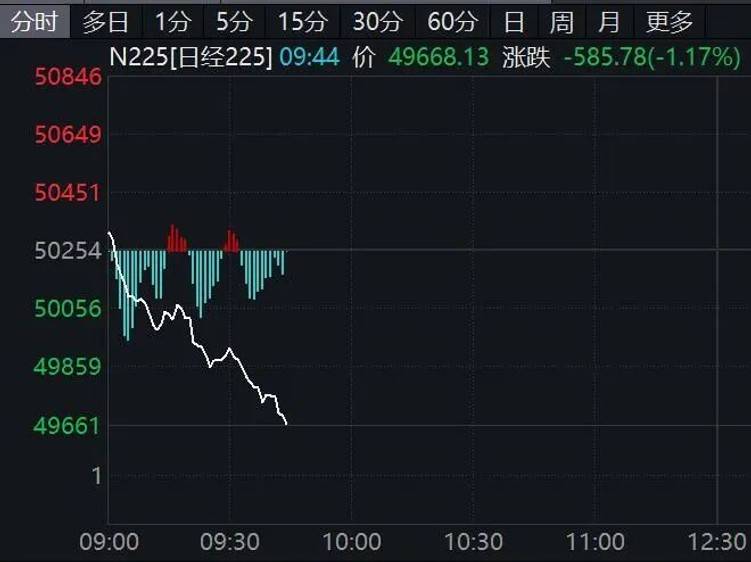
Group 1 - Japanese government bonds have experienced a significant decline due to renewed interest rate hike expectations, with the 3-month bond yield soaring over 34% and the 10-year bond yield reaching 1.840%, the highest level since June 2008 [1] - The Nikkei 225 index opened high but fell sharply, with an intraday drop exceeding 2%, losing over 1,000 points [1] - Bank of Japan Governor Kazuo Ueda indicated that the central bank will weigh the pros and cons of raising interest rates at the next monetary policy meeting, marking the strongest signal yet regarding a potential rate hike [2] Group 2 - The Japanese government plans to issue over 11.7 trillion yen (approximately 529.9 billion RMB) in new bonds to fund a new round of economic stimulus, raising concerns about the impact on fiscal health [4] - Japan's debt is projected to reach 229.6% of GDP by 2025, the highest among developed countries, leading to market worries about fiscal deterioration due to increased spending [4] - The Japanese economy has shown signs of deterioration, with the latest data indicating a 1.8% annualized decline in GDP for Q3, raising concerns about the effectiveness of the government's stimulus measures [6]