创新药

Search documents
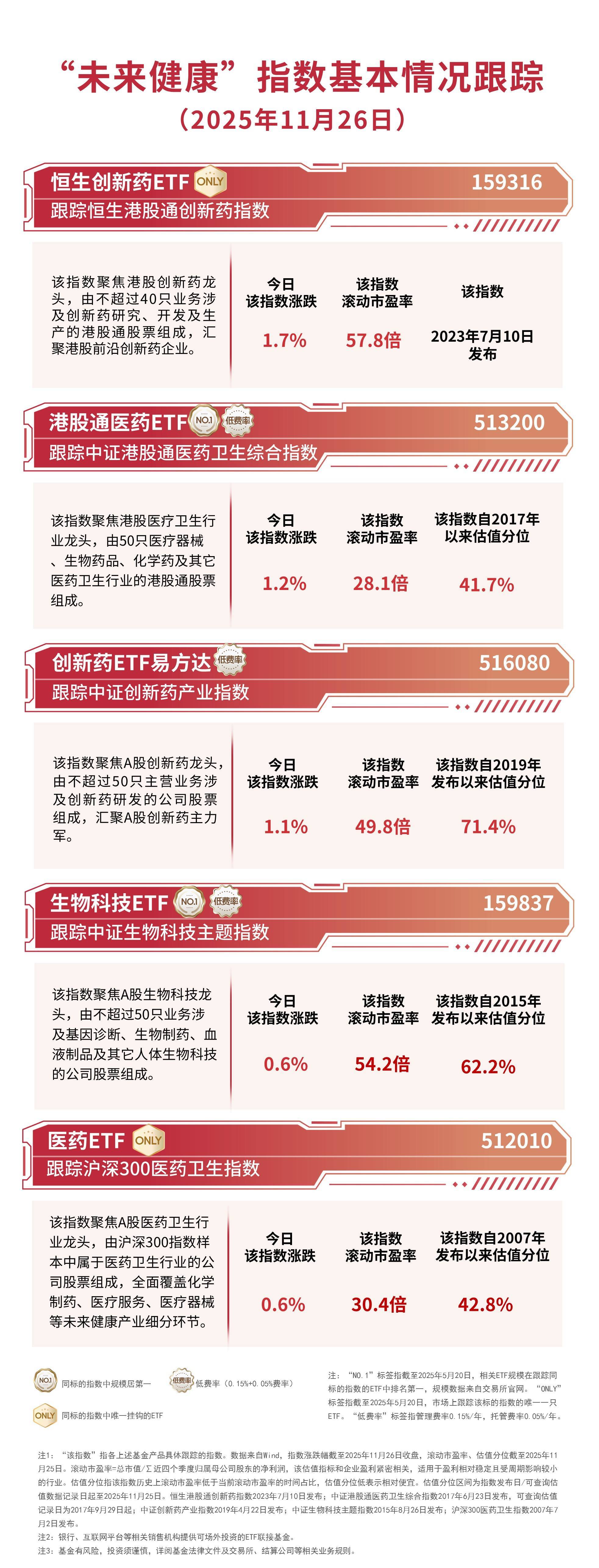
医药板块连续三日上涨,关注恒生创新药ETF(159316)、医药ETF(512010)等配置价值
Sou Hu Cai Jing· 2025-11-26 12:52
Core Viewpoint - The pharmaceutical sector continues its upward trend, achieving a "three consecutive days of gains" with various indices showing positive growth, indicating a robust market performance in the industry [1]. Group 1: Market Performance - The Hang Seng Hong Kong Stock Connect Innovative Drug Index rose by 1.7% [1]. - The CSI Hong Kong Stock Connect Pharmaceutical and Health Comprehensive Index increased by 1.2% [1]. - The CSI Innovative Drug Industry Index saw a rise of 1.1% [1]. - The CSI Biotechnology Theme Index and the CSI 300 Pharmaceutical and Health Index both grew by 0.6% [1]. Group 2: Industry Insights - CITIC Securities states that the Chinese pharmaceutical industry has entered a critical phase characterized by "innovation realization and global layout" [1]. - Key supports for the industry include population and domestic demand base, as well as comprehensive manufacturing capabilities across the entire industry chain [1]. - Companies are actively exploring diversified overseas paths [1]. - Looking ahead to 2026, opportunities are expected in innovative commercialization, global breakthroughs, policy optimization, and industry mergers and acquisitions [1].

创新药崛起!院内用药占比持续增长,中国医药行业结构性拐点已至
Di Yi Cai Jing· 2025-11-26 12:35
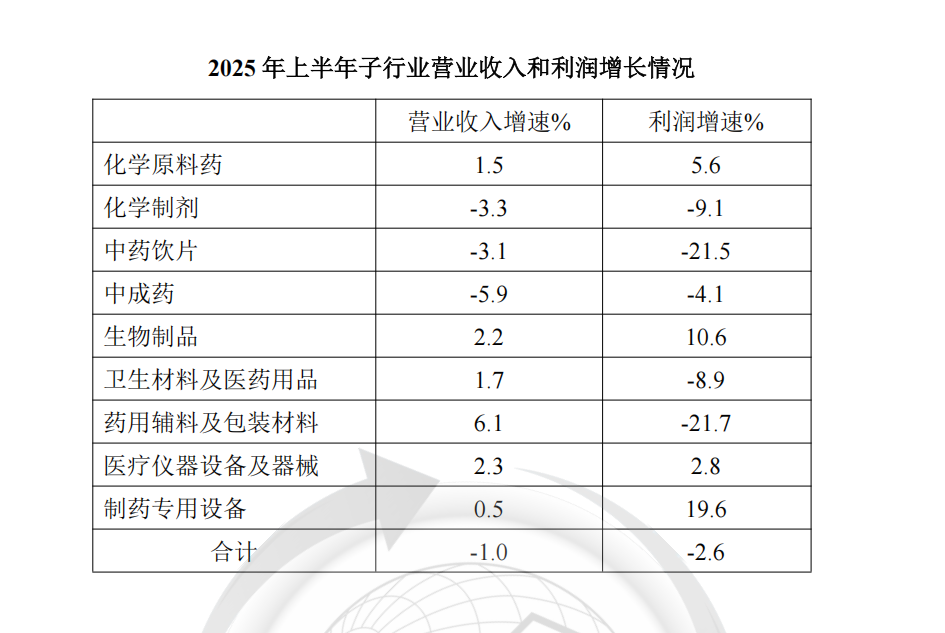
Group 1: Market Overview - In the US and five European countries, innovative drugs account for 70%-80% of the local market, while in China, the market share of innovative drugs is only 8.6% [1][10] - The Chinese innovative drug market is experiencing a "structural turning point," which is expected to reverse the downward trend in the pharmaceutical industry [1] - The domestic pharmaceutical terminal sales are projected to show negative growth starting in 2024, with over 30% of regulated pharmaceutical companies reporting losses in the first half of this year [1][3] Group 2: Industry Challenges - The pharmaceutical industry is facing a survival crisis due to external growth factors diminishing, and the capital market's enthusiasm for business development (BD) transactions cooling down [3] - The low concentration in several sub-sectors, particularly in the generic drug industry, has led to price competition, which is a key constraint on the development of the Chinese pharmaceutical industry [3][4] - The average price level of generic drugs has been further reduced due to policies on price governance and drug price comparison [4] Group 3: Innovative Drug Growth - Despite the overall revenue decline in the pharmaceutical industry, innovative drug companies have maintained good growth and profitability, with some achieving record high revenues [1][7] - The market size of innovative drugs (including biosimilars) reached 120 billion yuan in 2023, with a growth rate of 27% [7] - The revenue growth rate for biological products was 2.2%, with profit growth at 10.6%, indicating a strong performance in the innovative drug sector [8][7] Group 4: Regulatory and Policy Developments - The National Healthcare Security Administration has announced reforms to improve the immediate settlement of medical insurance funds, which is expected to alleviate the financial pressure on hospitals and improve drug payment timelines [5][6] - The implementation of policies to expand the scope of drug procurement and price control is expected to further impact the market dynamics [4][10] Group 5: Future Opportunities - The commercial potential of innovative drugs is anticipated to become the core driver of industry growth during the downturn [7] - The increasing number of innovative drug approvals and the shift in hospital medication structure are expected to enhance the market share of innovative products [7] - The industry is encouraged to build international innovation platforms to capture a larger share of the global market [2][18]




创新药ETF国泰(517110)涨超1.5%,创新药产业趋势不变
Mei Ri Jing Ji Xin Wen· 2025-11-26 10:33
Group 1 - The core viewpoint is that the innovative pharmaceutical sector is experiencing sustainable growth due to the continuous implementation of BD, with a trend towards "innovation + internationalization" remaining unchanged [1] - After a short-term adjustment, the elasticity of the innovative pharmaceutical sector has further increased, indicating a positive outlook [1] - There is a noticeable improvement in the fundamentals of the innovative pharmaceutical industry chain, with positive trends observed in investment and financing data, orders, and performance [1] Group 2 - The Guotai Innovative Drug ETF (517110) tracks the SHS Innovative Drug Index (931409), which focuses on listed companies in the A-share and Hong Kong markets engaged in innovative drug research and biopharmaceuticals [1] - The index selects 50 high-growth and volatile constituent stocks, reflecting the overall performance of innovative pharmaceutical enterprises, with a growth-oriented style primarily allocated in the healthcare sector [1]
尾盘,集体拉升!
证券时报· 2025-11-26 10:10
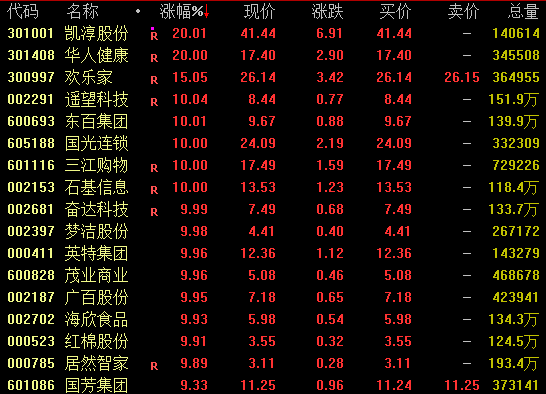
Market Overview - Major stock indices in the Asia-Pacific region mostly rose, with Japan's Nikkei 225 up 1.85% to 49,559.07 points, and South Korea's Composite Index up 2.67% to 3,960.87 points [1] - A-shares showed overall strength, with the ChiNext Index surging over 3% at one point [2] A-Shares Performance - The Shanghai Composite Index experienced narrow fluctuations, closing down 0.15% at 3,864.18 points, while the Shenzhen Component Index rose 1.02% to 12,907.83 points, and the ChiNext Index increased by 2.14% to 3,044.69 points [3] - Total trading volume in the Shanghai, Shenzhen, and Beijing markets was 17,973 billion yuan, a decrease of approximately 290 billion yuan from the previous day [3] - The retail sector saw significant gains, with stocks like Dongbai Group, Guoguang Chain, and Sanjiang Shopping hitting the daily limit [4] Retail Sector Highlights - Retail stocks surged in the afternoon, with notable gains including Kai Chun Co. and Huaren Health both hitting the 20% limit up [4] - Other retail stocks such as Huanle Jia and Dongbai Group also saw substantial increases, with Huanle Jia up over 15% [4] AI Industry Activity - AI-related stocks were active, with companies like Zhongji Xuchuang and Xinyi Sheng seeing significant price increases, with Zhongji Xuchuang up over 13% and Xinyi Sheng nearly 9% [10] - The AI industry is expected to continue its growth trajectory, driven by increasing demand for cloud computing and AI infrastructure [11][12] Pharmaceutical Sector Performance - The pharmaceutical sector showed strong performance, particularly in innovative drugs and vaccine concepts, with stocks like Yue Wannianqing and Huaren Health both hitting the 20% limit up [13] - The small nucleic acid drug sector is gaining attention due to recent advancements, with many domestic companies entering clinical research phases [16] Consumption and Economic Policy - The Ministry of Industry and Information Technology and other departments released a plan to enhance the adaptability of consumer goods supply and demand, aiming for significant improvements by 2027 [6] - The plan encourages the development of new retail formats and the use of technologies like AI and virtual reality to enhance consumer experiences [6] - Analysts suggest focusing on high-end domestic beauty care brands and emotional consumption-related industries as domestic consumption capacity and willingness are expected to rise [7]



尾盘,集体拉升!
Zheng Quan Shi Bao· 2025-11-26 09:53
Market Overview - Major Asia-Pacific stock indices mostly rose, with Japan's Nikkei 225 up 1.85% to 49,559.07 points and South Korea's Composite Index up 2.67% to 3,960.87 points [1] - A-shares showed strength, with the ChiNext Index surging over 3% at one point; however, the Shanghai Composite Index closed down 0.15% at 3,864.18 points [1] Retail Sector - Retail stocks experienced a significant surge, with companies like Kai Chun Co. and Huaren Health hitting the 20% limit up, and Huanle Jia rising over 15% [3][4] - The Ministry of Industry and Information Technology and other departments released a plan to enhance consumer goods supply and demand adaptability, aiming for a noticeable optimization of supply structure by 2027 [5] AI Industry - AI-related stocks were active, with companies like Changguang Huaxin and Saiwei Electronics seeing gains of 20% and over 16% respectively [7][8] - Alibaba reported a 34% year-on-year increase in cloud revenue for Q2 FY2026, with AI-related product revenue growing for nine consecutive quarters [9] Pharmaceutical Sector - The pharmaceutical sector saw strong performance, particularly in innovative drugs and vaccines, with companies like Yue Wannianqing and Huaren Health reaching the 20% limit up [11][12] - The small nucleic acid drug field is gaining attention due to recent advancements, indicating a potential golden development period driven by technological breakthroughs and commercial validation [13]
港股收盘 | 恒指收涨0.13% 美团-W涨超5% 阿里巴巴-W绩后跌近2%
Zhi Tong Cai Jing· 2025-11-26 08:47
Market Overview - The Hong Kong stock market experienced a slight increase, with the Hang Seng Index rising 0.13% to close at 25,928.08 points, while the total trading volume reached 2,070.78 million HKD [1] - Short-term risk factors for the Hong Kong market are decreasing, but a catalyst is needed for a confirmed rebound. The current position is considered attractive for medium to long-term investment [1] Blue Chip Performance - Meituan-W (03690) led the blue-chip stocks, rising 5.65% to 103.8 HKD, contributing 47.97 points to the Hang Seng Index. Alibaba's CFO indicated a significant reduction in investment for Taobao Flash Sales in the upcoming quarter, suggesting a "temporary truce" [2] - Other notable blue-chip movements include ZTO Express-W (02057) up 4.24%, Shenzhou International (02313) up 3.2%, while Chow Tai Fook (01929) fell 6.1% [2] Sector Performance Technology Sector - The technology sector showed mixed results, with Meituan rising over 5%, while Alibaba fell nearly 2% post-earnings, exacerbating e-commerce concerns. Tencent also saw a decline of 0.88% [3] Paper Industry - The paper industry stocks performed well, with Nine Dragons Paper (02689) up 5% and Lee & Man Paper (02314) up 4.88%. Several major paper companies announced price adjustments for various paper types, with increases ranging from 50 to 200 CNY per ton [3] Aviation Sector - Airline stocks rebounded, with China Eastern Airlines (00670) up 6.96% and Air China (00753) up 4.2%. The strengthening of the RMB and expectations of reduced oil prices contributed to this rebound [4] Innovative Pharmaceuticals - The innovative pharmaceutical sector showed strong performance, with Hengrui Medicine (01276) up 4.55% and Kangfang Bio (09926) up 3.97%. Analysts remain optimistic about the sector's fundamentals and growth potential [5] Consumer Sector - Consumer stocks were active, with Miniso (09896) up 2.64% and Pop Mart (09992) up 2.2%. The government has introduced a plan to enhance consumer goods supply and demand, aiming for significant improvements by 2027 [6] Notable Stock Movements - Yao Cai Securities Financial (01428) rose 5.73% after extending its acquisition offer deadline with Ant Group [7] - Changfei Optical Fiber (06869) increased by 4.77%, benefiting from negotiations with Meta and Google regarding data center chip usage [8] - Pony.ai (02026) saw a 4.37% increase, reporting significant revenue growth and profitability in its Robotaxi business [9] - Chow Tai Fook (01929) fell 6.1% post-earnings, reporting a slight decrease in revenue but a marginal increase in profit [10]

“易中天”突然集体暴涨!发生了什么?
天天基金网· 2025-11-26 05:21
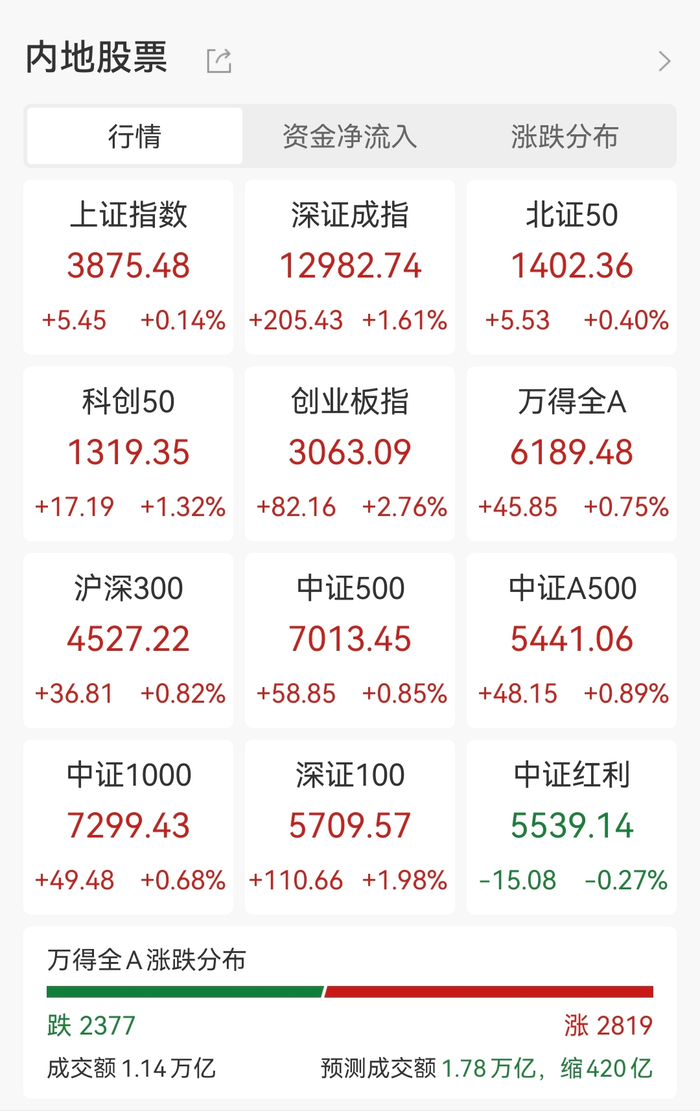
Market Overview - The pharmaceutical and technology sectors experienced a strong rally, with all three major A-share indices rising [2] - The Shanghai Composite Index rose by 0.14%, the Shenzhen Component Index increased by 1.61%, and the ChiNext Index surged by 2.76% [3] Pharmaceutical Sector - The pharmaceutical sector saw significant gains, with sub-sectors such as pharmaceutical commerce, chemical pharmaceuticals, medical services, and innovative drugs leading the way [2][7] - Notable stocks included Guangdong Wanyanqing and Huaren Health, both hitting the 20% daily limit up, while leading companies like Baijie Shenzhou and Hengrui Medicine also saw increases [7][9] Technology Sector - The computing power industry chain showed strong performance, particularly in the optical module sector, with stocks like Zhongji Xuchuang rising by 13.89% to reach a market capitalization of 606.99 billion [2][3] - Other leading stocks in the computing power sector, such as Xinyi Technology and Hushen Technology, also experienced significant increases [3] Catalysts for Pharmaceutical Sector Growth - The rapid rise in flu activity since November has driven demand for antiviral medications, with sales of Oseltamivir increasing by 237% and other flu treatments also seeing substantial growth [9] - Recent policy support measures from Beijing and Shanghai aimed at promoting the high-quality development of the medical device and pharmaceutical industries have further boosted investor sentiment [10] Investment Outlook - Analysts suggest that the pharmaceutical sector remains fundamentally strong, with a gradual improvement expected. The sector is currently viewed as being at a valuation bottom, presenting opportunities for investment in innovative drugs and medical devices [10]



光模块、创新药强势拉升,中际旭创涨近14%,总市值超6000亿元
2 1 Shi Ji Jing Ji Bao Dao· 2025-11-26 04:25
记者丨吴桂兴 见习记者张嘉钰 | ( 日 | 中际旭创(300308) | | | | | | --- | --- | --- | --- | --- | --- | | | 休市中 11-26 11:30:00 通 融 | | | | | | | 546.29 额 210亿 股本11.11亿 市盈™ 70.99 +66.63 +13.89% 换 3.72% 市值 6070亿 市净 23.40 | | | 万得 | | | 关羽 | 五日 日K 周K 月K 更多 | | | | | | 叠加 | | 均价: 512.50 | 盘口 | 资金 | | | 549.88 | | -- 14.64% | 卖5 547.77 | | 4 | | | | | 文4 547.35 | | 2 | | | | | 卖3 547.21 | | 18 | | | | | 英2 547.20 | | 11 | | 9.66 | | 0.00% | 546.99 型 | | 2 | | | | | 杀1 546.29 | | ട | | | | | 买2 546.10 | | 2 | | | | | 录3 546.04 | | 1 ...
光模块、创新药强势拉升,中际旭创涨近14%,总市值超6000亿元
21世纪经济报道· 2025-11-26 04:18
记者丨吴桂兴 见习记者张嘉钰 编辑丨刘巷 11月26日,A股市场早盘震荡反弹,截至收盘,沪指涨0.14%,深成指涨1.61%,创业板指涨2.76%。 沪深两市半日成交额1.14万亿,较上个交易日缩量420亿。盘面上热点快速轮动,全市场超2800只个股上涨。 | 内地股票 | | | | --- | --- | --- | | 行情 | 资金净流入 | 涨跌分布 | | 上证指数 | 深证成指 | 北证50 | | 3875.48 | 12982.74 | 1402.36 | | +5.45 +0.14% +205.43 +1.61% +5.53 +0.40% | | | | 科创50 | 创业板指 | 万得全A | | 1319.35 | 3063.09 | 6189.48 | | +17.19 +1.32% +82.16 +2.76% +45.85 +0.75% | | | | 沪深300 | 中证500 | 中证A500 | | 4527.22 | 7013.45 | 5441.06 | | +36.81 +0.82% +58.85 +0.85% +48.15 +0.89% | | | | 中证1000 ...

早盘直击|今日行情关注
申万宏源证券上海北京西路营业部· 2025-11-26 03:24
Market Overview - The A-share market has shown signs of recovery around the 3800-point level, ending a period of continuous adjustment and recording a small upward trend [1] - Over 4200 stocks rose during the trading day, indicating a shift in market sentiment as trading volume ended its continuous decline [1] - The market is expected to experience fluctuations around the 4000-point level as it prepares for a potential upward movement, driven by improved supply and demand conditions in the manufacturing sector by 2026 [1] Sector Focus - The technology sector remains a key area of interest in November, with opportunities for rebound in underperforming segments such as robotics, military, and smart vehicles [2] - The semiconductor industry continues to trend towards domestic production, with attention on semiconductor equipment, wafer manufacturing, materials, and IC design [2] - The military sector is anticipated to see a recovery in orders by 2025, with signs of bottoming out in the performance of various military sub-sectors [2] - The innovative pharmaceutical sector is entering a recovery phase after nearly four years of adjustment, with positive net profit growth expected to continue into 2025 [2] - The banking sector is witnessing a rebound in mid-year performance growth, attracting interest from long-term institutional investors due to its appealing dividend yield [2]