制造业

Search documents
广东省中小企业发展促进会成立20周年:中国制造家开启制造新生态
Jing Ji Guan Cha Wang· 2025-12-17 04:26
Core Insights - The "China Manufacturer" concept was systematically introduced at the Guangdong Small and Medium Enterprises Development Promotion Association's 20th anniversary conference, emphasizing the spirit of innovation and collaboration in the manufacturing sector [1][2] - The conference highlighted the importance of cost restructuring, scenario-driven value liberation, and ecological collaboration for manufacturing enterprises to create significant products worth billions [1] Group 1 - The Guangdong Small and Medium Enterprises Development Promotion Association has served over 100,000 small and medium enterprises since its establishment in 2005, becoming a 5A social organization and a national public service demonstration platform for SMEs [1] - The conference gathered over 800 participants, including entrepreneurs and industry experts, showcasing the collective strength and innovation potential of the manufacturing sector [1] Group 2 - The "China Manufacturer Mutual Cooperation System" initiative was signed at the conference, aiming to build a cross-regional and cross-industry cooperative network for manufacturing enterprises [2] - The event also featured the unveiling of the "China Manufacturer Portrait Art Exhibition" and the announcement of a collaborative program titled "Dialogue with China Manufacturers" by Beijing Literary Radio [2]
——2025年11月美国非农数据点评:政府停摆扰动就业,不足以支撑1月降息
EBSCN· 2025-12-17 03:50
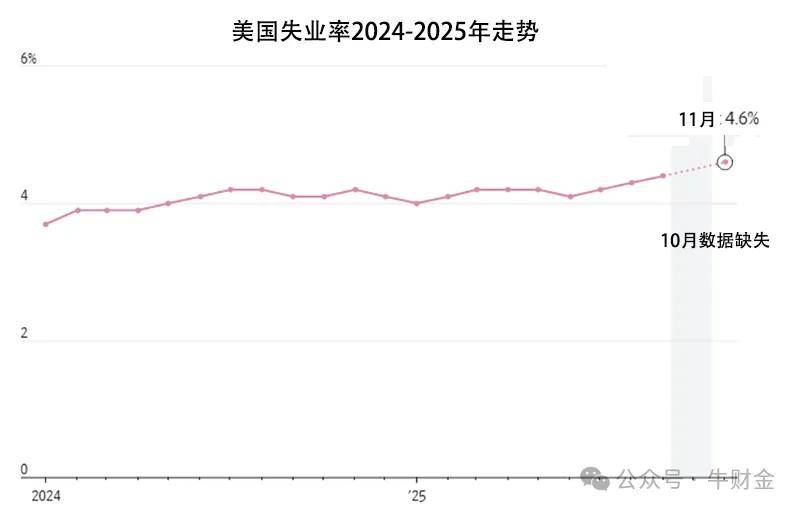
Employment Data - In November 2025, the U.S. added 64,000 non-farm jobs, exceeding the expected increase of 50,000 and recovering from a loss of 105,000 jobs in October[15] - The unemployment rate rose to 4.6%, higher than the expected 4.4%[15] - Average hourly earnings increased by 3.5% year-on-year, slightly below the expected 3.6%[15] Economic Insights - The rise in unemployment is attributed to a "technical" disruption from the government shutdown, which temporarily inflated the unemployment figures due to forced leave of federal employees[2] - Private sector employment remains resilient, with the goods-producing sector adding 19,000 jobs, the highest since May 2025[2] - Retail data for October showed stability, with core retail sales growth exceeding expectations, indicating that consumer spending, which accounts for nearly 70% of U.S. GDP, is stabilizing[2] Federal Reserve Outlook - Despite the unexpected rise in unemployment, the Federal Reserve is likely to maintain a cautious approach to interest rate cuts in the short term[5] - The market anticipates two rate cuts in 2026, with probabilities of 44.1% in April and 34.5% in July, while the probability of pausing rate cuts in January 2026 stands at 73.4%[24] Labor Market Dynamics - The labor force participation rate increased to 62.5% in November, up from 62.4% in September, indicating a recovery in employment willingness among younger demographics[4] - The number of unemployed individuals rose by 228,000 in November, reflecting the impact of the government shutdown on temporary unemployment[4] Wage Growth and Inflation - Wage growth showed signs of slowing, with a month-on-month increase of only 0.1% in November, down from 0.4% in October[42] - Year-on-year wage growth also decreased to 3.5%, compared to 3.7% in October, suggesting reduced inflationary pressures[42]
从11月份数据看中国经济增长点
Xin Hua She· 2025-12-17 03:17
Economic Overview - In November, the national economy continued to operate steadily, with industrial production and service sectors showing stable growth. The industrial added value for large-scale enterprises increased by 4.8% year-on-year and 0.44% month-on-month, while the cumulative growth from January to November was 6.0% [1][2] Industrial Production - The industrial production remained stable, with most sectors experiencing growth. The equipment manufacturing and high-tech manufacturing sectors saw rapid growth, indicating a continuous upgrade and transformation of the industrial economy [2][9] Service Sector and Retail - The retail sales of consumer goods increased by 4.0% year-on-year, with service retail sales growing by 5.4%, which is an acceleration of 0.1 percentage points compared to the previous ten months [4] Investment Trends - Fixed asset investment (excluding rural households) reached 444,035 billion yuan, showing a year-on-year decline of 2.6%. However, excluding real estate development investment, fixed asset investment grew by 0.8%, with manufacturing investment increasing by 1.9% [4][7] Policy Impact - The effects of large-scale equipment renewal policies have been evident, with significant growth in investment in equipment and tools. Despite an overall decline in investment, industrial investment remains stable, particularly in high-end, intelligent, and green development sectors [7][9] Future Outlook - The "14th Five-Year Plan" emphasizes technological self-reliance and high-quality development, providing a direction for economic transformation. Future macro policies are expected to focus more on technological innovation to empower industries and achieve high-quality economic growth [11]


2025年11月经济增长数据点评:服务消费增速加快
Ping An Securities· 2025-12-17 01:55
Economic Growth Overview - In November 2025, China's industrial added value grew by 4.8% year-on-year, slightly down by 0.1 percentage points from the previous month[3] - The service production index increased by 4.2% year-on-year, a decrease of 0.4 percentage points compared to October[3] - Retail sales of consumer goods rose by 1.3% year-on-year, down 1.6 percentage points from the previous month[3] Sector Performance - High-tech manufacturing added value increased by 8.4%, accelerating by 1.2 percentage points from the previous month, outpacing the overall industrial growth rate by 3.6 percentage points[3] - The export delivery value showed a marginal recovery, with a year-on-year decline of 0.1%, improving by 2.0 percentage points from October[3] - The service retail sales grew by 5.4% year-on-year from January to November, with a 0.1 percentage point increase compared to the previous month[3] Investment Trends - Fixed asset investment saw a cumulative year-on-year decline of 2.6% from January to November, a drop of 0.9 percentage points from the previous month[3] - Infrastructure and manufacturing investments maintained expansion, with cumulative year-on-year growth rates of 0.1% and 1.9%, respectively[3] - Equipment purchase investment rose by 12.2% year-on-year, contributing 1.8 percentage points to overall investment growth[3] Risks and Outlook - Risks include potential underperformance of growth stabilization policies, unexpected severity of overseas economic downturns, and escalation of geopolitical conflicts[3]
权威解读丨从11月份数据看中国经济增长点
Xin Hua Wang· 2025-12-17 01:32
Economic Overview - In November, the national economy showed overall stability with a steady development trend, as indicated by the National Bureau of Statistics [1][9] - The industrial production maintained stable growth, with the industrial added value above designated size increasing by 4.8% year-on-year and 0.44% month-on-month in November [1] Industrial Performance - The industrial production in November was generally stable, with most sectors experiencing growth, particularly in equipment manufacturing and high-tech manufacturing, indicating a continuous upgrade of the industrial economy [2] - From January to November, the industrial added value above designated size grew by 6.0% year-on-year [1] Investment and Consumption - From January to November, the total retail sales of consumer goods increased by 4.0% year-on-year, with service retail sales growing by 5.4%, accelerating by 0.1 percentage points compared to the previous ten months [4] - Fixed asset investment (excluding rural households) reached 444,035 billion yuan, a year-on-year decrease of 2.6%, while manufacturing investment grew by 1.9% [4] Policy Impact and Future Outlook - The effects of policy measures have been evident, with significant growth in equipment investment and a stable increase in industrial investment, particularly in high-end, intelligent, and green development [7] - The "14th Five-Year Plan" emphasizes technological self-reliance and high-quality development, guiding future macroeconomic policies to focus more on technological innovation [11]
数字中国十载潮涌,神州加“数”奔腾
Xin Hua Wang· 2025-12-17 01:25
Group 1 - The core idea of the article highlights the significant progress made in the construction of Digital China over the past decade, emphasizing the integration of digital technology into various sectors and its impact on economic development [1][4] - The value added by the core industries of the digital economy has increased from 6.8% of GDP in 2015 to 10.4% in 2024, demonstrating the strong momentum for high-quality economic growth [1] - The total number of 5G base stations in China is projected to reach 4.705 million by September 2025, supporting the digital lives of 1.123 billion internet users [1] Group 2 - The computing power scale in China has seen an average growth rate of approximately 30% over the past five years, with a projected total computing power of 280 EFLOPS by the end of 2024, placing it among the top globally [3] - The digital transformation in the manufacturing sector has led to the establishment of over 35,000 basic-level and more than 7,000 advanced-level smart factories, resulting in significant improvements in product development cycles, production efficiency, and reductions in defect rates and carbon emissions [3] - The rural e-commerce retail sales are expected to reach 2.56 trillion yuan in 2024, an increase of 770 billion yuan compared to 2020, indicating the revitalization of the agricultural sector through digital innovation [3] Group 3 - The digital upgrade in the public welfare sector has positively impacted over 600 million people through cross-province medical settlement services, and remote medical services now cover all cities and counties [4] - China has become the largest holder of artificial intelligence patents globally, accounting for 60% of the total, showcasing its strong technological capabilities in AI [4] - The construction of Digital China has evolved from concept to practice, extending from urban areas to rural regions, contributing to global digital transformation with Chinese wisdom [4]
我国用电量将首超10万亿千瓦时,意味着什么?
Zhong Guo Dian Li Bao· 2025-12-17 01:01
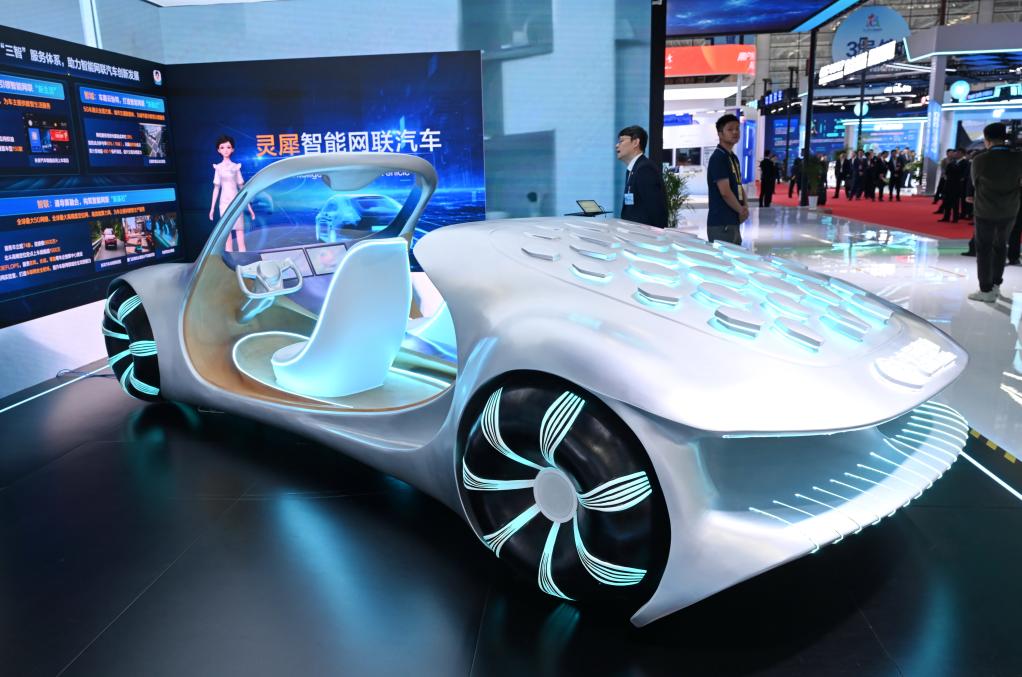
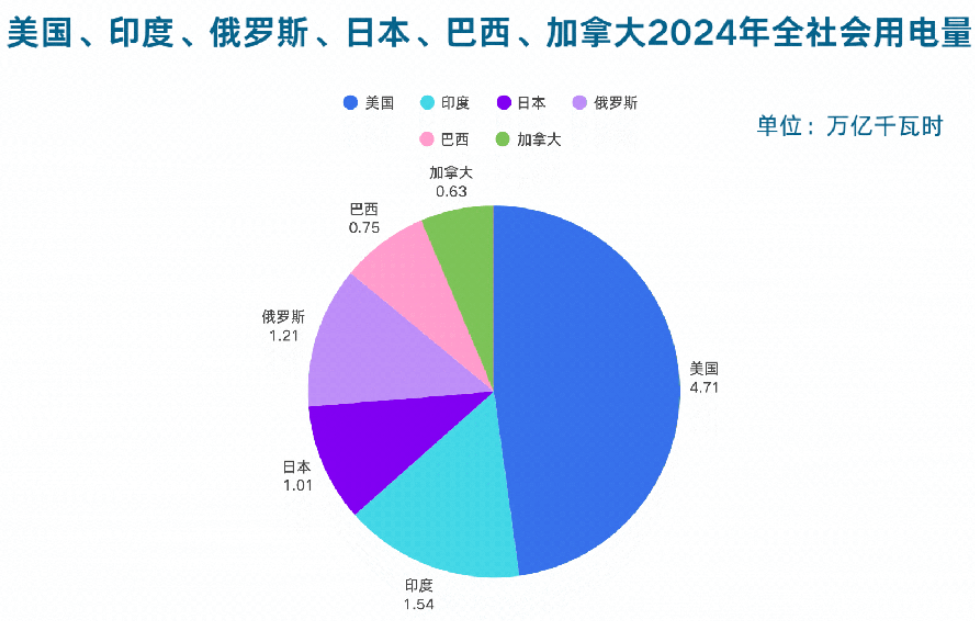
Core Viewpoint - The announcement of China's electricity consumption exceeding 10 trillion kilowatt-hours by 2025 marks a significant milestone, reflecting the robust growth and resilience of the Chinese economy, as well as the transition towards a greener energy structure [1][4][8]. Group 1: Electricity Consumption Milestones - In 2025, China's total electricity consumption is projected to surpass 10 trillion kilowatt-hours, equivalent to the combined annual electricity consumption of the USA, India, Russia, Japan, Brazil, and Canada [1]. - China experienced its first monthly electricity consumption exceeding 1 trillion kilowatt-hours in July and August of this year, showcasing the country's strong economic pulse and transition towards a greener economy [4]. - Historical milestones in electricity consumption include surpassing 1 trillion kilowatt-hours in 1996, 5 trillion in 2011, and 8 trillion in 2021 [4]. Group 2: Economic Growth Indicators - Multiple international institutions have raised their economic growth forecasts for China in 2025, with the World Bank, IMF, and ADB adjusting their predictions upward by 0.4, 0.2, and 0.1 percentage points respectively [8]. - In the first three quarters of this year, China's GDP growth rates were 5.4%, 5.2%, and 4.8%, indicating a sustained economic recovery that has driven an increase in electricity consumption [11]. Group 3: Sectoral Electricity Consumption Trends - The primary industry saw a 10.2% year-on-year increase in electricity consumption in the first three quarters, reflecting trends in agricultural modernization [15]. - The secondary industry contributed 51% to the overall electricity consumption growth, with a 5.1% increase in the third quarter, driven by high-tech and equipment manufacturing sectors [15]. - The internet and related services sector experienced a remarkable 29.8% year-on-year growth in electricity consumption, with specific regions like Guizhou showing a 72.92% increase [17]. Group 4: Power Supply Capacity - This summer, China's power load broke historical highs multiple times, demonstrating the resilience of the electricity supply system [18]. - China's power generation capacity accounts for one-third of the global total, with a projected increase to 3.8 billion kilowatts by 2025, reflecting a 14% year-on-year growth [21]. - The construction of large clean energy bases in western regions and the "West-to-East Power Transmission" initiative have significantly enhanced electricity supply capabilities [26]. Group 5: Energy Transition and Modernization - The electrification ratio of terminal energy use in China has reached approximately 30%, surpassing that of major developed economies [29]. - By the end of October this year, renewable energy capacity exceeded 2.2 billion kilowatts, accounting for nearly 60% of the total installed capacity, with wind and solar power installations surpassing thermal power [33]. - The development of new energy technologies, including advancements in solar and wind power, is accelerating, with significant reductions in costs and improvements in efficiency [39].
前十一月,全国规上工业增加值增长百分之六——工业经济转型升级持续推进
Xin Hua Wang· 2025-12-17 00:27
Core Insights - The Central Economic Work Conference emphasizes the implementation of a new round of high-quality development actions for key industrial chains and the deep integration of technological and industrial innovation [1] Industrial Performance - From January to November, the industrial added value of large-scale enterprises in China grew by 6.0% year-on-year, surpassing the previous year's growth by 0.2 percentage points [2] - In November, the industrial added value increased by 4.8% year-on-year, maintaining stable growth, with a month-on-month increase of 0.44%, accelerating by 0.27 percentage points from the previous month [2] - The mining, manufacturing, and electricity, heat, gas, and water production and supply industries saw year-on-year growth of 6.3%, 4.6%, and 4.3% respectively, with 30 out of 41 industrial categories experiencing growth [2] Equipment Manufacturing Sector - The equipment manufacturing sector is highlighted as a key growth area, with a year-on-year increase of 7.7% in November, accounting for 36.4% of the total industrial added value, an increase of 1.8 percentage points from the previous year [2][3] - All eight industries within the equipment manufacturing sector reported growth, with the electronics and automotive industries growing by 9.2% and 11.9% respectively, contributing 20.2% and 17.9% to overall industrial growth [3] High-tech Manufacturing - High-tech manufacturing added value grew by 8.4% year-on-year in November, contributing 29.8% to the overall industrial growth [4] - Key sectors such as integrated circuit manufacturing and biopharmaceuticals saw significant growth rates of 32.4% and 17.3% respectively [4] Digital Product Manufacturing - The digital product manufacturing sector experienced a year-on-year growth of 7.6% in November, with notable increases in smart vehicle equipment and industrial control systems [5] - Production of smart consumer devices like smart wristbands and 5G smartphones grew by 27.6% and 11.5% respectively, while 3D printing equipment saw a remarkable increase of 100.5% [5] Future Industrial Strategy - The Ministry of Industry and Information Technology aims to stabilize industrial production and promote new industrialization, focusing on growth, innovation, and integration [6][7] - Plans include enhancing supply-demand adaptability, implementing key industry growth strategies, and promoting deep integration of technological and industrial innovation [7]
海外宏观|美国就业真实情况究竟如何?
Sou Hu Cai Jing· 2025-12-17 00:25
10月私人部门增加5.2万人,政府部门减少15.7万人,合计减少10.5万人。11月私人部门增加6.9万人,高 于预期5万人。分行业来看,商品生产部门新增1.9万人,其中制造业减少0.5万人(耐用品减少0.4万 人,非耐用品减少0.1万人)。服务业新增就业5万人,其中,教育和保健服务新增6.5万人(其分项医疗 保健和社会救助服务新增6.4万人)是私人服务业的主要贡献项。政府部门减少0.5万人。11月私人部门 整体就业扩散指数为56.8,制造业就业扩散指数为46.5。 ▍鲍威尔给非农"官方打折",11月新增非农就业谈不上强劲。"低招聘"延续,但"低裁员"在10月和11月 有所变化。不过就12月美股公司会提到"Job Cuts"的次数来看,裁员规模并未恶化。 鲍威尔在12月议息会议上给非农"官方打折",按照鲍威尔所言平均每月高估6万新增就业,则11月几乎 为0增长(Payroll jobs averaging 40,000 per month since April. We think there's an overstatement in these numbers by about 60,000. So th ...
表面增长难掩结构隐患:美国高生产率行业收缩,经济活力减退
Sou Hu Cai Jing· 2025-12-17 00:01
Group 1 - The unemployment rate in the U.S. rose to 4.6% in November, marking the highest level in over four years, up from 4.4% in September [2][3] - The job market is showing signs of "high-frequency volatility and low-speed growth," with three months of net job losses in the past six months [3] - November saw an addition of 64,000 non-farm jobs, which was above the expected 45,000, but insufficient to offset previous job losses [4][3] Group 2 - Job growth is primarily occurring in low productivity or government-dependent sectors, while sectors representing economic vitality, such as manufacturing and professional services, are contracting [6] - Federal government jobs decreased by 6,000 in November and saw a significant drop of 162,000 in October, with a total reduction of approximately 270,000 since January [8][9] - The wage growth in the private sector fell to 3.5% year-over-year in November, the lowest in years, indicating that wage increases are not keeping pace with living costs [11][12] Group 3 - The current employment situation is characterized as "low-fire, low-hire," where companies are hesitant to make large layoffs or expand hiring, reflecting a cautious approach to seasonal employment and the testing of AI replacements [15] - The report suggests that the true state of the U.S. job market may be weaker than indicated, as the Federal Reserve has warned that current statistical models may overestimate job additions by about 60,000 each month [13][14] - The employment market is entering a dangerous phase, showing signs of cooling without a clear collapse, which could lead to a prolonged period of economic uncertainty [17]