玩具

Search documents
泡泡玛特劲敌,要IPO了
华尔街见闻· 2025-06-15 10:08
Core Viewpoint - 52TOYS is aiming to become the "Chinese version of Bandai" and is preparing for an IPO in Hong Kong, focusing on a diverse range of collectible toys and IP products, while differentiating itself from competitors like Pop Mart [1][10]. Company Background - Founded in May 2015 by Chen Wei and Huang Jin, 52TOYS started as a collectible toy company, leveraging their experience in the industry to create a brand that encompasses various toy categories including blind boxes and action figures [2][5]. - The company has developed over 100 self-owned and licensed IPs, including popular franchises like Crayon Shin-chan and Tom and Jerry, and has expanded its market presence internationally [3][5]. Financial Performance - 52TOYS has achieved a valuation exceeding 4.2 billion yuan, with significant investments from various venture capital firms, indicating strong market potential in the collectible toy sector [6][8]. - The company's revenue grew from 463 million yuan in 2022 to 630 million yuan in 2024, reflecting a compound annual growth rate of 16.7% [13]. Market Position and Competition - The collectible toy market in China is rapidly growing, with 52TOYS positioned as the second-largest multi-category IP toy company in the country, while also facing competition from Pop Mart, which has a significantly larger market capitalization [12][14]. - 52TOYS aims to carve out its niche in the collectible toy segment, emphasizing that it does not wish to replicate Pop Mart's model, but rather to establish itself as a leader in collectible toys [10][12]. International Expansion - The company is actively expanding its international footprint, with plans to enter Southeast Asia, Japan, South Korea, and North America, and has already established 90 overseas distributors and 16 licensed brand stores [3][14]. - 52TOYS' overseas revenue increased from 35.4 million yuan in 2022 to 147 million yuan in 2024, achieving a compound annual growth rate of over 100% [14].


泡泡玛特珠宝店首店开张;永辉“胖东来模式”调改完成100店;星巴克中国降价 | 品牌周报
36氪未来消费· 2025-06-15 07:58
Group 1 - Pop Mart's independent jewelry brand popop opened its first store in Shanghai, targeting the $50 billion fashion jewelry market with a focus on female consumers [2] - Pop Mart aims to achieve a revenue target of 20 billion yuan by 2025, with overseas markets expected to contribute 10 billion yuan [2] - Inditex's Q1 revenue was €8.27 billion, below analyst expectations, with summer sales growth slowing to 6% compared to 12% last year [3][4] - Inditex operates 5,562 stores globally, and its performance reflects broader challenges in the global retail sector [4] Group 2 - Yonghui Supermarket completed the transformation of 100 stores to the "Pang Dong Lai" model, focusing on enhancing employee skills, product quality, and store experience [5][6] - Yonghui plans to expand the number of transformed stores to 150 by the end of July and aims for 300 by the Lunar New Year in 2026 [6] - L'Oréal announced the acquisition of a majority stake in the UK skincare brand Medik8, enhancing its luxury product portfolio [6][7] - Starbucks is considering selling part of its Chinese business to attract external investors, with plans to increase store numbers from 8,000 to 20,000 [8] Group 3 - Guozi Shule launched a collaboration with "Wu Lin Wai Zhuan," achieving a sales increase from 200 million to 400 million bottles in the past year [9][10] - Dr. Martens reported a 10% decline in revenue to £790 million, with net profit dropping significantly [21] - Salia plans to establish a headquarters in Guangdong to manage its operations in China, where it has around 500 stores [22][23] - Bai Fei Dairy's IPO application has been accepted, marking the first food consumption project in the Shanghai Stock Exchange this year [24]


王毅分别同伊朗、以色列外长通电话;LABUBU暂停韩国线下销售|南财早新闻
2 1 Shi Ji Jing Ji Bao Dao· 2025-06-14 23:45
Company Movements - GAC Group announced its commitment to ensure the completion of dealer rebate payments within two months, responding to initiatives for the healthy development of the automotive industry [5] - Boeing delivered a new 787-9 aircraft to Juneyao Airlines, marking the resumption of aircraft deliveries to Chinese airlines from the U.S. after a significant hiatus [6] - Pop Mart announced a temporary halt to offline sales of its LABUBU plush toys and keychains due to potential safety concerns, prioritizing customer safety and service quality [6] - Baidu announced a more than 60% year-on-year increase in recruitment for its AIDU program, covering 23 core business areas and 11 research directions, focusing on cutting-edge artificial intelligence [6] - Romoss issued a public apology regarding safety concerns over its 20,000mAh charger, committing to take full responsibility for any defective products identified by authoritative agencies [6] Industry Developments - The State Administration for Market Regulation released new regulations for individual business registration, allowing changes in operators or transformation into enterprises, supporting the establishment of long-lasting businesses [2] - The Ministry of Industry and Information Technology issued management measures for technology-based enterprise incubators, introducing dynamic management and setting standards for recognition [2] - The domestic passenger car market is experiencing a shift, with demand for vehicles priced above 300,000 yuan showing negative growth, while sales of models below 100,000 yuan increased by 51% in the first five months of the year [2] - The public fund market has seen a resurgence of "doubling funds," with the Huatai-PineBridge CSI 300 ETF set to distribute over 8 billion yuan in cash dividends, marking a record for single-issue ETF dividends [4]
【财闻联播】广汽集团:两个月内完成经销商返利兑现!多所高校禁用罗马仕充电宝,公司回应
券商中国· 2025-06-14 12:27
Macro Dynamics - The number of registered individual businesses in China has reached 126 million, with new regulations facilitating their transformation into enterprises through a simplified registration process [1] Financial Institutions - French BPCE Group is set to acquire Portugal's fourth-largest bank, Novo Banco, for approximately €6.4 billion, marking the largest cross-border acquisition in the Eurozone in a decade [4] Market Data - U.S. stock indices closed down over 1%, with the Dow Jones falling 1.79%, the Nasdaq down 1.3%, and the S&P 500 decreasing by 1.13%. The energy sector saw significant gains, with Houston Energy rising over 119% [5] - International crude oil futures saw a substantial increase, with WTI crude oil rising by 7.26% to $72.98 per barrel, and Brent crude oil increasing by 7.02% to $74.23 per barrel [6] Company Dynamics - Pop Mart has temporarily suspended offline sales of LABUBU plush toys in South Korea due to potential safety concerns [7] - ROMOSS issued an apology regarding the ban of its power banks in multiple universities, committing to take responsibility for any defective products [8] - GAC Group announced a commitment to ensure the timely payment of dealer rebates to promote healthy development in the automotive industry [10] - Japan's Ministry of Land, Infrastructure, Transport and Tourism has mandated inspections of Boeing 787 aircraft following a crash incident involving an Indian airline [11]


3.1亿人的市场,这个看似“冷门”的小生意正逐渐火热
Sou Hu Cai Jing· 2025-06-14 11:53
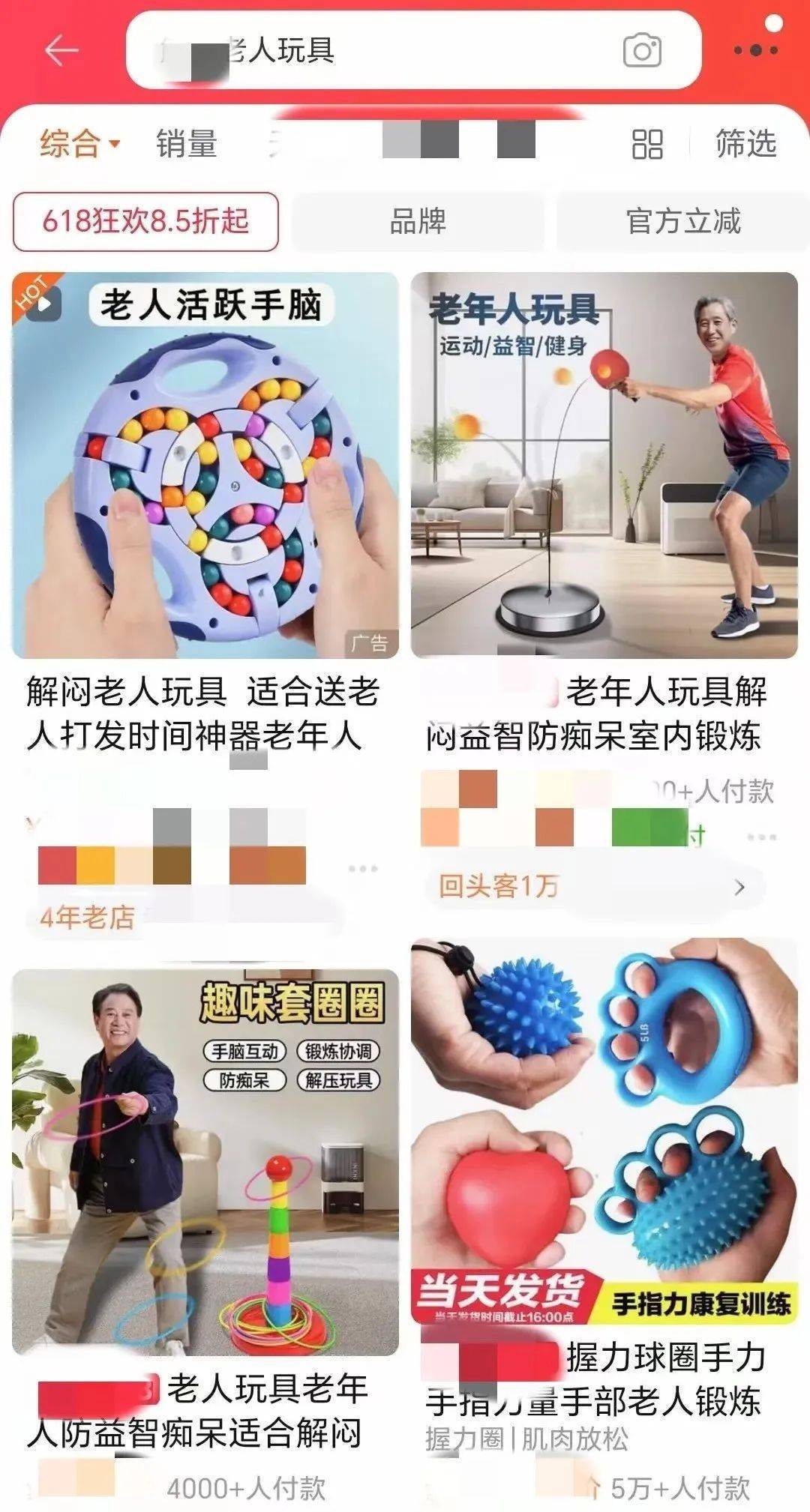
Core Insights - The market for "senior-friendly toys" is experiencing significant growth, with a 124% increase in search volume and over 70% increase in transaction volume in the past year, particularly among consumers aged 55 and above [1][4][5] Group 1: Market Trends - The demand for senior-friendly toys is driven by the increasing economic development and the rising living standards, leading the elderly population to seek entertainment and social engagement [4][5] - By the end of 2024, the population aged 60 and above in China is expected to exceed 310 million, creating a substantial market for senior-friendly toys [4] Group 2: Consumer Behavior - Many elderly individuals are actively engaging with these toys, as seen in various activity centers where they participate in games and puzzles, indicating a shift in their leisure activities [5][17] - A notable portion of the sales comes from children purchasing toys for their elderly parents, highlighting a familial approach to addressing loneliness and cognitive decline [7][15] Group 3: Product Offerings - The variety of senior-friendly toys includes traditional puzzles, fitness equipment, and cognitive games, with prices ranging from a few to several dozen yuan, and some products achieving sales of over 200,000 units [7][17] - Popular items include hand training devices and fitness balls, which cater to both physical activity and mental engagement for older consumers [17] Group 4: Market Challenges - Despite the growth, the market faces challenges such as a lack of offline availability, limited product variety, and some toys being merely rebranded children's products [18][19] - There is a structural imbalance in supply and demand, with many toys being underwhelming or overly complex for the elderly, leading to issues of disuse and dissatisfaction [18][19]
新华财经晚报:《个体工商户登记管理规定》将于7月15日起施行
Zhong Guo Jin Rong Xin Xi Wang· 2025-06-14 10:34
Domestic News - The State Administration for Market Regulation announced the implementation of the "Regulations on the Registration and Management of Individual Industrial and Commercial Households" starting July 15, which aims to standardize registration management and protect the legitimate rights and interests of individual industrial and commercial households, promoting their high-quality development [2] - The National Bureau of Statistics reported a 2.1% month-on-month decrease in the price of live pigs in early June, with the price at 14.1 yuan per kilogram [3] - The successful launch of the electromagnetic monitoring satellite "Zhang Heng No. 1" 02 by the Long March 2D rocket from the Jiuquan Satellite Launch Center was reported, marking a successful mission [3] - The completion of the Taibai Mountain Tunnel, a key project of the Meitai Expressway in Shaanxi, was announced, paving the way for the expressway to be fully operational this year [3] International News - Japan's Nippon Steel Corporation announced that U.S. President Trump has conditionally approved its acquisition plan for an American steel company [4] - The Bank of Japan is considering reducing its quarterly government bond purchase scale by 200 billion yen starting in spring 2026 [4] - The third United Nations Ocean Conference, co-hosted by France and Costa Rica, concluded with the release of the "Nice Ocean Action Plan," emphasizing the global commitment to urgent actions for ocean protection [4] - Iran's Foreign Ministry spokesperson stated that Iran has not yet decided whether to participate in the next round of negotiations with the U.S. regarding the nuclear issue, with no substantial progress made in recent talks [4] Company News - GAC Group announced a commitment to ensure the healthy development of its dealers, stating that it will complete dealer rebate payments within two months to promote high-quality development in the automotive industry [4] - Pop Mart in South Korea decided to temporarily suspend offline sales of LABUBU plush toys and keychains due to potential safety concerns, prioritizing customer safety and service quality [5]

谷歌上线气象预测网站:利用DeepMind AI模型判断台风路径;美泰公司与OpenAI合作,将推出AI产品丨AIGC日报
创业邦· 2025-06-14 00:38
Group 1 - Microsoft launched the Copilot Vision feature for Windows, allowing the AI assistant to analyze user screens and provide real-time suggestions during activities like gaming and photo editing [1] - Mattel, the manufacturer of Barbie and Hot Wheels, partnered with OpenAI to integrate generative AI into toy development and IP revitalization, marking OpenAI's first collaboration with a toy company [2] - Google introduced the Weather Lab website, utilizing DeepMind AI models to predict tropical cyclone characteristics and allowing users to compare AI predictions with traditional weather models [3] Group 2 - Tencent's Yuanbao launched a "College Entrance Examination Volunteer Consultation" feature, providing personalized advice for students filling out their college applications [4]





9点1氪:官方通报“罗某宇坠楼事件”;波音发布印度飞机事故最新声明;广州拟全面取消限购限售限价
36氪· 2025-06-13 16:34
Group 1 - The Shanghai Stock Exchange has approved the initial public offering of Dao Sheng Tian He Materials Technology (Shanghai) Co., Ltd. [2] - The China Securities Regulatory Commission has granted approval for Jiangxi Aifenda Heating Technology Co., Ltd. to register for its initial public offering on the ChiNext board [3] Group 2 - Guangzhou is proposing to fully cancel restrictions on home purchases, sales, and prices, aiming to better meet housing consumption needs [7] - The city plans to invest 100 billion yuan in the renovation of urban villages and old residential areas by 2025 [7] Group 3 - The opening of the first global store for Popop, an independent jewelry brand under Pop Mart, took place in Shanghai, featuring products from popular IPs with prices ranging from 319 to 2699 yuan [8] - The rental market for LABUBU collectibles has seen a significant increase, with search volume rising tenfold in June compared to May [8] Group 4 - Hanburger King China plans to close underperforming stores while simultaneously opening 40 to 60 new restaurants in core business districts of first and second-tier cities [12] - The company aims to reduce its total number of stores by 2025 due to the closure of unprofitable locations [12] Group 5 - Scale AI announced a significant new investment from Meta Platforms, raising its valuation to over $29 billion [19] - Adobe reported second-quarter revenue of $5.87 billion, exceeding analyst expectations, and raised its full-year revenue forecast [19]

一周热榜精选:以色列空袭伊朗引爆火药桶!黄金原油多头回归
Jin Shi Shu Ju· 2025-06-13 13:50
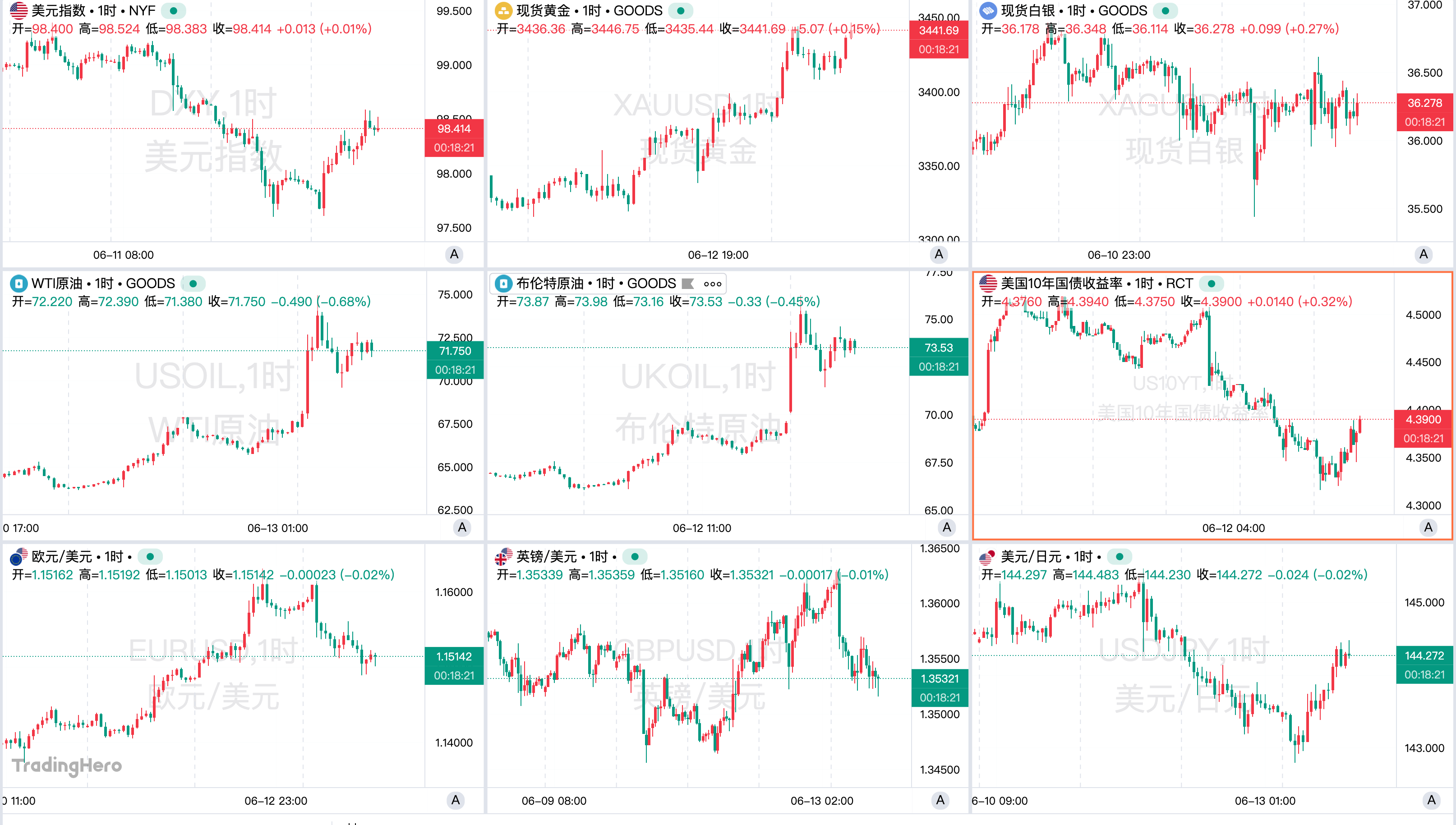
Market Overview - The US dollar index experienced a downward trend this week, hitting a three-year low due to lower-than-expected CPI data, which fueled strong expectations for interest rate cuts by the Federal Reserve [1] - Spot gold prices rose significantly, supported by a weak dollar, increased rate cut expectations, and geopolitical tensions, reaching $3445 per ounce [1] - Silver prices continued to rise, hovering at the highest levels since 2011, closing at $36.33 per ounce [1] Oil Market - International crude oil prices surged due to escalating tensions in the Middle East, with WTI crude oil futures rising over 13% to exceed $77 per barrel, marking a high not seen since February [2] Investment Insights - UBS Global Wealth Management recommends strategic investments in Chinese stocks, citing that trade risks have peaked and more policy support may be forthcoming [5] - Paul Tudor Jones predicts a shift to a "super dovish" stance by the Federal Reserve next year, potentially leading to a 10% depreciation of the US dollar [5] - Daniel Ghali from TD Securities suggests that silver prices could rise further to $40 and challenge historical highs of $50 by year-end [5] - Optimism for the US stock market is growing, with Morgan Stanley and Goldman Sachs projecting a 10% increase in the S&P 500 index by year-end, reaching a target of 6500 points [5] Major Events - Israel launched a significant military operation against Iran, targeting over 100 sites, which has heightened geopolitical tensions and could impact market stability [6] - The US government has not participated in Israel's military actions but has coordinated with Israel, emphasizing a desire for Iran to return to negotiations [7] Economic Indicators - The US CPI data for May showed a year-on-year increase of 2.4%, below expectations, leading to heightened expectations for interest rate cuts by the Federal Reserve [12] - The US tariff revenue reached $23 billion in May, a 270% increase year-on-year, reflecting the impact of new tariff policies [10][11] Corporate Developments - 17 major automotive companies in China have committed to a payment term of no more than 60 days to suppliers, aiming to foster a collaborative ecosystem in the industry [22] - Pop Mart's stock price has surged nearly 13 times over the past year and a half, driven by popular IPs like LABUBU, with significant auction results boosting investor interest [25]
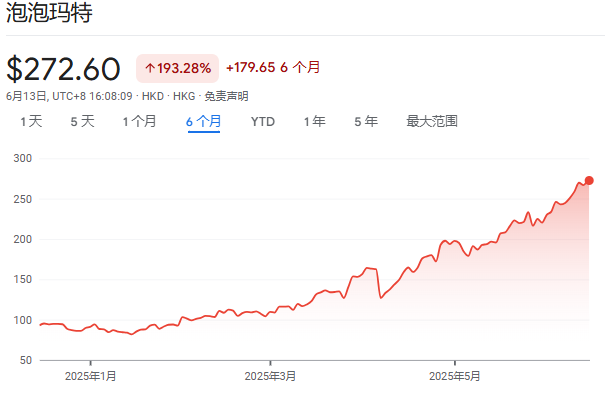
泡泡玛特股价年内飙涨200%,多家机构紧急上调目标价
Hua Er Jie Jian Wen· 2025-06-13 13:16
Pop Mart股价周五收涨2.17%,年内涨幅扩大近200%,本周早些时候该股创下历史新高。 当一只股票在年内内飙升200%,华尔街分析师们不是在警告泡沫,而是在疯狂上调目标价,这正是中 国盲盒巨头Pop Mart所引发的市场狂热。一个长着獠牙的怪兽玩偶Labubu,正在重新定义投资者对"玩 具经济"的认知。 本周,至少五家券商纷纷上调Pop Mart的目标价,包括德意志银行和摩根士丹利在内,其中花旗集团最 为激进,将目标价大幅上调90%至最高的308港元,理由是该公司知识产权在全球影响力日益扩大。 Pop Mart股价飙升的核心驱动力来自其明星产品——长着獠牙的怪兽玩偶Labubu。这个看似奇怪的角色 所在的THE MONSTERS盲盒系列去年为Pop Mart带来超过30亿元人民币的销售收入,占公司总营收近 四分之一。 Pop Mart已成为今年MSCI中国指数中表现最佳的股票,同时也是2024年该指数中涨幅最大的股票之 一。 风险提示及免责条款 市场有风险,投资需谨慎。本文不构成个人投资建议,也未考虑到个别用户特殊的投资目标、财务状况或需要。用户应考虑本文中的任何 意见、观点或结论是否符合其特定状况。 ...