脑机接口

Search documents
“十五五”投资:“投资于人”成为主线,“投资于物”布局未来
2 1 Shi Ji Jing Ji Bao Dao· 2025-10-30 00:12
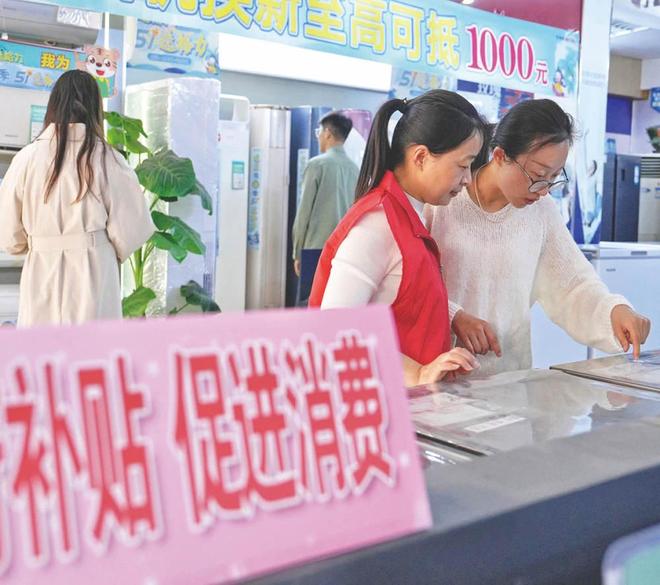
Group 1 - The core idea of the article emphasizes the importance of "investing in people" as a key focus in China's 14th Five-Year Plan, highlighting the need to combine investments in material and human capital to enhance people's livelihoods and promote consumption [1][3][4] - Fixed asset investment in China has reached 50 trillion yuan, with a shift from physical capital to human capital investment being deemed necessary due to declining returns on traditional investments [3][4] - The article outlines specific measures to enhance human capital, including improving population quality through education and healthcare investments, and implementing supportive policies for population growth [3][4][6] Group 2 - The article discusses the strategic emphasis on "investing in material" to layout future industries, with a focus on emerging sectors such as new energy, aerospace, and advanced manufacturing, which are expected to create trillion-yuan markets [5][6] - It highlights the role of technological innovation in driving new industries and enhancing productivity, with a call for deeper integration of technology and industry to support high-quality development [6][7] - The article notes that while fixed asset investment growth has slowed, there is a trend towards optimizing the industrial structure, with significant growth in high-tech sectors [7][8] Group 3 - Effective investment is defined as directing funds towards areas with positive returns and consumer willingness, with a focus on enhancing living standards and fostering new industries [8] - The relationship between central and local government investments is discussed, emphasizing the need for government investments to create a conducive environment for private sector participation and enhance overall investment effectiveness [8]

“十五五”产业趋势三大关键定调:巩固传统优势 决胜新兴未来
2 1 Shi Ji Jing Ji Bao Dao· 2025-10-29 14:51
Core Viewpoint - The article emphasizes the importance of building a modern industrial system and strengthening the foundation of the real economy as a strategic task in China's 15th Five-Year Plan, highlighting four key tasks: optimizing traditional industries, nurturing emerging and future industries, promoting high-quality development of the service sector, and constructing a modern infrastructure system [1][2]. Group 1: Traditional Industries - The first key task is to optimize and enhance traditional industries, including mining, metallurgy, chemicals, light industry, textiles, machinery, shipbuilding, and construction, to strengthen their global competitiveness and position in the international division of labor [1][2][3]. - Traditional industries account for about 80% of the added value in China's manufacturing sector, serving as a fundamental support for the modern industrial system and contributing to stable growth, employment, and income [2][3]. - The focus is on upgrading traditional industries through technological transformation, green transition, and brand internationalization, shifting from a "cost advantage" to a "system advantage" in the global division of labor [3][4]. Group 2: Emerging and Future Industries - The plan aims to cultivate and expand emerging industries, with a focus on creating new pillar industries, particularly in areas such as new energy, new materials, aerospace, and the newly added low-altitude economy [5][6]. - The low-altitude economy is highlighted for its potential to activate a trillion-level market space, driven by advancements in technology and broad application scenarios [6][7]. - Future industries will include quantum technology, biomanufacturing, hydrogen and nuclear fusion energy, brain-computer interfaces, embodied intelligence, and sixth-generation mobile communications, which are expected to become new economic growth points [7][8]. Group 3: Service Sector Development - The article discusses the need to promote high-quality development in the service sector, emphasizing the expansion and enhancement of service capabilities, particularly in productive services [9][10]. - The productive service sector currently accounts for about 30% of China's GDP, indicating significant room for growth compared to developed economies [10]. - The plan includes constructing a modern infrastructure system, focusing on the development of new-type infrastructure and enhancing connectivity across regions to support economic growth [11][12].
脑机接口行业把握:技术突破与临床应用加速,侵入式与非侵入式并行驱动(2025.10.20-2025.10.24)
Huafu Securities· 2025-10-29 13:13
Group 1 - The core viewpoint of the report highlights the explosive growth of the global Brain-Computer Interface (BCI) industry in the fields of neuroengineering and medical rehabilitation during 2023-2024, driven by collaborative innovations in both invasive and non-invasive technologies [3][8] - Significant advancements in BCI technology include improvements in hardware and software optimization, with the latest AFE achieving a CMRR of 140 dB and system-level CMRR exceeding 80 dB [8] - Clinical applications of BCI are expanding to address conditions such as stroke, spinal cord injury, ALS, and depression, with invasive systems providing precise interventions for severe cases and non-invasive systems enhancing accessibility [9] Group 2 - The report reviews the performance of the pharmaceutical sector from October 20 to October 24, noting that the medical services and pharmaceutical commercial sectors had the highest gains, with increases of 3.94% and 2.27% respectively [10] - The report indicates that the biopharmaceutical and traditional Chinese medicine sectors experienced declines of -0.69% and -0.85% respectively during the same period [10][12] - The report emphasizes the strong performance of the innovative drug sector, with 22 innovative drug-themed funds achieving a net asset value growth rate exceeding 50% year-to-date, reflecting the increasing competitiveness of Chinese innovative drugs globally [28][29]
共话脑机接口发展“加速度” “链接者”系列沙龙首期成功举办
Shang Hai Zheng Quan Bao· 2025-10-29 12:50
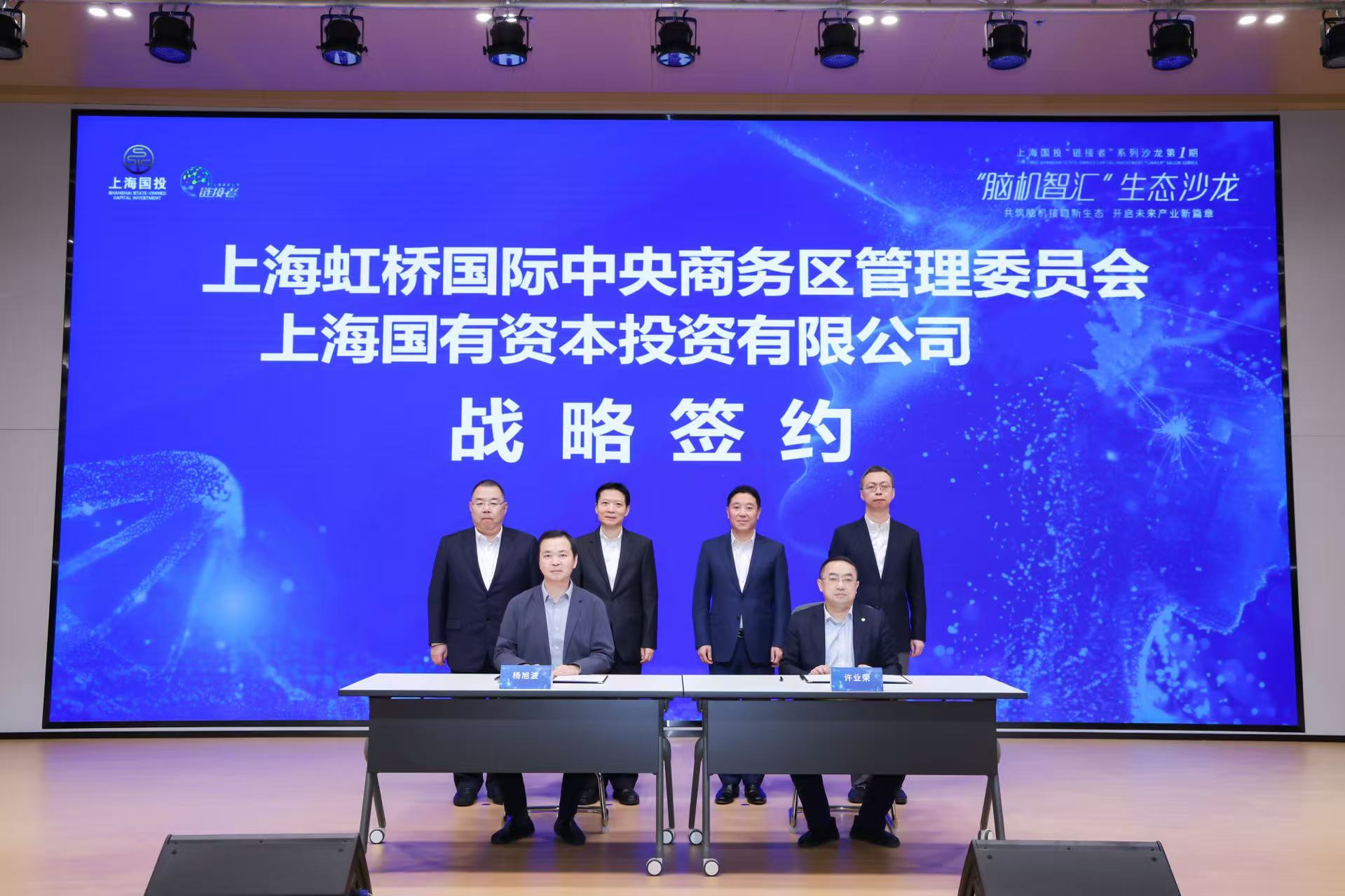
Core Viewpoint - The event "Brain-Machine Intelligence" hosted by Shanghai State-owned Capital Investment Co., Ltd. marks a significant step in promoting the brain-machine interface industry, focusing on strategic cooperation and technological innovation in Shanghai's Hongqiao area [1][3]. Group 1: Strategic Cooperation and Development - A strategic cooperation agreement was signed between the Hongqiao International Central Business District Management Committee and Shanghai State-owned Capital Investment Co., Ltd. to enhance investment in major strategic projects and key industries [3]. - The Hongqiao area is establishing the first national brain-machine interface future industry cluster, aiming to create a "big innovation" ecosystem and support internationalization [3][4]. - Shanghai is implementing a multi-faceted approach to promote the industrialization of brain-machine interface technology, including top-level design and the development of landmark innovative products [4]. Group 2: Investment and Capital Empowerment - Shanghai State-owned Capital Investment Co., Ltd. is focusing on five ecological matrices to support the brain-machine interface industry, with an expected investment scale exceeding 55 billion yuan this year [4]. - The company aims to gather capital across all levels and cycles, emphasizing early-stage investments in hard technology [4]. Group 3: Clinical Applications and Technological Advancements - Brain-machine interface technology is rapidly transitioning from laboratory research to clinical applications, particularly in the medical field, where it shows significant potential [5]. - The Shanghai Medical Device Testing and Research Institute is addressing challenges in testing capabilities and standards for brain-machine interface medical devices, having serviced approximately 61 batches of related products since last year [5]. - Research teams are developing both invasive and non-invasive brain-machine interface technologies to treat various neurological conditions, demonstrating promising results [5][6]. Group 4: Ecosystem Development and Future Goals - The development path for the brain-machine interface future industry cluster includes plans to establish a national technology innovation center by 2030 and attract over 10 leading enterprises [7]. - Companies are actively working on innovative projects, such as a global first in complex visual reconstruction and the development of advanced diagnostic models for neurological disorders [7].
2000万美元投资强脑科技!三七互娱重注前沿科技脑机接口技术
Xin Lang Cai Jing· 2025-10-29 08:36
Core Insights - Sanqi Interactive Entertainment has completed a $20 million investment in Qiangnao Technology, aiming to explore the commercialization of brain-computer interface technology [1] Group 1: Investment Details - The investment amount is $20 million, indicating a significant commitment to the development of brain-computer interface technology [1] - The partnership will focus on practical applications in various sectors, including entertainment and XR [1] Group 2: Strategic Goals - The collaboration aims to enhance business upgrades for enterprises while promoting the application of brain-computer interface technology in education and healthcare [1] - The initiative is positioned to leverage social responsibility as a foundational element, emphasizing the potential societal benefits of the technology [1]

聚焦“十五五”规划建议丨下好产业布局“先手棋” 打造经济新增长点
Yang Shi Wang· 2025-10-29 07:34
Group 1 - The core viewpoint emphasizes the acceleration of energy transition in China, with a focus on building a new energy system and promoting emerging technologies as new economic growth points [1][3][10] - In the electricity consumption of the whole society, one-third is green electricity, and the proportion of non-fossil energy in national energy consumption increases by 1 percentage point annually, while coal's share decreases by 1 percentage point each year [3] - China is leading the world in renewable energy and new energy vehicles, enhancing the "green content" of industries while balancing economic growth and environmental protection [3][12] Group 2 - The rapid development of the digital economy in China is highlighted, with new e-commerce becoming a vibrant component, and over half of live-streaming e-commerce actively using generative AI to optimize operations [7][8] - Emerging industries such as quantum technology, biomanufacturing, hydrogen energy, and brain-machine interfaces are being prioritized in China's strategic layout to seize global technological competition [10][12] - The "14th Five-Year Plan" targets future industries that represent revolutionary technological breakthroughs, indicating a significant potential for productivity leaps and industrial empowerment [12]
“十五五”规划建议稿解读:乘势而上,因势利导
Yin He Zheng Quan· 2025-10-29 05:44
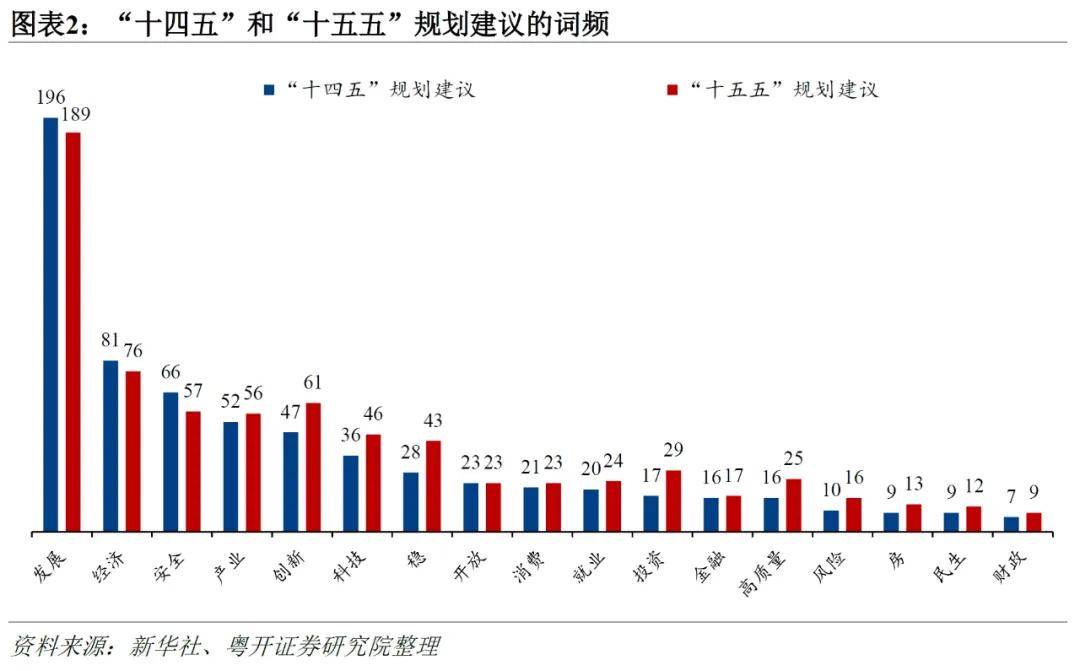
Group 1: Economic Development - The "15th Five-Year Plan" is a critical period for achieving socialist modernization by 2035, with a target GDP growth rate of around 5% during this period[2] - The plan emphasizes high-quality development as the primary task, aiming for significant achievements in this area[2] - By 2035, the goal is to reach a per capita GDP level comparable to that of moderately developed countries, which is projected to be approximately 21,000 USD[25] Group 2: Industrial and Technological Advancement - The plan focuses on building a modern industrial system, highlighting advanced manufacturing as a leading sector[3] - Key areas for technological self-reliance include new energy, quantum technology, and artificial intelligence, aiming for international leadership in these fields[3] - Strengthening the integration of technological innovation with industrial innovation is a priority[3] Group 3: Domestic Market and Consumption - Enhancing domestic demand is crucial, with a strong emphasis on boosting consumer spending as a top priority[3] - The plan outlines strategies for effective investment expansion to stimulate economic growth[3] Group 4: Financial and Open Economy - The "15th Five-Year Plan" aims to accelerate the construction of a financial powerhouse and promote the internationalization of the Renminbi[3] - It emphasizes a cooperative and win-win approach to expand autonomous openness in the economy[3] Group 5: Agricultural and Cultural Development - Accelerating agricultural modernization and leveraging regional strategic advantages are key components of the plan[3] - The plan also stresses the importance of cultural confidence and the value of the cultural industry, aiming to stimulate cultural innovation and creativity[3]
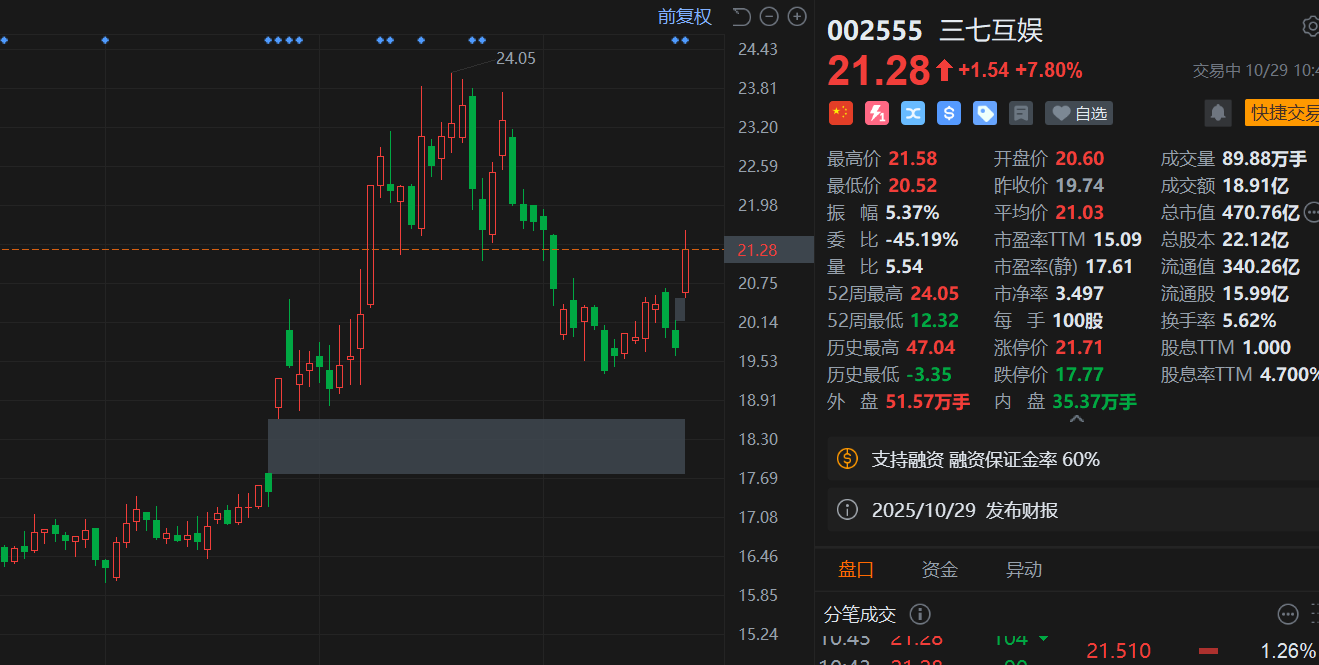
A股异动丨三七互娱逼近涨停 Q3利润好于预期+加码脑机接口布局
Ge Long Hui A P P· 2025-10-29 02:53
Core Viewpoint - Sanqi Interactive Entertainment (002555.SZ) has seen a significant stock price increase, nearing the daily limit, driven by multiple positive news, with a current price of 21.28 yuan and a total market capitalization of 47 billion yuan [1] Financial Performance - In Q3 2025, Sanqi Interactive achieved an operating revenue of 3.975 billion yuan and a net profit attributable to shareholders of 944 million yuan, representing a year-on-year growth of 49.24% [1] - The successful launch of several games this year, including "Time Explosion," "Heroes Don't Flash," and "Douluo Continent: Soul Hunting World," has significantly contributed to the company's revenue growth [1] Analyst Commentary - CICC commented that the company's profits exceeded expectations and highlighted a rich reserve of new products. They raised the target price by 6.8% to 25.1 yuan while maintaining an "outperforming the industry" rating [1] Strategic Investment - Recently, Sanqi Interactive completed a $20 million investment in Strong Brain Technology, which is recognized for its leading capabilities in the global brain-computer interface industry. This investment is seen as a key move for the company in the brain-computer interface sector and an important practice in exploring a positive cycle of "technology research and development - scenario implementation - ecosystem empowerment" [1]
\十五五\规划《建议》之解读
Bao Cheng Qi Huo· 2025-10-29 02:06
1. Report Industry Investment Rating No relevant content provided. 2. Core View of the Report The "15th Five-Year Plan" period is of great significance in the process of basically realizing socialist modernization. Boosting consumption and technological innovation will be the main drivers on the demand and supply sides respectively during the "15th Five-Year Plan" period. Policies conducive to expanding domestic demand and supporting technological innovation will continue to be promoted, and the relevant industries are expected to benefit from the policy advantages [3][4][20]. 3. Summary According to the Directory 3.1 "15th Five-Year Plan" 《Suggestions》 Main Content - The "15th Five-Year Plan" 《Suggestions》 has 15 parts and 61 articles, divided into three major sections. It positions the "15th Five-Year Plan" period as an important stage with a connecting role in the process of basically realizing socialist modernization [7]. - The development environment is characterized by both strategic opportunities and risks, with many uncertain and unpredictable factors. Internationally, the relationship between China and the United States is complex, but China has many favorable factors for shaping the external environment. Domestically, China has advantages such as a stable economic foundation, but also faces challenges such as unbalanced and insufficient development [7][8]. - The main goals include achieving significant results in high - quality development, greatly improving the level of technological self - reliance, and continuously improving people's living standards [9]. 3.2 Industry Construction - Prioritize optimizing and upgrading traditional industries to maintain the competitiveness of industries such as mining, metallurgy, and chemical engineering in the global division of labor. Cultivate and strengthen 4 strategic emerging industry clusters and 6 future industries [11]. - Expand the opening - up of the service industry to attract international capital and advanced business models, and moderately and ahead of time build new infrastructure to reserve development space [11]. 3.3 Technological Innovation - Strengthen original innovation and key core technology research in fields such as integrated circuits and industrial mother machines. Increase the proportion of basic research investment to achieve technological self - control [12]. - Promote the in - depth integration of technological innovation and industrial innovation, accelerate the transformation of scientific and technological achievements into productivity, and create new industries [12]. - Implement the "Artificial Intelligence +" action to lead the transformation of scientific research paradigms and empower various industries [12]. 3.4 Domestic Market - Adhere to the strategic basis of expanding domestic demand, combine improving people's livelihood and promoting consumption, and investment in objects and people. Promote the positive interaction between consumption and investment, supply and demand [13]. - Specific measures include boosting consumption (improving consumption scenarios and promoting residents' consumption ability), expanding effective investment (optimizing government investment and stimulating private investment), and removing obstacles to the construction of a unified national market [13][14]. 3.5 Macroeconomic Governance - Strengthen the coordination of fiscal and monetary policies, and maintain the continuity, effectiveness, and consistency of policies. Promote an economic development model driven by domestic demand and consumption [15]. - In fiscal and tax reform, improve the local tax and direct tax systems, and adjust the central - local fiscal relationship [15]. 3.6 Livelihood Security - Solve structural employment problems by strengthening the coordination between industry and employment, and promoting the healthy development of flexible employment [16]. - Improve the income distribution system to increase the income of low - income groups, expand the middle - income group, and form an olive - shaped distribution pattern [17]. - Improve the social security system, including pension and medical insurance, and focus on reducing the high - cost expenditures of residents in education, housing, etc. [17]. 3.7 Green Transformation - With the goal of achieving carbon peak by 2030, accelerate the construction of a new energy system and implement energy - saving and carbon - reduction reforms. The construction of the electricity market and carbon emission trading market is expected to accelerate [18]. - Reduce pollution emissions, strengthen pollution control, and promote the formation of a green production and lifestyle [18]. 3.8 Summary The "15th Five-Year Plan" 《Suggestions》 deploys strategic tasks and major measures in multiple fields. Boosting consumption and technological innovation will be the main focuses, and relevant industries are expected to benefit from policy support [19][20].
新的五年规划,释放了哪些信号?
Sou Hu Cai Jing· 2025-10-29 01:46
Core Viewpoint - The "14th Five-Year Plan" emphasizes economic construction, technological self-reliance, and high-quality development in real estate, indicating a shift in focus towards sustainable growth and innovation-driven development [1][3][20]. Economic Growth and Structure - The plan aims for a per capita GDP of approximately $25,000 by 2035, with current figures at $13,500, projected to exceed $14,000 this year [4][5]. - To achieve this goal, an average GDP growth rate of over 4.4% is necessary over the next decade [6]. - The focus is shifting from investment-driven growth to consumption and innovation-driven growth, marking a significant structural change in the economy [11]. Regional Development - The plan highlights the need for optimized regional economic layouts and coordinated development, with major urban clusters like Beijing-Tianjin-Hebei, Yangtze River Delta, and Guangdong-Hong Kong-Macau Greater Bay Area identified as key growth areas [12][13]. - The strategy aims to address regional disparities, particularly the widening gap between northern and southern regions [13]. High-Tech Industry Development - A goal to establish a new high-tech industry over the next decade is set, with a focus on strategic emerging industries such as new energy, new materials, and aerospace [14]. - The high-tech sector is expected to reshape industrial structures and urban competitiveness, with significant market potential in areas like electric vehicles and low-altitude economy [15][16]. Real Estate Sector - The real estate sector is now positioned as a foundation for public welfare rather than a pillar of economic growth, indicating a transition from rapid expansion to quality development [20]. - Sales in the real estate market have declined significantly, with new and second-hand housing sales dropping from 1.93 billion square meters to 1.5 billion square meters since 2021 [22]. - The focus is shifting towards urban renewal rather than new construction, impacting land finance and necessitating new revenue sources for local governments [24]. Investment in Human Capital - The plan proposes measures to create a family-friendly society, including financial support for child-rearing and education, which may stimulate population growth [26][27]. - The expansion of free education is also highlighted, with a potential move towards 12 years of free education [27]. - Wage increases are anticipated, with recent adjustments to minimum wage standards across various provinces signaling a commitment to improving income distribution [29][31].