多晶硅

Search documents
2025年12月通胀数据点评:PPI超预期回升
CMS· 2026-01-09 14:01
CPI Analysis - December CPI increased by 0.8% year-on-year, the highest growth since March 2023[2] - Food prices contributed significantly to CPI, with fresh vegetables and fruits rising by 18.2% and 4.4% respectively[2] - Core CPI, excluding food and energy, remained stable at 1.2% year-on-year[2] PPI Analysis - December PPI decreased by 1.9% year-on-year, but the decline narrowed by 0.3 percentage points from the previous month[2] - PPI recorded a month-on-month increase of 0.2%, marking three consecutive months of growth[2] - Key industries such as coal mining and cement manufacturing saw price increases of 1.3%, 0.8%, and 0.5% respectively[2] Market Outlook - January CPI is expected to drop to around 0.4% year-on-year due to a high base effect from the previous year[2] - January PPI is projected to rise to approximately 0.3% month-on-month, with a year-on-year estimate of -1.2%[2] - The impact of low oil prices continues to weigh on PPI improvements, while rising prices in non-ferrous metals support certain sectors[2] Risks - Domestic policy effectiveness may fall short of expectations, posing risks to economic recovery[2]
建信期货能源化工周报-20260109
Jian Xin Qi Huo· 2026-01-09 11:53
Report Information - **Report Title**: Energy and Chemical Weekly - **Date**: January 9, 2026 - **Research Team**: Energy and Chemical Research Team of Jianxin Futures Industry Investment Ratings No specific industry investment ratings are provided in the report. Core Views - The oil market is affected by geopolitical events such as the US takeover of Venezuela's oil industry and the turmoil in Iran. Crude oil supply has an increasing expectation, and the market faces a large inventory accumulation pressure in Q1 2026. Oil prices still have a risk of decline [7][10]. - The asphalt market has relatively balanced supply and demand, and the raw material end has certain support. It is expected that asphalt prices may run strongly. It is recommended to consider going long on asphalt and short on crude oil [30][31]. - The polyester market is in a demand - off season. PTA is expected to transition from de - stocking to inventory accumulation, and its price may decline slightly. Ethylene glycol is expected to maintain a concentrated inventory accumulation before and after the Spring Festival, and its price may have a small - scale callback [57][58]. - The price of polyester staple fiber is expected to decline due to weakening cost and poor supply - demand structure [66]. - The polyolefin market is expected to rise first and then fall under the drive of supply recovery and demand entering the off - season inventory digestion cycle [84]. - The polysilicon market has an upward price but no improvement in fundamentals. The downstream is in a cycle of production reduction, and the terminal demand is in an off - season [118]. - The industrial silicon market has a neutral performance. The supply is at a seasonal low, the demand is weak, and the inventory is high. The futures price is expected to fluctuate within a range [138]. - The pulp market has limited fundamental changes and is expected to operate in a volatile adjustment [154]. Summary by Directory Crude Oil 1. Market Review and Operation Suggestions - WTI crude oil closed at $58.28/barrel, up 1.66%; Brent crude oil closed at $62.79/barrel, up 3.27%; SC crude oil closed at 432.7 yuan/barrel, up 0.12%. The US takeover of Venezuela's oil industry and the turmoil in Iran have affected the oil price. The market faces inventory accumulation pressure in Q1 2026, and oil prices have a risk of decline [7]. 2. Fundamental Changes - The US takeover of Venezuela's oil industry and the turmoil in Iran have affected the supply and demand of the oil market. The US crude oil inventory decreased, but the refined oil inventory increased. The inventory accumulation speed in Q1 2026 slowed down slightly [10]. Asphalt 1. Market Review and Operation Suggestions - The BU2603 contract closed at 3171 yuan/ton, down 4.45%. The spot prices in Shandong, East China, and South China all increased. The supply of asphalt may decrease, and the demand is divided between the north and the south. It is recommended to go long on asphalt and short on crude oil [30][31]. 2. Fundamental Changes - The cost is affected by the oil market. The domestic asphalt device maintenance loss increased, and the average operating load rate decreased. The production profit increased. The demand is divided between the north and the south, and the inventory increased [33][34][35]. Polyester 1. Market Review and Operation Suggestions - The cost support for PTA is weakening, and the demand is decreasing. It is expected to transition from de - stocking to inventory accumulation, and the price may decline slightly. Ethylene glycol is expected to maintain inventory accumulation, and the price may have a small - scale callback [57][58]. 2. Main Driving Forces - The downstream consumption demand is decreasing. The supply of PTA is expected to decrease, and the price may decline. The ethylene glycol industry's operating load rate decreased, the inventory increased, and the profit increased slightly [59][60][62]. Polyester Staple Fiber 1. Market Review and Operation Suggestions - The price of polyester staple fiber in the East China market declined last week. This week, the cost support is weak, the supply is loose, and the demand is in an off - season. It is expected that the price will decline [66]. 2. Main Driving Forces - The downstream consumption demand is weakening. The operating load rate of the polyester staple fiber industry is stable, and the supply is loose. The cost and supply - demand factors drag down the price [67][68]. Polyolefin 1. Market Review and Operation Suggestions - The futures and spot prices of polyolefin increased last week. The supply pressure of polypropylene decreased, and the supply pressure of plastics increased slightly. The demand is in an off - season, and it is expected to rise first and then fall [76][84]. 2. Fundamental Changes - Polypropylene has more temporary maintenance, and the production decreases. The production of polyethylene increases slightly. The production profit of different raw materials has different changes. The inventory of two - oil companies decreased, and the downstream operating rate is divided [85][90][99]. Polysilicon 1. Market Review and Outlook - The price of polysilicon increased, but the fundamentals have no improvement expectation. The downstream is in a cycle of production reduction, and the terminal demand is in an off - season [118]. 2. Overview of the Photovoltaic Industry's Fundamentals - The market supervision department has taken regulatory measures. The prices of the photovoltaic industry chain are running strongly, but the supply exceeds demand, and the inventory removal resistance is large [119][121]. Industrial Silicon 1. Futures Review and Outlook - The price of industrial silicon futures declined, and the trading volume and open interest increased. The supply is at a seasonal low, the demand is weak, and the inventory is high. The futures price is expected to fluctuate within a range [138]. 2. Overview of the Industrial Silicon's Fundamentals - The prices of the industrial silicon industry chain are running strongly. The production of industrial silicon is at a seasonal low, the demand is weak, the export is stable, and the inventory is slowly accumulating [139][140][141]. Pulp 1. Pulp Market Review and Outlook - The price of pulp futures declined slightly. The spot prices of imported pulp mostly increased. The fundamentals of pulp changed little, and it is expected to operate in a volatile adjustment [153][154]. 2. Fundamental Changes - The pulp shipment volume of major producing countries decreased in November. China's pulp import volume increased in November. The global pulp inventory days increased, and the domestic and European port inventories decreased. The downstream market is stable [155][161][168].
日度策略参考-20260109
Guo Mao Qi Huo· 2026-01-09 05:51
Report Industry Investment Rating No relevant content provided. Core View of the Report - The market sentiment cooled slightly yesterday, with the commodity market weakening significantly and the stock index showing a volatile trend. The trading volume also contracted. After a rapid rise, the stock index has entered a stage of shock consolidation. There are no obvious macro-level negatives at present, and the short-term outlook for the stock index remains bullish. The bond futures are favored by the asset shortage and weak economy, but the central bank has recently warned of interest rate risks. Attention should be paid to the Bank of Japan's interest rate decision. [1] - The prices of various commodities are affected by different factors, such as supply and demand, policy changes, and macro sentiment. The report provides trend judgments and trading suggestions for each commodity, including metals, energy, chemicals, and agricultural products. [1] Summary by Related Catalogs Macro Finance - Stock Index: After a rapid rise, the stock index has entered a stage of shock consolidation. There are no obvious macro-level negatives at present, and the short-term outlook for the stock index remains bullish. Attention should be paid to capital flows and market sentiment changes. [1] - Treasury Bonds: The bond futures are favored by the asset shortage and weak economy, but the central bank has recently warned of interest rate risks. Attention should be paid to the Bank of Japan's interest rate decision. [1] Non-Ferrous Metals - Copper: The copper price has fallen from its recent high, but there are still disruptions in the mining end. The downside space for the copper price is expected to be limited. [1] - Aluminum: There has been an accumulation of domestic electrolytic aluminum stocks recently, and the industrial driving force is limited. The macro anti-involution sentiment has ebbed, and the aluminum price has fallen from its high. [1] - Alumina: The supply side of alumina still has a large release space, and the industrial side exerts downward pressure on the price. However, the current price is basically near the cost line, and the price is expected to fluctuate. [1] - Zinc: The fundamentals of zinc have improved, and the cost center has shifted upward. The recent macro sentiment has been good, and the zinc price has risen. However, considering the still existing pressure on the fundamentals, caution is advised regarding the upside space. [1] - Nickel: The market's concerns about nickel supply have significantly cooled, and the LME nickel inventory has increased significantly recently. The nickel price has corrected from its high. Since Indonesia has not disclosed the specific amount and said that it is still in the process of accounting, there is still uncertainty about the implementation of the subsequent policy. The short-term volatility risk of the nickel price has increased. Attention should be paid to the implementation of Indonesia's policy, changes in macro sentiment, and changes in futures positions, and risk control should be done well. [1] Precious Metals and New Energy - Gold and Silver: The annual weight adjustment of the BCOM index has officially started, and the exchange has introduced multiple risk control measures for silver to suppress speculative enthusiasm. The prices of precious metals have fallen across the board, with a significant decline in silver. In the short term, gold and silver are expected to continue to be weak and volatile. In the medium and long term, attention can be paid to the opportunity to buy on dips after this round of risk release. [1] - Platinum and Palladium: Platinum and palladium have followed the weakening of precious metals. In the short term, they are expected to be in a wide-range volatile pattern. In the medium and long term, with the still existing supply-demand gap for platinum and the tendency of palladium to have a loose supply, platinum can still be bought on dips or a [long platinum, short palladium] arbitrage strategy can be adopted. [1] Industrial Products - Industrial Silicon: There is an increase in production in the northwest and a decrease in production in the southwest. The production schedules for polysilicon and organic silicon in December have decreased. [1] - Polysilicon: It is the traditional peak season for new energy vehicles. The demand for energy storage is strong. The supply side has increased production resumption. There is a short-term rapid increase. [1] - Rebar and Hot Rolled Coil: In the short term, sentiment and capital have a greater influence than industrial contradictions. One can try to follow long positions with a stop-loss; for futures-spot trading, participate in positive spread positions. [1] - Iron Ore: There is sector rotation, but the upside pressure on iron ore is obvious. It is not recommended to chase long positions at this level. [1] - Non-Ferrous Metals: There is a combination of weak reality and strong expectations. The current supply and demand situation remains weak, but in terms of expectations, energy consumption double control and anti-involution may have an impact on supply. [1] - Soda Ash: Soda ash follows the trend of glass. In the medium term, the supply and demand situation will be more relaxed, and the price will be under pressure. [1] - Coking Coal and Coke: If the "capacity reduction" expectation continues to ferment and there is pre-holiday restocking of spot goods, coking coal may still have room to rise. However, since the current market's "capacity reduction" expectation mainly comes from online rumors, it is difficult to judge the actual upside space. After a significant increase, the volatility will intensify, and caution should be exercised. The logic for coke is the same as that for coking coal. [1] Agricultural Products - Palm Oil: The MPOB December data is expected to be bearish for palm oil, but palm oil will reverse under the themes of seasonal production reduction, the B50 policy, and US biodiesel in the future. Short-term rebounds due to macro sentiment should be watched out for. [1] - Soybean Oil: The fundamentals of soybean oil are relatively strong. It is recommended to allocate more in the oil sector and consider a long Y, short P spread. Wait for the January USDA report. [1] - Rapeseed Oil: The trade relationship between China and Canada may improve, and Australian rapeseed will be imported smoothly. After the rapeseed trade flow is opened up, the trading logic of rapeseed oil will gradually shift from the domestic tight supply situation to the global rapeseed production increase expectation. There is still room for the price to fall. Short-term rebounds due to macro sentiment should be watched out for. [1] - Cotton: There is a strong expectation of a good harvest for domestic new crops, and the purchase price of seed cotton supports the cost of lint cotton. The downstream operating rate remains low, but the inventory of yarn mills is not high, and there is a rigid demand for restocking. Considering the growth of spinning capacity, the demand for cotton in the new crop market year is relatively resilient. Currently, the cotton market is in a situation of "having support but no driving force." Future attention should be paid to the tone of the No. 1 Central Document in the first quarter of next year regarding the direct subsidy price and cotton planting area, the intention of cotton planting area next year, the weather during the planting period, and the demand during the "Golden Three and Silver Four" peak season. [1] - Sugar: Currently, there is a global surplus of sugar, and the supply of domestic new crops has increased. The short-selling consensus is relatively strong. If the futures price continues to fall, there will be strong cost support below. However, there is a lack of continuous driving force in the short-term fundamentals. Attention should be paid to changes in the capital side. [1] - Corn: The fundamentals of corn have not changed significantly. The spot price remains firm, and the progress of grain sales at the grassroots level is relatively fast. Most traders have not yet strategically built inventories, and feed enterprises maintain a safe inventory. There is a certain restocking demand before the holiday. The short-term outlook for CO3 is expected to be oscillating and slightly bullish. Attention should be paid to the dynamics of policy grain auctions. [1] - Soybean Meal: The domestic market may restart the auction of imported soybeans; the relationship between China and Canada is expected to ease, and China is expected to suspend the tax on Canadian rapeseed meal; the macro sentiment has cooled, and the domestic market has returned to the fundamentals and shown a significant decline. Recently, it has been greatly affected by policy news. The soybean meal futures price is expected to be mainly oscillating in the short term. Attention should be paid to the adjustment of the January USDA supply and demand report and the trend of the Brazilian premium. [1] - Pulp: Pulp has fallen today due to the decline in the commodity macro market. The overall price has not broken through the oscillating range. The short-term commodity sentiment fluctuates greatly, and it is recommended to observe cautiously. [1] - Logs: The spot price of logs has shown a certain sign of bottoming out and rebounding recently. The further downside space for the futures price is expected to be limited. However, the January overseas quotation has still slightly declined, and the log futures and spot markets lack upward driving factors. It is expected to oscillate in the range of 760 - 790 yuan/m³. [1] - Hogs: Recently, the spot price has gradually stabilized. Supported by demand and with the出栏体重 not yet fully cleared, the production capacity still needs to be further released. [1] Energy and Chemicals - Crude Oil: OPEC+ has suspended production increases until the end of 2026. There is uncertainty about the Russia-Ukraine peace agreement. The United States has imposed sanctions on Venezuela's crude oil exports. [1] - Fuel Oil: In the short term, the supply-demand contradiction is not prominent, and it follows the trend of crude oil. The probability of the 14th Five-Year Plan's rush demand being falsified is high, and the supply of Ma Rui crude oil is not short. The profit of asphalt is relatively high. [1] - BR Rubber: The futures position has declined, and the number of new warehouse receipts has increased. The increase in BR has slowed down temporarily. The spot price has led the rise to repair the basis, and BR continues to focus on the upward momentum above the 12,000 yuan line. The listed prices of BD/BR have been continuously raised, and the processing profit of butadiene rubber has narrowed. The overseas cracking device capacity has been cleared, which is beneficial to the long-term export expectation of domestic butadiene. The tax on naphtha also has a positive impact on the butadiene price. Fundamentally, butadiene rubber maintains high production and high inventory operation, and the trading center is generally average. Styrene-butadiene rubber is relatively better than butadiene rubber. [1] - PX and PTA: The PX market has experienced a rapid rise, but this round of rise is not due to a fundamental change. The fundamentals of PX do have support, and the market is expected to continue to tighten in 2026, driven by the new PTA production capacity in India and the organic growth of demand. Domestic PTA maintains high production. The gasoline spread is still at a high level, which supports aromatics. [1] - Ethylene Glycol: There is news that two sets of MEG plants in Taiwan, China, with a total annual capacity of 720,000 tons, plan to stop production next month due to efficiency reasons. Ethylene glycol has rebounded rapidly during the continuous decline, stimulated by supply-side news. The current operating rate of the polyester downstream remains above 90%, and the demand performance is slightly better than expected. [1] - Short Fiber: The PX market has experienced a rapid rise, but this round of rise is not due to a fundamental change. Domestic PTA maintains high production, and the domestic polyester load has declined. The short fiber price continues to closely follow the cost fluctuations. [1] - Styrene: The Asian styrene market is generally stable. Suppliers are reluctant to lower prices due to continuous losses, while buyers insist on pressing prices due to weak downstream polymer demand and compressed profits. Although the downstream demand is weak, the domestic market has a strong bullish sentiment due to export support. The market is in a weak balance state, and the short-term upward momentum needs to be driven by the overseas market. [1] - Urea: The export sentiment has slightly eased, and there is limited upside space due to insufficient domestic demand. There is support from anti-involution and the cost side below. [1] - PF: Geopolitical conflicts have intensified, and there is a risk of an increase in crude oil prices. There are fewer maintenance activities, the operating load is at a high level, and there are overseas arrivals, so the supply has increased. The downstream demand operating rate has weakened. In 2026, there will be more new production capacity, and the supply-demand surplus will further intensify, and the market expectation is weak. [1] - Propylene: There are fewer maintenance activities, the operating load is relatively high, and the supply pressure is relatively large. The improvement in the downstream is less than expected. The propylene monomer price is at a high level, the crude oil price has risen, and the cost support is strong. Geopolitical conflicts have intensified, and there is a risk of an increase in crude oil prices. [1] - PVC: In 2026, there will be less global new production capacity, and the future expectation is relatively optimistic. Currently, there are fewer maintenance activities, new production capacity is being released, and the supply pressure is increasing. The demand has weakened, and the orders are not good. The differential electricity price in the northwest region is expected to be implemented, which will force the clearance of PVC production capacity. [1] - LPG: The January CP has risen more than expected, and the cost support for imported gas is relatively strong. The geopolitical conflicts between the United States, Venezuela, and the Middle East have escalated, and the short-term risk premium has increased. The trend of inventory accumulation in the EIA weekly C3 inventory has slowed down, and it is expected to gradually turn to inventory reduction. The domestic port inventory has also decreased. Domestic PDH maintains high production and deep losses. There is a rigid demand for global civil combustion, and the demand for MTBE from overseas olefin blending for gasoline has declined temporarily. Since January 1, 2026, naphtha has been re-taxed, and the long-term demand expectation for light cracking raw materials such as LPG has increased, and the performance of downstream olefin products is relatively strong. [1] Shipping - Container Shipping - European Line: It is expected to peak in mid-January. Airlines are still relatively cautious in their trial reflights. The pre-holiday restocking demand still exists. [1]
多家多晶硅龙头企业被约谈!业内人士:属实
Bei Jing Shang Bao· 2026-01-09 01:59
Core Viewpoint - The Chinese photovoltaic industry is facing regulatory scrutiny following price increases in polysilicon, with major companies being called for discussions regarding potential monopolistic practices and required corrective actions [1] Group 1: Regulatory Actions - The market regulator has held discussions with leading polysilicon companies including Tongwei, GCL, Daqo Energy, Xinte Energy, Asia Silicon, and Dongfang Hope [1] - The meeting addressed reports of monopolistic risks and outlined corrective measures that companies must implement [1] Group 2: Meeting Outcomes - The corrective measures prohibit companies from agreeing on production capacity, utilization rates, sales volumes, and pricing [1] - Companies are also restricted from engaging in any form of market division, production allocation, or profit sharing through investment ratios [1] - Communication regarding current and future pricing, costs, and production volumes is also restricted [1] Group 3: Industry Developments - In December, the photovoltaic industry established a "polysilicon platform company," Beijing Guanghe Qiancheng Technology Co., Ltd., with shareholders including major polysilicon firms [1] - The recent regulatory discussions may lead to adjustments in future polysilicon storage plans [1]



早盘速递-20260109
Guan Tong Qi Huo· 2026-01-09 01:20
Report Summary 1. Hot News - Gold has officially surpassed US Treasuries to become the world's largest reserve asset for the first time in thirty years. As of the end of 2025, the value of global official gold reserves held overseas by the US reached $3.93 trillion, exceeding the value of overseas official US Treasuries, which was nearly $3.88 trillion as of October last year [2]. - US President Trump has agreed to promote a bill to strengthen sanctions against Russia. The Chinese Foreign Ministry spokesperson stated that normal economic and energy cooperation between China and Russia does not target third - parties and should not be interfered with [2]. - The State Administration for Market Regulation recently约谈 the China Photovoltaic Industry Association and six leading polysilicon enterprises, warning of monopoly risks and setting restrictions on production and price - related agreements [2]. - Indonesia may approve about 600 million tons of coal production quotas in 2026 and adjust its nickel quotas according to industry demand. The domestic demand for nickel ore in Indonesian smelters is expected to rise from about 300 million tons in 2025 to about 340 - 350 million tons in 2026 [2]. - CME announced on January 8 (local time) that it will raise the performance bond for precious metal varieties after the market on January 9, which is the third such notice in the past month [3]. 2. Key Focus - The key commodities to focus on are urea, lithium carbonate, polysilicon, crude oil, and plastic [4]. 3. Night - session Performance - **Plate Performance**: The night - session price changes of different commodity futures sectors are as follows: non - metallic building materials 2.17%, precious metals 30.68%, oilseeds 8.01%, non - ferrous metals 28.17%, soft commodities 3.26%, coal, coking, and steel 10.67%, energy 2.41%, chemicals 10.22%, grains 1.16%, and agricultural and sideline products 3.25% [4]. - **Plate Position**: The document shows the position changes of commodity futures sectors in the past five days [5]. 4. Performance of Major Asset Classes - **Equity**: The daily, monthly, and annual percentage changes of major stock indices are provided. For example, the Shanghai Composite Index had a daily change of - 0.07%, a monthly change of 2.88%, and an annual change of 2.88% [6]. - **Fixed - income**: The daily, monthly, and annual changes of different - term treasury bond futures are presented. For instance, the 10 - year treasury bond futures had a daily change of 0.15%, a monthly change of - 0.06%, and an annual change of - 0.06% [6]. - **Commodity**: The performance of commodities such as the CRB commodity index, WTI crude oil, London spot gold, LME copper, and the Wind commodity index is shown. For example, WTI crude oil had a daily change of 4.27%, a monthly change of 1.53%, and an annual change of 1.53% [6]. - **Other**: The daily, monthly, and annual changes of the US dollar index and the CBOE volatility index are given. The US dollar index had a daily change of 0.12%, a monthly change of 0.60%, and an annual change of 0.60% [6]. 5. Trends of Major Commodities - The document presents the trends of various commodities including the Baltic Dry Index (BDI), CRB spot index, WTI crude oil, London spot gold, London spot silver, LME 3 - month copper, and agricultural products such as CBOT soybeans and CBOT corn, as well as relevant ratios like the gold - oil ratio and copper - gold ratio, and stock market risk premiums [7].
商品日报(1月8日):金属板块普遍回调 多晶硅多数合约封板跌停
Sou Hu Cai Jing· 2026-01-09 00:51
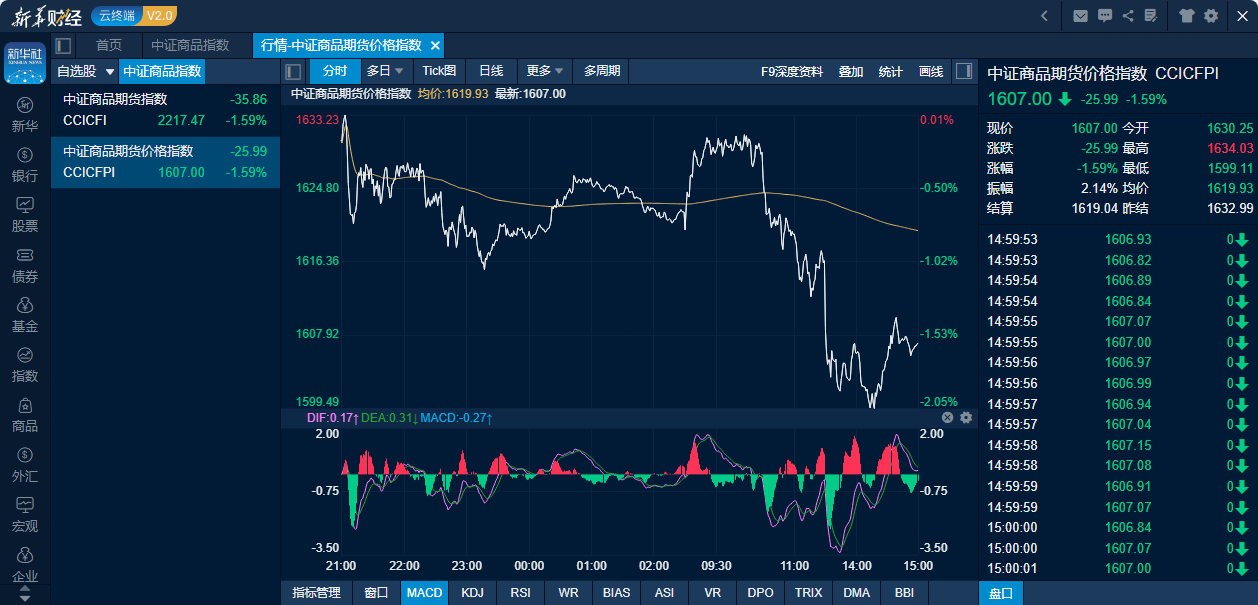
Market Overview - The domestic commodity futures market experienced a high-level correction on January 8, with significant declines in the metal sector. The China Securities Commodity Futures Price Index closed at 1607.00 points, down 25.99 points or 1.59% from the previous trading day [1] - The China Securities Commodity Futures Index also fell to 2217.47 points, a decrease of 35.86 points or 1.59% [1] Metal Sector Performance - The metal sector saw widespread declines, with nearly all contracts for polysilicon hitting the daily limit down, while platinum, nickel, and silver dropped around 6%. Industrial silicon and palladium fell over 4% and 3%, respectively, and copper, aluminum, and lead also decreased by more than 2% [1] - In contrast, the black chain commodities continued to show a rebound, with coking coal rising nearly 5%, leading the market, while coke increased over 2%. Iron ore saw a brief rise of nearly 2% but later fluctuated downwards [1] Coking Coal Insights - Coking coal maintained a strong performance, closing up over 4% despite a noticeable retreat from its night session highs. The supply side remains relatively tight, and the overall valuation of the black series is low, making it susceptible to positive factors [3] - Market sentiment has cooled, and recent data indicates a renewed accumulation of steel inventory, reflecting weak terminal demand. The outlook suggests that while coking coal supply and demand are balanced, market movements will be driven by macro sentiment and funding [3] Glass Market Trends - The main contract for glass continued its strong performance, closing up 2.65%. This was supported by rising coal prices and a slight improvement in the spot market, leading to a 2.37% decrease in national float glass inventory [4] - However, demand remains weak, with processing orders declining. The industry is expected to continue reducing capacity, with daily melting rates anticipated to drop below 150,000 tons [4] Polysilicon Market Dynamics - On January 8, polysilicon contracts faced significant declines, with most contracts hitting the daily limit down, resulting in a 9% drop. This was primarily driven by rumors of regulatory scrutiny regarding monopolistic risks in the polysilicon market [5] - Despite some production cuts in polysilicon supply regions, demand is also weakening, leading to a continued accumulation trend in January. Analysts suggest that the market may return to a marginal cost pricing model, which could stabilize prices once terminal demand improves [5][6] Shipping Market Conditions - The shipping market, particularly the European route, is experiencing heightened pessimism due to price cuts from major shipping companies like Maersk and CMA CGM. This has led to increased selling pressure on the main contracts [6] - Concerns are growing that if shipping volumes do not meet expectations before the Spring Festival peak, it could further negatively impact the shipping market [6]

A股晚间热点 | 重磅催化!中国石化、中国航油官宣重组 有何影响?
智通财经网· 2026-01-08 15:30
Group 1 - China Petroleum and Chemical Corporation (Sinopec) and China Aviation Oil Group announced a restructuring approved by the State Council, aimed at enhancing competitiveness in the aviation fuel industry and supporting green transformation efforts [1] - Guangzhou plans to establish itself as a new hub for commercial aerospace by 2035, focusing on reusable rocket technology and leveraging local testing facilities [1] Group 2 - The Ministry of Industry and Information Technology (MIIT) held a meeting with 16 major companies in the lithium battery sector to address irrational competition and regulatory compliance [2] - The Ministry of Commerce responded to inquiries regarding the review of Meta's acquisition of the AI platform Manus, emphasizing adherence to Chinese laws and regulations for cross-border investments [3] Group 3 - The market regulator reported a significant drop in polysilicon futures, with a 9% decline, following a meeting addressing monopoly risks in the photovoltaic sector [4] - Hong Kong's stock market experienced a downturn, with Goldman Sachs indicating that while a bull market may continue until 2026, the momentum is expected to slow down [6] Group 4 - OpenAI launched ChatGPT Health, targeting the healthcare market, which has seen over 230 million health-related inquiries weekly, highlighting the demand for AI in healthcare [9] - The semiconductor industry is expected to continue its supercycle until 2027, driven by persistent demand for AI technologies [11]


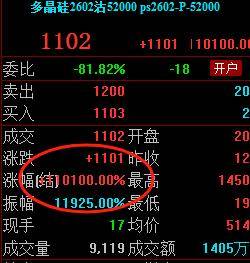
又见小作文影响市场,多晶硅期货跌停!有认沽期权价格单日暴涨110100%,多晶硅或回到边际成本定价模式,实现市场化出清
Sou Hu Cai Jing· 2026-01-08 10:17
Core Viewpoint - The domestic commodity futures market experienced significant volatility on January 8, with polysilicon futures hitting the limit down, and precious and non-ferrous metals markets plummeting. The sharp decline in polysilicon prices is attributed to regulatory concerns regarding monopolistic risks in the photovoltaic industry [1][4]. Market Performance - Polysilicon main futures dropped by 9%, closing at the limit down, while other related commodities such as aluminum, nickel, and silver also saw declines of over 5% to 8% [1]. - The price of polysilicon put options surged dramatically, with the polysilicon 2602 put option increasing by 110,100% to close at 1,102, with a transaction volume of 14.05 million yuan [1][2]. Regulatory Impact - A leaked meeting summary indicated that the State Administration for Market Regulation had discussions with major players in the photovoltaic sector regarding monopolistic risks and required corrective actions [3][4]. - Industry insiders confirmed the authenticity of the leaked document and indicated that the recent price drop in polysilicon futures was likely influenced by these regulatory discussions [4]. Industry Developments - A polysilicon capacity acquisition platform has been officially established, aimed at addressing the "involution" issue within the photovoltaic industry. This platform is expected to operate under a dual model of "debt acquisition and flexible capacity storage" [5][6]. - The platform is anticipated to help alleviate potential debts amounting to hundreds of billions, restore reasonable pricing, and enhance the overall competitiveness of the industry [6]. Future Outlook - The basic supply-demand dynamics for polysilicon remain weak, with a current production of 24,000 tons and an estimated demand of 85,000 tons for January, indicating an oversupply situation [7]. - If the underlying support logic for the industry is disrupted, inventory pressures may become more pronounced, leading to further downward pressure on polysilicon prices in the short term [7].
【点石成金】多晶硅:政策预期转向,市场情绪退潮
Xin Lang Cai Jing· 2026-01-08 09:53
Core Viewpoint - The recent decline in polysilicon futures is attributed to tightening market regulations and a shift in policy expectations, leading to a significant price drop after a period of volatility [3][9]. Market Dynamics - Polysilicon futures opened lower and hit the limit down on January 8, 2026, following a peak price of 61,985 yuan/ton on December 17, 2025, driven by the establishment of a new company and its capacity storage plan [3][9]. - The market has seen a shift from early-stage industry coordination to competition driven by technological iteration, as regulatory signals emphasize a market-oriented and legal approach to industry development [3][9]. Supply and Demand - In the traditional off-season of November and December, there was a reduction in production across polysilicon, silicon wafers, battery cells, and modules, with polysilicon production experiencing a 14.5% decrease in November, followed by a recovery to approximately 115,500 tons in December [4][10]. - Despite a 19% reduction in silicon wafer production in December, polysilicon inventory increased from 281,000 tons to 306,000 tons, indicating a mismatch in supply and demand [4][10]. Price and Cost Factors - The surge in silver prices in December raised the cost of battery cell silver paste, leading to tentative price increases across the entire industry chain, with polysilicon prices rising to a range of 55,000 to 63,000 yuan/ton [4][10]. - However, high-priced transactions have primarily been spot trades, and the acceptance of these prices by downstream customers remains uncertain [4][10]. Future Outlook - The path to clearing polysilicon capacity may change, with regulatory measures encouraging a rational return of funds to the market, contributing to price corrections [6][12]. - A technical rebound may occur after the rapid decline, but the extent of this rebound will face pressure from real-world cost factors, with prices expected to test lower integer levels in the short term [6][12].

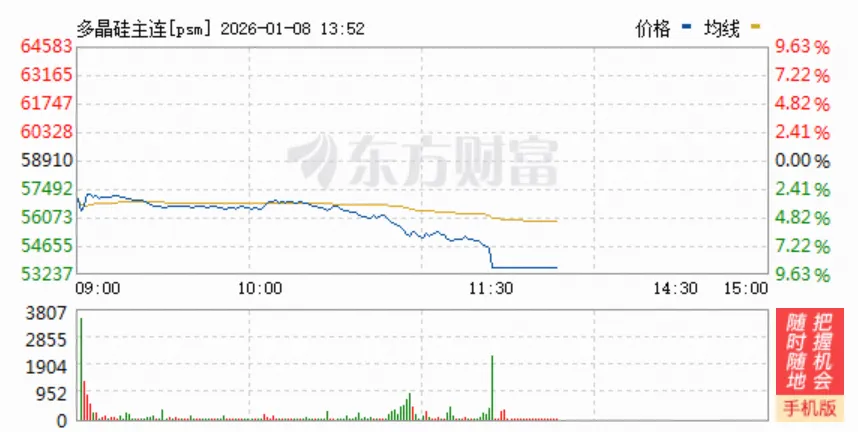
多晶硅跌停!短期需求淡季、库存难消...政策博弈回归供需基本面
Hua Er Jie Jian Wen· 2026-01-08 08:47
Core Viewpoint - The recent sharp decline in polysilicon futures prices reflects a pessimistic outlook on the supply-demand balance for 2026, driven by market sentiment and reduced trading volumes [3][5][12] Group 1: Market Performance - On the 8th, polysilicon futures fell by 9.00%, closing at 56,024 yuan/ton, a drop of 5,300 yuan from the previous settlement price, with an intraday low of 53,610 yuan/ton [1] - The main contract 2605 also saw a significant decline, dropping over 7% with a minimum price of 54,500 yuan/ton during the day [1] - The trading volume decreased significantly, with a reduction of 4,212 contracts, indicating a notable exit of capital from the market [3] Group 2: Supply and Demand Dynamics - The immediate trigger for the market downturn was a revision of policy expectations regarding the establishment of "Beijing Guanghe Qiancheng Technology Co., Ltd." which was anticipated to clear 1.7 million tons of capacity but has not yet initiated substantial acquisition actions [5][6] - Current demand signals are weak, with downstream component manufacturers showing limited orders and a significant drop in procurement willingness for polysilicon [7] - Forecasts indicate a potential 17% year-on-year decline in global new photovoltaic installations in 2026, with China's expected new installations dropping by 36% [7][10] Group 3: Inventory and Cost Considerations - As of the end of 2025, polysilicon industry inventory exceeded 350,000 tons, exacerbating the supply-demand imbalance [12] - The average complete cost for polysilicon production is approximately 48,000 yuan/ton, with the highest costs reaching 56,000 yuan/ton, suggesting that 42,000 yuan/ton may serve as a critical support level [12] - The market is currently navigating between maintaining high prices through alliances among leading companies and the potential for price collapse due to external competition [12] Group 4: Future Outlook - The first two months of 2026 are expected to be a demand lull, with potential price stabilization or further declines depending on market dynamics post-Spring Festival [14] - March is anticipated to be a crucial observation period, where demand may recover, leading to two possible scenarios: a stable high-price environment or further price declines due to new capacity releases [14] - The expected trading range for polysilicon futures in 2026 is projected to be between 42,000 yuan/ton and 80,000 yuan/ton [14]