
银行业

Search documents
专访瑞银卡普顿:股票或是最值得配置的资产
21世纪经济报道· 2026-02-06 08:08
Group 1 - The global economy is returning to a long-term potential growth trajectory, with credit gradually recovering and market confidence marginally improving. Stocks are expected to be the most advantageous asset class, with US stocks projected to rise by about 10%, and European and Japanese markets expected to see gains of around 8% [1][11]. - Emerging economic sectors have contributed approximately one-quarter of overall growth, surpassing the real estate sector in importance. This shift is not fully reflected in overall predictive data, indicating stronger actual economic performance than previously anticipated [4][3]. - China is recognized as a leading player in the global new economy, with per capita sales across various industries continuously increasing, signaling enhanced competitiveness. This trend is particularly evident in the AI sector, where China has found new ways to improve productivity [4][3]. Group 2 - The focus for 2026 will shift from investing in "producers of technology" to examining who will be the users and beneficiaries of technology. This includes a particular interest in data-intensive, labor-intensive, and low-cost companies that can achieve efficiency gains through new technologies [6][7]. - Investors are concerned about the concentration of funds in a few tech giants, leading to uncertainty about which companies will emerge as winners. This will be a recurring theme for investors in 2026 [7][8]. - The stock market is expected to experience a moderate "融涨" (liquidity-driven rise), as there is still significant liquidity in the market. If the economy maintains a trend of growth without major shocks, funds are likely to flow into the stock market [11][9]. Group 3 - China and Brazil are highlighted as the most promising emerging markets, offering significant value in terms of valuation levels and profit growth prospects. Investing in Chinese assets provides exposure to AI-related opportunities, which are not as readily available in India [13][12]. - The largest risks for global investors include potential fiscal stimulus measures in the US, which could significantly increase the fiscal deficit and lead to instability in global financial markets. The current fiscal deficit is approximately 6% of GDP [15][14]. - High levels of uncertainty in the US labor market, with 90% of economic growth stemming from AI investments and high-income spending, pose a risk of sudden economic downturns if this uncertainty persists [15][16].


加息也难救多头?澳元八年最高看涨头寸遭金价暴跌“定点爆破”
智通财经网· 2026-02-06 07:59
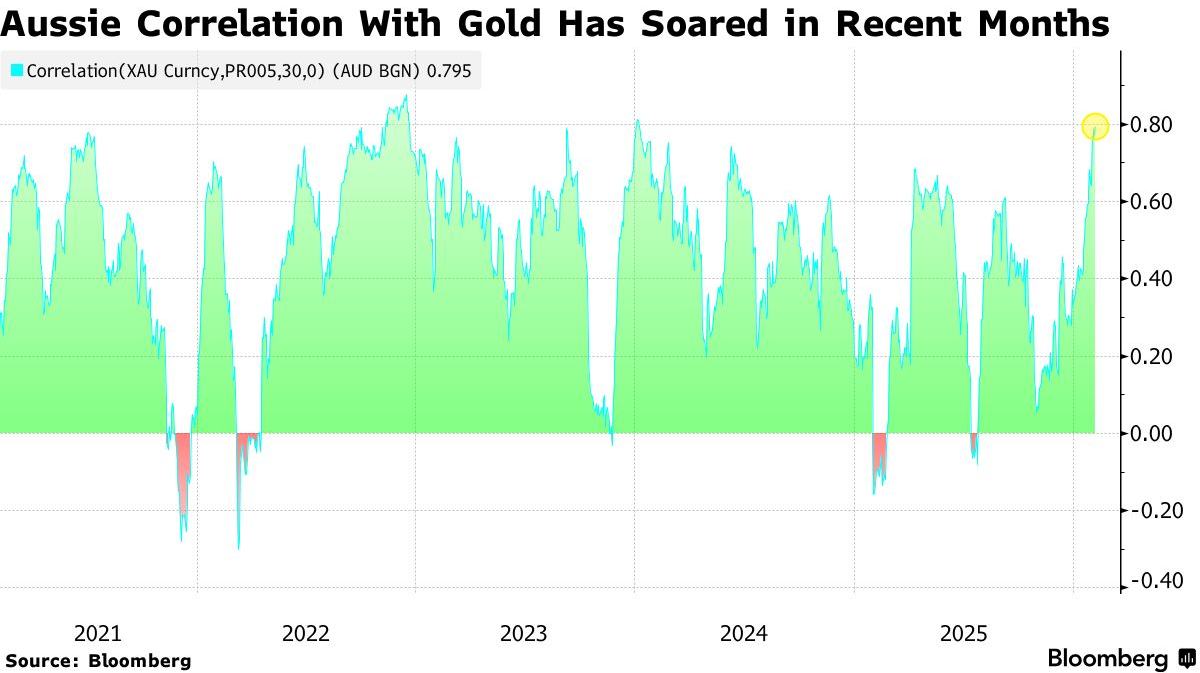
Group 1 - The Reserve Bank of Australia (RBA) unexpectedly resumed its interest rate hike cycle, raising the official cash rate by 25 basis points to 3.85%, breaking a two-year period of policy inaction to address persistent inflation pressures [1] - The Australian dollar (AUD), which should benefit from narrowing interest rate differentials, faced resistance after reaching a near three-year high, primarily due to significant fluctuations in the global precious metals market [1][2] - The decline in precious metal prices has not only offset the optimistic sentiment from interest rate hike expectations but has also pushed the AUD into a more severe downward trend, raising questions about whether hedge funds misjudged the situation as their bullish positions reached the highest level since December 2017 [1] Group 2 - The AUD experienced a 4.4% surge last month due to rising expectations of RBA tightening and a significant increase in gold and silver prices, which provided a reasonable basis for hedge funds' optimistic stance at that time [1] - However, the current environment presents a dual challenge of policy shifts and a commodity bear market, putting the effectiveness of their strategies to an unprecedented test [1] - The AUD's sensitivity to precious metal price movements was further highlighted by a 1% drop to 69.27 cents, triggered by signs of cooling in the U.S. labor market, leading to accelerated withdrawals from commodities and risk assets [5] Group 3 - Despite the challenges, the AUD still has strong support from various asset management firms and institutions, with options traders increasing bullish positions ahead of the RBA's rate hike [8] - The macro perspective indicates that the future trajectory of the AUD will depend on the balance between domestic economic growth resilience and external financial conditions, with the RBA lowering its economic growth forecast for the next year [8] - International investors are closely monitoring potential changes in U.S. monetary policy, as any unexpected hawkish signals could negate the benefits of the RBA's rate hikes, presenting a critical test for hedge funds between currency policy benefits and systemic risks in the commodity market [8]
糜妓挠美联储“独立性”面临挑战,华尔街想确定“是敌是友”,美联储新主席提名引发市场猜测-沃什-特朗普-鲍威尔-美联储会议纪要
Sou Hu Cai Jing· 2026-02-06 07:53
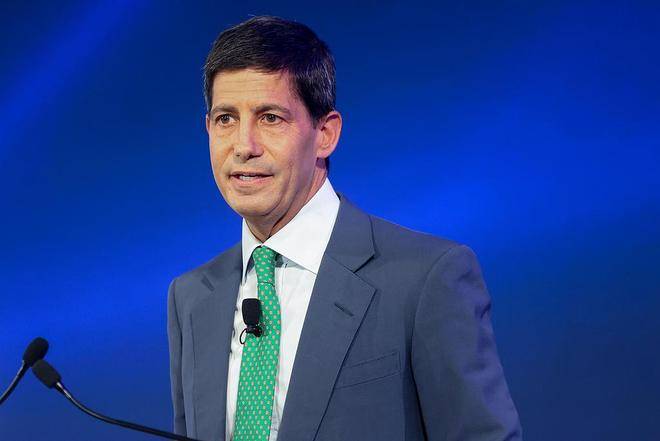
Core Viewpoint - The appointment of Kevin Walsh as the new Federal Reserve Chairman by President Trump has raised concerns about the independence of the Federal Reserve and market reactions indicate uncertainty regarding Walsh's ability to maintain this independence and his suitability for the role [1][6]. Market Reactions - Following the announcement of Walsh's nomination, U.S. financial markets experienced volatility, with major stock indices declining, including a 0.9% drop in the Nasdaq Composite Index [3]. - Precious metal prices saw significant declines, with gold prices dropping by 11% and silver prices falling by 31%, marking the largest single-day declines since 1980 [3]. - The U.S. dollar and long-term bond yields increased, as some market participants viewed Walsh as a "relatively safe choice" due to his previous experience at the Federal Reserve and his firm stance on inflation, supporting tight monetary policy [3]. Walsh's Background and Position - Walsh served as a Federal Reserve Governor from 2006 to 2011 and has been labeled as having a "hawkish" stance on inflation, advocating against low interest rates and large-scale bond purchases [4]. - Recently, he has publicly supported lowering borrowing costs, aligning more closely with President Trump's views, which contrasts with his previous hawkish image [4]. - Walsh's belief in reducing the Federal Reserve's balance sheet has led some investors to think this could mitigate the impact of rate cuts [4]. Concerns About Independence - There are ongoing concerns regarding the potential loss of independence for the Federal Reserve due to Trump's influence, with questions about what Walsh's appointment means for this independence [6]. - Some Wall Street analysts view Walsh's hawkish background as a positive signal, while his recent alignment with Trump adds uncertainty to the market [6]. Political Implications - Walsh's nomination has sparked discussions in the political arena, with Senator Elizabeth Warren questioning him about the Trump administration's pressure on the Federal Reserve and its implications for the institution's independence [7]. - Senator Tom Tillis has stated he will oppose any nominee for the Federal Reserve Chairman until the investigation into current Chairman Powell is resolved [7]. Challenges Ahead - Despite appearing to meet Trump's requirements, Walsh faces significant challenges in implementing changes within the large structure of the Federal Reserve [9]. - The speed and extent of potential interest rate cuts under Walsh's leadership remain uncertain, with analysts predicting further rate cuts this year [9]. - If the Federal Reserve were to lower short-term rates too quickly and be perceived as politically motivated, it could lead to concerns about rising inflation and result in investors selling government bonds [9].
印度央行按兵不动观望贸易红利 预算发力推高增长预期
Xin Hua Cai Jing· 2026-02-06 06:55
新华财经北京2月6日电印度央行周五维持利率不变,政府支出的增加以及令人意外的美印贸易协议提振 了经济增长前景。 过去四个月,消费者物价增长一直维持在2%以下。政府预测,在4月1日开始的新财年中,经济增长率 可能超过7%,而本财年的预估增长率为7.4%。 本周美国总统特朗普宣布,华盛顿将把印度商品的关税从50%大幅削减至18%,这提升了市场预期,经 济学家预计将上调这一亚洲第三大经济体的增长预测。 (文章来源:新华财经) 印度央行由六人组成的货币政策委员会一致投票决定将回购利率维持在5.25%,这符合机构对39位受访 经济学家调查的普遍预期。政策立场仍保持"中立"。 自去年2月以来,由于通胀持续低于4%的目标,印度央行已累计降息125个基点,其中包括2025年12月 份25个基点的降息。 ...
散户们把白银玩成了“万人坑”
投中网· 2026-02-06 06:53
Core Viewpoint - The article discusses the dramatic collapse of silver prices, highlighting the role of retail investors and institutional players in creating a volatile market environment that led to significant losses for many individual investors [6][10][43]. Group 1: Market Dynamics - Retail investors injected a record $1 billion into silver ETFs in January, with trading volumes reaching $39.4 billion on January 26, nearly matching the S&P 500 ETF [15][16]. - The surge in interest was fueled by social media platforms, particularly Reddit, where discussions about silver reached 20 times the five-year average [19]. - Analysts noted that silver became severely overvalued, likening its rise to a speculative bubble detached from industrial demand [19][20]. Group 2: Triggering the Collapse - On January 30, silver experienced a massive sell-off, with prices dropping significantly before the announcement of Kevin Warsh's nomination as Fed Chair, which was incorrectly blamed for the crash [21][22][24]. - The real catalyst for the collapse was the Chicago Mercantile Exchange's (CME) decision to raise margin requirements for silver futures by 50%, forcing many retail investors to liquidate their positions [27][36]. Group 3: Institutional Advantage - While retail investors faced forced liquidations due to margin calls, institutional players were positioned to benefit from the chaos, utilizing emergency liquidity from the Federal Reserve [30][32]. - Institutions like JPMorgan were able to exploit the situation by buying silver at depressed prices during the sell-off, showcasing a structural advantage over retail investors [39][42]. Group 4: Conclusion on Market Fairness - The article concludes that financial markets are not a level playing field, with retail investors often at a disadvantage against institutional players who can leverage their resources and market knowledge [44][46].

黄金白银巨震后带来怎样的启示?| 一财号每周思想荟(第54期)
Sou Hu Cai Jing· 2026-02-06 06:10
武泽伟 星图金融研究院高级研究员 美元并非普通货币,它是当今国际体系的基石,是全球最主要的交易、储备和计价信用货币。其信用一 旦出现裂痕,波及范围将远超国界。参考日本的经验,一个面临巨额债务的政府,确有可能选择容忍更 高的通胀水平来减轻实际债务负担。如果类似逻辑在美国上演,其影响将更为深远。全球持有大量美元 资产的国家、机构和个人,都将面临资产价值被稀释的风险。 正是在这种宏大而真切地担忧之下,黄金的耀眼涨势获得了最坚实的逻辑支撑。黄金作为一种非信用资 产,其价值不依赖于任何政府的承诺或偿付能力。当主要储备货币的信用根基出现松动的预期时,黄金 自然成为全球资本寻求庇护的终极目的地。 黄凡 宁波银行私人银行部原总经理 市场点金 黄金暴涨,背后是信用货币信任危机 因此,当前的黄金牛市,远非简单的周期性上涨,而是对全球货币体系深层结构变迁的提前定价。只要 主权债务膨胀与货币政策独立性的矛盾持续存在,黄金作为价值"压舱石"的吸引力就不会消退,其上涨 空间依然维系在对信用货币体系的普遍质疑之中。 金银巨震后的启示:没有永远上涨的资产,只有清醒的投资理念 消费新声 AI重构酒店业:商业模式的颠覆性变革与未解之思 投资世界 ...
波动率超100%、一个月跳水11次,白银何时止血?
Hua Er Jie Jian Wen· 2026-02-06 05:45
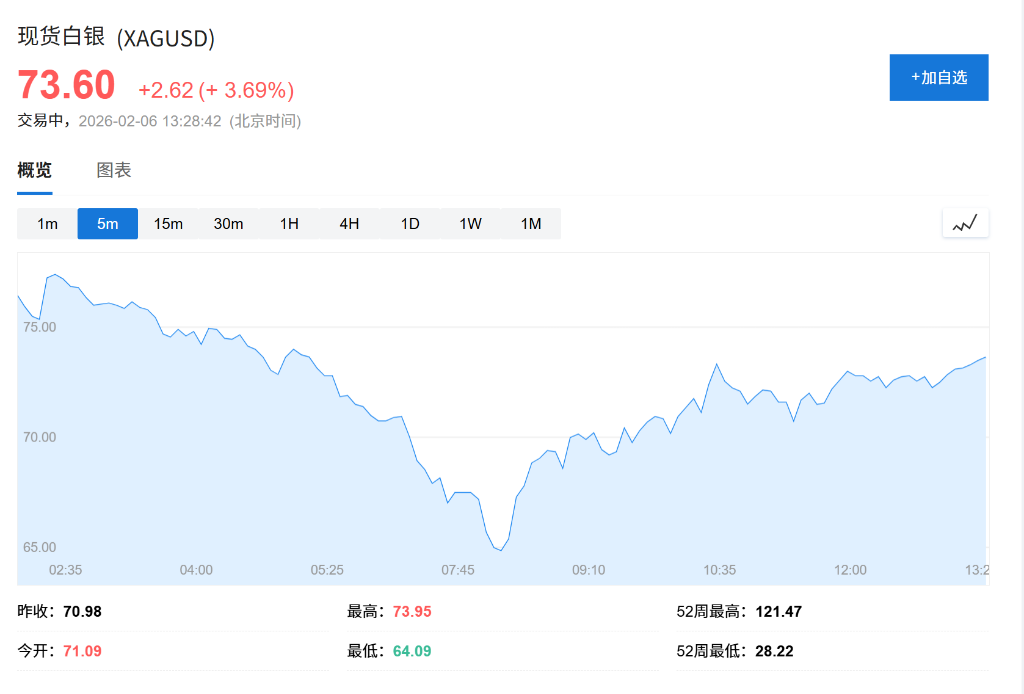
白银市场近期的剧烈波动正在侵蚀投资者信心,波动率飙升至100%以上,市场急于寻找价格底部。瑞银警告称,极端波动性使得短期定位风险极 高,但长期基本面仍然完好。 周五现货白银价格一度暴跌10%,随后收复失地,上涨逾2%至73美元/盎司。白银期货价格则下跌超5%至72.34美元/盎司。今年初白银价格曾创下 历史新高,但上周五单日暴跌近30%,此后一直未能站稳脚跟。 瑞银在周四晚间发布的报告中指出,近期暴跌更多是受风险厌恶情绪驱动,而非基本面崩溃。但该行强调,由于一个月期白银波动率现已超过 100%,短期内可能出现大幅价格波动。瑞银同时警告,如果没有持续的投资需求,白银将难以维持在85美元/盎司上方。 长期基本面获支撑 尽管对短期持谨慎态度,瑞银认为白银的长期基本面依然完好: "较低的名义和实际利率、全球债务担忧和美元贬值考量,以及我们对2026年全球经济增长将复苏的预期,应该会推动价格上涨。" 瑞银继续预计今年白银市场将出现近3亿盎司的短缺,投资需求预计将超过4亿盎司。不过该行警告称,高企的价格可能会抑制工业用途需求。 华侨银行投资策略董事总经理Vasu Menon坚持认为,虽然近期市场情绪严重受挫,但对于能够承 ...
中金固收:人民币升值环境下的流动性渐进宽松
Xin Lang Cai Jing· 2026-02-06 05:16
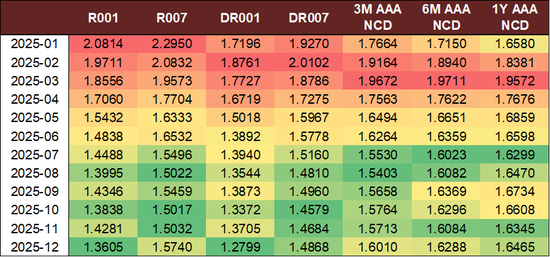
Summary of Key Points Core Viewpoint The report discusses the gradual loosening of liquidity in the Chinese monetary market in the context of the renminbi's appreciation, highlighting the transition from a tight to a more relaxed liquidity environment throughout 2025 and projecting continued easing in 2026. Group 1: 2025 Monetary Market Overview - In early 2025, liquidity was tight due to increased government bond supply and pressure to stabilize the exchange rate, leading to a decrease in bank reserves and a rise in funding rates until late February when pressures eased [1][5][6]. - From March onwards, uncertainties from U.S. tariffs and a weakening dollar prompted the People's Bank of China (PBOC) to adopt a more accommodative monetary policy, resulting in a decline in funding rates following a series of rate cuts in May [1][3][5]. - By October, the PBOC resumed government bond trading, which, along with year-end corporate foreign exchange settlement demands, contributed to a further decline in funding rates [1][6]. Group 2: Characteristics of the 2025 Monetary Market - The monetary market in 2025 exhibited several characteristics, including a gradual narrowing of the interest rate spread between funding rates and policy rates, with the 7-day reverse repo rate often acting as a lower bound for the DR007 weighted rate [2][3][32]. - The PBOC's refined liquidity provision strategies led to reduced volatility in funding rates, particularly during seasonal periods such as tax payments and month-end [2][3][38]. - As liquidity conditions improved, the phenomenon of funding stratification diminished, with reduced interest rate differentials between various funding instruments [2][3][43]. Group 3: 2026 Monetary Market Outlook - For 2026, it is anticipated that liquidity will remain ample, with the PBOC likely to further loosen monetary policy to manage the appreciation pressure on the renminbi and support economic recovery [3][53][54]. - The expected continued appreciation of the renminbi may lead to increased corporate foreign exchange settlements and improved growth in renminbi deposits, further enhancing interbank liquidity [3][62]. - The PBOC is projected to implement more aggressive rate cuts in 2026, with the 7-day reverse repo rate potentially falling to around 1.1%-1.2% and the overnight reverse repo rate to approximately 1.0%-1.2% [3][68].
【财经分析】 欧洲央行维持利率不变 地缘政治、通胀与汇率交织考验加剧
Xin Hua Cai Jing· 2026-02-06 04:47
Core Viewpoint - The European Central Bank (ECB) decided to maintain its key interest rates unchanged, reflecting market expectations amid complex geopolitical and economic conditions [1][4]. Group 1: Monetary Policy Decisions - The ECB announced that the deposit facility rate, main refinancing rate, and marginal lending rate will remain at 2.00%, 2.15%, and 2.40%, respectively [1]. - ECB President Christine Lagarde stated that the current monetary policy stance is well-positioned to address potential future shocks [1]. Group 2: Economic Outlook and Inflation - The eurozone's inflation rate fell to 1.7% in January, below the ECB's medium-term target of 2% [2]. - Lagarde noted that the recent decline in inflation is primarily due to fluctuations in energy prices, while core inflation remains stable at 2.2% [2]. - Some market analysts express caution regarding inflation trends, predicting that core inflation may drop below 2% in the second half of the year, potentially prompting the ECB to consider rate cuts [2]. Group 3: Exchange Rate Implications - The strengthening euro is seen as a significant factor affecting the economic outlook, as it may suppress import inflation but weaken export competitiveness [3]. - The euro recently surpassed the 1.20 mark against the dollar, currently fluctuating at relatively high levels [3]. - Analysts suggest that while the strong euro helps contain import inflation, it also raises prices for European exports, adding pressure on already competitive sectors, particularly in Germany [3]. Group 4: Future Policy Considerations - Analysts believe the ECB's decision to maintain rates aims to provide stability amid a turbulent global environment [4]. - The interplay of geopolitical conflicts, changing inflation paths, and exchange rate volatility presents complex challenges for the ECB's future policy decisions [4].
日本央行鹰派声浪再起 审议委员Masu首秀放“鹰”
Ge Long Hui· 2026-02-06 04:04
Core Viewpoint - The Bank of Japan's committee member Kazuyuki Masu emphasized the necessity of further increasing the benchmark interest rate to complete the normalization of monetary policy, which may heighten market speculation about an early rate hike [1] Group 1: Interest Rate Policy - Masu stated that raising interest rates would help end the divergence between Japan and other countries regarding monetary policy direction [1] - The interest rate increase is seen as a potential solution to the long-term weakness of the yen, which has been attributed to the interest rate differential with other major economies [1] Group 2: Market Expectations - Masu's comments have reinforced the hawkish signals released by the Bank of Japan since the January policy meeting, raising expectations for a possible rate hike before April [1] - Following the Bank of Japan's rate hike in December, most economists initially predicted that the next action would not occur until June or July [1]