
银行业

Search documents
债市早报:央行重启14天期逆回购操作;资金面稳中偏松,债市整体回暖
Sou Hu Cai Jing· 2026-02-06 02:29
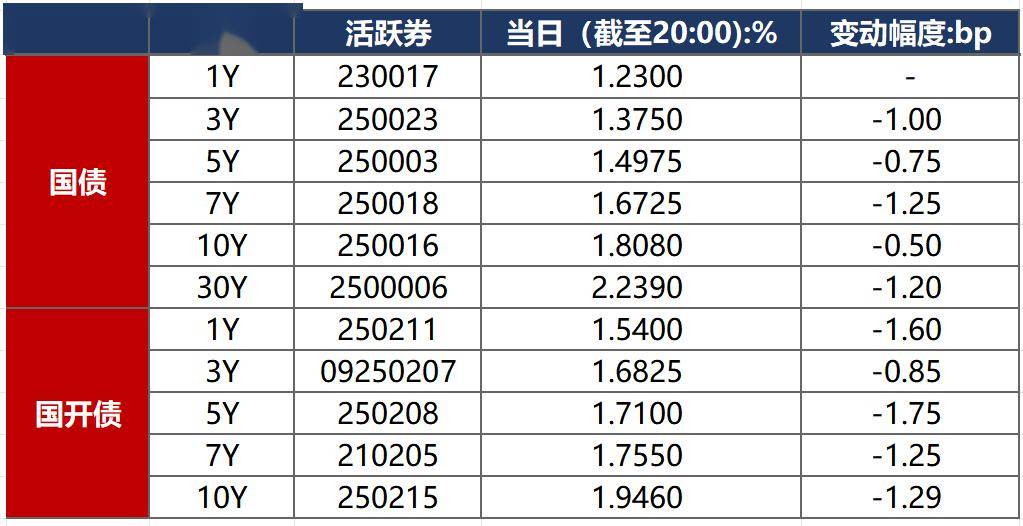
Core Viewpoint - The financial market is experiencing a mixed performance with a generally loose liquidity environment, a recovery in the bond market, and a decline in convertible bond indices and individual securities [1][9]. Group 1: Domestic News - The State Administration for Market Regulation is advancing the construction of a unified national market to enhance the vitality of various business entities and promote high-quality economic development [2]. - The Ministry of Commerce reported that by 2025, China's service trade is expected to grow steadily, with a total import and export value of 80,823.1 billion yuan, reflecting a year-on-year increase of 7.4% [3]. - A new policy has been implemented in Hainan Free Trade Port, allowing residents to purchase imported goods with a zero tariff policy, with an annual exemption limit of 10,000 yuan per person [4]. Group 2: International News - The U.S. JOLTS job openings fell to 6.542 million in December, the lowest level since September 2020, indicating a weakening demand for labor in an uneven job market [5]. - The European Central Bank has maintained its deposit rate at 2% for the fifth consecutive time, emphasizing the need for structural reforms amid geopolitical uncertainties and challenges in the external environment [6]. Group 3: Commodity Market - International crude oil futures prices fell, with WTI crude down by $1.85 to $63.29 per barrel, while natural gas prices continued to rise [7]. Group 4: Financial Market Operations - On February 5, the central bank conducted a 1,185 billion yuan reverse repurchase operation with a fixed rate of 1.40%, resulting in a net liquidity injection of 645 billion yuan for the day [8]. - The liquidity environment remains loose, with the DR001 and DR007 rates declining to 1.319% and 1.482%, respectively [9]. Group 5: Bond Market Dynamics - The bond market showed signs of recovery, with the yield on the 10-year government bond falling by 0.50 basis points to 1.8080% [11]. - In the secondary market, two industrial bonds experienced significant price deviations, with "H1碧地03" rising over 20% and "H0中骏02" increasing by over 264% [13]. - The convertible bond market saw a collective decline, with major indices down by 0.84% to 0.95%, and a total trading volume of 740.66 billion yuan [17]. Group 6: Overseas Bond Market - U.S. Treasury yields fell significantly, with the 2-year yield down 10 basis points to 3.47% and the 10-year yield down 8 basis points to 4.21% [20]. - In the European bond market, most major economies saw a decline in 10-year government bond yields, with Germany's yield down 2 basis points to 2.84% [21].

宏观经济点评:一文看懂日本众议院选举与日债、日元波动及影响
KAIYUAN SECURITIES· 2026-02-06 02:25
Group 1: Political Context - Prime Minister Kishi's support rate remains above 60%, the highest in three years, prompting the dissolution of the House of Representatives for new elections[1] - The ruling coalition of the Liberal Democratic Party (LDP) and the Japan Innovation Party holds 49% of seats in both the House of Representatives and the House of Councillors, indicating a lack of absolute majority[1] - Public support for the dissolution is low, with only 36% in favor, while 50% oppose it, highlighting potential electoral risks for Kishi[1] Group 2: Economic Policy and Challenges - Kishi's "responsible active fiscal policy" aims to shift Japan from a deflationary economy to a growth-oriented one, but it raises concerns about fiscal sustainability[2] - Japan's national debt is projected to reach 1,145 trillion yen by 2026, with interest payments amounting to 13 trillion yen, increasing fiscal pressure[2] - The Bank of Japan faces challenges as it begins to raise interest rates while managing the implications of increased government spending and potential inflation[2] Group 3: Market Implications - The Japanese yen has depreciated significantly since 2012, exacerbated by concerns over fiscal sustainability and the need for more government bonds[3] - Long-term government bond yields have risen sharply, with 10-year and 30-year yields increasing by over 150 basis points since 2024[3] - The government may intervene in the foreign exchange market to stabilize the yen, especially if it approaches the 160 yen per dollar mark[4] Group 4: Fiscal Outlook - The 2026 budget requires the issuance of approximately 29.6 trillion yen in new government bonds to cover a fiscal gap of 29.6 trillion yen, reflecting ongoing fiscal challenges[2] - The government’s debt reliance is projected to be 24.2% in 2026, a slight decrease from the previous year, but the overall debt burden remains high[2] - The expansionary fiscal policies may lead to increased inflation, putting further pressure on the bond market and the yen[3]
当所有人把钱换成了黄金。就会开始收割了。它就会从1600元一克慢慢降到300元一克,到时候黄金砸手里根本没人接盘,想变现都没门路。屏幕上那个数字红得刺眼,像是一记重锤砸在所有人的心口:金价从1600元一克自由落体至300元一克。这不仅是一个价格预测,更像是一部关于“财富蒸发8...
Sou Hu Cai Jing· 2026-02-06 02:17
Core Viewpoint - The article discusses the potential drastic decline in gold prices, predicting a drop from 1600 yuan per gram to 300 yuan per gram, which would represent an 80% evaporation of wealth [1]. Group 1: Market Dynamics - There are two contrasting trends in the gold market: widespread fear among retail investors about holding gold, and aggressive purchasing by central banks, which are accumulating gold bars at unprecedented rates [1][10]. - The article highlights that the market is not purely free, suggesting manipulation by major players, as evidenced by past actions of top traders at JPMorgan [2][3]. Group 2: Historical Context - Historical precedents show that significant drops in gold prices have occurred, such as in 1980 when prices fell over 65% due to high interest rates, and in 2013 when prices dropped significantly after retail investors entered the market [6][7]. - The article emphasizes that while fears of an 80% drop are prevalent, historically, gold prices have never fallen more than 65% in severe bear markets [9]. Group 3: Central Bank Actions - In 2024, global central banks purchased over 1000 tons of gold, double the average of previous years, indicating strong demand for gold as a non-sovereign asset amidst global uncertainties [10][11]. - China's central bank has been consistently increasing its gold reserves, which currently represent about 7% of its foreign exchange reserves, still below the global average, suggesting a strategic build-up rather than a retreat from gold [11]. Group 4: Investment Strategy - The article advises against panic selling or blind greed, recommending a balanced approach to gold investment, suggesting a portfolio allocation of 5% to 15% in gold as a wealth stabilizer [14]. - It encourages focusing on liquid assets like ETFs or bank-stored gold rather than high-premium jewelry, which may not be easily convertible to cash [14].

全球市场资金大撤离,黄金、白银、原油、币圈、美股全线下挫
Xin Lang Cai Jing· 2026-02-06 01:58
Core Viewpoint - The global financial markets are experiencing a significant capital withdrawal, leading to substantial declines in major indices and commodities [5][11]. Market Performance - Major US stock indices fell sharply, with the Dow Jones down approximately 600 points and the Nasdaq declining nearly 2% [6][11]. - Precious metals also faced severe losses, with spot silver plunging over 20% and gold dropping more than 4% [6][11]. - International oil prices saw significant declines, with WTI crude futures down 2.84% to $63.29 per barrel and Brent crude down 2.75% to $67.55 [6][11]. Cryptocurrency Market - Bitcoin experienced a drastic drop of over 13% in a single day, while Ethereum fell by more than 23% [6][11]. - Over the past 24 hours, more than 430,000 individuals in the cryptocurrency market faced liquidation [6][11]. - Since reaching a historical peak of $126,000 in October, Bitcoin's price has plummeted over 48%, with its total market capitalization shrinking from $2.48 trillion to $1.27 trillion [12]. Fund Flows and Investor Sentiment - Data indicates a shift in market sentiment, with Bitcoin ETFs recording a net inflow of approximately $562 million on Monday, followed by over $800 million in outflows in the subsequent two trading days [12]. - A report from CryptoQuant highlighted that US ETFs, which were significant buyers of Bitcoin last year, have now turned into net sellers [12]. Economic Outlook - Citigroup downgraded its rating on US stocks from "overweight" to "neutral," anticipating more negative economic data in the next 3-6 months and noting that the market remains relatively expensive with a trend of declining EPS expectations [7][12]. - In contrast, BlackRock expressed disagreement with the market's recession fears, citing a strong labor market and robust corporate earnings [7][12]. - Dan Morehead, founder of Pantera Capital, commented on the impact of leverage in declining markets, noting that the scale of capital evaporation in the downturn on October 10 last year was significantly greater than that in November 2022 [7].

央行公开市场操作本周净回笼7560亿元
Sou Hu Cai Jing· 2026-02-06 01:36
Core Viewpoint - The People's Bank of China (PBOC) conducted a total of 315 billion yuan in 7-day reverse repos and 3000 billion yuan in 14-day reverse repos, indicating a proactive approach to liquidity management in the financial system [1] Group 1 - The PBOC's 7-day reverse repo operation had a bidding amount and winning amount of 315 billion yuan, with an operation rate of 1.40% [1] - The 14-day reverse repo operation was conducted using a fixed quantity, interest rate bidding, and multiple price levels [1] - A total of 4775 billion yuan in 7-day reverse repos matured today, resulting in a net withdrawal of 1460 billion yuan [1] Group 2 - Throughout the week, the PBOC executed 10055 billion yuan in reverse repo operations [1] - This week saw 17615 billion yuan in 7-day reverse repos maturing, leading to a net withdrawal of 7560 billion yuan [1]
央行公开市场今日净回笼1460亿元
Xin Lang Cai Jing· 2026-02-06 01:30
Core Viewpoint - The central bank conducted a total of 3.15 billion yuan in 7-day reverse repos at an interest rate of 1.40%, alongside a 300 billion yuan 14-day reverse repo operation, resulting in a net withdrawal of 146 billion yuan due to the maturity of 477.5 billion yuan in 7-day reverse repos [1][1][1] Group 1 - The central bank's operation included 315 billion yuan in 7-day reverse repos [1] - The interest rate for the 7-day reverse repo was set at 1.40% [1] - A 300 billion yuan 14-day reverse repo was conducted using a fixed quantity and multi-price bidding method [1] Group 2 - The maturity of 477.5 billion yuan in 7-day reverse repos occurred today [1] - The net withdrawal from the market was 146 billion yuan as a result of these operations [1]
肉牛变“金牛” 科尔沁草原年味浓
Jin Rong Shi Bao· 2026-02-06 01:04
Core Viewpoint - The financial services provided by the People's Bank of China in Tongliao City have significantly boosted the local meat industry and consumer market, facilitating growth for both processing enterprises and livestock farmers during the peak season before the Spring Festival [1][2][3] Group 1: Meat Processing Industry - Tongliao City is a crucial base for the meat cattle industry in Inner Mongolia, experiencing a busy season with a 20% increase in order volume compared to usual [1] - A local meat processing enterprise received a quick loan of 2 million yuan from the Inner Mongolia Rural Commercial Bank, enabling it to expand slaughtering capacity and ensure supply for the Spring Festival [1] - The enterprise's increased production efficiency has led to contracts with local livestock farmers, enhancing both meat supply and farmers' income [1] Group 2: Livestock Farmers - Local farmers, such as Li, have benefited from favorable purchase prices and quick payment for cattle sales, with an increase in earnings of 20,000 yuan compared to the previous year [2] - The People's Bank of China in Tongliao has implemented the "Agricultural and Animal Husbandry Loan" initiative, facilitating access to financing for farmers through innovative collateral options [2] - By 2025, local financial institutions are expected to issue a total of 520 million yuan in "Agricultural and Animal Husbandry Loans" [2] Group 3: Consumer Market - The financial services have stimulated consumer spending, with personal consumption loans in the city reaching 51.073 billion yuan, a year-on-year increase of 9.38% [3] - Initiatives such as mobile payment installations and promotional activities for credit cards and consumer loans have been introduced to enhance shopping experiences during the New Year [3] - The collaboration between the People's Bank of China and the local commerce bureau aims to activate consumer potential and support local businesses during the festive season [3]

中国银河证券:由沃什领导的美联储或将开启央行角色的深刻转变
智通财经网· 2026-02-06 00:55
Core Viewpoint - The nomination of Kevin Warsh as the next Federal Reserve Chairman by Trump is not merely a personnel change but signals a shift in the defense of the dollar and U.S. Treasury credit, with the dollar index rising by 1% on the announcement [2]. Group 1: Warsh's Monetary Policy Views - Warsh is a clear critic of the current Federal Reserve's policies, opposing quantitative tightening (QT) during market turmoil and questioning the Fed's focus on price stability [2]. - He criticizes the Fed's reliance on data and its disconnect from reality, emphasizing the need for credible monetary policy and a return to normalization, opposing unlimited quantitative easing (QE) [2][3]. Group 2: Proposed Reforms for the Federal Reserve - Warsh advocates for a revival of the Fed's core framework while eliminating past policy errors, focusing on reducing the balance sheet to control inflation, which could create room for lowering interest rates [3]. - He stresses the importance of the Fed and Treasury fulfilling their respective roles and calls for a reassessment of the 1951 Treasury-Fed Accord, emphasizing the need for Fed independence [3]. Group 3: Impact on Major Assets - The leadership change at the Fed should not be automatically interpreted as a major market trend shift; the impact of policies on the U.S. economy is fundamental to dollar pricing [4]. - Under Warsh's leadership, the Fed may transition from a supportive role post-financial crisis to a more traditional, rule-based approach, with expectations of a stronger dollar in the short term and a slow bearish trend in the long term [4]. - Short-term U.S. Treasury yields are expected to rise, putting pressure on prices, while long-term inflation expectations are anchored around 2% [4].

芝商所上调黄金白银期货保证金 黄金从8%升至9%,白银从15%升至18% 2月6日收盘后生效 中国银行同步调整金银延期合约保证金
Jin Rong Jie· 2026-02-06 00:24
Group 1 - The Chicago Mercantile Exchange announced an increase in the initial margin requirements for certain precious metal futures contracts, with COMEX 100 gold futures rising from 8% to 9% and COMEX 5000 silver futures from 15% to 18% [1] - The new margin standards will take effect after the market closes on February 6 [1] - The exchange stated that this adjustment is a result of a routine review of market volatility, aimed at ensuring adequate collateral coverage and maintaining the stability of the trading market [1] Group 2 - The Bank of China also announced that it will adjust the margin ratios and related trading parameters for individual participation in the Shanghai Gold Exchange's gold and silver deferred contracts, effective after the market closes on February 6 [1] - This adjustment is intended to mitigate market risks and protect investor interests [1]

锚定“三强一优”,加快金融强省建设——14万亿GDP背后的江苏金融力量
Xin Hua Ri Bao· 2026-02-06 00:20
Core Insights - The Jiangsu provincial government emphasizes the importance of financial support for the real economy, aiming to build a strong financial province that aligns financial services with industrial development [1][2]. Financial Performance and Growth - Jiangsu's GDP reached 14.2 trillion yuan, with an average annual growth rate of 5.7%. The province has maintained the highest level of new domestic and foreign currency loans for four consecutive years [1]. - By 2025, Jiangsu's new social financing scale is projected to reach 3.2 trillion yuan, an increase of 316.7 billion yuan year-on-year, maintaining the top position in the country [2]. - The balance of RMB loans in Jiangsu is expected to reach 28.25 trillion yuan by the end of 2025, with an average annual growth rate of 12.8% from 2021 to 2025, consistently outpacing the nominal GDP growth rate [2]. Financial System and Innovation - Jiangsu is focusing on enhancing the financial system to support the modern industrial framework, including the establishment of the Jiangsu National Financial Group and the Jiangsu Rural Commercial Bank [4]. - The province's financial enterprises have total assets exceeding 15 trillion yuan, doubling since the end of 2018, with Jiangsu Bank leading among city commercial banks [4]. - The introduction of innovative financial products and services is aimed at supporting technology-driven enterprises, with a focus on integrating financial services throughout the lifecycle of these companies [3][5]. Support for Enterprises - By the end of 2025, the balance of loans to private enterprises in Jiangsu is expected to be around 8 trillion yuan, with inclusive loans for small and micro enterprises exceeding 4 trillion yuan [3]. - The province has implemented a combination of "Torch Innovation Credit Loan + Trade Financing" to address financing challenges for innovative companies [2]. Financial Ecosystem and Governance - Jiangsu is committed to creating a favorable financial ecosystem by enhancing information sharing, risk control, and collaborative governance among various departments [8]. - The province has established a financial regulatory coordination mechanism and innovative judicial cooperation models to ensure a stable financial environment [8]. - Recent measures have been introduced to optimize the financial ecosystem, focusing on improving the financial business environment and enhancing the legal framework for finance [8].