
家电

Search documents
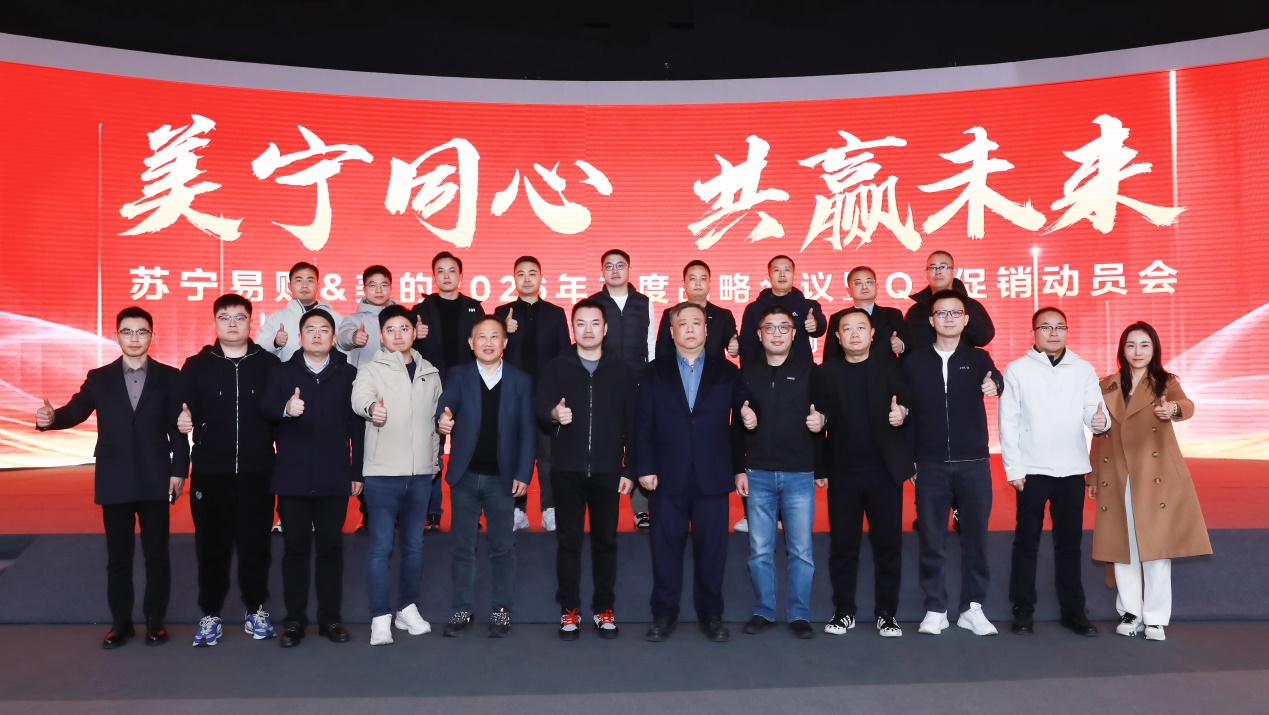
定制家庭生活场景,苏宁易购美的2026年家电“成套”上新
Jin Rong Jie· 2026-01-08 07:51
Core Insights - Suning.com and Midea announced a strategic partnership for 2026, focusing on user-driven collaboration to enhance home appliance integration and customization [1][3] - The partnership aims to launch over 1.26 million customized products to meet consumer demands for quality, personalization, and intelligence [1][3] Market Trends - The consumer market is undergoing a transformation, with policies promoting large-scale equipment updates and encouraging green, smart appliance consumption [3] - Consumer preferences are shifting from single-function products to comprehensive solutions that emphasize aesthetics, smart connectivity, health comfort, and hassle-free services [3] Product Customization - The collaboration will focus on "user-first" and "deep customization," leveraging consumer data analysis to create tailored products that address specific user needs [3][4] - Examples of customized products include the "Xiong Dung Dung Pro" refrigerator with a 600mm ultra-thin seamless design and the Toshiba "Big White Pear Pro" refrigerator with automatic ice-making features [3][4] Scene Solutions - The partnership will develop integrated solutions for four core living scenarios: "Sleep Bedroom," "Vitality Balcony," "Flavor Kitchen," and "Oxygen Living Room," with over 1.26 million customized products [4] - The "Sleep Bedroom" solution will include a no-wind air conditioner and quiet laundry care devices to optimize the sleep environment [4] Service Integration - Suning.com and Midea will enhance service offerings by integrating membership systems, home delivery, and localized activities, providing a comprehensive service experience [4][5] - Consumers will benefit from various service commitments, including a "1399 yuan all-inclusive" installation for designated air conditioners and a "10-year replacement" for refrigerator compressors [4][5] Marketing Initiatives - The annual strategic plan includes a promotional campaign, allowing consumers to experience Midea's full range of products at Suning.com stores, with subsidies of up to 2000 yuan for bundled purchases [5] - Additional activities such as themed pop-up events and community services will enhance consumer engagement and provide a more immersive shopping experience [5]



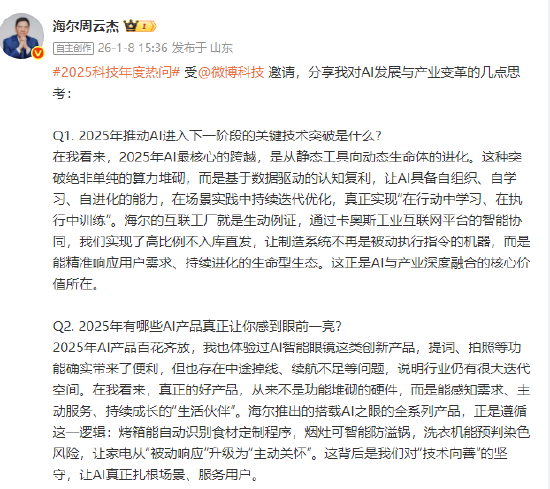
海尔周云杰谈AI发展:要么与AI同进化,要么被AI边缘化
Xin Lang Cai Jing· 2026-01-08 07:45
Core Insights - The core leap in AI by 2025 is the evolution from static tools to dynamic life forms, driven by data-driven cognitive compounding, enabling AI to self-organize, self-learn, and self-evolve [1][7] - The future of AI products should focus on being "life partners" that can sense needs and provide proactive services, rather than merely stacking functions [5][9] - Companies and individuals must evolve alongside AI, as the ability to collaborate with intelligent agents will directly determine their development space [6][9] Group 1: Key Technological Breakthroughs - The key technological breakthrough for AI in 2025 is not just an increase in computing power but achieving a self-evolving capability through data-driven cognitive compounding [3][8] - Haier's interconnected factory exemplifies this evolution, allowing for high direct shipping rates and transforming manufacturing systems into responsive ecosystems [3][8] Group 2: Notable AI Products - AI products in 2025 will showcase significant innovation, such as AI smart glasses, but still face challenges like connectivity issues and battery life, indicating room for improvement [5][9] - Haier's AI-enabled products, like ovens that recognize ingredients and washing machines that predict dye risks, represent a shift from passive to proactive household appliances [5][9] Group 3: Future Trends - The exponential application of intelligent agents (AI Agents) will be a crucial trend in 2026, with Haier establishing a comprehensive framework for cross-scenario and cross-device collaboration [6][9] - The ultimate value of AI is seen as "human-machine symbiosis," where every household has a self-evolving smart partner and every factory possesses an autonomous decision-making brain [6][9]

政策给力,消费争气!博州开年消费旺旺旺!
Sou Hu Cai Jing· 2026-01-08 07:06
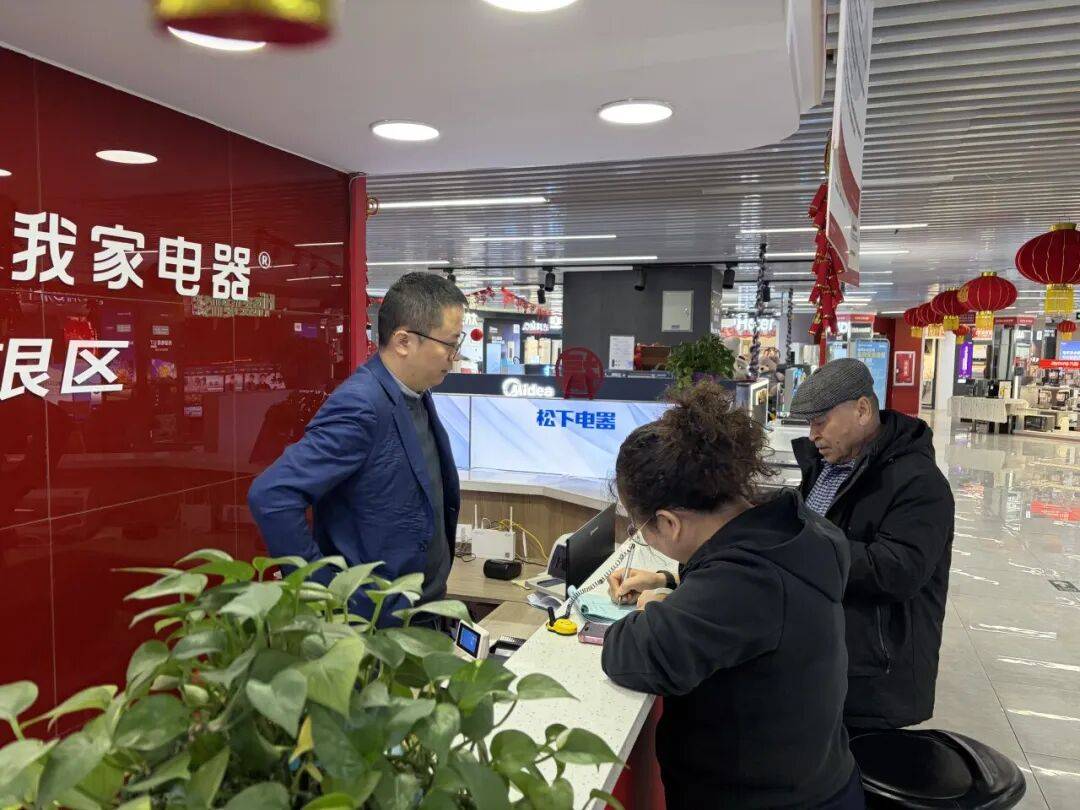
Core Insights - The consumer market in Bortala is showing strong vitality, driven by both daily consumption and quality consumption trends, indicating a positive outlook for the local economy [1] Group 1: Home Appliance Sector - The implementation of the "Two New" policy by the National Development and Reform Commission and the Ministry of Finance has significantly increased consumer interest in home appliance upgrades, particularly for energy-efficient products [3] - The previous "old-for-new" policy, which included both trade-in value and government subsidies, led to over 4,000 orders and a 10% increase in sales, with energy-efficient appliances being particularly popular [5] - The store manager anticipates a further 20% growth in order volume as consumer willingness to upgrade continues to rise, driven by upcoming local policy implementations [5] Group 2: Food and Dining Sector - The bustling atmosphere in local hotpot restaurants reflects the growing trend of quality consumption, with a nearly 30% increase in daily customer flow compared to the end of last year [7] - The aggregation effect of food courts is boosting foot traffic to surrounding shops, enhancing the overall consumer experience in the area [9] - The local consumer market has maintained steady growth, with significant increases in retail sales, particularly in the food and accommodation sectors, positioning Bortala's consumption growth among the top in the region [9]
惠民“大礼包”点燃消费热情 “政府补贴+企业让利”吹动消费市场“一池春水”
Yang Shi Wang· 2026-01-08 06:12
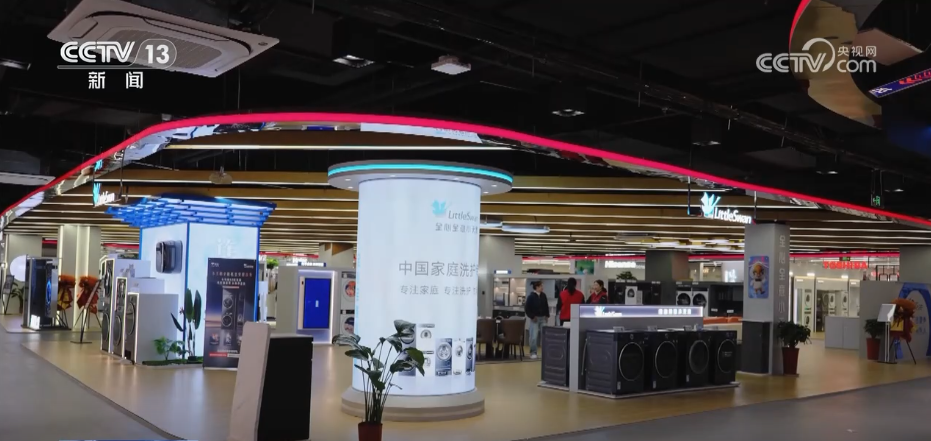
Core Viewpoint - The new round of the "old-for-new" policy for home appliances and digital products has been implemented since January 1, stimulating consumer purchasing enthusiasm across various sectors [1] Group 1: Policy Implementation and Consumer Response - The "old-for-new" policy has led to increased sales activity in cities like Lianyungang, where consumers are taking advantage of government subsidies to purchase new appliances [1][3] - Retailers in Lianyungang have optimized their services to provide a one-stop solution for consumers, allowing them to settle payments after subsidies and facilitating the process of old product disposal and new product installation [3] Group 2: Subsidy Details and Product Coverage - In Sichuan, a unified "subsidy deduction" model is being used, offering a 15% subsidy on the sale price for products like smartphones and tablets, which has attracted consumer interest [5] - The subsidy program has expanded to include smart glasses, indicating a broader support range for digital and smart products [7] Group 3: Market Activation Strategies - In Lanzhou, a dual approach of government subsidies and corporate discounts is being employed to activate key consumer markets, including automobiles and home appliances [7] - The subsidy for home appliances in Lanzhou covers six categories of energy-efficient products, with a standard subsidy of 15% on the final sale price [9] Group 4: Automotive Sector Insights - The automotive "old-for-new" policy includes two categories: scrapping old vehicles for new energy vehicles with a maximum subsidy of 20,000 yuan, and replacing old vehicles with a maximum subsidy of 15,000 yuan [11] - Consumers are leveraging the "old-for-new" policy in automotive purchases, benefiting from multiple layers of subsidies to acquire new vehicles at reduced prices [11] Group 5: Policy Execution and Consumer Access - Lanzhou has established a joint review mechanism among business departments to ensure effective policy implementation, with an online platform facilitating the entire process of subsidy application, review, and payment [13]
2025年广东上市公司分红规模再创历史新高
Zhong Zheng Wang· 2026-01-08 05:57
Core Insights - The Guangdong Securities Regulatory Bureau has implemented measures to enhance cash dividend supervision and improve investor returns since 2025, leading to a significant increase in both the number of companies and the total amount of dividends declared [1][4] Group 1: Dividend Performance - In 2025, 403 companies in the Guangdong region declared dividends totaling 129.5 billion yuan, marking a historical high in both the number of companies and the total dividend amount [2] - Among these, 219 companies have paid dividends for three consecutive years, and 162 companies for five consecutive years, indicating a substantial improvement in the sustainability and stability of cash dividends [2] - Leading companies such as Midea Group and Gree Electric Appliances announced a combined dividend of over 47 billion yuan, accounting for 36.5% of the total dividends declared in the region [2] Group 2: Mid-Year Dividend Trends - The mid-year dividend performance in 2025 was also impressive, with 110 companies declaring mid-year dividends totaling 29.2 billion yuan, representing increases of 57% and 78% compared to 2024 [3] - Several leading companies, including Gree Electric Appliances and Midea Group, paid over 1 billion yuan in mid-year dividends, while 20 companies had a dividend payout ratio exceeding 50% in the first three quarters of 2025 [3] - A positive atmosphere for regular dividends is forming, with many companies implementing mid-year dividends for the first time [3] Group 3: Regulatory Support and Investor Focus - The new "National Nine Articles" emphasizes the need for stable, sustainable, and predictable cash dividends, with regulatory guidelines encouraging companies to detail profit distribution arrangements in their articles of association [4] - The Guangdong Securities Regulatory Bureau has conducted over 10 training sessions to interpret policy requirements and promote an investor-centric business philosophy among listed companies [4] - The bureau plans to continue monitoring the execution of dividend policies and guide companies to enhance shareholder return mechanisms through cash dividends and share buybacks [4]
港股午评:三大指数均跌超1.1%,科技股、金融股齐跌,军工、半导体拉升
Ge Long Hui· 2026-01-08 04:18
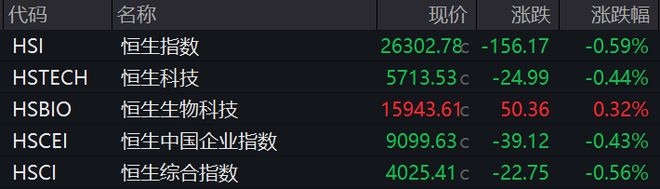
Market Performance - The Hong Kong stock market indices continued to decline, with the Hang Seng Index down by 1.22%, the Hang Seng China Enterprises Index down by 1.14%, and the Hang Seng Tech Index down by 1.13% [1] - Major technology and financial stocks experienced significant pressure, contributing to the overall market decline [1] Sector Performance - Apple-related stocks, gaming stocks, automotive stocks, and home appliance stocks all fell, with notable declines in companies such as Melco International Development, Sands China, Wynn Macau, and Amax Holdings, which reached new low points [1] - In contrast, defense stocks saw a rise due to a substantial increase in the U.S. military budget [1] Semiconductor Sector - Semiconductor stocks generally rose as reports indicated that China requested technology companies to suspend orders for H200 chips [1]
多家企业回应空调涨价
Jing Ji Wang· 2026-01-08 02:44
Group 1 - The air conditioning industry is experiencing price adjustments, with major companies like Midea and Meibo announcing price increases of 5% for their products, while Gree Electric has committed to not raising prices [1] - The rise in raw material costs, particularly for copper and aluminum, is a significant factor driving the price adjustments in the air conditioning sector, with expectations of further increases by 2026 [1][2] - Industry experts suggest that the air conditioning market is shifting from a strategy of "price for volume" to "intelligence for profit," emphasizing the need for companies to leverage artificial intelligence and product innovation to enhance profitability [2][3] Group 2 - Companies are focusing on high-end product structures and innovative technologies to cope with rising costs, which is expected to accelerate industry consolidation [2] - The continuation of government subsidies for replacing old appliances is seen as a favorable opportunity for companies to promote high-efficiency and intelligent products, aiding the transition to a more profitable business model [3] - The recent price hikes reflect a deeper evolution in the competitive logic of the home appliance industry, driven by cost pressures, policy opportunities, and market reshuffling [3]

联讯仪器、瑞尔竞达等4家公司IPO即将上会
Zheng Quan Shi Bao Wang· 2026-01-08 02:15
Group 1 - Four companies are set to present their IPO applications, including Lianxun Instruments for the Sci-Tech Innovation Board, Gaote Electronics for the Growth Enterprise Market, and Ruier Jieda and Bangze Chuangke for the Beijing Stock Exchange [1] - Lianxun Instruments aims to raise the highest amount of 1.711 billion yuan, with funds allocated for the development and industrialization of next-generation optical communication testing equipment, as well as various other projects [1] - Gaote Electronics and Bangze Chuangke plan to raise 850 million yuan and 400 million yuan, respectively, with Gaote focusing on new energy battery management systems [3][5] Group 2 - Lianxun Instruments specializes in the research, manufacturing, sales, and service of electronic measurement instruments and semiconductor testing equipment [4] - Bangze Chuangke is engaged in the research, production, and sales of office and household electrical products, while Ruier Jieda focuses on the development and production of energy-efficient and environmentally friendly materials for iron-making blast furnaces [5] - The companies are distributed across various provinces, with one each from Anhui, Guangdong, Jiangsu, and Zhejiang [1]
智谱涨超3%,天数智芯涨超31%,精锋医疗涨超36%
Di Yi Cai Jing Zi Xun· 2026-01-08 01:49
三只新股首日上市均高开,天数智芯高开31.54%,精锋医疗-B高开36.45%,智谱高开3.27%。 | < W | 天数智芯(9903) | | | | | --- | --- | --- | --- | --- | | | 集合竞价 01-08 09:20:08 | | | | | 190.200 | 额 4.14亿 股本 2.54亿 市盈 -40.2 | | 万得 | | | +45.600 +31.54% | 换 0.90% 市值1483亿 市净 17.53 | | 型口 | | | 分时 五日 | 日K | 周K 月K | 电子 | | | 置加 | | 均价:187.905 盘口 | 成交 | | | 200.000 | | 38.31% - | | 0.00(0) | | | | 卖9 191.800 | | 0.00(0) | | | | 卖8 191.700 | | 0.00(0) | | | | 卖7 191.600 | | 0.00(0) | | | | 卖6 191.500 | | 0.00(0) | | | | 卖5 191.400 | | 0.00(0) | | 144.600 | ...
2025年,我观察到企业组织的四个变化
3 6 Ke· 2026-01-08 01:08
Core Insights - In 2025, Chinese companies are undergoing a collective adjustment in organizational logic, moving away from "performative diligence" towards efficiency and human-centered management [1][11] Group 1: Efficiency Revolution - Leading companies are initiating an efficiency revolution, focusing on eliminating the illusion of productivity that busywork creates [2][6] - Midea serves as a benchmark for this movement, implementing measures to simplify work processes, resulting in a reduction of average working hours from 10.1 to 7.6 hours and a 20% increase in productivity [2][6] - DJI and Miniso are also adopting similar practices, such as enforcing strict work hours and minimizing unnecessary meetings to enhance effective work periods [3][4][5] Group 2: Organizational Restructuring in Real Estate - The real estate sector is experiencing a shift towards "organizational precision," with companies like Poly and China Jinmao restructuring to reduce management layers and bring decision-making closer to the frontline [7] - This restructuring involves merging or eliminating regional companies and compressing middle management, allowing younger and more qualified managers to take on direct responsibilities [7] Group 3: AI Talent Acquisition and Organizational Reconfiguration - In contrast to the real estate sector's downsizing, tech companies are focusing on talent acquisition and organizational restructuring to enhance their AI capabilities [8][9] - Tencent's restructuring of its technology engineering division exemplifies this shift, moving from a business-driven to a technology-driven approach, and planning to hire 28,000 new positions over three years, with a significant focus on AI roles [8][9] Group 4: Emphasis on Human-Centric Management - Amidst the push for efficiency, some companies are recognizing the importance of human-centric management, as seen in delivery platforms providing social security for riders [10] - The case of Pang Donglai highlights the growing trend of prioritizing employee well-being and creating a collaborative environment, which is becoming a management philosophy for many private enterprises [10] Group 5: Collective Organizational Adjustment - The year 2025 marks a significant change in organizational logic, with companies adjusting their value measurement standards, decision-making proximity, technology collaboration, and individual relationships [11]
