外卖

Search documents
内地大厂,抢滩香港
3 6 Ke· 2025-08-06 09:37
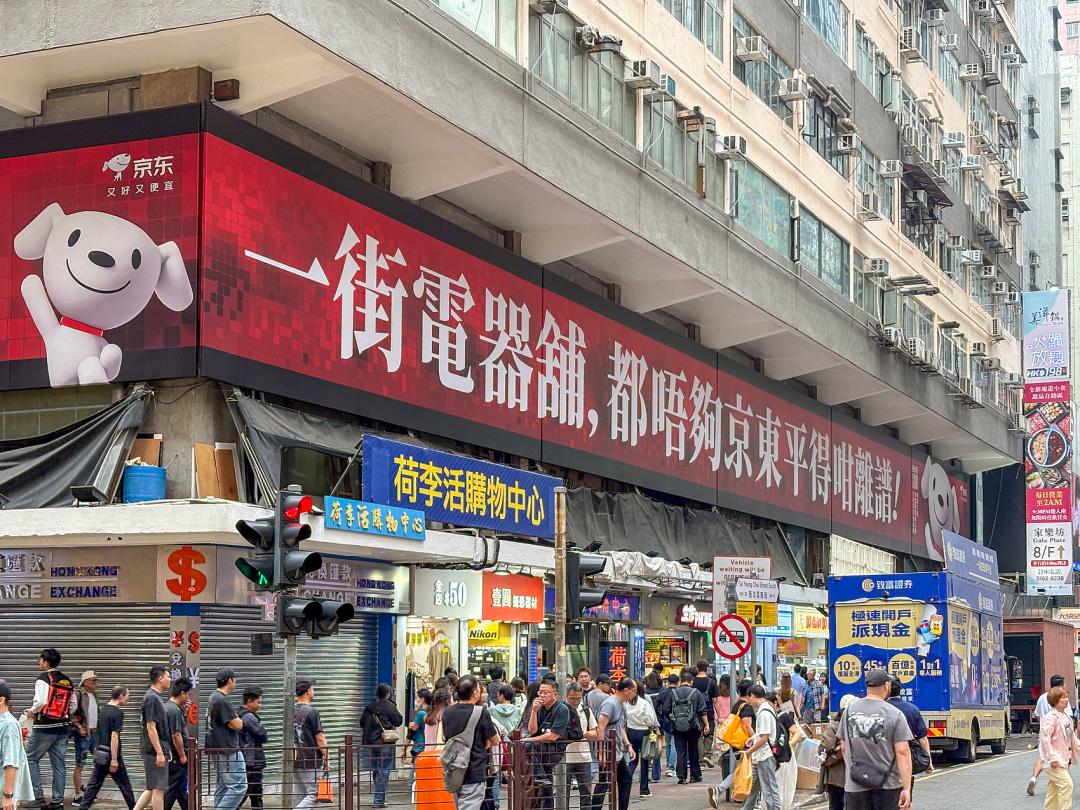
Core Insights - Hong Kong is becoming a battleground for major Chinese internet companies, which are aggressively expanding their presence in the region to capture local consumer markets and establish a foothold for international expansion [1][2][6] Group 1: Market Entry Strategies - JD.com plans to acquire Hong Kong's well-known discount supermarket chain, Jia Bao, for approximately HKD 4 billion, indicating its commitment to the local retail market [1][2] - Major internet companies, including Alibaba, Tencent, Meituan, and ByteDance, have established a presence in Hong Kong, with over 1,300 companies setting up operations in the region from January 2023 to mid-2025 [2][3] - The strategy of acquiring local businesses to leverage their brand and resources for rapid localization is a common approach for companies entering new markets [2][3] Group 2: Competitive Landscape - Meituan's Keeta launched in Hong Kong in May 2023, quickly gaining market share and competing with established players like Foodpanda and Deliveroo [3][15] - The competitive dynamics in Hong Kong's e-commerce and food delivery markets are shifting, with local companies feeling threatened by the aggressive expansion of mainland Chinese firms [5][19] - Keeta's entry has led to the exit of Deliveroo from the Hong Kong market, showcasing the impact of aggressive pricing and service strategies [15][18] Group 3: Financial Investments and Subsidies - Meituan's Keeta initiated its market entry with significant subsidies, including a HKD 1 billion promotional budget to attract users [7][8] - JD.com and Alibaba have also announced substantial investments in Hong Kong, with JD committing HKD 1.5 billion for logistics and service enhancements [7][8] - The scale of financial investment in Hong Kong, while appearing smaller than in mainland China, is proportionally significant given the size of the local market [8][20] Group 4: Consumer Behavior and Market Challenges - Hong Kong's online retail sales account for only 9.3% of total retail sales, indicating a slower adoption of e-commerce compared to mainland China [19][20] - The high cost of labor and entrenched consumer habits pose challenges for mainland companies trying to penetrate the Hong Kong market [19][20] - Despite the challenges, the potential for growth in Hong Kong is seen as a stepping stone for further expansion into larger international markets [20][21]




海通国际:电商补贴混战 平台“即时零售”增长赛道展开战略卡位
智通财经网· 2025-08-06 09:11
智通财经APP获悉,海通国际发布研报称,近期,外卖及即时零售市场的激烈竞争,其核心是各大平台 围绕"即时零售"这一关键增长赛道展开的战略卡位。各方投入巨额补贴,其根本目的并不仅限于争夺外 卖订单,而是出于更深远的战略考量:抢占新流量入口,提升用户粘性与平台渗透率。而此次竞争的更 深层逻辑,在于将即时购物延伸为覆盖本地生活全场景的服务平台。预计到2025年末,美团/淘宝闪购 &饿了么/京东外卖的市场份额将呈现6∶3∶1的分布格局。 外卖单量&市占率展望 美团保持最大份额,而淘宝闪购&饿了么日订单量增幅最大。在补贴大战高峰之际,美团外卖日订单量 由突破1.5万亿,市场份额~60%;淘宝闪购&;饿了么日单量突破9,000万单,市场份额~30%;京东外 卖日单量突破2,500万单,市场份额~10%在三家平台补贴与竞争升级带动下,整个外卖+即时零售市场 日单量已由5月约1亿单飙升至当前的约2.5亿单,标志着"场景黏性"与"生态协同"将成为下半场竞争的 真正核心。 外卖及即时零售市场规模将继续快速增长。根据艾瑞咨询统计,截至2024年底,中国餐饮外卖市场规模 已由2015年的1,250亿元跃升至约1.5万亿元,年复合增长 ...
吃到国内红利的瑞幸,为何要死磕美国市场?
3 6 Ke· 2025-08-06 07:50
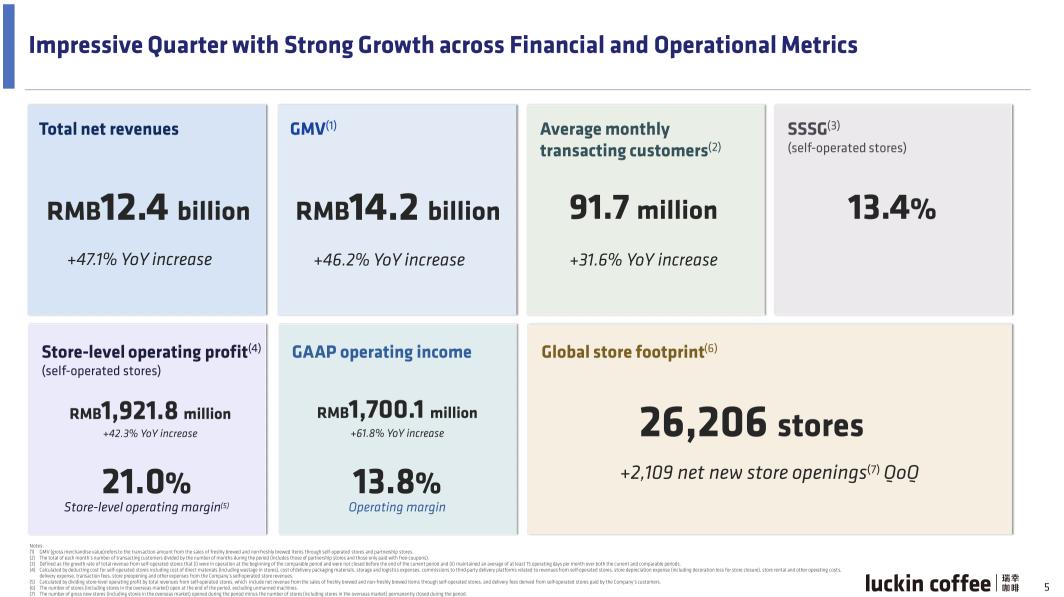
Core Viewpoint - Luckin Coffee has achieved its best-ever quarterly performance in Q2, driven by the external momentum from the food delivery battle and its own quick response to industry opportunities. However, the sustainability of this growth remains uncertain as the competitive landscape shifts [1][2][15]. Financial Performance - In Q2, Luckin Coffee reported total revenues of RMB 12.4 billion, marking a 47.1% year-over-year increase, which is the highest growth rate since 2024 [3][4]. - The company's GAAP operating income reached RMB 1.7 billion, a 61.8% increase year-over-year, with an operating margin of 13.8% [5]. - Net profit for Q2 was RMB 1.251 billion, up 43.6% year-over-year, with a net profit margin of 10.1% [5]. Operational Metrics - The average monthly transacting customers reached 91.7 million, a 31.6% increase year-over-year [3][11]. - Self-operated store revenue was RMB 9.136 billion, a 45.6% increase year-over-year, with a store-level operating profit of RMB 1.922 billion, up 42.3% [5][6]. - The number of self-operated stores increased by 2,109 in Q2, bringing the total to 26,206 stores globally [6][17]. Market Dynamics - The food delivery battle significantly benefited Luckin Coffee, with delivery orders accounting for over 30% of total orders in Q2, up from 17% previously [9][11]. - Delivery fees increased by 175% year-over-year to RMB 1.7 billion, reflecting the surge in order volume [11][12]. - The CEO acknowledged that the external environment created by delivery platform subsidies has positively impacted user engagement and growth metrics [12][13]. Competitive Landscape - Despite the strong performance, the external momentum from the food delivery battle is expected to wane, as regulatory scrutiny has increased and competition among delivery platforms has intensified [19][21]. - Luckin Coffee's rapid expansion strategy, including opening over 2,000 new stores in Q2, is seen as a gamble on sustaining user engagement and revenue growth [17][18]. - The company faces increasing competition from both domestic players and international giants like Starbucks, particularly as it expands into the U.S. market [22][24].

外卖行业告别“价格战”转向“价值战”
Huan Qiu Wang Zi Xun· 2025-08-06 06:14
Core Insights - The takeaway from the articles is that the food delivery industry is transitioning from a "price war" to a "merchant value war," focusing on supporting small and medium-sized restaurants to enhance their growth and service quality [1][3]. Group 1: Industry Transition - The food delivery industry is moving away from "burning money" and towards high-quality development, as evidenced by a new support plan for small and medium-sized merchants [3]. - Major food delivery platforms have collectively committed to resisting malicious subsidies and unfair competition, signaling a shift in competitive logic [3]. - The new support plan aims to help restaurants avoid harmful competition and focus on improving product and service quality [1][3]. Group 2: Support Initiatives - The latest initiative includes a financial support plan that will provide up to 50,000 yuan per store, with an expected coverage of over 100,000 restaurants by the end of the year [1]. - Since the launch of the initial support plan in December, over 300,000 restaurants have benefited, with nearly half reporting significant increases in order volume [1]. Group 3: Competitive Landscape - Platforms are now focusing on building differentiated competitive advantages through merchant ecosystems and user experiences [4]. - One platform has reported a doubling of restaurant orders in county areas, indicating successful market penetration and support for small merchants [4]. - Another platform is investing 10 billion yuan to recruit partners for signature dishes, aiming to enhance service quality and attract consumers [5]. Group 4: Future Outlook - Analysts suggest that the competition in the food delivery industry will increasingly revolve around multi-dimensional value comparisons, including merchant support, digital empowerment, supply chain integration, and service quality [5]. - The industry is expected to evolve towards a healthier and more sustainable direction, with platforms needing to innovate in service and supply differentiation [5].

高盛预警:电商外卖拖累,中国互联网巨头利润或现2022年二季度来首降
3 6 Ke· 2025-08-06 06:10
Core Insights - The focus of the upcoming Q2 earnings reports for Chinese internet giants will be on AI and food delivery services, with expectations of a mixed performance across companies [1][2] - Goldman Sachs predicts a 10% year-over-year decline in overall profits for the sector, marking the first drop since Q2 2022, primarily due to e-commerce and local service platform pressures [1][3] AI Cloud Business Growth - The AI cloud business is expected to see significant acceleration in growth, with Alibaba Cloud's revenue growth forecasted to increase from 18% in Q1 to 23% in Q2, although still below Google Cloud's 32% and Microsoft Azure's 39% [3] - This growth is driven by a surge in AI inference demand, with ByteDance processing 15 trillion tokens daily in June, compared to Alibaba's 4-5 trillion [3] - Major tech firms showcased advancements in AI at the World Artificial Intelligence Conference, which are anticipated to translate into revenue growth in the latter half of the year [3] Impact of Food Delivery Competition - Intense competition in the food delivery market is significantly impacting platform profits, with Alibaba's EBITA expected to decline by 16%, and Meituan and JD's EBIT forecasted to drop by 58% and 70%, respectively [1][5] - Alibaba's food delivery business is projected to incur losses of 11 billion yuan in Q2, increasing to 19 billion yuan in Q3, while JD's food delivery losses are expected to exceed 10 billion yuan [5] - The competition extends beyond traditional food delivery to instant shopping, with Alibaba and Meituan reporting peak order volumes of 15 million and 20 million, respectively [5] Performance Disparities Among Companies - Despite overall profit pressures, segments like gaming and ride-hailing are expected to show resilience, with Tencent projected to achieve an 11% revenue growth and a 15% adjusted EBIT increase [6][7] - Alibaba faces greater challenges, with a forecasted revenue growth of only 3% in Q1 and a 16% decline in adjusted EBIT, although customer management revenue is expected to grow by 11% [6] - Meituan anticipates a 16% revenue growth but a 58% drop in adjusted EBIT, while JD expects a 16% revenue increase but a 70% decline in adjusted EBIT [6] Stable Growth in Ride-Hailing - Didi is expected to maintain growth in a stable market environment, with a projected 8% revenue increase and a 32% rise in adjusted EBIT, reflecting operational leverage in the ride-hailing business [7]

《小小的优惠券,大大的经济账?》
Sou Hu Cai Jing· 2025-08-06 04:52
Core Viewpoint - Since 2025, platforms like Meituan, Taobao Flash Sale, and JD have initiated a "subsidy war," leveraging a 1 yuan coupon to stimulate nearly 7 yuan in consumption, showcasing a significant market impact [4] Group 1: Subsidy Impact - Research indicates that every 1 yuan flash sale coupon can drive 1.65 yuan in takeaway consumption and generate an additional 6.76 yuan in cross-scenario spending, significantly outperforming international coupon experiences [4] - This "small subsidy" effect has not only avoided cannibalizing offline dining but has also led to increased revenue for small and medium-sized merchants, with the smallest businesses benefiting the most [4] Group 2: Market Dynamics - The takeaway flash sale has even inspired innovative consumption scenarios such as "ordering air conditioners and buying furniture," further integrating online and offline experiences, contributing to a mainstream digital consumption ecosystem [4] - Despite intense competition among platforms and regulatory interventions emphasizing rational competition, the overall trend remains positive [4] Group 3: Economic Contribution - In the digital economy era, small discount coupons are stimulating significant market vitality, injecting strong momentum into China's consumption recovery [4]
美团、京东开食堂 :开辟价格战之外新战场
2 1 Shi Ji Jing Ji Bao Dao· 2025-08-06 03:48
Core Insights - Major companies like Meituan and JD.com are entering the food service industry, launching their own dining brands to enhance food safety and consumer choice in the takeaway market [1][9] - The competition between these platforms is expected to reshape the restaurant industry, particularly affecting small businesses [2][9] Company Initiatives - Meituan launched the "Raccoon Canteen" brand, aiming to build 1,200 locations across the country within three years, focusing on traceability and food safety [1][8] - JD.com introduced the "Seven Fresh Kitchen," planning to invest over 10 billion yuan to establish more than 10,000 locations nationwide within three years [1][6] Business Models - The "Seven Fresh Kitchen" operates on a self-operated model, aiming to capture market share from "ghost kitchens," while Meituan emphasizes not competing directly with merchants [3][6] - Both companies are exploring different operational strategies, with JD.com focusing on a partnership model with merchants, while Meituan aims to support merchants through infrastructure and safety measures [3][4] Food Safety Measures - Meituan's Raccoon Canteen implements strict monitoring with 24-hour surveillance cameras to ensure compliance with food safety standards [4][8] - JD.com guarantees that all ingredients are sourced from reputable suppliers, enhancing consumer trust in their offerings [6][9] Market Impact - The entry of these major players is expected to create a more competitive environment, potentially benefiting consumers through improved safety and service standards [9] - The ambitious expansion plans of both companies could lead to significant changes in the restaurant landscape, with the potential for new operational standards and consumer expectations [7][9]
外卖平台内卷式竞争造成的扭曲亟需纠正
Zhong Guo Jing Ji Wang· 2025-08-06 03:32
第三,消费而不浪费这句话,在这种内卷式竞争情境下已成为空谈。因为补贴到价格极低、就差不要钱 的水平,众多消费者特别是有情绪化特征的年轻人动辄购买一冰箱的奶茶咖啡等,很明显是要造成浪费 的。有人可能会说,毕竟这些东西是自己挣钱自己买,原则上只要自己愿意就行,但制造这些商品所使 用的原材料和相关资源、扔掉这些商品所产生的垃圾、回收这些塑料制品所发生的公共治理成本,其实 都是消费浪费所带来的社会综合成本,而不仅仅是花掉的那几块钱。 第四,长时间、大规模、高力度的补贴,对市场秩序势必产生扭曲畸形和对市场主体的伤害。尤其是市 场上的供给者,也就是商户,会身不由己地落入当下或中长期的困窘境地。首先,从中国连锁经营协会 数据看,连锁餐饮品牌门店商数在全国餐饮门店总量中占比不足三成,平台补贴的主要对象也基本是针 对连锁餐饮品牌的,其他2/3以上比重的大量小、散、单店事实上并未或极少获得平台补贴。这其实使 多数相关商户迅速落入市场份额收缩困难处境的负面影响。其次,这种变化对市场交易原本所依托的相 关行业生态又将产生一个像中长期外延传导的负面影响:因为从消费者行为考察,消费者对价格高低的 感受是具有较长延续性的,一旦习惯餐饮业的 ...
高盛:中国互联网巨头季报看点,AI云的增长有多快?外卖的拖累有多大?
美股IPO· 2025-08-06 02:25
Core Viewpoint - Goldman Sachs predicts a significant acceleration in AI cloud business growth in Q2, driven by surging demand for AI inference and rapid development of AI applications, while competition in the food delivery sector is expected to lead to a substantial decline in platform profits [1][3][4]. Group 1: AI Cloud Business Growth - The AI cloud business of Chinese internet giants is expected to see a notable acceleration in growth during Q2, with Alibaba Cloud's revenue growth forecasted to increase from 18% in Q1 to 23% in Q2 [5][6]. - Despite being lower than Google Cloud's 32% and Microsoft Azure's 39% growth rates, this increase indicates a positive trend driven by the surge in AI inference demand [6]. - In June, ByteDance's daily token processing reached 15 trillion, while Alibaba's was around 4-5 trillion, highlighting the rapid growth in AI inference demand [6][7]. Group 2: Impact of Food Delivery Competition - Intense competition in the food delivery market is significantly impacting the performance of transaction platforms [8]. - As a result, Alibaba's EBITA is expected to decline by 16% year-on-year, while Meituan and JD's EBIT are projected to drop by 58% and 70%, respectively [9]. - Goldman Sachs estimates that Alibaba's food delivery business incurred losses of 11 billion yuan in Q2, which is expected to expand to 19 billion yuan in Q3 [9]. Group 3: Performance Disparities Among Companies - The report anticipates a divergence in performance among major platforms, with gaming and ride-hailing sectors expected to show resilience [11]. - Tencent is projected to report a revenue growth of 11% in Q2, with adjusted EBIT growth of 15%, driven by strong performance in its gaming segment [11][12]. - Meituan is expected to see a revenue increase of 16%, but its adjusted EBIT is forecasted to plummet by 58% due to intensified competition in food delivery [12]. - JD is also expected to grow revenue by 16%, but its adjusted EBIT is anticipated to decline by 70% [12].
外卖大战的“受益者”:高盛预测古茗今年多赚2亿,蜜雪多赚5000万
Hua Er Jie Jian Wen· 2025-08-06 02:08
Group 1 - Goldman Sachs raised the profit forecast for Gu Ming by 9% to 2.2 billion RMB for 2025, benefiting from the extended duration of delivery subsidies [1][10] - The profit forecast for Mi Xue Bing Cheng was increased by 1% to 5.4 billion RMB, translating to an additional 50 million RMB [1][10] - The competition among delivery platforms intensified after JD launched a 10 billion RMB subsidy plan, with total investments by the three major platforms reaching 25 billion RMB in Q2, leading to a 27% year-on-year increase in daily delivery orders [1][10] Group 2 - The new tea beverage sector is the biggest beneficiary of the current subsidy competition, with aggressive subsidy policies introduced in July [1][2] - The rapid expansion of new tea beverage stores has disrupted the industry consolidation trend, with brands like Gu Ming and Xing Yun Ka accelerating store openings [2][3] - Price competition has increased due to platform subsidies and new product launches, with Starbucks reducing non-coffee drink prices by 2-6 RMB [2] Group 3 - Goldman Sachs conducted a scenario analysis indicating that if delivery subsidies are completely withdrawn in 2026, Gu Ming's single-store GMV may decline by 5%, while Mi Xue's may drop by 1% [4][5] - Gu Ming's expansion into coffee and breakfast categories may mitigate some of the impacts from subsidy withdrawal, while Mi Xue is less affected due to its lower reliance on delivery [5][6] - Investor sentiment may be influenced by changes in delivery platform strategies, with Gu Ming's stock performance potentially limited by the end of the lock-up period and seasonal factors [6][7] Group 4 - The long-term outlook suggests that the normalization of subsidies could improve the competitive landscape, benefiting companies with core advantages [7] - Mi Xue's strong pricing power and supply chain capabilities support its long-term growth, while Gu Ming's investment in new product development and brand building will help it explore untapped markets [7] - The subsidy war presents an opportunity for leading new tea beverage brands to redistribute market share despite short-term volatility [7]