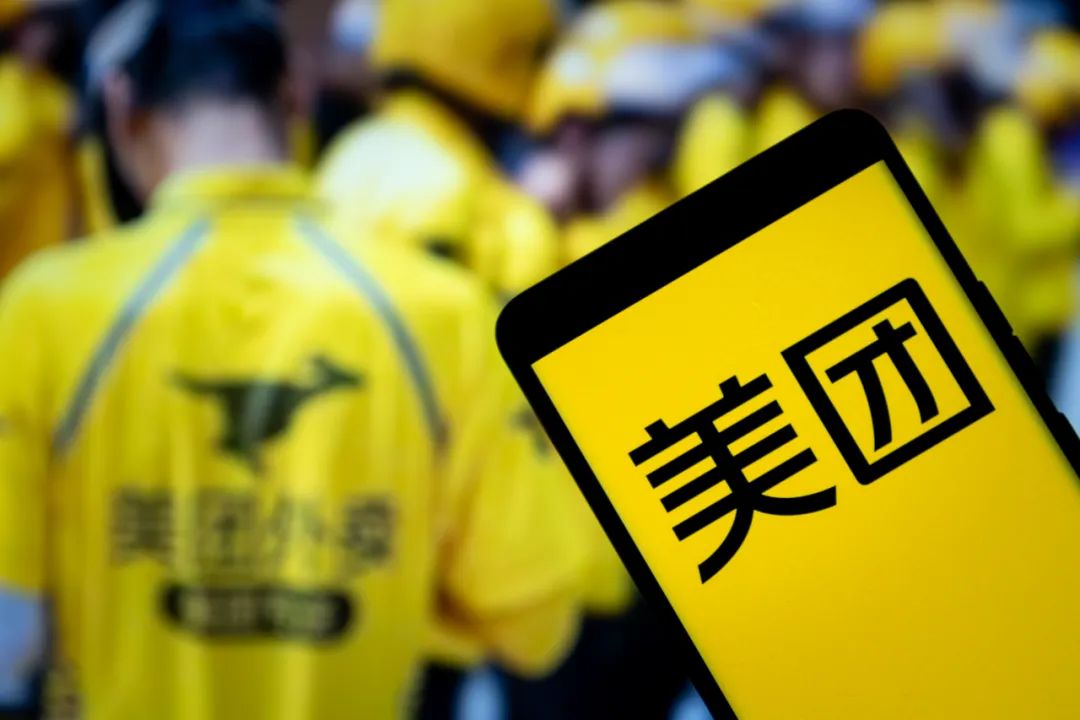
外卖

Search documents
海通国际市场洞察系列:电商补贴混战
Haitong Securities International· 2025-08-06 01:42
Core Insights - The report highlights an escalating competition among Chinese e-commerce platforms in the instant retail and food delivery market, with significant subsidies being deployed to capture user attention and market share. This competition is not solely focused on short-term transaction volume but reflects deeper strategic goals centered around user acquisition and platform stickiness [55] - Alibaba is investing RMB 50 billion over 12 months to enhance its logistics and service integration across platforms like Taobao Flash Sale and Ele.me, aiming to improve user experience and operational efficiency [55] - Meituan, as the market leader, has achieved over 120 million daily orders, while JD.com is focusing on quality and high-frequency categories through its "Double Hundred Plan" to support brand sales and improve merchant services [55] Group 1: Competitive Strategies and Subsidy Analysis - The intense competition in the food delivery and instant retail market is driven by platforms extending their services to cover local life scenarios, with Alibaba integrating various services to enhance user retention and cross-category conversion [6][7] - The national appliance subsidy program has provided a strong boost to platforms, with JD.com benefiting the most due to its dominance in the home appliance category, while Alibaba's impact is more moderate due to its broader category coverage [17][21] - The order volume in the food delivery and instant retail market surged from approximately 100 million in May to 250 million daily orders by July, indicating a significant increase in market activity [55][29] Group 2: Market Share and Future Outlook - The report anticipates that by the end of 2025, the market share distribution among Meituan, Taobao Flash Sale & Ele.me, and JD.com will be approximately 60%:30%:10%, respectively, with future competition focusing on user retention and operational efficiency post-subsidy [35][55] - The total addressable market (TAM) for food delivery and instant retail is projected to reach approximately RMB 4.1 trillion by 2030, driven by increasing consumer acceptance of home delivery services and improvements in technology and supply chain networks [32][35] - The report emphasizes that the competition will hinge on who can maintain their core advantages through precise operations and scene-based product innovation after the subsidy war [35]
中国互联网巨头季报看点:AI云的增长有多快?外卖的拖累有多大?
Hua Er Jie Jian Wen· 2025-08-06 01:20
Core Viewpoint - The upcoming Q2 earnings reports of Chinese internet giants are expected to show a divergent performance, with overall profits projected to decline by 10% year-on-year, marking the first drop since Q2 2022, primarily due to the struggles in e-commerce and local service platforms, while AI cloud services and gaming sectors are anticipated to provide support for some companies [1] Group 1: AI Cloud Business Growth - The AI cloud business of Chinese internet giants is expected to see significant acceleration in growth during Q2, with Alibaba Cloud's revenue growth forecasted to increase from 18% in Q1 to 23%, although still lagging behind Google Cloud's 32% and Microsoft Azure's 39% [2] - This growth is driven by a surge in AI inference demand and rapid development of AI applications, with ByteDance processing 15 trillion tokens daily in June, while Alibaba processes around 4-5 trillion tokens [2][3] Group 2: Impact of Intense Competition in Food Delivery - Intense competition in the food delivery market is a major drag on platform profits, with Alibaba's EBITA expected to decline by 16%, and Meituan and JD's EBIT projected to drop by 58% and 70%, respectively [4] - Alibaba's food delivery business is estimated to incur losses of 11 billion yuan in Q2, which may expand to 19 billion yuan in Q3, while JD's food delivery business is expected to lose over 10 billion yuan in Q2 [4] - The competition extends beyond traditional food delivery to instant shopping, with Alibaba's peak daily order volume reaching 15 million and Meituan's at 20 million, further intensifying market rivalry [4] Group 3: Performance Divergence Among Platforms - Despite overall profit pressures, gaming and ride-hailing sectors are expected to show strong growth, with Tencent projected to achieve an 11% revenue increase and a 15% adjusted EBIT growth in Q2 [5] - JD is expected to report a 16% revenue growth, significantly outperforming the overall retail sector, but its adjusted EBIT is forecasted to decline by 70% [5][6] - Didi is anticipated to maintain growth in a stable market environment, with a projected 8% revenue increase and a 32% adjusted EBIT growth [6]




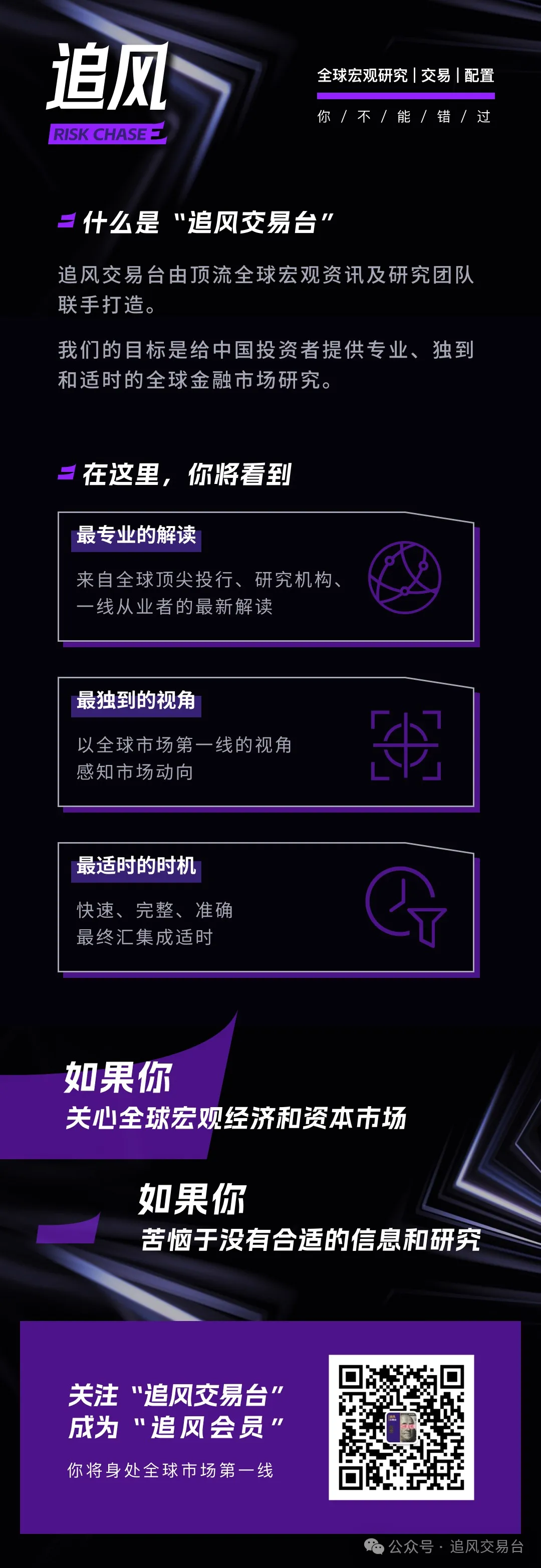
治理“内卷式”竞争!多部门“组合拳”发力!
证券时报· 2025-08-06 00:14
Core Viewpoint - The article discusses the ongoing "involution" competition across various industries in China, emphasizing the need for a unified national market and the government's efforts to regulate and guide this competition to ensure a healthy market environment [2][4][11]. Group 1: Involution Competition - The "involution" competition has escalated from e-commerce and automotive sectors to electronics, food, steel, and cement industries, leading to a detrimental cycle where companies sacrifice profits for market share [2][4]. - The Chinese government, through multiple departments, is actively implementing measures to address this "involution" competition, aiming to break the cycle and promote a healthier market order [2][5][11]. Group 2: Government Measures - The National Development and Reform Commission (NDRC) has introduced guidelines to prevent local governments from offering illegal incentives in areas such as finance, taxes, and resources, focusing on both constraints and guidance [5][6]. - The Ministry of Industry and Information Technology (MIIT) is targeting key industries like automotive and steel to encourage structural adjustments and the elimination of outdated capacities [6][11]. - The State Administration for Market Regulation (SAMR) is conducting targeted actions against unfair competition across a wide range of sectors, including e-commerce and food, to ensure fair market practices [6][9]. Group 3: Price Governance Framework - Recent reforms in the Anti-Unfair Competition Law aim to establish a fair competition review system, prohibiting practices that disrupt market order through below-cost pricing [8][9]. - The NDRC and SAMR are working on revising the pricing law to address predatory pricing and ensure that service pricing is also regulated, enhancing the legal framework for market supervision [9][10]. Group 4: Achievements and Future Directions - Initial results from the government's "combination punches" against "involution" competition show improvements in industries like steel and construction materials, with a gradual recovery in upstream supply chain prices [11]. - The article highlights the need for further reforms in performance evaluation and fiscal systems to eliminate local protectionism and market barriers, which are essential for the successful establishment of a unified national market [11].
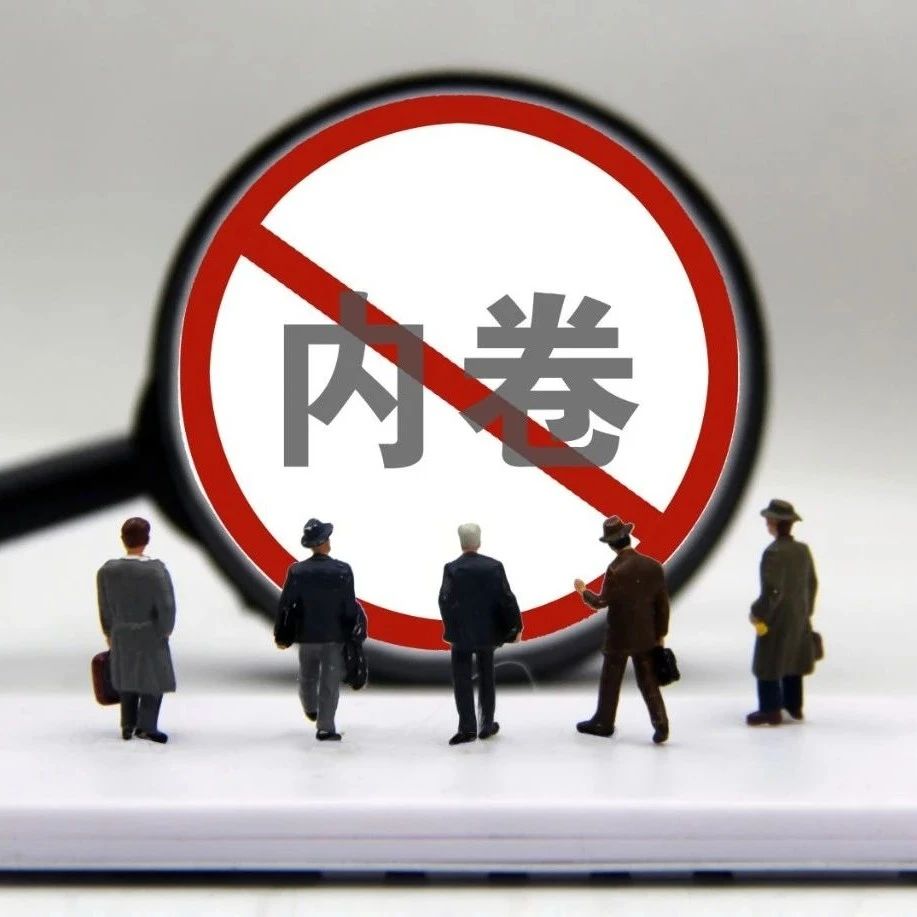
高温津贴如何贴心发放
He Nan Ri Bao· 2025-08-05 23:48
Core Points - The article discusses the challenges in implementing high-temperature allowances for outdoor workers during extreme heat conditions, highlighting disparities in enforcement across different industries [2][6][9] - It emphasizes the importance of protecting workers' rights and health, particularly in sectors like construction and delivery services, where compliance with high-temperature policies is inconsistent [3][4][5][8] Industry Insights - In the sanitation sector, some workers receive high-temperature allowances, with one worker reporting a payment of 150 yuan for June, reflecting a proactive approach by their employer [3][4] - However, in the construction industry, many workers have not received any high-temperature allowances despite working under extreme conditions, indicating a gap in policy enforcement [5][8] - Delivery workers, such as those from platforms like Ele.me, may not clearly perceive the high-temperature allowances due to the way they are integrated into their earnings, which complicates awareness and enforcement [7][9] Policy Implementation - The article outlines that the high-temperature allowance is mandated under national regulations, which require employers to provide compensation when outdoor temperatures exceed certain thresholds [6][9] - It highlights the need for better oversight and enforcement of these policies, as many workers are unaware of their rights or fear repercussions for asserting them [9][11] - The article calls for increased efforts from labor protection agencies to ensure compliance and educate both employers and workers about their rights and responsibilities regarding high-temperature allowances [9][11]
淘宝即将上线大会员体系,打通饿了么、飞猪、盒马
Sou Hu Cai Jing· 2025-08-05 23:40
Group 1 - Taobao is launching a new membership system that integrates resources from Ele.me, Fliggy, and Hema, covering various consumer rights including shopping, food delivery, travel, and transportation [1] - The 88VIP user benefits will be fully upgraded as part of this initiative, marking a significant business move as Alibaba transitions from e-commerce to a broader consumer platform strategy [1] - Ele.me and Fliggy have been incorporated into Alibaba's China e-commerce business group, indicating a strategic shift towards a comprehensive consumer service model [1] Group 2 - Hema has started a promotional campaign related to the 88VIP membership, offering all Taobao 88VIP members a free 90-day Hema X membership from August 4 to September 10, which includes various discounts and free shipping [3] - Prior to this announcement, there were reports of Hema's member stores shutting down, with the last Hema X member store in Shanghai set to close on August 31, indicating a complete withdrawal from the previously considered "second growth curve" of membership stores [5]
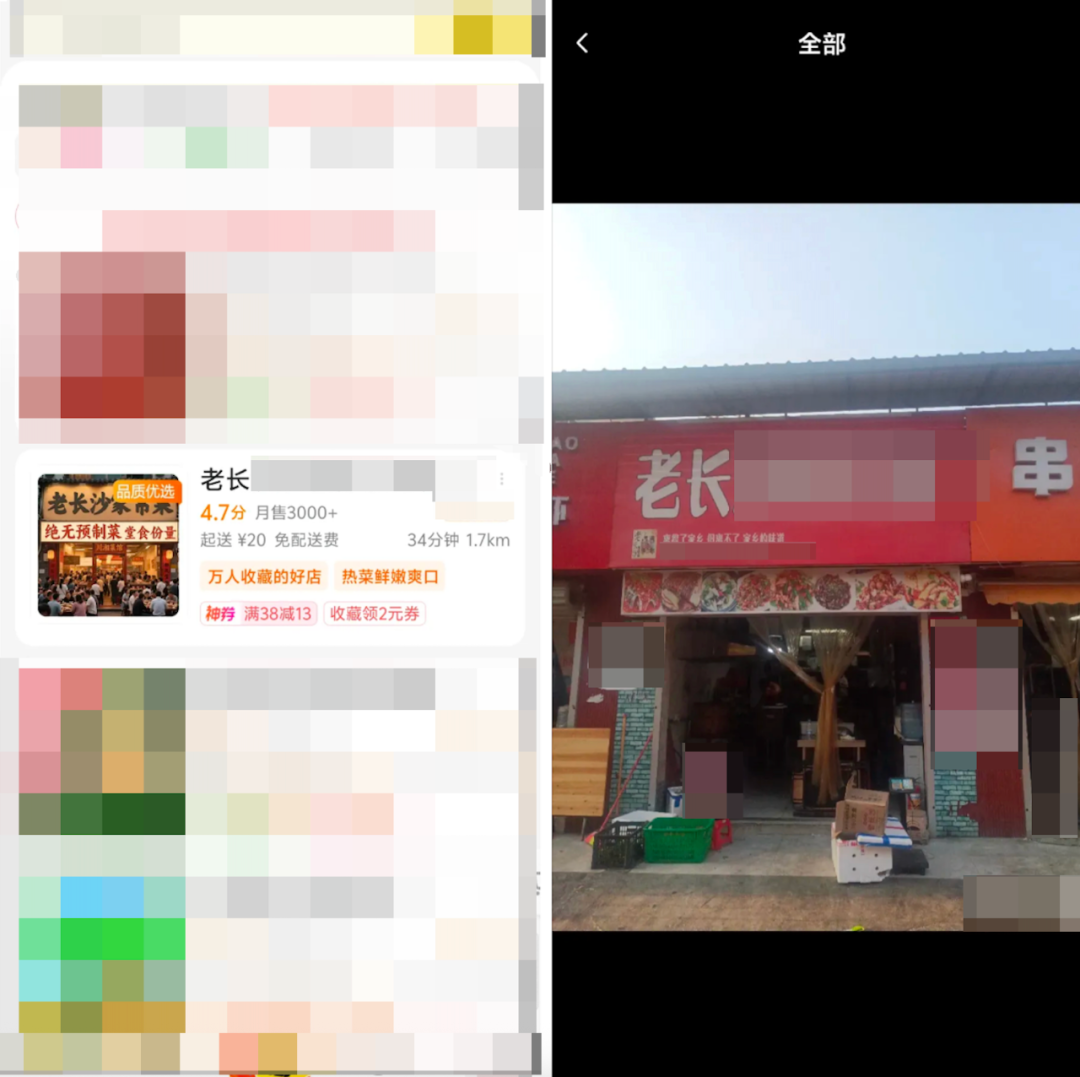
用AI生图的外卖店,我劝你别点
Hu Xiu· 2025-08-05 23:04
Core Viewpoint - The article discusses the increasing use of AI-generated images in food delivery services, highlighting the challenges consumers face in distinguishing between genuine and misleading representations of restaurants and their offerings [4][15][32]. Group 1: AI Image Usage in Food Delivery - Many restaurants are now using AI-generated images for their listings, which can appear appealing but may not accurately represent the actual dining experience [6][17][21]. - The rise of AI images is attributed to cost-saving measures, as hiring professional photographers can be expensive compared to generating images through AI [18][32]. - Consumers find it difficult to discern which images are real and which are AI-generated, leading to a lack of trust in food delivery platforms [15][32][38]. Group 2: Consumer Experience and Trust Issues - The article describes a personal experience where a consumer ordered food expecting freshly made dishes but received pre-packaged meals instead, raising concerns about transparency in food preparation [26][28]. - There is a growing trend of "ghost kitchens" that misrepresent their offerings, leading to poor hygiene and food safety standards [33][35]. - Consumers are increasingly relying on tips and tricks to identify potential red flags in food delivery services, such as the quality of images and packaging [37][38]. Group 3: Industry Response and Regulations - Major food delivery platforms are implementing measures to combat the misuse of AI images, including enhanced verification processes and stricter regulations for restaurant listings [30][43]. - Initiatives like "Million Bright Kitchen" by Meituan and high standards for merchant entry by JD and Ele.me aim to improve transparency and trust in the food delivery industry [42][43]. - Despite these efforts, the effectiveness of regulations is questioned due to the evolving nature of AI technology and the blurred lines between acceptable marketing and misleading practices [32][46].
单店最高5万,现金补贴来了!美团出手,“反内卷”新战役打响
Mei Ri Jing Ji Xin Wen· 2025-08-05 22:21
Core Viewpoint - The takeaway from the news is that the food delivery industry is transitioning from a price war to a focus on merchant value, with platforms like Meituan initiating support programs for small and medium-sized businesses to promote healthy growth and competition [1][2]. Group 1: Industry Changes - Meituan has launched a support plan for small and medium-sized merchants, aiming to distribute financial aid to over 100,000 restaurants by the end of the year, with individual support reaching up to 50,000 yuan [1][2]. - Major food delivery platforms, including Meituan, Ele.me, and JD.com, have collectively announced a commitment to eliminate harmful subsidies and promote competition based on quality and service rather than price [1][4]. - The shift in competition dynamics is characterized by a move from "low-price competition" to "merchant value competition," indicating a significant change in the industry's competitive landscape [1][4]. Group 2: Meituan's Initiatives - Meituan's support plan builds on a previous 1 billion yuan initiative, which has already benefited over 300,000 restaurants, with nearly half reporting significant increases in order volume [2]. - The company plans to enhance its support by providing infrastructure upgrades, digital operation tools, and promoting dine-in consumption through exclusive offers [2]. - Meituan aims to help merchants focus on product and service quality, distancing them from the pressures of low-price competition [2]. Group 3: Competitor Responses - Other platforms are expected to follow Meituan's lead in increasing support for merchants, as the competitive pressure from Alibaba and JD.com intensifies [3]. - JD.com has introduced a "Dish Partner" recruitment plan, committing to invest over 10 billion yuan to support the development of high-quality dishes and restaurants [5]. - Taobao's flash purchase service reported significant growth in orders from small merchants, indicating a positive trend in the market for quality-focused offerings [4][5].
外卖补贴转向 美团发放优惠引导堂食消费
Zheng Quan Shi Bao· 2025-08-05 18:45
Core Viewpoint - The three major food delivery platforms, including Meituan, have committed to promoting healthy competition and supporting small and medium-sized restaurants in response to regulatory pressure and recent market challenges [2][3][5]. Group 1: Company Actions - Meituan has launched a support plan for small and medium-sized merchants, starting from August 5, with a goal to distribute financial aid to over 100,000 restaurants by the end of the year, with individual support reaching up to 50,000 yuan [2]. - The company previously initiated a "1 billion yuan support fund" in December, which has already benefited over 300,000 restaurants, with nearly half reporting increased order volumes and 40% experiencing revenue growth [2]. - Meituan plans to provide additional resources, including infrastructure upgrades for 200,000 small restaurants and access to AI tools to enhance operational efficiency [2][3]. Group 2: Industry Context - The recent price wars among food delivery platforms have primarily harmed small and medium-sized restaurants rather than large enterprises, highlighting the need for support in the sector [3]. - Industry experts note that Meituan's financial aid and operational support can help alleviate the pressures faced by small merchants, facilitating a shift from mere financial assistance to sustainable business practices [3]. - The commitment from Meituan and other platforms to regulate promotional activities aims to establish a fair and orderly market environment, benefiting consumers, merchants, and delivery personnel alike [4][5].
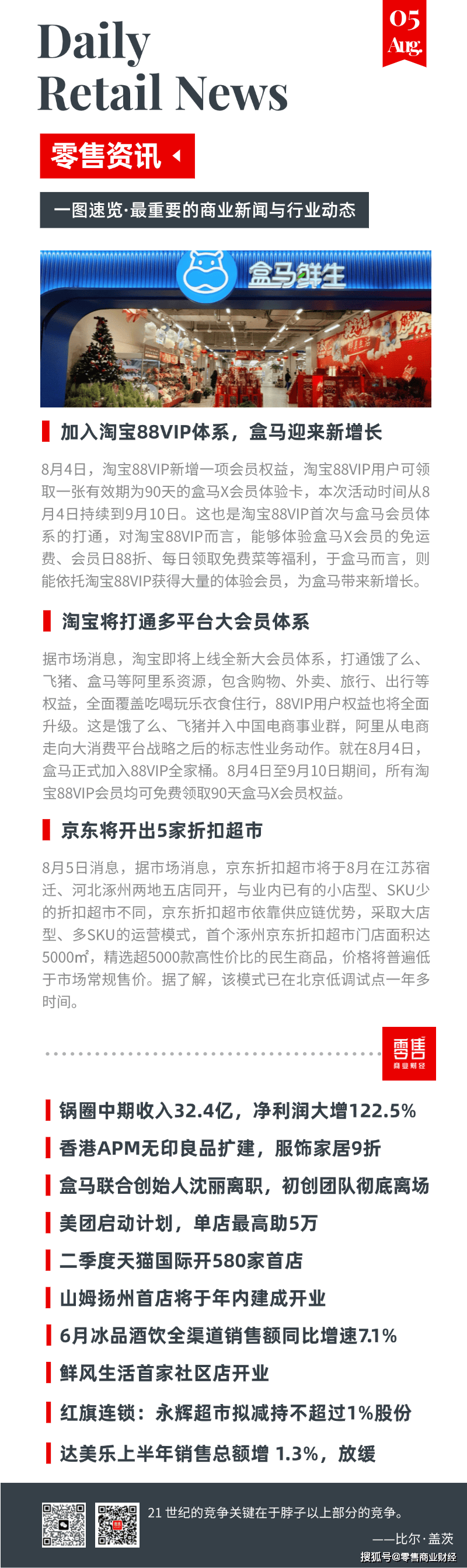
盒马加入淘宝88VIP体系;京东将开出5家折扣超市
Sou Hu Cai Jing· 2025-08-05 18:24
Group 1 - Taobao 88VIP has integrated with Hema, allowing members to enjoy benefits such as free shipping and discounts, which is expected to drive new growth for Hema [6] - Taobao is launching a new membership system that integrates resources from Ele.me, Fliggy, and Hema, enhancing user benefits and marking a strategic shift towards a comprehensive consumption platform [8] - Hema's co-founder, Shen Li, has left the company, indicating a shift in leadership as the company focuses on profitability and core business areas [11] Group 2 - JD.com plans to open five discount supermarkets in Jiangsu and Hebei, utilizing a large store format and a wide range of SKUs to offer competitive pricing [8] - Guoquan reported a revenue of 3.2397 billion yuan, a year-on-year increase of 21.6%, with net profit rising by 122.5% to 190.2 million yuan [9] - Meituan has initiated a support plan for small and medium-sized merchants, providing up to 50,000 yuan in assistance per store, aiming to cover over 100,000 additional restaurants by year-end [12] Group 3 - Tmall International saw 580 overseas brands open their first stores in China in Q2, a 45% year-on-year increase, with the majority coming from the U.S., Japan, and South Korea [13] - Sam's Club plans to open its first store in Yangzhou by the end of the year, with construction progressing well [14] - Domino's Pizza reported a 1.3% increase in sales for the first half of the year, with challenges from rising raw material costs impacting profit margins [20]
单店最高5万元!现金补贴来了,美团出手!“反内卷”新战役打响
Mei Ri Jing Ji Xin Wen· 2025-08-05 16:58
Core Points - The takeaway from the news is that the food delivery industry is transitioning from a price war to a focus on merchant value and quality service, as evidenced by Meituan's new support plan for small and medium-sized restaurants [1][3][4]. Group 1: Industry Changes - Meituan has launched a support plan for small and medium-sized merchants, aiming to provide financial assistance to over 100,000 restaurants by the end of the year, with individual support reaching up to 50,000 yuan [1][4]. - The recent statements from major platforms like Meituan, Ele.me, and JD.com indicate a collective move to resist harmful subsidies and promote healthy competition based on quality and service rather than price [3][6]. - The shift in competition logic signifies a critical transition from "traffic price wars" to "merchant value wars," highlighting the importance of enhancing the merchant ecosystem and user experience [3][4]. Group 2: Meituan's Initiatives - Meituan's additional investment in the support plan follows a previous 1 billion yuan initiative, which has already benefited over 300,000 merchants, with nearly half reporting significant increases in order volume [4]. - The company plans to leverage its capabilities in restaurant infrastructure and digital operations to provide further support, including helping 200,000 small shops upgrade their infrastructure and offering free AI tools to improve operational efficiency [4][9]. - Meituan's strategy aims to help merchants focus on product and service quality, moving away from the pressures of low-price competition [4][9]. Group 3: Competitive Landscape - Analysts suggest that Meituan's initiatives may prompt other platforms to increase their support for merchants, indicating rising competitive pressure from Alibaba and JD.com [5]. - JD.com has also announced a 1 billion yuan investment to recruit partners for signature dishes, aiming to enhance its quality-focused restaurant offerings [8]. - The overall industry trend is towards improving food quality and safety management, with platforms differentiating themselves through service and supply [9].