
家电

Search documents
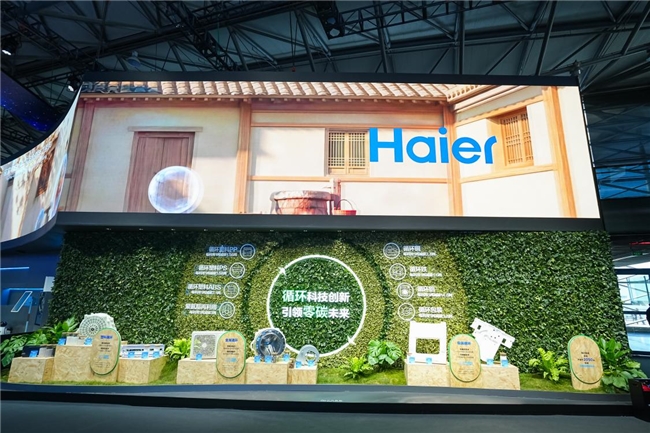
家电回收第一规模!海尔智家AWE展多品类循环生态
Sou Hu Wang· 2026-03-13 01:46
Core Insights - The 2026 China Household Appliances and Consumer Electronics Expo (AWE2026) opened in Shanghai, showcasing Haier Smart Home's AI Eye 2.0, which aims to enhance home management through AI technology [1] - Haier Smart Home has demonstrated its latest achievements in the recycling of old household appliances, leveraging its leading position in appliance recovery to innovate in circular material technology and digital platforms [1] Group 1: Recycling Achievements - Since 2022, Haier Smart Home has recovered nearly 30 million old appliances through a comprehensive channel, leading the industry in recovery volume [3] - The company has developed a "Five Networks Integration" model, combining marketing, channel, service, logistics, and recycling networks to create a specialized recycling system for old appliances, achieving centralized, standardized, and scaled recovery [3] - The Haijing Green Recycling platform, the first of its kind in the industry, extends beyond traditional large appliances to include small appliances, 3C electronic products, drones, and even old clothing, facilitating the recovery of more idle resources [3] Group 2: Recycling Process and Environmental Impact - Haier Smart Home has established a closed-loop system for the entire process of recycling, disassembly, regeneration, and reuse, ensuring a comprehensive approach to recycling [3] - The company has achieved a plastic recycling purity of 99.9% through innovative processes, successfully entering overseas markets in Europe and Japan, and expanding into high-value applications in automotive, daily chemicals, and office automation sectors [3] - The company is building a traceable, quantifiable zero-carbon circular digital platform, demonstrating that 10,000 discarded refrigerators can yield approximately 406 tons of metal, reducing carbon emissions by 744 tons, and that 10,000 old washing machines can yield about 93 tons of plastic, reducing carbon emissions by 270 tons [5] Group 3: Commitment to Green Development - Haier Smart Home is committed to promoting green practices in appliance recycling and processing, continuously deepening its circular economy layout [5] - The company integrates green concepts throughout the entire lifecycle of product design, manufacturing, and recycling, reinforcing its position as a service-oriented technology ecosystem enterprise [5] - As the smart home strategy is further implemented, more users will benefit from a low-carbon, convenient green lifestyle [5]


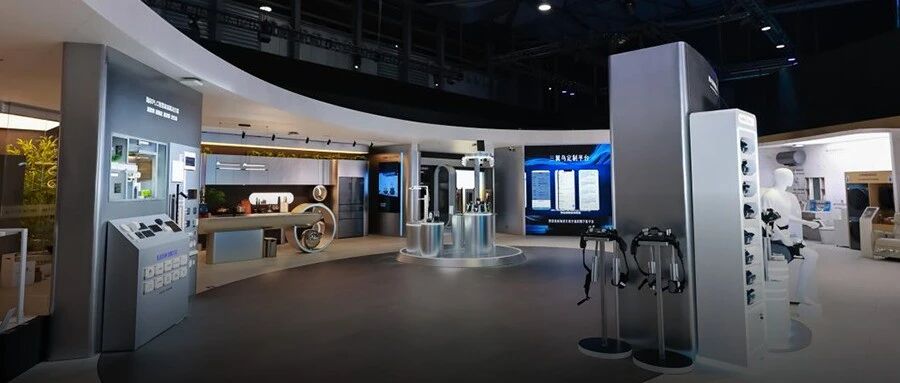
松下参展AWE2026,演绎“怡居生态先行者”新范式
Cai Jing Wang· 2026-03-13 00:00
Group 1: Core Themes - Panasonic showcased its commitment to creating an immersive smart living experience at the 2026 AWE, emphasizing the integration of space aesthetics and health living concepts [1] - The company aims to redefine the boundaries between home appliances and home decor through its flagship Himalayan series, which combines natural elements with modern industrial aesthetics [2] - The Panasonic Xtra series targets young consumers with innovative features and emotional design, addressing their specific needs and preferences [3] Group 2: Product Innovations - Panasonic's kitchen ecosystem focuses on the formula "good rice = 50% good rice + 20% good water + 30% good pot," highlighting the importance of quality ingredients and cookware in meal preparation [4] - The new Norwegian Sea 600 series refrigerator is designed for optimal seafood storage, featuring independent cooling cycles and ultra-low temperature rapid cooling technology [5] - The ALPHA G5 washing machine introduces a unique "4-in-1" design, providing a comprehensive laundry solution that caters to various fabric care needs [5] Group 3: Health and Personal Care - The beauty and personal care section emphasizes health and refined experiences, with products like the L690U shaver and EH-NC80 hair dryer designed for optimal performance and user satisfaction [6][7] - The hair dryer utilizes advanced technology to provide deep nourishment while drying hair quickly, showcasing Panasonic's focus on quality personal care [7] Group 4: Smart Technology Integration - Panasonic integrates cutting-edge technology into everyday life, offering products like a cleaning robot that features hot water cleaning and an automatic water supply station for convenience [8] - The company also presented a range of products, including air conditioning, residential equipment, and bathroom products, to demonstrate its comprehensive ecosystem for smart living [8] Group 5: Marketing and Engagement Strategies - Panasonic created a multi-dimensional interactive experience during the exhibition, combining online and offline activities to engage audiences and promote its products [9] - The company aims to lead the home appliance industry by providing innovative solutions and enhancing the quality of life for families through localized innovations [9]

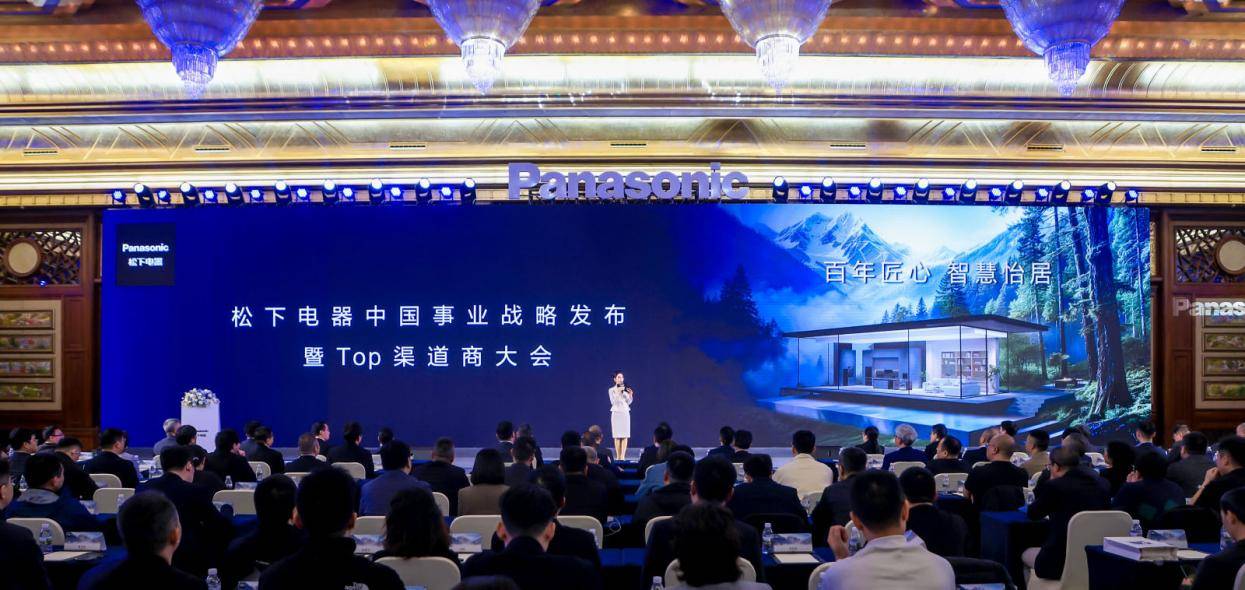
松下参展AWE发布中国事业战略,迈向“在中国,为全球”
Sou Hu Cai Jing· 2026-03-12 18:08
Core Viewpoint - Panasonic is launching a new business structure in April 2026, transitioning from a focus on "In China, for China" to "In China, for the World," emphasizing its commitment to global growth from a Chinese base [2][3]. Group 1: New Business Structure - The new Panasonic Electric Company will oversee the smart living sector, aiming to enhance brand value while achieving revenue growth and contributing to society [2]. - The transition involves moving from the China Northeast Asia Company (CNA) to the China Northeast Asia Business (CNAB), which will have a unique organizational structure focused on cross-business coordination [2][3]. Group 2: Strategic Focus Areas - Panasonic's mid-term plan concentrates on three key areas: solutions, components, and smart living [2]. - The company aims to leverage local insights and innovations to create high-value products that meet diverse consumer needs, such as the Himalaya refrigerator and ALPHA washing machine [3]. Group 3: Market Challenges and Opportunities - The Chinese home appliance market is experiencing a decline in demand and increasing competition, yet it remains a core hub for the global industry [6]. - Panasonic emphasizes a "coexistence and win-win" business philosophy to navigate market challenges and enhance customer satisfaction through innovative products [7]. Group 4: Product and Market Strategy - Panasonic will focus on deepening its product offerings, particularly in the "living space appliances" category, with flagship products like the ALPHA G5 washing machine and the Himalaya rice cooker [8]. - The company plans to implement an open business ecosystem to address real user pain points and explore new value in the home appliance sector [8]. Group 5: Performance and Future Outlook - In a challenging market, Panasonic achieved a 106% year-on-year growth in direct sales of certain product categories, increasing market share by over 30% [10]. - The company will continue to prioritize high-margin products and maintain a stable pricing strategy to ensure long-term profitability and channel confidence [10].
AWE里的海尔智慧家庭:AI之眼2.0与「无人家务」的临界点
36氪· 2026-03-12 15:24
Core Insights - The article discusses the evolution of smart homes, emphasizing the integration of AI technology into household appliances, which transforms them from simple devices into a cohesive intelligent system capable of understanding and responding to user needs [4][5][6]. Group 1: Evolution of Smart Homes - Smart homes have evolved from basic connectivity to complex systems that can understand and interact with users, driven by advancements in AI and robotics [4][5][6]. - The introduction of AI capabilities allows household devices to not only control and link but also to comprehend environmental changes and user behaviors, marking a significant shift in the smart home landscape [5][6][12]. Group 2: AI Integration in Appliances - Haier's AI Eye 2.0 enhances the ability of appliances to perceive their environment, improving recognition accuracy and response speed, thus enabling a more intuitive user experience [17][21]. - The AI Eye technology allows devices to autonomously adjust their functions based on real-time environmental data, enhancing safety and efficiency in household tasks [21][22]. Group 3: Robotics in Smart Homes - Haier has introduced various household robots, including cleaning and companion robots, which leverage AI to perform complex tasks autonomously, thus reducing the need for human intervention [27][28]. - These robots are designed to understand their surroundings and execute tasks such as cleaning and organizing, representing a significant leap from traditional smart appliances [27][28]. Group 4: Decision-Making Systems - The Haier Smart Home Brain serves as the decision-making hub, utilizing a unified operating system to coordinate various appliances and robots, thereby optimizing household management [30][33]. - This system allows for seamless interaction between devices, enabling them to work together to fulfill user needs and enhance overall household efficiency [33][34]. Group 5: Expanding the Concept of Smart Homes - The concept of smart homes is evolving to encompass broader life ecosystems, integrating not just household devices but also connecting to community and urban systems [39][40]. - Haier's vision includes creating a comprehensive ecosystem that links homes with vehicles, communities, and cities, thereby expanding the functionality and relevance of smart home technology [39][40].
松下AWE发布中国事业战略,迈向“在中国,为全球”
Feng Huang Wang· 2026-03-12 14:05
Core Insights - Panasonic is transitioning its business strategy in China from "in China, for China" to "in China, for the world" with the establishment of the China Northeast Asia Business (CNAB) set to launch in April 2026 [1] - The company aims to leverage its advantages in cost, model, and speed developed in the Chinese market to create globally standardized products and enhance its global presence [1] Group 1: Business Strategy - Panasonic will focus on three key areas: solutions, components, and smart living, with a particular emphasis on smart living under the new Panasonic Electric Co., Ltd [1] - The company plans to reform its kitchen small appliance business and strengthen collaboration between Chinese R&D and global supply chains [1] Group 2: Financial Performance - From 2019 to 2024, Panasonic's China Northeast Asia company is expected to generate over 15 billion RMB in operating cash flow, demonstrating robust growth driven by localization reforms [2] - In 2025, despite a competitive pricing environment, Panasonic's direct sales categories saw a 106% year-on-year increase, with market share rising over 30% and profit quality improving [2] Group 3: Product and Market Strategy - Panasonic's "coexistence and win-win" strategy addresses the current challenges in the home appliance market, focusing on a three-way win for customers, channels, and the company [2] - The company is committed to deepening single product development, launching flagship products like the ALPHA washing machine and the Rice Light rice cooker, and enhancing its home appliance solutions [2]

松下参展2026AWE,擘画中国东北亚事业蓝图,践行三方共存共赢
Sou Hu Wang· 2026-03-12 13:47
Core Viewpoint - Panasonic is launching a new business structure in April 2026, transitioning from a focus on "In China, for China" to "In China, for the World," emphasizing its commitment to global growth from a Chinese base [2][11]. Group 1: New Business Structure - The new structure will see Panasonic's Northeast Asia operations evolve from the China Northeast Asia Company (CNA) to the China Northeast Asia Business (CNAB), which will have a cross-business coordination function [2][3]. - The mid-term plan focuses on three key areas: solutions, components, and smart living, with a strong emphasis on enhancing brand value and customer proximity [2][3]. Group 2: Financial Performance - From 2019 to 2024, CNA is expected to generate over 15 billion RMB (300 billion JPY) in operating cash flow, attributed to product specialization, market engagement, and talent [3]. - In 2025, despite a challenging market, Panasonic's direct sales in certain categories grew by 106%, with market share in those categories increasing by over 30% [10]. Group 3: Strategic Initiatives - Panasonic aims to provide "space value" and promote sustainable development through its Wellness Smart (WS) initiative, focusing on health and environmental contributions [3][4]. - The "Made by China" initiative will expand, pushing innovative products developed in China to global markets, leveraging the diverse needs of China's 1.4 billion population [4][11]. Group 4: Market Challenges and Responses - The Chinese home appliance market is experiencing a decline in demand and increased competition, with local brands expanding internationally and channel efficiency improving [5][6]. - Panasonic's "coexistence and win-win" philosophy emphasizes collaboration with stakeholders to navigate market challenges and achieve sustainable growth [6][11]. Group 5: Future Strategies - Panasonic will focus on deepening its product offerings, particularly in the "living space appliances" category, with new flagship products set to launch [8]. - The company plans to implement a comprehensive open business ecosystem, enhancing collaboration across the supply chain to address consumer pain points and unlock new value in the appliance industry [8][10].

家电行业2026年2月月报及3月投资策略:两会强调提振消费,政策着力稳定地产-20260312
Guolian Minsheng Securities· 2026-03-12 13:10
Group 1 - The report emphasizes the importance of boosting consumption and stabilizing the real estate market as highlighted in the recent Two Sessions [1] - The home appliance sector is expected to see a gradual improvement in both domestic and foreign sales, with key categories likely to benefit from continued subsidies throughout the year [3][12] - The report forecasts that the overall performance of the home appliance sector in 2026 will be stable, with domestic demand consolidating and foreign demand showing signs of recovery [3][12] Group 2 - In January and February, the domestic and foreign sales of air conditioners are projected to see a narrowing decline, with a significant increase in retail sales for washing machines and refrigerators [3][12] - The report identifies strong operational resilience among leading brands, with a notable emphasis on overseas expansion and capacity building in emerging markets [3][12] - The report suggests that the current relative valuation of the home appliance sector is at historically low levels, indicating potential for upward adjustment as fundamentals improve [3][12] Group 3 - Recommended stocks include leading white goods manufacturers such as Midea Group, Haier Smart Home, Hisense Home Appliances, and Gree Electric [3][12] - For the TV segment, the report recommends Hisense Visual and suggests monitoring TCL Electronics due to their strong market positions [3][12] - In the cleaning appliance category, Stone Technology and Ecovacs are highlighted as key players, while kitchen appliance leaders such as Boss Electric, Supor, and Bear Electric are also recommended for their innovative product strategies [3][12]


AWE2026海尔智家发布AI之眼2.0,开启无人家务新篇章
Zhong Guo Jing Ying Bao· 2026-03-12 12:00
Core Viewpoint - The AWE2026 event highlights the significant shift in the home appliance industry towards AI-driven technologies, with Haier Smart Home leading the charge in promoting "unmanned household chores" [1] Group 1: Event Overview - AWE2026 took place from March 12 to 15 at the Shanghai New International Expo Center and the Shanghai Oriental Hub, covering an unprecedented area of over 170,000 square meters [1] - The event featured over 1,200 renowned companies from the global home appliance and consumer electronics sectors [1] Group 2: AI Technology in Home Appliances - The event showcased a wave of AI innovations, with many appliance companies launching AI technologies and products, capturing market attention [1] - Haier Smart Home introduced AI Eye 2.0 and household robots, emphasizing a transition from "labor replacement" to "active service" in home appliances [1] - A representative from Haier Smart Home stated that the rise of AI technology allows appliances to break through capability boundaries, marking a new chapter in "unmanned household chores" [1]

从“替人家务”迈向“无人家务” 家电巨头海尔智家打响AI落地攻坚战
Zhong Guo Jing Ying Bao· 2026-03-12 11:44
Core Insights - The 2026 China Household Appliances and Consumer Electronics Expo (AWE2026) is seen as a "weather vane" for the future direction of the global home appliance industry, showcasing over 1,200 renowned companies across more than 170,000 square meters [2] - The rise of AI technology is a focal point at AWE2026, with many appliance companies launching AI-driven products, exemplified by Haier's focus on "unmanned household chores" and the introduction of AI Eye 2.0 and home robots [2][3] AI Technology Advancements - The trend of "AI + home appliances" is becoming increasingly evident, with advancements in AI models and embodied intelligence accelerating the smart home appliance development [2] - Haier's AI Eye 2.0, launched this year, enhances the capabilities of home appliances, allowing them to perceive, decide, and execute tasks more effectively [4] Product Innovations - AI Eye 2.0 features improvements such as broader recognition capabilities, with the refrigerator's AI Eye now able to identify all types of food, and the air conditioner's AI Eye achieving dynamic human position recognition with millisecond response times [4][5] - Haier has also introduced various household robots, including cleaning robots and companion robots for elderly care, further contributing to the "unmanned household" trend [5] Strategic Developments - Haier is enhancing its smart home ecosystem with the UHomeOS, an AI-native cross-ecosystem operating system, aiming to empower the entire industry rather than just its own operations [5][6] - The company is committed to integrating perception, cognition, decision-making, and execution capabilities to create an end-to-end embodied intelligence system, with plans for self-developed humanoid robots [6] Financial and Market Performance - Haier's R&D investment reached 9.222 billion yuan in 2025, an 11.7% increase from the previous year, focusing on AI and energy efficiency to enhance product performance and user experience [6][7] - By the end of 2025, Haier's global registered users surpassed 130 million, with significant interaction metrics indicating strong engagement with its smart home ecosystem [7] Industry Impact - The concept of "unmanned household chores" has gained consensus within the industry, with Haier's advancements providing a practical path for the sector to transition towards this new era of smart living [8]
海尔智家、TCL、方太等企业在AWE 2026集中展示AI成果
Cai Jing Wang· 2026-03-12 04:48
Core Viewpoint - The 2026 China Household Appliances and Consumer Electronics Expo (AWE2026) commenced in Shanghai, showcasing cutting-edge AI achievements and new products from various home appliance and home furnishing companies [1] Group 1: Company Highlights - Haier Smart Home presented five major brands including Casarte, Leader, and Fisher & Paykel [1] - TCL showcased multiple new products across its three business segments [1] - Fotile, after upgrading its "Smart Kitchen Expert and Leader" strategy, provided a panoramic display and introduced its first kitchen cooking robot [1] - Stone Technology and Ecovacs unveiled new core category products [1] - Huida Sanitary displayed a comprehensive intelligent bathroom solution centered on "Smart and Healthy Living" [1]