
金融

Search documents
中国对加拿大、英国实施免签;春节档总票房破4亿元;Grok 4.20版本将于本周正式发布丨每经早参
Mei Ri Jing Ji Xin Wen· 2026-02-15 22:43
Group 1 - The Chinese government has decided to implement a visa-free policy for ordinary passport holders from Canada and the UK starting February 17, 2026, allowing stays of up to 30 days for business, tourism, family visits, and transit [5] - The total box office for the 2026 Spring Festival period has surpassed 4 billion yuan, with "Flying Life 3," "Silent Awakening," and "Bounty Hunter: Wind Rises in the Desert" leading the box office rankings [7] - The China National Railway Group has refuted rumors regarding severe overcrowding on green trains during the Spring Festival, stating that most circulated videos are either historical footage or AI-generated misinformation [13] Group 2 - The State Administration of Foreign Exchange and eight other departments have released a new anti-money laundering management measure effective from February 16, 2026 [3] - The Heilongjiang Provincial Government has issued a work plan for the deep application of "Artificial Intelligence +" in government affairs, focusing on enhancing service levels and scale through technology [6] - DJI's former Vice President Yuan has been criminally detained for alleged bribery during his tenure from May 2019 to May 2024, with the case currently in judicial proceedings [17]


大摩Q4持仓维持核心科技主线 苹果荣登榜首、指数ETF仓位下降
Zhi Tong Cai Jing· 2026-02-15 06:43
Core Insights - Morgan Stanley's Q4 holdings report indicates a strategy focused on maintaining core technology positions, reducing index exposure, and enhancing active selection capabilities [1] Group 1: Overall Holdings - Morgan Stanley's total holdings value for Q4 reached $1.67 trillion, a 1.2% increase from $1.65 trillion in the previous quarter [1] - The fund added 454 new stocks, increased positions in 4,007 stocks, reduced positions in 3,028 stocks, and completely exited 415 stocks [1] - The top ten holdings accounted for 22.15% of the total portfolio value [1] Group 2: Major Holdings - Apple (AAPL.US) became the largest holding with an increase of approximately 1.38 million shares [1] - Nvidia (NVDA.US) remained the second-largest holding with an increase of nearly 780,000 shares [1] - Microsoft (MSFT.US) dropped from first to third place but still saw an increase of about 980,000 shares [1] - Google Class A (GOOGL.US) was reduced by approximately 150,000 shares, while Google Class C (GOOG.US) was increased by 1.13 million shares, indicating a shift in stock type optimization [1] - Amazon (AMZN.US) was reduced by about 1.28 million shares, ranking fifth [1] Group 3: Sector Adjustments - In the technology sector, Meta (META.US) saw an increase of about 820,000 shares, while Tesla (TSLA.US) was reduced by 360,000 shares [2] - AMD (AMD.US) was reduced by 5.02 million shares, and Palantir (PLTR.US) was reduced by 103,000 shares [2] - Defensive and high-dividend sectors, such as healthcare and consumer staples, saw reductions in holdings, including Johnson & Johnson (JNJ.US), AbbVie (ABBV.US), and Walmart (WMT.US) [2][3] Group 4: New Positions and ETF Strategy - Morgan Stanley increased positions in JPMorgan (JPM.US), Uber (UBER.US), and gold ETF (GLD.US) [4] - New investments included Medline (MDLN.US), Total (TTE.US), Qnity Electronics (Q.US), Solstice (SOLS.US), and Dream Dragon (MICC.US) [4] - The decline in ETF positions suggests a preference for individual stock selection to achieve excess returns rather than relying on broad index exposure [5]


美股点金丨AI恐慌交易蔓延,美股“2月寒流”何时结束?
Di Yi Cai Jing Zi Xun· 2026-02-15 03:25
Group 1 - The US stock market experienced a decline this week due to "AI panic trading" and increased probabilities of the Federal Reserve maintaining its policy unchanged after the January non-farm employment report [1] - Concerns over cost and profit margin pressures for technology companies have suppressed optimism, despite a generally favorable macroeconomic environment characterized by steady job growth and easing inflation [1] - The ability of technology stocks to stabilize and the strengthening of interest rate cut expectations from the Federal Reserve will be critical for market recovery in the coming week [1] Group 2 - The retail sales data showed weakness, with December retail sales unchanged month-on-month, below the previous value of 0.6% and the expected 0.4% [2] - The Atlanta Fed's GDPNow model revised its forecast for Q4 GDP from 4.2% to 3.7% due to the retail sales performance [2] - The January non-farm payrolls increased by 130,000, significantly above the market expectation of 65,000, with the unemployment rate dropping to 4.3% from 4.4% [2] - The Consumer Price Index (CPI) for January rose by 0.2% month-on-month, lower than the expected 0.3%, and the year-on-year increase was 2.4%, also below the expected 2.5% [2] Group 3 - Economic signals are mixed, with the January employment report contradicting the narrative of stagnant hiring, while retail sales data challenges the view of strong consumer spending [3] - The flattening of the US Treasury yield curve indicates a significant drop in long-term yields, with the 2-year yield approaching 3.40%, and the probability of two rate cuts this year nearing 90% [3] - The inflation report shows encouraging signs, particularly with housing prices slowing and tariff-related impacts diminishing, which may lead the Federal Reserve to consider rate cuts later this year [3] Group 4 - The recent signals are unlikely to persist, as the decline in retail sales may be a temporary pause following strong spending, and the sustainability of the significant increase in non-farm employment is questionable [4] - The cooling inflation data provides a favorable environment for the Federal Reserve to potentially restart rate cuts later in the year [4] Group 5 - The US stock indices fell over the past week, with investors continuing to reduce exposure to technology sectors, and the S&P 500 index turned negative for the year [5] - Concerns regarding the impact of new AI tools on specific industries have led to market volatility, initially affecting software and financial stocks, and later spreading to real estate and logistics sectors [5] Group 6 - The financial sector experienced the largest decline this week, down 4.8%, followed by communication services down 3.5%, and both non-essential consumer goods and technology sectors fell over 2% [6] - Utility stocks surged by 7.1% due to safe-haven inflows, while real estate and materials rose over 3% [6] Group 7 - The launch of AI tools by companies like Altruist and Anthropic has heightened fears of job displacement, leading to a cautious sentiment among traders regarding US stock exposure [7] - The sell-off pressure in the market is primarily driven by concerns over the disruptive effects of AI, affecting not only software stocks but also real estate and logistics [7] Group 8 - The significant decline in US Treasury yields typically serves as a bullish catalyst for the stock market, but bearish confirmation signals in the Nasdaq indicate potential further downside risks [8] - The volatility index (VIX) remains around 20, suggesting that the market is seeking protective measures and may maintain higher-than-average volatility in the short term [8]
嘉兴借力“最暖返乡潮”擘画“最强招商季”
Xin Lang Cai Jing· 2026-02-15 00:02
(来源:嘉兴日报) "不敢说能为家乡带来多少直接投资,但我会利用自己的身份,多多促成嘉兴与德国莱茵—美因地区之 间商业代表团的互访。"从海盐澉浦走出的"村娃子"袁袭,在德国创业生活20余载,却始终乡音未改。 作为拥有300多家企业会员的商业俱乐部亚洲事务主管,她惦念的不仅是家乡"炒雪冬"的乡土滋味,更 是如何让家乡的企业走向世界,让世界的资本看见嘉兴。 活动伊始,嘉兴市商务局、市投资促进中心相关负责人便为乡贤们送上了一份厚重的"家乡发展报告"。 报告不仅细数了嘉兴经济社会发展的最新成果,更重磅推介了以新材料、新一代网络通信、智能光伏、 新能源汽车及零部件为核心的"135N"现代产业体系。面对新一轮科技革命,嘉兴已然在人工智能、临 空经济等新兴赛道上提前布局,展现出强大的产业韧性与未来潜力。 "每次回来,都能感受到嘉兴的更新和变化。"从嘉兴一中毕业走出去的郁虹刚,亲身经历了中国制造的 辉煌十年,如今转身为投资人,他对家乡产业的蝶变升级感触尤深。正是家乡这份扎实的产业底气和清 晰的战略眼光,让他毫不犹豫地作出了"优先选择家乡"的承诺。 活动的重头戏是"嘉兴市招商合作大使"的聘任仪式。9位来自航空航天、投资金融、生 ...
基金研究周报:市场结构性分化持续,成长强势(2.9-2.13)
Sou Hu Cai Jing· 2026-02-14 23:35
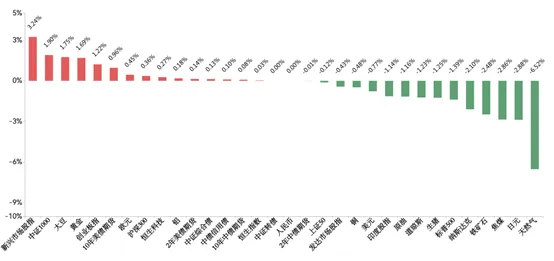
Market Overview - The A-share market exhibited a structural upward trend last week, with the Shanghai Composite Index closing at 4082.07 points, remaining stable throughout the week [1] - The growth sector performed strongly, highlighted by a 3.37% increase in the STAR 50 Index, indicating robust momentum in technology and innovation themes [1] - In contrast, the value sector showed relative weakness, with the Shanghai 50 and CSI Dividend Index experiencing slight declines [1] - Internationally, the U.S. stock indices collectively fell, with the S&P 500 down 1.39%, while European markets saw moderate gains [2] - Asian markets performed strongly, with the Korean Composite Index soaring 8.21% and the Nikkei 225 rising 4.96% [2] Sector Performance - The Information Technology sector rose by 3.62%, and the Communication Services sector increased by 2.43%, showcasing strong performance [1][9] - Conversely, the Consumer Staples sector declined by 2.45%, and the Financial sector fell by 1.41%, marking the weakest performances [1][9] - The rise of AI technologies has propelled the TMT (Technology, Media, and Telecommunications) sector, leading to accelerated sector rotation during the earnings forecast period [1][9] Fund Issuance and Performance - A total of 64 funds were launched last week, including 24 equity funds, 19 mixed funds, 8 bond funds, 2 QDII funds, and 11 FOF funds, with a total fundraising amount of 58.33 billion [1][17] - The overall performance of funds was positive, with the Wind All Fund Index rising by 0.79%, and the ordinary equity fund index increasing by 1.40% [5] - The equity funds significantly outperformed bond funds, with the equity mixed fund index rising by 1.52% [5] Bond Market Overview - The bond market sentiment was warm, with the convertible bond index leading gains, and both 10-year and 30-year government bond futures slightly rising [13] - Domestic long-term interest rates remain at historically low levels, indicating a stable bond market environment [13]
基金研究周报:市场结构性分化持续,成长强势(2.9-2.13)
Wind万得· 2026-02-14 22:20
Market Overview - The A-share market exhibited a structural upward trend last week, with the Shanghai Composite Index closing at 4082.07 points, remaining stable throughout the week [2] - The Growth sector performed strongly, with the STAR 50 Index surging by 3.37%, highlighting robust momentum in technology and innovation themes [2] - In contrast, the Value sector showed relative weakness, with the SSE 50 and CSI Dividend Index experiencing slight declines [2] - The U.S. stock indices collectively fell, with the S&P 500 down by 1.39%, while European markets saw moderate gains [4] - Asian markets performed strongly, with the Korean Composite Index soaring by 8.21% and the Nikkei 225 rising by 4.96% [4] Industry Performance - The Information Technology sector rose by 3.62%, and the Communication Services sector increased by 2.43%, demonstrating strong performance [12] - Conversely, the Consumer Staples sector declined by 2.45%, and the Financial sector fell by 1.41%, indicating weaker performance [12] - The rise of AI technologies has propelled the TMT (Technology, Media, and Telecommunications) sector, leading to accelerated sector rotation during the earnings forecast period [12] Fund Issuance and Performance - A total of 64 funds were launched last week, including 24 equity funds, 19 mixed funds, 8 bond funds, 2 QDII funds, and 11 FOF funds, with a total fundraising amount of 58.33 billion [17] - The overall fund performance showed the Wind All Fund Index rising by 0.79%, with equity funds significantly outperforming bond funds [7][17] - The Wind Ordinary Equity Fund Index increased by 1.40%, while the Mixed Equity Fund Index rose by 1.52%, indicating strong performance in equity-related funds [7]

国际货币基金组织预测摩洛哥2026年经济增长4.9%
Shang Wu Bu Wang Zhan· 2026-02-14 15:50
Core Viewpoint - The International Monetary Fund (IMF) projects strong economic growth for Morocco in 2025, driven by robust performance in agriculture, construction, and services, despite external uncertainties [1] Economic Growth - Morocco's economy is expected to grow significantly in 2025, supported by ample rainfall and increasing investments in agriculture and economic development [1] - The growth trend is anticipated to continue into 2026 [1] Inflation - The overall inflation rate in Morocco is projected to be controlled at 0.8% in 2025, aided by lower food inflation [1] - The IMF forecasts that inflation will gradually rise to around 2% by mid-2027 as economic momentum strengthens and previous interest rate cuts take effect [1] Monetary Policy - The current robust monetary policy in Morocco remains applicable, with encouragement for banks to transition towards greater flexibility in exchange rate policies to better manage inflation [1] External Economic Factors - The current account deficit is expected to widen slightly due to increased imports driven by public investment, although growth in tourism revenue and foreign direct investment will provide a buffer [1] - Morocco's foreign exchange reserves are currently adequate, but caution is advised regarding potential impacts from economic slowdowns in the Eurozone and fluctuations in commodity prices [1] Fiscal Performance - Tax revenue as a percentage of GDP has reached 24.6% due to tax reforms and improved tax management [1] - The fiscal deficit has narrowed to 3.5%, better than the previously anticipated 3.8% [1] - The IMF recommends increasing investments in human capital in the health and education sectors [1]
贵州发文!在白酒等领域培育世界500强企业,严禁新设或异化产生各类融资平台
Sou Hu Cai Jing· 2026-02-14 13:26
Group 1 - The core objective is to enhance the quantity, structure, and quality of business entities in Guizhou Province by 2030, aiming for a total of approximately 25,000 "Four Up" enterprises and a 30% share of enterprises in the total business entities [3][4] - The plan includes fostering a world-class enterprise in the liquor sector and creating billion-level enterprise groups in energy, chemicals, finance, and transportation, with a target of one world 500 company, five billion-level, one five-hundred-million-level, and seven hundred-million-level provincial backbone enterprises by 2030 [4][3] Group 2 - The initiative emphasizes the optimization of state-owned enterprises by focusing resources on six major industrial clusters and three characteristic industries, aiming to enhance their leading positions [4][5] - A new round of reforms for state-owned enterprises will be implemented, including labor, personnel, and distribution system reforms, to improve the efficiency of state asset supervision [4][5] Group 3 - The plan aims to expand the space for private enterprises, with a target for the private economy to account for approximately 58% of the regional GDP by 2030 [6] - A mechanism for assisting private enterprises will be established, including regular communication between government leaders and private businesses to address their concerns [7] Group 4 - The initiative includes measures to support the growth of "Four Up" enterprises, with a focus on helping them meet standards and improve efficiency through various support mechanisms [8][9] - Specific action plans will be implemented to enhance the industrial, service, and agricultural sectors, with annual targets for new enterprises in these areas [9][10] Group 5 - The plan emphasizes the importance of innovation and the cultivation of high-tech enterprises, with a goal of reaching 1,200 high-tech enterprises by 2030 [11][12] - Support for the establishment of listed companies will be enhanced, with a structured approach to guide enterprises through the listing process [12] Group 6 - The initiative aims to attract strong enterprises by creating a comprehensive service system for project recruitment and implementation [14] - Collaboration with central enterprises will be strengthened to support the development of key industries in Guizhou [14] Group 7 - The plan includes measures to optimize the business environment, focusing on fair competition and improving government services for enterprises [16][17] - Financial and tax support will be enhanced, with specific incentives for growth-oriented enterprises and high-tech companies [18] Group 8 - A collaborative mechanism will be established to ensure the effective implementation of policies aimed at nurturing and expanding business entities [19]
贵州:在白酒等领域培育世界500强企业 推动能源、化工、金融、交通等行业打造千亿级企业集团
Mei Ri Jing Ji Xin Wen· 2026-02-14 12:34
Core Viewpoint - Guizhou Province has issued policies to cultivate and strengthen business entities, aiming to enhance the quality, quantity, and vitality of these entities to solidify the foundation of the real economy by 2030 [1] Group 1: Business Development Goals - By 2030, the total number of business entities in Guizhou is expected to steadily increase, with a target of enterprises making up about 30% of the total [1] - The total number of "Four Up" enterprises is projected to reach approximately 25,000 [1] Group 2: Industry Focus and Resource Allocation - The government aims to guide state-owned enterprises to concentrate quality resources in six major industrial clusters and three characteristic industries, as well as in new productive forces and major infrastructure [1] - There is a focus on cultivating world-class enterprises in sectors like liquor, and developing billion-level enterprise groups in energy, chemicals, finance, and transportation [1] Group 3: Future Enterprise Fleet - By 2030, the goal is to form a fleet of provincial backbone enterprises, including one world-class enterprise, five billion-level enterprises, one five-hundred-million-level enterprise, and seven hundred-million-level enterprises [1]
贵州:到2030年力争形成1家世界500强企业和5家千亿级、1家五百亿级、7家百亿级的省属骨干企业舰队
Xin Lang Cai Jing· 2026-02-14 12:22
Core Viewpoint - The Guizhou Provincial Government has issued policies aimed at cultivating and strengthening business entities, focusing on optimizing the layout of state-owned enterprises and enhancing their competitive positions in key industries [1] Group 1: Policy Measures - The measures encourage state-owned enterprises to concentrate their quality resources on six major industrial clusters and three characteristic industries, as well as new productive forces and major infrastructure [1] - The goal is to nurture world-class enterprises in sectors like liquor, and to develop billion-level enterprise groups in energy, chemicals, finance, and transportation [1] Group 2: Future Goals - By 2030, the province aims to establish one world-class enterprise, five billion-level enterprises, one five-hundred-million-level enterprise, and seven hundred-million-level enterprises among state-owned backbone companies [1]