
锂离子电池制造

Search documents
19个月首次破1%!9月核心CPI等指标走势释放重要信号
证券时报· 2025-10-15 08:30
Core Insights - The article highlights that the Consumer Price Index (CPI) remains low in September, but core inflation is showing signs of recovery, while the Producer Price Index (PPI) is experiencing a narrowing decline, indicating marginal improvement in industrial demand [1][2]. CPI Analysis - In September, the CPI increased by 0.1% month-on-month but decreased by 0.3% year-on-year. The core CPI, excluding food and energy, rose by 1.0% year-on-year, marking the fifth consecutive month of growth and the first time in 19 months that it has surpassed 1% [2][4]. - The decline in CPI is primarily driven by food prices, which fell by 4.4% year-on-year, with significant drops in pork, fresh vegetables, and eggs, down 17.0%, 13.7%, and 13.5% respectively [6][4]. - Analysts suggest that the high base effect will gradually diminish, and there is potential for the CPI to turn positive year-on-year within the year [7]. PPI Analysis - The PPI remained flat month-on-month and saw a year-on-year decline of 2.3%, with the rate of decline narrowing by 0.6 percentage points compared to the previous month [2][10]. - The improvement in PPI is attributed to the "anti-involution" policies that have led to price stabilization in several industries, including coal and steel, with coal processing prices rising by 3.8% month-on-month [9][10]. - The overall market environment is improving due to regulatory measures aimed at curbing disorderly competition, which is expected to enhance industrial capacity utilization and support a re-inflationary trend [11].


国家统计局:9月光伏设备及元器件制造价格上涨0.8%
Guo Jia Tong Ji Ju· 2025-10-15 05:41
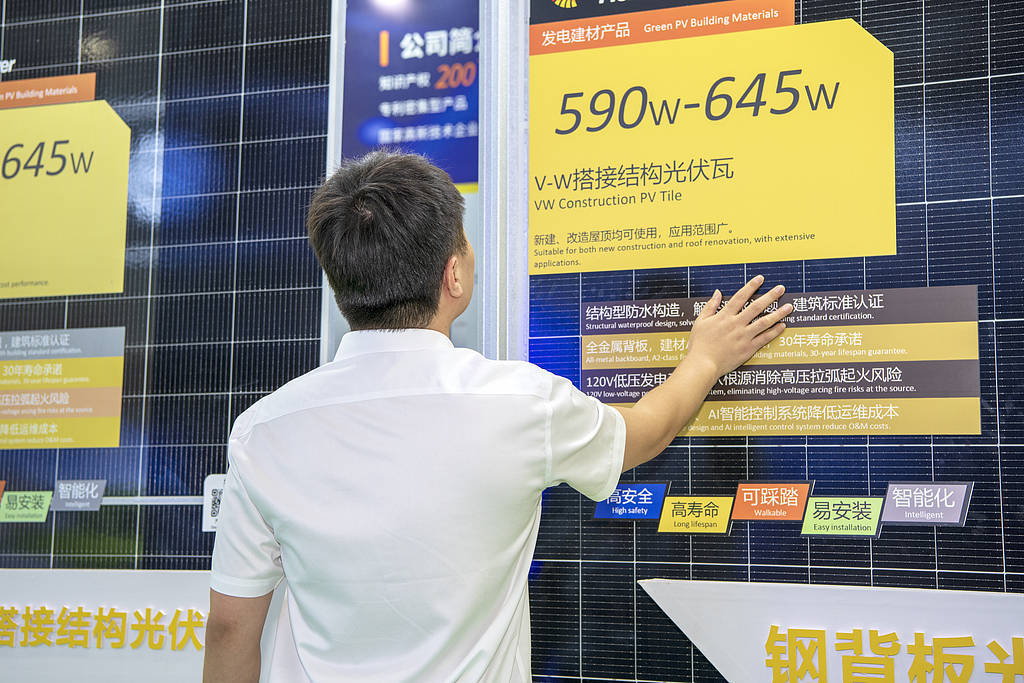
Group 1 - In September, coal processing prices increased by 3.8% month-on-month, while prices in the coal mining and washing industry rose by 2.5% [1] - The prices in the black metal smelting and rolling processing industry saw a slight increase of 0.2%, marking two consecutive months of price rises across these sectors [1] - The price of photovoltaic equipment and components manufacturing shifted from a decrease of 0.2% last month to an increase of 0.8% this month [1] Group 2 - Prices in the non-metallic mineral products industry and lithium-ion battery manufacturing decreased by 0.4% and 0.2%, respectively, with the decline rates narrowing by 0.6 and 0.3 percentage points compared to the previous month [1] - The reduction in prices for coal processing, black metal smelting and rolling processing, coal mining and washing, photovoltaic equipment and components manufacturing, battery manufacturing, and non-metallic mineral products narrowed by 8.3, 3.4, 3.0, 2.4, 0.5, and 0.4 percentage points, respectively, compared to last month [1]
国家统计局解读:9月核心CPI同比涨幅持续扩大 PPI同比降幅继续收窄
智通财经网· 2025-10-15 01:47
Group 1: CPI Analysis - In September 2025, the Consumer Price Index (CPI) increased by 0.1% month-on-month and decreased by 0.3% year-on-year, with the core CPI (excluding food and energy) rising by 1.0%, marking the fifth consecutive month of growth [1][2][3] - The month-on-month CPI increase was influenced by a 0.7% rise in food prices, particularly fresh vegetables, eggs, fresh fruits, lamb, and beef, which saw price increases between 0.9% and 6.1% [3] - The year-on-year CPI decline of 0.3% was primarily due to a negative base effect, with food prices dropping by 4.4%, significantly impacting the overall CPI [4][5] Group 2: PPI Analysis - The Producer Price Index (PPI) remained flat month-on-month and decreased by 2.3% year-on-year, with the decline narrowing by 0.6 percentage points compared to the previous month [1][2][7] - The PPI's year-on-year decline was influenced by improvements in supply-demand structures, with certain industries like coal processing and black metal smelting showing price stabilization [6][7] - The ongoing construction of a unified national market has contributed to a reduction in price declines across various sectors, with notable improvements in industries such as coal processing and battery manufacturing [7]
国家统计局:9月供需结构改善带动部分行业价格明显企稳 输入性因素影响国内石油相关行业价格环比下降
Di Yi Cai Jing· 2025-10-15 01:44
Core Insights - The Producer Price Index (PPI) remained stable month-on-month for two consecutive months, indicating a stabilization in prices across various industries driven by improved supply-demand dynamics [1][2] - Year-on-year, the PPI decreased by 2.3%, but the decline was less severe than the previous month, reflecting the positive impact of macroeconomic policies and structural adjustments in certain industries [2] Group 1: Month-on-Month PPI Analysis - The PPI showed notable month-on-month price increases in coal processing (up 3.8%), coal mining and washing (up 2.5%), and black metal smelting and rolling (up 0.2%), all of which have risen for two consecutive months [1] - Prices for photovoltaic equipment and components shifted from a decrease of 0.2% last month to an increase of 0.8% this month, indicating a recovery in this sector [1] - Conversely, prices in the petroleum-related industries declined due to falling international oil prices, with oil extraction prices down 2.7% and refined petroleum product manufacturing prices down 1.5% [1] Group 2: Year-on-Year PPI Trends - The year-on-year decline in PPI was influenced by a lower comparison base from the previous year, with several industries showing reduced price declines, including coal processing and black metal smelting [2] - The construction of a unified national market has led to improved price stability in various sectors, with significant reductions in price declines for coal processing (down 8.3%), black metal smelting (down 3.4%), and coal mining (down 3.0%) [2] - Upgrades in industrial structure and the release of consumer potential have resulted in price increases in specific sectors, such as aircraft manufacturing (up 1.4%) and electronic materials (up 1.2%) [2]
“反内卷”政策预计会继续ING
Sou Hu Cai Jing· 2025-08-30 06:05
Core Viewpoint - The Producer Price Index (PPI) in July showed a month-on-month decline of 0.2%, marking the first narrowing of the decline since March this year, indicating a potential stabilization in industrial prices [2][3]. Group 1: PPI Trends - In July, the prices in coal mining, black metal smelting, photovoltaic equipment manufacturing, cement manufacturing, and lithium-ion battery manufacturing saw a reduced month-on-month decline of 1.9, 1.5, 0.8, 0.3, and 0.1 percentage points respectively, contributing to a reduced downward impact on PPI by 0.14 percentage points compared to the previous month [3]. - The month-on-month decline in PPI was primarily influenced by a series of "anti-involution" policies that have led to a rebound in product prices in cyclical industries, as evidenced by the futures price trends of coal, steel, and cement [3][4]. Group 2: Year-on-Year PPI Analysis - The year-on-year PPI in July decreased by 3.6%, maintaining the same decline as the previous month, with the PPI growth rate remaining in negative territory for 34 consecutive months [4]. - The "anti-involution" policy is seen as a significant factor in the month-on-month improvement of PPI, addressing the core issue of low-price competition driven by supply-demand imbalances [4][5]. Group 3: Future Outlook - The ongoing "anti-involution" policies are expected to continue supporting the month-on-month improvement of PPI, but the extent of this improvement and whether the year-on-year growth can turn positive will require further observation [5]. - To solidify the effects of the "anti-involution" policies, it is crucial to restore domestic demand; otherwise, competitive pressures among enterprises may intensify [6].

工业企业利润持续改善, 中下游行业“反内卷”仍需更多支持
Sou Hu Cai Jing· 2025-08-28 01:41
Core Insights - The cumulative profit of industrial enterprises above designated size fell by 1.7% year-on-year from January to July, with a significant narrowing of the decline in July to 1.5%, down 2.8 percentage points from the previous month [1] - The "Two New" policies, focusing on large-scale equipment updates and consumer goods replacement, have significantly contributed to profit growth in new momentum industries, particularly in equipment manufacturing [1][5] - In July, profits in specific sectors such as electronic and electrical machinery manufacturing, general component manufacturing, and food and beverage equipment manufacturing saw substantial year-on-year increases of 87.9%, 15.3%, and 11.3% respectively [1] Industrial Performance - The industrial added value for enterprises above designated size grew by 5.7% year-on-year in July, despite a 1.1 percentage point decline in growth rate compared to previous months, remaining above the average of the past five years [3] - Export growth in July was recorded at 7.2%, surpassing the ten-year average of 3.6% for the same period, driven by "grabbing exports" and "grabbing Two New" initiatives [3] - The "anti-involution" effect has been reflected in the prices of raw materials, with significant reductions in price declines for various industries, contributing to a decrease in the overall impact on the Producer Price Index (PPI) [3] Profit Recovery - From January to July, profits in the raw materials manufacturing sector increased by 10% year-on-year, accelerating by 3.2 percentage points compared to the previous period, with the steel processing industry turning profitable [5] - Small and medium-sized industrial enterprises showed signs of profit recovery in July, with profits turning from declines of 7.8% and 9.7% in June to increases of 1.8% and 0.5% respectively [6] - The overall industrial production maintained rapid growth in July, although challenges such as weak effective demand and low profit levels persist [6] Future Outlook - The "anti-involution" strategy is expected to focus on controlling increments while optimizing existing resources, leading to a gradual support for industrial profit growth [7] - With the expected normalization of supply and demand following extreme weather disruptions, industrial profits are anticipated to continue a mild recovery trend, with monthly year-on-year growth potentially turning positive [7] - Upcoming policies, including a new 500 billion yuan financial tool aimed at supporting infrastructure and strategic emerging industries, are expected to provide stable demand support [7][8]
7月国民经济稳中有进 规上工业增加值增长5.7%
Chang Jiang Shang Bao· 2025-08-18 00:05
Economic Overview - The national economy shows a steady growth trend, with industrial added value above designated size increasing by 5.7% year-on-year in July and 6.3% from January to July [1][3] - The service industry continues to grow rapidly, contributing significantly to economic stability [6] Industrial Production - Industrial production maintains robust growth, with high-quality development progressing steadily, showcasing resilience and potential [1] - High-tech manufacturing added value increased by 9.3% year-on-year in July, with significant growth in integrated circuits and electronic materials [2] - Equipment manufacturing and high-tech manufacturing sectors are key contributors, with respective growth rates of 8.4% and 9.3% [1][2] Investment Trends - Fixed asset investment continues to expand, with a total of 288,229 billion yuan from January to July, marking a 1.6% year-on-year increase [3] - Manufacturing investment grew by 6.2%, with high-tech industries such as aerospace and information services seeing substantial increases [3] Consumer Market - Retail sales showed positive growth, with total retail sales reaching 38,780 billion yuan in July, up 3.7% year-on-year [4] - Online retail sales increased by 9.2%, indicating a strong shift towards e-commerce [4][5] - The consumption upgrade policy, including trade-in programs, has positively impacted sales of upgraded goods [5] Service Sector Growth - The service sector's contribution to economic growth is significant, with a 5.5% year-on-year increase in added value in the first half of 2025 [6] - The service production index rose by 5.8% in July, with information technology services growing at 11.9% [6]
扩内需政策效应持续显现 7月物价数据释放积极信号
Xin Hua Wang· 2025-08-12 09:31
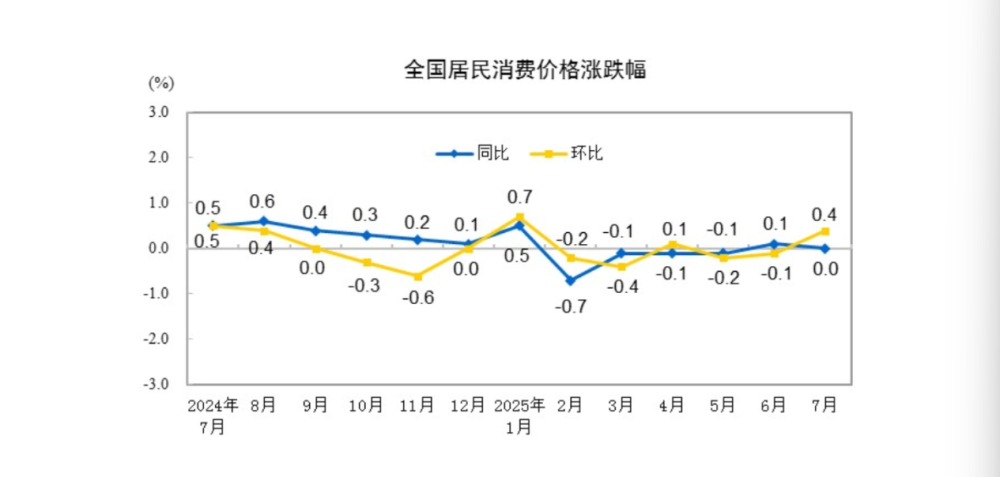
Core Viewpoint - The latest data from the National Bureau of Statistics indicates a shift in the Consumer Price Index (CPI) in July, with a month-on-month increase of 0.4% and a year-on-year stability, signaling positive trends in consumer spending and economic recovery [1][5]. Group 1: Consumer Price Index (CPI) Trends - In July, the service prices rose by 0.6% month-on-month, contributing approximately 0.26 percentage points to the CPI's month-on-month increase, marking a significant factor in the CPI's positive shift [5]. - The core CPI, excluding food and energy prices, saw a year-on-year increase of 0.8%, with the growth rate expanding for three consecutive months [1]. Group 2: Consumer Activity and Promotions - Various regions have launched over 2,000 promotional activities to stimulate consumption during the summer, enhancing consumer engagement and spending [6]. - The "Follow the Movie to Tour Zhejiang" initiative has led to increased visitor numbers at local attractions, boosting related industries such as accommodation and dining [11]. Group 3: Industrial Producer Price Index (PPI) Insights - The PPI showed a month-on-month decline of 0.2% in July, but the rate of decline has narrowed by 0.2 percentage points compared to the previous month, indicating a potential stabilization in industrial pricing [12][18]. - The government is focusing on regulating low-price competition among enterprises to enhance product quality and promote orderly market conditions [15]. Group 4: Supply and Demand Dynamics - Macro policies are being implemented to strengthen new growth drivers in various industries, leading to improved supply-demand relationships and positive price changes [19]. - The demand for high-quality consumer goods is increasing, with significant growth in sales of energy-efficient air conditioning units and smart home appliances [23][24].
权威数读|6月份:规上工业企业利润降幅收窄
Xin Hua Wang· 2025-08-12 06:20
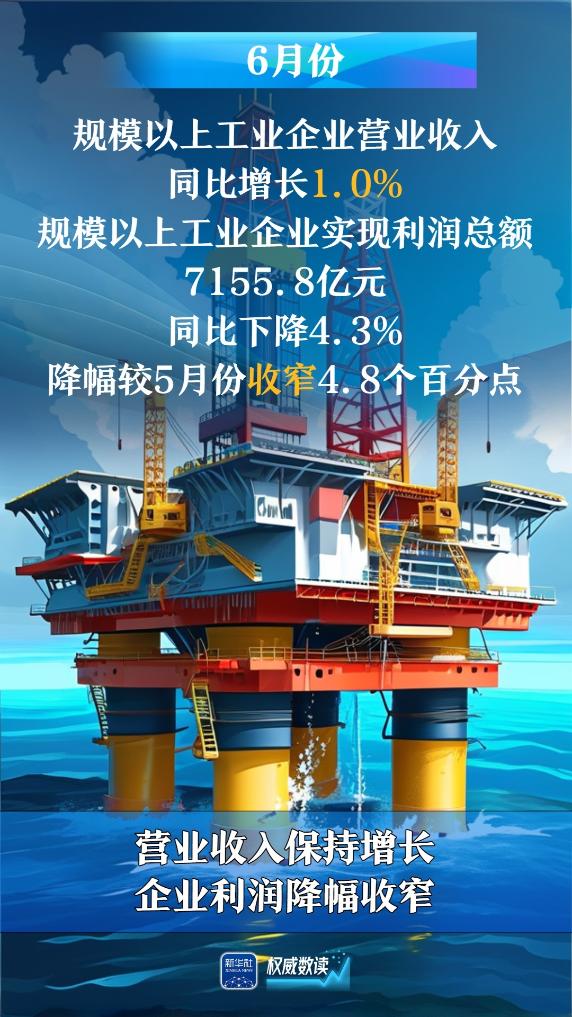
Core Insights - In June, the profit decline of large-scale industrial enterprises narrowed compared to May, with a total profit of 715.58 billion yuan, reflecting a year-on-year decrease of 4.3%, which is a 4.8 percentage point improvement from May [3]. Group 1: Industrial Performance - The operating revenue of large-scale industrial enterprises increased by 1.0% year-on-year [3]. - The equipment manufacturing industry showed significant growth, with operating revenue rising by 7.0% and profits shifting from a decline of 2.9% in May to a growth of 9.6% in June [5]. - The electronic special materials manufacturing industry experienced a profit increase of 68.1%, while the smart consumer devices manufacturing industry saw a profit rise of 40.9% [7]. Group 2: Industry Trends - The manufacturing sector is advancing towards high-end, intelligent, and green development, as evidenced by the substantial profit growth in key sectors such as key ion battery manufacturing, which reported a profit increase of 72.8% [7].
新华全媒+丨CPI同比由降转升 部分行业价格呈企稳回升态势——透视6月份物价数据
Xin Hua Wang· 2025-08-12 05:43
Core Insights - The Consumer Price Index (CPI) in June turned from a decline to an increase of 0.1% year-on-year, indicating a marginal improvement in consumer prices [2] - The core CPI, excluding food and energy, rose by 0.7% year-on-year, marking the highest increase in nearly 14 months, reflecting a gradual recovery in consumer demand [3][4] CPI Analysis - The CPI's year-on-year increase was influenced by a rebound in industrial consumer goods prices and rising domestic fuel prices due to international oil price fluctuations [2] - The year-on-year decline in industrial consumer goods prices narrowed from 1.0% to 0.5%, reducing the downward pressure on CPI by approximately 0.18 percentage points [2] - Food prices decreased by 0.4% month-on-month, with specific items like freshwater fish and fresh vegetables seeing price increases [3] PPI Analysis - The Producer Price Index (PPI) fell by 0.4% month-on-month, with some industries showing signs of price stabilization and recovery [5] - The year-on-year decline in PPI expanded by 0.3 percentage points, but macroeconomic policies have improved supply-demand relationships in certain sectors [5][6] - Prices in the automotive manufacturing sector, including gasoline and new energy vehicles, showed a narrowing decline, indicating potential recovery in these industries [5][6] Policy Impact - The implementation of proactive macroeconomic policies has led to improvements in both manufacturing and non-manufacturing sectors, addressing supply-demand issues and supporting price trends [4] - The ongoing exit of outdated production capacity and the enhancement of product quality are expected to contribute to a gradual price recovery in the second half of the year [6]