茶饮

Search documents
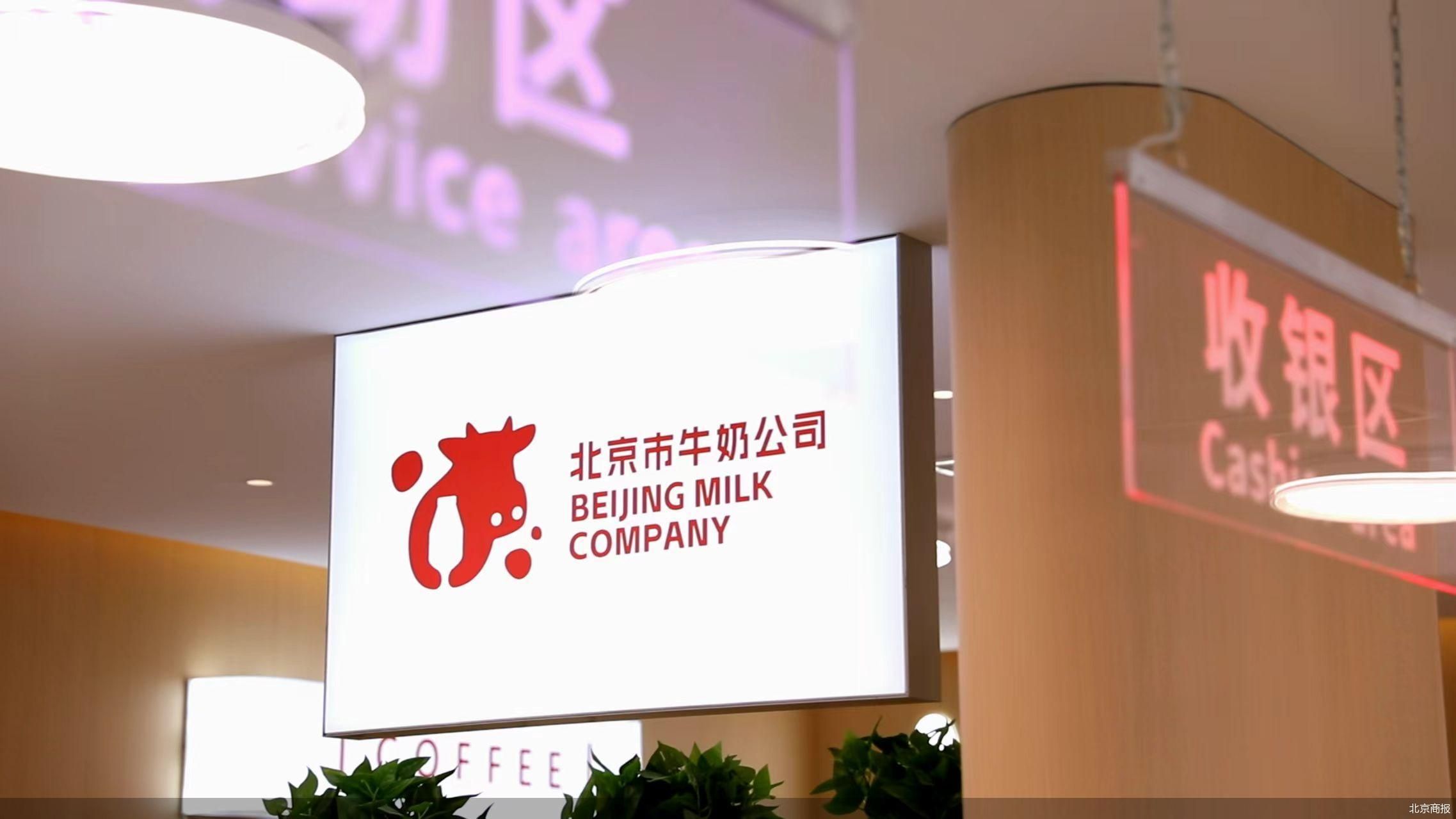
开出“回忆杀”奶茶店 老字号三元寻找年轻力
Bei Jing Shang Bao· 2025-06-11 12:51
Group 1 - The core viewpoint of the article is that Sanyuan Foods is launching a new tea beverage store under the brand "Beijing Milk Company" to engage with younger consumers and adapt to market changes [1][6][11] - The new store emphasizes fresh milk and beverages, with a menu featuring "24h direct supply from the farm" and a range of products including tea drinks and fresh milk [5][12] - Sanyuan Foods plans to open 5-6 new self-operated stores in Beijing this year, focusing on differentiated layouts based on community, business districts, and tourist attractions [5][11] Group 2 - The tea beverage market is highly competitive, and Sanyuan Foods needs to leverage its strengths and adopt a differentiated approach to establish a foothold in the new consumer market [1][10] - The store's design and branding evoke nostalgia, aiming to connect with consumers' memories while appealing to modern tastes [3][6] - Sanyuan Foods is utilizing smart technology in its operations, such as robot-made coffee and self-service ice cream, to attract younger customers [5][12] Group 3 - The company recognizes the need to innovate and adapt to the rapidly changing preferences of young consumers, as traditional retail models are losing relevance [7][11] - Sanyuan Foods aims to maintain its core identity while exploring new business opportunities, emphasizing the importance of fresh milk supply and unique product offerings [10][12] - The brand's historical significance and established reputation provide a solid foundation for its new ventures, but it must remain responsive to market trends and consumer demands [9][12]


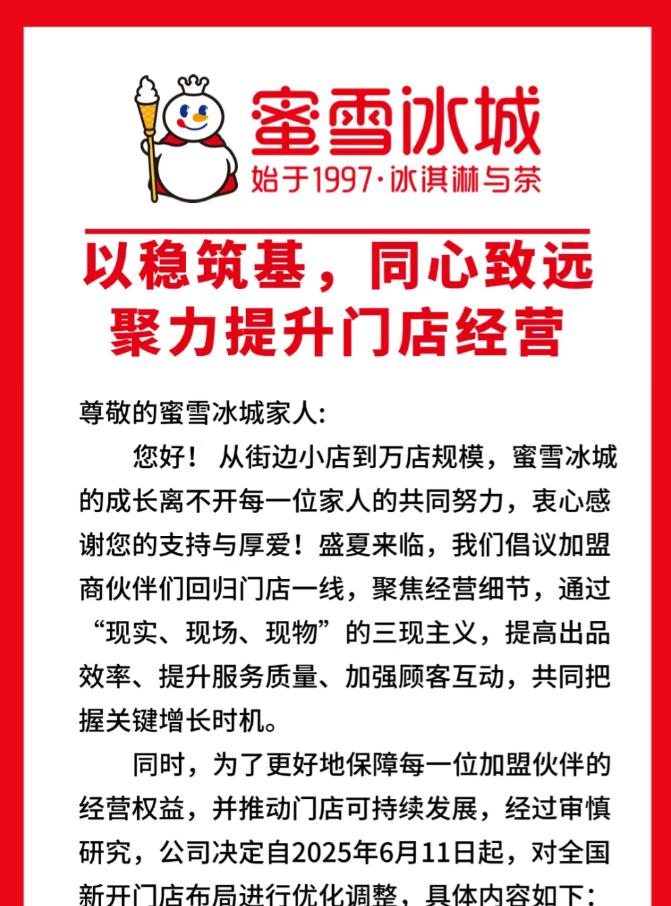
蜜雪冰城再次调整加盟政策,释放什么信号?
Hu Xiu· 2025-06-11 03:33
Core Viewpoint - The latest adjustment in the franchise policy of Mixue Ice City indicates a shift towards optimizing store layout and tightening new store openings, effective from June 11, 2025, reflecting a strategic response to market saturation and consumer demand [4][10][11]. Summary by Sections Franchise Policy Adjustments - Mixue Ice City has slowed its overall store opening pace and is focusing on developing multi-scenario stores [4]. - The company has undergone a cycle of tightening and loosening its opening strategies over the past year [5]. - From the second half of 2024, existing franchisees must meet a performance criterion of maintaining a top-tier score for seven consecutive months to qualify for new store applications [6][7]. - Only about 10% of franchisees meet this criterion, limiting expansion opportunities for many interested franchisees [8]. - In December 2024, the company slightly relaxed the opening requirements, allowing franchisees not in the lowest performance tier to apply for new stores [9]. New Store Layout Optimization - The upcoming policy emphasizes scientific planning and rational layout based on market capacity, consumer demand, and regional development potential [11]. - The company continues to encourage the establishment of multi-scenario stores in high-traffic areas such as scenic spots and transportation hubs [11]. Selection and Approval Process - As the total number of stores increases, the selection criteria for new store locations have become stricter, with many franchisees reporting difficulties in finding and getting approval for new locations [13][15]. - The company is particularly cautious about opening new stores in already developed areas, leading to increased competition for prime locations [15]. Focus on Special Channels - The trend in the industry is shifting towards special channels (referred to as "special channels"), which include high-traffic areas like campuses and transportation hubs, due to lower competition and higher consumer concentration [16][18]. - Some early franchisees are adjusting their strategies to focus on these special channel locations, recognizing their potential for stable customer flow and profitability [18]. Local Management Requirements - New franchise applications for certain underserved towns now require local residency and management by the franchisee, reflecting a strategy to ensure better operational success in less populated areas [19].
新式茶饮,激发消费新活力
Ren Min Ri Bao· 2025-06-10 22:04
Group 1 - The new-style tea beverage industry is experiencing a trend towards healthier options, driven by increasing consumer health awareness and preferences for "light milk" and "low sugar" products [1][2] - Companies are focusing on product transparency by providing detailed nutritional information on their beverages, such as glycemic index, calorie count, caffeine content, protein, and sodium levels [1] - The introduction of non-hydrogenated base milk products is seen as a significant innovation in the tea beverage sector, with companies like Saint Mana Dairy leading the way in developing healthier alternatives to traditional creamers [2] Group 2 - Saint Mana Dairy has expanded its production capacity with new Tetra Pak production lines to meet the demand for non-hydrogenated base milk, which avoids the health risks associated with trans fats [2] - The founder of Saint Mana Dairy emphasizes the importance of balancing taste and health in product development, aiming to cater to the new consumer trend of prioritizing health without sacrificing flavor [2]
霸王茶姬20250610
2025-06-10 15:26
Summary of Bawang Chaji Conference Call Company Overview - **Company**: Bawang Chaji - **Industry**: Tea Beverage Industry Key Points Financial Performance - Bawang Chaji's single-store model is robust, with annual revenue exceeding 5 million yuan, demonstrating significant operational efficiency [2][3] - In Q1, the average monthly sales per store were approximately 430,000 yuan, showing a slight year-on-year decline, but improvements were noted in May with new product launches [2][6] - The company anticipates revenue growth of 10%-20% in the future [2][3] Market Position and Competition - Bawang Chaji holds a competitive edge in the tea beverage market, particularly in the price segment above 10 yuan, where it competes strongly with brands like Gu Ming and Mi Xue Bing Cheng [4] - The company has a projected profit of approximately 2.5 billion yuan for 2024, ranking second in the new-style tea beverage sector [4][23] - The brand's high repurchase rate and strong brand value are validated by its leading Baidu search index compared to competitors [2][8] Expansion Plans - The company plans to slow down domestic store openings, focusing on refined management and profitability for franchisees, with a target of 1,000 new stores in 2025 [10][31] - Bawang Chaji is expanding internationally, with Singapore stores achieving over 20% operating profit margins and plans to enter multiple Southeast Asian countries and California in the U.S. [13][31] Product Innovation and Marketing - New product launches, including collaborations with celebrities, are expected to drive sales and potentially act as catalysts for stock price increases [7][9] - The company emphasizes brand building over traditional marketing, focusing on product series expansion and maintaining a strong brand presence [9][19] Operational Efficiency - Bawang Chaji has streamlined its supply chain, achieving over 90% sales concentration on its main product, "Tea Latte," and reducing raw material costs from 59% in 2022 to 49% in 2024 [20] - The company utilizes automation and digital tools to enhance operational efficiency, with top-performing stores achieving daily sales of 1,300 cups [20] Future Growth Projections - Revenue is expected to grow by 24% in 2025 and 20% in 2026, reaching 15.3 billion yuan and 19 billion yuan, respectively [33] - The company anticipates a net profit of 2.91 billion yuan in 2025 and 3.51 billion yuan in 2026, with adjusted net profit margins potentially declining due to increased investments [35] Risks - Bawang Chaji faces risks including changing consumer preferences, intensified market competition, underperformance in overseas markets, and food safety concerns [37] Valuation - The company is valued at a target price of $41.5, based on a projected P/E ratio of 19 for 2025, reflecting its position in the premium tea beverage market and growth potential in international markets [36]
【e公司观察】超2000亿港元市值的蜜雪集团 高速扩张之路还能持续多久?
Zheng Quan Shi Bao Wang· 2025-06-10 12:56
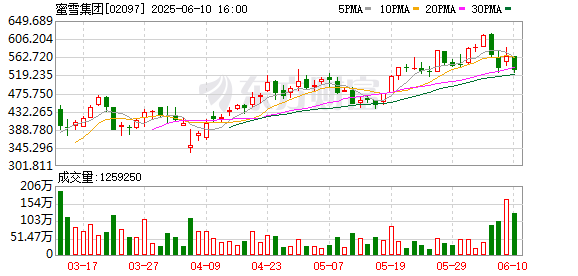
Core Viewpoint - The company, Mixue Group, has experienced rapid expansion and is positioned within the "new consumption" concept in the Hong Kong stock market, but its gross margin is significantly lower than its peers [1][4]. Expansion and Market Presence - As of the end of 2024, Mixue Group had a total of 41,584 stores in mainland China, covering all county-level cities, with a focus on the low-price market in third and fourth-tier cities [1]. - The distribution of stores by city tier is as follows: 1,983 in first-tier cities (4.8%), 8,143 in new first-tier cities (19.6%), 7,000 in second-tier cities (18.2%), and 23,858 in third-tier and below cities (57.4%) [1]. Financial Performance - The gross margin of Mixue Group is approximately 32%, which is lower than that of competitors like Pop Mart (64.79%) and Maogeping (84.37%) [1]. - The average single-store daily GMV (Gross Merchandise Volume) was about 4,184.4 yuan in the first three quarters of 2024, showing a year-on-year decline of 5.3% [2]. Store Growth and Challenges - The growth rate of store openings in third-tier and below cities has slowed down, with the number of stores increasing from 11,590 in 2021 to 23,858 in 2024, but with varying growth rates [2]. - The company has faced challenges with increasing store density leading to a decline in single-store GMV, indicating a potential saturation in the market [3]. Recent Developments - Mixue Group's stock price has faced significant fluctuations, with a drop of 6.19% on June 10, 2025, and three out of four trading days showing substantial declines [4]. - The company has also seen an increase in the number of closed stores, with 1,307 and 1,609 closures in 2023 and 2024, respectively [3]. Food Safety Concerns - Recent media reports have raised concerns about food safety issues in several Mixue stores, including allegations of altering ingredient expiration dates and using overnight tea [5]. - The company has acknowledged these issues and has taken steps to address them, including closing affected stores for rectification [5].
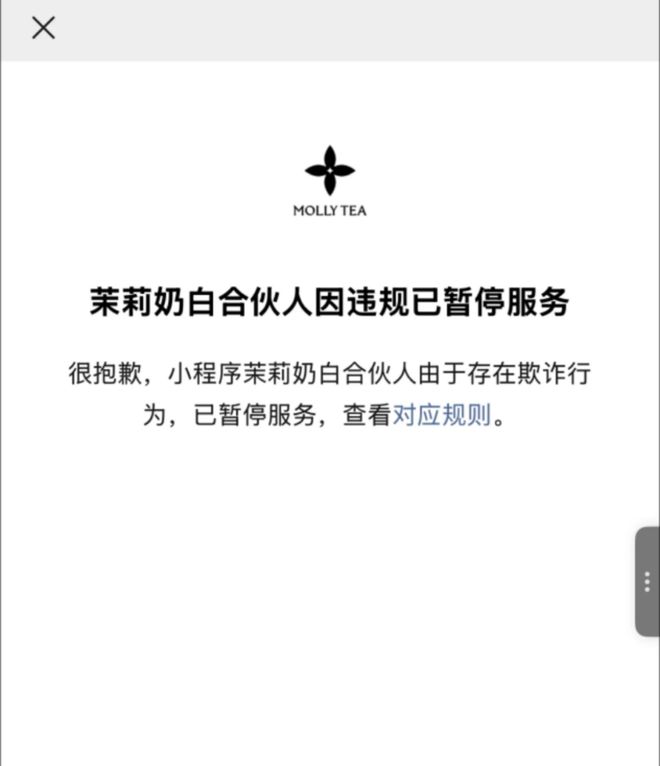
“茉莉奶白合伙人”小程序被曝因“欺诈”暂停服务
Guan Cha Zhe Wang· 2025-06-10 11:32
Group 1: Consumer Complaints and Issues - In May, the Black Cat Complaints platform reported that consumers frequently found foreign objects in snacks purchased from Tea Yan Yue Se, leading to unresolved complaints despite customer service inquiries [1] - The Black Cat Complaints platform received nearly 26.42 million effective complaints from consumers by the end of May 2025, with over 790,000 complaints recorded in May alone [1] Group 2: Business Operations and Partnerships - The "Jasmine Milk White Partner" mini-program was suspended due to allegations of fraud, impacting potential franchisees seeking information about joining the brand [2][4] - Nova Coffee has partnered with Zhongshang Lawson to enter convenience stores, launching its first batch of cooperative stores in Hefei, enhancing its market presence [8] Group 3: Market Performance and Growth - During the 2025 Lemon Season Festival, Lemon Season reported a total GMV exceeding 60 million, marking a 30.2% increase compared to the same period in 2024, with a significant rise in membership and Z-generation consumer engagement [6] - Lemon Season plans to expand its store footprint in Singapore and Australia, following successful openings in Malaysia and Cambodia [7] Group 4: Stock Market Developments - The Shenzhen Stock Exchange announced the inclusion of brands like Buluco, Guming, and Mixue Group in the Hong Kong Stock Connect list, allowing southbound funds to invest in these new consumer stocks [5] - Analysts suggest that while this is a short-term positive for stock prices, high valuations and upcoming lock-up expirations may pose challenges in the medium term [5]
餐饮行业月度观察报告(2025年5月)
Hong Can Chan Ye Yan Jiu Yuan· 2025-06-10 09:55
Investment Rating - The report indicates a positive investment outlook for the restaurant industry, with a significant increase in the national restaurant prosperity index from 94.7 in April to 104.2 in May 2025, reflecting a 10% month-on-month growth [7][8]. Core Insights - The restaurant industry is experiencing a robust recovery driven by holiday consumption, with increased foot traffic and sales during May due to various celebrations [6][7]. - New product launches are thriving, particularly in Western fast food and tea beverages, showcasing regional flavors and innovative ingredients [12][22]. - The expansion of restaurant brands is notable, with both domestic growth and international market entries being actively pursued [41][45]. - Investment activities are stabilizing, with several financing events and IPOs occurring in the restaurant sector, indicating a healthy investment climate [48][52]. Summary by Sections 1. Restaurant Industry Prosperity Index - The national restaurant prosperity index rose to 104.2 in May 2025, a 10% increase from April, driven by holiday spending and seasonal demand [7][8][9]. 2. New Product Launches - In May, 45 Western fast food brands launched 121 new products, an 8% increase from the previous month, with a focus on regional flavors [13][14]. - The tea beverage sector saw 64 brands introduce 242 new products, with fruit tea leading the market and a notable increase in health-oriented ingredients [22][23]. - The bakery segment introduced 237 new products, with cakes being the most popular category, driven by Mother's Day and the upcoming Dragon Boat Festival [31][32]. 3. Opening Situations - Domestic brands are actively expanding, with notable openings such as Luckin Coffee's Brazilian coffee-themed store and Haidilao's first crispy fish-themed restaurant [45][46]. - International expansions include the opening of tea brands in Europe and Southeast Asia, indicating a strategic move towards global markets [45][46]. 4. Investment, Mergers, and IPOs - The report recorded four financing events in May, with a focus on downstream restaurant brands, and three companies indicating IPO plans [48][49]. - Notable IPOs include the successful listing of沪上阿姨 and海天味业, highlighting the growing interest in the restaurant sector [52][54]. 5. Major Events in the Restaurant Industry - Key developments include McDonald's stable performance in China, the launch of new themed stores by various brands, and strategic partnerships aimed at expanding market reach [57][61]. - Regulatory updates are also noted, with new legislation aimed at enhancing food safety and protecting traditional dining cultures [61]. 6. Red Restaurant Index Top 100 - The top three brands in the Red Restaurant Index for May 2025 are Haidilao, KFC (China), and Luckin Coffee, reflecting their strong market positions [66][70].
新一轮“造富”,河南赢了?
Mei Ri Jing Ji Xin Wen· 2025-06-09 15:52
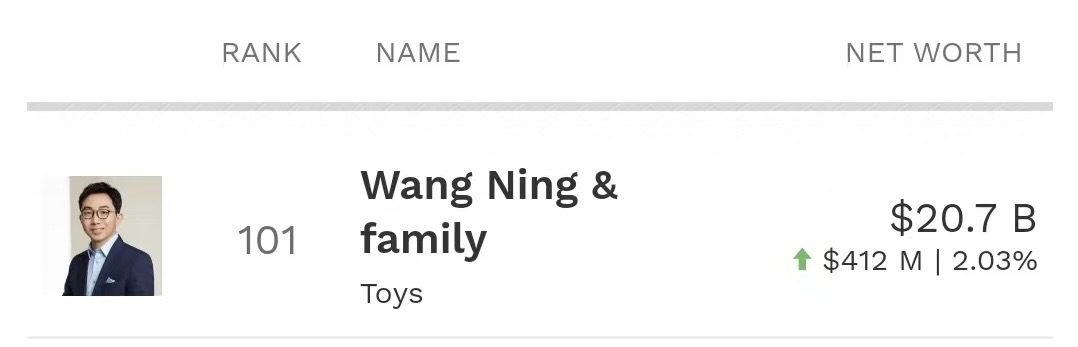
Core Insights - Labubu's global popularity has propelled Wang Ning, the founder of Pop Mart, into the spotlight as the new richest person in Henan with a net worth of $20.7 billion, surpassing the previous record held by Qin Yinglin of Muyuan Foods at $16.9 billion [1][2] Group 1: Market Performance - The new consumption companies, including Pop Mart and Mixue Ice City, have seen their stock prices double this year, with a combined market capitalization exceeding HKD 700 billion [2] - Pop Mart's stock price has surged over 170% this year, reaching HKD 250.8, and has increased more than 11 times since the beginning of 2024 [9] - Mixue Ice City has a market capitalization of HKD 214.7 billion, with a stock price increase of 5.41% on June 9 [3][4] Group 2: Business Models and Consumer Trends - New consumption brands are thriving by addressing current consumer pain points, with Mixue Ice City focusing on cost-effectiveness and Pop Mart targeting emotional consumption through blind boxes and social attributes [9][10] - Pop Mart's revenue for 2024 is projected to be CNY 13.04 billion, a year-on-year increase of 106.9%, with adjusted net profit expected to rise by 185.9% to CNY 3.4 billion [5] Group 3: Economic and Industrial Shifts - The rise of new consumption brands reflects a shift in Henan's economic landscape from traditional agriculture and manufacturing to emerging industries like new consumption and cultural creativity [14][18] - The success of these brands is supported by Henan's strong agricultural and manufacturing base, which provides essential resources for production and supply [18] Group 4: Future Outlook - The emergence of new consumption brands in Henan indicates a broader trend of wealth creation linked to new industries, as seen in other provinces like Sichuan and Shaanxi [21][22] - Despite the current success, there are concerns about the sustainability of the new consumption boom, with potential risks of market bubbles and overvaluation [24]
再论新消费的投资节奏、方向
2025-06-09 15:30
Summary of Key Points from Conference Call Records Industry Overview - **New Consumption Market**: The new consumption market has seen a significant increase in attention, with investors actively seeking potential stocks. Traditional leading companies also present investment opportunities due to high dividends and competitiveness [1][6] - **Investment Focus for 2025**: Key investment themes include the rise of domestic brands, emotional consumption, the silver economy, and AI smart home products [1][11] Core Insights and Arguments - **Consumer Trends**: The new consumption sector is characterized by a shift towards products that reflect future consumption trends, such as trendy toys, gold jewelry, and beauty products. Companies with strong market positions and high growth potential are recommended despite their valuations being relatively high [1][9] - **Tea Beverage Industry**: The tea beverage sector is thriving, with chain tea brands being the top recommendation. Companies like Mixue Ice City and Gu Ming are highlighted for their unique business models and growth potential [1][29][31] - **Gold and Jewelry Sector**: The gold and jewelry sector benefits from rising gold prices and increased penetration of premium gold jewelry. Companies like Lao Pu Gold and Chow Tai Fook are recommended for their strong brand positioning and product differentiation [4][34][37] Notable Companies and Their Performance - **Pop Mart and Miniso**: These companies are recognized as leaders in the trendy toy industry, with successful overseas market expansions and innovative product offerings [1][27][52] - **Beauty Sector**: Companies like Juzi Biotechnology and Runben are noted for their solid fundamentals and reasonable valuations, despite some short-term growth slowdowns [4][43][44] - **Children's Retail**: Kid's King is highlighted for its robust growth in direct sales and rapid expansion of its franchise business [4][38] Additional Important Insights - **Market Volatility**: The new consumption sector is expected to experience increased volatility, with many stocks having already seen significant price increases. The focus should remain on companies with strong growth prospects and competitive advantages [9][10] - **Investment Opportunities in Hong Kong and A-shares**: The top ten new consumption companies in Hong Kong and A-shares include Pop Mart, Miniso, and others, indicating a broad interest in this sector [8][11] - **Emerging Trends**: The rise of emotional consumption and the demand for personalized products are reshaping consumer preferences, leading to opportunities for companies that can innovate and adapt [13][44] Conclusion The new consumption market is evolving rapidly, with significant opportunities in various sectors such as trendy toys, beauty products, and gold jewelry. Companies that can leverage these trends and maintain strong growth trajectories are likely to attract investor interest.


新消费股大抱团,谁是下一个?
格隆汇APP· 2025-06-09 10:42
Core Viewpoint - The recent significant adjustments in the new consumption sector, particularly among leading companies, indicate a potential shift in market dynamics, questioning whether this is the beginning of a breakdown in the "hugging" phenomenon or merely a pause in the upward trend [4][14]. Group 1: Market Dynamics and Policy Drivers - The new consumption trend began in March 2023, with various sectors like jewelry, cosmetics, and pet products experiencing substantial growth, leading to a phenomenon of extreme market "hugging" [3][4]. - Recent high-level declines in leading new consumption stocks suggest a potential unraveling of this "hugging" phenomenon, driven by changing market expectations and macroeconomic policies [4][14]. - The Chinese government's shift in policy focus from investment to consumption is a significant driver, aiming to stimulate domestic demand and stabilize economic growth [5][6]. Group 2: Performance Metrics and Sector Analysis - In the pet sector, companies like Zhongchong and Guibao have shown impressive revenue growth rates of 18.9% and 27% respectively from 2020 to 2024, with net profit growth rates of 30.7% and 54% [6]. - In the jewelry sector, Laopu Gold reported a staggering revenue and net profit growth of 166% and 254% respectively in 2024, while Chaohongji saw a year-on-year growth of 25.4% and 44.4% in Q1 [6][7]. - The overall jewelry sector had been undervalued for years, which contributed to the recent price surges [7]. Group 3: Market Sentiment and Valuation Concerns - The recent decline in new consumption stocks is partly attributed to the market's adjustment to high valuations, with Laopu Gold's PE ratio exceeding 100 times and Chaohongji's surpassing 50 times [14][16]. - The market's enthusiasm for new consumption stocks has led to inflated valuations, raising concerns about sustainability and potential corrections [16][17]. Group 4: Future Market Outlook - The potential for a shift towards technology sectors is highlighted, driven by upcoming tariff negotiations and significant corporate mergers in the tech space [18][19]. - The upcoming Shanghai Lujiazui Forum may introduce financial policies that could positively impact technology stocks, suggesting a possible transition in market focus [19][20]. - Despite the potential for a rebound in technology stocks, caution is advised due to ongoing macroeconomic pressures and reduced expectations for overall market performance [20][21].