
科技

Search documents
A股新开户数持续增加透露了哪些利好信息
Zheng Quan Ri Bao· 2025-10-13 16:22
Core Insights - The continuous increase in new A-share accounts indicates growing investor confidence in China's economy and capital market reforms, highlighting the increasing attractiveness of Chinese assets [1][2][3] - The A-share market has shown resilience, with the Shanghai Composite Index reaching a year-to-date increase of 16.04% as of October 13, driven by positive macroeconomic fundamentals and a series of stabilizing measures [1][2] - The deepening reforms in the capital market are providing better investment opportunities, particularly in technology sectors, which are becoming the main focus of the current market rally [2][3] Market Dynamics - The influx of institutional investors, with 10,900 new accounts in September, marks a significant milestone and reflects a growing trend towards long-term and value investing [3] - The shift in residents' asset allocation towards financial assets, particularly A-shares, is becoming evident as traditional investments like real estate face regulatory constraints [3][4] - The trend of asset migration to A-shares is expected to continue, but maintaining investor confidence through protection measures and promoting rational investment practices is crucial for sustaining this trend [4]
外部冲击下市场波动加剧
Tebon Securities· 2025-10-13 15:29
Market Analysis - The A-share market experienced significant fluctuations due to external uncertainties, particularly following the announcement of a 100% tariff on all imports from China by the U.S. starting November 1, 2025. The Shanghai Composite Index closed at 3889.50, down 0.19%, while the ChiNext Index fell by 1.11%. The Sci-Tech 50 Index, however, rose by 1.40% [7][8]. - The market showed a clear adjustment with a total of 1682 stocks rising and 3628 falling, with a total trading volume of 2.37 trillion, a decrease of approximately 6.3% from the previous trading day [7][8]. - Resource sectors and self-sufficiency stocks led the market, driven by a 37% increase in rare earth prices and export control policies. Precious metals also saw gains due to their safe-haven status amid U.S.-China tensions [8][11]. Bond Market - The bond market saw an overall increase, with government bond futures rising across the board. The 30-year main contract increased by 0.37%, while the 10-year, 5-year, and 2-year contracts rose by 0.10%, 0.03%, and 0.02% respectively [10]. - The interbank market maintained a loose funding environment, with the central bank conducting a 137.8 billion yuan reverse repurchase operation at an interest rate of 1.40%, resulting in a net injection of 137.8 billion yuan [10][11]. - The rise in long-term government bonds was primarily driven by increased risk aversion and a stable funding environment, with expectations of continued fluctuations in the bond market [10][11]. Commodity Market - Precious metals continued to lead the commodity market, with gold and silver prices reaching new highs. Gold futures rose by 1.99%, while silver increased by 2.84% [11]. - The rise in precious metals was attributed to heightened global economic uncertainty due to U.S.-China trade tensions, leading to increased demand for gold as a safe-haven asset [11]. - The pork market continued to decline, with futures prices hitting a new low of 11,125 yuan per ton, driven by seasonal demand drops and supply chain issues [11]. Trading Hotspots - Key trading opportunities identified include precious metals, artificial intelligence, nuclear fusion, domestic chips, robotics, and consumer sectors, driven by factors such as central bank policies, geopolitical risks, and domestic economic recovery [12][13]. - The report emphasizes the importance of monitoring developments in U.S. Federal Reserve interest rate decisions and domestic economic stimulus measures as critical factors influencing market trends [12][13]. Core Insights - Despite short-term volatility due to external shocks, core indices are expected to maintain an upward trajectory, supported by China's increasing core competitiveness amid U.S.-China tensions [13]. - The bond market is anticipated to remain in a state of recovery, bolstered by a loose funding environment and global liquidity trends [13]. - Commodity prices, particularly for precious metals, are expected to continue their strong performance, driven by both safe-haven demand and favorable monetary policies [13].


中金公司 假期动态与节后交易主线
中金· 2025-10-13 14:56
Investment Rating - The report indicates a cautious investment stance due to ongoing geopolitical risks and economic uncertainties, particularly in the context of U.S.-China trade relations and domestic consumption trends [1][3]. Core Insights - The report highlights that the recent surge in gold and base metal prices is driven by increased geopolitical risks and the potential for U.S. government shutdowns, suggesting that these factors will continue to support commodity prices in the near future [4][17]. - It emphasizes the importance of monitoring Japan's political changes, which could lead to both short-term asset price volatility and long-term structural economic reforms [5][23]. - The report notes that consumer spending data during the holiday period was weaker than expected, reflecting broader economic challenges, and suggests that high-valuation sectors are experiencing significant corrections [6][29]. Summary by Sections U.S.-China Trade Relations - The report discusses the impact of renewed U.S.-China tariffs, which have led to significant market volatility, particularly affecting U.S. stocks and Chinese concept stocks [3][10]. - It suggests that market sentiment has adjusted to these developments, potentially limiting asset declines [3]. Commodity Market Outlook - The report identifies a new bull market cycle for colored resources, driven by global supply chain adjustments and rising demand from emerging industries [2][15]. - It specifically highlights the bullish outlook for precious metals, basic metals, and strategic minor metals, with gold expected to benefit from declining real interest rates and de-dollarization trends [17][18]. Japanese Political Landscape - The report outlines the implications of recent political changes in Japan, which are expected to influence stock market performance and monetary policy [5][23]. - It notes that the new leadership may not pursue aggressive fiscal expansion, which could stabilize the yen and impact market expectations [24][27]. Consumer Trends - The report indicates that consumer spending during the recent holiday period was below expectations, with a notable shift in consumer preferences towards experience-based spending [6][29]. - It highlights that structural changes in consumer behavior, particularly among younger demographics, are shaping the retail landscape [29]. Market Valuation and Performance - The report assesses current market valuations as high, with both U.S. and Chinese markets showing signs of inflated valuations compared to historical levels [7][8]. - It notes that U.S. stock performance has been primarily driven by earnings revisions, while Hong Kong stocks have relied more on valuation increases [9]. Future Market Dynamics - The report expresses uncertainty regarding future market trends due to escalating unexpected events and the complexities of trade negotiations [10][11]. - It suggests that the credit cycles in both the U.S. and China are approaching a phase of recovery, with potential implications for asset prices [12][14]. Specific Metal Outlook - The report provides a positive outlook for silver, driven by industrial demand recovery and its correlation with gold price movements [20]. - It also highlights the potential for basic metals to enter a bull market due to supply disruptions and increasing demand from new industries [21][22]. Strategic Resource Management - The report emphasizes the growing importance of strategic resource management, particularly for critical minerals like cobalt, lithium, and rare earths, which are expected to maintain bullish trends [22].

特朗普这2天冷静下来,再打关税战美国必败,主动给中国递上台阶
Sou Hu Cai Jing· 2025-10-13 12:29
Core Viewpoint - The article discusses the shifting stance of former President Trump regarding the trade war with China, indicating a potential retreat from aggressive tariff policies due to domestic economic pressures and the realization of the negative impacts of such policies on the U.S. economy [1][4][10]. Economic Impact - The Yale Budget Lab estimates that by 2025, American households will face an increased annual expenditure of $2,100 to $3,800 due to tariffs, with low-income families being disproportionately affected [6]. - The short-term price increase of goods due to tariffs is approximately 1.7% to 1.8%, resulting in an average loss of about $2,400 per household this year [6]. - The volatility in the U.S. stock market, particularly affecting tech and manufacturing sectors, reflects growing concerns over tariff policies leading to capital flight [6]. Supply Chain Challenges - Stricter origin verification mechanisms complicate global supply chains, forcing companies to adjust logistics and factory layouts, which increases overall logistics costs and compliance burdens [8]. - The article highlights that Trump's tariff policies are contributing to the fragmentation of the global economy and creating a "supply chain isolation" for the U.S., which could dilute its overall competitiveness in the long run [8]. Political and Legal Ramifications - Domestic legal challenges are emerging against Trump's tariff policies, with some companies and industry associations filing lawsuits, questioning the president's authority to impose tariffs under national security claims [16]. - If courts uphold these challenges, it could fundamentally undermine the existing tariff framework, leading to increased uncertainty in the trade environment and diminishing investment confidence [18]. International Relations - The article notes that Trump's unilateral and bullying tactics have damaged U.S.-China relations, with China responding firmly to U.S. tariffs, particularly affecting American agricultural and energy sectors [14][12]. - The article emphasizes that many countries are seeking to reduce their dependence on the U.S. market and are moving towards regional integration, while China is actively pursuing multilateral trade cooperation [18][20]. Strategic Misalignment - Trump's recent shift in tone is viewed as a tactical adjustment ahead of midterm elections rather than a genuine strategic change, as he faces increasing domestic opposition to the trade war [20]. - The article concludes that for genuine improvement in U.S.-China economic relations, the U.S. must abandon its unilateral sanctions and tariff threats, and instead engage in respectful and mutually beneficial negotiations [22].

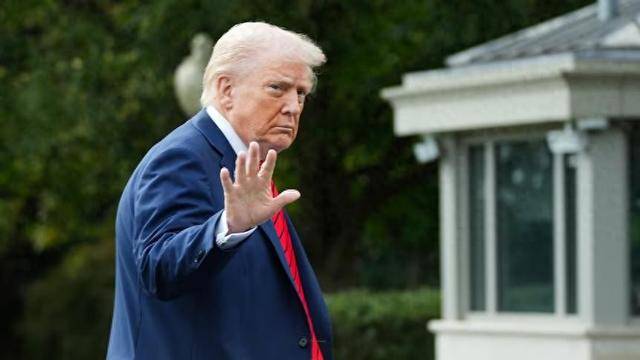
美联储吵翻了!黄金跌金融涨,降息快慢,影响你房贷、股票、菜价
Sou Hu Cai Jing· 2025-10-13 11:12
Core Viewpoint - The ongoing debate around interest rate cuts in the U.S. is creating uncertainty in global markets, with traders expecting two more cuts this year while Federal Reserve officials express concerns about persistent inflation [1][15]. Group 1: Interest Rate Dynamics - The Federal Reserve lowered interest rates to 4.25%-4.5% at the end of last year, but this followed a period of rates above 5% for two years, leading to significant capital inflows into the U.S. [3]. - The expectation of slower interest rate cuts by the Federal Reserve could lead to renewed capital outflows from emerging markets, as higher U.S. interest rates attract funds [3][5]. Group 2: Impact on Domestic Economy - The high U.S. interest rates limit the Chinese central bank's ability to lower domestic interest rates, affecting mortgage rates and housing market stimulation efforts [5]. - A strong U.S. dollar puts pressure on the Chinese yuan, leading to increased costs for imported goods, which could contribute to domestic inflation [8]. Group 3: Market Reactions - The anticipation of interest rate changes has led to volatility in various sectors, with gold prices dropping significantly in response to reduced rate cut expectations [10]. - The financial sector benefits from a high-interest environment, with U.S. financial stocks performing well while other sectors, like technology, face challenges [10]. Group 4: External Trade Considerations - The U.S. unemployment rate is projected to rise, which may reduce consumer spending and impact export orders from China, particularly in manufacturing hubs like the Yangtze River Delta [11]. - The upcoming Federal Reserve meetings are closely monitored by businesses involved in foreign trade, as decisions made can significantly affect their operations [13]. Group 5: Investment Strategies - Investors are advised to focus on long-term strategies, such as selecting undervalued stocks with high dividends or investing in broad market indices, rather than reacting to short-term fluctuations driven by Federal Reserve communications [13][15].

禾赛科技跌2.55%创新低 上市募41.6亿港元高瓴浮亏
Zhong Guo Jing Ji Wang· 2025-10-13 09:43
Core Viewpoint - Hesai Technology's stock price has fallen to a new low since its listing, indicating potential challenges in market performance and investor sentiment [1]. Group 1: Stock Performance - Hesai Technology's stock closed at HKD 183.20, down 2.55%, with an intraday low of HKD 173.00, marking a new low since its IPO [1]. - The stock price has fallen below the IPO price, reflecting a decline in market confidence [1]. Group 2: IPO Details - Hesai Technology was listed on the Hong Kong Stock Exchange on September 16, 2025, with a final offer price of HKD 212.80 and a maximum public offer price of HKD 228.00 [3]. - The total amount raised from the global offering was HKD 4,160.24 million, with a net amount of HKD 4,005.25 million after deducting estimated listing expenses [3]. Group 3: Use of Proceeds - Approximately 50% of the net proceeds from the offering is planned for research and development investments [3]. - About 35% (approximately HKD 1,297.1 million) is expected to be allocated for production capacity investments to ensure the delivery of high-performance products [3]. - Around 5% is intended for business development to accelerate expansion, and 10% is earmarked for working capital and general corporate purposes [3]. Group 4: Cornerstone Investors - Major cornerstone investors include HHLRA, Taikang Life, WT Asset Management, Grab Inc., Hongda Group, and Commando Global Fund [3]. - HHLRA is the largest cornerstone investor, contributing USD 50 million, followed by Taikang Life with USD 28 million and WT Asset Management with USD 30 million [4].
港股版“恐慌指数”升近29%
Shang Hai Zheng Quan Bao· 2025-10-13 09:30
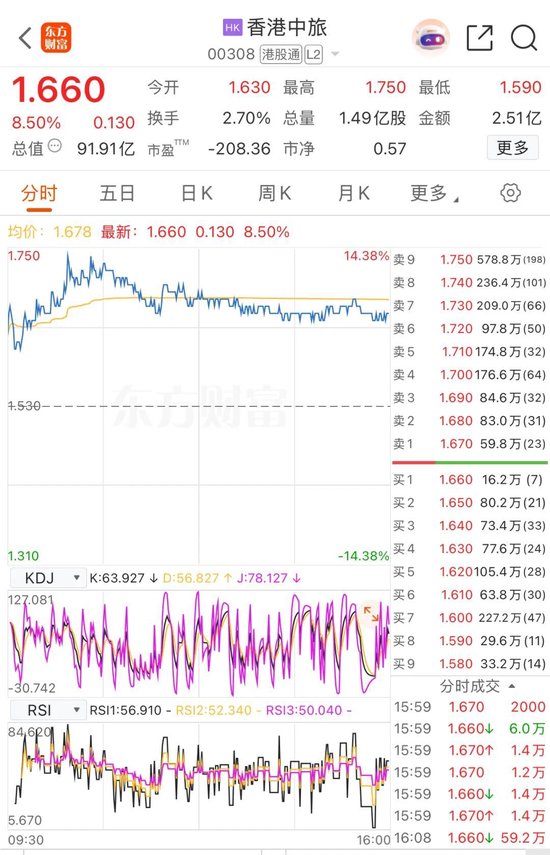
Group 1: Market Overview - The Hong Kong stock market experienced a decline on October 13, with the Hang Seng Index falling by 1.52%, the Hang Seng Tech Index down by 1.83%, and the Hang Seng China Enterprises Index decreasing by 1.45% [1] - The "fear index" for Hong Kong stocks, the Hang Seng Volatility Index, surged nearly 29%, reaching its highest level since May 2025, closing up 18.42% [1][6] - Southbound capital recorded a net inflow of HKD 19.804 billion throughout the day [1] Group 2: Sector Performance - Information security, controllable nuclear fusion, rare earth permanent magnets, semiconductors, and lithography machine sectors showed significant gains [1] - Notable stock performances included Kingsoft Corporation, which rose by 13.82%, and Hong Kong Travel, which increased by 8.5% [1] Group 3: Hong Kong Travel Company Developments - Hong Kong Travel Company proposed a distribution of its tourism business, allowing shareholders to choose between receiving one share of a private company or cash of HKD 0.336 per share [3] - The company aims to reduce non-core asset burdens, improve profitability, and optimize its operational model by focusing on high-return tourism operations [3] Group 4: Gold and Precious Metals - The gold and precious metals sector led the market on October 13, with notable increases in stocks such as Chifeng Jilong Gold Mining, which rose over 9%, and Zijin Mining, which increased by over 9% as well [4] - UBS Wealth Management reported that gold has become the strongest performing major asset class this year, with a price increase exceeding 50% [5]
稀土只是前戏?美国学者:“中国还留着后招没出,美国压根无能为力”
Sou Hu Cai Jing· 2025-10-13 05:13
Group 1 - The core issue of the US-China trade conflict has evolved beyond mere economic competition to encompass geopolitical and technological security dimensions, with specific commodities like rare earths and lithium batteries becoming central to the confrontation [1] - The US's heavy reliance on China for critical supplies is evident, with over 90% of ibuprofen in the US sourced from China, highlighting the limitations of US retaliatory measures against China [3] - China's strategic response to US tariffs and technology restrictions demonstrates a higher level of strategic thinking, as it showcases its ability to exert influence in the supply chain while signaling a willingness to engage in dialogue [3] Group 2 - The volatility in the US stock market, particularly the significant losses experienced by tech giants, reflects the economic pressures faced by the Trump administration amid rising discontent from various industries [5] - The contrasting approaches of the US and China in handling trade tensions reveal a fundamental difference in strategic thinking, with China seeking to maximize its interests through a broader perspective while the US appears to be in a crisis management mode [5] - The ongoing tensions between the two nations suggest that future confrontations will be increasingly complex, with China's actions in critical sectors potentially having a disruptive impact on the US economy [5][6]
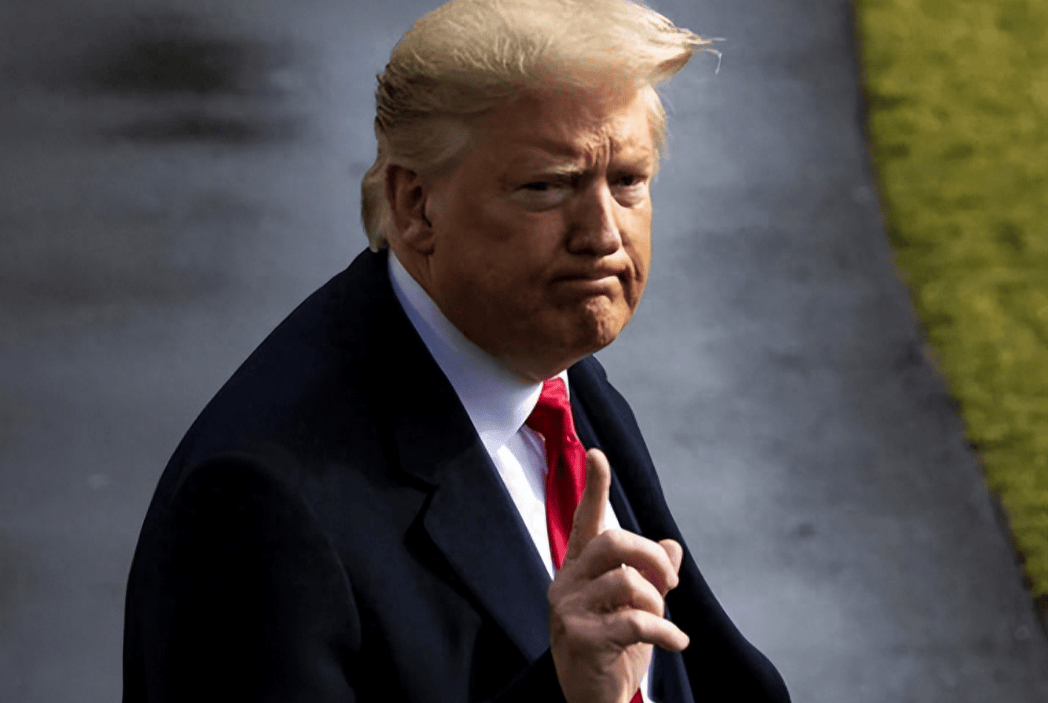
孟晓苏|特朗普的“诺贝尔奖之梦”: 一位地产商总统的理想与中美相处之道
Xin Lang Zheng Quan· 2025-10-13 02:18
炒股就看金麒麟分析师研报,权威,专业,及时,全面,助您挖掘潜力主题机会! 作者:孟晓苏 川哥这番改口一出,美铜、原油、加密货币立马像看到"限时特价房"的购房者,疯了似的往上冲,全球 市场的"特朗普依赖症"又犯了。但若是顺着我所揭示的"特朗普房地产商思维"往下刨,就会发现这看似 反复无常的操作背后,藏着川哥那藏不住的政治野心蓝图——想拿诺贝尔和平奖,想在孙女面前拍着胸 脯说"爷爷是最伟大的总统",还得加上一句"我还能更厉害"。 特朗普这股不懈追求进步的劲头,不正可以作为年轻人励志的榜样吗?这与他当年在曼哈顿抢地盖楼时 一模一样:不仅要盖得高,还要成为所有人都仰望的地标;不仅要赚钱,还要让自己的名字刻进"美国 历史的房产证"里。 一、地产商的造势术:从纽约楼盘到白宫推文,套路从未变过 要读懂特朗普的理想,得先摸清他刻在骨子里的"地产商基因"。想当年,他在纽约开发特朗普大厦时, 哪次不是先放风"这将是全纽约最奢华的豪宅",再用各种争议话题吸引媒体关注,最后在谈判桌上跟承 包商、购房者讨价还价,把"造势-压价-成交"的套路玩得炉火纯青。如今到了政治舞台,这套本事更是 被他用到了极致。 此前他喊着加征100%关税,就像 ...