冰淇淋

Search documents
史上最热夏天,冰淇淋却卖不动了
创业邦· 2025-07-23 10:03
Core Viewpoint - The ice cream and popsicle market is experiencing a significant shift, with traditional products losing appeal in favor of healthier and more affordable options, leading to a decline in sales and a re-evaluation of consumer preferences [4][13][30]. Group 1: Market Trends - The popularity of traditional ice creams and popsicles is waning, with consumers increasingly opting for low-cost options like 0.5 yuan popsicles, which have become bestsellers [4][10]. - The market is entering a "quality-price ratio" era, with new products generally priced below 5 yuan, contrasting with previous years when new products were priced between 5 to 8 yuan [13][27]. - The ice cream market in China is showing signs of slowdown, with major brands like Mengniu and Yili reporting significant revenue declines in their ice cream segments [27]. Group 2: Consumer Behavior - Consumers are becoming more health-conscious, leading to a preference for low-sugar and low-calorie ice cream options, with many seeking products with reduced sugar content [12][17]. - The perception of ice cream as a nostalgic treat is changing, with younger consumers prioritizing health and affordability over indulgence [15][22]. - The demand for ice cream decreases as temperatures rise, as consumers prefer beverages like water and soft drinks for hydration [17][19]. Group 3: Competitive Landscape - The emergence of Gelato as a popular alternative is noted, with brands like "Mr. Wildman" experiencing rapid growth, indicating a shift towards premium, artisanal ice cream options [32][34]. - Traditional ice cream brands are struggling to maintain their market share, with some resorting to collaborations and sponsorships to attract consumers [29][30]. - The competitive pricing strategy is becoming essential, with many retailers focusing on sourcing cheaper products to remain viable in a price-sensitive market [26][42].


史上最热夏天,冰淇淋却卖不动了
Xin Lang Cai Jing· 2025-07-22 01:44
Core Viewpoint - The ice cream and popsicle market in China is experiencing a significant shift, with traditional products losing popularity in favor of healthier and more affordable options, leading to a decline in sales for established brands [1][20][31]. Group 1: Market Trends - The sales of traditional ice creams and popsicles are stagnating, with low-cost options like 0.5 yuan popsicles becoming bestsellers, while higher-priced items struggle to attract consumers [2][6][20]. - The market is entering a "quality-price ratio" era, with new products generally priced below 5 yuan, focusing on affordability [8][19]. - The demand for healthier options is rising, with consumers increasingly seeking low-sugar or zero-sugar ice creams [7][8]. Group 2: Consumer Behavior - Consumers are shifting their preferences towards beverages for cooling off, with ice creams and popsicles no longer being the primary choice for refreshment [12][19]. - The perception of ice cream has changed, with younger consumers looking for unique flavors and experiences, while older consumers associate ice cream with low prices [11][12]. - The trend of purchasing ice cream through online platforms is increasing, with significant discounts available, making traditional retail less competitive [17][19]. Group 3: Industry Challenges - Major brands like Mengniu and Yili are facing declining revenues in their ice cream segments, with Mengniu's ice cream revenue down 14.1% and Yili's down 18.4% [20]. - The operational costs for ice cream retailers are rising, with many struggling to maintain profitability due to low margins on cheaper products [6][20]. - The market is seeing a rise in Gelato, a premium product with a focus on quality and health, which is gaining traction despite its higher price point [23][24][30]. Group 4: Competitive Landscape - The competition among ice cream brands is intensifying, with companies exploring collaborations and unique marketing strategies to attract consumers [21][23]. - New entrants in the Gelato market are expanding rapidly, with brands like "Wild Man" opening numerous stores and capitalizing on the trend for premium ice cream [24][30]. - The traditional ice cream market is witnessing a decline in consumer interest, prompting retailers to adapt by offering more competitive pricing and exploring online sales channels [19][30].


与LABUBU联名也卖不动 号称“贵族”冰淇淋,歌帝梵如何“自救”?
Mei Ri Jing Ji Xin Wen· 2025-07-17 11:12
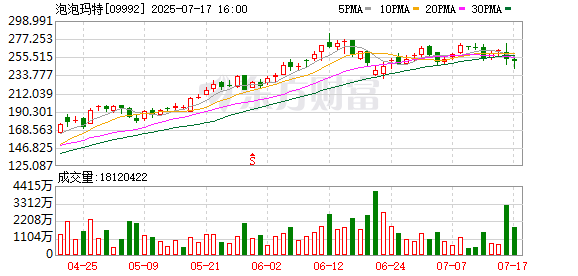
Core Viewpoint - Pop Mart (HK09992) is expected to report a strong performance in the first half of 2025, with revenue projected to grow by no less than 200% year-on-year, driven by its popular IP LABUBU and a collaboration with Godiva [2][6]. Group 1: Company Performance - Pop Mart's market capitalization is 336.3 billion HKD, with a share price of 250.4 HKD [2]. - The company anticipates a profit increase of no less than 350% year-on-year, with projected revenue exceeding 135 billion CNY for the first half of 2025 [6]. - The expected revenue for the first half of 2025 is significantly higher than its total revenue for 2024, which was 45.58 billion CNY [6]. Group 2: Collaboration with Godiva - Godiva and LABUBU launched two summer products, "Forest Soft Ice Cream" and "Forest Magic Drink," available in China, Singapore, Malaysia, and Indonesia [4]. - The collaboration generated interest primarily due to a collectible stainless steel spoon featuring the LABUBU logo, which has become a sought-after item on resale platforms [4][6]. - Despite the online buzz, in-store sales have been underwhelming, with daily sales reported to be only in the dozens [4][6]. Group 3: Market Challenges - Traditional high-end brands like Godiva, Häagen-Dazs, and others are facing challenges in maintaining sales and relevance in a competitive market [3][9]. - Godiva's market presence has diminished since 2020, with a significant reduction in store numbers and a shift in consumer preferences towards more affordable options [7][8]. - The high-end ice cream market is increasingly competitive, with local brands offering innovative products at lower prices, posing a threat to established brands [10]. Group 4: Strategic Adjustments - Godiva is undergoing strategic changes, including a brand integration under Pladis and a focus on innovation and localization to better connect with consumers in the Asia-Pacific region [10][11]. - The company aims to leverage changing consumer preferences and the demand for high-quality innovative products to drive growth in key markets like the U.S. and China [11].

从打卡爆款到长红IP,文创雪糕进阶之路还有多远
Qi Lu Wan Bao Wang· 2025-07-16 12:58
Core Insights - The cultural ice cream market is evolving from a novelty item to a long-lasting cultural product, with a focus on unique flavors and designs that resonate with local culture [1][7][8] Group 1: Market Trends - Cultural ice creams have gained popularity in tourist attractions, with unique flavors and designs becoming a trend since the introduction of the "spine beast ice cream" by the Palace Museum in 2019 [1][2] - The number of attractions offering cultural ice creams has significantly increased, with new designs and flavors being introduced regularly [3][4] - The market has seen a shift towards more interactive and immersive consumer experiences, moving beyond mere photo opportunities [7][8] Group 2: Challenges - The cultural ice cream market faces challenges such as high prices, inconsistent quality, and a lack of differentiation among products [5][6] - The average price of cultural ice creams ranges from 20 to 35 yuan, with some reaching up to 50 yuan, leading to consumer hesitance due to perceived value [5][6] - The reliance on popular cultural symbols and landmarks has led to aesthetic fatigue, necessitating innovation to maintain consumer interest [6][7] Group 3: Future Directions - To achieve long-term success, the industry must deepen the cultural significance of ice creams, integrating local culinary traditions and storytelling into product development [7][8] - Companies are encouraged to explore cross-industry collaborations and seasonal innovations to keep the product offerings fresh and appealing [7][9] - Continuous research into consumer preferences is essential for developing new flavors and enhancing the overall experience of cultural ice creams [9]
钟薛高,已被申请破产!
中国基金报· 2025-07-16 12:08
Core Viewpoint - The company Zhong Xue Gao, known for its high-priced ice cream products, has been applied for bankruptcy due to insolvency and inability to pay debts [2][4][10]. Group 1: Bankruptcy Application - On July 16, 2024, Zhong Xue Gao Food (Shanghai) Co., Ltd. was reported to have a bankruptcy review initiated by Shanghai Zhenliao Trading Co., Ltd., with the Shanghai Third Intermediate People's Court handling the case [2][6]. - The company is unable to repay due debts and has insufficient assets to cover all liabilities, leading to the case being transferred for bankruptcy investigation [4][6]. - The company was established in March 2018 with a registered capital of approximately 1.203 billion RMB, and it has multiple negative records including being a subject of execution and having consumption restrictions [6][10]. Group 2: Financial Struggles and Market Presence - Zhong Xue Gao's subsidiary, Pan Zhu You Xi (Shanghai) Biotechnology Co., Ltd., has also been applied for bankruptcy review, indicating broader financial issues within the company [10]. - The company attempted to auction off equipment valued at approximately 7.9457 million RMB, but the first auction failed due to no bids, and the second auction also ended without a sale [10]. - The flagship store on Taobao is still operational but offers very limited products, with the last post on its official WeChat account dating back to August 2023 [10]. Group 3: Historical Context and Controversies - Founded in 2018, Zhong Xue Gao gained rapid popularity with its unique "tile" shaped ice cream, achieving significant sales during events like Double Eleven [17]. - The company has faced criticism for its high pricing strategy, earning the nickname "ice cream assassin," and has been involved in various controversies regarding product quality and pricing [17][19]. - In 2024, the founder acknowledged the company's financial difficulties and the impact on employee compensation, expressing regret over past decisions and emphasizing efforts to restore normal operations [19].

钟薛高被申请破产审查!旗舰店仅剩3款产品在售,曾经年销10亿元,创始人直播卖红薯还债
新华网财经· 2025-07-16 11:29
Core Viewpoint - The company Zhongxuegao Food (Shanghai) Co., Ltd. is undergoing bankruptcy review due to its inability to repay debts and insufficient assets to cover liabilities, leading to multiple legal issues and a significant decline in operations [1][3][8]. Group 1: Bankruptcy and Legal Issues - Zhongxuegao Food has been officially filed for bankruptcy review by Shanghai Zhenliao Trading Co., Ltd., with the case being handled by the Shanghai Third Intermediate People's Court [1][2]. - The company has a total of 10 execution cases with a total amount of approximately 23.03 million yuan [5]. - The company has been unable to repay due debts, prompting the court to suspend execution and transfer the case for bankruptcy filing [3][5]. Group 2: Financial Performance and Business Decline - Zhongxuegao achieved remarkable growth initially, with revenue surpassing 1 billion yuan in its first year and over 10 billion yuan in 2021 [6][8]. - However, the company faced a turning point in 2022 due to public controversies and subsequent issues such as unpaid salaries and employee turnover [8][9]. - Currently, the company has only two insured employees, and six out of its 14 wholly-owned subsidiaries have been deregistered [8]. Group 3: Operational Adjustments and Future Prospects - To mitigate financial distress, Zhongxuegao has been downsizing, including office space reduction and significant staff layoffs, with reports of 729 employees owed salaries [8][9]. - The product lineup has shrunk significantly, with only three flavors currently available for sale, compared to over 20 during peak times [9][11]. - The company has attempted to diversify through sub-brands, but these efforts have largely failed, with new brands disappearing from both online and offline channels [11].

这个夏天,雪糕回到「小时候」
3 6 Ke· 2025-07-16 04:14
Industry Overview - The ice cream market in China has shifted from a "consumption upgrade" phase characterized by high-priced premium products to a resurgence of low-priced ice creams, indicating a return to more affordable options [2][9] - The market size of China's ice cream industry has grown significantly, from 839 billion yuan in 2015 to 1835 billion yuan in 2024, with projections to exceed 2000 billion yuan by 2027 [10] Market Dynamics - High-end ice cream brands are facing challenges, with reports of store closures and declining sales, exemplified by Häagen-Dazs and Meiji, which have seen significant operational difficulties in China [3][6] - The consumer sentiment has shifted towards price sensitivity, with 54% of consumers preferring products priced below 5 yuan, while only 31% are willing to pay between 10-30 yuan for premium options [14] Competitive Landscape - The emergence of a "quality-price ratio" era is reshaping the competitive landscape, where brands must balance quality and price to attract consumers [17][19] - Brands that maintain high quality while offering reasonable prices are gaining consumer favor, as seen with innovative products like the jasmine lychee ice cream from "Raising a Cow" [17][19] Consumer Behavior - Consumers are increasingly focused on the intrinsic value of products, prioritizing quality and safety over brand prestige, leading to a decline in tolerance for high prices without corresponding quality [8][12] - The trend of nostalgia and flavor innovation is prevalent, with brands reviving classic products and introducing unique flavors to enhance consumer experience [19]
茶咖日报|哈根达斯“低头参战”,9.9元咖啡撕开高端防线
Guan Cha Zhe Wang· 2025-07-14 10:29
Group 1: Haagen-Dazs Price Strategy - Haagen-Dazs has joined the "9.9 yuan" price war by launching a 9.9 yuan coffee product to attract more consumers, particularly price-sensitive customers [1] - The low-price strategy aims to increase foot traffic and boost sales of higher-margin products, indicating a shift from the brand's long-standing premium pricing strategy [1] - The brand has faced challenges in recent years, including the closure of multiple stores in various cities, leading to nostalgia among consumers [1] Group 2: Starbucks and China Eastern Airlines Partnership - Starbucks China has announced a comprehensive partnership with China Eastern Airlines, introducing a joint membership program for 160 million members [2] - The collaboration will focus on three key areas: co-creation of Yunnan coffee, cultural tourism, and sustainable development [2] - Both companies are committed to leveraging their strengths to enhance customer experiences and promote mutual growth [2] Group 3: Junlebao's Strategy in Dairy Industry - Junlebao's chairman emphasized the need to develop B2B tea drinks, coffee, baking ingredients, and dairy products to expand the domestic dairy market [3] - The B2B dairy product market is experiencing rapid growth, with 70%-80% of the market share currently held by imported products [3] - Strengthening B2B collaborations to increase the usage of domestic dairy products is seen as a crucial path for industry transformation [3] Group 4: Xiangpiaopiao's Half-Year Performance - Xiangpiaopiao has projected a revenue of approximately 1.035 billion yuan for the first half of 2025, with slight growth in Q2 revenue but an overall decline compared to the previous year [4][5] - The company is focusing on stabilizing its brewing business and accelerating the expansion of its ready-to-drink segment, with new product launches aimed at health-conscious consumers [5] - The brand's marketing strategy includes targeting younger demographics, as evidenced by a significant increase in sales during promotional events [5] Group 5: Dongguan's Consumption Promotion Activities - Dongguan's government has launched a plan to stimulate service consumption, including hosting food festivals and coffee festivals to enhance dining experiences [6] - The initiative aims to promote local culinary culture and create cross-industry consumption scenarios [6] - The plan includes organizing supply chain matchmaking events to facilitate communication between restaurants and suppliers [6] Group 6: Lemon Right's New Brand Launch - Lemon Right has opened its first store for the upgraded brand "Xiangyou Shouzuo" in Nanjing, focusing on fresh, healthy, and low-calorie products [7] - The new brand expands its product line to include freshly squeezed juices, steamed teas, and handmade ice creams [7] - The launch signifies Lemon Right's deeper market penetration in Jiangsu, with over 300 stores established in East China since its inception in 2021 [7]


贵价雪糕没人买?年轻人连哈根达斯都抛弃了
Hu Xiu· 2025-07-14 07:39
Core Viewpoint - The article discusses the decline of Häagen-Dazs in the Chinese market, highlighting its struggles against cheaper ice cream brands and changing consumer preferences, leading to a significant reduction in store numbers and sales [1][3][19]. Group 1: Company Performance - Häagen-Dazs' net sales in China for the third quarter of fiscal year 2025 were reported at $138 million, reflecting a year-on-year decline of approximately 3.2% [3]. - The number of Häagen-Dazs stores in mainland China has halved from 557 in 2019 to only 263 currently, indicating a severe contraction in its physical presence [4]. - The CEO of General Mills acknowledged a double-digit percentage decline in store traffic for Häagen-Dazs in China [3]. Group 2: Market Dynamics - The rise of affordable ice cream brands has shifted consumer preferences, with many opting for lower-priced options, making it difficult for Häagen-Dazs to attract customers [6][29]. - Häagen-Dazs was once perceived as a luxury brand, but its image has deteriorated as consumers now view it as overpriced and outdated [22][29]. - The competitive landscape has intensified, with local brands like Zhong Xue Gao and others introducing innovative and cost-effective products that challenge Häagen-Dazs' market position [22][28]. Group 3: Consumer Sentiment - Consumers have become more price-sensitive, with many expressing disbelief at Häagen-Dazs' high prices compared to similar products available at much lower costs [21][30]. - The nostalgia associated with Häagen-Dazs has not translated into sustained consumer loyalty, as younger generations prioritize value and health in their purchasing decisions [19][30]. - The perception of Häagen-Dazs as a "high-end" product has been undermined by its recent controversies, including the use of inferior ingredients, further alienating its customer base [22][29].

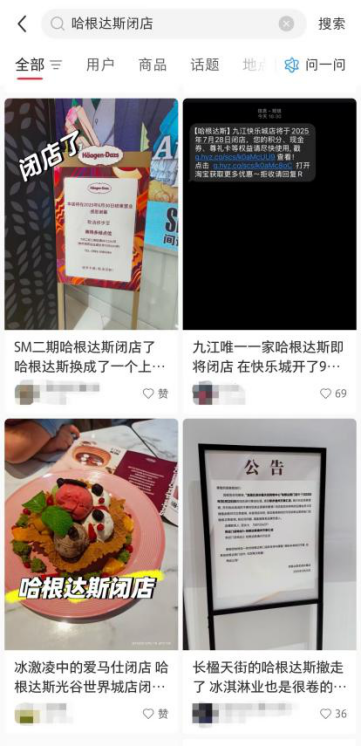
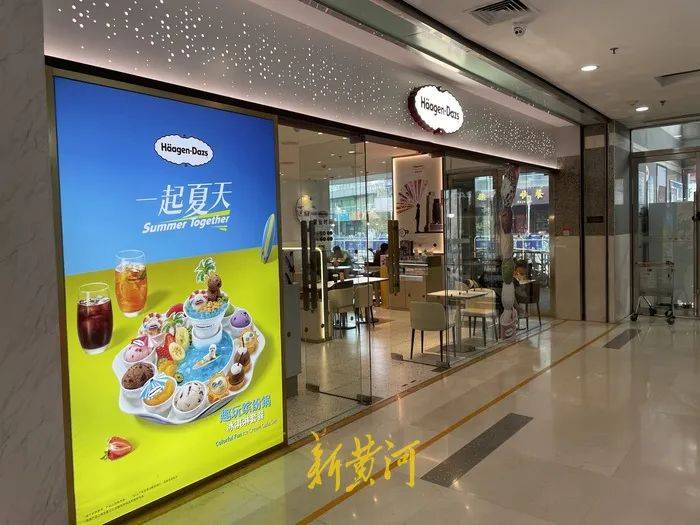
知名品牌,不到两年关了150余家门店!山东仅剩9家门店
Sou Hu Cai Jing· 2025-07-10 00:55
Core Insights - Häagen-Dazs is experiencing a significant reduction in its store presence in China, with the number of locations dropping from over 400 in January 2024 to approximately 247 by mid-2023, indicating a loss of over 150 stores in less than two years [1][11][13] - The brand's parent company, General Mills, reported a 3.2% year-over-year decline in sales for its high-end ice cream business in China, alongside a notable drop in customer traffic by double digits [13][14] - The competitive landscape in the Chinese ice cream market has intensified, with the rise of domestic brands and new beverage options diverting consumer attention away from Häagen-Dazs [14] Store Operations - Currently, only two Häagen-Dazs stores remain operational in Jinan, specifically at Yuhuan Yinzuo and Gaoxin Wanda, while other locations in major shopping centers have ceased operations [1][9][11] - The overall number of Häagen-Dazs stores in Shandong province has decreased to nine, spread across five cities, including Jinan, Qingdao, Zibo, Yantai, and Weihai [8][11][10] Financial Performance - Häagen-Dazs' sales in China have declined from $800 million in the 2019 fiscal year to $730 million in the 2024 fiscal year, reflecting a downward trend in performance [13] - General Mills reported a net sales figure of $1.38 billion for its high-end ice cream business in the three months ending February 23, 2025, down from $1.42 billion in the same period the previous year [13] - For the fiscal year ending May 25, 2025, General Mills' total net sales were $19.5 billion, a decrease of 2% year-over-year, with net profit falling by 8% to $2.3 billion [13]