玩具

Search documents
东兴证券晨报-20260128
Dongxing Securities· 2026-01-28 09:09
Economic News - The National Taxation Bureau reported that the total tax revenue for 2025 reached 33.1 trillion yuan, with a 2.7% year-on-year growth in tax income excluding export tax rebates [2] - The State-owned Assets Supervision and Administration Commission (SASAC) announced plans to focus on the "three concentrations" of state-owned capital, emphasizing restructuring and integration to optimize the layout and structure of state-owned enterprises [2] - The People's Bank of China indicated that by the end of Q4 2025, the balance of RMB loans from financial institutions grew by 6.4% year-on-year, with corporate loans increasing by 8.9% [2] - The Ministry of Industry and Information Technology reported that telecommunications revenue for 2025 reached 1.75 trillion yuan, a 0.7% increase from the previous year, with cloud computing and big data services growing by 4.7% [2] Company News - Pop Mart has partnered with Simon Property Group to open over 20 retail stores in shopping centers across the U.S. [5] - Corning has signed a fiber optic cable supply agreement with Meta, potentially worth up to $6 billion [5] - The company "Supply and Marketing Great Collection" has entered a strategic cooperation agreement with Luckin Coffee to enhance coffee consumption experiences in rural areas [5] - ASML reported a Q4 2025 net profit of 2.84 billion euros, slightly below expectations, and announced a stock buyback plan of up to 12 billion euros by the end of 2028 [5] - Haohua Energy expects a significant decline in net profit for 2025, projecting a decrease of 59.55% to 45.08% year-on-year due to falling coal prices [5] Banking Sector Analysis - In Q4 2025, the proportion of active equity funds in the banking sector slightly increased, with a total market value of 1.61 trillion yuan, of which 30.37 billion yuan was allocated to the banking sector, representing 1.89% [6][7] - The concentration of holdings among the top five banks decreased to 57.6%, with 23 banks increasing their positions while 15 banks reduced theirs [7] - Northbound funds reduced their holdings in bank stocks, with a total market value of 177.26 billion yuan, a decrease of 13.75 billion shares [8] - The investment outlook for 2026 suggests that macro policies will support credit growth, particularly in the corporate sector, while net interest margins are expected to stabilize [8][9]
经济政策一线微观察丨“银发经济”新浪潮:适老化设计如何催生“青春化”市场
Xin Hua Wang· 2026-01-28 07:24
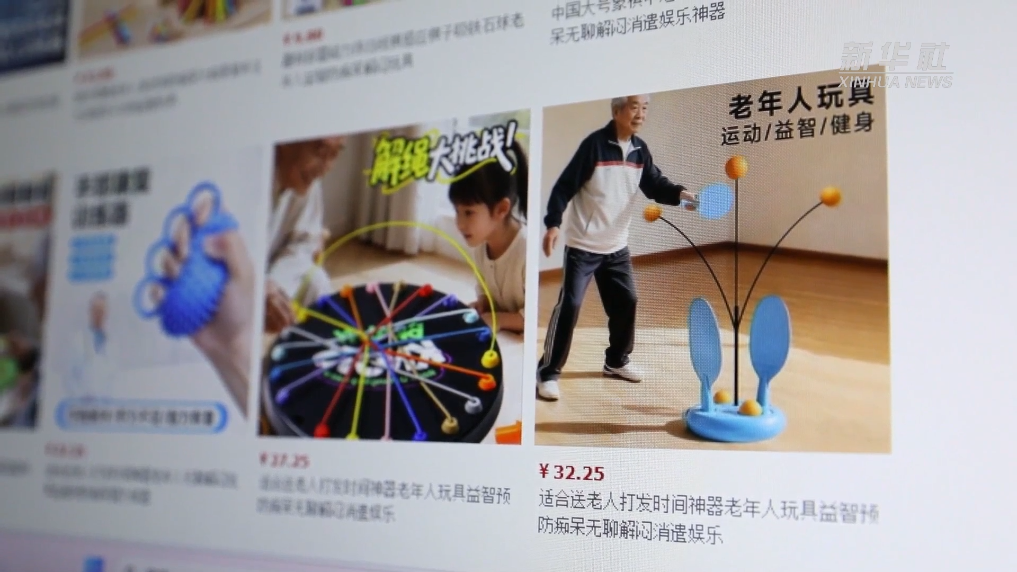
Group 1 - The core viewpoint highlights the emergence of the "silver economy," driven by the increasing elderly population in China, projected to reach 310 million by the end of 2024 and over 400 million by 2035, with the market scale expected to exceed 30 trillion yuan [1] - There is a shift from "passive aging" to "active enjoyment of aging," indicating a transformation in consumer behavior among the elderly, moving from material needs to seeking joy and self-fulfillment [1] - The rise of senior-friendly toys in e-commerce platforms, particularly in Yiwu, reflects the elderly's proactive approach to combating cognitive decline and emphasizes the transition in silver consumption from material supply to spiritual pleasure [1] Group 2 - In Yunhe, Zhejiang, companies have developed over 200 types of elderly intellectual toys, focusing on creating social scenarios and competitive enjoyment, demonstrating a deep understanding of the "youthful" market [3] - Local government initiatives, such as hosting four consecutive elderly wooden toy competitions, aim to enhance community engagement and transform personal enjoyment into broader social activities [3] Group 3 - Micro-innovations in the market are resonating with macro-level policy guidance, as the State Council's 2024 document emphasizes the development of the silver economy and the promotion of smart health and elderly care industries [5] - The "14th Five-Year Plan" suggests actively developing elderly human resources and fostering the silver economy, while a joint initiative by eight departments in December 2025 aims to promote market-oriented elderly care services and support technology-enabled elderly care [5] - Industry experts believe that the continuous increase in life expectancy and the economic transformation driven by artificial intelligence will unlock the potential of the silver economy, creating new opportunities for high-quality economic development [5]

破“内卷”通壁垒 广东政协委员多维度支招民企高质量出海
Zhong Guo Xin Wen Wang· 2026-01-28 06:15
Group 1 - The core discussion during the Guangdong Two Sessions focused on the high-quality overseas expansion of enterprises and the development of the private economy, with proposals aimed at transforming Guangdong into a global hub for new productive forces [1] - According to Ernst & Young, China's total foreign direct investment exceeded $160 billion in the previous year, marking a 10% year-on-year increase, indicating robust growth in overseas investments by Chinese enterprises [1] Group 2 - Medium-sized enterprises face challenges such as insufficient internationalization capabilities, high compliance risks, and fragmented service systems, necessitating the establishment of a "new productive force output base" to support their overseas expansion [2] - Suggestions include creating a collaborative platform for overseas expansion based on the Belt and Road Initiative, forming an "overseas alliance" for key industries, and standardizing overseas business practices to enhance brand recognition [2] Group 3 - Leveraging the unique advantages of Macau in design, quality control, and international certification can add high value to products from Guangdong's county-level industries, promoting a "cross-border e-commerce + industrial belt" model [3] - The proposal includes establishing a policy coordination list for cross-border e-commerce and extending logistics subsidies and rent reductions to rural areas in Guangdong [3] Group 4 - The integration of over 8,000 professionals from Hong Kong and Macau in the Greater Bay Area is crucial for enhancing overseas expansion efficiency, but challenges such as qualification recognition and public service gaps remain [3] - Recommendations include creating a dynamic recognition list for professionals from Hong Kong and Macau and optimizing tax policies to facilitate talent mobility [3] Group 5 - The various proposals from committee members complement each other, emphasizing the need for institutional innovation to address development challenges and strengthen the foundation for overseas expansion [4]
“不完美”的治愈感如何撬动全球订单?
Mei Ri Jing Ji Xin Wen· 2026-01-26 15:15
Core Insights - The rise of "imperfect" products like "Crying Horse" reflects a shift in consumer sentiment towards emotional consumption, surpassing traditional notions of perfection in products [1][2] - The success of "Crying Horse" has led to increased demand both domestically and internationally, with orders coming from countries like South Africa, Russia, Romania, and Mexico [2][3] Group 1: Market Dynamics - The "Crying Horse" has become a significant product in the Yiwu small commodity market, with high demand leading to long queues of foreign customers and local retailers [2][3] - The product's appeal lies in its unique design, which resonates with consumers' emotional states, making it a popular choice among young people [2][3] - Yiwu's overall foreign trade is experiencing a robust recovery, with significant growth in orders from regions such as Africa, the Middle East, and South America [3][4] Group 2: Business Operations - Zhang Huoqing, the owner of the "Crying Horse" shop, has adapted her production line to meet the demand for this product, demonstrating agility in business operations [2][3] - The shop operates as a family business, primarily focusing on wholesale rather than retail, with a minimum order quantity of 50 units [3][4] - The shop's success has allowed for a shift in focus from foreign trade to domestic sales, indicating a change in market dynamics [3][4] Group 3: Consumer Trends - The "Crying Horse" and other horse-themed products are part of a broader trend where traditional zodiac items are being reimagined for modern consumers, expanding their appeal beyond just festive occasions [6][7] - The market for zodiac-themed products is evolving, with consumers seeking unique designs that resonate emotionally, leading to increased sales in various contexts [6][7] - Collaborations with popular brands, such as Disney, highlight the merging of traditional zodiac themes with contemporary consumer culture, enhancing market potential [7]
资金动向 | 北水增持腾讯超10亿港元,中国移动、紫金矿业遭抛售
Ge Long Hui A P P· 2026-01-26 13:00
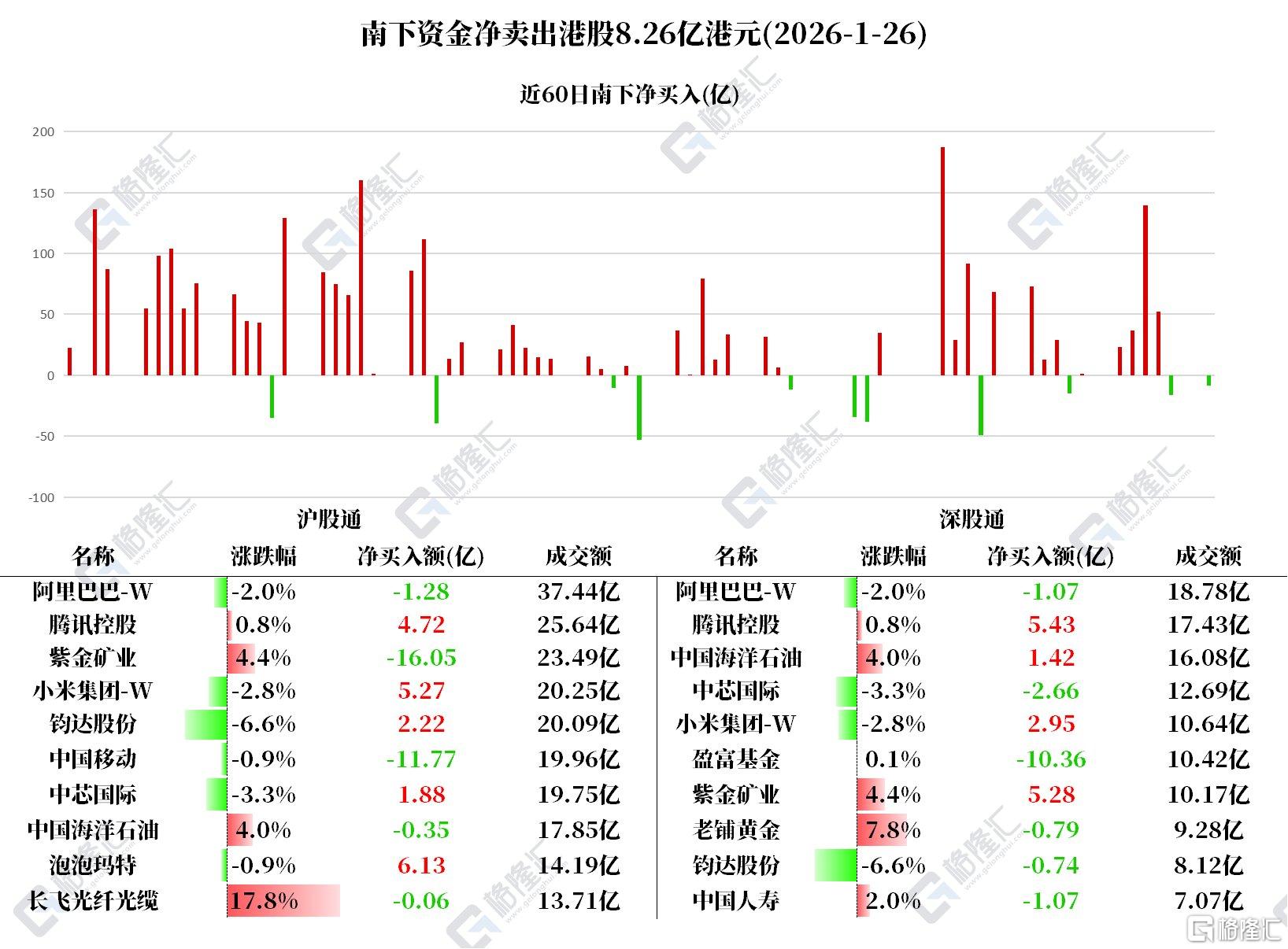
Group 1 - Southbound funds recorded a net sell of HKD 826 million in Hong Kong stocks for the second consecutive day, with notable net purchases in Tencent Holdings (HKD 1.015 billion), Xiaomi Group (HKD 822 million), and Pop Mart (HKD 613 million) [1] - Continuous net buying trends were observed for Xiaomi over the past 7 days, totaling HKD 3.89621 billion, and for CNOOC over 4 days, totaling HKD 1.09627 billion [1] - Significant net selling was noted for China Mobile over 16 days, amounting to HKD 12.89303 billion [1] Group 2 - Haitong International maintained a "Outperform" rating for Tencent Holdings with a target price of HKD 700, expecting total revenue of HKD 195 billion for Q4, a 13% year-on-year increase [5] - Xiaomi Group repurchased 4 million B shares for HKD 14.04 million on January 26 [5] - Citigroup reiterated a "Buy" rating for Pop Mart, forecasting growth driven by IP diversification and product innovation, with a target price of HKD 415 [6]

午后异动!直线涨停 封单近20万手
Zhong Guo Zheng Quan Bao· 2026-01-26 08:59
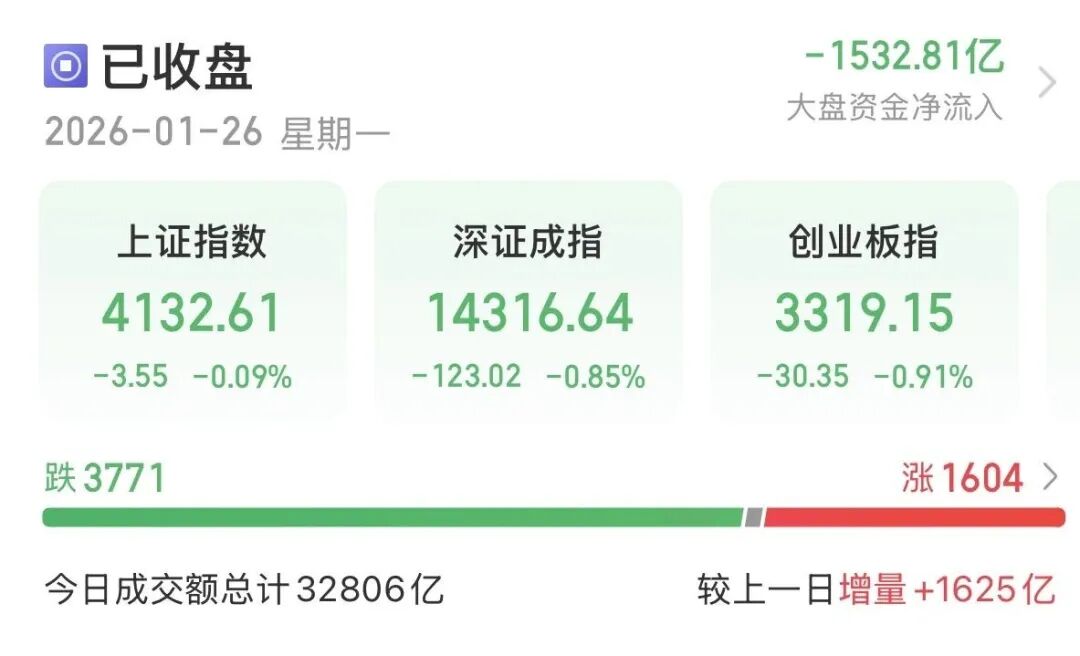
Market Overview - The A-share market experienced fluctuations with the three major indices adjusting, while the non-ferrous metal sector surged, particularly the precious metals concept leading the gains. The Shanghai Composite Index fell by 0.09%, the Shenzhen Component Index decreased by 0.85%, and the ChiNext Index dropped by 0.91% [1] Sector Performance - Precious metals, gold concepts, animal vaccines, and oil and gas extraction and services sectors saw significant gains, while satellite navigation and commercial aerospace sectors faced adjustments [2] - The commercial aerospace sector showed weakness, with stocks like Youke De-W and Ruihua Tai hitting the daily limit, while others like Shaoyang Hydraulic and Haozhi Electromechanical dropped over 10% [8] Individual Stock Highlights - Silver and non-ferrous metals stocks, such as Silver Holdings, achieved a "5 consecutive limit up," with gold stocks like Western Gold and Zhaojin Gold hitting the daily limit. Qunxing Toys saw a sharp rise, closing with nearly 200,000 hand orders [2] - Qunxing Toys, primarily engaged in intelligent computing, liquor sales, and property management, has been included in the Tencent concept stocks due to a service agreement with Tencent Technology [6] Tencent Concept Stocks - Tencent concept stocks showed localized movements, with Qunxing Toys hitting the daily limit and stocks like Wanfu Biology experiencing significant increases [3] - Qunxing Toys closed at 6.95 CNY per share, with a market capitalization of 4.285 billion CNY and a trading volume ratio of 4.02 [5][7] Analyst Insights - Commercial aerospace has become one of the strongest market themes recently, with space photovoltaic technology expected to drive demand for new equipment and provide early advantages for companies that differentiate themselves in this field [11] - Analysts suggest that the market's short-term differentiation may continue, with high elasticity sectors attracting new capital and maintaining risk appetite, while the overall liquidity environment remains relatively loose [13]

午后异动!直线涨停,封单近20万手
Zhong Guo Zheng Quan Bao· 2026-01-26 08:55
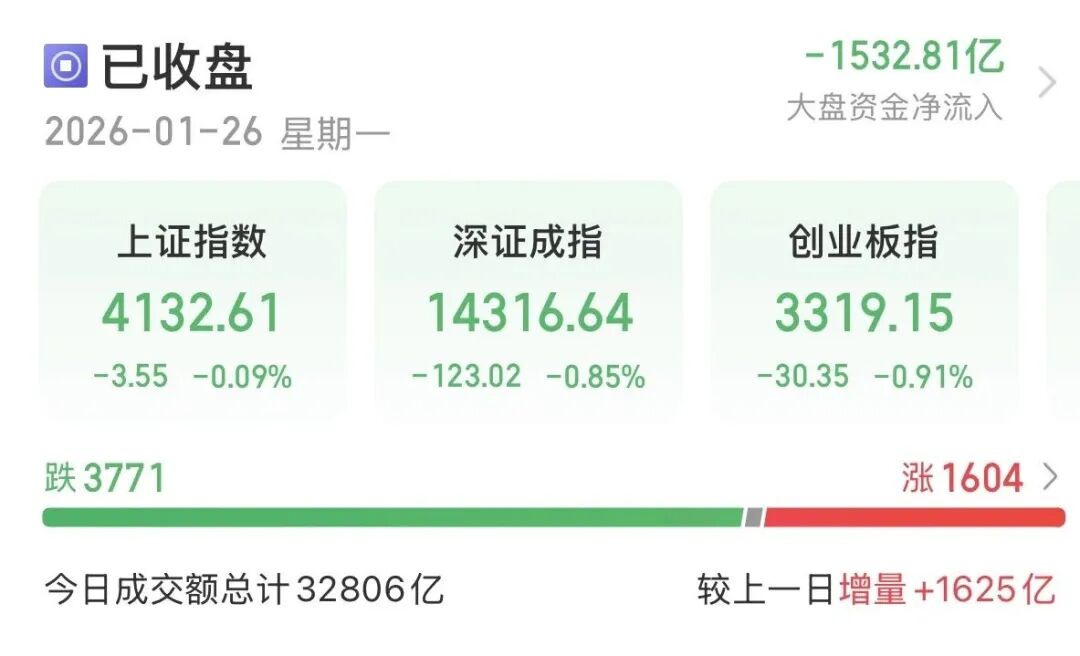
Market Overview - The A-share market experienced fluctuations with the three major indices adjusting, while the non-ferrous metal sector surged against the trend, led by precious metals [1] - The Shanghai Composite Index fell by 0.09%, the Shenzhen Component Index decreased by 0.85%, and the ChiNext Index dropped by 0.91% [1] Sector Performance - Precious metals, gold concepts, animal vaccines, and oil and gas extraction and services sectors saw significant gains, while satellite navigation and commercial aerospace sectors faced adjustments [1] - Notable individual stocks included Silver Nonferrous (601212) achieving a "5 consecutive limit up," and gold stocks such as Western Gold (601069) and Zhaojin Gold (000506) hitting the daily limit [1] Individual Stock Highlights - Qunxing Toys (002575) experienced a sharp rise, hitting the daily limit with a closing price of 6.95 yuan per share and a market capitalization of 4.285 billion yuan, with nearly 200,000 shares in closing orders [6][8] - The stock's surge is attributed to its involvement in intelligent computing services and a partnership with Tencent Technology (Shenzhen) Co., Ltd. for providing computing power services [7] Commercial Aerospace Sector - The commercial aerospace sector showed weakness today, with mixed performances among stocks; Yuke De-W (688158) and Ruihua Tai (688323) reached the daily limit, while Shaoyang Hydraulic (301079) and Haoshi Electromechanical (300503) fell over 10% [9][10] - According to Everbright Securities, commercial aerospace has become one of the strongest market themes recently, with space photovoltaic technology expected to drive demand for new equipment [12] Market Sentiment and Future Outlook - Analysts from Zhongtai Securities suggest that the current market differentiation may continue in the short term, with high elasticity sectors attracting new capital [13] - Citic Securities indicates that market confidence is gradually recovering, recommending a focus on chemical, non-ferrous, new energy, and power equipment sectors for investment [14]
港股开盘|恒指高开0.35% 泡泡玛特涨逾4%
Di Yi Cai Jing· 2026-01-26 01:55
Group 1 - The Hang Seng Index opened up by 0.35% and the Hang Seng Tech Index increased by 0.05% [1] - Pop Mart surged over 4%, while Zijin Mining rose nearly 3% [1] - Tencent Music and JD Health also showed significant gains [1] Group 2 - Baidu Group, Xpeng Motors, and NIO experienced notable declines [1]



警惕盲盒“拆包换卡”
Xin Lang Cai Jing· 2026-01-25 22:24
Core Viewpoint - The rise of the blind box economy has led to some businesses manipulating extraction probabilities through deceptive practices, harming consumer rights [1][2] Group 1: Regulatory Actions - The Shanghai Jiading District Market Supervision Administration has initiated investigations into Company A and Company B for trademark infringement related to blind box products [1] - Company B purchased 30 boxes of the involved products at a significantly lower price, aware of tampering with the packaging QR code, and shipped them to Company A without proper inspection [1][2] - The investigation revealed that while the internal cards were genuine, the extraction probabilities were altered, violating consumer rights and the Shanghai Consumer Rights Protection Regulations [2] Group 2: Compliance and Consumer Protection - Blind box operators are reminded to fulfill their due diligence in verifying product sources and ensuring the accuracy of probability disclosures [3] - Key information such as extraction rules, product distribution, and probabilities must be prominently displayed and consistent with actual offerings [3] - Consumers are advised to be cautious of misleading promotions and to verify product authenticity through official channels [3]
破圈出海 中国品牌加速登陆全球市场(国际论道)
Ren Min Ri Bao· 2026-01-25 21:23
Core Insights - Chinese brands are rapidly expanding their presence in global markets, showcasing a shift from previous challenges to a new era of growth and innovation [4][5][6] Group 1: Market Expansion - Chinese brands are increasingly establishing physical stores and local operations in various countries, enhancing brand recognition and local engagement [12] - The market share of Chinese automotive brands in Kazakhstan has surged from approximately 2% in 2020 to 34.5% in the first nine months of 2025, indicating a significant increase in their presence [7] - Chinese tea brands have successfully entered the U.S. market, with several brands expanding their operations internationally, including Southeast Asia and Europe [7] Group 2: Brand Perception and Consumer Trends - There is a notable shift in consumer attitudes towards Chinese products, particularly among younger demographics in the U.S., who are increasingly embracing Chinese technology and brands [6] - The global trust index for Chinese brands has significantly improved over the past six years, reflecting a growing acceptance and recognition of their quality and innovation [9] - Chinese brands are not only competing on price but are also focusing on quality and creativity, challenging the previous perceptions of low-quality Chinese products [10] Group 3: Innovation and Cultural Influence - Innovation is a key driver for the success of Chinese brands, with many companies emphasizing their cultural roots and unique product offerings [10][11] - The rise of Chinese brands is accompanied by a cultural wave that is reshaping global perceptions of China, with the country becoming a center for trends and creativity [14][15] - The transition from merely selling products to building ecosystems marks a significant evolution in the strategy of Chinese brands in the global market [13]