
股票

Search documents
【笔记20251118— 债市:心如止水、古井无波、买即成佛】
债券笔记· 2025-11-18 14:05
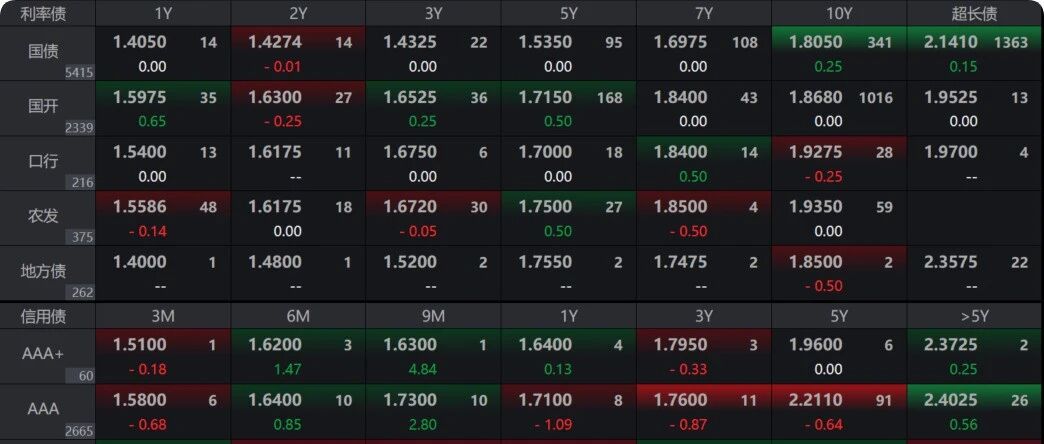
Group 1 - The bond market shows a slight upward trend in long-term bond yields, with the central bank conducting a 407.5 billion yuan reverse repurchase operation, resulting in a net injection of 3.7 billion yuan [3][4]. - The interbank funding rates remain stable, with DR001 around 1.53% and DR007 around 1.52%, indicating a marginal contraction in the funding environment [4][6]. - The stock market is performing weakly, with a slight decline of 0.81% in the A-share market, while the Nikkei 225 index dropped by 3.22%, influenced by rising Japanese bond yields [6][7]. Group 2 - The 10-year government bond yield opened at 1.80% and fluctuated around 1.805%, reflecting a stable sentiment in the bond market despite external pressures [6][7]. - The trading volume in the repo market shows a significant decrease, with R001 at 62.2 billion yuan and R007 at 6.96 billion yuan, indicating a contraction in market activity [5][6]. - The overall market sentiment is described as calm, with no significant news impacting the trading environment, leading to a stable bond market despite the weak stock performance [3][6].

每日投行/机构观点梳理(2025-11-18)
Jin Shi Shu Ju· 2025-11-18 10:59
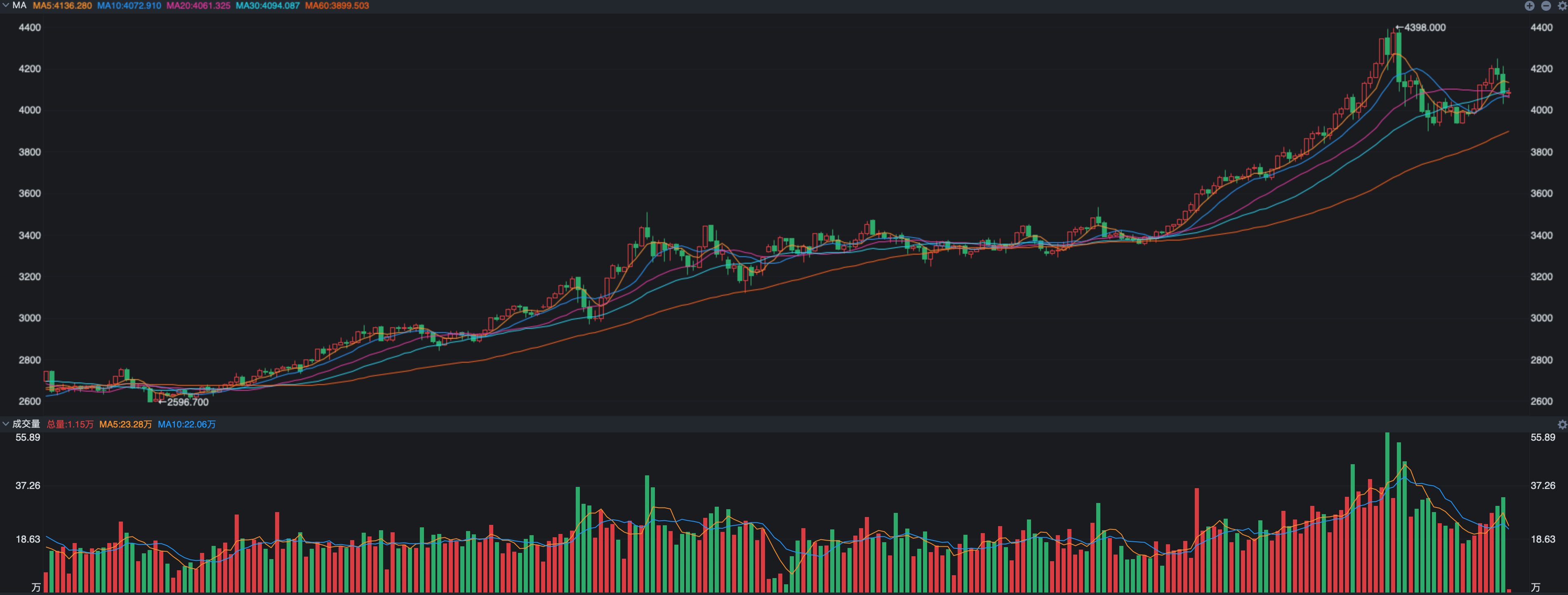
Group 1: Gold Market Insights - Goldman Sachs indicates that central banks may purchase significant amounts of gold in November to diversify reserves against geopolitical and financial risks, maintaining a price forecast of $4,900 by the end of 2026 [1] - Year-to-date, gold prices have risen by 55%, driven by economic and geopolitical concerns, increased inflows into exchange-traded funds, and expectations of further interest rate cuts in the U.S. [1] - In September, central banks purchased 64 tons of gold, up from 21 tons in August [1] Group 2: Oil Price Forecasts - Goldman Sachs has lowered its average price forecasts for Brent and WTI crude oil to $56 and $52 per barrel, respectively, due to strong global supply (excluding Russia) [2] - UBS expects Brent crude oil prices to fluctuate between $60 and $70 per barrel, with a year-end target of $62 per barrel and a 2026 target of $67 per barrel [3] Group 3: Chinese Stock Market Outlook - UBS forecasts a prosperous year for the Chinese stock market in 2026, driven by factors such as innovation and a projected 14% upside for the MSCI China Index by year-end [4] - Earnings per share are expected to grow by 10% in 2026, supported by anti-involution measures and a decrease in depreciation expenses [4] Group 4: Currency Trends - Barclays economists suggest that the USD/JPY exchange rate may continue to rise, recommending investors to remain long on USD/JPY due to Japan's fiscal policies [5] Group 5: Central Bank Policies - Goldman Sachs Asset Management predicts that the Federal Reserve may cut interest rates twice in 2026, while the European Central Bank may maintain rates and the Bank of England may resume cuts in December [6] - Morgan Stanley anticipates further rate cuts from the European Central Bank in the first half of next year, with a target for the 10-year German bond yield at approximately 2.45% by the end of 2026 [8] Group 6: Semiconductor Sector - Galaxy Securities asserts that the long-term growth logic for the semiconductor sector remains intact despite recent underperformance, emphasizing supply chain security and domestic substitution trends [11] Group 7: AI and Consumer Electronics - Galaxy Securities highlights the potential for smart glasses to become a major consumer electronics category, following the entry of major tech companies into the AI glasses market [12] Group 8: Multi-Modal AI Trends - CITIC Securities identifies the shift towards native multi-modal architectures as a pivotal point for the industry, suggesting investment opportunities in both foundational and application layers [13] Group 9: Energy Demand and Coal Prices - Huatai Securities predicts that electricity consumption growth in October may exceed 10%, supporting a positive outlook for thermal coal prices in the fourth quarter [14]
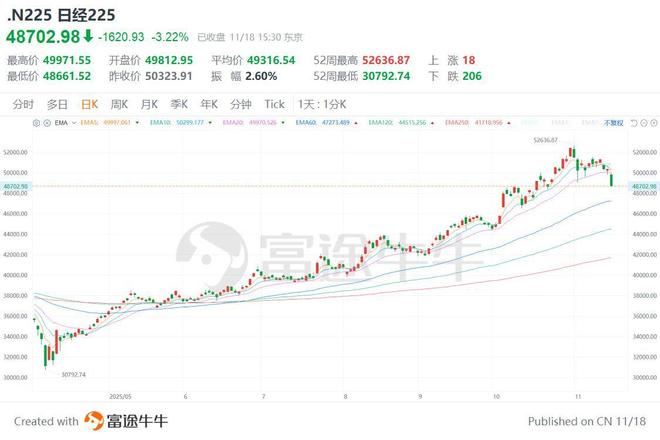
全球市场恐慌:日本股债汇三杀,纳指期货跌1%,比特币跌破9万美元大关,金价跌破4000美元
Ge Long Hui A P P· 2025-11-18 08:19
Core Viewpoint - Global markets experienced widespread sell-offs, with significant declines in U.S. stock futures and cryptocurrencies, driven by concerns over interest rate outlook and technology stock valuations [1]. Market Performance - The Nikkei 225 index in Japan fell by 3.2%, marking its largest single-day drop since April, amid worries over government spending and geopolitical factors [1]. - The KOSPI index in South Korea dropped by 3.32%, led by declines in semiconductor stocks [2]. - A-shares also saw declines, with the Shanghai Composite Index down 0.81%, the ChiNext Index down 1.1%, and the Shenzhen Component Index down 0.92%. The Taiwan Weighted Index fell by 2.5% [3]. - U.S. stock futures showed significant declines, with the Nasdaq 100 futures down over 1%, Dow futures down 0.5%, and S&P 500 futures down 0.7% [4]. Interest Rate and Commodity Impact - The probability of a 25 basis point rate cut by the Federal Reserve in December dropped to 42.9%, leading to a decrease in optimistic sentiment towards gold, which fell below the $4,000 mark [1][5]. - Bitcoin experienced intensified selling pressure, dropping to a low of $89,253 per coin, with traders betting on further declines to $85,000 and even $80,000 [5][13].
大类资产早报-20251118
Yong An Qi Huo· 2025-11-18 01:38
Global Asset Market Performance - On November 17, 2025, the 10 - year treasury bond yields of major economies varied, with the US at 4.140%, UK at 4.534%, etc. The latest changes, weekly, monthly, and yearly changes also differed among countries. For example, the US 10 - year treasury bond yield had a latest change of - 0.009, a weekly change of 0.023, a monthly change of 0.159, and a yearly change of - 0.188 [3] - The 2 - year treasury bond yields also showed different trends. For instance, China (1Y) was 3.580% on November 17, 2025, with corresponding changes over different time periods [3] - The exchange rates of the US dollar against major emerging economies' currencies had various changes. For example, against the South African zar, the latest change was 0.58%, and the yearly change was - 6.37% [3] - The performance of major economies' stock indices on November 17, 2025, showed declines in most cases. For example, the Dow Jones had a latest change of - 0.92%, and a weekly change of - 2.34% [3] - The credit bond indices of different types (emerging economies' investment - grade, high - yield, etc.) had different values and changes on November 17, 2025. For example, the emerging economies' investment - grade credit bond index was 3516.030, with a latest change of 0.05% [3] Stock Index Futures Trading Data - On November 17, 2025, the closing prices of A - shares, CSI 300, SSE 50, ChiNext, and CSI 500 were 3972.03, 4598.05, 3012.07, 3105.20, and 7235.35 respectively, with corresponding percentage changes [4] - The PE (TTM) values of CSI 300, SSE 50, CSI 500, S&P 500, and German DAX were 14.14, 11.93, 32.98, 27.74, and 18.30 respectively, with环比 changes [4] - The risk premiums and their环比 changes of S&P 500 and German DAX were - 0.54 and 2.75 respectively, with环比 changes of 0.04 and 0.07 [4] - The latest values and 5 - day average values of capital flows in A - shares, main boards, etc., showed different trends. For example, the latest value of A - share capital flow was - 543.55, and the 5 - day average was - 629.80 [4] - The latest trading volumes and环比 changes of Shanghai and Shenzhen stock markets, CSI 300, etc., were provided. For example, the latest trading volume of Shanghai and Shenzhen stock markets was 19107.91, with a环比 change of - 472.88 [4] - The basis and amplitude of the main contracts of stock index futures (IF, IH, IC) were - 16.65, - 2.87, - 91.95 and - 0.36%, - 0.10%, - 1.27% respectively [4] Treasury Bond Futures Trading Data - On November 17, 2025, the closing prices of treasury bond futures T00, TF00, T01, TF01 were 108.485, 105.905, 108.240, 105.885 respectively, with no percentage changes [5] - The capital interest rates (R001, R007, SHIBOR - 3M) were 1.5596%, 1.5321%, 1.5800% respectively, with daily changes (BP) of 7.00, 4.00, 0.00 [5]
“新债王“冈拉克看空美股及私人信贷,建议投资者手握20%现金过冬
智通财经网· 2025-11-18 00:41
尽管发出警告,冈拉克承认很难直接从这一判断中获利。例如,他不会做空垃圾债券,因为这笔交易一 直在亏钱。 智通财经APP获悉,华尔街资深人士、DoubleLine Capital首席执行官杰弗里·冈拉克表示,当前许多资产 价格已极度高估,建议投资者将约20%的投资组合配置为现金,以防范重大市场下行风险。 "金融市场的下一场重大危机将是私人信贷危机,"他表示,"其特征与2006年次贷抵押贷款重组如出一 辙。" 冈拉克进一步批判向散户投资者营销私人信贷基金实为"完美错配"——尽管基金承诺可轻松赎回,但底 层资产往往难以快速变现,这种结构性矛盾在流动性危机中极易引发连锁风险。 在本周一发布的一场播客节目中,这位达特茅斯学院毕业生、自上世纪80年代中期在TCW集团开启华 尔街生涯的资深人士警告,当前美股呈现出危险的投机特征,已成为他整个职业生涯中见过的最不健康 的市场之一。他指出,人工智能相关股票及数据中心投资领域存在过度投机现象,并警示动量投资策略 在市场繁荣期可能以惨淡结局收场。 冈拉克表示,他特别担忧私人信贷市场的快速扩张——这一规模达1.7万亿美元的市场直接向企业放 贷。他称,放贷机构正在发放类似2008年抵押 ...
宏观与大宗商品周报:冠通期货研究报告-20251117
Guan Tong Qi Huo· 2025-11-17 11:48
1. Report Industry Investment Rating No relevant content provided. 2. Core Viewpoints of the Report - Recently, after the U.S. government ended its shutdown, market sentiment varied, and asset trends diverged. The controversy over AI bubble resurfaced, and the high - level decline of safe - haven assets such as gold and Bitcoin raised market concerns, resulting in a decline in investors' risk appetite and a slight increase in the VIX volatility index. Global major stock markets showed mixed performance, with A - shares leading the decline after reaching a high, while the Hang Seng Index had a relatively large increase. The BDI index rose, U.S. bond yields increased, the U.S. dollar index slightly declined, and most non - U.S. currencies strengthened. Most commodities rose [4][8]. - In the domestic market, the bond market mostly closed down with short - term weakness and long - term strength, and most stock indices declined. The commodity sectors showed mixed performance but generally closed up, with the Wind Commodity Index having a weekly change of 3.92%. Among the 10 commodity sub - sector indices, 6 closed up and 4 closed down. Commodity futures generally maintained the pattern of strong agricultural products and weak industrial products [4][13]. - The probability of the Fed cutting interest rates by 25bp to 3.5 - 3.75% in December decreased to 39.8%, significantly lower than last week's 61.9%, while the probability of keeping the interest rate unchanged at 3.75 - 4% increased significantly [5][68]. 3. Summary by Relevant Catalogs Market Overview - Global asset trends: Global major stock markets showed mixed performance, A - shares led the decline after reaching a high, the Hang Seng Index rose, the BDI index increased, U.S. bond yields went up, the U.S. dollar index slightly declined, and most non - U.S. currencies strengthened. Most commodities rose, with precious metals stabilizing, rebounding, and then fluctuating at a high level, and copper and oil prices slightly rebounding [4][8]. - Domestic market performance: The domestic bond market mostly closed down with short - term weakness and long - term strength, and most stock indices declined. The commodity sectors showed mixed performance but generally closed up. The Wind Commodity Index had a weekly change of 3.92%. Commodity futures maintained the pattern of strong agricultural products and weak industrial products, with precious metals leading the rise, followed by significant increases in the agricultural products, grains, and oilseeds sectors. The non - ferrous and chemical sectors slightly closed up, while other sectors all closed down, with the coal, coking, steel, and mining and energy sectors having the largest declines [4][13]. - Futures market capital flow: The overall capital in the commodity futures market slightly flowed in. The precious metals, non - metallic building materials, oilseeds, and non - ferrous sectors had obvious capital inflows, while the soft commodities, coal, coking, steel, and mining, and chemical sectors had obvious capital outflows [4][15]. - Commodity volatility: The volatility of the international CRB Commodity Index significantly increased, while the volatility of the domestic Wind Commodity Index and Nanhua Commodity Index showed a divergent performance of one rising and one falling. Most of the commodity futures sub - sector volatilities declined, with the oilseeds, non - ferrous, soft commodities, and coal, coking, steel, and mining sectors having the largest decline in volatility, and the energy sector having the most obvious increase in volatility [5][22]. Variety Performance - The domestic major commodity futures showed mixed performance in the recent week. The top - rising commodity futures varieties were Shanghai silver, lithium carbonate, and apples, while the top - falling varieties were glass, coke, and red dates [18][21]. Data Tracking - International commodities: International major commodities generally closed up, the BDI slightly increased, the CRB was flat, soybeans and corn rose, and copper, oil, gold, and silver all closed up, with the silver price rising more and the gold - silver ratio significantly declining [26]. - Domestic data: Asphalt production rate continued to decline, real - estate sales were weakly bottom - seeking, freight rates rebounded with differentiation, and short - term capital interest rates fluctuated downward [41]. Macro Logic - Stock market: The domestic four major stock indices fluctuated and declined last week. In terms of style, value stocks were obviously more resistant to decline, while growth - style stock indices were relatively weaker. The valuation of stock indices declined, and the equity risk premium (ERP) changed little [30][31]. - Commodities: The commodity price index fluctuated and rebounded, and the inflation expectation was under downward pressure [34]. - U.S. bonds: U.S. bond yields rebounded, the term structure steepened bearishly, the term spread changed little, the real interest rate rebounded, and the gold price rebounded and then declined [49]. - U.S. economic indicators: The U.S. high - frequency "recession indicator" weakened, the Citi Economic Surprise Index showed differentiation, and the 10Y - 3M U.S. bond spread fluctuated in positive territory [60]. Fed Interest Rate Expectation The probability of the Fed cutting interest rates by 25bp to 3.5 - 3.75% in December decreased to 39.8%, significantly lower than last week's 61.9%, while the probability of keeping the interest rate unchanged at 3.75 - 4% increased significantly [5][68]. This Week's Focus - Monday (November 17): Canada's October CPI monthly rate, U.S. November New York Fed Manufacturing Index [73]. - Tuesday (November 18): U.S. October Import Price Index monthly rate, U.S. October Industrial Production monthly rate, U.S. November NAHB Housing Market Index, Minneapolis Fed President Kashkari hosts a fireside chat, Reserve Bank of Australia releases November Monetary Policy Meeting Minutes, Saudi Crown Prince Mohammed visits the White House and meets with U.S. President Trump [73]. - Wednesday (November 19): U.S. API crude oil inventory for the week ending November 14, UK October CPI monthly rate, Eurozone October CPI annual rate final value, U.S. October New Housing Starts annualized, U.S. EIA crude oil inventory for the week ending November 14, U.S. EIA crude oil inventory in Cushing, Oklahoma for the week ending November 14 [73]. - Thursday (November 20): China's October Swift RMB share in global payments, China's one - year loan prime rate as of November 20, Germany's October PPI monthly rate, Switzerland's October trade balance, U.S. initial jobless claims for the week ending November 15, U.S. November Philadelphia Fed Manufacturing Index, Eurozone November Consumer Confidence Index preliminary value, U.S. October Existing Home Sales annualized, U.S. October Conference Board Leading Index monthly rate, U.S. EIA natural gas inventory for the week ending November 14, Fed releases Monetary Policy Meeting Minutes, New York Fed President Williams gives a speech, September non - farm payroll data [73]. - Friday (November 21): Japan's October core CPI annual rate, UK November Gfk Consumer Confidence Index, UK November Manufacturing PMI preliminary value, Canada's September retail sales monthly rate, U.S. November S&P Global Manufacturing PMI preliminary value, U.S. November University of Michigan Consumer Confidence Index final value, U.S. November one - year inflation rate expectation final value, Chicago Fed President Goolsbee gives a speech, Philadelphia Fed President Patrick Harker gives a speech on the economic outlook, European Central Bank President Lagarde gives a speech, New York Fed President Williams gives a speech [73].
中金2026年展望:维持超配中国股票与黄金
Guan Cha Zhe Wang· 2025-11-17 04:29
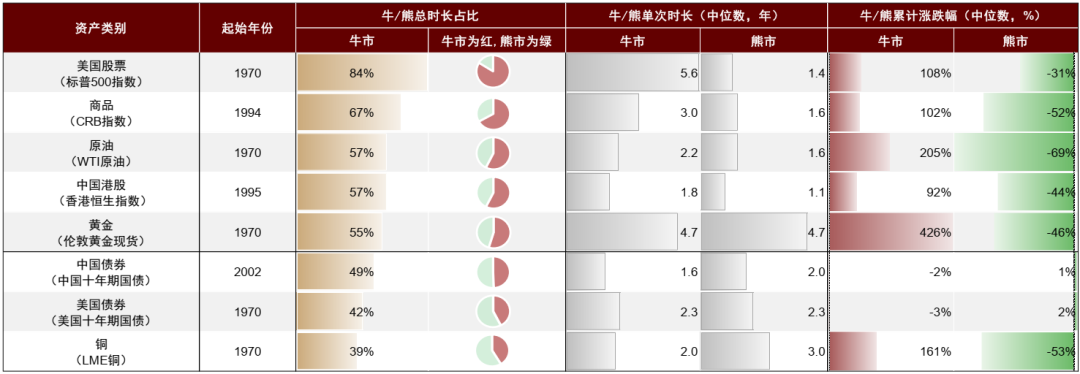
Core Viewpoint - The current gold bull market is likely not over, as its price increase and duration are still below historical comparisons from the 1970s and 2000s [1] Gold Market Insights - The continuation of the gold bull market is contingent on the Federal Reserve's monetary policy and the U.S. economy not entering a strong recovery phase characterized by "declining inflation and rising growth" [1] - There is a possibility that gold prices could exceed $5,000 per ounce next year if current trends persist [1] - Despite a clear bull market logic, gold is currently considered overvalued, suggesting a strategy of increasing allocation during dips rather than chasing prices [1] Stock Market Insights - Chinese stocks are expected to benefit from the AI technology wave and ample liquidity, with reasonable valuations [1] - Although year-end volatility may increase, there are no signals indicating a market top, thus maintaining an overweight position is recommended [1] - The U.S. stock market also has a bullish outlook, but concerns about high valuations and low elasticity during the dollar depreciation cycle suggest a neutral allocation [2] Fixed Income Insights - Chinese interest rates have room to decline, but the current valuation of Chinese bonds is high, limiting upside potential, leading to a recommendation for underweighting [2] - U.S. Treasuries benefit from the Fed's easing cycle but face mid-term inflation and debt risks, resulting in a neutral allocation recommendation [2] Market Top Indicators - The analysis of market tops for Chinese stocks and gold highlights the importance of economic and policy signals, with economic slowdowns or tightening policies often indicating market tops [4][5] - The difficulty in accurately timing market tops is noted, particularly due to the close timing of economic and market turning points [4] 2026 Market Outlook Factors - Four key factors that could alter the bullish trends for stocks and gold in 2026 include unexpected growth shifts, tightening policies, high valuations, and geopolitical shocks [6][7][8] - Current data does not support a significant improvement in economic growth for China and the U.S., suggesting that the bullish trends for stocks and gold are likely to continue [8] Asset Allocation Recommendations - The recommendation is to overweight Chinese stocks and gold, maintain a neutral position in U.S. stocks and bonds, and adjust commodity allocations to neutral [9] - The strategy emphasizes the importance of being prepared for potential market trend changes by increasing commodity allocations [9]
上周五,A股、黄金走势异常,原因是什么?
Sou Hu Cai Jing· 2025-11-17 01:02
Group 1 - The A-share market experienced a significant drop, with the Shanghai Composite Index falling by 39 points, nearly 1% [1] - The decline was primarily influenced by the drop in large-cap tech stocks in the US, which negatively impacted A-share tech stocks that were already weak [1] - The market's expectations for a Federal Reserve rate cut in December have diminished, with the probability of a 25 basis point cut dropping from 70% to 50%, affecting investor sentiment [1] Group 2 - The negative impact of the Federal Reserve's rate cut expectations is likely to continue in the short term, leading to a challenging environment for non-USD economies to achieve significant upward movement [2] - The market is expected to exhibit a volatile trend rather than a clear upward breakout before the end of the year [2] - Investors are advised to either refrain from trading if they do not understand the market or cautiously increase positions if they are confident in their profitability [2] Group 3 - International gold prices experienced a sharp decline, with a maximum intraday drop of 3.8% and a closing drop of 2%, indicating a significant reversal of the previous three days' gains [4] - The decrease in gold prices is attributed to the reduced expectations for a Federal Reserve rate cut in December, which negatively impacts gold as a hedge against inflation [4] - The speculative nature of the recent rise in gold prices, driven by expectations of rate cuts, has weakened, suggesting further downward potential for gold prices [5]
中金2026年大类资产展望:超配中国股票与黄金 标配美股与美债
智通财经网· 2025-11-17 00:40
Group 1 - The article discusses the importance of identifying market tops for Chinese stocks and gold, emphasizing that economic and policy signals are crucial for making accurate predictions [1][10][40] - It highlights that the U.S. stock market has a long bull market duration, while Chinese stocks experience more frequent bull-bear switches, making timing more critical for Chinese stocks [5][10] - The analysis indicates that gold's bull and bear markets are lengthy with low switching frequency, suggesting that identifying tops is also significant for gold [1][5] Group 2 - Four key factors are identified that could potentially alter the bull market trends for stocks and gold in 2026: growth direction, tightening policies, high valuations, and geopolitical shocks [2][39] - The current economic conditions in China are characterized as a "weak recovery," while the U.S. is moving towards "stagflation," which could impact the performance of stocks and gold differently [2][41] - The article suggests that while there are no immediate signals indicating a top for the current bull markets, high valuations for gold may lead to increased volatility in the future [26][36][40] Group 3 - The asset allocation recommendation includes overweighting Chinese stocks and gold, while maintaining a neutral position in U.S. stocks and bonds, and adjusting commodity exposure to neutral [3][4] - The rationale for these recommendations is based on the ongoing AI technology wave and liquidity conditions benefiting Chinese stocks, while gold is supported by the current monetary policy environment [3][4] - The article notes that despite potential volatility, there are no clear signals indicating a market top for Chinese stocks or gold at this time [25][36]
全球股市和贵金属市场受挫:12月降息预期转淡
Sou Hu Cai Jing· 2025-11-14 14:12
本文由 AI 算法生成,仅作参考,不涉投资建议,使用风险自担 【11月14日全球股市和贵金属市场受挫】11月14日,美联储官员鹰派信号浇灭市场对美国12月降息希 望,混乱数据日历和人工智能泡沫担忧,令全球股市和贵金属市场周五重创。从东京到巴黎、伦敦的蓝 筹股市场大幅下跌,英国市场因对预算案新担忧加剧痛苦。美国股指期货预示华尔街股市开盘黯淡,周 四已大幅下挫。 CIBC Markets外汇策略主管称,12月降息预期回到五五开,加上人工智能泡沫担忧, 破坏市场情绪稳定,本月市场情绪反复无常。白宫粉碎市场对美国状况很快清晰的希望,称10月美国失 业数据可能无法获得,加剧美联储暂停行动的看法。 ...