家电

Search documents
绿色消费“20条”:支持购买新能源汽车、绿色智能家电
2 1 Shi Ji Jing Ji Bao Dao· 2026-01-05 09:56
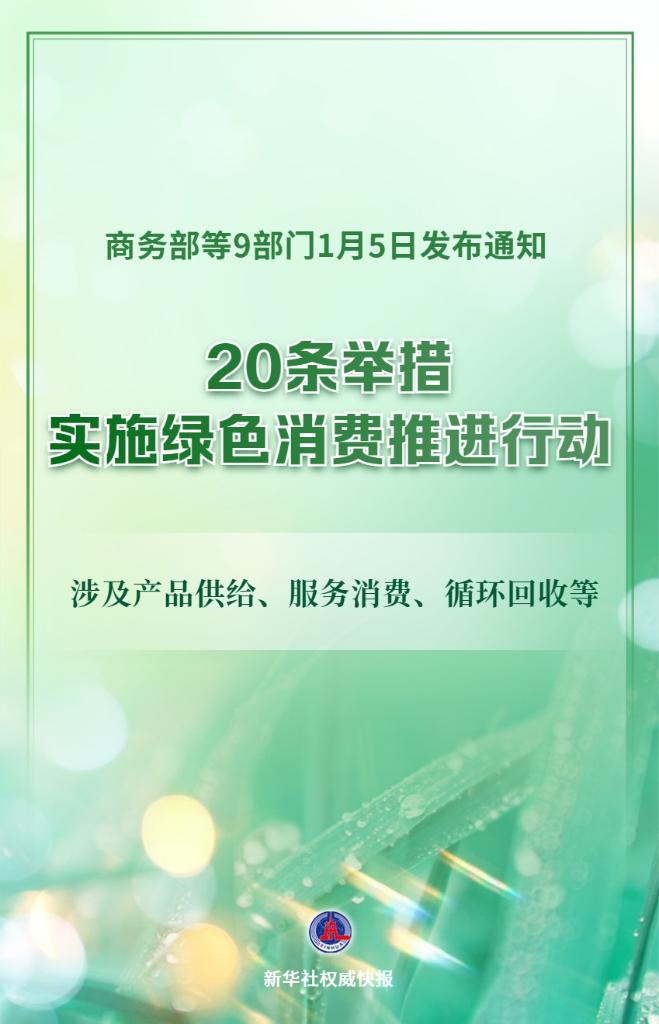
21世纪经济报道记者张旭 北京报道 1月5日,商务部等9部门发布《关于实施绿色消费推进行动的通知》 (以下简称《通知》),对"十五五"时期绿色消费工作作出安排。《通知》提出7方面20条具体举措, 涵盖农产品、家电家装、餐饮住宿等多个领域,同时明确金融等支持政策,优化绿色消费环境,促进形 成绿色低碳的生产生活方式。 对于绿色消费的重要意义,国研新经济研究院创始院长朱克力向21世纪经济报道记者表示,绿色产品与 绿色消费是实现经济社会绿色转型的关键抓手。 "一方面,扩大绿色产品供给能倒逼产业链上下游加速低碳改造,比如绿色家电需求增长会推动上游芯 片、电机企业研发节能技术,助力制造业向高端化、绿色化升级。另一方面,绿色消费模式创新能培育 新的消费增长点,比如二手商品流通、绿色租赁等业态,既拉动消费规模扩张,又减少资源浪费,契 合'双碳'目标与高质量发展要求。"朱克力说。 《通知》提出,丰富绿色产品供给,促进汽车绿色消费,支持消费者购买新能源汽车。鼓励购买新能源 汽车,是我国十余年来政策导向的延续,也集中体现在2026年汽车以旧换新政策当中。 2024年以来,商务部会同各地区、各相关部门深入实施汽车以旧换新政策。截至2 ...
央广财评|新年消费活力开局 元旦假期热气腾腾
Yang Guang Wang· 2026-01-05 09:45
Group 1 - The core viewpoint of the articles highlights the vibrant consumer market driven by various consumption hotspots such as cultural tourism, new store economies, and ice and snow economies during the New Year holiday [1][2][3] Group 2 - Consumption policies are continuously being implemented to directly benefit consumers, with significant discounts observed during the New Year holiday, such as a consumer saving over 1,000 yuan on a large television through an old-for-new policy [1] - The tourism sector is experiencing strong momentum, with over 140.5 million visitors in Harbin on January 1, 2023, and a 42.1% share of visitors from outside the province, leading to deep consumption transformation [2] - The domestic travel expenditure during the New Year holiday reached 84.789 billion yuan, indicating a sustained release of vitality in cultural tourism consumption [2] Group 3 - There is a noticeable upgrade in product consumption, with new consumption scenarios and models emerging, reflecting consumers' increasing demand for personalized, quality, and experiential consumption [3] - Events like the "New Year YEAH Carnival" in Beijing and the rise of "tourism + camping" in Guangdong showcase the new consumption trends [3] - The Ministry of Commerce is launching a series of activities to stimulate consumption, focusing on product and service consumption, which will inject vitality into the market and confidence for growth throughout the year [3]
安徽2026“国补”开门红!首单空调已由京东完成送装!
Xin Lang Cai Jing· 2026-01-05 09:28
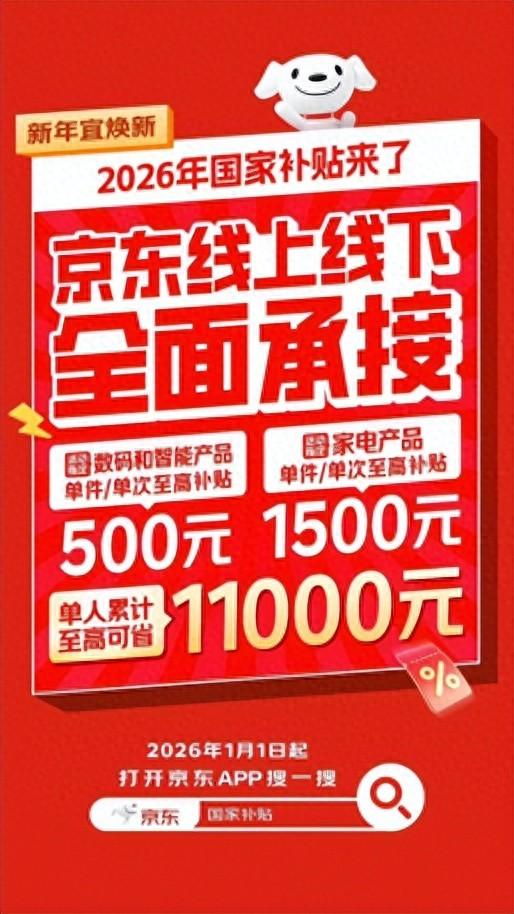
2026年元旦假期,新一轮全国家电"以旧换新"补贴政策正式启动。家住经开区的郭先生夫妇听到消息后 就来到京东MALL合肥蜀山店,在顺利领取国补资格后,当场下单了一台美的3P新一级能效省电节能空 调,并迅速完成了送装同步。这不仅是他个人的"新年第一购",也成为2026年度"国补"落地安徽后,全 省完成的首个送装"国补"订单。 据了解,郭先生夫妇正在为新房购置全屋家电,看到2026年"国补"出来后就先下单了一台客厅空 调,"过年吃团圆饭,屋里就暖和了"。他们直接看好了一台美的3P柜机空调,原价 6690元,京东 MALL直降890元,再减去15%"国补"870元,最终只要4930元,一起优惠了1760元。京东还给安排了空 调送装同步活动,货送到的同时,京东以旧换新工程师也上门将新机安装到位,为郭先生家里送去新年 第一份惊喜。 作为线上线下率先承接2026年国家补贴落地的渠道,消费者在京东购买活动指定的冰箱、洗衣机、电 视、空调、电脑、热水器产品,单件/单次至高补贴1500元;购买活动指定的手机、平板、智能手表手 环、智能眼镜产品,单件/单次至高补贴500元。单人累计至高可省11000元! 在"国补"使用方式上,消 ...


9部门联合发布:加快消费模式绿色转型!
券商中国· 2026-01-05 09:19
Core Viewpoint - The article discusses the implementation of green consumption initiatives aimed at promoting a low-carbon lifestyle and accelerating the transition to green consumption models through 20 specific measures outlined in the notification issued by the Ministry of Commerce and other departments [1][2]. Group 1: Green Product and Service Supply - The notification emphasizes increasing the supply of green agricultural products, promoting green home appliances and renovations, and encouraging green consumption in the automotive sector [1]. - It highlights the need to improve energy and water efficiency standards for home appliances and to develop a certification system for green smart appliances [1]. - The automotive industry is encouraged to explore the potential of the "aftermarket," including used cars, car rentals, modifications, and sharing services, while also supporting new consumption models like RV camping and self-driving tours [1]. Group 2: Green Consumption Growth Points - The notification aims to cultivate new growth points in green consumption by establishing green supply chains and conducting carbon footprint evaluations [2]. - It promotes green procurement, products, and packaging, and encourages the development of a universal green consumption points system that can be used both online and offline [2]. - The article also mentions the importance of innovative green sharing services to enhance resource efficiency through shared transportation, space, and goods [2]. Group 3: Green Recycling and Policy Support - The notification stresses the need for promoting green recycling by reducing single-use plastic products and enhancing the recycling and reuse of waste materials [2]. - It aims to create a resource recycling system based on reduction, recycling, and reuse of goods [2]. - The notification outlines a commitment to strengthen policy integration and support local initiatives for green markets and restaurants through potential reward policies [2]. Group 4: Financial Support for Green Consumption - Financial institutions are encouraged to increase support for green consumption loans that meet specific standards [3]. - The notification suggests that banks should provide convenient services for users with good green consumption records [3]. - It also proposes the establishment of a project library for green consumption infrastructure to connect quality projects with financial institutions [3].

商务部、国家发改委等九部门发布重要行动通知
中国能源报· 2026-01-05 09:05
Core Viewpoint - The article emphasizes the implementation of green consumption initiatives to promote sustainable development and reduce carbon emissions across various sectors in China [1][2]. Group 1: Richening Green Product Supply - Encouragement for enterprises to expand the supply of green agricultural products, including organic and geographical indication products, and to establish dedicated sales areas for these products [2]. - Promotion of green home appliances and home decoration, urging the purchase of certified green products and the use of eco-friendly materials [3]. - Support for the consumption of new energy vehicles and the development of related markets, including second-hand cars and car-sharing services [3]. Group 2: Enhancing Green Service Consumption - Development of green dining services, urging restaurants to adopt standards that reduce waste and promote the use of biodegradable packaging [4]. - Promotion of green accommodation, encouraging hotels to use non-toxic and biodegradable cleaning products and to provide refillable toiletries [4]. - Encouragement of green housekeeping services that utilize eco-friendly cleaning products and innovative service models [4]. Group 3: Innovating Green Consumption Models - Promotion of green supply chains that prioritize eco-friendly products and practices throughout the supply chain [5]. - Establishment of a green consumption points system to incentivize consumers for purchasing green products and using low-carbon services [6]. - Encouragement of innovative sharing models, including shared transportation and resource-sharing platforms [6]. Group 4: Promoting Green Circular Recycling - Reduction of single-use plastic products through various initiatives, including the promotion of reusable shopping bags [7]. - Development of a comprehensive recycling system for waste products, including furniture and electronics, to enhance recycling efficiency [7]. - Support for the circulation of second-hand goods and the establishment of platforms for second-hand transactions [8]. Group 5: Optimizing Green Consumption Environment - Promotion of energy-efficient facilities and smart energy management systems to reduce energy consumption [9]. - Advocacy for green consumption awareness, encouraging consumers to adopt low-carbon lifestyles and make environmentally friendly choices [9]. - Strengthening public awareness campaigns to promote green consumption as part of national ecological and energy-saving initiatives [9]. Group 6: Strengthening Green Consumption Foundation - Encouragement for businesses to adopt green standards and certifications to foster a culture of sustainability [10]. - Participation in the formulation of international standards for green consumption to align with global practices [10]. Group 7: Increasing Policy Support - Strengthening policy integration and coordination among various departments to support green consumption initiatives [11]. - Encouragement for financial institutions to increase support for green consumption loans and innovative financial products [11].

商务部等9部门关于实施绿色消费推进行动的通知
中汽协会数据· 2026-01-05 09:04
Core Viewpoint - The article emphasizes the importance of promoting green consumption as a means to accelerate economic and social development while achieving a comprehensive green transformation during the "14th Five-Year Plan" period [1]. Group 1: Enriching Green Product Supply - Encourage the supply of green agricultural products, including organic and high-quality goods, and support the establishment of dedicated sales areas for these products [1]. - Promote the purchase of green home appliances and building materials, focusing on energy efficiency and sustainability [2]. - Support the consumption of new energy vehicles and explore the potential of the automotive aftermarket [2]. Group 2: Enhancing Green Service Consumption - Develop green dining practices by encouraging restaurants to adopt standards that reduce waste and promote the use of biodegradable materials [3]. - Foster green accommodation by promoting eco-friendly practices in hotels and encouraging the use of sustainable products [4]. - Innovate in green housekeeping services by promoting the use of non-toxic cleaning products and smart home technologies [4]. Group 3: Innovating Green Consumption Models - Promote the development of green supply chains and encourage the use of environmentally friendly products and packaging [5]. - Establish a green consumption points system to incentivize consumers for purchasing green products and services [5]. - Encourage innovative sharing models in green consumption, leveraging technology for efficient resource use [6]. Group 4: Promoting Green Circular Recycling - Reduce the use of single-use plastic products and promote the use of reusable alternatives [7]. - Establish a comprehensive recycling system for waste materials, focusing on furniture, electronics, and textiles [8]. - Support the development of second-hand goods markets and encourage community initiatives for recycling and reuse [8]. Group 5: Optimizing the Green Consumption Environment - Promote energy-efficient facilities and encourage the use of green electricity in businesses [9]. - Raise awareness of green consumption and advocate for low-carbon lifestyles among consumers [9]. - Strengthen public awareness campaigns to promote green consumption as part of national environmental initiatives [9]. Group 6: Strengthening Policy Support - Enhance policy integration and coordination among various departments to support green consumption initiatives [12]. - Increase credit support for green consumption loans and encourage financial institutions to collaborate with businesses [12]. - Innovate financial products to provide insurance and investment opportunities for green consumption projects [12].

国投证券港股晨报-20260105
国投证券(香港)· 2026-01-05 08:53
Core Insights - The report highlights a strong start for the Hong Kong stock market in 2026, with the Hang Seng Index rising by 2.76% and the Hang Seng Tech Index increasing by 4% on the first trading day, driven by positive market sentiment and broad sector gains [2][3] - The semiconductor sector is noted as a key driver in the US market, with significant gains in companies like Nvidia and Micron Technology, while software stocks showed weakness [4] - The report discusses the geopolitical impact of US military actions in Venezuela, suggesting potential long-term implications for oil prices and market stability [5] Company Overview - The specific company under review, 精锋医疗 (Jingfeng Medical), was established in 2017 and specializes in surgical robots, being the first in China and the second globally to receive regulatory approval for multiple types of surgical robots [7] - Financial projections indicate revenues of 48.04 million yuan in 2023, 160 million yuan in 2024, and 150 million yuan in the first half of 2025, with net losses projected at 210 million yuan, 220 million yuan, and 89.09 million yuan respectively [7] Industry Status and Outlook - The surgical robot market in China is projected to grow from 2.71 billion yuan in 2019 to 7.18 billion yuan by 2024, reflecting a compound annual growth rate of 21.5%, with expectations to reach 102.02 billion yuan by 2033 [8] Advantages and Opportunities - The company holds a unique position as the first in China and second globally to gain approval for various types of surgical robots, which enhances its competitive edge [9] - The product portfolio is comprehensive, allowing for strong synergies and collaboration within the company [9] - The company has robust research and development capabilities and has attracted significant cornerstone investors, indicating strong industry recognition and support [9] Fundraising and Use of Proceeds - The IPO is set to raise funds with approximately 42% allocated for the research and development of core products, 20% for commercialization, and 10% for capacity expansion, among other uses [13] Investment Recommendation - The report suggests that the company, with its leading position and strong investor backing, has a projected market capitalization of approximately 16.8 billion HKD at the IPO price, with a price-to-sales ratio of about 50 times, comparable to its peers [14]
“铝代铜”再被热议,格力电器:暂无相关计划
Guo Ji Jin Rong Bao· 2026-01-05 08:53
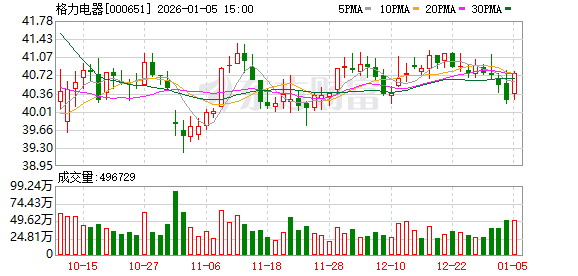
2026年开年,格力电器再谈"铝代铜"。 1月5日,格力电器通过公司官方账号对外表示,公司陆续收到投资者及媒体就部分企业推出空调涨价和"铝代铜"计划等相关问题的咨询,询问公司的态度和 计划。公司现说明如下:"格力积极响应2026年家电国家补贴政策,切实让利消费者。我们承诺,格力家用空调不涨价。同时,为满足格力家用空调十年免 费包修服务标准,我们暂无'铝代铜'相关计划。未来若相关研究能完全满足格力质量和技术标准要求并正式应用,我们将予以明确标注,充分保障消费者的 知情权与选择权。" "铝代铜"是近年来空调行业的重要议题,其背后是行业共同面临的成本压力与技术演进。 一方面,铜作为空调的主要原材料,铜价持续飙升使行业承压。基于伦敦金属交易所(LME)的权威数据,过去一年期铜价格从年初到年末累计上涨约 42%,创下2009年以来最大年度涨幅,其中12月31日LME铜价报12550美元/吨,较年初显著攀升,年内最高触及12960美元/吨的历史新高。从国内市场来 看,根据大宗商品数据商生意社的监测数据,2025年现货铜价从年初的73830元/吨,涨到了年末的99180.00元/吨,涨幅达34.34%。 另一方面,技术路径 ...

包头市青山区:烟火气里燃动消费新活力
Sou Hu Cai Jing· 2026-01-05 08:39
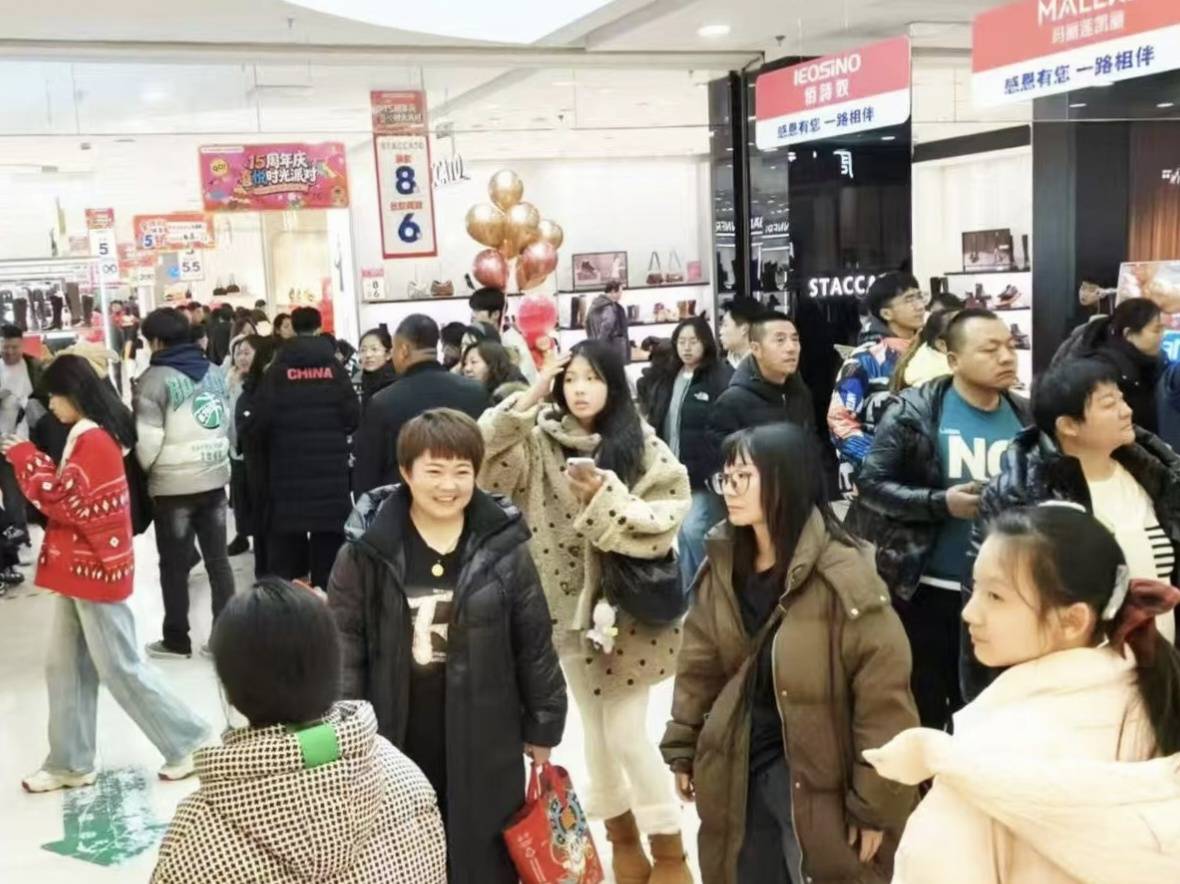
Group 1 - The core viewpoint highlights the vibrant consumer market in Qingshan District during the New Year holiday, driven by policy benefits, innovative consumption scenarios, and upgraded quality demands, contributing to strong economic growth for the year ahead [1] Group 2 - During the New Year holiday, Qingshan District's key monitored commercial enterprises achieved a total revenue of 35.72 million yuan over three days, with eight major commercial complexes generating over 50 million yuan, reflecting a year-on-year growth of 27% [3] - On New Year's Day, the monitored retail and catering enterprises in the district reported year-on-year revenue increases of 30.43% and 25.28%, respectively [3] Group 3 - The introduction of the old-for-new subsidy policy during the New Year period provided up to 1,500 yuan in subsidies for energy-efficient appliances and smart digital products, effectively stimulating green and smart consumption [4] - Major appliance retailers launched exclusive promotions and events in conjunction with the New Year, enhancing shopping experiences and consumer enthusiasm [4] Group 4 - The supply of essential goods remained stable and orderly during the holiday, with sufficient inventory of key consumer products like meat and vegetables, and overall market prices maintained stability [5] - The Qingshan District's integration of cultural, tourism, and retail activities, along with continuous innovation in consumption scenarios, enriched the holiday experience and released economic vitality for the year [5]
新华鲜报丨9部门发文!中国实施绿色消费推进行动
Xin Hua Wang· 2026-01-05 08:30
Core Viewpoint - The Chinese government, through nine departments including the Ministry of Commerce, has launched a green consumption promotion initiative aimed at fostering a green, low-carbon lifestyle and production methods across various sectors [1]. Group 1: Food Sector - The initiative emphasizes increasing the supply of green agricultural products and promoting green dining practices [3][4]. - It encourages businesses to procure high-quality products such as organic and geographical indication agricultural products, while also advocating for reduced cooking oil emissions and the use of biodegradable packaging [4]. Group 2: Housing Sector - The initiative promotes the purchase of green-certified smart home appliances and eco-friendly building materials [5][6]. - It encourages the development of green hotels that utilize non-toxic, water-saving cleaning agents and provide refillable toiletries, while also innovating in health-oriented guest services [6]. Group 3: Transportation Sector - The initiative aims to strengthen the automotive industry by exploring the potential of the second-hand car market and promoting new consumption models such as RV camping and car-sharing [8]. - It highlights the importance of technology in supporting green consumption through smart products and resource optimization [8]. Group 4: Recycling and Second-hand Market - The initiative promotes green recycling practices and encourages retailers to offer reusable shopping options [9]. - It outlines the establishment of a three-tier recycling system and supports the development of second-hand shops to enhance the value of idle goods [9]. Group 5: Challenges and Future Outlook - The initiative acknowledges existing shortcomings in the green consumption market, such as the lack of unified standards and regulations in the second-hand market [10]. - It aims to align domestic green consumption standards with international ones, fostering deeper integration and cooperation in standardization [10].