通信

Search documents
星闪:让万物互联“飙”进未来
Xin Lang Cai Jing· 2025-12-26 16:58
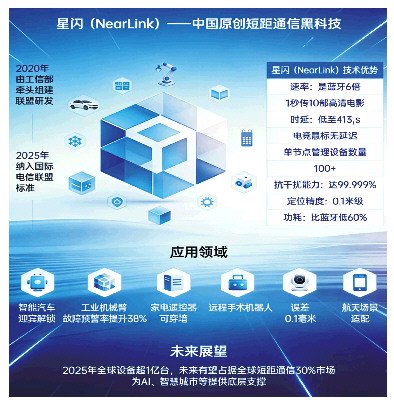
Core Viewpoint - The article highlights the emergence of "NearLink," a Chinese-developed short-range wireless communication technology that significantly enhances connectivity and performance for smart devices, addressing the limitations of existing technologies like Bluetooth and Wi-Fi [2][3]. Group 1: Technology Development - NearLink was initiated in 2020 by the Ministry of Industry and Information Technology, gathering over 400 organizations, including Huawei and China Mobile, to develop a faster, more responsive, energy-efficient, and stable short-range communication technology [2]. - The first technical standard for NearLink was published in 2022, and in 2023, Huawei launched the first terminal product supporting NearLink, enabling high-quality lossless audio transmission [3]. Group 2: Performance Metrics - NearLink operates in two modes: one for low-power scenarios with transmission speeds six times faster than traditional Bluetooth, and another for high-speed needs capable of transmitting 8K ultra-high-definition video [4]. - The latency of NearLink can reach as low as 20 microseconds, making it 1500 times faster than traditional Bluetooth and 500 times faster than Wi-Fi, surpassing human neural response speed [4]. Group 3: Application Scenarios - NearLink can connect up to 4096 devices simultaneously, significantly outperforming traditional Wi-Fi routers, which can only handle 32 devices [6]. - In smart home applications, devices using NearLink can operate seamlessly without interference, even in environments with many connected devices [6]. Group 4: Energy Efficiency - NearLink is designed to be energy-efficient, consuming 60% less power than traditional Bluetooth and 80% less than Wi-Fi, leading to extended battery life for devices [8]. - For instance, smartwatches equipped with NearLink can have their battery life extended by 30%, and industrial sensors can see battery life increase from three months to eight months [8]. Group 5: Industry Impact - In the automotive sector, NearLink enhances vehicle key functionalities, improving accuracy and responsiveness for features like automatic unlocking and guest welcome [10]. - In industrial applications, NearLink facilitates real-time data transmission, significantly reducing operational delays and improving efficiency in manufacturing and healthcare settings [11]. Group 6: Future Prospects - To achieve widespread adoption comparable to Bluetooth and Wi-Fi, NearLink needs to expand its ecosystem and reduce costs, as the current chip price is approximately 15 yuan, nearly double that of traditional Bluetooth chips [12]. - The anticipated reduction in chip costs by 30% by 2026 is expected to make NearLink more accessible to consumers and encourage broader adoption across various device categories [12].

2.5万亿!A股融资余额创新高,6700亿杠杆资金最爱这些赛道
Sou Hu Cai Jing· 2025-12-26 16:27
Core Insights - The electronic industry leads with a net buying amount exceeding 160 billion yuan, indicating a significant shift from a leader in optical modules to a powerhouse in computing capabilities [1] - By the end of 2025, the financing balance in the A-share market reached a historical high of 2.52 trillion yuan, reflecting a net increase of 670 billion yuan, a growth rate of over 36% [3][5] Financing Growth - The financing balance in the A-share market has shown unprecedented expansion throughout 2025, reaching 2.52 trillion yuan by December 25, with a net increase of 670 billion yuan compared to the end of 2024 [3] - The growth of leveraged funds reflects market participants' confidence, remaining within a controllable range compared to the peak levels of 2015 [3] Industry Preferences - Among 31 primary industries, 28 experienced net buying, with the electronic, power equipment, and communication sectors being the biggest beneficiaries [5] - The electronic industry led with a net buying amount of 160.6 billion yuan, accounting for 24% of the total net buying for the year [5] Leading Stocks - Six stocks had net buying exceeding 10 billion yuan, with Xinyi Technology leading at 18.6 billion yuan, making it the most favored stock among investors [7] - Other notable stocks with significant net buying include Zhongji Xuchuang, Shenghong Technology, CATL, Han's Laser, and Sunshine Power [7] Star Stocks - Xinyi Technology emerged as a star stock in the financing market for 2025, with a financing balance of 20.7 billion yuan, representing 4.5% of its market capitalization [9] - The company's strong performance is linked to its fundamentals, with a revenue of 16.5 billion yuan and a net profit of 6.3 billion yuan, showing year-on-year growth of 221.7% and 284.4% respectively [9] Market Dynamics - The growth of the financing balance correlates with market trends, particularly between June 20 and September 25, when the financing balance increased by 623.5 billion yuan alongside a 14.6% rise in the Shanghai Composite Index [11] - There are variations in the distribution of financing funds across different exchanges, with the Shanghai Stock Exchange seeing an increase while the Shenzhen Stock Exchange experienced a decrease [11] Growth Drivers - Multiple factors support the significant growth in financing balance, including policy support from the China Securities Regulatory Commission and brokerage firms expanding margin financing business [13] - By November 6, the average maintenance guarantee ratio in the margin financing market was 281.62%, well above the 130% warning line, indicating manageable risk levels [13] Continued Preference for Electronics - The preference for the electronic industry persisted throughout the year, with Xinyi Technology's financing balance surpassing 20.7 billion yuan [15] - The overall financing transaction volume accounted for 10.59% of the A-share trading volume, indicating a strong influx of leveraged funds into the market [15]


AI核心产业超万亿,工信部将完善具身智能等创新发展政策
Di Yi Cai Jing· 2025-12-26 15:24
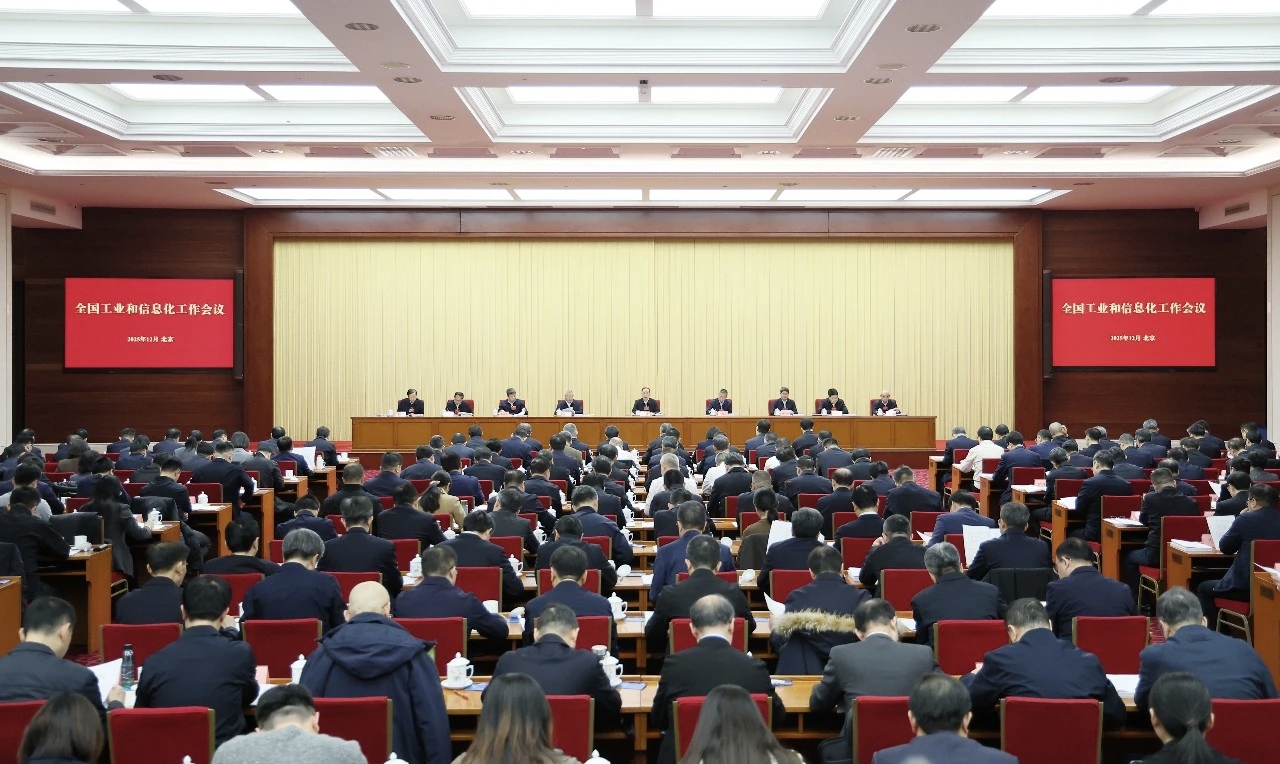
Core Insights - The conference outlined ten key areas of focus for 2026, emphasizing the need to stabilize and enhance the industrial economy while promoting innovation and integration [1][2] Group 1: Industrial Economic Performance - From January to November, the added value of high-tech manufacturing and equipment manufacturing increased by 9.2% and 9.3% year-on-year, respectively [1] - The core AI industry surpassed 1 trillion yuan, and exports of new energy vehicles exceeded 2 million units [1] - By the end of October, the total number of 5G base stations reached 4.758 million, with 5G technology integrated into 91 out of 97 categories of the national economy [1] Group 2: Strategic Goals for 2026 - The year 2026 marks the beginning of the "14th Five-Year Plan," focusing on stabilizing growth, enhancing innovation, promoting integration, optimizing governance, and preventing risks [1][2] - Key tasks include consolidating the positive trend of the industrial economy, enhancing the resilience and security of industrial chains, and accelerating technological innovation [2] Group 3: Emerging Industries and Technological Development - The Ministry of Industry and Information Technology (MIIT) aims to cultivate emerging industries such as integrated circuits, new displays, new materials, aerospace, low-altitude economy, and biomedicine [4] - Support for AI research and development, as well as the orderly launch of new business trials in satellite IoT, is emphasized [4] - The conference highlighted the need for innovation policies in future industries, including embodied intelligence and the metaverse [4] Group 4: Industry Governance and Policy Coordination - The MIIT plans to enhance industry governance effectiveness by implementing a series of "14th Five-Year Plan" initiatives [5] - There will be a focus on addressing "involution" competition and curbing low-price, low-quality competition [5] - Strengthening the coordination of industrial policies with fiscal and financial policies is a priority, along with promoting innovative pilot policies for industry-finance cooperation [5]
华夏中证A500ETF基金投资价值分析:攻守兼备,穿越周期
GOLDEN SUN SECURITIES· 2025-12-26 13:47
Quantitative Models and Construction Methods Model Name: China Securities A500 Index - **Model Construction Idea**: The China Securities A500 Index aims to provide a balanced industry representation and incorporate ESG exclusion criteria to enhance the sustainability and resilience of its constituent stocks[2][21]. - **Model Construction Process**: 1. **Sample Space**: The index includes A-shares and depositary receipts issued by red-chip companies that meet specific criteria, such as not being ST or *ST securities, having been listed for more than a quarter, and being part of the Shanghai-Hong Kong Stock Connect or Shenzhen-Hong Kong Stock Connect[21]. 2. **Exclusion Criteria**: Securities with a China Securities ESG rating of C or below are excluded[22]. 3. **Selection Criteria**: Securities are selected based on their market capitalization, liquidity, and industry representation to ensure a balanced distribution across sectors[22]. 4. **Final Selection**: The index includes 500 securities, with a focus on large-cap, highly liquid stocks, and aims to reflect the performance of the most representative listed companies in each industry[21][22]. - **Model Evaluation**: The inclusion of ESG criteria significantly optimizes the risk-return characteristics of the index, enhancing its investment value by reducing volatility and increasing excess returns[24][27]. Model Backtesting Results - **China Securities A500 Index**: - **Expected Annual Return**: 12.9%[9] - **Annualized Volatility**: Lower compared to the benchmark index after ESG exclusion[24] - **Correlation with Other Assets**: Low correlation with Hong Kong stocks, US stocks, commodities, gold, and bonds, making it suitable for risk diversification[17][19] - **Excess Return**: Significantly higher than the benchmark index after ESG exclusion[24] Quantitative Factors and Construction Methods Factor Name: ESG Exclusion - **Factor Construction Idea**: The ESG exclusion factor aims to enhance the sustainability and resilience of the index by excluding companies with poor ESG ratings[2][21]. - **Factor Construction Process**: 1. **ESG Rating**: Companies with a China Securities ESG rating of C or below are excluded from the index[22]. 2. **Selection Criteria**: The remaining companies are selected based on their market capitalization, liquidity, and industry representation[22]. - **Factor Evaluation**: The ESG exclusion factor significantly improves the risk-return profile of the index, reducing volatility and increasing excess returns[24][27]. Factor Backtesting Results - **ESG Exclusion Factor**: - **Annualized Return**: 3.96% for the China Securities 500 ESG Benchmark Index compared to 2.42% for the China Securities 500 Index[24] - **Annualized Volatility**: Lower for the ESG Benchmark Index compared to the standard index[24] - **Maximum Drawdown**: Lower for the ESG Benchmark Index compared to the standard index[24] Additional Information - **Index Characteristics**: The China Securities A500 Index includes large-cap, highly liquid stocks with a balanced representation of new and traditional economies, focusing on sectors such as electronics, electric power equipment and new energy, banking, non-ferrous metals, and pharmaceuticals[31][33][35]. - **Index Valuation and Profitability**: The index's current valuation is not high, with significant room for upward valuation adjustment. The expected earnings growth is high, making it a cost-effective investment[45][47]. Fund Information - **Fund Name**: China Securities A500 ETF - **Fund Objective**: To closely track the target index, minimizing tracking deviation and tracking error[51]. - **Fund Manager**: Managed by Mr. Li Jun, who has extensive experience in managing passive index products[53]. - **Fund Performance**: The fund has been operating steadily since its inception, closely tracking the performance of the China Securities A500 Index[54]. Fund Manager Information - **Asset Management Scale**: China Asset Management's scale continues to grow, ranking among the top in the industry with a comprehensive product line[57]. References - [1] [2] [3] [4] [5] [6] [7] [8] [9] [10] [11] [12] [13] [14] [15] [16] [17] [18] [19] [20] [21] [22] [23] [24] [25] [26] [27] [28] [29] [30] [31] [32] [33] [34] [35] [36] [37] [38] [39] [40] [41] [42] [43] [44] [45] [46] [47] [48] [49] [50] [51] [52] [53] [54] [55] [56] [57] [58] [59] [60] [61] [62] [63] [64] [65] [66]
鸿蒙生态如何打造出境服务新体验?解决出境游"三大难"
经济观察报· 2025-12-26 12:23
Core Viewpoint - Huawei aims to enhance outbound travel experiences by leveraging its HarmonyOS capabilities and fostering partnerships to create a comprehensive service ecosystem for travelers [1][24]. Group 1: Market Trends - By 2025, China's outbound tourism market is projected to experience a robust recovery with an average annual growth rate of 44.3% [2]. - The traditional group travel model is declining, with over 70% of travelers now opting for independent travel, particularly among the "digital natives" of Generation Z [3]. Group 2: User Experience Challenges - Travelers face significant "experience degradation" when transitioning from a highly integrated domestic digital ecosystem to fragmented services abroad [4][5]. - The mismatch in service distribution mechanisms between domestic and international contexts leads to difficulties in accessing essential services while traveling [5]. Group 3: Structural Gaps in Outbound Services - There are three major structural gaps in outbound travel services: 1. **Infrastructure Connection Gap**: Variability in network standards and roaming agreements across countries creates technical barriers [8]. 2. **Information Gap**: The lack of a unified digital intermediary complicates information access and decision-making for travelers [10]. 3. **Local Service Access Gap**: Travelers face high "digital identity costs" when trying to access local services, which are often distributed through traditional app-based models [12][14]. Group 4: Comprehensive Service Integration - Huawei proposes a solution that integrates pre-trip, in-trip, and post-trip services into a seamless experience, addressing the identified gaps [17][18]. - The integration includes features like itinerary management, local service recommendations, and AI-enhanced photo sharing to enhance user satisfaction [20][22]. Group 5: Ecosystem Development - Huawei is building a robust ecosystem by empowering partners and developers to enhance outbound travel services, as seen with the integration of services like Grab and Keeta [25][26]. - The HarmonyOS has launched over 120 outbound service cards, covering essential travel needs such as dining, accommodation, and shopping [27]. - The installed base of HarmonyOS devices has surpassed 32 million, indicating a significant market opportunity for global partners [28].
12月26日沪深两市强势个股与概念板块
2 1 Shi Ji Jing Ji Bao Dao· 2025-12-26 12:13
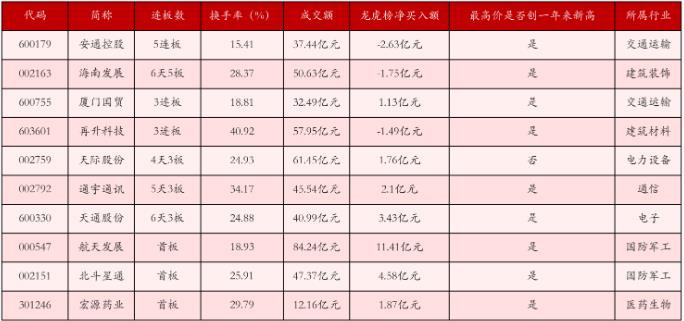
Strong Stocks - As of December 26, the Shanghai Composite Index rose by 0.1% to 3963.68 points, the Shenzhen Component Index increased by 0.54% to 13603.89 points, and the ChiNext Index went up by 0.14% to 3243.88 points [1] - A total of 91 stocks in the A-share market hit the daily limit up, with the top three strong stocks being: Antong Holdings (600179), Hainan Development (002163), and Xiamen Guomao (600755) [1] - The detailed data for the top 10 strong stocks includes metrics such as consecutive limit up days, turnover rates, trading volumes, and net buying amounts from the Dragon and Tiger List [1] Strong Concept Sectors - The top three concept sectors based on A-share performance are Hainan Free Trade Zone, Metal Zinc, and Metal Lead, with respective increases of 4.32%, 3.61%, and 3.3% [2] - The detailed data for the top 10 concept sectors includes metrics such as percentage of limit up stocks, percentage of rising stocks, and percentage of falling stocks [2]


鸿蒙生态如何打造出境服务新体验?解决出境游"三大难"
Jing Ji Guan Cha Wang· 2025-12-26 11:32
Core Insights - The outbound tourism market in China is experiencing a strong recovery with an average annual growth rate of 44.3% by 2025 [1] - The traditional group tours are declining, with over 70% of travelers now opting for independent travel, primarily driven by the "digital natives" of Generation Z [2] Group 1: Industry Challenges - There is a significant "experience downgrade" for travelers accustomed to a highly integrated digital lifestyle in China when they travel abroad [2][3] - The outbound tourism experience is hindered by three major structural gaps: infrastructure connectivity, information exchange, and local service access [4] - The "infrastructure connectivity gap" arises from differences in network standards, complex roaming agreements, and varying levels of communication infrastructure across countries [5] - The "information exchange gap" is characterized by increased decision-making costs due to fragmented information sources and language barriers, making it difficult for travelers to navigate unfamiliar environments [7] - The "local service access gap" reflects the challenges faced by short-term visitors in establishing a digital identity to access local services, which often requires extensive setup [9][10] Group 2: Solutions Proposed by Huawei - Huawei aims to address these gaps by providing a comprehensive solution that integrates services across the entire travel experience, from pre-trip planning to post-trip sharing [11][12] - The proposed solution includes a unified service platform that aggregates travel information, visa updates, personalized itinerary suggestions, and easy booking options [14] - During the trip, Huawei's services will offer seamless connectivity, navigation, and local recommendations, enhancing the overall travel experience [15][16] - Huawei is also focusing on upgrading its core technologies and services, such as the Petal Maps and Tianji Tong app, to support global connectivity and enhance user experience [17] Group 3: Ecosystem Development - Huawei is building a collaborative ecosystem by empowering partners and developers to enhance outbound travel services, ensuring users have access to high-quality offerings [18][20] - The integration of services like Grab and Keeta into Huawei's ecosystem has significantly improved user experience, with Grab reporting an 18-fold increase in monthly orders after joining [18][19] - As of now, over 120 outbound service cards have been launched within the HarmonyOS ecosystem, covering essential travel needs such as dining, accommodation, and shopping [20] - The number of devices equipped with HarmonyOS has surpassed 32 million, indicating a substantial market opportunity for global partners [21]
年终博弈?
第一财经· 2025-12-26 11:08
2025.12. 26 A股三大指数呈现"震荡收涨"格局。银行、保险等金融权重股今日表现稳定,为上证指数提供 了支撑,深证成指领涨三大指数,主要受科技板块和消费板块拉动,创业板指微涨,主要受新能 源板块和生物医药板块分化影响。 1865家上涨 涨跌停比 市场呈现"涨跌分化"特征,表现为"赚钱效应 集中、风险偏好下降"。商业航天、有色金属、机 械设备等热点板块表现活跃,成为上涨个股的 核心来源,电子、通信、医药生物等板块表现疲 软。 两市成交额 万亿元 ▲12.5% 两市成交额大幅放量,创近期市场新高,是多 重因素共振的结果。商业航天、有色金属等核 心热点外,锂电池、光伏等板块也表现活跃,形 成"多点开花"的赚钱效应,吸引更多资金入 场,进一步放大了市场成交额。 资金情绪 主力资金净流出 长你冲了还是撤了 2 散户资金净流入 机构谨慎调仓,资金流入电力设备、有色金属、汽车整车,减仓电子、通信、机械设备。散户追涨热门板块, 资金流入商业航天(如神剑股份、九鼎新材)、有色金属(如江西铜业、永兴材料),部分抄底电子、通信等 调整板块。 散户情绪 75.85% 发 关注 0 3 % 足球 足球 川 a 396 laz ...

【26日资金路线图】有色金属板块净流入逾183亿元居首 龙虎榜机构抢筹多股
证券时报· 2025-12-26 10:48
Market Overview - The A-share market showed mixed performance on December 26, with the Shanghai Composite Index closing at 3963.68 points, up 0.1%, and the Shenzhen Component Index at 13603.89 points, up 0.54% [1] - Total market turnover reached 21812.64 billion, an increase of 2372.04 billion compared to the previous trading day [1] Capital Flow - The main capital in the A-share market experienced a net outflow of 242.43 billion, with an opening net outflow of 96.61 billion and a closing net outflow of 6.56 billion [2] - The CSI 300 index saw a net outflow of 54.39 billion, while the ChiNext index had a net outflow of 133.96 billion and the STAR Market a net outflow of 20.89 billion [4] Sector Performance - The non-ferrous metals sector led with a net inflow of 183.35 billion, showing a rise of 2.35% [6][7] - Other sectors with net inflows included non-bank financials (40.67 billion) and electric power equipment (16.91 billion) [7] - The electronics sector faced the largest net outflow at -173.32 billion, followed by machinery equipment at -86.84 billion and pharmaceuticals at -39.51 billion [7] Notable Stocks - Yangguang Electric Power saw the highest net inflow of 23.72 billion [8] - Institutional buying was noted in several stocks, including Aerospace Development with a net purchase of 481.76 million [11][12]

主力资金丨主力重金布局5股!
Zheng Quan Shi Bao Wang· 2025-12-26 10:46
Group 1 - The core point of the news is that the power equipment industry saw a significant net inflow of funds amounting to 77.52 billion yuan, which is notably higher than other sectors [1] - On December 26, the A-share market experienced a slight increase, with the Shanghai Composite Index achieving an eight-day consecutive rise [1] - Among the 25 industries with net outflows, the electronics, communications, and machinery sectors had the highest outflows, each exceeding 4 billion yuan [1] Group 2 - From individual stocks, 49 stocks had net inflows exceeding 2 billion yuan, with five stocks seeing inflows over 10 billion yuan [2] - Yangguang Electric Power led with a net inflow of 23.72 billion yuan, attributed to a surge in the photovoltaic sector following the "2025 China Photovoltaic Industry Annual Conference" [2] - Aerospace Development followed with a net inflow of 20.72 billion yuan, with significant buying from institutional investors [2] Group 3 - At the market close, there was a net outflow of 6.56 billion yuan, but the power equipment and defense industries attracted over 1 billion yuan in net buying [3] - Individual stocks such as Xiechuang Data and Yangguang Electric Power had net inflows exceeding 1 billion yuan at the close [3] - Other stocks like China Satellite Communications and Zhejiang Sebao also saw substantial net inflows, each exceeding 800 million yuan [3] Group 4 - On the outflow side, stocks like Xinwei Communication, Yingweike, and Lixun Precision experienced the highest net outflows at the market close [4]