
黄金珠宝

Search documents
潮宏基谋划H股上市:年轻化IP突围与代工依赖的暗流
Xin Lang Zheng Quan· 2025-06-12 06:20
Core Viewpoint - Chao Hong Ji plans to issue H-shares and list on the Hong Kong Stock Exchange to enhance its global strategy, international brand image, and competitiveness while connecting with overseas capital markets [1] Strategic Motives - The H-share listing is a key move in Chao Hong Ji's "Eastern Culture + Capital Going Global" strategy, aiming to expand into Southeast Asia and replicate its successful business model [2] - The official rationale for the H-share issuance is to advance globalization and enhance brand image, but it also aims to address the valuation bottleneck in the A-share market, where the dynamic P/E ratio is significantly higher than the industry average [2] - The timing of the H-share listing aligns with the recovery of the Hong Kong IPO market, allowing the company to benefit from policy incentives and avoid tightening regulations in the A-share market [2] Financial Challenges - In 2024, Chao Hong Ji's revenue increased by 10.48% to 6.518 billion yuan, but net profit dropped by 41.91% to 194 million yuan, indicating a "scale without economy" issue [3] - The decline in profit is attributed to rising gold prices and increased costs from channel expansion, with the average gold price up 18% and sales expenses rising by 32% due to the opening of 129 new stores [3] - The company faces liquidity challenges, with inventory turnover days increasing to 202 and operating cash flow declining by 29.22% to 435 million yuan, highlighting supply chain and franchisee financial pressures [3] - The funds raised from the H-share issuance will be used for working capital, debt repayment, and overseas expansion, indicating a need for debt structure optimization [3] Capital Arbitrage Risks - The H-share issuance presents risks related to valuation discrepancies and governance issues, as the A+H valuation system may lead to conflicts between cash flow focus in Hong Kong and speculative valuations in A-shares [4] - The controlling shareholder's opaque shareholding structure raises concerns about potential dilution of minority shareholders' rights through various financial instruments [4] - The sustainability of the business model is questioned, with overseas revenue currently below 5% and challenges in price competitiveness in Southeast Asian markets [4] Market Insights - Chao Hong Ji's H-share listing reflects broader challenges in the gold and jewelry industry, balancing between hedging against gold price fluctuations and capturing consumer premium [6] - A successful listing could prompt similar actions from A-share peers, but it may also expose common industry weaknesses such as reliance on franchise expansion and price competition [6] - Investors should be cautious of the disconnect between cultural narratives and financial fundamentals, with the need to validate the profitability of the Southeast Asian expansion and the scalability of traditional craftsmanship [6]

老凤祥:黄金珠宝板块火热之下关注变化中的老品牌-20250611
Orient Securities· 2025-06-11 14:23
Investment Rating - The report maintains a "Buy" rating for the company [4][8] Core Views - The company is experiencing significant changes and is adapting to the evolving market conditions in the gold and jewelry sector, despite facing short-term operational pressures due to high gold prices [7] - The company has established a joint venture in Northeast China to enhance its business operations in that region, indicating a strategic move to strengthen its market presence [7] - The company is actively pursuing online sales channels and has launched its official flagship store on Tmall, aiming to integrate online and offline sales [7] Financial Forecast and Investment Recommendations - The earnings per share (EPS) for 2025-2027 are projected to be 2.86, 3.30, and 3.75 yuan respectively, with a target price of 62.92 yuan based on a 22x PE valuation for 2025 [3][8] - The company’s revenue for 2023 is reported at 71.436 billion yuan, with a projected decline to 49.371 billion yuan in 2025, followed by a recovery to 57.047 billion yuan in 2027 [3][10] - The net profit attributable to the parent company is expected to decrease from 2.214 billion yuan in 2023 to 1.496 billion yuan in 2025, before rising to 1.959 billion yuan in 2027 [3][10] Key Financial Metrics - The company’s gross margin is expected to improve slightly from 8.3% in 2023 to 9.1% in 2027, while the net margin is projected to remain stable around 3.0% to 3.4% during the forecast period [3][10] - The return on equity (ROE) is forecasted to decline from 20.4% in 2023 to 11.3% in 2025, before recovering to 11.7% in 2027 [3][10] - The company’s market capitalization is approximately 26.893 billion yuan as of June 10, 2025 [4]

新消费潮词——“Kidult 经济”,到底是什么?
Xin Lang Ji Jin· 2025-06-11 08:47
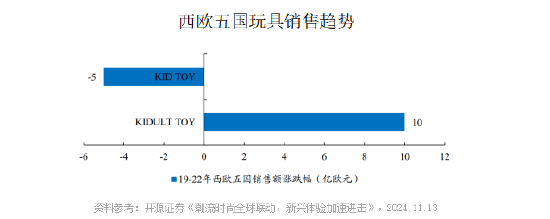
Group 1: Kidult Economy Overview - The term "Kidult" combines "kid" and "adult," referring to adults aged 20 to 50 who are interested in traditional children's hobbies, leading to the emergence of a unique "Kidult economy" [2] - The Kidult economy is driven by two main factors: the need for stress relief and the desire for identity recognition among adults, with social media playing a significant role in sharing experiences and collections [2] - Market data shows that while overall toy sales in the U.S. declined by 8% in 2023, the adult consumer segment grew by 8%, accounting for approximately $6.7 billion in sales, demonstrating strong resilience [2] Group 2: Kidult Economy in China - In China, the Kidult economy is primarily driven by Generation Z and Millennials, becoming one of the fastest-growing segments in the consumer market [4] - A survey conducted by JD.com revealed that 56.8% of adults purchased toys for themselves, and 51.1% planned to celebrate Children's Day for themselves, indicating a shift in consumer behavior [4] Group 3: Emotional Economy - The Kidult economy is a branch of the broader "emotional economy," which emphasizes personalized, differentiated, and emotional consumption experiences, contrasting with traditional consumption focused on functionality [6] - According to a report, 42% of surveyed consumers indicated that their shopping motivation includes "pleasing oneself" or "enhancing mood," highlighting the rise of emotional consumption [6] Group 4: Impact on Businesses and Industries - The emotional value consumption presents both challenges and opportunities for businesses, potentially enhancing operational capabilities, consumer guidance, and profitability through increased consumer loyalty [6] - The emotional economy manifests in three main forms: "service + consumption value," "IP + self-pleasure consumption," and "social + pleasing others consumption," affecting various industries such as dining, retail, and cosmetics [6][9] - The emotional consumption market in China is projected to exceed 20 trillion yuan, indicating a significant shift towards mainstream acceptance of emotional economy concepts [9]

为什么“中国式消费”这么像投资?
吴晓波频道· 2025-06-10 16:40
Core Viewpoint - The article emphasizes the shift in consumer behavior in China, where spending is increasingly viewed as a form of investment rather than mere consumption, reflecting a desire for value retention and appreciation in purchases [5][15][48]. Group 1: Consumer Behavior Trends - In Shanghai, large-scale consumption vouchers have led to significant increases in sales, particularly in gold jewelry, indicating a strong consumer interest in both consumption and investment [2][3]. - The Consumer Price Index (CPI) data shows a stark contrast between the rising prices of gold (up 40.1%) and the overall CPI, which decreased by 0.1%, highlighting a trend where consumers are prioritizing investment-like purchases [3][5]. - The concept of "investment-style consumption" is becoming prevalent, where consumers are not just buying goods but are also considering their potential for value retention and appreciation [6][17][24]. Group 2: Policy and Economic Context - The Chinese government has implemented various policies to stimulate consumption, including subsidies for replacing old goods, which have significantly boosted sales across multiple categories [7][8]. - Despite the push for increased consumer spending, the actual contribution of consumption to GDP has remained relatively stable, indicating that the growth in consumer loans has not translated into proportional increases in retail sales [18][20]. - Recent trends show a surge in consumer loans, with banks aggressively promoting these products, but much of this borrowing is being redirected towards investments rather than direct consumption [21][22]. Group 3: Service Consumption - There is a notable shift towards service consumption, which includes spending on experiences rather than physical goods, yet this segment remains underreported in official statistics [30][32]. - Current data indicates that while product consumption has returned to historical levels, service consumption lags behind at only 87.7% of historical trends, suggesting untapped potential in this area [34][38]. - The quality and quantity of service supply are critical to meeting consumer demand, and enhancing service offerings could be a key strategy for stimulating further consumption growth [35][41].

金价震荡!上金所紧急提醒
Sou Hu Cai Jing· 2025-06-10 14:18
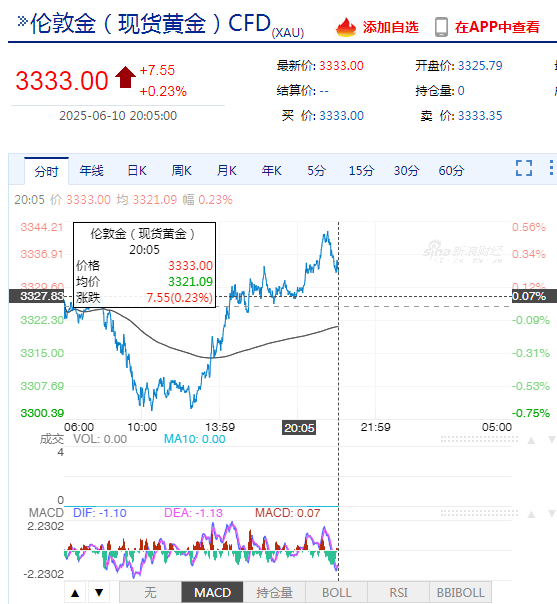
Group 1 - International spot gold prices experienced significant volatility, dropping to $3301 per ounce before rebounding to $3333 per ounce [1] - Domestic gold jewelry prices have also declined, with brands like Chow Tai Fook reporting a drop of 7 yuan per gram, bringing the price to 978 yuan per gram [3] - The Shanghai Gold Exchange issued a notice emphasizing the need for market risk control due to recent instability and urged members to enhance risk awareness and maintain market stability [3] Group 2 - There has been a notable shift in consumer preferences towards smaller weight gold jewelry to mitigate risks associated with price fluctuations [5][6] - The popularity of traditional gold, enamel, and intricately carved products has increased among consumers [6] - The "old for new" and recycling business for gold items is thriving, with many consumers opting to exchange old gold for new pieces or cash in on high prices [6] Group 3 - The People's Bank of China has continued to increase its gold reserves, accumulating 1.03 million ounces over the past seven months, although the pace of purchases has slowed [8] - Analysts suggest that the ongoing geopolitical and economic changes may lead to a prolonged period of rising gold prices, reducing the necessity to pause gold purchases for cost control [8] - A survey by the World Gold Council indicates that 69% of central banks expect the share of gold in global reserves to increase over the next five years, contrasting with a decline in the share of US dollar reserves [8][9] Group 4 - The World Gold Council believes that gold prices still have potential for growth, as global trade tensions and rising tariffs have not yet significantly increased inflation [9] - Economic slowdowns may pressure stock markets and cyclical commodities, positioning gold as one of the few resilient assets in a stagflation environment [9]
黄金震荡,刚刚直线拉升!上金所紧急提醒
21世纪经济报道· 2025-06-10 08:30
Core Viewpoint - The article discusses the recent fluctuations in international gold prices and their impact on domestic gold jewelry consumption, highlighting a shift in consumer behavior towards smaller gold items and increased interest in gold recycling and exchange programs [1][3][5][7]. Group 1: Gold Price Fluctuations - On June 10, international gold prices experienced significant volatility, dropping to $3301 per ounce before rebounding to $3332.63 per ounce [1]. - The Shanghai Gold Exchange issued a notice urging members to enhance risk management due to the unstable market conditions affecting precious metal prices [1]. Group 2: Consumer Behavior Changes - Despite the fluctuations in gold prices, consumer interest in gold jewelry remains, with daily transactions still reaching dozens, and peaking at over a hundred on weekends [3]. - Consumers are increasingly favoring smaller weight gold products to mitigate risks associated with price volatility, as well as preferring traditional gold, enamel, and intricately carved items [5]. Group 3: Gold Recycling and Exchange - The "exchange old for new" and gold recycling businesses are gaining traction, with many consumers opting to trade in older gold items for new ones or cashing out at high prices [7]. - Some jewelry stores are offering free gold testing services to facilitate the exchange process, leading to a significant increase in exchange business volume, reportedly by over 30% to 50% [9]. Group 4: Central Bank Gold Reserves - As of the end of May, China's central bank reported a gold reserve of 73.83 million ounces (approximately 2296.37 tons), reflecting a month-on-month increase of 6,000 ounces [11]. - The World Gold Council's survey indicates that 69% of central banks expect the share of gold in global reserves to rise over the next five years, contrasting with a declining expectation for the share of U.S. dollar reserves [11].

2025夏季电商零售投资策略:内需崛起,挖掘新消费的情绪曲线
Shenwan Hongyuan Securities· 2025-06-10 08:00
证 券 研 究 报 告 内需崛起,挖掘新消费的情绪曲线 2025夏季电商零售投资策略 证券分析师:赵令伊 A0230518100003 研究支持:李秀琳 A0230123070007 2025.6.10 投资主线 ◼ 主线1:新消费高景气,情绪价值满足的供给升级 • 工艺变迁升级下,行业转向产品设计和品牌化能力比拼,金饰迎来产品及品牌长周期beta,而传统品牌产品同质化及渠道竞争仍在调整。 建议关注具备产品差异化和高品牌认知的优质品牌:老铺黄金、潮宏基、曼卡龙、 菜百股份、莱绅通灵、周大生、老凤祥。 • 情绪消费崛起,中国人均IP消费有巨大潜力空间。聚焦IP经济,赋予产品更大商业附加值,将成为消费品牌构建差异化的重要竞争力。 建议关注:名创优品、量子之歌。 1. 宏观:内需提振,政策加力推动新消费 3 ◼ 主线2:增长势能延续,AI、即时零售开拓增量 • 平台竞争维度延展,对商家及用户生态、AI和即时零售潜力新业务、出海扩张等新增长极加大布局,持续投入蓄力,有望带动长期增长 正循环,看好平台高质量增长势能。推荐:阿里巴巴、美团、拼多多、京东 。 ◼ 主线3:贸易不确定性加剧,消费内循环重要性提升。 • 关税波 ...


商贸零售行业6月投资策略:618大促表现稳中有进,新消费行情持续扩圈
Guoxin Securities· 2025-06-10 03:20
Core Insights - The report maintains an "outperform" rating for the retail sector, highlighting a stable performance during the 618 shopping festival, with significant growth in sales and user engagement across major platforms like JD and Tmall [1][2][10] - New consumption trends are emerging, driven by instant retail and AI technology, enhancing consumer interaction and operational efficiency for merchants [2][20][24] Retail Sector Performance - During the 618 promotional period, JD reported over 200% year-on-year growth in transaction volume, order quantity, and number of users within the first hour of the event [1][10] - Tmall's first phase saw 217 brands surpassing 100 million yuan in sales, indicating strong brand performance [1][10] - Instant retail platforms like Meituan have also shown impressive results, with over 50 product categories experiencing more than 100% growth compared to the previous year [10][20] Investment Recommendations - The report suggests focusing on sectors with strong growth potential, including: 1. **Beauty and Personal Care**: Companies like Dongkang Oral Care and Maogeping are expected to achieve significant growth due to innovative product offerings and effective use of e-commerce channels [2][3] 2. **Gold and Jewelry**: The sector is anticipated to benefit from a low base effect in Q2, with brands like Chaohongji and Caibai showing promising sales [3][12] 3. **IP Toys**: Companies like Pop Mart and Blokus are well-positioned to capitalize on the emotional value for young consumers and the potential for overseas market expansion [3][12] 4. **Cross-border E-commerce**: Brands like Anker Innovations are expected to leverage favorable trade conditions for growth [3] Market Trends - The retail sector is experiencing a shift towards simplified promotional rules and extended event durations, with Tmall starting pre-sales earlier than in previous years [19] - AI technology is increasingly integrated into retail operations, enhancing customer service and marketing effectiveness [24][28] Recent Industry Data - In April, the total retail sales of consumer goods reached 37,174 billion yuan, with a year-on-year growth of 5.1%, indicating a steady recovery in consumer spending [28][29] - Online retail sales for the first four months of 2025 reached 47,419 billion yuan, growing by 7.7% year-on-year, with physical goods online sales accounting for 24.3% of total retail sales [29][30] Stock Performance - In May 2025, the retail index rose by 1.66%, slightly underperforming the CSI 300 index, while the beauty and personal care index increased by 2.55%, outperforming the broader market [42][47] - Notable stock performers in the retail sector included Liren Liyang and Ruoyuchen, with significant price increases [52][55]

再论新消费的投资节奏、方向
2025-06-09 15:30
Summary of Key Points from Conference Call Records Industry Overview - **New Consumption Market**: The new consumption market has seen a significant increase in attention, with investors actively seeking potential stocks. Traditional leading companies also present investment opportunities due to high dividends and competitiveness [1][6] - **Investment Focus for 2025**: Key investment themes include the rise of domestic brands, emotional consumption, the silver economy, and AI smart home products [1][11] Core Insights and Arguments - **Consumer Trends**: The new consumption sector is characterized by a shift towards products that reflect future consumption trends, such as trendy toys, gold jewelry, and beauty products. Companies with strong market positions and high growth potential are recommended despite their valuations being relatively high [1][9] - **Tea Beverage Industry**: The tea beverage sector is thriving, with chain tea brands being the top recommendation. Companies like Mixue Ice City and Gu Ming are highlighted for their unique business models and growth potential [1][29][31] - **Gold and Jewelry Sector**: The gold and jewelry sector benefits from rising gold prices and increased penetration of premium gold jewelry. Companies like Lao Pu Gold and Chow Tai Fook are recommended for their strong brand positioning and product differentiation [4][34][37] Notable Companies and Their Performance - **Pop Mart and Miniso**: These companies are recognized as leaders in the trendy toy industry, with successful overseas market expansions and innovative product offerings [1][27][52] - **Beauty Sector**: Companies like Juzi Biotechnology and Runben are noted for their solid fundamentals and reasonable valuations, despite some short-term growth slowdowns [4][43][44] - **Children's Retail**: Kid's King is highlighted for its robust growth in direct sales and rapid expansion of its franchise business [4][38] Additional Important Insights - **Market Volatility**: The new consumption sector is expected to experience increased volatility, with many stocks having already seen significant price increases. The focus should remain on companies with strong growth prospects and competitive advantages [9][10] - **Investment Opportunities in Hong Kong and A-shares**: The top ten new consumption companies in Hong Kong and A-shares include Pop Mart, Miniso, and others, indicating a broad interest in this sector [8][11] - **Emerging Trends**: The rise of emotional consumption and the demand for personalized products are reshaping consumer preferences, leading to opportunities for companies that can innovate and adapt [13][44] Conclusion The new consumption market is evolving rapidly, with significant opportunities in various sectors such as trendy toys, beauty products, and gold jewelry. Companies that can leverage these trends and maintain strong growth trajectories are likely to attract investor interest.

潮宏基20250609
2025-06-09 15:30
Summary of the Conference Call for Chao Hong Ji Company Overview - **Company**: Chao Hong Ji - **Industry**: Gold and Jewelry Key Points and Arguments Performance and Strategy - Chao Hong Ji improved customer traffic and shopping conversion rates through product structure adjustments and channel optimization, outperforming industry averages, especially in Q1 of this year [2][4] - The number of direct-operated stores decreased to approximately 240, but single-store revenue increased significantly, directly enhancing profit performance [2][5] - The company shifted its product focus from 18K gold to gold jewelry, which, despite lower gross margins, has led to stable revenue growth as the income structure stabilizes [2][6] - The expansion of the franchise model has also improved gross margins, with a notable increase in franchise revenue share in Q1 [2][6] Market Dynamics - The overall gold jewelry industry is experiencing a downturn, with high gold prices and declining wedding demand leading to reduced consumption [2][9] - Chao Hong Ji successfully differentiated itself with its traditional gold products, while competitors like Lao Feng Xiang and Zhou Da Sheng are closing stores, providing opportunities for Chao Hong Ji to open new locations [2][9] Future Outlook - The company has an optimistic performance outlook, with expectations for terminal GMV to reach 9.5 million, corresponding to reported revenue of 3.5 million [2][3][10] - The asset structure is rapidly improving, with over 70% of the asset proportion being fixed-price assets, which is expected to reflect positively in the upcoming financial reports [10] - The investment return cycle for Chao Hong Ji is approximately 4 years, significantly shorter than the over 6 years for competitors, making it attractive for franchisees [4][12] International Expansion - Chao Hong Ji plans to open 200 to 300 stores in Southeast Asia and Asia, targeting regions with strong gold jewelry consumption habits, which could contribute approximately 600 to 800 million in revenue [15] - The company is set to open a store in Singapore in June, with positive sales expectations from previously opened stores in Thailand [13][14] Financial Projections - Domestic growth is primarily driven by franchise competition, with projected earnings of approximately 750 million by 2027, plus an additional 120 million from overseas operations, totaling around 800 to 900 million [16] - The current market valuation of around 12 billion is considered to be at an absolute bottom, with significant upward potential based on short-term performance and mid-term international expansion [16] Additional Important Insights - Chao Hong Ji's ability to adapt quickly to market changes through a robust digital system and strong control over franchisees has been a key factor in its superior performance compared to peers [2][7] - The company has effectively reduced opening costs compared to traditional brands by lowering initial inventory requirements for franchisees, allowing for better responsiveness to consumer preferences [11]