
制造业

Search documents
邦达亚洲:日本央行行长发表鹰派言论 美元日元刷新10日低位
Xin Lang Cai Jing· 2025-12-02 09:26
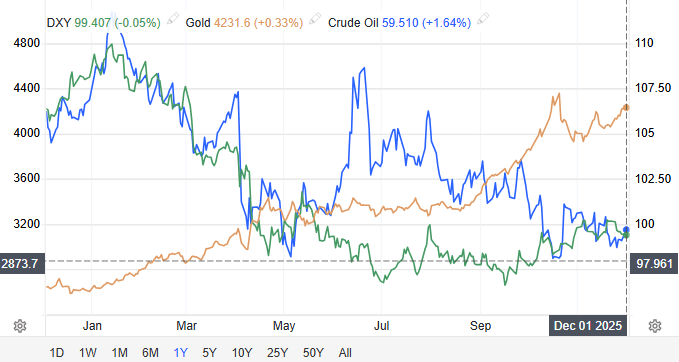
12月2日,日本央行行长植田和男周一表示,央行将权衡加息利弊并做出适当决策。他在名古屋指出, 实现央行经济前景的可能性正在上升,且即便政策利率上调,金融环境仍将保持宽松。这相当于"松开 油门"而非"踩下刹车"。他说,央行在加息时机的选择上必须不早不晚,以确保通胀顺利实现2%的目 标。植田和男称:"推迟加息太久可能会导致严重的通货膨胀,迫使我们快速调整政策。我希望在我们 将利率提高至0.75%后,再进一步阐述未来加息路径。"植田对美国关税的经济影响持乐观态度,称企 业利润仍处于高位,国内增长前景的不确定性正在减小。随着关税影响担忧的消退,央行经济和物价预 测得以实现的可能性正在增加,植田表示,这暗示着加息的条件正在逐步具备。 另外,周一,美国供应管理协会(ISM)公布的数据显示,美国11月工厂活动萎缩幅度创四个月最大, 新订单走弱,显示制造商仍难摆脱长期低迷。美国11月ISM制造业PMI指数48.2,不及预期的49,前值 为48.7。50为荣枯分界线。该指数已连续九个月低于50的荣枯线,意味着制造业持续收缩。今年的大部 分时间里,美国ISM制造业PMI都维持在一个较窄的区间内。ISM制造业商业调查委员会主席Su ...
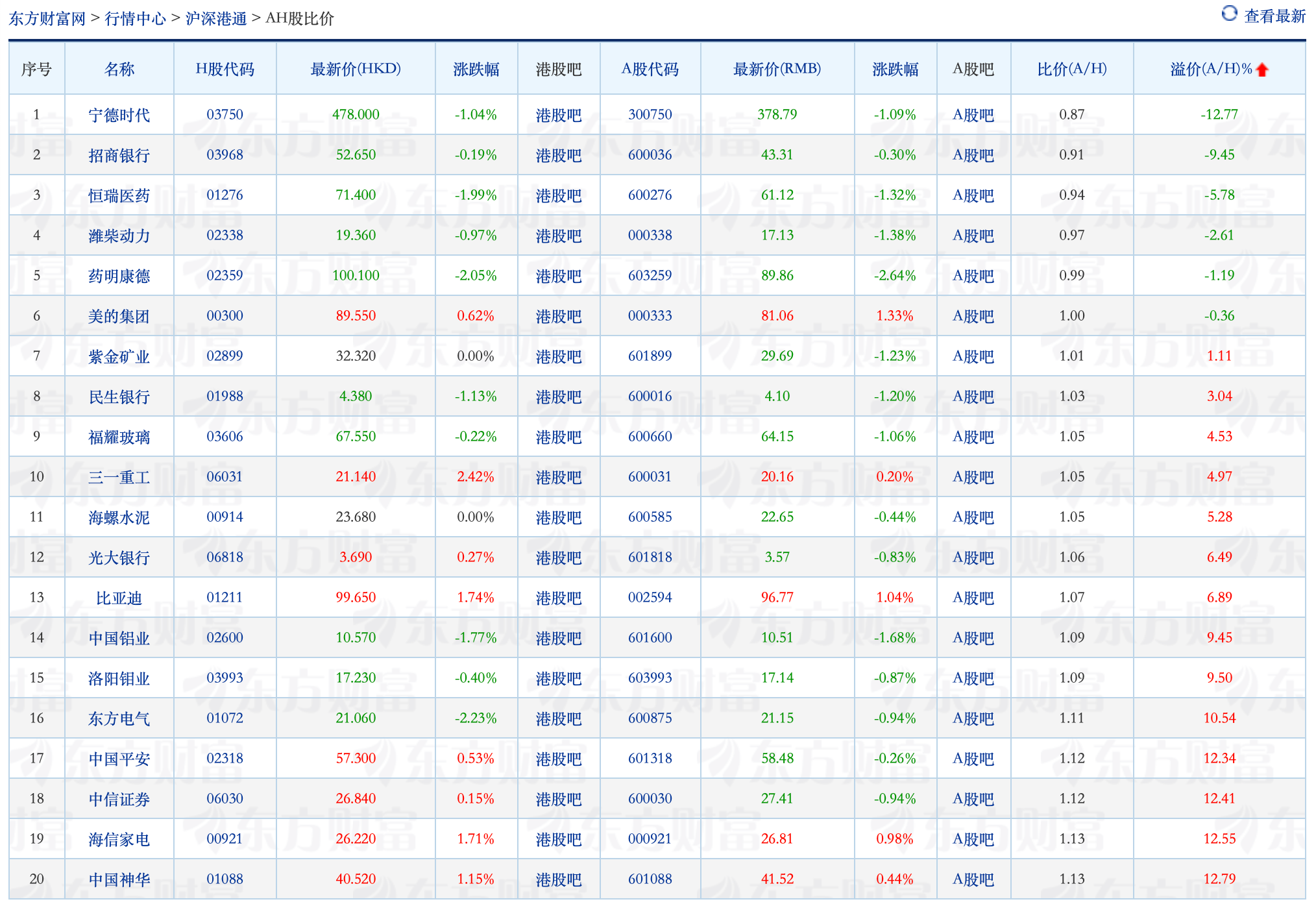
6家AH股“倒挂”背后:流通股比例小,外资更爱行业龙头
Di Yi Cai Jing· 2025-12-02 06:25
Core Viewpoint - The phenomenon of "AH share premium inversion" is observed in six companies, where H-shares are priced higher than A-shares, attributed to low liquidity and foreign investors' preference for industry leaders [1][2]. Group 1: Market Dynamics - The Heng Seng AH Share Premium Index (HSAHP) remains above 120, indicating a 20% premium of A-shares over H-shares [1]. - The six companies experiencing this inversion include CATL, China Merchants Bank, Hengrui Medicine, Weichai Power, WuXi AppTec, and Midea Group [2]. - The market sees a preference for newly listed stocks in the H-share market, which have lower liquidity, leading to higher valuations [2]. Group 2: Liquidity and New Listings - The "inversion" stocks are characterized by a high proportion of newly listed shares, with three of the six companies listed for less than a year [2]. - The market capitalization of H-shares is often significantly smaller than that of A-shares, contributing to the liquidity scarcity and price inversion [2]. - As institutional investors gradually exit their IPO allocations, the liquidity in the H-share market is expected to increase, potentially narrowing the premium [2]. Group 3: Foreign Investment Preferences - Foreign investors show a strong preference for industry leaders that have established market positions and stable financials [3][4]. - These companies typically operate in traditional sectors such as finance, energy, and infrastructure, which have predictable profit models [3]. - The preference for H-shares is also driven by the perception of higher growth potential and better governance structures in these companies [4]. Group 4: Examples of Inversion - BYD and China Merchants Bank are highlighted as typical examples of companies where H-shares occasionally exhibit a premium over A-shares [5]. - The presence of monopolistic characteristics in H-shares can attract foreign investment, as these companies are often seen as irreplaceable in the global market [5].




以进一步深化改革融通江苏发展新动能
Xin Hua Ri Bao· 2025-12-02 05:48
Group 1 - The core viewpoint emphasizes that Jiangsu must leverage reform as a key driver for high-quality development, focusing on "integration" to break down institutional barriers and enhance the flow of critical elements such as talent, technology, capital, and data [1] - The "14th Five-Year Plan" period requires Jiangsu to address existing barriers between technology, education, and talent through reform practices, enhancing their interaction to support industrial upgrades and future development [2] - Establishing a dual-channel mechanism for industry professors and technology vice presidents aims to integrate academic and industry expertise, enhancing the practical application of research in enterprises [3] Group 2 - The emphasis on regional collaboration highlights the need for Jiangsu to create a complementary and high-quality regional economic layout, leveraging its strategic position in the Yangtze River Delta [5] - The "1+3" functional area reform is identified as a key strategy to address development imbalances and enhance overall competitiveness within Jiangsu [5] - The proposal to optimize the "flying economy" and establish a shared benefits mechanism aims to stimulate cooperation between regions and enhance innovation [6] Group 3 - The focus on market system construction aims to eliminate obstacles to the establishment of a unified national market, enhancing supply and demand dynamics through institutional reforms [8] - Jiangsu's strong supply capacity for intermediate products necessitates reforms to elevate its position in the value chain, promoting high-value-added segments [8] - The introduction of a public demand-driven technology iteration mechanism aims to address challenges in urban governance, healthcare, and environmental protection [9] Group 4 - Jiangsu's large population of 85 million presents an opportunity to convert its market potential into effective demand, driving high-quality supply [10] - The exploration of new consumption incentives linked to sustainable behaviors aims to create a circular consumption market [10] - The establishment of a skills-based compensation guideline is intended to ensure that skill enhancements directly reflect in income growth [10] Group 5 - The need for a platform-driven approach to enhance the market-oriented allocation of factors is emphasized, promoting the integration of technology, data, and governance [11] - The establishment of a data aggregation hub aims to clarify rights and responsibilities in data development and usage, ensuring equitable benefit sharing [11] - The introduction of a collaborative and efficient system for assessment will shift focus from GDP to indicators of factor integration, linking results to resource allocation [12]
黄奇帆:2040年之前,制造业比重不要低于25%,生产性服务业力争达到40%
Guan Cha Zhe Wang· 2025-12-02 04:43
Core Viewpoint - The importance of the productive service industry is emphasized as a key driver for the development of new productive forces in China, with a target to increase its GDP share to 40% by 2035 or 2040, alongside maintaining manufacturing at a minimum of 25% [1][3][9] Group 1: Role of Productive Service Industry - The productive service industry is crucial for enhancing technological innovation in manufacturing, improving efficiency, and reducing operational costs [3][4] - It serves as a growth engine for GDP and is a significant contributor to the emergence of unicorn companies [5][6] - The industry is interconnected with all sectors, linking primary, secondary, and tertiary industries [3][4] Group 2: Comparative Analysis - In the U.S., the productive service industry has grown from 10% of GDP in 1950 to 48% in 2022, while China's share has increased from about 10% in 1980 to 28% currently [4][5] - The growth rate of the productive service industry is the highest across various countries, indicating its potential to become the largest sector in GDP [5][6] Group 3: Challenges and Opportunities - China faces challenges in transforming research and innovation into practical applications, with only 7% of R&D funding allocated to original innovation compared to around 20% in G20 countries [7] - Logistics costs in China are significantly higher than in developed regions, suggesting potential for increased profitability if these costs are reduced [8] - The digital service sector has not been fully leveraged for industrial applications, indicating a need for improvement in this area [9]

美国 11 月 ISM 制造业 PMI 萎缩幅度创 4 个月最大,连续 9 个月收缩,对此你怎么看?
Sou Hu Cai Jing· 2025-12-02 03:52
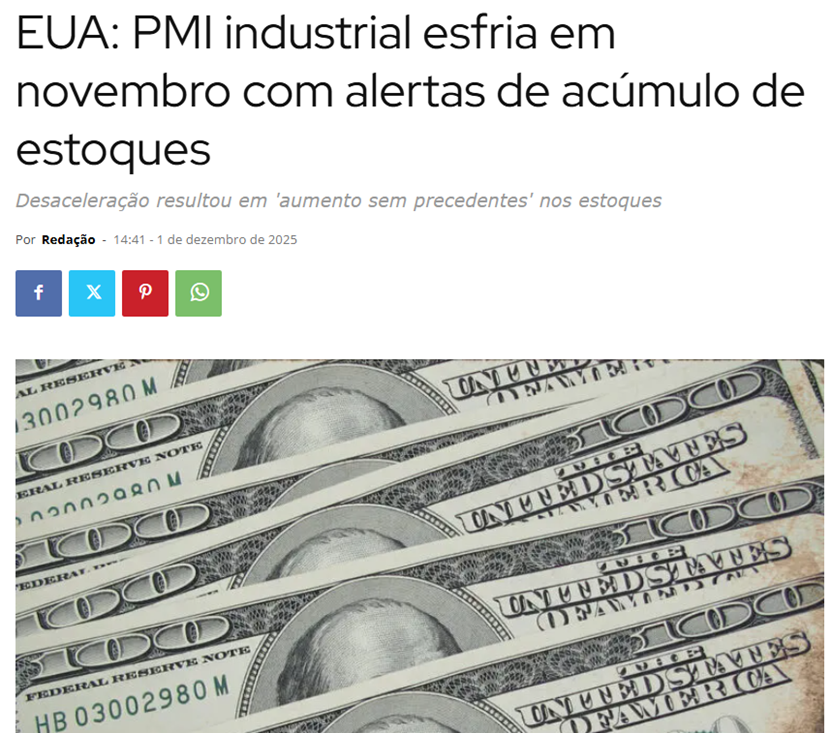
Group 1 - The core viewpoint of the articles indicates a divergence in the U.S. economy, with manufacturing experiencing continuous contraction while the service sector shows strong expansion, creating a complex economic landscape [7][8][14] - The ISM Manufacturing PMI for November dropped to 48.2, marking a significant decline and indicating ongoing challenges in the manufacturing sector, with new orders and backlogs also showing substantial decreases [3] - The Federal Reserve's monetary policy remains a critical factor, with a neutral to tight stance that suppresses manufacturing activity, despite a recent interest rate cut [3][10] Group 2 - The employment market in the U.S. is characterized by a "virtual fat" condition, with job growth concentrated in low-wage service sectors, while manufacturing jobs remain stagnant and unemployment rises [5] - Consumer spending is under pressure due to rising costs and stagnant wages, leading to a shift in spending from non-essential to essential goods, which negatively impacts durable goods consumption [5][8] - The service sector's resilience is crucial for economic stability, as it accounts for over 80% of the U.S. economy, but structural issues in the labor market could threaten this balance [8][14] Group 3 - The recent government shutdown has negatively impacted GDP growth forecasts and created disruptions in manufacturing supply chains, leading to conservative strategies among businesses [5][14] - The bond market reflects concerns over economic downturns, with a slight decrease in 10-year U.S. Treasury yields following PMI data releases, while the currency market shows volatility influenced by mixed economic signals [12] - Despite the challenges, there is a notable increase in business confidence regarding future economic conditions, driven by expectations of further interest rate cuts and the resolution of the government shutdown [14]
美国制造业活动连续第9个月萎缩
Xin Hua She· 2025-12-02 02:39
新华社纽约12月1日电(记者刘亚南)美国供应管理学会1日公布的调查报告显示,受关税政策和联邦政 府"停摆"等因素影响,11月美国制造业活动连续第9个月萎缩。 ...
恒指高开高走,收涨 174 点
Guodu Securities Hongkong· 2025-12-02 02:38
Market Overview - The Hang Seng Index opened high and closed up by 174 points, reaching 26,033 points, with a trading volume of 20.0884 billion HKD and a net inflow of 2.148 billion HKD from northbound trading [3][4]. Retail Sector - Hong Kong's retail sales in October increased by 6.9% year-on-year, surpassing market expectations of 4.7%, with total sales value estimated at 35.2 billion HKD [7]. - Online sales accounted for 14.6% of total retail sales in October, with an estimated value of 5.2 billion HKD, reflecting a year-on-year increase of 27.2% [7]. - Approximately 70% of retail members expect business in November to remain flat or grow in the low to mid-double digits, driven by tourism-related retail and promotional activities [8]. Gaming Sector - Macau's gaming revenue for November rose by 14.4% year-on-year, totaling 21.088 billion MOP, exceeding expectations [9]. Manufacturing Sector - China's manufacturing PMI fell to 49.9 in November, indicating a contraction, as new orders slowed and production ceased to expand [10]. Company News - Kaisa Group initiated a consent solicitation for multiple USD notes to allow for interest payments in shares instead of cash [12]. - ZhongAn Group reduced its stake in ZhongAn Technology by selling 37 million shares, raising approximately 76.96 million HKD for general working capital [13]. - BYD reported a 5.25% year-on-year decline in November vehicle sales, totaling approximately 480,200 units [14]. - Xpeng Motors announced a 156% year-on-year increase in cumulative deliveries for the first 11 months, with November deliveries reaching 36,728 units [15].
美国制造业PMI指数连续第八个月萎缩
Huan Qiu Wang· 2025-12-02 01:51
【环球网财经综合报道】北京时间12月2日凌晨,美国公布的10月ISM制造业PMI指数为48.7,连续第八个月萎缩,不 及预期的49.5,前值为49.1。新订单连续第二个月下降,生产指数疲软,物价支付指数创今年初以来新低。 《巴西商业价值报》发文称,美国制造业需求"显著放缓",部分源于疲弱的销售表现,导致"连续第二个月"产成品库 存大幅增加,通胀压力则依旧因关税导致的投入成本上升维持高位。企业将成本上涨转嫁给销售价格的能力不如以 往,销售价格增长目前是今年最慢的,受强竞争和需求低迷所影响。 报道还提到,S&P全球市场情报(S&P Global Market Intelligence)首席商务经济学家克里斯·威廉姆森警告:"越深入 了解美国工业部门的处境,就越担心。制造商生产更多产品,但往往难以找到买家。" ...
美国11月ISM制造业PMI继续下降
Sou Hu Cai Jing· 2025-12-02 01:43
Group 1 - The core point of the article highlights that the US manufacturing sector is experiencing a continuous contraction, with the ISM manufacturing PMI declining from 48.7 to 48.2 in November, marking nine consecutive months of decline [2] - The efforts made by the Trump administration to revitalize the manufacturing sector through various policies have not yielded the desired results, as the sector continues to shrink under the impact of tariffs and other policies [2] - Revitalizing the manufacturing sector requires more than just financial investment; it necessitates the cultivation of skilled workers and coordination of supply chains, indicating that deep-rooted social issues in the US pose significant challenges to this goal [2] Group 2 - The downturn in the manufacturing sector reflects broader economic stagnation in the US, characterized by high levels of uncertainty that hinder corporate investment and operations, contributing to increased social unrest [2] - A worsening job market and persistently low consumer confidence indices suggest that if consumer spending, a crucial pillar of the US economy, declines sharply, an overall economic downturn will be inevitable [2] - Even if the Federal Reserve accelerates interest rate cuts, the effectiveness of loose monetary policy in supporting the US economy may be limited, akin to a drop in the bucket [2]

2026年中国经济展望:风鹏正举
Ping An Securities· 2025-12-02 01:15
Economic Growth Outlook - The GDP growth target for China in 2026 is expected to remain around 5%[4] - The contribution of final consumption expenditure to GDP growth is projected to be 53.5% in 2025, up from 44.5% in 2024[26] - The anticipated growth rate of social retail sales is around 4% in 2026, with final consumption expenditure growth expected to exceed 5%[51] Export Performance - China's export share is projected to continue its upward trend, with an expected growth rate of 4-5% in 2026[21] - As of July 2025, China's export share reached 15.1%, up from 14.9% in 2024, indicating strong global competitiveness[14] Investment Stability - Real estate investment is expected to stabilize, with a projected decline of around 10.2% in 2026, a significant improvement from previous years[55] - Infrastructure investment growth is anticipated to rebound significantly in 2026, supported by new policy tools and long-term special bonds[74] Inflation and Price Trends - CPI is expected to rise to around 0.6% in 2026, driven by food prices, while PPI is projected to recover from a decline of -2.8% in 2025[95][116] - The core CPI is expected to maintain a higher level of around 0.8-1% in 2026, reflecting improved consumer confidence and spending[110] Fiscal Policy Outlook - The narrow deficit ratio is projected to increase to 4-4.3% in 2026, with a special bond issuance of approximately 1.5 trillion yuan[127] - New local special bonds are expected to be in the range of 5-5.5 trillion yuan, marking an increase from 2025[128]