
新能源汽车

Search documents
新势力的下半场,小鹏正在换一种跑法
Tai Mei Ti A P P· 2026-01-26 14:00
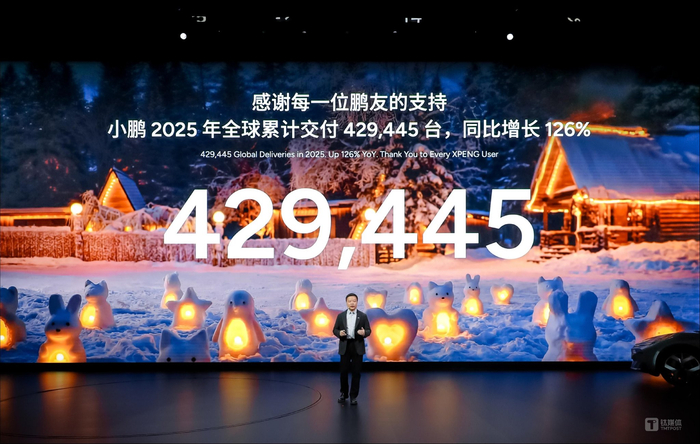
Core Viewpoint - Xiaopeng Motors is positioning itself for a new growth cycle starting in 2026, emphasizing a shift from a focus on pure electric vehicles and intelligent driving to a dual-energy product strategy, technological innovation, and global market expansion [2][3][20]. Group 1: Product Strategy - Xiaopeng launched four new models simultaneously, including the P7+, G7, G6, and G9, aiming to regain market momentum and address diverse consumer needs in a competitive landscape [3][20]. - The company is betting on a dual-energy approach, integrating both pure electric and range-extended vehicles to broaden its market reach and enhance sales stability in 2026 [7][10]. - The specifications of the new models, such as the P7+ and G7, highlight a focus on maintaining a pure electric driving experience while extending range through innovative battery and fuel tank designs [9][10]. Group 2: Market Dynamics - The range-extended vehicle market is expected to see significant growth in 2026, with over ten major automakers planning to launch new models, indicating a shift in supply-side dynamics [7][20]. - Xiaopeng's strategy aims to address the increasing competition in the electric vehicle market by expanding its product matrix and enhancing its delivery capabilities [3][10]. Group 3: Organizational Resilience - In 2025, Xiaopeng focused on restructuring its organizational capabilities, achieving a delivery of 429,000 vehicles, a 126% year-on-year increase, and reaching a milestone of one million vehicles produced [11][13]. - The company adopted a conservative approach to inventory management, prioritizing low stock levels and efficient cash flow to mitigate operational risks [13][14]. Group 4: Technological and Global Expansion - Xiaopeng is entering a critical phase of technological advancement, transitioning from conceptual to practical applications of physical AI, which is expected to be pivotal from 2026 to 2028 [15][19]. - The company is enhancing its global presence, having entered over 60 countries, and is focusing on localizing research, manufacturing, and delivery to build a sustainable international business model [17][18]. Group 5: Evaluation Criteria for 2026 - The success of Xiaopeng's dual-energy strategy will be measured by its ability to expand overall sales without internal cannibalization, maintain delivery quality and customer satisfaction across multiple models, and establish replicable success in international markets [20][21].


市政协委员相均泳:为全国废旧动力电池回收利用打造“北京样板”
Bei Ke Cai Jing· 2026-01-26 13:09
Core Viewpoint - The article discusses the importance of strengthening the recycling and utilization of used power batteries in Beijing's new energy vehicle sector, highlighting the challenges and proposing solutions to create a "Beijing model" for nationwide implementation [1][2]. Group 1: Current Situation and Challenges - Beijing has over 1.3 million new energy vehicles, and the first batch of their batteries is approaching the end of life, raising concerns about battery recycling [1]. - The city has made progress in establishing a comprehensive management system for battery recycling but faces challenges such as weak constraints on production, a nascent recycling industry, and inadequate regulatory oversight [2][4]. Group 2: Recommendations for Improvement - The proposal includes three main recommendations: 1. Encourage collaboration among upstream and downstream companies in the new energy vehicle industry to develop standardized battery designs and lifecycle carbon footprint accounting [3]. 2. Establish a recycling and regeneration system involving original manufacturers and recycling companies, implementing a "white list" for companies with strong technical capabilities and safety controls [3]. 3. Strengthen comprehensive regulation of the battery industry by incorporating battery recycling into local legislation, enhancing oversight, and establishing a lifecycle information tracing system [4].
新华社经济随笔:从“贡献超四成”读懂现代产业的分量
Xin Hua Wang· 2026-01-26 12:49
Core Insights - The contribution of the industrial and information sectors to China's economic growth exceeds 40%, highlighting the importance of modern industrial systems in driving economic development [1][2]. Group 1: Economic Contribution - In 2025, China's industrial added value reached 41.7 trillion yuan, contributing 35% to economic growth, an increase of 1.8 percentage points from the previous year [2]. - The manufacturing sector continues to dominate, maintaining the world's largest added value for 16 consecutive years, while the information transmission, software, and IT services sector achieved an added value of 7.06 trillion yuan, showing double-digit growth [2]. Group 2: Industry Development - The advanced manufacturing sector is rapidly developing, with significant growth in key industries such as new energy vehicles, industrial robots (28% increase), and the solar industry [3]. - At the 2026 International Consumer Electronics Show, 21 out of 38 exhibiting companies in the humanoid robot sector were from China, indicating a growing confidence in showcasing technological advancements [3]. Group 3: Integration of Technology - The integration of information technology and industrialization is emphasized, with 5G and gigabit optical networks covering 91 out of 97 economic categories, and industrial internet achieving full coverage across 41 industrial categories [3]. - Over 500 excellent smart factories have been established, and 15 leading smart factories have been cultivated, promoting innovation in processes, equipment, and software [3]. Group 4: Strategic Initiatives - The construction of a modern industrial system is a key strategic task during the 14th Five-Year Plan, with recent initiatives such as the "Industrial Internet and Artificial Intelligence Integration Empowerment Action Plan" and "AI + Manufacturing Special Action Implementation Opinions" being launched [4]. - The focus is on consolidating the foundation of the real economy, seizing opportunities for digital transformation, and accelerating industrial upgrades to gain a competitive edge globally [4].
2025年外贸增速前十省份:中西部占9席
Di Yi Cai Jing· 2026-01-26 12:30
Core Insights - The article highlights the significant growth in foreign trade for several provinces in China's central and western regions, with many achieving record import and export values in 2025, despite global trade uncertainties [1][5]. Group 1: Trade Growth and Rankings - In 2025, Chongqing's foreign trade reached 800.68 billion yuan, a year-on-year increase of 12%, ranking 8th nationally, surpassing the national growth rate by 8.2 percentage points [1]. - The top ten provinces for foreign trade growth in 2025 included Xinjiang (19.9%), Shaanxi (18.5%), Hubei (18.2%), and others, with only Hebei being coastal [1][3]. - Hubei's foreign trade exceeded 800 billion yuan for the first time, reaching 834.01 billion yuan, with an 18.2% growth rate, ranking 12th nationally [4]. Group 2: Export and Import Performance - In 2025, Chongqing's exports totaled 558.73 billion yuan, growing by 10.2%, while imports reached 241.95 billion yuan, increasing by 16.4% [2]. - The export of high-tech products from Hubei reached 114.84 billion yuan, a 25.9% increase, with significant growth in new materials and high-end equipment [7]. - In 2025, Anhui's total trade value surpassed 1 trillion yuan for the first time, achieving 1,013.56 billion yuan, with a growth rate of 17.3% [4]. Group 3: Factors Driving Growth - The growth in Chongqing's foreign trade was driven by high-tech product exports, which increased by 11.6%, contributing 7.4 percentage points to overall trade growth [5][6]. - The "new three items" (new energy vehicles, lithium batteries, and photovoltaics) saw a remarkable export growth of 73.5% in Chongqing, significantly boosting trade [5][6]. - In 2025, the export of lithium-ion batteries from Qinghai surged by 3.8 times, becoming the province's top export product [8]. Group 4: Changing Trade Dynamics - The rapid growth of exports from central and western provinces is altering the traditional trade dynamics, which have historically favored eastern coastal regions [8]. - The combined import and export value of seven eastern coastal provinces reached 34.11 trillion yuan, growing by 2.7%, but the central and western regions are increasing their economic openness and trade significance [8].
新旧动能转换攻坚,经济第一大省广东展望新五年
Di Yi Cai Jing· 2026-01-26 12:25
在地区生产总值从11.37万亿元提高到14.58万亿元之后,广东提出用13年(2022年到2035年)实现经济 总量倍增的愿景。 1月26日,广东省十四届人大五次会议开幕,省长孟凡利在开幕会上作政府工作报告。 2026年及"十五五"主要目标 2026年广东的主要预期目标是地区生产总值增长4.5%~5%,在实际工作中全力争取更好结果,地方一 般公共预算收入增长3%左右,居民收入增长与经济增长同步。 根据广东省政府工作报告,广东"十五五"时期经济社会发展的主要目标有,地区生产总值年均增长5% 左右,高质量发展取得显著成效,科技自立自强水平大幅提高、城乡区域发展更加协调、进一步全面深 化改革取得新突破等。展望未来,从党的二十大到二〇三五年,用13年时间基本实现社会主义现代化, 经济总量实现倍增,人均地区生产总值达到中等发达国家水平。 中山大学岭南学院经济学系教授、港澳珠江三角洲研究中心副主任林江在接受第一财经记者采访时表 示,可以用务实、转型、稳预期来评价该目标。"广东经济体量大、基数高,4.5%~5%的年度增速 和'十五五'时期年均5%左右,对应的增量依然可观,体现了经济大省在复杂环境下稳中求进、挑大梁的 责任担 ...
2025新能源汽车安全认知报告
中国汽研· 2026-01-26 12:24
Investment Rating - The report does not explicitly state an investment rating for the industry Core Insights - The Chinese new energy vehicle (NEV) industry is transitioning from scale expansion to quality improvement and technological innovation, with a projected sales volume of 16.49 million units by 2025, maintaining its position as the global leader for ten consecutive years [9][10] - The safety development of NEVs is evolving into a comprehensive system that includes vehicle safety, functional and software safety, data and network security, and scenario usage safety, indicating a shift from single technical risks to systemic risk management [16][17] - The report emphasizes the importance of safety as a foundational pillar for user safety, brand reputation, technological innovation, and sustainable industry development [17][24] Summary by Sections Chapter 1: Introduction - The NEV industry in China is leading globally in terms of scale, technological iteration speed, and market penetration, with a complete supply chain in key areas such as batteries, motors, and electronic controls [9][10] - The focus of national policies has shifted from initial subsidies to long-term institutional governance, emphasizing infrastructure improvement and smart network promotion [14][15] Chapter 2: Safety Technology and Standards - The passive safety technology in China's NEVs is rapidly developing, focusing on vehicle structure, restraint systems, battery protection, and accident rescue [44] - The standard system for passive safety is being upgraded to meet new challenges posed by electrification and intelligence, with a complete safety system established for occupant protection and rescue mechanisms [49][50] Chapter 3: Public Safety Awareness - There is a gap between public perception of NEV safety and actual industry developments, with consumers increasingly concerned about battery thermal runaway and data privacy [41][43] - The report highlights the need for scientific recognition and education to bridge this gap and promote rational consumer behavior [41][43] Chapter 4: Challenges in International Markets - The report discusses the differences in safety awareness and regulatory standards across major international markets, emphasizing the need for compliance and adaptation strategies for Chinese NEV brands [46][50] Chapter 5: Consensus and Strategic Recommendations - The report outlines strategic recommendations for regulatory bodies, industry organizations, and enterprises to enhance safety governance and consumer education [78][84] - It emphasizes the importance of building a dynamic regulatory framework and improving detection and verification capabilities across the entire supply chain [80][82] Chapter 6: Summary and Outlook - The NEV safety landscape is entering a systematic deep-water zone, with a shift from passive safety to predictive safety expected in the future [99][100] - The report anticipates that safety will become a core competitive factor in the industry, with consumer awareness and behavior playing a crucial role in enhancing safety standards [104][105]
公募基金2025四季报调仓图谱:科技制造主线强化 传统蓝筹获回流布局 新能源内部分化(附加减仓TOP50榜单)
Xin Lang Cai Jing· 2026-01-26 12:17
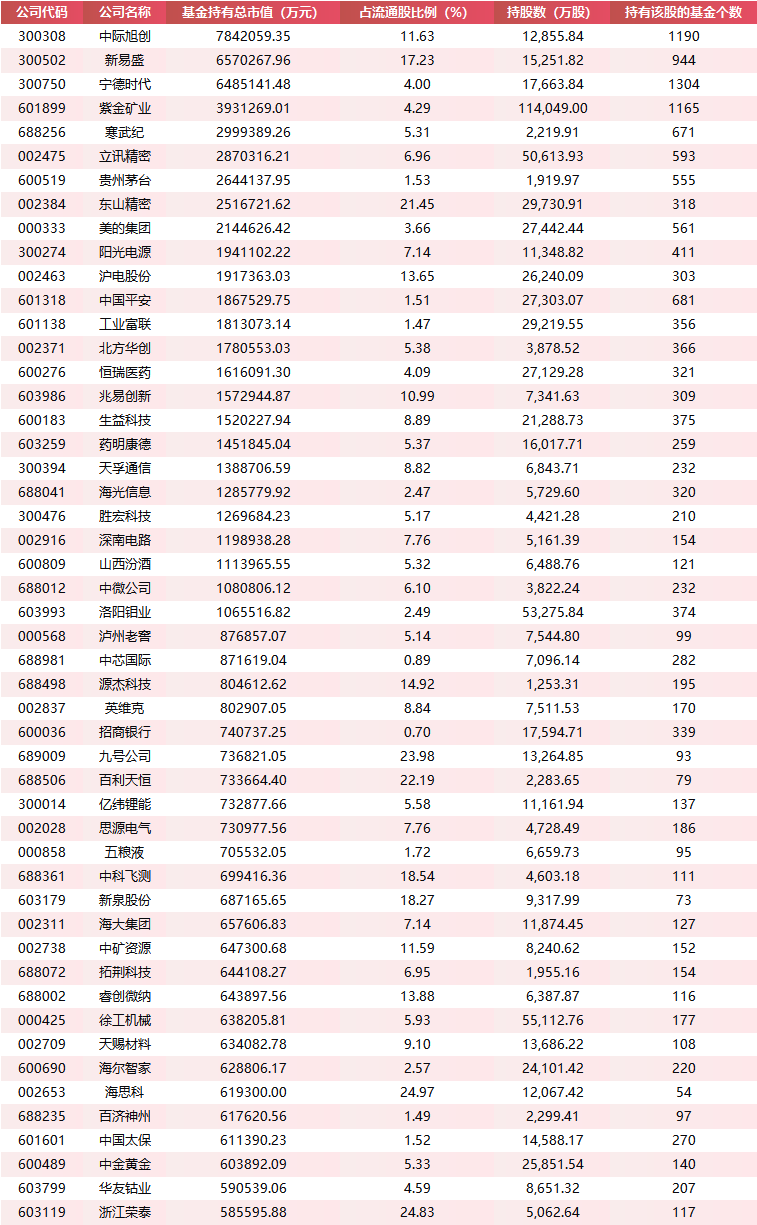
Core Insights - Public funds continue to focus on technology growth and high-end manufacturing, while also reallocating to consumer and financial leaders with returning valuations [1][14] - The structure of holdings indicates a significant increase in positions in AI computing, semiconductor equipment, and resource sectors, while reducing exposure to batteries, consumer electronics, and pharmaceuticals [14] Group 1: Fund Holdings Overview - As of Q4 2025, public fund holdings data shows that technology growth and high-end manufacturing remain core investment directions, with traditional industry leaders and some cyclical stocks also maintaining high allocation levels [1] - The top 50 heavy stocks include major players in technology sectors such as communication, AI, and electronics, reflecting institutional confidence in technological innovation and industrial upgrades [2][3] - Notable stocks like Ningde Times, Zhongji Xuchuang, and Zijin Mining are held by over a thousand funds, indicating strong consensus among institutions on these targets [4] Group 2: Increases in Holdings - The increase in holdings is prominently seen in technology stocks, with Zhongji Xuchuang receiving over 22.6 billion yuan in fund increases, ranking first, followed by Xinyi Sheng with approximately 9.6 billion yuan [5][6] - Traditional sectors also saw significant increases, with China Ping An gaining over 10.5 billion yuan, and other blue-chip stocks like Midea Group and Haier Smart Home returning to substantial increase lists [5] - Resource stocks such as Zijin Mining and Luoyang Molybdenum also experienced collective increases, reflecting high enthusiasm for non-ferrous and energy metal sectors amid global manufacturing recovery expectations [5] Group 3: Decreases in Holdings - Certain stocks in the consumer electronics and OEM sectors, including Industrial Fulian and Lixun Precision, faced collective reductions, indicating a cautious stance on their growth prospects [8] - The internal structure of the new energy vehicle supply chain showed differentiation, with battery leaders like Ningde Times and Yiwei Lithium Energy being reduced [8] - Pharmaceutical stocks like Heng Rui Medicine and WuXi AppTec also saw significant reductions due to industry policy uncertainties and valuation pressures [8] Group 4: New Entrants in Holdings - A number of new stocks have entered the fund's heavy holdings, characterized by small to mid-cap sizes and high growth expectations, covering advanced manufacturing and industrial upgrade sectors [11][12] - Notable new entrants include Chaojie Co. and Guocheng Mining, which have garnered attention from multiple funds, indicating potential focus areas for institutional investment [11][12]





2025年,这些消费领域“火”了→
Jin Rong Shi Bao· 2026-01-26 11:54
Group 1: Consumer Trends - The Chinese consumer market is expected to show new highlights by 2025, driven by targeted policies [8] - Home appliance consumption is shifting from "basic needs" to "smart experiences," with sales of refrigerators, kitchen appliances, and communication devices increasing by 17.4%, 12.9%, and 18.6% respectively [1] - The sales of new energy passenger vehicles are projected to grow by 24.3% in volume and 21.1% in revenue by 2025 [1] Group 2: Entertainment and Travel - Immersive and scenario-based performances are gaining popularity, with sales in arts and performances expected to rise by 17.3% [2] - Travel-related services, including travel agencies and scenic spots, are anticipated to see sales growth of 11.2% and 26.1% respectively [2] Group 3: Digital and Online Services - Internet life service platforms and food delivery services are projected to grow by 9.4% and 13.3% respectively, indicating a robust expansion in online consumption [3] - Digital cultural services, including gaming and animation, are expected to see a sales increase of 16.6% [3] Group 4: Sports and Events - The sports economy, exemplified by events like "Su Super" and "Zhe BA," is emerging as a new engine for consumption, with sports exhibition services and consulting services expected to grow by 12.2% and 27.8% respectively [4] Group 5: Health and Wellness - Health management and wellness services are becoming new consumption hotspots, with sales in health consulting, wellness services, and sports health services expected to grow by 11.7%, 12%, and 16.5% respectively [5] Group 6: Aging Population - The increasing population of the elderly is driving demand for senior care services, with sales in elderly care, social assistance, and nursing home services projected to grow by 24.9%, 23.1%, and 15.4% respectively [6] Group 7: Inbound Tourism and Shopping - Measures to enhance the inbound shopping experience are expected to significantly boost consumption, with the number of foreign travelers benefiting from tax refunds increasing by 305% and sales of tax-refunded goods rising by 95.9% [7] - The number of tax refund stores has reached 12,930, with over 7,000 offering "buy and refund" services [7]
恒生指数上涨0.06% 恒生科技指数下跌1.24%
Xin Hua Cai Jing· 2026-01-26 11:30
成交额前三的个股中,阿里巴巴跌1.96%,成交超112亿港元;腾讯控股涨0.76%,成交超104亿港元; 紫金矿业涨4.35%,成交超57亿港元。 整体来看,多数板块下跌,黄金、有色金属、光通讯、石油与天然气、高铁基建等股多为上涨,科网、 银行、券商、房地产、电信等股有涨有跌,百货业、风电、生物医药、新能源车企、芯片、新消费、商 业航天等股多有下跌。 个股方面,小米集团跌2.81%,泡泡玛特跌0.91%,中芯国际跌3.27%,中国海洋石油涨4.01%,美团跌 0.46%,老铺黄金涨7.80%,快手跌3.26%,长飞光纤光缆涨17.82%,国泰君安国际涨3.33%,智谱涨 13.02%,建设银行涨0.66%,小鹏汽车跌4.17%,长和涨3.50%,中国石油股份涨3.68%。 新华财经香港1月26日电(记者林迎楠)26日,港股主要指数高开后震荡整理,截至收盘,恒生指数上 涨0.06%至26765.52点,恒生科技指数下跌1.24%至5725.99点,国企指数下跌0.15%至9147.21点。 当日恒指高开94.53点,开报26844.04点,指数早盘期间宽幅震荡,午后窄幅整理,最终恒指涨16.01 点,主板成交超 ...
海科新源:签署长期合作协议 向比亚迪锂电池湖北项目供应协议所购产品每年至少10万吨
Zheng Quan Shi Bao Wang· 2026-01-26 11:24
人民财讯1月26日电,海科新源(301292)1月26日公告,公司与深圳市比亚迪(002594)锂电池有限公 司(简称"比亚迪锂电池")签署长期合作协议暨湖北项目管输合作协议,协议有效期三年,在协议有效期 内,海科新源以管输方式向比亚迪锂电池湖北项目供应协议所购产品每年至少10万吨。产品的实际采购 数量以双方签署的相关协议为准。 ...
