零售

Search documents
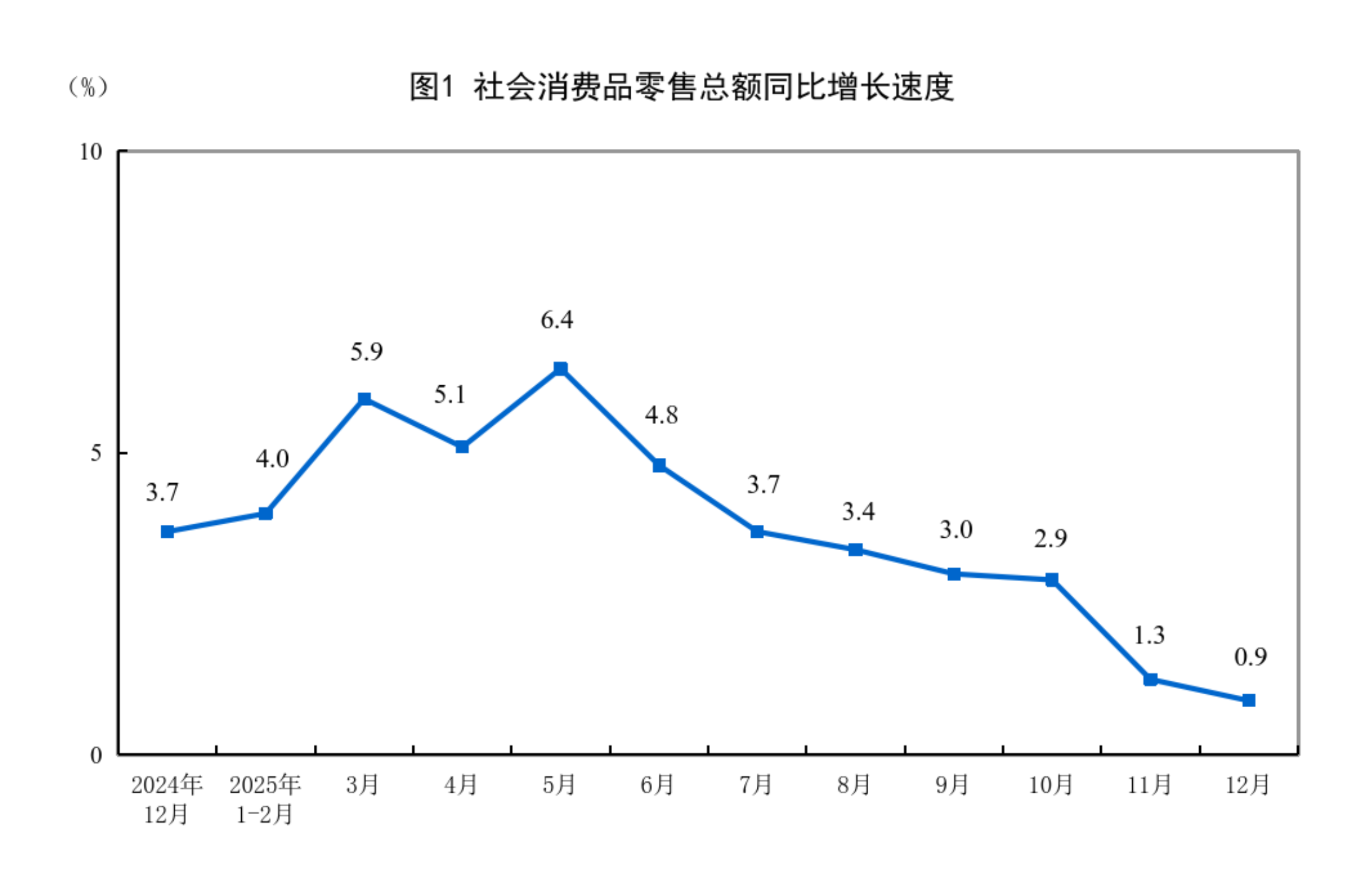
2025年社会消费品零售总额同比增长3.7% 12月同比增长0.9%
Guo Jia Tong Ji Ju· 2026-01-21 05:54
2025年12月份社会消费品零售总额增长0.9% 按消费类型分,12月份,商品零售额39398亿元,同比增长0.7%;餐饮收入5738亿元,增长2.2%。2025年,商品零售额443220亿元,比上年增长3.8%;餐饮收入57982亿元,增长 3.2%。 按零售业态分,2025年,限额以上零售业单位中便利店、超市、百货店、专业店零售额比上年分别增长5.5%、4.3%、0.1%、2.6%;品牌专卖店零售额下降0.6%。 2025年,全国网上零售额159722亿元,比上年增长8.6%。其中,实物商品网上零售额130923亿元,增长5.2%,占社会消费品零售总额的比重为26.1%;在实物商品网上零售额 中,吃类、穿类、用类商品分别增长14.5%、1.9%、4.1%。 按经营单位所在地分,12月份,城镇消费品零售额38429亿元,同比增长0.7%;乡村消费品零售额6707亿元,增长1.7%。2025年,城镇消费品零售额432972亿元,比上年增长 3.6%;乡村消费品零售额68230亿元,增长4.1%。 12月份,社会消费品零售总额45136亿元,同比增长0.9%。其中,除汽车以外的消费品零售额39654亿元,增长1 ...

抓好第一要务 守牢安全底线 努力实现经济高质量发展和社会高效能治理
Xi An Ri Bao· 2026-01-21 04:07
1月20日下午,省委常委、市委书记蒿慧杰到雁塔区调研经济社会发展情况时强调,要深入学习贯 彻党的二十届四中全会精神和习近平总书记历次来陕考察重要讲话重要指示,认真落实省委部署要求, 抓好第一要务,守牢安全底线,努力实现经济高质量发展和社会高效能治理。 蒿慧杰来到雁塔未来产业城斯瑞新材科技产业园项目,察看产品展示与产线布局,勉励企业加大研 发投入,不断提升产品核心竞争力,同时要求属地和相关部门主动靠前服务、做好要素保障,为企业发 展创造良好条件。 西安雁塔人工智能创新发展中心是西北首个大规模人工智能算力集群。蒿慧杰详细了解中心运营管 理、创新孵化、人才培养等情况,强调要紧抓新一代人工智能发展战略机遇,以西安区域科技创新中心 建设为牵引,加快推进人工智能技术创新、产业发展和场景应用,推动我市人工智能高质量发展和高水 平赋能。 二〇五所社区是2015年习近平总书记到西安考察过的地方。蒿慧杰走进社区党群服务大厅、中医 馆、便民驿站等,与工作人员深入交流,对社区用心用情服务群众予以肯定,强调要牢记总书记"让千 家万户切身感受到党和政府的温暖"殷殷嘱托,全面提升服务质量,从生活点滴做起为群众办实事、解 难题,持续提升社区 ...
中兴商业:未来公司将结合实际情况考虑回购事宜
Zheng Quan Ri Bao Wang· 2026-01-21 03:50
Group 1 - The core viewpoint of the article is that Zhongxing Commercial (000715) aims to enhance capital efficiency and increase investment returns through the purchase of financial products, while ensuring that risks are controllable and do not affect normal operations and main business development [1] - In 2023, the company repurchased 12.31 million shares, accounting for 2.96% of the total share capital at that time [1] - The company will consider future repurchase matters based on actual conditions and will fulfill information disclosure obligations in a timely manner [1]

银行大量到期存款的再配置展望:环球市场动态2026年1月21日
citic securities· 2026-01-21 03:31
Market Overview - Global stock markets experienced a widespread decline, with the S&P 500 dropping 2.1% and erasing all gains for the year[3] - The Dow Jones fell by 1.8%, closing at 48,488.6 points, while the Nasdaq dropped 2.4% to 22,954.3 points[8] Commodity and Forex - Oil prices rose due to supply disruptions in Kazakhstan and geopolitical tensions, with WTI crude oil increasing by 1.51% to $60.34 per barrel[26] - Gold prices surged past $4,700 per ounce, closing at $4,765.8, marking a 3.71% increase[26] - The US Dollar Index fell 0.8% to 98.64, dropping below the 99 level for the first time in two weeks[26] Fixed Income - Japanese government bonds faced significant selling pressure, with 30-year yields rising over 25 basis points[28] - US Treasury yields increased by 1-8 basis points, with the 10-year yield reaching 4.29%[28] Banking Sector Insights - Over 40 trillion in long-term deposits are expected to face yield gaps by 2026, potentially leading to outflows[6] - The shift in deposits is likely to favor short-term products and smaller banks, with a portion moving to wealth management and insurance products[6] Individual Stock Highlights - JD.com projected a revenue of 350.4 billion yuan for 2025, with a year-on-year growth of only 1.0%[9] - Anta Sports is expected to face pressure on profit margins due to increased marketing costs for upcoming events[13]
2025年北京市场总消费额同比增长1.6% 服务性消费较为活跃
Bei Jing Shang Bao· 2026-01-21 02:33
Core Viewpoint - In 2025, Beijing's total market consumption is projected to grow by 1.6% compared to the previous year, driven by service consumption in sectors like information and transportation [1] Group 1: Economic Performance - The total retail sales of social consumer goods reached 1.3677 trillion yuan, a decrease of 2.9%, with the decline narrowing by 2.2 percentage points compared to the first three quarters [1] - Retail sales of goods amounted to 1.23535 trillion yuan, also down by 2.9%, while catering revenue was 132.35 billion yuan, declining by 3%, with respective reductions narrowing by 2.4 and 0.7 percentage points [1] Group 2: Consumption Trends - In the wholesale and retail sectors above the designated size, retail sales of upgraded goods such as gold, silver, and jewelry increased by 39.5%, cosmetics by 12.6%, and new energy vehicles by 13.2% [1] - Retail sales of essential goods related to daily life, such as grain and oil food products, grew by 5.7% [1] - Retail sales of automobiles and communication equipment fell by 13.7% and 15.9%, with the decline gradually narrowing since the fourth quarter [1]
五项财政金融新政加力促消费扩内需
Jin Rong Shi Bao· 2026-01-21 02:09
Core Viewpoint - The Chinese government has introduced a series of financial policies aimed at reducing financing costs for residents and businesses, stimulating consumption, and expanding effective investment through various measures such as interest subsidies and extended implementation periods [1][2][3]. Group 1: Policies for Small and Micro Enterprises - The policy for small and micro enterprises' loan interest subsidies will provide a 1.5% annual subsidy on principal for fixed asset loans and new policy financial tool funds, with a maximum subsidy loan size of 50 million yuan per entity, effective from January 1, 2026 [1]. - A special guarantee plan for private investment has been launched with a total quota of 500 billion yuan over two years, supporting long-term loans for small and micro enterprises in areas like equipment purchase and technological transformation, with a maximum guarantee of 20 million yuan per entity [2]. Group 2: Equipment Update and Service Sector Support - The equipment update loan interest subsidy policy will be extended until the end of 2026, with an expanded support scope that now includes over ten new fields such as construction, artificial intelligence, and digitalization, offering a 1.5% annual subsidy for new technology innovation loans [2]. - The service sector loan interest subsidy policy has been optimized to increase the maximum subsidy to 10 million yuan per entity for new loans issued in 2026, with a 1% annual subsidy rate, and has added new support areas including digital and green consumption [3]. Group 3: Personal Consumption Loan Support - The personal consumption loan interest subsidy policy has been extended until December 31, 2026, now including credit card installment payments with a 1% annual subsidy, and has removed restrictions on consumption fields, allowing for a cumulative subsidy limit of 3,000 yuan per person per year [3].
“消费第一城”上海火力全开
Di Yi Cai Jing Zi Xun· 2026-01-21 02:09
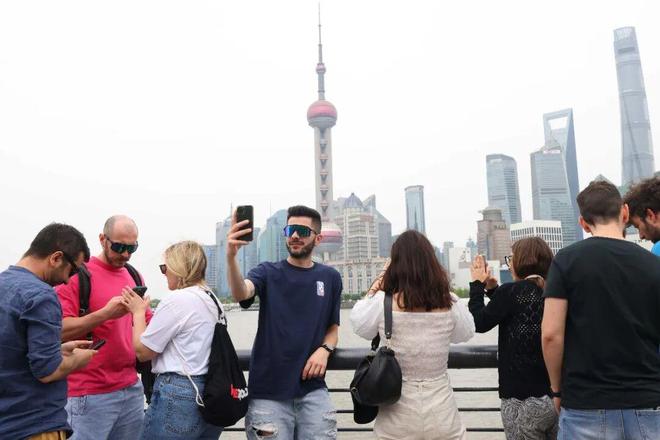
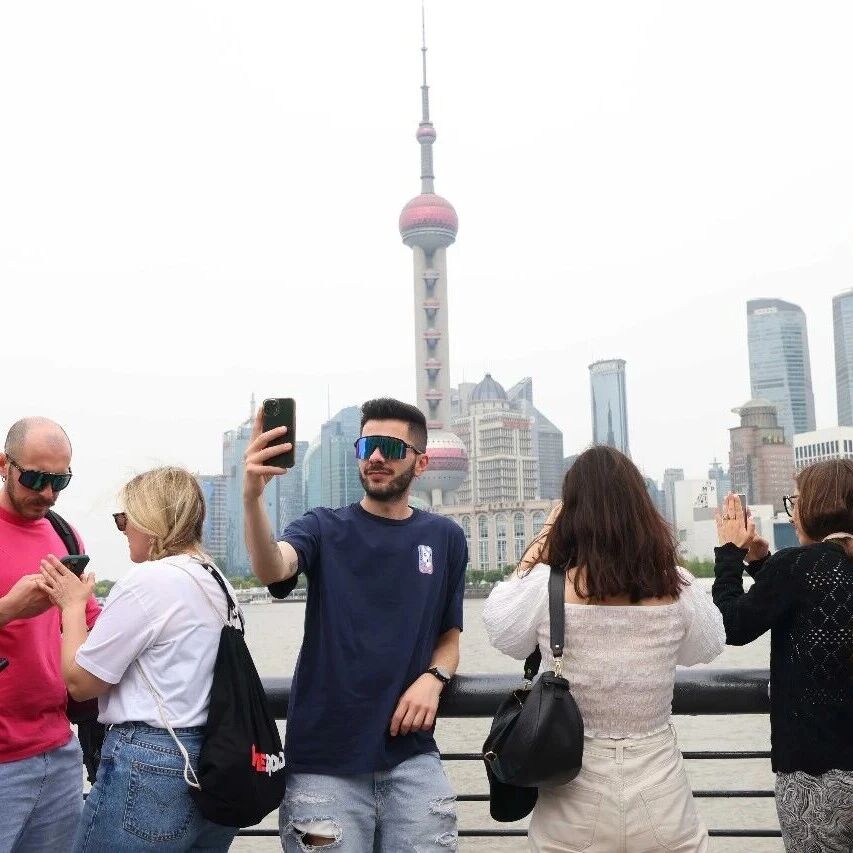
Core Insights - Shanghai's retail sales reached over 1.66 trillion yuan in 2025, marking a 4.6% year-on-year increase, outperforming the national average of 3.7% by 0.9 percentage points [2] - Key sectors such as new energy vehicles, communication equipment, and home appliances saw double-digit growth, with cultural and office supplies retail up by 30.4% [2] - The city welcomed a record 9.36 million inbound tourists in 2025, a 40% increase from the previous year, with tax refund sales rising by approximately 80% [2] Economic Drivers - The steady recovery in Shanghai's consumption is attributed to three main factors: targeted policy measures, innovative cultural and tourism events, and the accelerated recovery of international flights and visa facilitation [3] - Policies such as trade-in programs for automobiles and home appliances, along with service consumption vouchers, have effectively stimulated demand [3] - The implementation of the trade-in policy led to over 320,000 cars and 4.5 million digital products being replaced, generating over 120 billion yuan in sales and benefiting more than 21.95 million people [4] Future Outlook - The strong growth trend in consumption is expected to continue into 2026, with service consumption anticipated to remain a key driver [5] - Ongoing policies, including the "28 measures" for service and consumption linkage, are expected to further stimulate service consumption potential [5] - Recommendations for sustaining growth include enhancing inbound tourism measures, improving service quality, and leveraging digital tools for better consumer engagement [6]
“消费第一城”上海火力全开
第一财经· 2026-01-21 02:05
Core Insights - Shanghai's retail sales reached over 1.66 trillion yuan in 2025, marking a 4.6% year-on-year increase, outperforming the national average of 3.7% by 0.9 percentage points [2] - Key growth sectors included new energy vehicles, communication equipment, and home appliances, with significant increases in retail sales across various categories [2] - The city welcomed a record 9.36 million inbound tourists in 2025, a 40% increase from the previous year, alongside an 80% rise in tax refund sales [2] Factors Driving Growth - The steady recovery in Shanghai's consumption data is attributed to three main factors: targeted policy measures, innovative cultural and commercial activities, and the accelerated recovery of international flights and visa facilitation [4] - Policies such as trade-in programs for automobiles and home appliances, along with service consumption vouchers, have effectively stimulated demand [4] - The implementation of the trade-in policy led to over 320,000 cars and 4.5 million digital products being replaced, generating over 120 billion yuan in sales and benefiting more than 21.95 million people [4] Continued Growth Prospects - Despite uncertainties in the international environment, the strong growth trend in consumption is expected to continue into 2026, with service consumption remaining a key driver [7] - Policies supporting consumption and inbound tourism are anticipated to persist, with potential for further activation of service consumption [7] - Recommendations for sustaining growth include enhancing convenience measures for inbound tourism, improving service quality, and leveraging digital tools for better consumer engagement [8]
未知机构:①近1个月来化工行业迎来一场全球性涨价潮巴斯夫陶氏亨斯迈等-20260121
未知机构· 2026-01-21 02:00
Summary of Key Points from Conference Call Records Industry Overview - The chemical industry has experienced a "global price surge" in the past month, with major companies like BASF, Dow, and Huntsman implementing price increases across Europe, Asia, and the Middle East [1][1][1] - Significant price increases have been noted for certain chemical products, with propylene oxide prices rising by 7.9% week-over-week [2][2][2] Companies Mentioned - Companies involved in the chemical sector include: - Xinxiang Chemical Fiber - Cangzhou Dahua - Weiyuan Co. - Shandong Heda - Hongbaoli - Hongbai New Materials - Red Wall Co. - Zhongyida - Zanyu Technology - China National Chemical - Jiangtian Chemical - Meibang Technology [2][2][2] Core Insights and Arguments - The recent price increases in the chemical market are attributed to a combination of supply chain pressures and increased demand for chemical products globally [1][1][1] - The government has introduced new policies to support urban renewal and stimulate the economy, which may further impact the demand for chemical products [2][2][2] Additional Important Information - The National Energy Administration reported that national electricity load has reached a historical winter high, exceeding 1.4 billion kilowatts for the first time, indicating strong energy demand [2][2][2] - The investment in new power systems is expected to grow significantly, with a projected 40% increase in investment during the 14th Five-Year Plan period [2][2][2] - The chemical industry is likely to benefit from these macroeconomic trends, as increased urban development and energy demands will drive further consumption of chemical products [1][1][1]



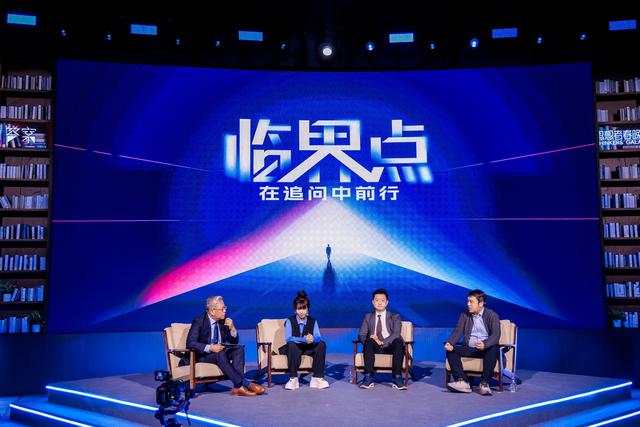
2026答案秀·思想者春晚|业界对谈:供应链赋能全球,中国产业的出海打法正在变
Guan Cha Zhe Wang· 2026-01-21 01:53
Core Insights - The discussion highlights the disparity in product pricing between the U.S. and China, emphasizing the role of supply chains, brand premiums, and consumer psychology in this phenomenon [1] - The conversation revolves around how Chinese manufacturing can transition from domestic competitiveness to global empowerment, especially in the context of geopolitical tensions and supply chain fragmentation [1][2] Group 1: Chinese Manufacturing and Global Empowerment - The panelists discuss the importance of digitalizing the manufacturing supply chain to better connect with global markets and meet international demands [2][3] - The concept of a "digital capacity map" is introduced, which aims to provide detailed insights into the capabilities and cost structures of Chinese factories [5][7] - The need for understanding local markets and consumer preferences is emphasized, suggesting that success in international markets requires more than just high-quality products [10][11] Group 2: Industry Perspectives - The CEO of 66 Degrees Expeditions discusses the potential for Chinese companies to enter niche markets like polar tourism, leveraging lessons from the manufacturing sector [16][17] - The discussion includes the role of platforms like JD.com in enhancing supply chain efficiency and addressing the challenges faced by manufacturers in both domestic and international markets [24][27] - The importance of standardization in industrial procurement is highlighted, with JD.com aiming to streamline the purchasing process for manufacturers [28][35] Group 3: Challenges and Opportunities - The impact of geopolitical tensions and trade barriers on business operations is acknowledged, with companies adapting their strategies to navigate these challenges [39][40] - The conversation points out the increasing importance of understanding non-Western markets and the need for Chinese manufacturers to adapt to diverse cultural and economic contexts [39] - The potential for "import substitution" is discussed, suggesting that challenges can lead to new opportunities for growth and innovation within the Chinese manufacturing sector [40]