现制茶饮

Search documents
柠檬向右徐柏鹤:我从来没有想快的心,晃晃悠悠走也能到达终点
Cai Jing Wang· 2025-06-11 12:15
Group 1 - The current ready-to-drink tea industry is showing signs of reaching its peak, with slower new store openings and reduced single-store output, leading to skepticism about market capacity and the search for new potential brands [1] - Lemon Tea brand "Lemon Towards Right" has less than 300 stores but has significant online presence, driven by founder Xu Baihe's engaging social media content [1] - Xu Baihe emphasizes a focus on quality over rapid expansion, stating that the brand does not prioritize the number of stores or GMV, but rather aims for long-term stability [4][5][34] Group 2 - The challenges faced by the lemon tea industry include maintaining product quality due to weather-dependent lemon supply, requiring frequent adjustments to standard operating procedures (SOP) [2][12][23] - Xu Baihe's approach involves meticulous attention to detail in store operations, with SOPs being updated every few days to ensure consistent taste and quality [22][23] - The brand's strategy includes diversifying product offerings, such as ice cream, to mitigate the instability of lemon supply and enhance customer experience [15][28] Group 3 - The industry is characterized by a trend of rapid expansion, often leading to operational challenges and quality control issues, with many brands prioritizing speed over sustainability [10][11][26] - Xu Baihe critiques the fast-paced growth model prevalent in the industry, suggesting that many brands fail to maintain quality due to their focus on rapid expansion [9][10] - The brand's operational model includes a full management approach for franchisees, aiming to ensure consistent quality and support for store operations [26][27]


“翻倍”的蜜雪:海外还没“甜”,投资很难“蜜”
3 6 Ke· 2025-06-11 11:47
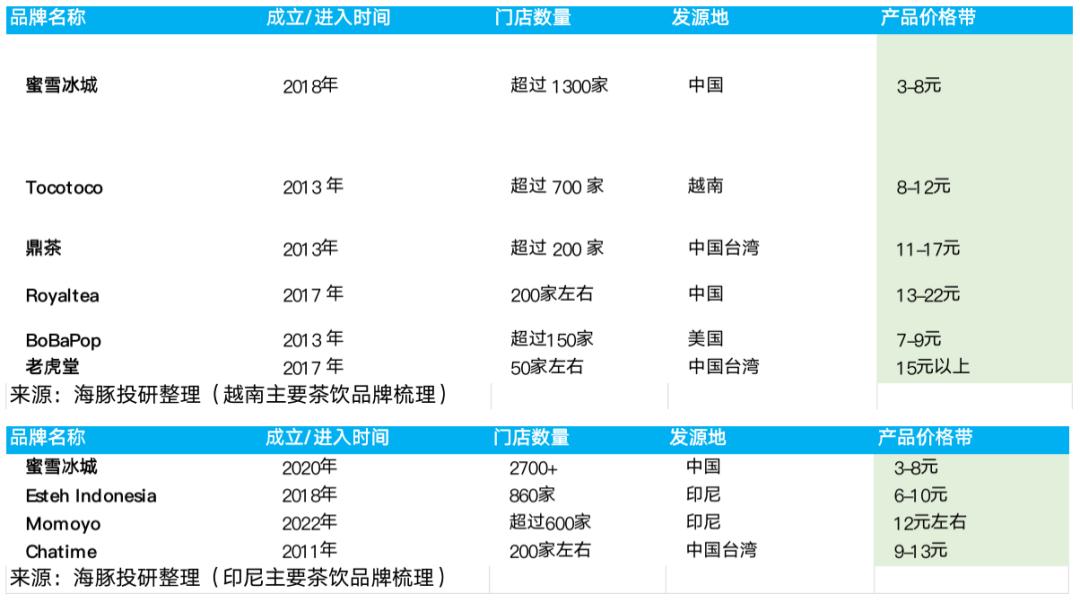
Core Insights - The article discusses the potential for the company, Mixue Ice City, to replicate its domestic success in overseas markets, particularly in Southeast Asia, while also evaluating the current risk-reward ratio of its stock price after a significant increase post-IPO [1][14]. Group 1: Overseas Market Expansion - Southeast Asia is seen as a primary target for expansion due to its geographical proximity to China, a large Chinese population, and a similar tea culture, making it an attractive market for tea brands [1][5]. - Mixue entered Vietnam in 2018 and Indonesia in 2020, quickly establishing itself as a leading tea brand in both countries by leveraging its supply chain advantages and offering lower prices than local competitors [1][2]. - As of the end of 2024, 80% of Mixue's overseas stores are located in Indonesia and Vietnam, but these markets contribute only about 5% to the company's total revenue, indicating a significant gap compared to other brands like Pop Mart and Miniso, which have higher overseas revenue shares [2]. Group 2: Challenges in Overseas Operations - In 2024, Mixue significantly slowed its overseas store openings, adding only 564 new locations, and experienced nearly 20% negative revenue growth, with same-store sales declining over 30% [5][10]. - The decline is attributed to several factors, including low franchise entry barriers leading to market saturation, poor management oversight, and supply chain issues causing frequent stockouts [7][8][9]. - A notable incident in Indonesia saw a major stockout during Ramadan due to ordering mismanagement, severely impacting sales and franchisee confidence [9]. Group 3: Future Growth Potential - Despite current challenges, the company is working to improve its supply chain in Southeast Asia, aiming to establish local production facilities to reduce reliance on imports and improve logistics [10]. - The potential for store expansion in Southeast Asia remains significant, with estimates suggesting a possible increase to 15,000 stores based on market conditions, compared to the current number [11][13]. - The company is also enhancing its franchise management and oversight to address issues of franchisee dissatisfaction and operational inefficiencies [10]. Group 4: Financial Projections and Valuation - The company is expected to see a compound annual growth rate (CAGR) of 12% in revenue from 2024 to 2029, with profit growth projected at 18% CAGR during the same period, indicating a positive outlook for profitability despite revenue challenges [19][20]. - Current valuations suggest that the stock may be overvalued, with a price-to-earnings growth (PEG) ratio of 1.4, higher than comparable companies, indicating that the market may have priced in optimistic growth expectations prematurely [22][24]. - Investors are advised to wait for a more favorable valuation before considering investment, particularly as the company approaches a period of stock unlocks that may increase selling pressure [22][30].
“翻倍”的蜜雪:海外还没“甜”,投资很难“蜜”
海豚投研· 2025-06-11 10:19
在海豚君的现制饮龙头蜜雪冰城的研究中, 上篇 阐述了蜜雪冰城商业模式、 中篇 测算国内空间。本篇侧重走出国内市场逐步成熟的情况下,探讨两个核心命 题: 1)海外市场能否再造蜜雪? 2)上市三月即翻倍的情况下,当前这个价位到底隐含着怎样的风险收益比? 废话不多,直接端正文: 一、海外会是星辰大海么? 随着各路新茶饮品牌在国内尤其是高线城市不断加密开店,市场饱和度逐步提升,为了寻求新的增量,开辟第二增长曲线,先知先觉的茶饮品牌从2018年开始纷 纷试水海外。 而由于东南亚从地理位置上和中国毗邻,原料运输相对高效便捷,且拥有庞大的华人群体和相似的茶文化,再加上年轻人口占比高,消费力旺盛,叠加低廉的人 力成本&租金,自然成为了几乎每个茶饮品牌出海的第一站。 蜜雪也不例外,2018年将越南设为了出海的第一站,打法和国内基本一致,依托国内的供应链优势主攻性价比市场,价格带低于本土现存品牌,迅速在越南市场 占据一席之地。2020年,蜜雪又攻入了东南亚第一人口大国印尼,采用相同的策略同样取得了快速发展,目前在印尼和越南蜜雪冰城均已成为开店数量最多的连 锁茶饮品牌。 截至2024年底,从招股书上可以看到蜜雪海外门店主要集中在印 ...

港股收评:恒生科技指数跌0.76%,中国稀土涨超13%,蜜雪冰城跌超6%
Jin Rong Jie· 2025-06-10 08:24
美国《GENIUS法案》进入关键冲刺 金融界6月10日消息 截至收盘,港股恒生指数跌0.08%,报24162.87点,恒生科技指数跌0.76%,报 5392.19点,国企指数跌0.15%,报8767.36点,红筹指数涨0.38%,报4093.28点。大型科技股中,阿里巴 巴-W跌0.42%,腾讯控股跌0.87%,京东集团-SW跌1.57%,小米集团-W跌1.29%,网易-S跌0.2%,美 团-W跌2.7%,快手-W跌1.44%,哔哩哔哩-W涨1.47%。 蜜雪冰城跌超6%。美国银行近日发表研究报告,将蜜雪集团的评级从"中性"降至"跑输大市"。报告指 出,蜜雪集团自3月初上市以来股价累计上涨约1.8倍,当前股价对应今明两年预测市盈率分别约为40倍 和33倍。尽管蜜雪是中国较为优秀的现制茶饮品牌,但美银认为其基本面可能无法支撑现有估值。美银 强调,资金流无法永远为股价带来支持,同时认为蜜雪是否属于"新消费"板块仍存有争议。 美银认为,蜜雪的每股盈利上行空间或远低于泡泡玛特等IP公司。基于中国业务表现强劲,美银将今明 两年每股盈利预测上调3.4%,收入分别上调2%和2.2%,目标价由400港元上调至465港元。 美 ...

中金公司维持霸王茶姬跑赢行业评级,目标价41美元
Xin Lang Cai Jing· 2025-06-09 07:56
Group 1 - CrowdStrike Holdings Inc-A (CRWD.O) maintains a hold rating with a target price of $414, driven by improved operational efficiency and the importance of identity security in the AI era, despite slightly lower revenue expectations for Q1 FY26 [1] - Lululemon Athletica Inc (LULU.O) also holds a neutral rating with a target price of $280, as same-store sales in the Americas weaken and competition in China increases, leading to a valuation downgrade [1] - Nvidia (NVDA.O) is rated outperform, with Q1 FY26 revenue exceeding expectations by 69%, driven by data center growth, and projected revenue of $45 billion for Q2 FY26 [1] Group 2 - Suzano SA ADR (SUZ.N) maintains a hold rating, with expectations of cost reduction and stable profits from a joint venture with Kimberly Clark, despite regulatory risks [2] - Zscaler (ZS.O) is rated buy with a target price of $317, as significant revenue and order growth is noted, alongside a strong position in the SASE market [3] - Bilibili (BILI.O) is rated buy, with Q1 revenue exceeding expectations and a significant improvement in adjusted net profit, driven by strong growth in advertising and gaming [6] Group 3 - Broadcom (AVGO.O) maintains an outperform rating with a target price of $275, as Q2 FY25 results meet expectations and AI revenue exceeds $4.4 billion, with a forecast of 60% growth in AI revenue for FY25 and FY26 [6][7] - Charters Industrial (GTLS.N) holds a rating of hold, with expectations of $300 million in annual synergies from a merger with FOSS, despite potential risks from cost inflation and demand downturns [8] - Hesai Technology (HSAI.O) shows strong Q1 performance with significant revenue and profit growth, and partnerships with top global OEMs [9] Group 4 - Palo Alto Networks (PANW.O) is rated buy with a target price of $203, as the company focuses on platform strategy and anticipates increased customer spending on platform products [10] - Pinduoduo (PDD.O) maintains a buy rating with a target price of $131, despite Q1 results falling short of expectations, as long-term growth strategies remain promising [11] - EHang Intelligent (EH.O) is rated outperform, with expectations of revenue growth despite a decline in Q1 due to reduced sales of EH216 series [12] Group 5 - MOMO Inc (MOMO.O) is rated outperform with a target price of $9, as Q1 results exceed expectations and overseas business shows rapid growth [13] - MOMO Inc also receives a buy rating with a target price of $8, with an increase in revenue and adjusted net profit expectations based on a 7x P/E ratio for 2025 [14]

商贸零售行业跟踪周报:布鲁可、古茗和蜜雪集团即将入通,关注新消费配置机会
Soochow Securities· 2025-06-08 13:25
Investment Rating - The report maintains an "Overweight" rating for the retail industry [1] Core Insights - The report highlights the upcoming inclusion of companies Bruker, Guming, and Mixue Group into the Hong Kong Stock Connect, indicating potential investment opportunities in new consumer sectors [4][9] - Bruker, as the leading building block toy brand in China, has achieved a market share of 30.3% in 2023, with a global market share of 7.4%. The company is expected to continue its rapid growth through new IP and product launches [4][9] - Guming, the leading ready-to-drink tea brand in China, has expanded its store count to 9,914 by the end of 2024, with a projected GMV of 22.4 billion yuan. The company is well-positioned to capture market share through its differentiated competitive advantages [4][10] - Mixue Group, a leader in affordable ready-to-drink beverages, has established a comprehensive supply chain and has expanded to 45,302 stores by September 2024. The company holds a 31% market share in the sub-10 yuan price segment [4][10] - The report suggests focusing on the newly included consumer brands and highlights the potential for increased brand value and market share due to changing consumer habits [4][11] Summary by Sections Industry Trends - The report notes a 1.29% increase in the retail index from June 2 to June 6, 2025, and a year-to-date increase of 9.30% [12][23] Company Valuation Table - The report includes a valuation table for various companies, indicating their market capitalization and projected earnings [21] Market Performance - The report provides insights into the performance of various indices, with the retail index showing a positive trend compared to other sectors [12][22]
布鲁可、古茗和蜜雪集团即将入通,关注新消费配置机会
Soochow Securities· 2025-06-08 12:34
Investment Rating - The report maintains an "Overweight" rating for the retail industry, indicating a positive outlook for the sector in the coming months [1]. Core Insights - The report highlights the upcoming inclusion of companies Bruco, Guming, and Mixue Group into the Hong Kong Stock Connect, which is expected to attract incremental capital allocation [4]. - Bruco, as the leading building block toy brand in China, has achieved a market share of 30.3% in 2023, with a global market share of 7.4%. The company is expected to continue its rapid growth through new IP, products, and channel expansion [4][9]. - Guming, the leading domestic ready-to-drink tea brand, has expanded its store count to 9,914 by the end of 2024, with a projected GMV of 22.4 billion yuan. The company is well-positioned to capture market share through its differentiated competitive advantages [4][10]. - Mixue Group, a leader in affordable ready-to-drink beverages, has established a comprehensive supply chain and has expanded to 45,302 stores by September 2024. The company holds a 31% market share in the sub-10 yuan price segment, indicating strong market presence [4][10]. - The report suggests focusing on new consumer brands such as Bruco, Guming, and Mixue Group, as well as collectible brands like Pop Mart and pet food sectors, which are expected to benefit from changing consumer habits and increased brand value [4][11]. Summary by Sections Industry Trends - The retail sector has shown a positive performance with a 1.29% increase in the Shenwan retail index from June 2 to June 6, 2025, and a year-to-date increase of 9.30% [12][23]. Company Valuation Table - The report includes a valuation table for various companies in the retail sector, providing insights into their market capitalization, closing prices, and projected earnings [21]. Market Performance - The report notes that the Shenwan retail index has outperformed other indices, indicating a robust market environment for retail stocks [12][23].
海外消费周报:2025下半年港股消费服务投资策略:关注茶饮新股,把握出行链机会-20250606
Shenwan Hongyuan Securities· 2025-06-06 11:42
Group 1: Hong Kong Consumer Services Investment Strategy - The report highlights the significant effect of the ready-to-drink tea segment, emphasizing the competition in supply chains. Mixue has the largest and earliest established supply chain, while Gu Ming excels in fruit procurement and cold chain logistics. Both companies are expected to enter the Hong Kong Stock Connect on June 9 [1][4]. - Online travel competition in China is improving, with Tongcheng Travel showing high performance and expected profit margin improvements. Trip.com Group's short-term investments may impact profit margins, but long-term growth is anticipated [1][4]. - Macau's gaming revenue shows resilience, with May gross gaming revenue reaching 21.2 billion MOP, a post-pandemic high, reflecting a 5% year-on-year increase and recovering 82% compared to the same period in 2019 [1][4]. Group 2: Key Companies to Watch - Key companies to focus on include Gu Ming (01364.HK), Mixue Group (02097.HK), Trip.com Group (09961.HK), and MGM China (02282.HK) [1][5]. Group 3: Overseas Pharmaceutical Developments - The report notes that the Hang Seng Healthcare Index rose by 2.35%, outperforming the Hang Seng Index by 0.93 percentage points [7]. - Domestic pharmaceutical companies are making progress, with Hansoh granting Regeneron global exclusive rights to its GLP-1/GIP dual receptor agonist HS-20094, receiving an upfront payment of $80 million and potential milestone payments of up to $1.93 billion [9][10]. - BioNTech and BMS have reached an agreement to co-develop and commercialize BioNTech's dual-specific antibody BNT327, with BMS paying an upfront fee of $1.5 billion and potential milestone payments of up to $7.6 billion [10]. Group 4: Education Sector Insights - The education index increased by 2.2%, outperforming the Hang Seng China Enterprises Index by 0.4 percentage points, with a year-to-date increase of 8.76% [14]. - The report suggests focusing on Hong Kong higher education companies, anticipating improved profitability due to slowed investment and peak capital expenditures. Recommended companies include Yuhua Education, Neusoft Ruixin Group, and China Education Group [16]. - The report also highlights the recovery in vocational training demand, with a positive outlook for China Oriental Education, which is expected to significantly enhance operational efficiency [16].
消费板块龙头股暗藏玄机:传统巨头 VS 新兴黑马,谁更值得投资?
Sou Hu Cai Jing· 2025-06-06 05:54
| | 研究院副副 | 福岡市 | | | | | | | | --- | --- | --- | --- | --- | --- | --- | --- | --- | | | 15:0 | CENSE CORPI | | | | | | | | | EMIS 9制的 | 000558880 | | | 智能在线网址:彩金利用网登录登录 彩票网址官网 | | | GIOULE GAMERS O | | A | 1805 | 0351 1950 374,2500 | | | | | | | | 2017 | 品番組 | CEO TRUD | | | | | | | | 25-32 | TERE | CBS33355 | | CATALOW | | | | | | | 加 | SED. JA229 | | | | | | | | | 品是本站 | 503 1000 | | | | | | | | | 113 | 289 920.00 | | 05 00 11 | | | | | | પાટ ગુ | 118248 | 22500 | | | | | | | | | 800 | SERVE | | GENERA ...




【光大研究每日速递】20250606
光大证券研究· 2025-06-05 13:36
Group 1 - The number of public REITs in China reached 66, with a total issuance scale of 174.39 billion yuan as of May 31, 2025 [4] - The weighted REITs index closed at 139.99 with a monthly return rate of 3.71%, outperforming A-shares, gold, pure bonds, and crude oil [4] - The return rates of major asset classes are ranked as follows: US stocks > convertible bonds > REITs > A-shares > gold > pure bonds > crude oil [4] Group 2 - The SAF (Sustainable Aviation Fuel) policy in Europe is set to require a mandatory 2% addition, which is expected to drive price increases in related products [5] - Domestic channels for exporting bio-aviation fuel have been successfully established, indicating promising future development [5] Group 3 - The company Guming has expanded its presence to over 200 cities across 17 provinces in China, with a total of 9,914 stores, making it the largest mass-market fresh tea drink brand in the country [6] - Guming has achieved an average quarterly repurchase rate of 53% and a store operating profit margin of approximately 20%, both leading the industry [6] Group 4 - NIO reported a total revenue of 12.04 billion yuan in Q1 2025, reflecting a year-on-year increase of 21.5% but a quarter-on-quarter decrease of 38.9% [8] - The gross margin for NIO was 7.6%, with a year-on-year increase of 2.7 percentage points but a quarter-on-quarter decrease of 4.1 percentage points [8] - The Non-GAAP net loss for NIO expanded by 28.2% year-on-year to 6.28 billion yuan, although it narrowed by 4.2% quarter-on-quarter [8]