AI算力

Search documents
存储算力两手抓,协创数据加码转型赴港IPO“谋变”
Zhi Tong Cai Jing· 2025-10-29 02:07
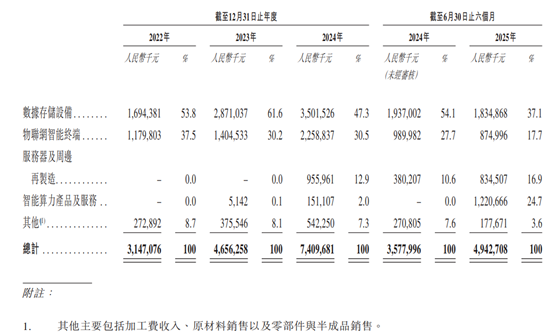
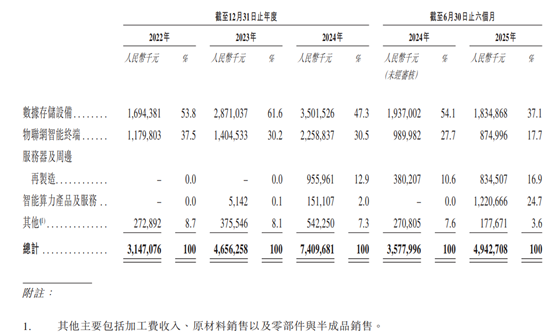
Core Viewpoint - The Hong Kong stock market has seen over HKD 190 billion in IPO fundraising this year, leading globally, with A-share companies like Ningde Times and Hengrui Medicine also listing in Hong Kong, highlighting a trend of A+H listings [1] Company Overview - Xiechuang Data, established in November 2005, has been in the consumer electronics manufacturing industry for nearly 20 years and was listed on the Shenzhen Stock Exchange in July 2020 [2] - The company focuses on a "smart IoT ecosystem" strategy, integrating smart terminals, computing infrastructure, and cloud services into a global industrial system [2] - Xiechuang Data is the second-largest domestic smart storage device manufacturer in the global market by revenue and the second-largest domestic consumer-grade smart camera manufacturer by shipment volume, holding a 6.6% market share [2] Business Structure Changes - From 2022 to the first half of 2025, Xiechuang Data's business structure has shifted significantly, with data storage devices being the core revenue source, increasing from RMB 1.694 billion in 2022 to RMB 3.502 billion in 2024 [3] - IoT smart terminals, previously the second-largest business, saw revenue growth from RMB 1.179 billion in 2022 to RMB 2.259 billion in 2024, but their revenue share declined to 17.7% in the first half of 2025 [3] - The smart computing products and services segment emerged as a new growth engine, with revenue reaching RMB 1.221 billion in the first half of 2025, accounting for 24.7% of total revenue [4] Financial Performance - Xiechuang Data's revenue grew from RMB 3.147 billion in 2022 to RMB 7.410 billion in 2024, with a 38.1% increase in the first half of 2025 compared to the same period in 2024 [5] - Gross profit rose from RMB 322 million in 2022 to RMB 1.233 billion in 2024, with a gross margin improvement from 10.2% to 16.6% [5] - Net profit increased from RMB 131 million in 2022 to RMB 687 million in 2024, with RMB 422 million achieved in the first half of 2025 [5] IPO Objectives and Strategy - The primary goal of Xiechuang Data's IPO is to deepen its focus on the AI computing sector, with funds allocated for building AI computing infrastructure, enhancing R&D capabilities, strategic investments, and operational funding [6] - The company has already committed to significant investments in high-performance computing servers, with a total planned investment exceeding RMB 120 billion in the AI computing sector by 2025 [6] Market Position and Valuation - The AI computing industry is characterized by high barriers, high margins, and high repurchase rates, making it attractive to capital markets, which benefits Xiechuang Data's IPO prospects [10] - The company has three key advantages: a shift from storage hardware to AI computing, increasing revenue and profit margins, and substantial R&D investment supporting global expansion [10] Financial Risks - Xiechuang Data's debt levels have surged, with a debt-to-asset ratio of 256.4% as of mid-2025, reflecting increased bank borrowings to support its expansion in smart computing products and services [9] - The company reported significant cash flow volatility, with negative operating cash flow in 2023 and the first half of 2025, indicating potential liquidity challenges [7][10]


新股前瞻|存储算力两手抓,协创数据加码转型赴港IPO“谋变”
Zhi Tong Cai Jing· 2025-10-29 02:06
Core Viewpoint - The company, Xiechuang Data, is seeking to list on the Hong Kong Stock Exchange (HKEX) as part of the A+H listing trend, aiming to enhance its focus on AI computing power and capitalize on the growing demand in this sector [1][6]. Company Overview - Xiechuang Data was established in November 2005 and has been engaged in the consumer electronics manufacturing industry for nearly 20 years, listing on the Shenzhen Stock Exchange in July 2020 [1]. - The company has developed a global industrial system centered on "smart terminals + computing infrastructure + cloud services," integrating the entire value chain from R&D to manufacturing and services [1]. Business Transformation - The company is transitioning its business focus towards AI computing power, leveraging its existing strengths in consumer electronics to support this shift [2]. - From 2022 to 2025, the revenue from data storage devices is projected to grow from 1.694 billion RMB to 3.501 billion RMB, while the IoT smart terminal revenue is expected to increase from 1.179 billion RMB to 2.259 billion RMB [3]. Financial Performance - The company's revenue is expected to rise from 3.147 billion RMB in 2022 to 7.409 billion RMB in 2024, with a 38.1% increase in the first half of 2025 compared to the same period in 2024 [4]. - Gross profit is anticipated to grow from 322 million RMB in 2022 to 1.233 billion RMB in 2024, with a gross margin improvement from 10.2% to 16.6% [5]. IPO Objectives - The primary goal of the IPO is to deepen the company's focus on AI computing power, with funds allocated for building AI infrastructure, enhancing R&D capabilities, strategic investments, and operational funding [6]. - The company plans to invest over 120 billion RMB in computing power by 2025, indicating a strong commitment to this transformation [6]. Market Position and Valuation - The AI computing power industry is characterized by high barriers, high margins, and high repurchase rates, making it attractive to capital markets [9]. - Xiechuang Data's business shift from storage hardware to AI computing power positions it favorably in a booming market, with increasing revenue and profit margins [9]. Financial Risks - The company faces significant financial risks due to increased debt levels to support its expansion in AI computing power, with a debt-to-asset ratio of 256.4% as of mid-2025 [8]. - The operating cash flow has shown volatility, with net cash outflows in recent periods, indicating potential liquidity challenges [8].
基金经理"同题异做"科技赛道AI算力投资图谱现分歧
Zheng Quan Shi Bao· 2025-10-28 23:15
Core Insights - The AI computing sector has seen significant returns for heavily invested funds this year, leading to a divergence in investment strategies among fund managers [1][2] - Notable fund managers are adjusting their portfolios within the AI computing chain, with some reducing holdings in high-performing optical modules while increasing positions in PCB and AI application sectors [2][3] Fund Manager Adjustments - Fund managers like Jin Zicai from Caitong Fund have significantly increased their holdings in PCB-related companies such as Shenzhen South Circuit and Shengyi Technology, while reducing positions in leading optical module firms like NewEase and Zhongji Xuchuang [2][4] - The China Europe Digital Economy Fund, managed by Feng Ludan, has made more substantial adjustments, reducing exposure to optical modules and PCB while increasing investments in AI application stocks like Alibaba and Tencent [3][4] Long-term Outlook on AI Infrastructure - Despite the adjustments, there remains a consensus among fund managers regarding the long-term potential of AI infrastructure, with expectations of increased demand for computing power in the coming years [4][5] - Jin Zicai emphasized that the growth certainty of overseas AI has improved, predicting faster growth in computing demand for 2026 and 2027 [4] Investment Risks and Valuation Concerns - While acknowledging the long-term value of the AI computing sector, fund managers have also highlighted the risks associated with high valuations following significant price increases [7] - Concerns have been raised about the sustainability of past performance as the AI sector's overall valuation is no longer at a low level, with some stocks reflecting overly optimistic growth expectations [7]



基金经理“同题异做”科技赛道 AI算力投资图谱现分歧
Zheng Quan Shi Bao· 2025-10-28 18:21
Core Insights - The AI computing sector has generated remarkable returns for heavily invested funds this year, leading to a divergence in investment strategies among fund managers [1][2] - Notable fund managers are adjusting their portfolios within the AI computing chain, with some reducing holdings in high-performing segments like optical modules while increasing exposure to PCB and AI applications [2][3] Fund Manager Adjustments - Fund managers are showing differing strategies in the AI computing sector, with some, like Jin Zicai from Caitong Fund, significantly increasing positions in PCB-related companies while reducing holdings in leading optical module firms [2][3] - The China Europe Digital Economy fund, managed by Feng Ludan, has made substantial adjustments, reducing exposure to optical modules and PCB while increasing investments in AI application stocks like Alibaba and Tencent [3] Long-term Outlook on AI Infrastructure - Despite the adjustments, there remains a consensus among fund managers regarding the long-term potential of AI infrastructure, with expectations of increased demand for computing power in the coming years [4] - Jin Zicai emphasized the underestimated growth potential of the overseas computing sector, predicting a significant increase in demand driven by advancements in video reasoning technology [4] Global Cloud Computing Focus - The global cloud computing industry continues to be a focal point, with recent months seeing an increase in the value of AI models and a shift in business models towards more sustainable pricing strategies [5][6] - The investment in AI computing is expected to rise, driven by both established companies and new entrants in the market [6] Caution Amid High Valuations - While acknowledging the long-term value of the AI computing sector, fund managers are also highlighting the risks associated with high valuations and potential market volatility following significant price increases [7] - There is a call for diversified investment strategies to mitigate risks while capitalizing on the growth potential of the AI industry [7]
近30万亿财富大洗牌!钟睒睒四当首富,雷军年增2000 亿财富,房地产仅1人上榜
Sou Hu Cai Jing· 2025-10-28 10:04
Group 1 - The 2025 Hurun Rich List shows a significant increase in wealth, with 1,434 entrepreneurs having over 5 billion in wealth, an increase of 340 from last year, and total wealth reaching nearly 30 trillion, up by 9 trillion [1] - The list features 15 new billionaires, bringing the total to 41, and 268 new individuals with wealth over 1 billion, indicating a rapid expansion of wealth among the elite [1] - Notable new entrants include Lei Jun and Li Shufu in the top ten, with Lei Jun gaining nearly 200 billion this year, making him the "growth king" with a total wealth of 326 billion [1] Group 2 - The list reflects a clear industry reshuffle, with new wealth being generated in sectors like industrial products, health, and consumer goods, while real estate has seen a significant decline, with only one representative remaining in the top 100 [2] - The emergence of new billionaires such as Wang Ning from Pop Mart and Chen Tian Shi from Cambrian, who capitalized on the AI computing trend, highlights the shift towards innovative industries [2] - The changes in the list serve as a barometer for the Chinese economy, showcasing the dynamics of industry upgrades and the impact of innovation on wealth distribution [3]

权益类基金“十年考”:万家品质生活A总回报555%领跑,太平灵活配置跌57%垫底
Xin Lang Ji Jin· 2025-10-28 08:59
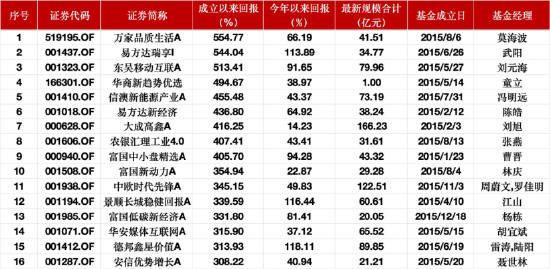
Core Insights - The report highlights the performance of equity funds established in 2015, noting a significant disparity in their growth trajectories over the past decade [1] - The report emphasizes the dominance of technology sectors, particularly AI and coal, in the portfolios of top-performing funds [2][3] Fund Performance Overview - A total of 419 equity funds were established in 2015, with only 2 exceeding 10 billion yuan in size, and 14 funds above 5 billion yuan, representing less than 3.4% of the total [1] - The top-performing fund, Wan Jia Quality Life A, achieved a total return of 554.77% since inception, with a year-to-date return of 66.19% [2] - The second-best fund, Yi Fang Da Rui Xiang I, reported a total return of 544.04%, focusing heavily on the AI computing industry [3] - Dong Wu Mobile Internet A ranked third with a total return of 513.41%, showcasing a broad technology sector investment [4] Sector Analysis - The AI sector is highlighted as a critical area for growth, driven by the need for self-sufficiency amid US-China trade tensions [3] - The coal sector is experiencing a reversal in supply-demand dynamics, with expectations of rising coal prices in the fourth quarter due to potential cold weather [3] Underperforming Funds - The fund Tai Ping Flexible Allocation has the lowest total return at -56.70%, with a year-to-date return of only 1.17% [5][6] - Another underperformer, Yin He Transformation Growth A, has a total return of -51.90%, indicating a trend of long-term decline [8] Investment Strategies - Successful fund managers emphasize risk management and adaptability to market conditions, with a focus on technology and cyclical sectors [9] - The report suggests that investors should consider funds managed by experienced managers with stable investment philosophies to navigate market volatility [9]
帮主郑重盘前策略 :4000点临门一脚!冲关时刻盯紧这三条线
Sou Hu Cai Jing· 2025-10-28 01:16
Core Viewpoint - The A-share market is at a critical juncture, with the index reaching 3999.07 points, just shy of the 4000-point mark, indicating a mix of anticipation and caution among investors [1][3]. Market Analysis - The market is experiencing a significant increase in trading volume, with a total turnover of 2.34 trillion yuan, suggesting substantial capital inflow [3]. - Key resistance levels are identified between 3990 and 4016 points, with a potential breakout target of 4030 points if the index surpasses 4016 [3]. - A pullback to around 3978 points could indicate a healthy consolidation, while a drop below 3950 points may trigger a short-term correction [3]. Investment Strategy - Three main investment lines are recommended: 1. **Technology Growth Line**: Focus on sectors like storage chips and AI computing, which are seeing deep capital involvement and have policy support from the "14th Five-Year Plan" [4]. 2. **Resource Cycle Line**: Emphasize non-ferrous metals and rare earths, as supply-demand dynamics are improving amid a global manufacturing recovery [4]. 3. **Defensive Complement Line**: Consider large financial institutions like brokerages and banks, which are still undervalued and provide a balance of risk and reward [4]. - It is advised to maintain a cash position of 40-50% to capitalize on potential market corrections, with an increase to 70% if the index breaks 4016 points [4].
四中全会定调与市场锚点解析
2025-10-27 15:22
Summary of Key Points from Conference Call Records Industry or Company Involved - The discussion primarily revolves around the Chinese economy, focusing on key policies set forth during the 20th Central Committee's Fourth Plenary Session, as well as implications for the bond market and various sectors within the economy. Core Points and Arguments 1. **Emphasis on Core Industries** China aims to strengthen its core industries, including manufacturing, quality, internet, aerospace, and transportation, to counter global de-globalization risks [3][4] 2. **Technological Development as a Priority** Technological advancement is identified as a crucial driver of new productive forces, with the new economy contributing approximately 17-18% to GDP. Future efforts will focus on original innovation and tackling key core technologies [3][4] 3. **Expansion of Domestic Demand** The strategy to expand domestic demand is highlighted, with an emphasis on integrating material and human investments to stimulate consumption and investment. Special government bonds may be used to support consumption subsidies [3][4] 4. **Real Estate Sector Focus** For the first time, the real estate sector is addressed in the context of people's livelihoods, with a push for high-quality development that returns to its residential nature. This indicates a policy shift to mitigate the economic drag from the real estate sector [3][4] 5. **Local Government Debt Management** The need to manage local government debt risks is reiterated, with expectations for new debt limits to be issued early next year. The government may increase bond issuance and align monetary policy with potential rate cuts [4][5] 6. **Market Liquidity and Interest Rates** The People's Bank of China may restart net purchases of government bonds to enhance market liquidity, with expectations for the effective repurchase rate to decrease from the current range of 1.8-1.85% to 1.75-1.8% [4][5] 7. **Impact of U.S.-China Trade Relations** Ongoing U.S.-China trade negotiations and their outcomes are expected to influence market sentiment and the bond market's direction [4][8] 8. **Performance of Key Sectors** The third-quarter earnings reports indicate strong performance in sectors such as communication equipment, electronic semiconductors, chemicals, and industrial metals, particularly in AI computing and consumer electronics [11] 9. **Foreign Capital Inflows** Recent weeks have seen strong foreign capital inflows into the A-share market, with October's inflow reaching a multi-year high. In contrast, foreign interest in Hong Kong stocks remains weaker [12] 10. **New vs. Old Economic Drivers** The transition from old to new economic drivers is accelerating, with significant growth in new productive forces, particularly in computing power and cloud computing, which have seen increases of around 1.5 times [13] 11. **Investment Value of Anti-Overwork Policies** Anti-overwork policies are expected to impact various sectors, including photovoltaics and steel, presenting investment opportunities aligned with new productive forces [14] 12. **Consumer Sector Investment Logic** Investment in the consumer sector should focus on fundamental performance, with specific attention to sectors like light manufacturing, textiles, and agriculture, which have shown strong performance [15] Other Important but Possibly Overlooked Content - The potential for further monetary policy adjustments, including rate cuts, is anticipated in response to economic data releases [5] - The upcoming "15th Five-Year Plan" is expected to provide detailed policy guidance, particularly regarding modern industrial systems and domestic market strength [9]
沪指逼近4000点,科技主线还能布局吗?
Mei Ri Jing Ji Xin Wen· 2025-10-27 08:37
Group 1 - A-shares experienced a significant surge, with the Shanghai Composite Index approaching 4000 points and trading volume exceeding 2 trillion yuan, driven by a rebound in technology leaders, particularly in AI computing power and semiconductor equipment [1] - The "14th Five-Year Plan" emphasizes technology investment, providing a positive outlook for continued investment in the tech sector [1] Group 2 - Both A-shares and Hong Kong stocks are considered important for investment, suggesting a dual approach to portfolio allocation [2] - The semiconductor industry is highlighted as having high growth potential, particularly as it is in the early to mid-stage of an AI expansion cycle, with strong domestic demand for self-sufficiency in semiconductor equipment [3] - AI computing power is identified as a key area of focus, with increasing demand for computing infrastructure driven by ongoing AI advancements [3] Group 3 - Nvidia's upward adjustment of shipment expectations for 2026 strengthens the profitability outlook for leading computing power firms, reinforcing the sustainability of the high demand cycle for optical modules driven by AI [4] - The Hong Kong tech sector has seen significant inflows from southbound capital, with a notable increase in foreign investment interest in Chinese assets, particularly as external risks improve [4] - The valuation gap between Hong Kong tech stocks and A-shares presents an opportunity for catch-up, with expectations of accelerated capital inflows into Hong Kong stocks as the Federal Reserve continues to lower interest rates [4] Group 4 - The Hong Kong Stock Connect Technology Index has outperformed the Hang Seng Technology Index and the Hong Kong Internet Index from 2018 to October 2025, with a cumulative increase of 66.24% [5] - There are concerns regarding the fundamental performance of companies, as earnings have not shown substantial improvement, and market sentiment has cooled due to reduced trading volume [5] - Investors should be cautious as the upcoming third-quarter earnings reports may reveal risks if actual performance does not meet high expectations [5] Group 5 - A conservative approach is recommended in the short term, with a strategy of buying low and selling high being the preferred choice [6]
“翻倍基”曝光:猛增!
天天基金网· 2025-10-27 08:30
Core Viewpoint - The article discusses the performance and investment strategies of several mutual funds, highlighting their focus on sectors such as AI, innovative pharmaceuticals, and carbon neutrality, which are expected to yield significant returns in the current market environment [3][10][15]. Group 1: Fund Performance and Holdings - The "Zhonghang Opportunity Leading" fund reported a remarkable performance of 127.17% in the first three quarters, ranking 4th among actively managed equity funds, with a total scale of 132.31 billion yuan, nearly a 12-fold increase from the previous quarter [5][10]. - The "Yongying Medical Innovation Selection" fund achieved a performance of 114.01%, ranking in the top 20 among actively managed equity funds, with a scale of 78.29 billion yuan, reflecting a growth of 157.28% from the previous quarter [10][13]. - The "Penghua Carbon Neutral Theme" fund recorded a performance of 111.79% in the first three quarters, with a stock position of 89.95% [15][17]. Group 2: Investment Focus Areas - The "Zhonghang Opportunity Leading" fund primarily invests in the AI computing power industry chain, with a stock position of 88.56%. Key holdings include Yingweike, Xinyi Sheng, and Zhongji Xuchuang, all of which have seen significant price increases this year [5][8]. - The "Yongying Medical Innovation Selection" fund focuses on innovative pharmaceuticals, with major holdings in Kangfang Bio and Xinda Bio, both exceeding 700 million yuan in market value [10][12]. - The "Penghua Carbon Neutral Theme" fund emphasizes manufacturing, new energy, and new technologies, with significant profits reported in the third quarter [15][17]. Group 3: Market Outlook and Trends - The article suggests that the growth potential for AI computing power remains high, with a focus on long-term investment opportunities in emerging technologies [8][17]. - The innovative pharmaceutical sector is expected to become a key investment theme, similar to the explosive growth seen in the CXO sector from 2018 to 2019 [13]. - The AI technology cycle is anticipated to last at least 5 to 10 years, with significant investment opportunities in robotics and new industrial technologies [17][23].