
农业

Search documents
日度策略参考-20251015
Guo Mao Qi Huo· 2025-10-15 12:36
Group 1: Investment Ratings - There is no information about the report's industry investment rating in the given content. Group 2: Core Views - In the short term, stock index futures are expected to fluctuate strongly, but beware of the recurrence of tariff policies. Pay attention to the possible meeting between Chinese and US leaders during the APEC meeting in South Korea at the end of this month [1]. - Treasury bond prices are affected by the central bank's interest - rate risk warning, suppressing the upward space [1]. - Gold prices may fluctuate in the short term [1]. - Silver prices may fluctuate further once the physical shortage in London is alleviated [1]. - Copper prices are expected to continue to run strongly due to continuous disturbances in copper - mine supply and improved macro - liquidity, despite the suppression from global trade frictions [1]. - Alumina prices are expected to have limited downward space as they approach the cost line, although the fundamentals are weak with increasing production and inventory [1]. - The non - ferrous sector faces callback risks due to the intensification of Sino - US trade frictions and repeated risk - aversion sentiment. Zinc, nickel, stainless steel, etc. in the non - ferrous sector are affected by various factors such as trade uncertainties, policy changes, and inventory levels, and their prices are expected to fluctuate or be under pressure in the short term [1]. - For agricultural products, palm oil, soybean oil, and other varieties are affected by factors such as policies, reports, and inventory, and their prices have different trends. Cotton prices are expected to fluctuate widely in the short term and face pressure in the long term [1]. - In the energy and chemical sector, products such as crude oil, fuel oil, and asphalt are affected by factors such as OPEC production increase, demand seasonality, and tariff policies, with different price trends [1]. Group 3: Summary by Industry Macro - finance - Treasury bonds: Affected by the central bank's interest - rate risk warning, the upward space is limited [1]. - Gold: Prices may fluctuate in the short term [1]. - Silver: May fluctuate further once the physical shortage in London is alleviated [1]. Non - ferrous metals - Copper: Despite trade - friction suppression, prices are expected to run strongly due to supply disturbances and improved liquidity [1]. - Alumina: Fundamentals are weak, but the downward space is limited as it approaches the cost line [1]. - Zinc: Faces short - term pressure, but the opening of the export window may support the domestic price if the LME inventory continues to decline [1]. - Nickel: Prices are mainly affected by the macro - situation in the short term, with high - inventory pressure. Short - term trading is recommended, and there is still pressure from primary - nickel surplus in the long term [1]. - Stainless steel: Futures prices are expected to fluctuate in the short term. Pay attention to the actual production of steel mills [1]. - Tin: There is a risk of callback in the non - ferrous sector, but there are still opportunities to go long at low levels in the long term due to supply risks and demand support [1]. Black metals - Iron ore: The short - term fundamentals are not optimistic, with supply recovery and possible weakening demand, and high inventory [1]. - Coke: Similar to coking coal, the short - term is in a wait - and - see state [1]. - Coking coal: The price is still in the process of bottom - seeking, but it is not suitable to chase short positions for now [1]. Agricultural products - Palm oil: The Indonesian B50 policy may have a negative impact on near - month contracts, and the MPOB September report is expected to support prices [1]. - Soybean oil: The reduction of raw materials and oil - mill压榨 reduction support the price due to factors such as China's rare - earth export restriction and the expected reduction of US soybean ending stocks [1]. - Rapeseed oil: There is no new driving force, and it is recommended to wait and see [1]. - Cotton: Prices are expected to fluctuate widely in the short term and face pressure in the long term with the new - cotton listing [1]. - Sugar: The original - sugar price has bottomed out and rebounded, but the upward space is limited. It is recommended to short at high levels in the domestic market [1]. - Corn: New - season corn is under selling pressure, and the 01 contract is expected to oscillate and bottom [1]. Energy and chemicals - Crude oil: Affected by factors such as OPEC production increase, geopolitical situation, and demand seasonality [1]. - Fuel oil: Affected by factors such as OPEC production increase, demand seasonality, and US tariff threats [1]. - Asphalt: The short - term supply - demand contradiction is not prominent, and the demand for the 14th Five - Year Plan's construction rush is likely to be falsified [1]. - Rubber: Affected by factors such as US tariffs, supply increase, and weak market atmosphere [1]. - BR rubber: The raw - material fundamentals are loose, and the downstream trading is weak [1]. - PTA: The domestic production has decreased due to unit maintenance [1]. - Ethylene glycol: The port inventory is low, but the price is under pressure due to imports and device commissioning [1]. - Short - fiber: Factory devices are gradually returning, and the delivery willingness of market warehouse receipts has weakened [1]. - Styrene: The export sentiment has eased, and there is support at the cost end [1]. - PF: The price fluctuates strongly due to factors such as reduced market - price center and increased downstream demand [1]. - PVC: The price fluctuates weakly due to factors such as reduced maintenance and high near - month warehouse receipts [1]. - Calcined alumina: The short - term price is bearish, and the medium - term is bullish [1]. - LPG: The upward momentum is limited due to factors such as OPEC production increase and high domestic inventory [1]. Shipping - Container shipping (European line): The price may rebound at a low level, and it is expected to stop falling and stabilize [1].
安徽将全面推进“农业保险+”改革
Zhong Guo Xin Wen Wang· 2025-10-15 09:27
Core Viewpoint - Anhui Province is set to comprehensively promote the "Agricultural Insurance +" reform, aiming for full coverage of pilot programs by the end of 2025 and risk protection exceeding 230 billion yuan by 2026 [1][2] Group 1: Reform Objectives - By the end of 2025, the goal is to achieve full coverage of the "Agricultural Insurance + a package of financial products" pilot program [1] - By 2026, the agricultural insurance risk protection is expected to exceed 230 billion yuan [1] Group 2: Key Actions and Measures - The reform includes four main actions and twenty specific measures [1] - The first action is to implement a multi-dimensional financing initiative, focusing on establishing comprehensive financial products and addressing existing policy challenges [2] - The second action involves multi-dimensional empowerment, utilizing a national financing credit service platform to enhance agricultural insurance through technology and data resources [2] - The third action promotes multi-chain integration, offering comprehensive insurance services across the entire agricultural supply chain [2] - The fourth action focuses on multi-level coverage, enhancing insurance capabilities for key agricultural products and exploring commercial insurance co-insurance models [2]
海南自贸港封关在即 官员称将深化同东盟经贸合作
Zhong Guo Xin Wen Wang· 2025-10-15 08:54
Core Points - Hainan Free Trade Port is about to close, aiming to enhance economic and trade cooperation with ASEAN countries, particularly Vietnam, creating new development opportunities for businesses in these regions [1][2] - Hainan's bilateral trade with ASEAN is projected to grow from 23.66 billion RMB in 2020 to 57.91 billion RMB by 2024, with ongoing collaboration in agriculture, investment, shipping, and tourism [1] Group 1 - Hainan's trade with Vietnam is expected to reach 10.43 billion RMB in 2024, marking a year-on-year increase of 26.8% [2] - In the first nine months of this year, Hainan's trade with Vietnam has already surpassed the total trade volume for the entire year of 2021 [2] - The trade between Hainan and Vietnam includes a variety of products such as refined oil, equipment, chemicals, timber, and coconuts [2]
以农作物秸秆为原料生产纸浆 、秸秆浆和纸实行增值税即征即退50%
蓝色柳林财税室· 2025-10-15 07:55
Group 1 - The article discusses tax incentives aimed at promoting the development of rural specialty industries and the circular economy in agriculture, specifically through the use of agricultural crop straw as raw material for producing pulp and paper [1] - A 50% immediate VAT refund policy is implemented for taxpayers producing pulp and paper from agricultural crop straw [1] - Taxpayers must meet specific conditions to qualify for the VAT refund, including obtaining proper invoices and maintaining a record of recycled resource purchases [2][3] Group 2 - Taxpayers are required to establish a record-keeping system for recycled resource acquisitions, detailing supplier information, resource types, quantities, prices, and invoice status [3] - The policy excludes sales of products that fall under categories deemed as high pollution or high environmental risk, as defined by relevant environmental regulations [3][4] - Taxpayers must ensure that over 70% of raw materials used in production come from the specified resources and comply with environmental discharge standards [4] Group 3 - The article outlines that small-scale taxpayers can enjoy VAT exemptions if their monthly sales do not exceed 100,000 yuan or quarterly sales do not exceed 300,000 yuan, with the policy extended until December 31, 2027 [8] - Small-scale taxpayers are subject to a reduced VAT rate of 1% on applicable sales, down from the standard 3% [8][15] - The article provides guidance on how small-scale taxpayers should fill out their VAT declaration forms based on their sales figures and invoice status [9][12]


首席点评:美联储或将结束缩表
Shen Yin Wan Guo Qi Huo· 2025-10-15 05:21
Report Summary 1. Investment Rating - The report does not provide an overall industry investment rating. 2. Core Views - The Fed may end its balance - sheet reduction, and there is a high probability of a 25 - basis - point interest rate cut later this month [1][5][12]. - Gold is becoming an increasingly important ultimate safe - asset due to factors such as the US government shutdown, rising fiscal deficits, and global confrontation, but there may be adjustments after a rapid rise [2][19]. - The copper market is affected by factors like tight concentrate supply, high smelting output, and downstream demand. The Indonesia mine accident may lead to a supply - demand gap and support copper prices in the long term [2][20]. - The short - term trend of oil prices is downward, although global oil demand is expected to increase [3][13]. 3. Summary by Directory 3.1 Main News - **International News**: Fed Chairman Powell hinted that the Fed may stop shrinking its balance sheet in the next few months and is likely to cut interest rates by 25 basis points later this month. The labor market shows signs of weakness, and inflation and employment prospects have changed little since September [1][5]. - **Domestic News**: Premier Li Qiang emphasized the importance of the next - step economic work, including implementing counter - cyclical adjustments, expanding domestic demand, and supporting foreign trade and investment [6]. - **Industry News**: The 138th Canton Fair kicked off, and China's goods trade in Q3 showed a 6% year - on - year increase, indicating the resilience of China's foreign trade [7]. 3.2 Outer - market Daily Returns - On October 14, the S&P 500, European STOXX 50, and other indices showed different degrees of decline, while ICE 11 - sugar and other varieties showed increases [8]. 3.3 Morning Comments on Major Varieties - **Financial Products** - **Stock Index**: After a high - level shock in September, the stock index is likely to maintain an upward trend in the long - term. However, short - term market fluctuations may increase due to Sino - US trade issues. The market style may shift to value in Q4 [10][11]. - **Treasury Bonds**: Treasury bonds continued to rise. The Fed's expected interest rate cut provides more room for China's monetary policy. With the weak domestic demand, the central bank is likely to implement a moderately loose monetary policy, which supports the price of treasury bond futures [12]. - **Energy and Chemical Products** - **Crude Oil**: SC crude oil fell 1.73% at night. A cease - fire agreement in Gaza was signed, and short - term oil prices tend to break downward, although global oil demand is expected to increase [3][13]. - **Methanol**: Methanol is short - term bullish. The operating rate of coal - to - olefin plants and methanol plants has increased, and coastal inventories are rising [14]. - **Rubber**: Rubber prices are expected to be weak due to smooth supply and limited demand. Weather in rubber - producing areas may affect production [15][16]. - **Polyolefins**: Polyolefin futures mainly declined. The market focuses on demand and potential industrial policies in Q4, and prices are affected by cost fluctuations [17]. - **Glass and Soda Ash**: Glass futures remained weak, and soda ash futures closed up. The market is cautious, and attention should be paid to consumption and policy changes [18]. - **Metals** - **Precious Metals**: Gold and silver prices fluctuated sharply at high levels. Gold is favored as a safe - asset due to various factors, but there may be adjustments [2][19]. - **Copper**: Copper prices rose 0.57% at night. The concentrate supply is tight, and the Indonesia mine accident may support copper prices in the long - term [2][20]. - **Zinc**: Zinc prices fell 0.74% at night. The smelting output is expected to increase, and zinc prices may follow copper prices in the short - term [21]. - **Lithium Carbonate**: The supply and demand of lithium carbonate are both increasing, and the inventory is decreasing. The price is supported, and the recent fluctuation is small [23]. - **Black Products** - **Coking Coal and Coke**: The short - term fluctuation of coking coal and coke futures may intensify due to factors such as high steel production and Sino - US trade friction [24]. - **Iron Ore**: Iron ore demand is supported by high steel production. With a decrease in global iron ore shipments and rapid port inventory depletion, the market is expected to be bullish [25]. - **Steel**: The supply pressure of steel is increasing, and the inventory is accumulating. The market is in a state of weak supply and demand, with hot - rolled coils performing better than rebar [26]. - **Agricultural Products** - **Protein Meal**: The price of soybean meal and rapeseed meal showed different trends at night. The market is waiting for the USDA report, and the domestic supply is sufficient [27]. - **Oils and Fats**: Oils and fats were weak at night. The MPOB report showed an increase in palm oil inventory, and short - term prices may be under pressure, but long - term demand is supported [29]. - **Sugar**: International sugar is in a stock - building stage, and domestic sugar prices are expected to be weak due to supply pressure [30]. - **Cotton**: Cotton prices are expected to be weak in the short - term due to factors such as new cotton supply and weak downstream demand [31]. - **Shipping Index** - **Container Shipping to Europe**: The EC index rebounded in the afternoon. Maersk's price - stabilizing signal is positive, and the 12 - contract is expected to fluctuate widely in the short - term [32].
行业轮动模型由高切低,增配顺周期板块
GOLDEN SUN SECURITIES· 2025-10-15 05:17
Quantitative Models and Construction Methods 1. Model Name: Industry Relative Strength (RSI) Model - **Model Construction Idea**: This model identifies leading industries by calculating their relative strength (RS) based on historical price performance over different time windows [10] - **Model Construction Process**: 1. Use 29 first-level industry indices as the configuration targets [10] 2. Calculate the price change rates for the past 20, 40, and 60 trading days for each industry index [10] 3. Rank the industries based on their price change rates for each time window and normalize the rankings to obtain RS_20, RS_40, and RS_60 [10] 4. Calculate the average of the three rankings to derive the final RS value: $ RS = \frac{RS_{20} + RS_{40} + RS_{60}}{3} $ [10] 5. Industries with RS > 90% by the end of April are identified as potential leading industries for the year [10] - **Model Evaluation**: The model successfully identified key annual industry trends, such as high dividend, resource products, exports, and AI, which were validated by market performance throughout the year [10][12] 2. Model Name: Industry Sentiment-Trend-Crowding Framework - **Model Construction Idea**: This framework provides two industry rotation strategies based on market conditions: 1. High sentiment + strong trend, avoiding high crowding (aggressive strategy) 2. Strong trend + low crowding, avoiding low sentiment (conservative strategy) [6][14] - **Model Construction Process**: 1. Evaluate industries based on three dimensions: sentiment, trend, and crowding [6][14] 2. Use sentiment as the core metric for the aggressive strategy, with crowding as a risk control factor [14] 3. Use trend as the core metric for the conservative strategy, avoiding low-sentiment industries [14] 4. Allocate weights to industries based on their scores in the three dimensions [6][14] - **Model Evaluation**: The framework is effective in adapting to different market conditions and has shown strong performance in historical backtests [6][14] 3. Model Name: Left-Side Inventory Reversal Model - **Model Construction Idea**: This model identifies industries with potential for recovery by analyzing sectors in distress or those with low inventory pressure and high analyst optimism [24] - **Model Construction Process**: 1. Identify industries currently in distress or recovering from past distress [24] 2. Focus on sectors with low inventory pressure and potential for restocking [24] 3. Incorporate analyst long-term positive outlooks for these industries [24] - **Model Evaluation**: The model effectively captures recovery opportunities in industries undergoing inventory restocking cycles, providing significant absolute and relative returns [24] --- Model Backtesting Results 1. Industry Relative Strength (RSI) Model - **Annualized Return**: Not explicitly mentioned - **Excess Return**: Not explicitly mentioned - **Information Ratio (IR)**: Not explicitly mentioned - **Maximum Drawdown**: Not explicitly mentioned - **Monthly Win Rate**: Not explicitly mentioned - **Performance Highlights**: - Industries with RS > 90% by April 2024 included coal, utilities, home appliances, banking, petrochemicals, communication, non-ferrous metals, agriculture, and automotive [10] - These industries showed strong performance, with key themes being high dividends, resource products, exports, and AI [10][12] 2. Industry Sentiment-Trend-Crowding Framework - **Annualized Return**: 22.1% (long-only portfolio) [14] - **Excess Return**: 13.8% (annualized) [14] - **Information Ratio (IR)**: 1.51 [14] - **Maximum Drawdown**: -8.0% [14] - **Monthly Win Rate**: 68% [14] - **Performance Highlights**: - 2023 excess return: 7.3% [14] - 2024 excess return: 5.7% [14] - 2025 YTD excess return: 2.8% [14] 3. Left-Side Inventory Reversal Model - **Annualized Return**: Not explicitly mentioned - **Excess Return**: - 2023: 17.0% (relative to equal-weighted industry benchmark) [24] - 2024: 15.4% (relative to equal-weighted industry benchmark) [24] - 2025 YTD: 7.8% (relative to equal-weighted industry benchmark) [24] - **Information Ratio (IR)**: Not explicitly mentioned - **Maximum Drawdown**: Not explicitly mentioned - **Monthly Win Rate**: Not explicitly mentioned - **Performance Highlights**: - Absolute return: - 2023: 13.4% [24] - 2024: 26.5% [24] - 2025 YTD: 26.4% [24] --- Quantitative Factors and Construction Methods 1. Factor Name: Sentiment Factor - **Factor Construction Idea**: Measures the overall sentiment of an industry to identify high-growth opportunities [14] - **Factor Construction Process**: 1. Evaluate the sentiment of each industry based on relevant metrics (not explicitly detailed in the report) [14] 2. Rank industries by sentiment scores [14] - **Factor Evaluation**: Sentiment is a core metric in the aggressive strategy of the Industry Sentiment-Trend-Crowding Framework, providing strong signals for high-growth opportunities [14] 2. Factor Name: Trend Factor - **Factor Construction Idea**: Measures the strength of market trends to identify industries with strong momentum [14] - **Factor Construction Process**: 1. Evaluate the trend of each industry based on relevant metrics (not explicitly detailed in the report) [14] 2. Rank industries by trend scores [14] - **Factor Evaluation**: Trend is a core metric in the conservative strategy of the Industry Sentiment-Trend-Crowding Framework, offering a simple and replicable approach to industry allocation [14] 3. Factor Name: Crowding Factor - **Factor Construction Idea**: Measures the level of crowding in an industry to identify overbought or underbought sectors [14] - **Factor Construction Process**: 1. Evaluate the crowding level of each industry based on relevant metrics (not explicitly detailed in the report) [14] 2. Rank industries by crowding scores [14] - **Factor Evaluation**: Crowding is used as a risk control factor in both aggressive and conservative strategies of the Industry Sentiment-Trend-Crowding Framework [14] --- Factor Backtesting Results 1. Sentiment Factor - **Annualized Return**: Not explicitly mentioned - **Excess Return**: Not explicitly mentioned - **Information Ratio (IR)**: Not explicitly mentioned - **Maximum Drawdown**: Not explicitly mentioned - **Monthly Win Rate**: Not explicitly mentioned 2. Trend Factor - **Annualized Return**: Not explicitly mentioned - **Excess Return**: Not explicitly mentioned - **Information Ratio (IR)**: Not explicitly mentioned - **Maximum Drawdown**: Not explicitly mentioned - **Monthly Win Rate**: Not explicitly mentioned 3. Crowding Factor - **Annualized Return**: Not explicitly mentioned - **Excess Return**: Not explicitly mentioned - **Information Ratio (IR)**: Not explicitly mentioned - **Maximum Drawdown**: Not explicitly mentioned - **Monthly Win Rate**: Not explicitly mentioned
有色上游价格回升,农业上游价格波动
Hua Tai Qi Huo· 2025-10-15 05:13
Report Summary 1. Industry Investment Rating No investment rating information is provided in the report. 2. Core View The report presents an overview of the mid - and upstream industries, including production and service sectors, and details the price and operation status of various industries at different levels. It also mentions relevant policies and responses to international trade issues [1][2][3]. 3. Summary by Directory 3.1 Mid - view Event Overview - **Production Industry**: The Shanghai Economic and Information Technology Commission released an action plan to promote the high - quality development of the intelligent terminal industry from 2026 - 2027, aiming to increase the scale of intelligent computing power terminals. The National Development and Reform Commission issued a management method to support energy - saving and carbon - reduction renovations in key industries and infrastructure [1]. - **Service Industry**: In response to the US 301 investigation restrictions on China's shipbuilding and other industries, the Chinese Ministry of Commerce stated that the US measures are unfair and discriminatory, and urged the US to correct its mistakes and resolve issues through dialogue [1]. 3.2 Industry Overview - **Upstream**: Copper, zinc, and aluminum prices in the non - ferrous metal industry have rebounded, while egg prices in the agricultural industry have dropped significantly [2]. - **Midstream**: The PX industry in the chemical sector has a high operating rate; power plant coal consumption in the energy sector has decreased; and the asphalt industry in the infrastructure sector has reached a three - year high in operating rate [2]. - **Downstream**: The sales of commercial housing in second - and third - tier cities in the real estate market have slightly increased [3]. 3.3 Key Industry Price Index Tracking - **Agriculture**: On October 14, the prices of eggs decreased by 19.12% year - on - year, while the prices of palm oil increased by 2.38% [37]. - **Non - ferrous Metals**: On October 9, the prices of copper increased by 7.20% year - on - year, and the prices of zinc increased by 1.45% [37]. - **Energy**: On October 14, the prices of WTI crude oil decreased by 6.24% year - on - year, and the prices of Brent crude oil decreased by 5.62% [37]. - **Real Estate**: On October 14, the building materials comprehensive index decreased by 0.94%, and the concrete price index decreased by 0.35% [37].
卫星遥感、无人机服务农作物受损情况快速评估 优化理赔流程提高赔付效率
Yang Shi Wang· 2025-10-15 03:27
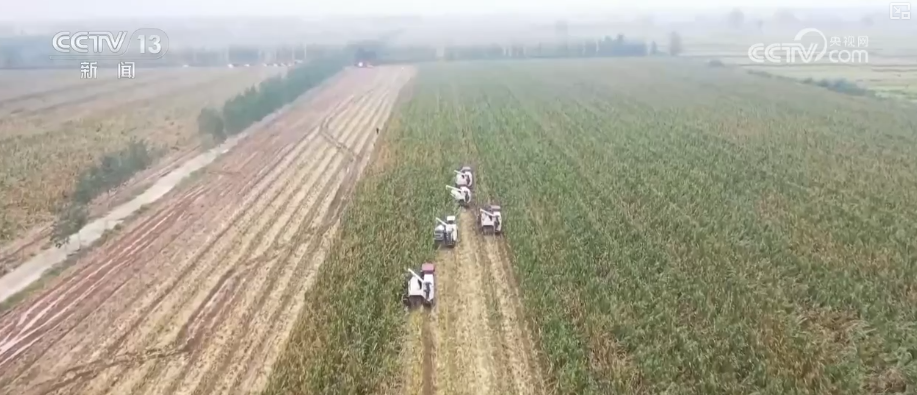
Core Viewpoint - The Ministry of Agriculture and Rural Affairs and the National Financial Regulatory Administration are accelerating agricultural insurance claims in the Huanghuai region due to severe weather challenges affecting crop harvest and sowing [2][3]. Group 1: Agricultural Insurance Claims - The agricultural insurance claims process faces significant challenges, including difficulties in damage assessment. Authorities are prioritizing efficiency in claims processing and have established a "green channel" for rapid claims related to autumn grain [4][7]. - Agricultural insurance is a crucial policy tool for post-disaster recovery, directly impacting farmers' funding for production and national food security [7]. - In Shandong, persistent rainfall has severely impacted the harvesting, drying, and storage of autumn grain, prompting local authorities to expedite damage assessments and claims processing [7][11]. Group 2: Technological Integration - To address the challenges posed by the scattered nature of smallholder farms in the Huanghuai region, insurance companies are utilizing satellite remote sensing and drone technology to enhance damage assessment efficiency [6][11]. - The integration of technology aims to speed up the claims process and improve payout efficiency, with a focus on optimizing the claims workflow [6][11]. Group 3: Coordination and Support - Various departments, including finance, agriculture, and financial regulation, are actively monitoring the claims process and addressing challenges to ensure smooth reporting and damage assessment [13]. - It is anticipated that damage assessments will be completed by the end of October, with claims expected to be largely finalized by November [13].
ICE棉花价格低位震荡 巴西2025/26年度棉花产量预估为403.06万吨
Jin Tou Wang· 2025-10-15 03:09
Group 1 - The core viewpoint of the article highlights the fluctuations in cotton futures prices on the ICE, with a current price of 63.51 cents per pound, reflecting a slight increase of 0.13% from the opening price [1] - On October 14, the opening price for cotton futures was 63.58 cents per pound, with a closing price of 63.52 cents per pound, indicating a decrease of 0.31% [2] - Brazil's national supply company, Conab, forecasts a cotton production of 4.0306 million tons for the 2025/26 season, a year-on-year decrease of 1.1% from 4.0769 million tons in the previous season [2] - The planted area for cotton in Brazil for the 2025/26 season is estimated at 2.1382 million hectares, an increase of 2.5% compared to 2.0861 million hectares in the previous year [2] - The average price of domestic cotton (B index) on October 14 was 14,731 yuan per ton, down 38 yuan per ton from October 13 [2] - The price of Xinjiang cotton delivered to Shandong for grade 3128B was 14,830 yuan per ton, a decrease of 35 yuan per ton from October 13 [2] Group 2 - As of October 14, the number of cotton futures warehouse receipts on the Zhengzhou Commodity Exchange was 2,875, a decrease of 44 receipts from the previous trading day [3]
泰安市多措并举为乡村振兴提供“鑫”动力
Qi Lu Wan Bao· 2025-10-15 02:53
Core Viewpoint - The financial services sector in Tai'an is actively supporting rural revitalization by directing financial resources towards key areas and weak links, thereby injecting continuous financial momentum into rural development [1] Group 1: Work Mechanism - The implementation of the "Tai'an Financial Support for Rural Revitalization Implementation Opinions" outlines responsibilities and measures to enhance the financial service system for rural revitalization [2] - A service team consisting of young officials and senior bank executives has been established to create a collaborative service model [2] - A regular assessment and adjustment mechanism has been set up to monitor and optimize the progress of financial support for rural revitalization [2] Group 2: Innovative Product Services - The introduction of the "Talent Loan" and a "green channel" for agricultural technology personnel aims to streamline the loan approval process, with 131 loans amounting to 621 million yuan issued [3] - Banks are encouraged to innovate financial products tailored to agricultural needs, resulting in over 90 new agricultural credit products launched [3] - A total of 22,532 guarantee projects have been initiated, with a cumulative guarantee amount of 13.47 billion yuan, including 777 new projects this year [3] Group 3: Policy Utilization - Agricultural loans in Tai'an reached 201.24 billion yuan by the end of August, reflecting an 8.06% increase since the beginning of the year, surpassing the city's average growth rate [4] - The Agricultural Development Bank has provided 750 million yuan in loans to support grain and oil reserves, with specific loans allocated for summer grain purchases [4] - A total of 5.167 billion yuan in policy loans has been secured to support ecological protection and high-quality development in the Yellow River basin [4] Group 4: Comprehensive Strategies - Local financial organizations, such as small loan and private capital companies, are being encouraged to support rural finance, with a total agricultural investment of 92.8 million yuan [5] - Efforts are being made to facilitate the listing of agricultural enterprises on capital markets, with 12 enterprises already listed on the "Rural Revitalization Board" [6] - Agricultural insurance services are being expanded through the establishment of "Three Agricultural Insurance Service Stations" to cover more local agricultural products [6]