
云计算

Search documents
无创植入大脑芯片或能成为现实,芯片ETF天弘(159310)连续六日“吸金”,云计算ETF天弘(517390)实时成交额居同标的第一
2 1 Shi Ji Jing Ji Bao Dao· 2025-11-17 03:04
Group 1: A-Share Market Performance - The three major A-share indices collectively declined on November 17, with the China Securities Chip Industry Index rising by 0.62% at the time of reporting [1] - Among the component stocks, Baiwei Storage surged over 8%, with Beijing Junzheng, Chipone, Nanda Optoelectronics, and Shengke Communication-U also experiencing gains [1] - The Chip ETF Tianhong (159310) recorded a trading volume of nearly 2 million yuan, with a premium trading occurrence and a net inflow of funds for six consecutive trading days [1] Group 2: Cloud Computing Sector - The China Securities Hong Kong-Shenzhen Cloud Computing Industry Index increased by 1.46%, with the Cloud Computing ETF Tianhong (517390) achieving a trading volume exceeding 5.9 million yuan, ranking first among similar products [1] - As of November 14, the Cloud Computing ETF Tianhong (517390) reported a year-to-date share growth rate of 401.14%, leading among its peers [1] Group 3: Semiconductor and AI Chip Developments - Samsung Group announced plans to invest a total of 450 trillion won in South Korea over the next five years, focusing on research and development, including the expansion of semiconductor investments [2] - The company plans to commence structural construction of its fifth factory (P5) in the Pyeongtaek complex, expected to be fully operational by 2028 [2] - Domestic AI chips are increasingly significant, with their performance directly influencing AI model capabilities and future economic structures, driven by ongoing investments in AI infrastructure and the importance of self-controllable strategies [2]


大行评级丨野村:芯片短缺将持续对腾讯云业务造成较大影响 仍维持“买入”评级
Ge Long Hui· 2025-11-17 02:55
Core Viewpoint - Nomura's research report indicates that Tencent's overall performance in Q3 is stable, but management acknowledges facing AI chip supply constraints, leading to a downward revision of the 2025 fiscal year capital expenditure guidance, which is expected to be lower than the previous guidance of a low double-digit percentage of total revenue, yet still above last year's level of 77 billion [1] Group 1 - The chip shortage is anticipated to significantly impact Tencent's cloud business, hindering its development, as computing power is one of the highest demands for enterprise users deploying large language models [1] - Management expects that its two most valuable AI assets, Yuanbao and Hongyuan large models, are not affected by the supply shortage [1] Group 2 - Compared to peers like ByteDance and Alibaba, Tencent's investments in AI infrastructure and large language models over the past few years may be insufficient [1] - Nomura maintains a "Buy" rating on Tencent, raising the target price from 757 HKD to 775 HKD [1]

新一轮科技行情或可关注这两大信号:12月美联储降息能否落地、科技巨头三季度财报
Sou Hu Cai Jing· 2025-11-17 02:52
Group 1 - Hong Kong's three major indices experienced a slight decline, with the Hang Seng Tech Index dropping over 0.5%. The largest ETF in the A-share sector, the Hang Seng Tech Index ETF (513180), followed the index's downward trend, with major holdings like Trip.com, Lenovo, Baidu, and BYD Electronics leading the decline, while Hua Hong, SMIC, and Alibaba showed gains, with Alibaba rebounding after a near 2% drop [1] - In the A-share market, the three major indices also saw slight declines, with the computer sector performing well. Concepts such as lithium mining, cross-strait integration, and AI computing power were active during the trading session. The Cloud Computing 50 ETF (516630) rose over 1%, with stocks like Dongfang Guoxin, Yidian Tianxia, and Tuo Wei Information showing significant gains, including Dongfang Guoxin which surged over 12% [1] Group 2 - Current A-share technology trends are heavily influenced by global AI industry trends and the performance of US tech stocks. Key signals to watch include the Federal Reserve's potential interest rate cut in December, which has seen a decrease in implied probability to below 45%, raising concerns about the "US stock AI bubble theory." Additionally, the upcoming Q3 earnings reports from major tech companies like Nvidia, Alibaba, and Baidu will be crucial in addressing these concerns and impacting A-share tech stocks and global risk assets [2] Group 3 - The Hang Seng Tech Index ETF (513180) includes core Chinese tech assets such as Xiaomi, NetEase, Tencent, Alibaba, and Meituan, which are relatively scarce compared to A-shares [3] - The Cloud Computing 50 ETF (516630) covers popular computing power concepts, including optical modules and devices, computing power leasing, data centers, and AI servers [3]


国信证券:CAPEX仍需下游景气度支撑 广告和SaaS类产品为高需求方向
Zhi Tong Cai Jing· 2025-11-17 02:41
Core Insights - The report from Guosen Securities highlights that advertising and SaaS products are high-demand areas based on token consumption and input-output analysis [1] - There is a significant need for continued support from downstream market conditions for the massive CAPEX investments, particularly in sectors like autonomous driving and robotics, which are driving GPU leasing demand [1] - The report indicates that without a trend of explosive growth in downstream applications, leading companies may slow their CAPEX spending, especially those reliant on single customers [1] Supply Side - The financial pressure from high CAPEX growth and power shortages is evident, with major overseas companies' CAPEX exceeding 60% of their operating cash flow [2] - Companies are increasingly resorting to financing leases and financial operations to manage cash flow constraints, with firms like Meta and Google utilizing debt financing to supplement their investments [2] - The projected growth in data center capacity in North America is expected to be 100% in 2026 and 50% in 2027, leading to significant power shortages [2] Demand Side - There remains a substantial gap between the cumulative incremental CAPEX of overseas cloud providers since the end of 2022 and the current backlog of unfulfilled orders, which is less than 50% of the current order scale [3] - Excluding Oracle, which is heavily impacted by OpenAI, the three major cloud providers are still in a state of supply shortage, indicating that current CAPEX levels are not excessive [3] Computing Power Demand Structure - The current structure of computing power demand shows a higher internal proportion for cloud providers, supporting AI applications, model training, and the development of AI products like Gemini and Copilot [4] - External revenue is also growing rapidly, primarily from GPU leasing and API calls for AI application development, with GPU leasing accounting for about 70% of demand [4] - API calls, while currently a smaller portion of demand, are growing quickly, with many small companies utilizing models for customer service and process optimization [4]

从Mag 7股价狂飙到巴菲特“最后一舞”建仓谷歌 华尔街巨头们坚定押注AI大浪潮
智通财经网· 2025-11-17 02:32
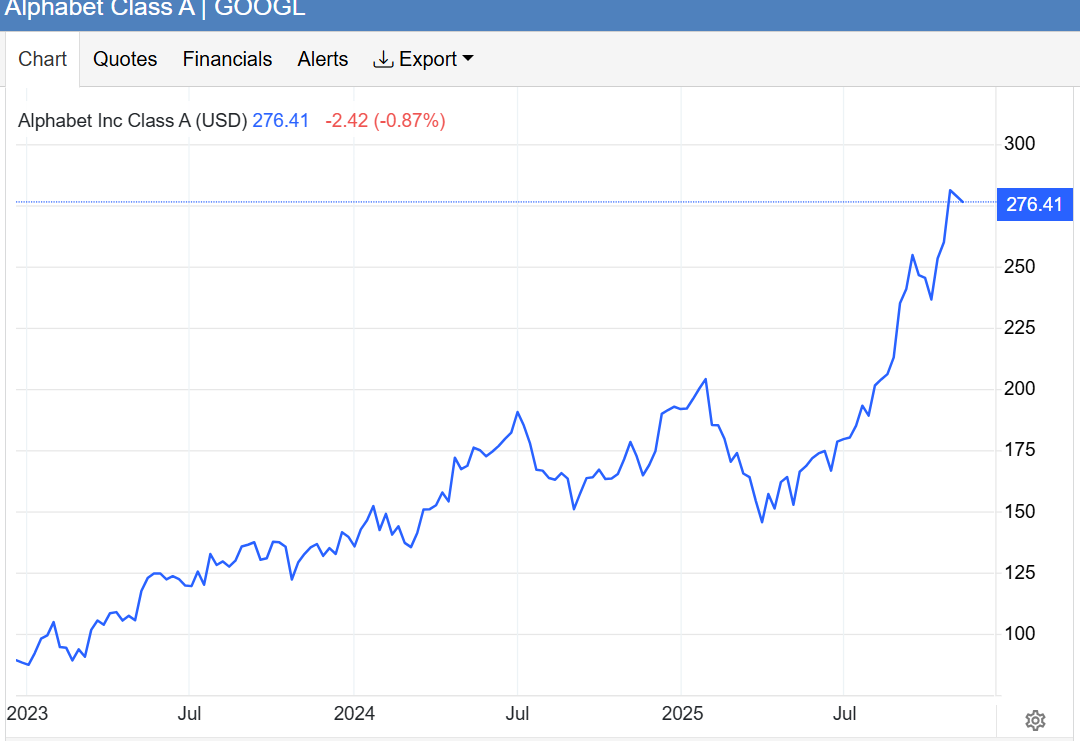
Core Insights - Major institutional investors are increasingly focused on publicly listed tech stocks, particularly in the context of the AI investment wave, despite concerns about a potential "AI bubble" [1][3][4] - The "Magnificent Seven" tech giants, which include Apple, Microsoft, Google, Tesla, Nvidia, Amazon, and Meta Platforms, are viewed as key drivers of market performance and potential returns for investors [2][10] Group 1: AI Investment Trends - Institutional investors are optimistic about the influx of capital into AI-related investments, with significant commitments from major firms like Microsoft, which announced a $10 billion AI data center investment in Portugal [3][6] - Analysts from Goldman Sachs and UBS suggest that the current AI investment climate resembles the early stages of the 1990s tech boom rather than a bubble about to burst, indicating a healthy investment environment [4][5][14] - The AI investment cycle is expected to continue growing, with major tech companies projected to invest over $500 billion in AI infrastructure [6][15] Group 2: Performance of Tech Giants - Nvidia, Micron, TSMC, and SK Hynix remain near historical highs, reflecting strong performance amid the AI investment surge [2][3] - Alphabet, Google's parent company, has seen a significant increase in its stock value and is now among Berkshire Hathaway's top holdings, highlighting its recovery and growth in the AI space [10][12] - The cloud computing segment of Google is experiencing rapid growth, with a 34% year-over-year increase in revenue, driven by AI-related services [12] Group 3: Market Sentiment and Future Outlook - Investment firms like Wedbush predict a continued upward trajectory for tech stocks, estimating a 10% increase in the Nasdaq 100 index for the remainder of the year [5][13] - Analysts emphasize that the current market dynamics differ significantly from the 2000 internet bubble, as today's leading tech companies are generating substantial free cash flow and have low debt levels [14][15] - The overall sentiment among major investment firms is one of optimism, with a focus on long-term growth opportunities in AI rather than short-term volatility [16][17]

清仓英伟达!“白宫背后的科技大佬”Peter Thiel三季度大幅降仓,新买入微软和苹果
Hua Er Jie Jian Wen· 2025-11-17 01:49
Core Insights - Peter Thiel's recent actions signal caution in the AI market, particularly with his complete exit from Nvidia amid its soaring valuation [1][4] - Thiel Macro LLC's portfolio underwent a significant restructuring, reducing its total holdings by two-thirds while establishing new positions in Microsoft and Apple [2][3] Group 1: Portfolio Changes - Thiel Macro LLC completely liquidated its position in Nvidia, which previously accounted for 40% of its portfolio, selling all 537,700 shares [2] - The fund also sold a significant portion of its holdings in Vistra Energy, which represented 19% of its portfolio [2] - The total portfolio size decreased from approximately $212 million to $74.4 million, indicating a portfolio turnover rate exceeding 80% [2] Group 2: New Investments - The fund initiated new positions in Microsoft and Apple, purchasing 49,000 shares of Microsoft and 79,181 shares of Apple [3] - Following the reductions, Tesla remains the largest holding at approximately 38.8%, while Microsoft and Apple account for 34.1% and 27.1% of the portfolio, respectively [3] Group 3: Market Sentiment - Thiel's actions reflect a belief that the AI hype cycle is outpacing its actual economic benefits, drawing parallels to the 1999 internet bubble [4] - Despite acknowledging Nvidia's leadership in hardware, Thiel's strategy suggests a preference for platform companies with diversified revenue streams over high-valuation chip manufacturers [4] Group 4: Thiel's Influence - Peter Thiel is a prominent figure in the tech and investment sectors, known for co-founding PayPal and being an early investor in Facebook [5] - His involvement in various disruptive tech companies, including Palantir and investments through Founders Fund, enhances his influence in both technology and capital markets [5]



美银Hartnett:2026年“最佳交易”是“做空云大厂债券”,明年5月前市场不太可能“停止做多股市”
Hua Er Jie Jian Wen· 2025-11-17 01:08
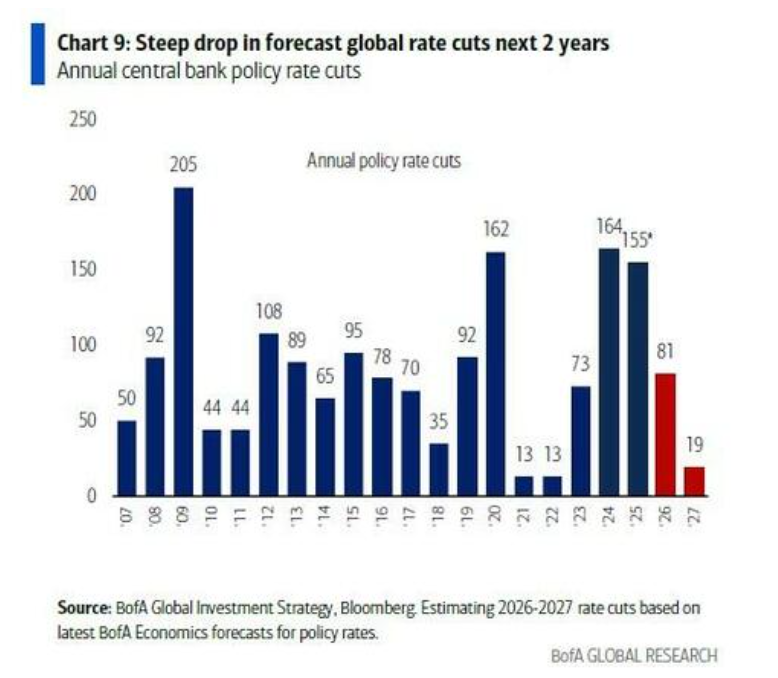
Core Viewpoint - The report by Bank of America strategist Michael Hartnett predicts that the best trade entering 2026 will be shorting the bonds of hyperscaler companies heavily invested in AI, as debt pressures from AI will become a significant vulnerability for these tech giants [1][2]. Group 1: Financial Conditions and Debt Risks - Hartnett's bearish logic is based on the changing financial conditions, noting that the past year saw 167 rate cuts by global central banks, but this momentum is expected to decrease to 81 cuts in the next year [2][4]. - The tightening of liquidity is leading to increased concerns about credit market strains and the financing of capital expenditures for AI, which have exceeded cash flow capabilities, resulting in widening bond spreads and credit default swaps (CDS) [4][6]. Group 2: Economic Disparities and Borrowing Costs - Hartnett highlights a core contradiction in the U.S. economy, where financial conditions have led to prosperity for Wall Street, but borrowing costs for Main Street remain "unaffordable," with various interest rates significantly higher than government borrowing costs [6][7]. - The disparity in borrowing costs is illustrated by the following rates: U.S. government borrowing at 4%, investment-grade companies at 5%, and credit card APRs reaching 20% [6][7]. Group 3: Market Sentiment and Future Outlook - Despite credit concerns, Hartnett believes that the macro narrative supporting the market remains strong, characterized by a "Goldilocks" scenario of lower rates and higher profits, with expectations of continued stock market preference until May 2026 [8]. - The date of May 15, 2026, is significant as it marks the appointment of a new Federal Reserve chair, with expectations of a more dovish stance, which may support stock preferences until then [8]. Group 4: Macro Trading Opportunities - Hartnett identifies macro trading opportunities, suggesting that tax cuts, interest rate reductions, and U.S. industrial policies will drive the Purchasing Managers' Index (PMI) towards an expansionary range [9][11]. - He expresses optimism for commodities and U.S. small-cap stocks, which are currently undervalued compared to the S&P 500 index, indicating potential for a rebound [11][13]. Group 5: Inflation and Long-term Bonds - Hartnett proposes a "reverse trade" regarding inflation, suggesting that if the U.S. core Consumer Price Index (CPI) falls to 2%, it would benefit long-term U.S. Treasuries [15]. - He anticipates that the government may intervene directly in pricing to control costs in key sectors, which could negatively impact profit margins but create further upside for long-term bonds [15].
花旗:阿里巴巴股价的任何回调都是加仓机会
Ge Long Hui A P P· 2025-11-17 01:07
Core Viewpoint - Citigroup anticipates that market focus will return to Alibaba's fundamentals and its capabilities in AI and cloud as the company prepares to announce its second fiscal quarter results on November 25 [1] Group 1 - Alibaba has approximately $19 billion remaining in its buyback program, and it is expected that the company will accelerate its buyback pace following the earnings announcement [1] - Citigroup reiterates a buy rating for Alibaba, suggesting that any stock price pullback will present a buying opportunity [1]
长话短说
小熊跑的快· 2025-11-16 15:17
Core Insights - The article suggests that AI is expected to rebound, with recent developments indicating positive trends in the sector [1] - Notable investment shifts include Buffett's fund selling Apple shares and acquiring Google [1] - The article highlights the investment return rates of major tech companies, indicating Google's strong performance compared to others like Amazon, Microsoft, Meta, and Oracle [3] Financial Performance - Google's capital expenditure to cash flow ratio is the best among peers, indicating strong financial health [5] - Google reported a significant earnings surprise with a gross margin increase, outperforming expectations by 34% and achieving a 14% growth in search revenue [6] Strategic Trends - The integration of large models, cloud computing, and ASIC technology is identified as a major trend in the industry [8] - The article emphasizes the importance of integration within companies, as discussed internally by Google earlier this year [7] Upcoming Earnings - NVIDIA's upcoming earnings report is anticipated to slightly exceed expectations, with projected revenues of $55.5 to $56 billion, compared to guidance of $54 billion [10]
海内外云厂商发展与现状(三):资本开支压力与海外云厂需求情况拆解
Guoxin Securities· 2025-11-16 13:55
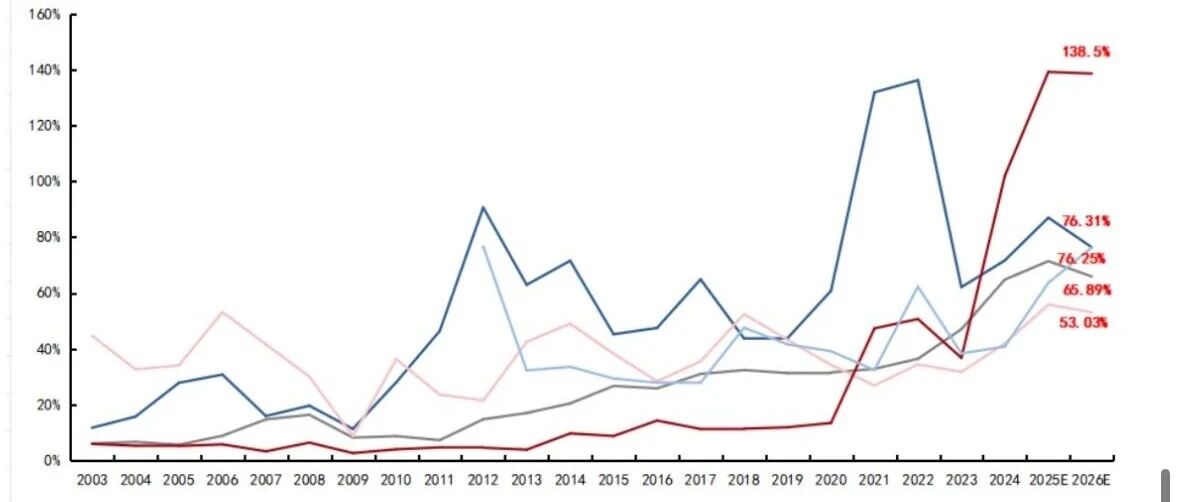
Investment Rating - The report maintains an "Outperform" rating for the industry [1] Core Insights - The capital expenditure (CAPEX) of major overseas cloud providers has significantly increased, exceeding 60% of their operating cash flow, leading to financial pressure and power shortages [2][13] - There is a persistent gap between unfulfilled orders and supply, indicating that the current CAPEX is not excessive [2][41] - The demand structure for computing power is shifting, with internal needs for model training and inference growing, alongside rapid increases in external leasing and API calls [2][34] - High-demand areas identified include advertising and SaaS, which are expected to support ongoing CAPEX investments [2][34] Summary by Sections Supply Side: Financial Pressure and Power Shortages from High CAPEX Growth - Major cloud providers are experiencing financial pressure due to CAPEX growth, which has surpassed 60% of operating cash flow [2][13] - The projected data center capacity in North America is expected to grow by 100% in 2026 and 50% in 2027, leading to significant power shortages [2][32] Demand vs Supply: Unfulfilled Orders Exceed Supply - The cumulative increase in CAPEX since the end of 2022 is still below the current unfulfilled order scale, indicating a supply-demand imbalance [2][41] - The report highlights that the three major cloud providers are still in a state of supply shortage [2][41] Computing Power Demand Structure: Internal Support for Model Training and Rapid Growth in External Leasing and API Calls - The internal demand for computing power is primarily for AI model training and inference, while external demand is growing rapidly through GPU leasing and API calls [2][34] - The average share of GPU leasing is around 70%, with significant growth in API calls from smaller companies [2][34] High Demand Directions: Advertising and SaaS - The report identifies advertising and SaaS as high-demand areas that will support ongoing CAPEX investments [2][34] - The overall CAPEX still requires sustained support from downstream demand, particularly from breakthroughs in AI applications [2][34]


