农业

Search documents
刘宁王凯会见参加2025中国(河南)—东盟粮农合作发展大会暨第四届“一带一路”(河南)国际农业合作博览会的重要外宾
He Nan Ri Bao· 2025-10-12 10:50
Core Insights - The meeting in Zhengzhou highlighted the importance of agricultural cooperation between Henan and ASEAN countries, emphasizing mutual benefits and complementary strengths in agricultural resources and industry development [1][2] - The event aims to deepen collaboration in agricultural trade, technology, and sustainable development, contributing to food security and the construction of a closer China-ASEAN community [1][2] Group 1: Key Points from the Meeting - Henan is recognized as a significant agricultural province in China, focusing on modernizing its agricultural systems and increasing farmers' income [1] - The representatives from ASEAN countries acknowledged Henan's rich agricultural resources and its role in ensuring food security and promoting agricultural trade [2] - The meeting emphasized the need for practical cooperation in the entire agricultural value chain, including smart agriculture and green development [2]
中美贸易冲突下各品种行情解读
Guo Tai Jun An Qi Huo· 2025-10-12 08:37
Report Summary 1. Industry Investment Rating No industry investment rating is provided in the report. 2. Core View The report analyzes the impact of the Sino-US trade conflict on various investment varieties, suggesting investors adjust their positions according to the market situation and the development of the trade war, and provides corresponding option strategies for different varieties [3][4][6]. 3. Summary by Variety Stocks - **Hong Kong Stocks**: If the trade war is less severe than expected, reduce short - term positions in the Hang Seng Technology Index and wait for better entry points. If it worsens, adopt a barbell strategy of technology (AI/innovative drugs/autonomous control) + dividends and buy technology assets at the right time [3]. - **US Stocks**: Short - term fluctuations are inevitable, but the decline will be less than in April. Reduce short - term positions and wait for better opportunities to enter the US technology stock market [3]. Futures - **Treasury Bond Futures**: Affected by the intensification of the trade war, Treasury bonds may open higher on Monday, but the upward trend may not last. Maintain a view of bottom - side oscillating and bearish [3]. - **Stock Index Futures**: The market has TACO trading expectations, but A - shares are overvalued, especially technology stocks with bubbles, and there is a risk of liquidity. The key lies in the development of the trade war and the government's willingness and strength to maintain stability. Consider buying short - term out - of - the - money put options and November call options [3]. Commodities - **Copper**: Prices are under pressure. If the trade conflict worsens, there may be further decline. The supply of copper raw materials is tight, which will be transmitted to the smelting end. Build positions by selling out - of - the - money put options on the far - month [3]. - **Aluminum**: Aluminum prices may be affected by short - term negative sentiment, but the long - term trend is bullish. Consider constructing a collar strategy by buying put options and selling out - of - the - money call options [3]. - **Energy and Chemicals** - **European Routes**: The 2510 contract may decline by 2 - 5%, the 2512 contract by about 10%, and the 2602 contract has a risk of significant decline [5]. - **Crude Oil**: There is a 5 - 6% decline in price, and a 10% decline in the most pessimistic scenario. Consider buying out - of - the - money put options for short - term speculation [5]. - **Chemicals**: The impact is mainly on ethane and propane. Consider bearish spreads and wait for the market to stabilize before selling options [5]. - **Agricultural Products**: Beans and some domestic - priced fresh products are strong, while cotton is weak. Consider buying call options on beans [5]. - **Black Metals**: The direct impact of the trade war on the fundamentals is small, but the valuation may decline. The decline amplitude may be smaller than that of other sectors [5]. - **New Energy and Related Metals** - **Lithium Carbonate**: The price may decline by 5%. Build positions by selling out - of - the - money put options and consider buying deep - out - of - the - money put options for tail protection [6]. - **Nickel**: The price is under pressure and may fluctuate. Sell out - of - the - money call options and buy out - of - the - money put options to construct a collar strategy [6]. - **Stainless Steel**: The price is expected to be weak, and it is advisable to short at high prices with a light position [6]. - **Industrial Silicon**: The price is expected to decline by 4 - 5%. Sell at - the - money call options and buy put options to construct a collar strategy [6]. - **Polysilicon**: The price may decline by 5 - 6%. Sell at - the - money call options and buy more out - of - the - money call options to construct an inverse spread option [6].
申万宏源:短期风险偏好驱动资产和顺周期资产可能调整 中期
智通财经网· 2025-10-11 12:16
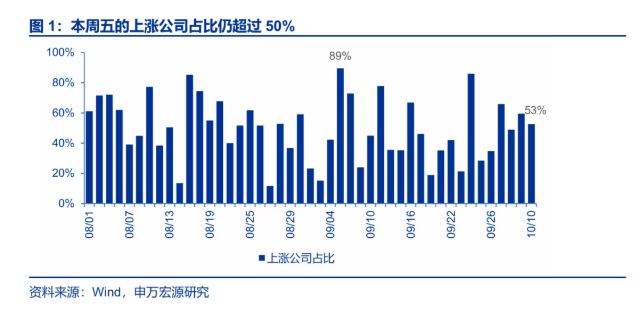
Core Viewpoint - The report from Shenwan Hongyuan indicates that short-term disturbances from US-China trade tensions may lead to adjustments in risk-sensitive and cyclical assets, while stable capital market expectations are essential. The report suggests focusing on sectors such as banking, rare earths, military, and agriculture, with a positive outlook for technology stocks in Q4 2025, particularly in overseas computing power, semiconductors, and robotics [1][9]. Summary by Sections US-China Trade Tensions - The re-emergence of US-China trade tensions has led to a significant decline in global risk assets, with a notable drop in risk appetite. However, the current A-share index is at a higher midpoint compared to April, indicating market adaptability and learning effects [2][11]. - The adjustment in the A-share market is expected to be less severe than in April, with a potential for a short-term pulse adjustment without a pessimistic outlook [2][3]. Technology Sector Analysis - The technology sector is not expected to experience sustained or deep adjustments. The overall market needs to break through, primarily led by technology stocks. Key factors include ongoing advancements in AI both domestically and internationally, and an improvement in short-term cost-effectiveness for technology stocks [3][5]. - Recent adjustments in heavily weighted technology stocks are attributed to concerns over high valuations in semiconductor leaders and the impact of rising trade tensions. However, these adjustments are not expected to have a lasting effect [4][6]. Market Outlook - The report maintains a positive mid-term outlook for the Hong Kong stock market, which is expected to benefit from global monetary easing and the development of new economic industries. The report emphasizes the importance of the "anti-involution" trend as a key structural factor for transitioning from a structural bull market to a comprehensive bull market [1][9]. - The anticipated peak for the A-share market may occur in the spring of 2026, with potential challenges related to demand verification and supply dynamics. However, the overall sentiment remains optimistic for Q4 2025, with expectations for a continued bull market as conditions improve over time [8][9].


佛山市俊木木材有限公司成立 注册资本10万人民币
Sou Hu Cai Jing· 2025-10-11 09:21
Core Insights - A new company, Foshan Junmu Wood Co., Ltd., has been established with a registered capital of 100,000 RMB [1] - The company's business scope includes various agricultural activities such as wood sales, fertilizer sales, agricultural scientific research, vegetable planting, and wholesale and retail of fresh vegetables [1] Company Overview - Company Name: Foshan Junmu Wood Co., Ltd. [1] - Registered Capital: 100,000 RMB [1] - Business Activities: - Wood sales [1] - Fertilizer sales [1] - Agricultural scientific research and experimental development [1] - Vegetable planting [1] - Wholesale and retail of fresh vegetables [1] - Planting of tubers and edible fungi [1] - Crop cultivation services [1] - Initial processing of edible agricultural products [1] - Wholesale and retail of edible agricultural products [1]
湖南大三湘生物科技有限公司成立 注册资本1000万人民币
Sou Hu Cai Jing· 2025-10-11 08:24
天眼查App显示,近日,湖南大三湘生物科技有限公司成立,法定代表人为周泉,注册资本1000万人民 币,经营范围为许可项目:化妆品生产;食品用洗涤剂生产;食品生产(依法须经批准的项目,经相关 部门批准后方可开展经营活动,具体经营项目以批准文件或许可证件为准)一般项目:粮食收购;初级 农产品收购;农副产品销售;化妆品零售;技术服务、技术开发、技术咨询、技术交流、技术转让、技 术推广;专用化学产品制造(不含危险化学品);专用化学产品销售(不含危险化学品);食品用洗涤 剂销售;互联网销售(除销售需要许可的商品);日用杂品制造;日用杂品销售;农业科学研究和试验 发展(除依法须经批准的项目外,自主开展法律法规未禁止、未限制的经营活动)。 ...
突然集体跳水,超166万人爆仓
Zheng Quan Shi Bao· 2025-10-11 04:32
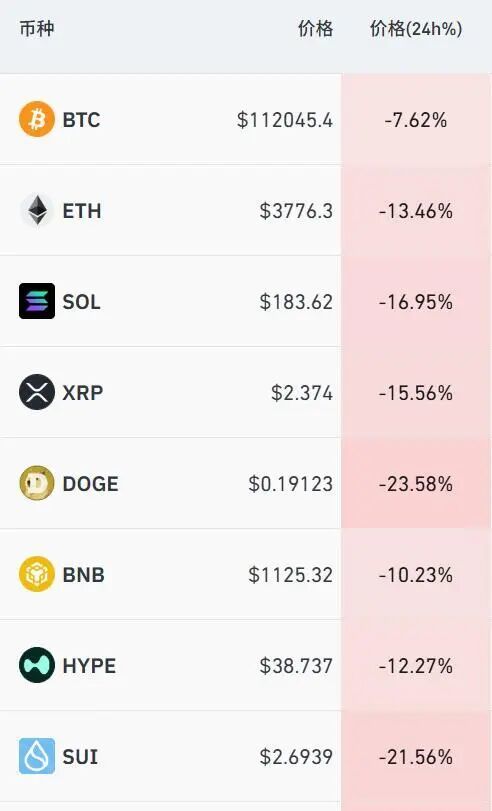
Group 1: Cryptocurrency Market - Bitcoin experienced a sudden drop, falling over 9% on October 10, dropping below $110,000 [1] - As of the report, the entire cryptocurrency market saw significant declines, with Bitcoin down over 7% and Ethereum down over 13% [1] - In the last 24 hours, over 1.66 million traders faced liquidation in the cryptocurrency market [1] Group 2: U.S. Government Shutdown - The U.S. government shutdown has entered its tenth day, affecting various federal departments [2] - The Department of Justice reported that seven agencies are issuing layoff notices to over 4,000 employees, with significant layoffs planned in the Department of Health and Human Services and the Department of the Treasury [2] - The ongoing government shutdown is exacerbating the challenges faced by U.S. farmers due to rising costs and reduced exports linked to tariff policies [3]
特朗普关税威胁引爆抛售潮,美三大股指暴跌创四个月新低
Sou Hu Cai Jing· 2025-10-11 00:30
Group 1 - The U.S. stock market experienced significant declines on October 11, with the Dow Jones Industrial Average dropping 1.90%, the Nasdaq Composite falling 3.56%, and the S&P 500 decreasing by 2.71%, marking the lowest closing point in four months [1] - The sell-off was triggered by the Trump administration's announcement of new tariffs on Chinese imports, raising concerns about escalating global trade tensions and causing a ripple effect across capital markets [1][2] - Asian markets showed severe volatility, with Japan's Nikkei 225 index experiencing a maximum drop of nearly 9%, and South Korea's composite index triggering a trading halt due to sharp declines [1] Group 2 - The technology sector was particularly hard hit, with Nvidia's market value shrinking by $229 billion, Tesla losing $71 billion, and Amazon and Microsoft shares dropping by 5% and 3.3% respectively [2] - The Nasdaq index has fallen 22% from its historical peak, entering a technical bear market, as chip manufacturers and cloud computing companies faced sell-offs due to supply chain disruption risks [2] - The U.S. government shutdown has exacerbated market uncertainty, delaying the release of non-farm payroll data and increasing information asymmetry in the market [2] Group 3 - The escalating trade tensions have led to new challenges for the global supply chain, with the EU announcing retaliatory tariffs on $28 billion worth of U.S. goods and China implementing a comprehensive 34% tariff on U.S. imports [3] - Key industries such as automotive, semiconductors, and agriculture are facing dual cost pressures, prompting the International Monetary Fund to lower its global economic growth forecast for 2025 from 2.8% to 2.2% [3] - Analysts suggest that the escalation of trade friction may lead to systematic downgrades in corporate earnings expectations, potentially hindering the recovery of global stock market valuations [3]
Will Trump's Additional Tariff Make The US Less Dependent on China?
Youtube· 2025-10-10 22:50
Economic Policy and Tariffs - The introduction of the Earth America's Future Act aims to enhance domestic processing and refining of critical minerals and rare earth elements, reducing dependency on China [2] - Recent tariff announcements have led to price increases on everyday goods, prompting the proposal of the No Tariffs on Groceries Act [3] - The chaotic nature of tariff policies has resulted in 55 announcements within 100 days, impacting consumer prices [3] Industry and National Security - The Pentagon's investment in Empty Materials highlights the importance of public-private partnerships in national security and critical minerals [5][6] - The need for more government involvement in companies, especially in the context of national security, is emphasized [6] Infrastructure and Public-Private Partnerships - The discussion around aging infrastructure, such as 100-year-old water pipes, raises questions about funding and public-private partnerships [7][8] - Support for loan guarantees and tax credits is suggested to revitalize American industry, particularly in the rare earths sector where 95% of processing currently occurs in China [8] Employment and Economic Impact - Rising unemployment and healthcare cuts are significant concerns for Michigan, with 700,000 residents potentially losing healthcare coverage due to Medicaid cuts [12][14] - The impact of federal layoffs on Michigan's economy is highlighted, with concerns over the pride and dignity of work in the state [15][18]
乡村振兴里有田园诗意
Jing Ji Ri Bao· 2025-10-10 22:21
近年来,随着乡村环境和基础设施的日益改善,"回归田园"正成为越来越多年轻人出游和休闲的首选。 湖南省长沙市长沙县开慧镇自去年以来,创新推出"我在开慧有丘田"认领农业项目,围绕吃、住、行、 游、购、娱等环节持续打造消费场景,蹚出了一条"农田变场景、产品变品牌、村民变股东"的集体经济 发展新路。 农行长沙分行三农金融部负责人罗胜说,已累计为当地200余户农户投放贷款5000余万元。为有效解决 金融服务"最后一公里"难题,农行长沙分行除了在葛家山村内设立"惠农通"普惠金融服务站,还在板仓 社区搭建普惠金融服务站与零工驿站、工会驿站融合"三站合一"综合平台。 走进开慧村的田野,绿油油的禾苗随风摇曳,成为乡村一道独有的风景线。"城市生活节奏太快,来这 里认领一丘田,一下车,乡村田园画卷和清新空气扑面而来。"每逢节假日,新晋"田主"黄小虎便和家 人来到这里。他告诉记者,在这儿种上自己爱吃的蔬菜,从城市快生活切换到乡村慢生活,身心在感受 田野的宁静与舒缓中得到了充分放松。 农行长沙分行还积极参与长沙市农村产权交易服务体系建设,为农村产权交易提供支付结算、资金监管 等基础金融服务,并创新开发"潇湘农易宝"专属金融产品系列,满 ...
国庆中秋双节“燃”动银川:商文旅农体酒融合发力 揽客411万人次创收超27亿元
Sou Hu Cai Jing· 2025-10-10 12:29
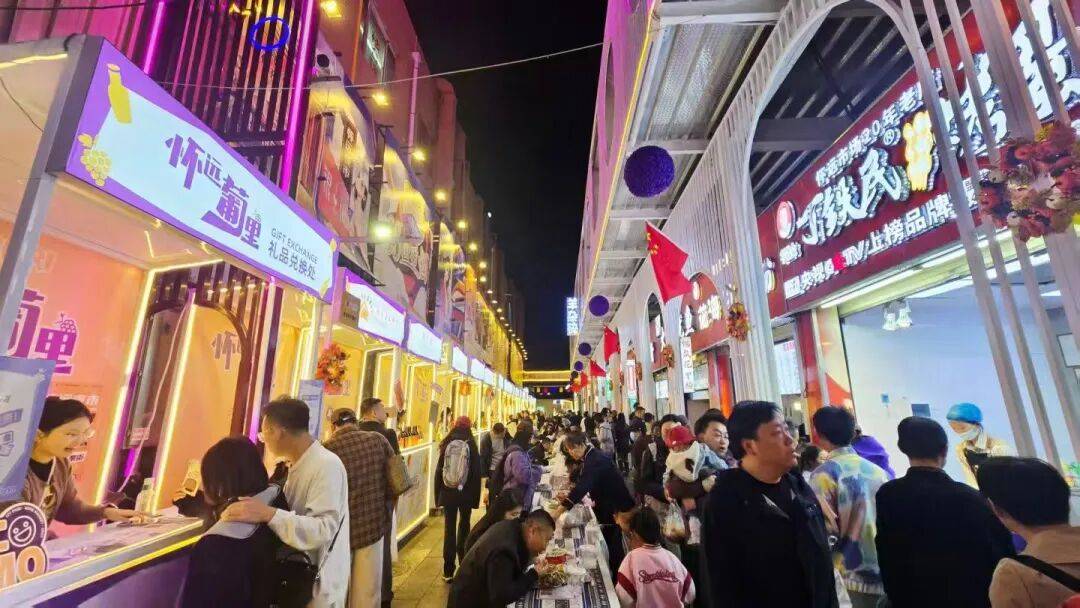
Group 1 - During the National Day and Mid-Autumn Festival, Yinchuan City organized five major brands and 159 special activities, attracting 4.114 million domestic tourists, a year-on-year increase of 10.5%, and achieving a total tourism expenditure of 2.713 billion yuan, up 13.1% [1] - The first "Yinling Shishang · Chuanxing Baiwei" food recommendation event selected 50 restaurants, boosting catering sales by 10 million yuan. The opening of Shanzhichuan (Yinchuan) Outlet attracted a total footfall of 605,100 and sales of 81.1891 million yuan [1] - The core business districts launched over 20 differentiated activities, driving consumption of 320 million yuan. The "11th International Auto Show" attracted 144,000 visitors, with vehicle booking amounts reaching 1.463 billion yuan [1] Group 2 - The 23rd China Green Food Expo achieved a transaction volume of 2.35 million yuan, showcasing over 300 high-quality agricultural products such as wine and goji berries, with 42 promotional activities generating sales of 10.09 million yuan [3] - 38 sports events attracted 6,598 participants and over 60,000 spectators, with three major business districts linking events to commercial consumption, driving foot traffic exceeding 570,000 and related consumption over 20 million yuan [3] - The "Yin Ticket Gift" initiative allowed tourists to enjoy discounts at 761 businesses, boosting consumption by 231 million yuan [3] Group 3 - To optimize traffic support, Yinchuan City launched 24 "point-to-point" tourist shuttle lines, opened 140 free parking lots with over 30,000 spaces, and provided temporary shuttle services and parking for certain scenic spots, ensuring smooth access for over 1.84 million vehicles [5] - The city established a "12345" cultural tourism hotline and introduced a "complaint QR code" in crowded areas, setting up "volunteer service stations" to offer information, route guidance, and emergency supplies, enhancing visitor satisfaction [5]