
建材

Search documents
港股晨报-20260212
国投证券(香港)· 2026-02-12 11:46
Group 1: Market Overview - The Hong Kong stock market continued its rebound with all three major indices closing higher, with the Hang Seng Index up 0.31%, the Hang Seng China Enterprises Index up 0.28%, and the Hang Seng Tech Index up 0.9% [2] - Market activity has slowed significantly ahead of the Chinese New Year, with trading volume dropping to 217.2 billion HKD, and the short-selling ratio on the main board at 17.95% [2] - Southbound capital remained stable, with a net buy of 4.82 billion HKD, with Tencent Holdings, Meituan, and Pop Mart being the most actively bought stocks [2] Group 2: Sector Performance - The resources and cyclical sectors led the market, driven by a rebound in gold prices, with companies like Zijin Mining, Lingbao Gold, and Shandong Gold seeing significant gains [3] - The building materials and cement sector performed well, with companies like China National Building Material and Conch Cement recording considerable increases, supported by improved industry profitability expectations [3] - The automotive supply chain remained active, particularly with Tesla-related stocks, as the market anticipates advancements in autonomous driving and robotics [4] Group 3: Company Analysis - LeShuShi (2698.HK) - LeShuShi is a multinational hygiene products company focused on emerging markets, with a broad sales network across over 30 countries in Africa, Latin America, and Central Asia [7] - The company has established eight factories in Africa, making it the largest local manufacturer in the hygiene products sector, which enhances its supply chain efficiency [8] - Future growth for LeShuShi is expected to come from external factors like demographic growth in emerging markets and internal factors such as localized production and extensive sales channels [8] - The report gives a "Buy" rating with a target price of 38 HKD, forecasting revenues of 541 million USD, 627 million USD, and 711 million USD for 2025, 2026, and 2027 respectively, with net profits of 106 million USD, 129 million USD, and 147 million USD [8]
卖地、借款也要转行半导体!600076,股价提前大涨60%,员工、董事亲属被曝敏感期买卖股票
Mei Ri Jing Ji Xin Wen· 2026-02-12 10:06
Core Viewpoint - Kangxin New Materials (SH600076) is attempting a strategic shift from traditional building materials to semiconductor equipment by acquiring a 51% stake in Wuxi Yubang Semiconductor Technology Co., Ltd. for 392 million yuan, amidst a backdrop of significant stock price increase and ongoing financial losses [1][2]. Group 1: Financial Performance - Kangxin New Materials has reported continuous losses over the past three years, with net profits of -297 million yuan, -334 million yuan, and -189 million yuan for the first three quarters of 2023, 2024, and 2025 respectively [2]. - The company anticipates a net profit of -394 million yuan for the full year of 2025, indicating ongoing financial struggles [2]. - As of September 30, 2025, the total liabilities of the company reached 2.86 billion yuan, with interest-bearing debt amounting to 1.598 billion yuan [2]. Group 2: Acquisition Details - The acquisition price for Yubang Semiconductor is set at 392 million yuan, with a significant premium of 430.80% over its valuation [1][5]. - Following regulatory inquiries, the acquisition valuation was adjusted from 688 million yuan to 550 million yuan, reducing the cash requirement from 392 million yuan to 347 million yuan while increasing the stake from 51% to 55% [4]. - Yubang Semiconductor's net asset value is reported at 130 million yuan, with a projected high growth potential justifying the acquisition's valuation [5]. Group 3: Strategic Rationale - The company aims to leverage Yubang Semiconductor's technology and customer resources to enhance asset quality and drive strategic transformation [4]. - The acquisition is seen as a move to create a second growth curve, addressing the urgent need for transformation in light of declining performance in traditional sectors [3][4]. - Yubang Semiconductor has a strong order backlog of 468 million yuan, which is expected to convert into revenue over the next three years, providing a degree of revenue assurance [8]. Group 4: Risks and Concerns - The acquisition raises concerns due to the high level of goodwill expected to be generated, estimated at 180 million yuan, which represents 4.74% of the company's net assets [8]. - Yubang Semiconductor is facing issues with high inventory levels, with a reported inventory value of 347 million yuan as of September 30, 2025 [8]. - The company operates on a light asset model, with fixed assets valued at only 535,000 yuan, indicating a reliance on its core technology team for competitive advantage [8].



森泰股份实施2025年前三季度分红方案,市场反应中性
Jing Ji Guan Cha Wang· 2026-02-12 09:42
Core Viewpoint - SenTai Co., Ltd. announced a cash dividend distribution plan for the first three quarters of 2025, reflecting a commitment to shareholder returns despite declining profitability [1][5] Dividend Distribution - The company will distribute a cash dividend of 1.30 yuan per 10 shares, totaling approximately 15.107 million yuan, based on a total share count of 116,207,369 shares after excluding repurchased shares [1] - The dividend payout ratio is approximately 34.85% of the net profit attributable to shareholders, which was 43.3396 million yuan for the first three quarters of 2025 [1] Stock Performance - Following the ex-dividend date, the stock price adjusted to reflect the cash outflow, with a reference price of approximately 21.22 yuan [2] - As of February 12, 2026, the stock price was 21.48 yuan, showing a slight increase of 0.61% compared to the pre-dividend price, indicating a neutral market reaction to the dividend [2] Financial Situation - The cash dividend represents 16.23% of the net cash flow from operating activities, which was 93.04 million yuan for the first three quarters of 2025, suggesting limited impact on liquidity [3] - The company's net profit margin was only 3.03%, and with a year-on-year decline of 23.45% in Q3 2025 net profit, the sustainability of high dividends may increase financial pressure [3] Shareholder Returns Perspective - The dividend yield at the latest stock price of 21.48 yuan is approximately 1.39%, which is below the average yield of 2.5% in the A-share building materials industry, but provides stable cash returns for long-term shareholders [4] - The dividend signals the company's commitment to profitability and shareholder returns, potentially boosting investor confidence, although the sustainability of dividends is in question given the backdrop of "increased revenue without increased profit" [4] Summary - The recent dividend distribution by SenTai Co., Ltd. has a neutral short-term impact on stock price, but the high payout ratio contrasts with declining profitability, necessitating close monitoring of cost management and overseas expansion effectiveness [5]
国新证券每日晨报-20260212
Guoxin Securities Co., Ltd· 2026-02-12 06:35
Domestic Market Overview - The domestic market experienced a contraction and mixed performance on February 11, with the Shanghai Composite Index closing at 4131.99 points, up 0.09%, while the Shenzhen Component Index closed at 14160.93 points, down 0.35% [1][4] - The total trading volume of the A-share market was 20,010 billion, showing a decrease compared to the previous day [1][4] - Among the 30 first-level industries, 13 saw an increase, with construction materials, non-ferrous metals, and petroleum and petrochemicals leading the gains, while communication, media, and defense industries experienced significant declines [1][4] Overseas Market Overview - The three major U.S. stock indices experienced slight declines on February 11, with the Dow Jones down 0.13%, the S&P 500 remaining flat, and the Nasdaq down 0.16% [2][4] - IBM's stock fell over 6%, leading the decline in the Dow [2][4] Economic Data - The National Bureau of Statistics reported that in January, the Consumer Price Index (CPI) rose by 0.2% month-on-month and year-on-year, while the core CPI increased by 0.8% year-on-year [9][12] - The Producer Price Index (PPI) rose by 0.4% month-on-month, marking the fourth consecutive month of increase, while year-on-year it decreased by 1.4% [9][12] News Highlights - The State Council issued an implementation opinion on improving the national unified electricity market system, aiming to establish a unified market by 2030 and fully complete it by 2035 [10][11] - The successful flight test of the Long March 10 and the Dream Chaser spacecraft marks a significant milestone in China's manned lunar exploration program [12] - A "New Year gift package" worth 2.05 billion will be distributed to consumers during the Spring Festival, including cash vouchers and subsidies [13]
平安证券(香港)港股晨报-20260212
Ping An Securities Hongkong· 2026-02-12 04:03
Market Overview - The Hong Kong stock market experienced fluctuations, with the Hang Seng Index closing at 23,831 points, down 145 points or 0.61% [1] - The market saw a further decrease in trading volume, with total turnover dropping to 82.799 billion [1] - The net inflow of funds through the Hong Kong Stock Connect was 484 million, with 283 million from the Shanghai Stock Connect and 201 million from the Shenzhen Stock Connect [1] Sector Performance - The local real estate, software, and 5G concept sectors faced significant declines, while gold stocks performed well against the market trend [1] - Notable performers included Chifeng Jilong Gold, which rose nearly 6%, and China National Building Material, which increased by over 11% [1] - The market showed a structural divergence, with resource/building materials strong and financial sectors weak, particularly in light communication and CPO [1] US Market Insights - The US stock market saw slight declines, with the Dow Jones down 0.13% and the Nasdaq down 0.16% [2] - Major tech stocks like IBM and Salesforce led the declines, with IBM dropping over 6% [2] - The Nasdaq Golden Dragon China Index fell by 0.65%, indicating challenges for Chinese tech firms in the US market [2] Future Market Outlook - The report emphasizes the importance of technology self-reliance and AI applications as core themes for future performance in the Hong Kong stock market [3] - The Ministry of Industry and Information Technology's recent policies on national computing power are expected to boost domestic computing and communication sectors [3] - Investment opportunities are highlighted in sectors supported by policies for "technology self-reliance," including AI, semiconductors, and industrial software [3] Key Company Performances - The report notes significant stock performance variations among major companies, with Tencent and Alibaba showing declines of 0.5% and 0.2% respectively [12] - BYD's stock increased by 3.5%, while XPeng Motors saw a rise of 1.9% [12] - In the pharmaceutical sector, companies like WuXi Biologics and CSPC Pharmaceutical reported positive stock movements, with WuXi Biologics up 3.4% [12]
为地方经济社会发展提供坚实支撑——中央企业在山西奋力创新积极作为
Xin Lang Cai Jing· 2026-02-12 03:45
Core Viewpoint - Central enterprises are playing a crucial role in supporting the high-quality development of Shanxi by leveraging their strengths in various sectors, including energy security, infrastructure, and technological innovation [1][2]. Group 1: Central Enterprises' Contributions - Central enterprises are actively collaborating with Shanxi to enhance energy security, upgrade industries, and improve transportation networks, contributing to a series of successful outcomes in the region [2]. - The Daqin Railway has achieved a normalized transportation capacity of 450 million tons per year, facilitating the supply of coal and ensuring national energy security [1][3]. Group 2: Strategic Cooperation and Development - Shanxi has positioned itself as a welcoming environment for central enterprises, encouraging investment and collaboration to drive traditional industry upgrades and foster new industries [3]. - The establishment of strategic partnerships between Shanxi and central enterprises has led to significant investments and project developments, enhancing the region's economic foundation [3]. Group 3: Infrastructure and Transportation - The Taiyuan Railway Bureau has completed the construction of the pre-fabricated box beams for the Xiongxin High-speed Railway, which will connect Shanxi with the Beijing-Tianjin-Hebei region, improving the national high-speed rail network [4]. - Central enterprises are enhancing the logistics capabilities in Shanxi, facilitating the movement of coal and manufactured goods, thereby supporting local industries [4]. Group 4: Energy Supply and Green Transition - Central enterprises are committed to ensuring energy supply while promoting a green transition in Shanxi, with significant investments in clean energy projects such as wind and solar power [6][7]. - The State Grid's construction of the Dazhou-Huailai-Tianjin South ultra-high voltage project will add 770 kilometers of clean energy transmission capacity, enhancing Shanxi's energy export capabilities [6]. Group 5: Technological Innovation and Modernization - Central enterprises are driving technological advancements in Shanxi, focusing on high-end manufacturing, digital technology, and ecological protection to support the development of a modern industrial system [8][10]. - Companies like CRRC Dalian are implementing digital transformation initiatives, achieving a system integration rate of 94% and enhancing their manufacturing capabilities [8]. Group 6: Digital Infrastructure and Rural Development - Shanxi Mobile is advancing digital rural construction by creating platforms for governance and smart agriculture, promoting e-commerce and logistics in rural areas [9]. - Central enterprises are investing in digital infrastructure, including 5G networks and computing centers, to support various sectors and enhance the region's digital economy [10].
十万亿化债资金开闸!财政组合拳重塑建材板块逻辑,建材ETF(159745)早周期配置窗口开启
Sou Hu Cai Jing· 2026-02-12 03:28
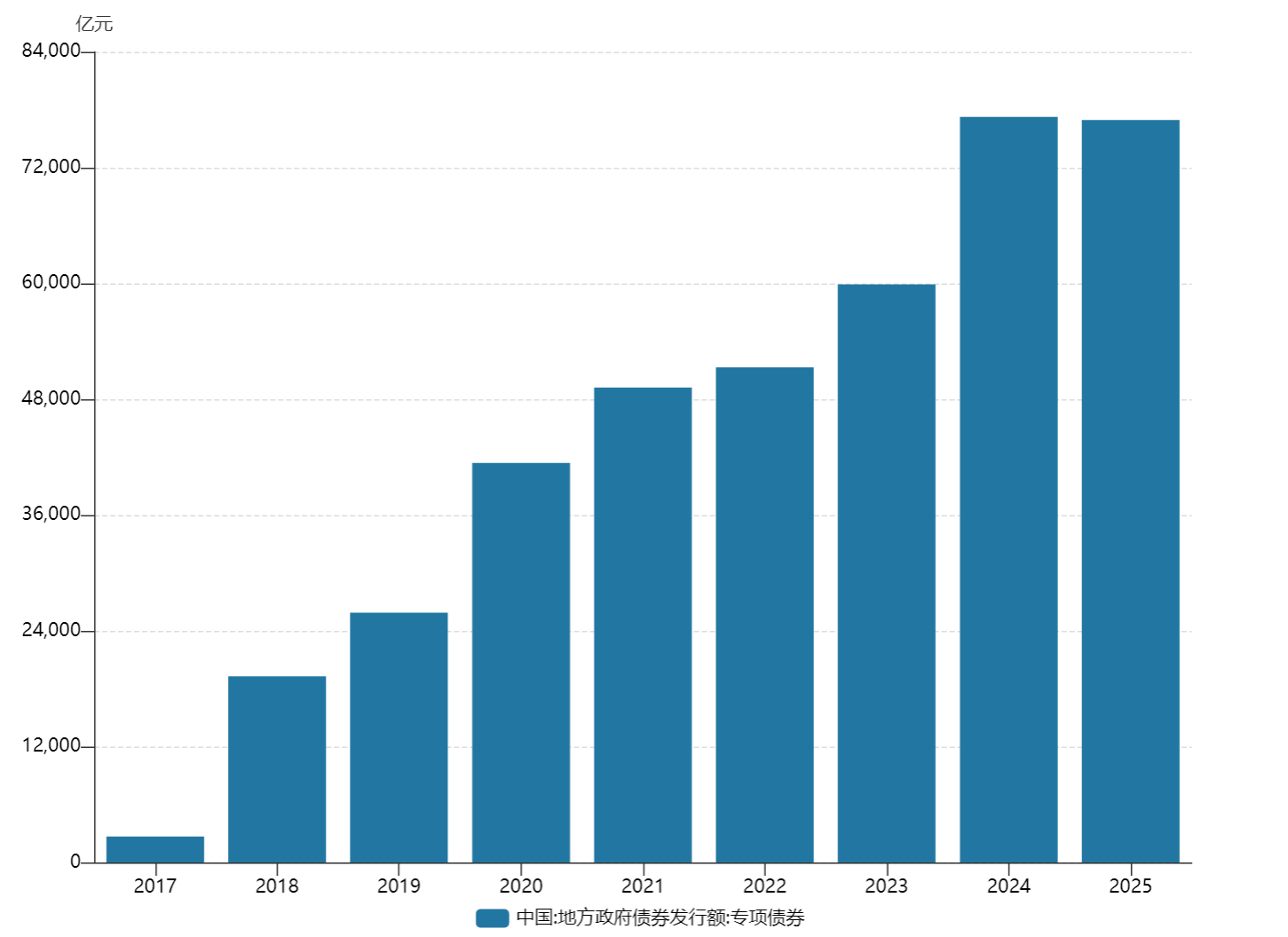
Core Viewpoint - The construction materials industry is experiencing a sustainable growth momentum due to unprecedented debt resolution actions, which are expected to improve market expectations and drive investment recovery in infrastructure and real estate sectors [1] Fiscal Perspective - The current debt resolution measures, including debt swaps and the expansion of special bonds, have systematically alleviated liquidity constraints for local governments, improving fiscal space for infrastructure investments [1] - Special bonds issued by local governments have been increasing annually since 2017, with projections for 2024 and 2025 to exceed 7 trillion yuan, and the total issuance in 2025 expected to surpass 10 trillion yuan for the first time in history [1][4] Infrastructure Investment - The issuance of special bonds is expected to lead to a significant increase in construction activity in transportation, municipal, and water conservancy sectors, with a projected surge in physical work volume in the first half of 2025 [4][6] - Despite a decline in infrastructure investment growth, the sector still holds a significant share of fixed asset investment, indicating its critical role in the overall economy [4] Policy Transition - The policy environment is shifting from "debt replacement" to "investment stimulation," which is likely to further enhance demand for construction materials [5] Demand Dynamics - The demand structure for construction materials is changing, with traditional materials benefiting from infrastructure support and renovation materials gaining from the demand for upgrading existing properties [6] - The dual drivers of infrastructure and real estate are expected to provide a solid foundation for the construction materials sector during this debt resolution cycle [6] Profitability and Market Outlook - The profitability of the cement industry is recovering, with expectations of improved margins due to supply-side adjustments and a favorable demand outlook from real estate policies [8] - The construction materials sector is characterized by high cash flow and potential for stable dividends, with forecasts indicating overall profit recovery by 2026 [8] Investment Opportunities - The construction materials ETF (159745) tracks the performance of the construction materials index, providing investors with a tool to efficiently allocate resources in the sector [8][11] - The sector is viewed as a core cyclical investment opportunity, especially in the context of a market shift towards undervalued, high-dividend stocks [11]


构筑通道 开拓新局
Shan Xi Ri Bao· 2026-02-12 00:59
Core Viewpoint - The article emphasizes that Shaanxi is overcoming its limitations in openness to drive high-quality development and become a model for the western region of China [2][4][16]. Group 1: Policy Empowerment and Support - Shaanxi is actively implementing policies to support foreign trade enterprises, with the Chen Cang District providing nearly 2 million yuan in subsidies to help businesses expand internationally [3]. - The province has established a comprehensive support system that addresses key challenges faced by enterprises in logistics and customs, enhancing their ability to navigate international markets [3][4]. - The "Shan Yao Global" initiative has facilitated significant cooperation agreements, including a total of 160 million yuan in contracts with clients from Poland, Turkey, India, and Kazakhstan [3]. Group 2: Trade and Market Expansion - Shaanxi's foreign trade resilience has improved, with the province's import and export volume reaching 244.51 billion yuan in 2025, a year-on-year increase of 7.5%, surpassing the national growth rate of 4.6% [4]. - The province is shifting from simple product sales to brand and model exports, as seen with companies like Yalan Bedding, which has established a presence in the high-end hotel market in South Korea [4]. Group 3: Infrastructure and Logistics Development - The operation of the China-Europe Railway Express (Xi'an) has significantly enhanced Shaanxi's logistics capabilities, with a total of 6,037 trains operated in 2025, marking a 21.1% increase [9]. - The establishment of the China-Xi'an Kazakhstan terminal has reduced port transfer times from several days to just 3 hours, boosting the number of cross-Caspian trains [9][10]. - Shaanxi is developing a multi-modal transport network that integrates land and air logistics, facilitating smoother domestic and international circulation [10]. Group 4: Tourism and Cultural Exchange - In 2025, Shaanxi received 926,700 inbound tourists, a remarkable increase of 98.14%, highlighting the province's strong international appeal in tourism [12]. - The expansion of the "visa-free" policy has contributed to the rising popularity of Shaanxi as a travel destination [12]. Group 5: Innovation and Economic Growth - Shaanxi is focusing on building a multi-layered open platform system, including free trade zones and comprehensive bonded zones, to enhance its open economy [13][14]. - The province's free trade zones account for 70% of its total import and export trade, despite occupying less than 1/1700 of the land area [15]. - The provincial government aims to achieve greater breakthroughs in reform and high-level openness, positioning Shaanxi as a key player in the global economy [15][16].
观点全追踪(2月第5期):晨会精选-20260212
GF SECURITIES· 2026-02-11 23:31
Group 1: Industry Insights - The two-dimensional game market is expected to see a revival, as evidenced by the successful launch of "Arknights: Endfield," which generated over 1.2 billion CNY in revenue within two weeks globally. In the domestic market, PC revenue accounted for nearly 60%, while in overseas markets, PC and PS platforms combined for 70%, indicating significant demand in the global two-dimensional market [3] - The building materials sector is projected to continue its downward trend from 2021 to 2024, with a potential bottoming out in 2024-2025, followed by a recovery in 2026. The construction materials industry has experienced a lesser decline in volume compared to real estate, with a cumulative drop of 70% in new construction, 51% in sales, and 40% in completed areas from 2021 to 2025. Cement and glass production saw declines of 28% and 4%, respectively [3] - Price declines in the building materials sector have accompanied volume drops, but a stabilization in prices is expected in 2024 as supply improves. Companies like Sanke Tree are anticipated to see performance turning points in 2025, with more leading companies expected to follow suit in 2026 as volume and price expectations improve [3] Group 2: Statistical Data - From 2021 to 2025, the cumulative decline in production for various building materials includes plastic pipes (4%), gypsum boards (15%), architectural coatings (19%), sanitary ceramics (19%), tiles (28%), and waterproof materials (38%) [3] - The report highlights that the building materials sector has already passed its most challenging phase and is awaiting the final wave of volume impact, suggesting a potential for recovery in the near future [3]
“双碳”政策专家电话会
2026-02-11 15:40
Summary of Conference Call on Carbon Neutrality and Chemical Industry Industry Overview - The conference focused on the chemical industry in the context of China's dual carbon goals, specifically the 14th Five-Year Plan (14th FYP) and the transition towards carbon neutrality by 2060 [1][2]. Key Points and Arguments 1. **Carbon Peak and Neutrality Goals**: - China aims to reach carbon peak by 2030 and achieve carbon neutrality by 2060, with a specific target of reducing total carbon emissions by 7% to 10% after reaching the peak [2][4]. - The transition from intensity-based targets to total emission reduction is a significant shift in policy [4][6]. 2. **Policy Implementation**: - The 14th FYP emphasizes a comprehensive green transformation across all industries, moving from energy consumption control to carbon emission control [5][6]. - A carbon emission budget mechanism will be established at provincial and municipal levels, with specific targets allocated to each region [6][7]. 3. **Inclusion of Industries in Carbon Market**: - Currently, eight major industries, including power, cement, aluminum, and steel, are included in the carbon market, which accounts for 65% of national carbon emissions [7][8]. - By 2027, additional sectors such as petrochemicals, chemicals, paper, and construction materials will be integrated into the carbon market [7][8]. 4. **Carbon Management and Monitoring**: - Companies will be required to incorporate carbon management into their operational frameworks, with carbon emissions data becoming a prerequisite for project approvals [8][9]. - A product carbon footprint database will be established to track and certify carbon emissions associated with products [9][10]. 5. **Development of Zero-Carbon Facilities**: - The government plans to establish 100 national-level zero-carbon parks by 2030, with ongoing efforts to create zero-carbon factories in high-emission industries [9][10]. 6. **Market Mechanisms and Cost Implications**: - The introduction of paid carbon allowances is anticipated, with a gradual shift from free allocation to auction-based distribution [11][12]. - The carbon market will also facilitate voluntary emission reduction projects, allowing non-regulated companies to participate [12][13]. 7. **Impact on Chemical Industry**: - The chemical industry faces significant pressure due to its reliance on coal, which constitutes over 40% of its emissions [16][17]. - The projected carbon emissions from the chemical sector are expected to increase slightly, posing challenges for compliance with future carbon reduction targets [16][17]. 8. **Technological Innovations**: - The industry is encouraged to adopt renewable resources and improve production processes to reduce carbon emissions, including the use of Carbon Capture, Utilization, and Storage (CCUS) technologies [17][18]. Additional Important Content - The transition to a carbon-neutral economy will require a comprehensive understanding of the carbon footprint across various production processes, particularly in the chemical sector [17][18]. - The government is expected to monitor and adjust carbon emission allowances based on real-time data, although the current monitoring system is still under development [45][46]. - The dual carbon goals will necessitate a balance between maintaining industrial competitiveness and achieving environmental sustainability, particularly in coal-dependent sectors [38][39]. This summary encapsulates the critical discussions and insights from the conference call regarding the implications of China's carbon neutrality goals on the chemical industry and related sectors.