
食品

Search documents
巴菲特,突发!
中国基金报· 2025-08-02 13:31
Group 1 - The core viewpoint of the article is the analysis of Berkshire Hathaway's second-quarter financial results, highlighting significant declines in net earnings and operational profits [2][6][15]. Group 2 - In the second quarter of 2025, Berkshire Hathaway reported revenues of $92.515 billion, a slight decrease from $93.653 billion in the same period last year. Net earnings attributable to shareholders fell to $12.370 billion, down 59% from $30.348 billion year-over-year [6]. Group 3 - Operating earnings, which come from wholly-owned subsidiaries including insurance and railroad businesses, decreased by 4% to $11.160 billion. This decline was primarily due to a drop in insurance underwriting profits, although profits from railroads, energy, manufacturing, services, and retail showed growth compared to the previous year [7][8]. Group 4 - Berkshire Hathaway recorded a $3.8 billion impairment on its investment in Kraft Heinz, reducing the book value of its holdings to $8.4 billion. Since the merger of Kraft and Heinz in 2015, the stock price has dropped by 62%, while the S&P 500 has increased by 202% during the same period [9][10]. Group 5 - Cash reserves slightly decreased from $347 billion at the end of March to $344.1 billion, marking the first decline in three years. This reduction occurred as the company struggled to find suitable investment opportunities [13]. Group 6 - Berkshire Hathaway has been a net seller of stocks for the 11th consecutive quarter, and despite a more than 10% drop from historical highs, the company did not repurchase any shares in the first half of 2025. The top five holdings as of the end of the second quarter were American Express, Apple, Bank of America, Coca-Cola, and Chevron [15]. Group 7 - The company expressed concerns regarding the potential impacts of Trump's tariffs on its various businesses, indicating that changes in international trade policies could adversely affect most, if not all, of its operational businesses and stock investments, significantly impacting future performance [16].


超百家泰国企业将赴约第22届东博会
Xin Lang Cai Jing· 2025-08-02 11:21
Core Viewpoint - Thailand is actively preparing for participation in the 22nd China-ASEAN Expo (CAEXPO) to be held in Nanning, Guangxi in September, with 109 Thai companies confirmed to exhibit their products across various sectors [1] Group 1: Participation Details - A total of 109 Thai enterprises have confirmed their participation in the upcoming CAEXPO [1] - The exhibition will cover multiple sectors including food, agricultural products, household goods, and beauty care [1] - The total exhibition area allocated for Thai companies is 2,000 square meters [1]
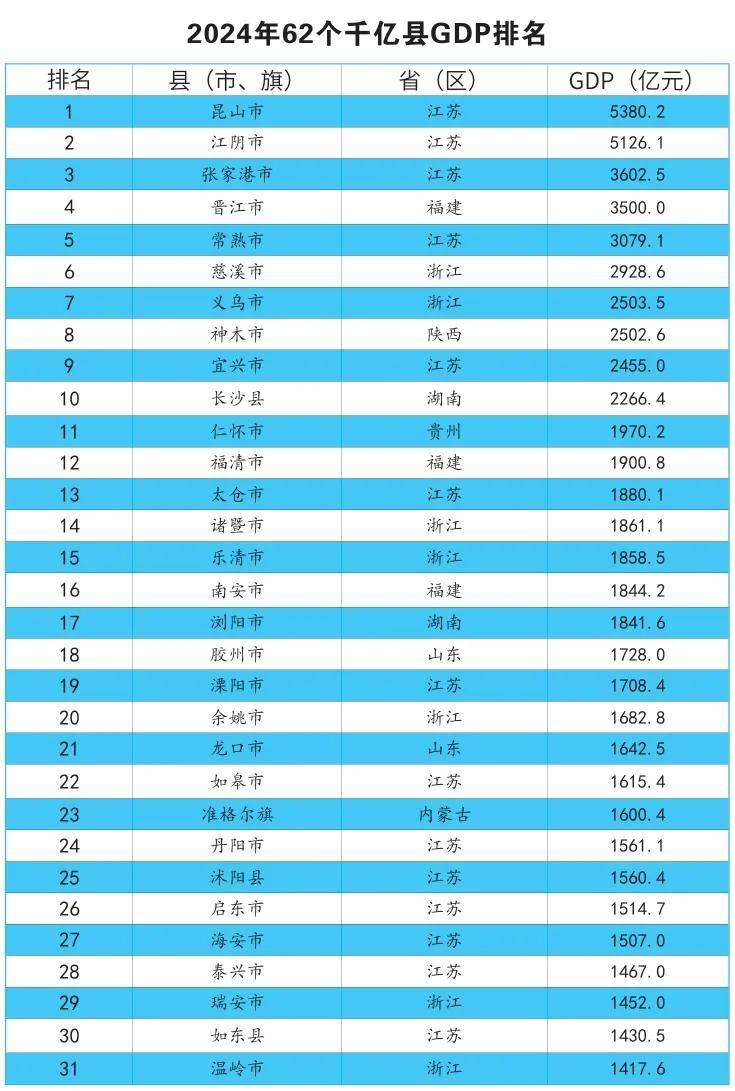
全国“千亿县”GDP排名来了!谁在领跑?谁新进榜单?
Sou Hu Cai Jing· 2025-08-02 05:18
Core Insights - The "billion-county" phenomenon plays a significant role in China's economy, contributing 7.8% of the national GDP while occupying only 1.3% of the land area [1][8]. Group 1: Growth and Distribution of Billion-Counties - The number of billion-counties in China has increased from the first three in 2007 to 62 by 2024, indicating a steady growth trend [2][4]. - The distribution of these counties shows a pyramid structure, with two counties (Kunshan and Jiangyin) exceeding 500 billion yuan in GDP, five counties surpassing 300 billion yuan, and 52 counties reaching 100 billion yuan [4][6]. - The eastern region is highly concentrated with 46 billion-counties, while the central and western regions are seeing a rise in their numbers, reflecting a shift in economic vitality [3][6]. Group 2: Economic Contributions and Characteristics - The 62 billion-counties collectively contributed over 10 trillion yuan to the national economy in 2024, showcasing their economic strength [8]. - These counties are characterized by a transformation in industrial structure, with traditional industries upgrading and new industries emerging rapidly [8][10]. - The counties are increasingly focusing on digital transformation and green development, enhancing their competitiveness [8][14]. Group 3: Industrial Development and Innovation - Many billion-counties are actively upgrading traditional industries while simultaneously developing new sectors, such as digital economy and clean energy [10][12]. - For instance, Jiangsu's Changshu is undergoing a digital revolution in its garment industry, while Shandong's Jiaozhou is promoting digital transformation in the steel industry [8][9]. - The counties are also forming industrial clusters to enhance competitiveness, with examples like Fujian's Fuzhou focusing on electronic information and chemical materials [13][22]. Group 4: Regional Integration and Collaboration - Billion-counties are integrating into urban agglomerations, leveraging the economic strength of surrounding cities to accelerate their growth [17][18]. - For example, Kunshan benefits from its proximity to Shanghai, becoming a hub for high-end industries [18]. - Collaborative efforts between neighboring counties, such as Cixi and Yuyao, are fostering regional economic synergy through complementary industries [19][25]. Group 5: Strategic Insights for Development - The success of billion-counties highlights the importance of leveraging local resources for industrial transformation and capturing emerging market opportunities [21][22]. - Building strong industrial clusters around leading enterprises is crucial for enhancing competitiveness and driving economic growth [22][23]. - The role of local governance, entrepreneurial spirit, and skilled labor is essential in fostering a conducive environment for economic development [24][25].
花样翻新的“对等关税”最先伤到谁?
2 1 Shi Ji Jing Ji Bao Dao· 2025-08-02 04:30
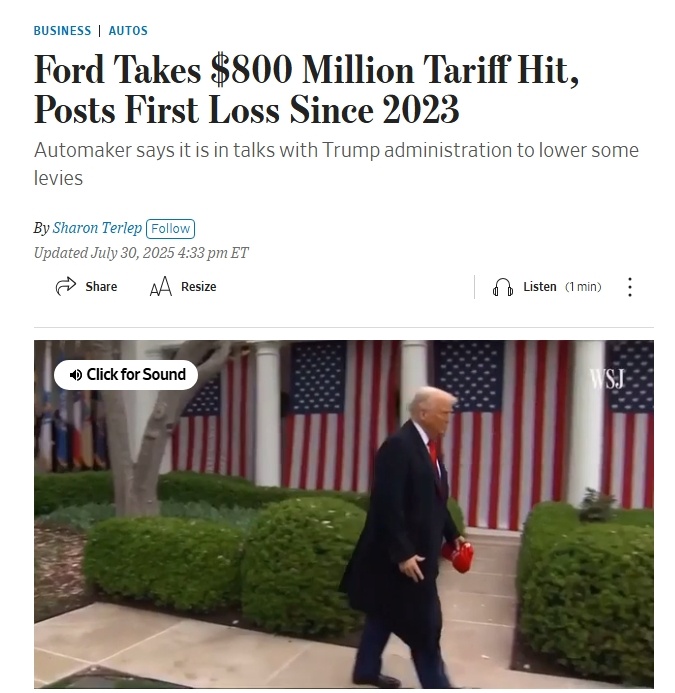
Group 1: Impact of Tariffs on Automotive Industry - Ford Motor Company reported its first quarterly loss of 2023 in Q2, with a loss of $800 million and a net profit decline of $36 million, attributing the losses to the unilateral tariff policy [1] - General Motors, the largest automaker in the U.S., experienced a one-third drop in profits in Q2, resulting in losses exceeding $1 billion, and forecasts a potential annual profit reduction of $4 billion to $5 billion due to tariffs [4] Group 2: Price Increases Across Industries - U.S. wholesalers and distributors plan to collectively raise prices in response to tariff impacts, with the industry valued at $8.2 trillion being identified as a major victim of the trade policy [7] - Procter & Gamble announced a 5% price increase on about a quarter of its products starting in August to offset tariff-related cost pressures, despite significant domestic investments [8] - Food giants like Mondelez and Hershey warned of potential retail price changes for consumer goods, with Hershey's tariff costs reaching approximately $15 million to $20 million in Q2, leading to price adjustments and product downsizing strategies [10]
上半年越南自美进口商品金额同比增长24.8%
Shang Wu Bu Wang Zhan· 2025-08-02 04:27
Group 1 - Vietnam imported goods worth 8.8 billion USD from the United States in the first half of 2025, representing a year-on-year increase of 24.8% [1] - The largest category of imports from the U.S. was computers, electronic products, and components, totaling 2.5 billion USD, which is a 35.9% increase and accounts for 29% of total imports [1] - Cotton imports reached 799.4 million USD, showing a significant year-on-year growth of 79.3%, making up 9% of total imports [1] Group 2 - Notable month-on-month increases in import values were observed in several categories, including plastic raw materials (up 48.8%), fruits and vegetables (up 43.7%), wood and wooden products (up 75.5%), precious stones and metals (up 55.4%), and candy and confectionery products (up 690.3%) [1]
朱啸虎:现在只有两类人能融到资
创业家· 2025-08-01 10:13
Core Viewpoint - The article emphasizes that only two types of individuals can secure funding in the current market: "White Horses" who have impressive resumes and align with trending sectors, and "Black Horses" who focus on solid business practices and product validation [2][4][6]. Group 1: Types of Entrepreneurs - "White Horses" are characterized by their strong backgrounds and ability to present compelling narratives [2][3]. - "Black Horses" are those who build their companies steadily, proving their products and market viability before seeking investment [4][5]. Group 2: Learning Opportunity in Japan - A learning trip to Japan is scheduled from September 21 to September 26, focusing on the operational secrets behind enduring Japanese brands [7]. - The program aims to explore how Japan has nurtured leading companies despite low growth, aging population, and other challenges [8]. Group 3: Insights on Japanese Brands - The article outlines three core philosophies of resilient Japanese brands: supply chain-driven private label (PB) products, continuous iteration of key products, and defining lifestyles that resonate emotionally with consumers [14]. - Examples include Kobe Bussan's integration of supply chain and product development, and Nitori's application of automotive supply chain standards to furniture [16][26]. Group 4: Consumer Behavior and Market Trends - The article discusses the shift in consumer behavior towards rational and emotional purchasing, highlighting the importance of understanding Japanese market evolution as a predictive model for China's future consumer landscape [12][18]. - It notes that the failure of traditional traffic-driven strategies will lead to missed opportunities in engaging with new consumer generations [12]. Group 5: Event Details and Structure - The event includes various expert sessions and company visits, featuring insights from industry leaders such as 7-11 and Shiseido, focusing on their successful strategies in the current market [23][28]. - The program is designed for 35 participants, specifically targeting company founders, with a comprehensive itinerary that includes lectures, company visits, and practical learning experiences [31].

莲花控股召开2025年年中工作会议
Zheng Quan Ri Bao Wang· 2025-08-01 07:47
Core Insights - Lianhua Holdings has implemented a "Brand Revival Strategy" in the first half of the year, focusing on innovation in new models, mechanisms, products, and channels to strengthen its core business [1] - The company aims to optimize product structure, enhance business collaboration, and deepen reforms in the second half of the year [1] - The chairman emphasizes a dual-driven strategy of consumption and technology, focusing on key areas such as seasoning products and smart materials [2][3] Group 1 - The company has achieved significant breakthroughs in its core business by continuously expanding its foundational advantages and innovating in various operational aspects [1] - The CEO outlined three key areas of focus for the second half: optimizing product structure, enhancing business collaboration across various channels, and deepening reforms to create a more efficient supply chain [1] - The chairman highlighted the importance of a dual-driven strategy that combines consumption and technology, with a focus on specific product categories and innovation in business models [2] Group 2 - The company plans to strengthen its existing advantages in the seasoning product sector while also innovating in technology-related fields such as computing power and semiconductor materials [2] - A strategic center will be established to integrate consumption and technology, enhancing collaboration across various functions and improving innovation across multiple dimensions [2] - The company aims to develop a unique corporate culture that supports the implementation of its dual-driven strategy, creating a conducive environment for growth [3]

国证国际港股晨报-20250801
Guosen International· 2025-08-01 06:51
Core Viewpoints - The market is adopting a wait-and-see attitude due to trade policy uncertainties, with the Hang Seng Index falling below 25,000 points, down 1.6% to 24,773.33 points [2] - Southbound funds have seen a net inflow of HKD 13.126 billion, maintaining a level above HKD 8 billion for five consecutive days [2] Market Performance - The major indices in the Hong Kong stock market continued to decline, with the Hang Seng Index, the Hang Seng China Enterprises Index, and the Hang Seng Technology Index all experiencing losses [2] - The total market turnover increased to HKD 320.633 billion, with the short-selling amount rising to HKD 51.314 billion, accounting for 17.607% of the total turnover [2] Sector Analysis - The luxury goods, Hong Kong retail, and local consumption sectors showed significant declines, indicating pressure on consumer spending and related company performance [4] - Prada's stock dropped 8% following its H1 2025 financial report, leading the sector's decline, while Chow Tai Fook and Samsonite fell 4.5% and 2.9%, respectively [4] - Other consumer-related stocks, including beer, home appliances, food, and automotive sectors, also performed poorly, reflecting a general decline in consumer confidence [4] Electricity Sector Insights - In June, the total electricity consumption in society grew by 5.4% year-on-year, with a notable increase in the third sector and residential electricity consumption [10] - The cumulative electricity consumption from January to June reached 48,418 billion kilowatt-hours, with a year-on-year growth of 3.7% [10] - High-tech industries showed a higher electricity consumption growth rate, with the new energy vehicle manufacturing sector growing by 28.7% year-on-year [11] Investment Recommendations - The report suggests that investors consider undervalued, high-dividend, and fast-growing electricity operators such as China Resources Power and China Power [13]
2025年5月美国行业库存数据点评:从库存和关税因素看美铜价格波动
CMS· 2025-08-01 06:43
Overall Inventory Cycle - In May, the total inventory in the U.S. increased by 2.62% year-on-year, down from 3.15% in the previous period[12] - Sales in May rose by 3.30% year-on-year, compared to 3.68% previously[12] - The U.S. is confirmed to be entering an active destocking phase, with a significant import surge occurring from November 2024 to March 2025[12] - A brief replenishment demand is expected in June and July, after which active destocking will continue[12] Industry Inventory Cycle - Six out of fourteen major industries are in active destocking as of May, including oil, gas, chemicals, transportation, automotive parts, textiles, and food[19] - The historical percentile for overall inventory in May is 32.4%, with construction materials at 83.6% and chemicals at 69.3%[19] - The first round of excess imports is estimated at $180 billion and the second at $100 billion, totaling $280 billion, which may be exhausted by November[12] - Recent rapid declines in copper prices are attributed to a 50% tariff on copper products while exempting raw materials, disrupting supply and demand dynamics[13] Risk Factors - The potential for U.S. economic fundamentals and policies to exceed expectations poses a risk to inventory and pricing stability[8]
调查显示日本8月将有逾1000种食品涨价
Yang Shi Xin Wen· 2025-07-31 15:32
Core Insights - A recent survey in Japan indicates that over 1,000 food items will see price increases in August 2023, with an average rise of 11% [1] - This wave of food price hikes is reportedly more aggressive than last year's, with an estimated total of around 20,000 food items expected to increase in price throughout the year [1]