
白酒

Search documents
A股突然降温!融资收紧保证金调整,是打压市场还是保护散户?
Sou Hu Cai Jing· 2026-01-17 10:21
Core Viewpoint - The adjustment of the financing margin ratio from 80% to 100% by the Shanghai, Shenzhen, and Beijing stock exchanges aims to reduce excessive leverage in the A-share market, which has seen record-high trading volumes and margin balances, thereby ensuring market stability and protecting investors' rights [1][15]. Group 1: Policy Changes and Market Reactions - The new financing margin ratio will take effect on January 19, significantly reducing investors' new financing capabilities and directly lowering the overall leverage level by 20% [4][6]. - Following the announcement, the A-share market experienced a sharp decline, with major indices turning negative and significant sell orders observed in heavyweight stocks, such as China Merchants Bank with over 6.5 billion yuan in sell orders [1][4]. - The adjustment is a response to the overheated margin trading environment, with the A-share margin trading volume reaching a record 427.2 billion yuan on January 12 and the margin balance exceeding 2.7 trillion yuan on January 15 [1][12]. Group 2: Impact on Investors and Market Dynamics - The increase in the financing margin ratio raises the entry barrier for retail and aggressive investors, making them more cautious about leveraging their investments [6][17]. - The "new and old separation" rule allows existing financing contracts to continue under the previous 80% margin ratio, providing a buffer period for the market to adjust without forcing existing investors to add margin or face liquidation [6][10]. - The current leverage level in the A-share market is relatively low, with margin balances accounting for only 2.56% of the A-share market's circulating value, indicating that the market is not in a bubble [12][15]. Group 3: Long-term Market Outlook - The adjustment is seen as a moderate normalization of policy rather than a drastic measure to suppress the market, aiming for a sustainable "slow bull" market rather than a speculative "crazy bull" [10][15]. - The regulatory intent is to guide the market from being driven by capital to being driven by performance, fostering a more rational investment environment [14][17]. - Analysts believe that while high-volatility sectors may face profit-taking pressures, blue-chip stocks will be less affected, and the overall market is unlikely to experience systemic risks [12][15].


估值周报:最新A股、港股、美股估值怎么看?-20260117
HUAXI Securities· 2026-01-17 09:04
Group 1: A-share Market Valuation - The current PE (TTM) of the A-share market is 17.02, with a median of 13.55 and a maximum of 30.60[9] - The PE (TTM) excluding financial and oil sectors is 27.80, indicating a higher valuation compared to the overall market[6] - The Shanghai Composite Index has a PE (TTM) of 14.66, while the ChiNext Index stands at 39.66[9] Group 2: Hong Kong Market Valuation - The Hang Seng Index has a current PE (TTM) of 12.20, with a median of 10.32 and a maximum of 22.67[58] - The Hang Seng Technology Index shows a PE (TTM) of 24.11, reflecting a significant valuation compared to other sectors[62] - The Hang Seng Index's PE has fluctuated between a minimum of 7.36 and a maximum of 22.67 since 2010[58] Group 3: U.S. Market Valuation - The S&P 500 Index has a current PE (TTM) of 29.62, with a median of 21.18 and a maximum of 41.99[82] - The NASDAQ Index shows a PE (TTM) of 42.02, indicating a high valuation compared to other indices[90] - The Dow Jones Industrial Average has a PE (TTM) of 30.38, with a historical maximum of 34.70[94] Group 4: Sector Valuation Insights - Non-bank financials, food and beverage, and banking sectors have lower PE ratios, indicating potential undervaluation[24] - The technology sector, including computing and electronics, shows higher PE ratios, suggesting overvaluation[24] - The consumer sector, particularly in liquor and pharmaceuticals, has a PE of 18.29 and 38.70 respectively, indicating strong market interest[34]
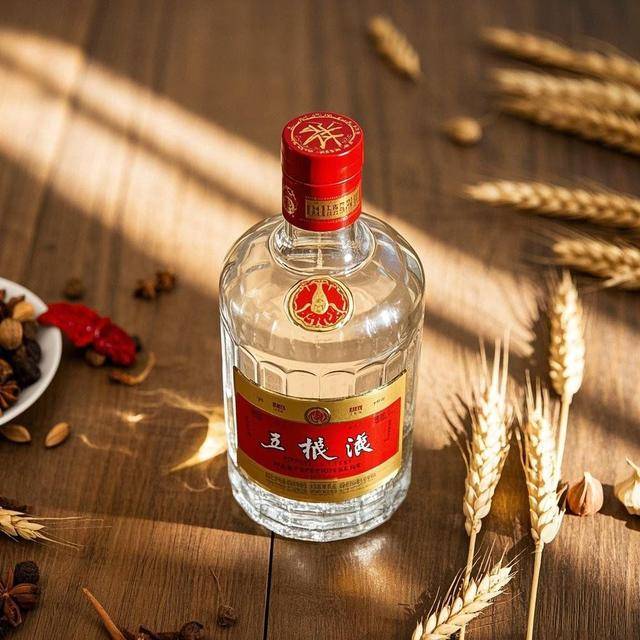
五粮液危机:高端市场被蚕食,年轻人离场,新赛道成最后斩杀线
Sou Hu Cai Jing· 2026-01-17 08:38
Core Viewpoint - Wuliangye is exploring new market opportunities rather than competing directly with Moutai, aiming to adapt to changing consumer preferences and capture the younger demographic. Group 1: Market Dynamics - The Chinese liquor market is experiencing a stark contrast, with Moutai achieving significant online sales while Wuliangye faces declining interest and competition from rivals [1] - Changing consumer habits are shifting away from high-end liquor for social occasions, with younger consumers preferring lower-alcohol beverages and foreign options like whiskey [3][5] Group 2: Strategic Shifts - Wuliangye recognizes that competing in the high-end segment against Moutai is not sustainable, as the market for premium liquor remains stagnant while younger consumers are drawn to new products [7] - The company is innovating with its low-alcohol product "Yijian Qingxin," which has gained popularity among young consumers, indicating a willingness to adapt to new consumption trends [9] Group 3: International Opportunities - There is significant market potential in the imported liquor segment, particularly whiskey, where domestic brands have limited presence [11] - Wuliangye has the resources to pursue international partnerships and acquisitions, which could enhance its product lineup and open up new markets [12] Group 4: Balancing Tradition and Innovation - While exploring new markets is essential, maintaining stability in traditional business is crucial for Wuliangye to have the confidence to innovate [14] - The future direction of the liquor industry will be influenced by younger consumers who are less attached to traditional liquor, making it vital for Wuliangye to invest in this demographic [16]

美联储政策转向信号!A股换手率280%显韧性,机构呼吁引入长期资金稳市
Sou Hu Cai Jing· 2026-01-17 05:58
Group 1 - The Federal Reserve maintained the federal funds rate at 4.25%-4.5% during its first meeting in 2026, while adjusting the balance sheet reduction pace and lowering economic growth expectations to below 2%, alongside raising inflation expectations to above 3% [3] - Market expectations for future rate cuts have strengthened, with traders anticipating two rate cuts by the end of July 2026, leading to a drop in U.S. Treasury yields and a rise in gold prices, reflecting increased global liquidity expectations [3] - There are internal divisions within the Federal Reserve regarding the path of rate cuts, with Goldman Sachs predicting two cuts to 3.5%-3.75% in 2026, while some officials emphasize the need for tangible progress on inflation or weakness in the labor market before policy adjustments [3] Group 2 - A-share turnover rate reached 280%, with companies like Yisou Technology experiencing significant speculative trading, driven by the hype around the reality world asset tokenization concept, resulting in a 38.22% price surge [6] - High turnover rates can indicate both speculative activity and structural opportunities, as seen with companies like New Times reaching similar turnover rates, where performance improvements or policy benefits could lead to significant investment opportunities [7] - The Central Financial Office and the China Securities Regulatory Commission have issued guidelines to encourage long-term capital to enter the market, focusing on enhancing the quality of listed companies and promoting the development of equity funds [8] Group 3 - The expectation of a weaker dollar due to potential Fed rate cuts is driving global capital towards undervalued markets, with A-shares and Hong Kong stocks being viewed as core investment targets [11] - As of August 2024, long-term funds held 21.4 trillion yuan of A-share circulating market value, a 32% increase since the end of the 13th Five-Year Plan, indicating a growing proportion of long-term capital in the market [12] - Domestic fiscal policies, including an increase in the fiscal deficit rate and expanded local bond issuance, combined with expectations of monetary easing, are creating a dual effect of increased liquidity and economic recovery [13] Group 4 - Investment strategies should balance offensive and defensive positions, focusing on sectors like AI, robotics, and semiconductor equipment, while also considering consumer recovery in sectors such as home appliances and automobiles [14] - Risk management strategies include maintaining a total position of 60%-65%, with no single sector exceeding 30%, and employing hedging tools like index futures and options to mitigate systemic risks [14] - Investors should closely monitor Fed policy changes, domestic fiscal and monetary policies, and industry data to adjust strategies flexibly [14] Group 5 - The shift in Fed policy signals and the high turnover rate in A-shares reflect a new global capital flow pattern, with A-shares establishing an independent market moat through the introduction of long-term funds and improved investor structure [16] - There is a need for investors to seize structural opportunities in sectors like technology and consumer recovery while enhancing risk control awareness to achieve stable returns [16]
陈光明一把捐了1.3亿!最新发声
Zhong Guo Ji Jin Bao· 2026-01-17 03:09
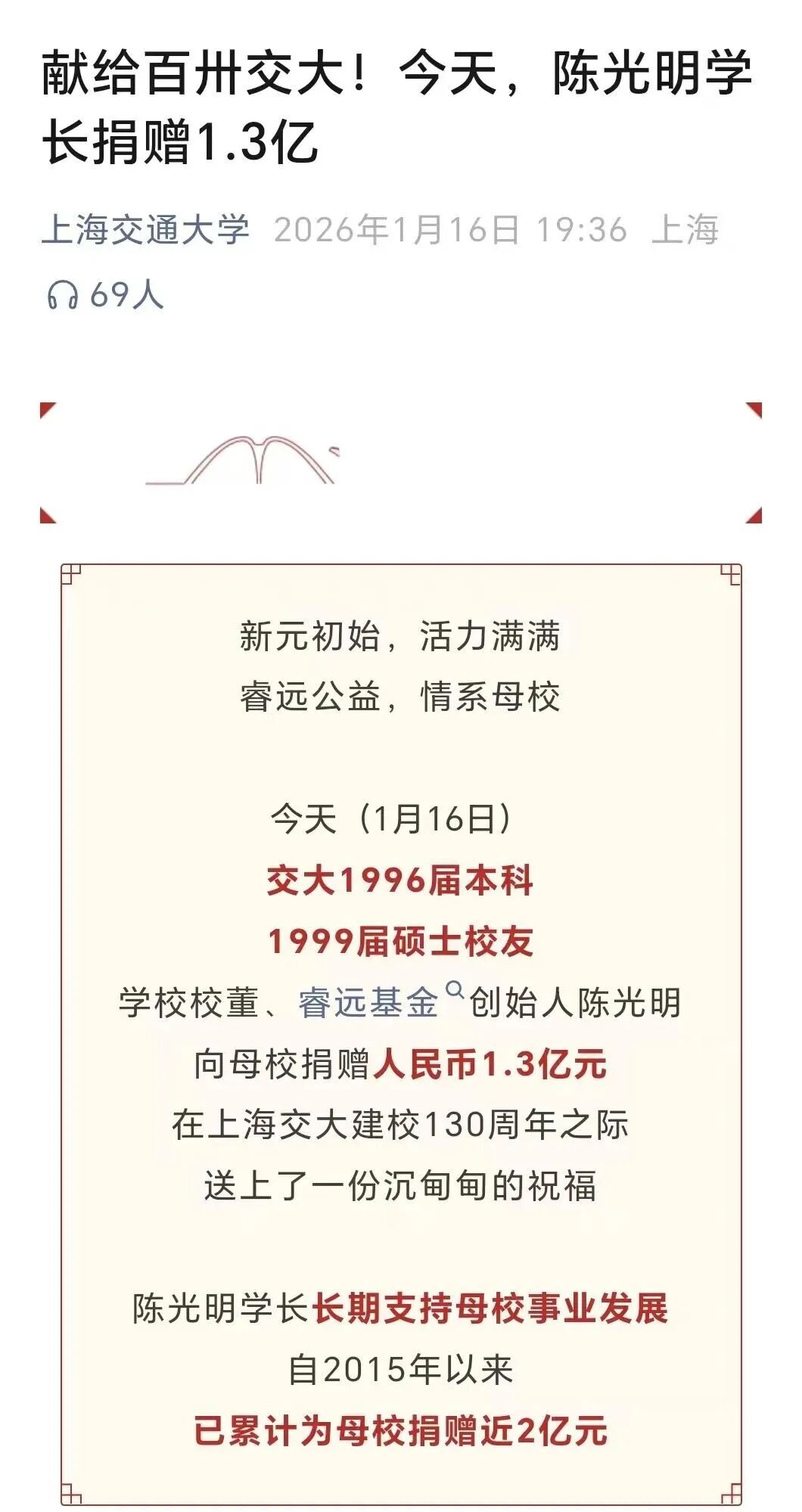
Core Viewpoint - Chen Guangming, founder of Ruifeng Fund, donated 130 million RMB to Shanghai Jiao Tong University, supporting medical assistance, scientific innovation, and talent cultivation as part of the university's 130th anniversary celebration [5][6]. Group 1: Donation Details - The donation of 130 million RMB will specifically support the "Ruifeng Youth Science Award," aimed at facilitating young researchers and enhancing medical assistance, business innovation, and departmental development [5][6]. - Since 2015, Chen Guangming has donated nearly 200 million RMB to Shanghai Jiao Tong University, contributing to talent development and academic construction [8][7]. Group 2: Impact of Donations - The "Ruifeng Science Award" and "Ruifeng Youth Science Award" have been well-received, with numerous outstanding scientists and young scholars recognized, encouraging original research and innovation [8]. - The "Ruifeng Science Award" has been held for three consecutive years since its establishment in 2022, covering five major fields, including mathematics, engineering, and life sciences, with 13 distinguished scientists awarded to date [8]. Group 3: Broader Context - Other investors, such as Duan Yongping and Xie Huanyu, have also made significant donations to their alma maters, supporting talent cultivation and academic development [10][11]. - Duan Yongping has made multiple donations exceeding 1 billion RMB to various educational institutions, including Beijing Normal University and Zhejiang University, focusing on infrastructure and talent development [10].
甘肃皇台酒业股份有限公司 关于公司总经理、副总经理辞任暨聘任总经理、副总经理的公告
Zhong Guo Zheng Quan Bao - Zhong Zheng Wang· 2026-01-17 01:58
Core Viewpoint - Gansu Huangtai Liquor Co., Ltd. has announced the resignation and subsequent appointment of its senior management, which is expected to have no impact on the company's operations [2][3]. Group 1: Resignation of Senior Management - The company received written resignation reports from General Manager Dai Jichen and Vice General Manager Xiu Weihua, effective upon delivery to the board [2]. - Dai Jichen is resigning due to work arrangement adjustments and will be appointed as Vice General Manager, while Xiu Weihua is resigning as Vice General Manager to be appointed as General Manager [2]. Group 2: Appointment of Senior Management - The board approved the appointment of Xiu Weihua as General Manager and Dai Jichen as Vice General Manager, effective from the date of the board meeting [4]. - Both appointees possess the necessary professional capabilities and do not have any legal or regulatory disqualifications for holding senior management positions [4][8]. Group 3: Background of Appointees - Xiu Weihua, born in 1972, has extensive experience in marketing and management, having held various leadership roles in the liquor industry [7][8]. - Dai Jichen, born in 1975, holds a Master's degree in Business Administration and has served in multiple managerial positions, including as General Manager of the company [9].

酒价内参1月17日价格发布 核心产品显著下跌均价再创两月新低
Xin Lang Cai Jing· 2026-01-17 01:19
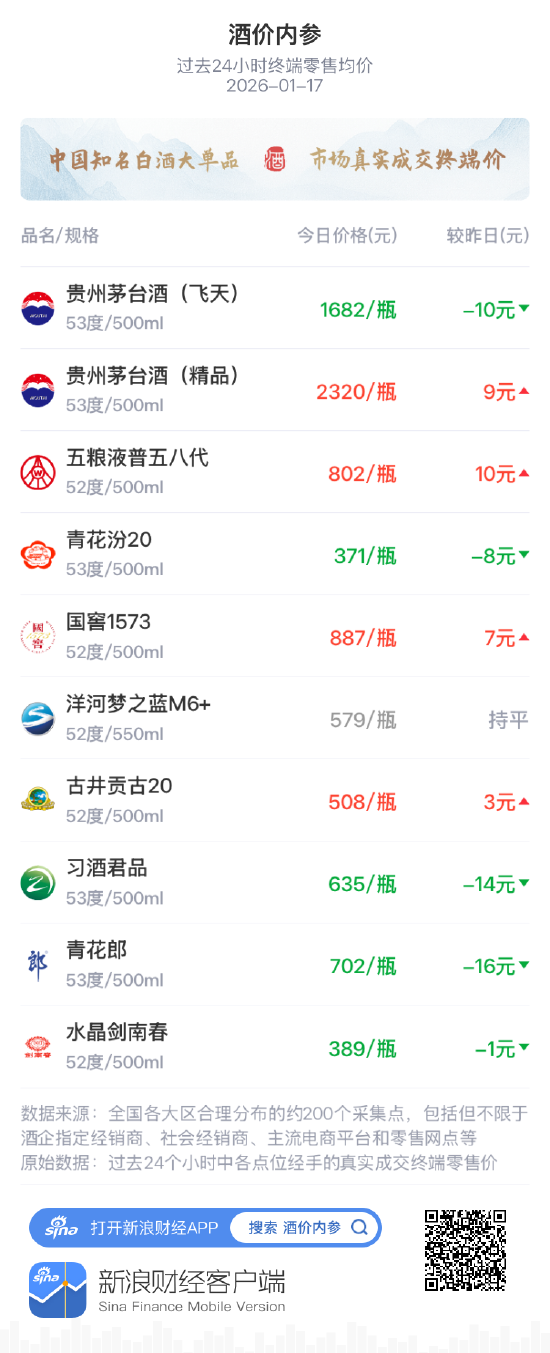
Core Viewpoint - The Chinese liquor market is experiencing a price decline, with the average retail price of the top ten products dropping to its lowest level in nearly two months, indicating a deepening market adjustment process [1][6]. Price Trends - The total retail price for a package of the top ten liquor products is 8,875 yuan, down 20 yuan from the previous day [1][6]. - Five products saw price declines, while four increased, with one remaining stable [4][9]. - The leading price drops were observed in Qinghua Lang and Xijiu Junpin, which fell by 16 yuan and 14 yuan per bottle, respectively [4][9]. - Feitian Moutai decreased by 10 yuan per bottle due to a loosening of the "price anchor" effect and increased supply from the iMoutai platform [4][9]. - In contrast, Wuliangye Pu Wuba generation rose by 10 yuan, while boutique Moutai and Guojiao 1573 increased by 9 yuan and 7 yuan, respectively [4][9]. Data Collection Methodology - The price data is sourced from approximately 200 collection points across various regions, including designated distributors, social distributors, e-commerce platforms, and retail outlets [5][10]. - The data aims to provide an objective and traceable representation of the market prices for well-known liquors [5][10]. Market Policy Changes - Recent policy changes allow certain tax-compliant enterprises to purchase Feitian Moutai at 1,499 yuan per bottle without needing to buy other non-standard products [10]. - This policy is seen as an optimization compared to last year, focusing on existing corporate group customers [10].

业绩承压倒逼转型,茅台直销破局,价格话语权重回手中
Sou Hu Cai Jing· 2026-01-17 01:18
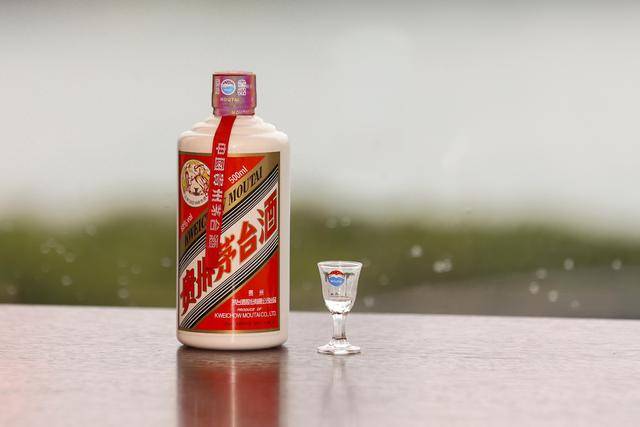
Core Viewpoint - The recent direct sales of Moutai's 53-degree 500ml Flying Moutai at a price of 1499 yuan through its self-operated app "i Moutai" have disrupted the traditional distribution model, leading to a significant change in the market dynamics and pricing strategies of the high-end liquor industry [3][21]. Group 1: Company Actions - Moutai has begun selling its core product, Flying Moutai, directly to consumers, bypassing traditional distributors who have held significant pricing power for decades [3][10]. - As of January 9, over 2.7 million new users registered on the i Moutai app, with more than 400,000 making purchases, indicating strong consumer demand [5]. - Moutai's strategy includes limiting purchases to six bottles per person per day, which is intended to control pricing and discourage hoarding [5][21]. Group 2: Impact on Distributors - The new direct sales approach has negatively impacted distributors, who previously relied on the price differences of Flying Moutai to maintain profitability [7][12]. - Distributors are now facing challenges as Moutai's fixed pricing undermines their ability to profit from markups, leading to some considering selling their stores [12][24]. - The traditional model where distributors had to purchase non-core products to obtain Flying Moutai allocations is being dismantled, reducing their inventory pressure [21][22]. Group 3: Market Dynamics - Moutai's actions have effectively eliminated the profit margins that resellers (often referred to as "scalpers") previously enjoyed by marking up prices [14][15]. - The introduction of a clear pricing structure for both current and aged Flying Moutai has removed the ambiguity in pricing, stabilizing the market [17][19]. - The overall market value of existing Flying Moutai is estimated at around 300 billion yuan, with Moutai's recent moves aimed at stabilizing this value and preventing panic selling among collectors [19][24]. Group 4: Industry Trends - Moutai's shift towards direct sales is seen as a potential trendsetter for the industry, with other high-end liquor brands like Wuliangye also optimizing their distribution channels [10][24]. - The move signifies a broader transformation in the marketing logic of high-end liquor, as companies seek to engage more directly with consumers [24].
茅台聚焦供应链发展三大方向:数字化、绿色化、现代化
Sou Hu Cai Jing· 2026-01-16 18:19
Core Viewpoint - Moutai Group is focusing on three main directions for its supply chain: digital upgrade, green transformation, and modernization to build a more competitive and resilient supply chain system [2][3] Group 1: Supply Chain Digitalization and Risk Management - The company aims to strengthen supply chain operations by enhancing predictive execution levels and establishing a digital linkage between procurement plans and production demands [2] - A risk management mechanism will be implemented, featuring a multi-track strategy of "physical buffering + relationship backup + capability co-construction" to cultivate a diverse supplier base [2] - Compliance management will be emphasized to ensure a solid foundation for development, integrating clear vendor relationships into supplier management [2] Group 2: Quality Management and Supplier Stability - Moutai will develop a comprehensive supplier lifecycle management system to optimize its supplier database and implement a digital evaluation system for suppliers [2] - The company plans to enhance the construction of raw material bases to ensure stable and traceable sources of high-quality materials [2] - Quality control measures will be advanced through training and guidance to help suppliers establish risk prevention mechanisms [2] Group 3: Modern Supply Chain Management for High-Quality Development - The company will deepen green supply chain construction by integrating green evaluation standards into supplier lifecycle management and promoting green certification among core suppliers by 2026 [3] - A smart procurement system will be developed, focusing on a digital control system and the application of technologies like AI in logistics [3] - Moutai aims to foster collaborative ecosystems by breaking down information barriers and enhancing real-time data sharing among suppliers [3]

泸州老窖:公司股东人数在定期报告中进行披露
Zheng Quan Ri Bao Wang· 2026-01-16 15:14
证券日报网讯1月16日,泸州老窖(000568)在互动平台回答投资者提问时表示,公司股东人数在定期 报告中进行披露,可向公司提供证明持有公司股份的种类以及持股数量的书面文件,待公司核实股东身 份后,可查询相关股东人数,详细情况可咨询公司投资者热线0830-2398826。 ...
